
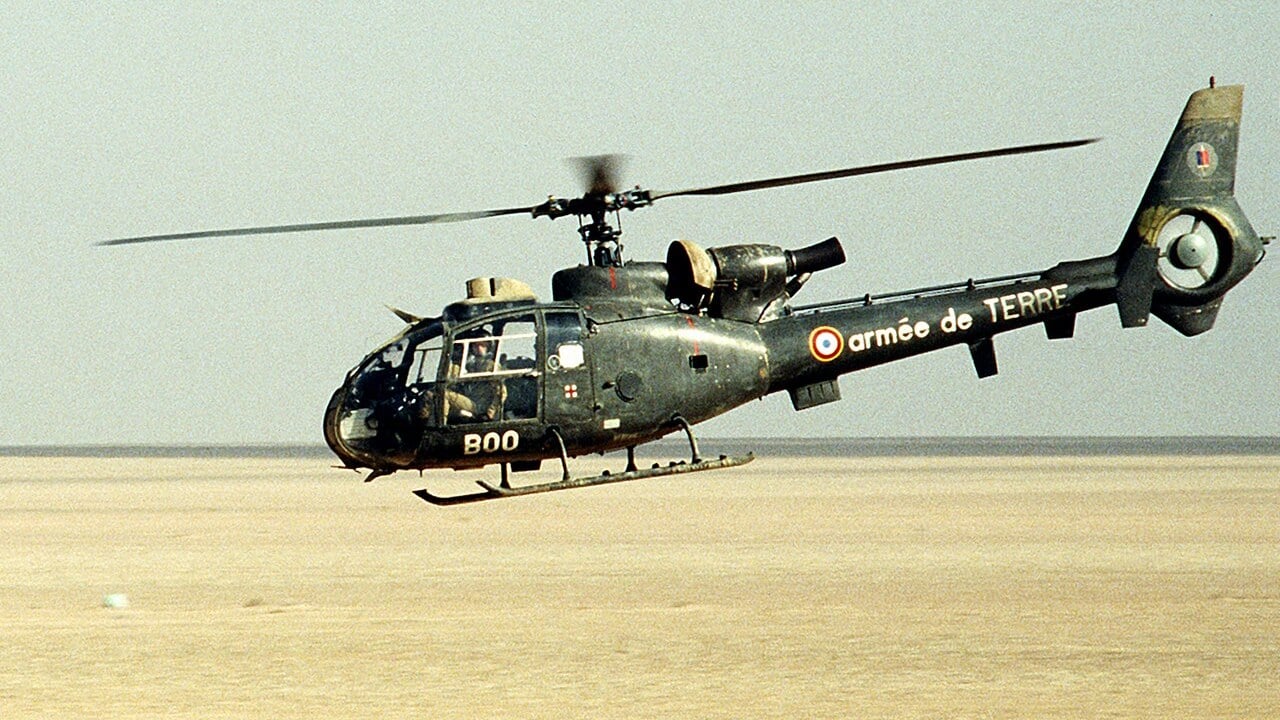
On 12 April 1968, at Marignane near Marseille, a small French helicopter lifted off with something missing. Where every other helicopter of the day had a spinning tail rotor hanging off the end of its boom, this one had a fat vertical fin with a round hole in it, and a fan of short blades turning inside.
The aircraft was the second prototype of the Sud Aviation SA 340, the machine that would become the Gazelle. The device in its tail was the Fenestron, and half a century later it is still one of the most recognisable signatures in the helicopter world.
Informazioni rapide
- Tipo: Sud Aviation / Aérospatiale SA 341/342 Gazelle, light five-seat helicopter, also built by Westland
- Primo volo: 7 April 1967 (SA 340 prototype, conventional tail rotor)
- First Fenestron flight: 12 April 1968, second prototype, Marignane
- Fenestron inventors: Paul Fabre and René Mouille
- Motore: One Turbomeca Astazou turboshaft
- Fenestron certified: 1972, on the Gazelle
- Costruito: Well over 1,500 in France and Britain, plus licence production
- British Army: Gazelle AH1 withdrawn at the end of October 2023 after 49 years
A successor to the Alouette
Sud Aviation began work on the Gazelle in the mid-1960s as a successor to its hugely successful Alouette II, aimed at a French Army requirement for a new light observation helicopter. It kept the Alouette’s formula of a single Turbomeca turbine, in this case the Astazou, but wrapped it in a sleek, enclosed five-seat airframe.
The first prototype flew on 7 April 1967, still fitted with a conventional tail rotor borrowed from the Alouette II. The Fenestron arrived a year later on the second prototype, and the shrouded tail became the defining feature of the production SA 341 and SA 342.
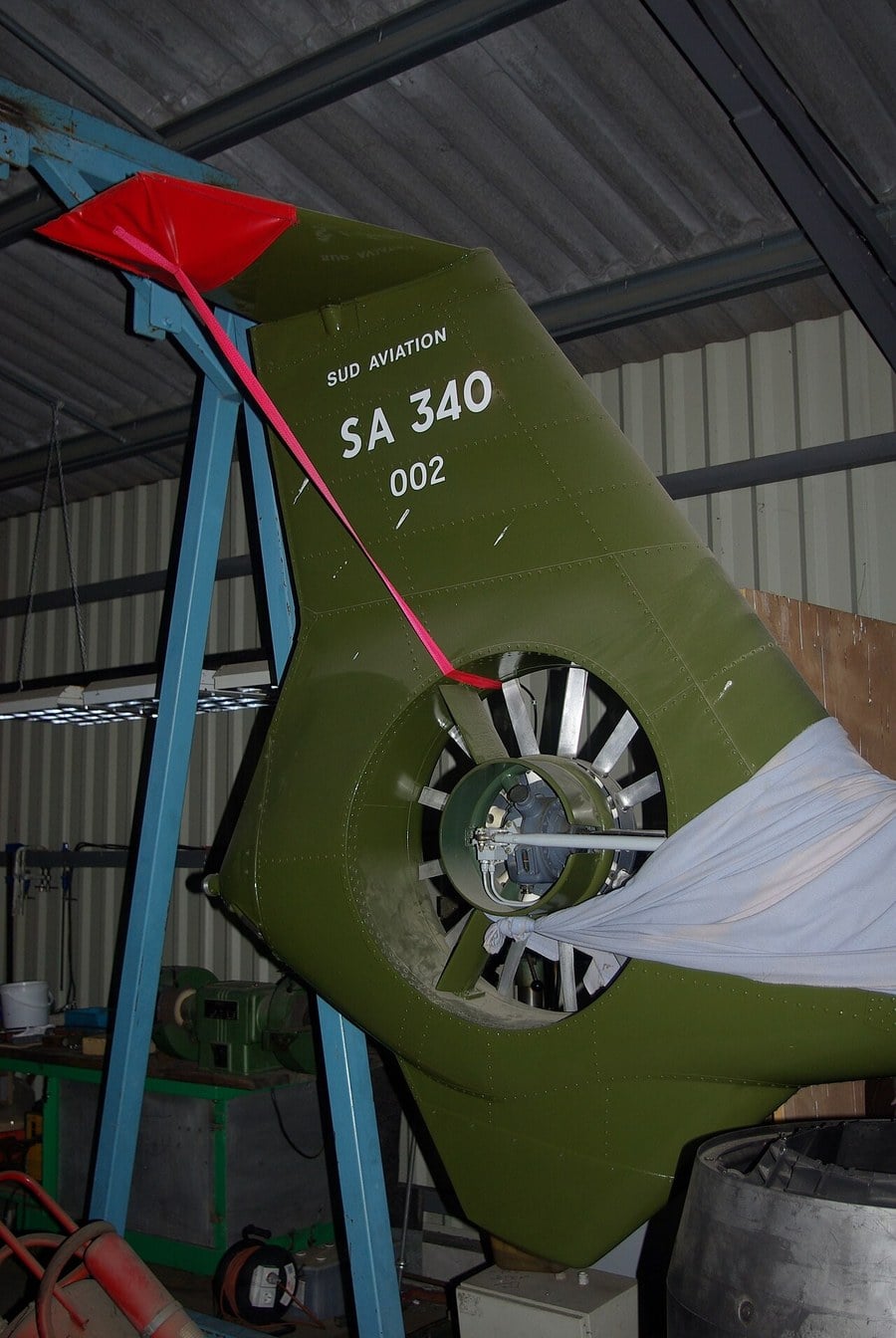
The little window
Every single-rotor helicopter has the same problem. As the engine drives the main rotor one way, the fuselage wants to spin the other way, and something at the tail has to push sideways to stop it. Since the 1940s that job had been done by a small open rotor on the end of the tail boom, and the pilot’s pedals changed its pitch to steer the nose.
The idea came from two Sud Aviation engineers, Paul Fabre and René Mouille. Their goal was safety. Conventional tail rotors of the time were fragile and often spun at head height, a hazard to ground crews and passengers walking around a helicopter, and a weak point in flight when working near trees, buildings or power lines.
Their answer was to bury a multi-bladed fan inside a duct in the tail fin. The shroud protects the blades and the people around them, and the duct makes the fan work like a ducted propeller, reducing losses at the blade tips. According to Airbus Helicopters, the name started as “Fenestrou”, Provençal for “little window”, before evolving into Fenestron.
Getting it right was not easy. Engineers had to work hard on the blade profiles, the shape of the duct and the stabilisers before the Fenestron delivered enough thrust with acceptable efficiency and good handling. Early versions were also criticised for their noise, which later generations tamed by spacing the blades unevenly.
The Fenestron was first certified on the Gazelle in 1972. The same year it flew on the prototype Dauphin, and it went on to equip the Dauphin family, including the US Coast Guard’s search and rescue helicopters, then the EC135, the EC130 and the EC145 family. The latest and largest, on the Airbus H160, is 1.2 metres across and canted 12 degrees for extra lift.
Airbus Helicopters’ own film on the origins of the Fenestron, released for its 50th anniversary in April 2018.
Where the idea stops working
The Fenestron is not for every helicopter. In 1975 Aerospatiale tried an 11-bladed, 1.6-metre version on a seven-tonne Puma, and the experiment showed that beyond a certain size it needed too much power to bring any real advantage. Even the company’s best-selling Ecureuil, today the H125, kept a conventional tail rotor in production, although an Ecureuil was used to test a Fenestron between 1987 and 1991. That prototype still stands at the entrance to the Airbus Helicopters headquarters in Marignane.
Gazelles in uniform
The Gazelle itself became a big success. Under a 1967 Anglo-French helicopter agreement, Westland built Gazelles in Britain for all three British services, while France equipped its army, navy and air force. The French Army’s Light Aviation turned the SA 342M into an anti-tank helicopter armed with Euromissile HOT missiles, and also flew versions with a 20 mm cannon and Mistral air-to-air missiles.
Light, quick and agile, the Gazelle proved an ideal scout and light attack machine for export customers too. Armed versions could carry machine guns, 68 mm or 70 mm rocket pods and between two and six guided missiles, from the early AS.11 and AS.12 to the HOT. Egypt and Lebanon are among the countries that still fly the type, according to Vintage Aviation News, and the same 1967 agreement that put Gazelles on British production lines also covered the Lynx and the Puma.
French Army Light Aviation Gazelles in action in 1983, from the ImagesDéfense archive.
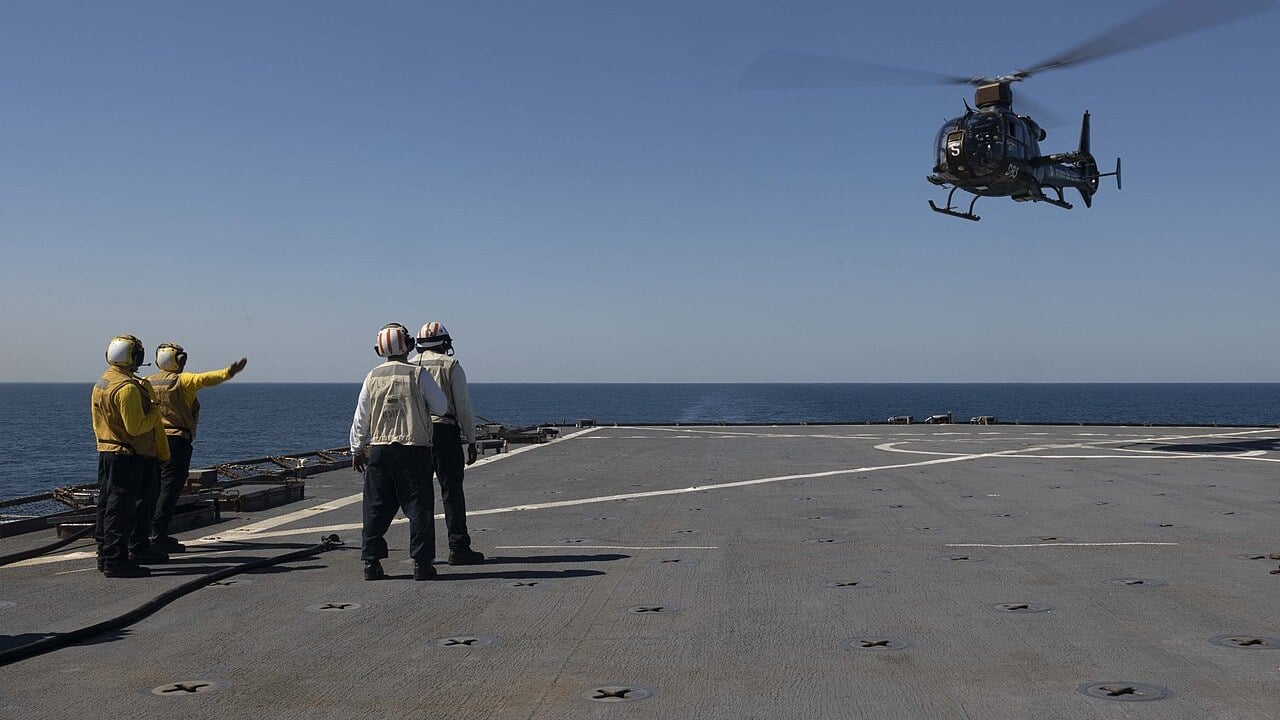
French Gazelles deployed to Saudi Arabia for the 1990–91 Gulf crisis and to many other French operations abroad. Today the Tiger has taken over the attack role, but the Gazelle remains in French service for reconnaissance, liaison and training, and still operates from ships alongside allied navies.
The civil SA 341G also became the first helicopter approved in the United States for single-pilot flight under instrument flight rules, a sign of how stable and easy to fly the design was considered. In total, well over 1,500 Gazelles were built in France and Britain, plus licence production in Yugoslavia and Egypt.
The British farewell
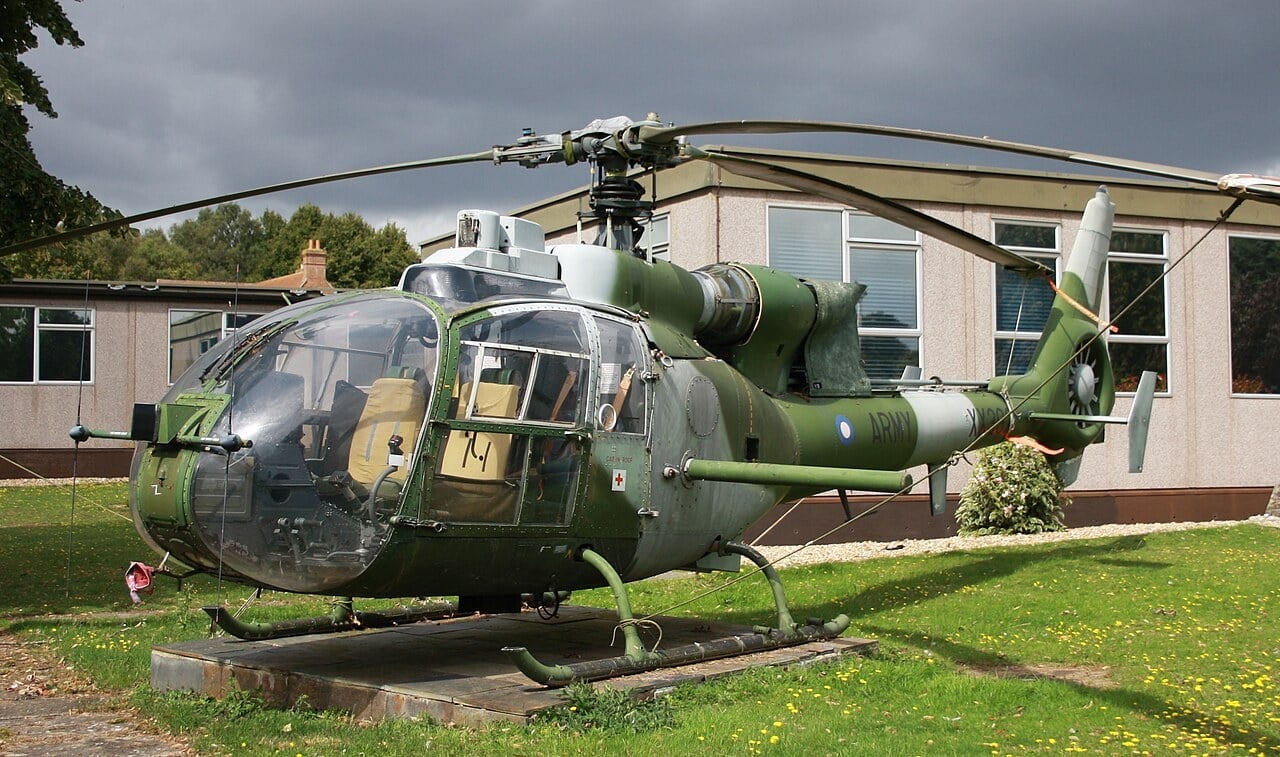
In Britain, the Gazelle’s longest career was with the Army Air Corps, which flew the Gazelle AH1 for observation, training and, later, surveillance tasks in Northern Ireland and at the British Army training area in Canada. After 49 years of service, the last Army Gazelles were withdrawn at the end of October 2023, following a farewell tour of formation flights around the country.
Three Army Air Corps Gazelles visit Barton Aerodrome near Manchester on their farewell tour in October 2023.
Today, many Gazelles fly on with private owners and smaller air arms, and the Fenestron flies on in the newest Airbus helicopters. The Gazelle helicopter was the first to carry it. Not bad for a hole in a tail fin that two engineers at Marignane dreamed up to keep people from walking into a spinning rotor.
Sources: Airbus Helicopters, Vertical, Helicopter Industry, UK Aviation News, Vintage Aviation News, US Navy, ImagesDéfense, Wikipedia (Aérospatiale Gazelle; Fenestron)
Header photo: TSgt H.H. Deffner, US Air Force / Wikimedia Commons, public domain
0 Comments