
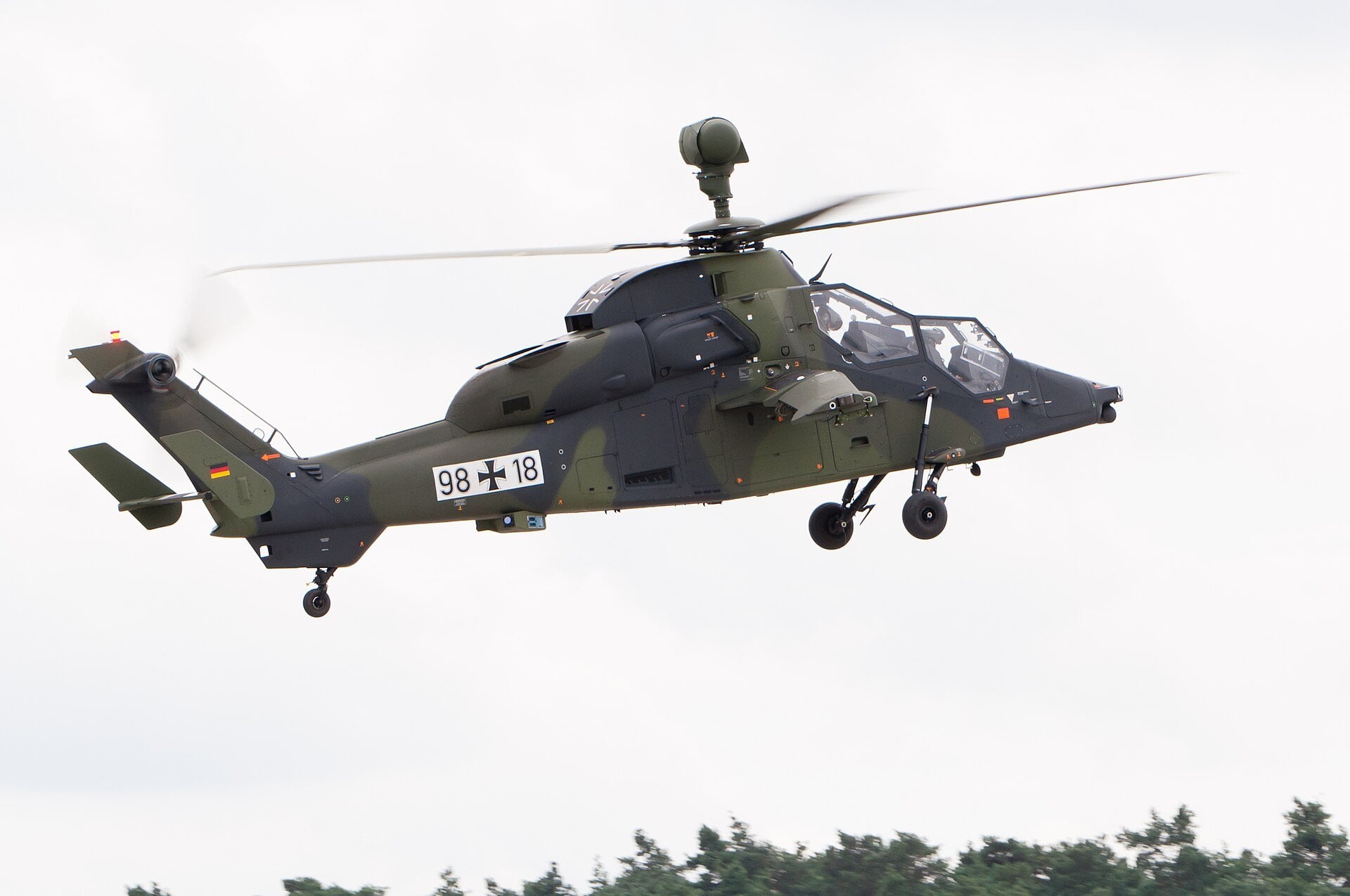
Eurocopter Tiger
Europe’s Attack Helicopter
Conceived by France and Germany to kill Soviet tanks, the all-composite Tiger arrived after the Cold War ended, then fought in Afghanistan, Libya and Mali while its partners argued over its cost and future.
The Tiger: how two old enemies built one attack helicopter
In 1984 France and Germany agreed to develop a common combat helicopter. Both armies faced the same problem: thousands of Warsaw Pact tanks across the inner-German border, and ageing Gazelles and Bo 105s armed with HOT missiles to stop them. A joint company, Eurocopter Tiger GmbH, was formed in September 1985, but costs climbed so fast that the programme nearly died in 1986 and had to be restructured. The agreement was amended in November 1987, full development was approved that December, and in November 1989, when the main development contract was signed, the helicopter got its name: Tiger in Germany, Tigre in France. The first prototype, PT1, was rolled out in February 1991 and made its first flight on 27 April 1991. By then the Berlin Wall had fallen, and the enemy the Tiger had been designed to fight was disappearing.
The programme survived, but slowly. Five prototypes flew nearly 2,900 hours of tests, a production contract for 160 aircraft was signed only in June 1999, and the first deliveries reached the French and German armies in the spring of 2005. By then the Tiger had split into versions that reflected two national philosophies: the French HAP escort and fire-support model with a 30 mm chin cannon, the German UHT anti-tank model with a mast-mounted sight and no gun, and later the multi-role HAD with uprated engines for France and Spain, which ordered 24. Australia became the first export customer in 2001 with 22 armed reconnaissance ARH Tigers. In 2012 the French Senate counted 206 Tigers on order.
The Tiger’s war record came in places nobody imagined in 1984. French Tigers flew in Afghanistan from 2009, from the assault ship Tonnerre over Libya in 2011 and across the Sahel in Mali from 2013; German Tigers followed to Afghanistan and Mali. Yet the helicopter also became a byword for European defence cooperation’s difficulties: low availability, high support costs and diverging national versions. Australia chose the AH-64E Apache to replace its Tigers from 2025, and Germany decided to retire its fleet by 2032. France and Spain, meanwhile, committed in 2022 to the Tiger Mk III upgrade, with new sights, data links and missiles, and with deliveries planned from late 2029 for France and 2030 for Spain.
01The Tiger at war: Afghanistan, Libya and Mali
The Tiger’s first operational deployment came in July 2009, when France sent three Tiger HAPs to Kabul. They were certified for operations in early August and by July 2010 the detachment had passed 1,000 operational hours, escorting transport helicopters and supporting troops in contact. In February 2011 a French Tiger crashed east of Kabul; both crew suffered only light injuries. Germany followed, deploying four UHT Tigers to Mazar-i-Sharif at the end of 2012.
In 2011 France embarked Tigers and Gazelles in the assault ship Tonnerre for the NATO campaign over Libya. Alongside British Apaches flying from HMS Ocean, they were sent in from early June to attack targets around Misrata and elsewhere that high-flying jets could not easily find, a significant escalation that showed what attack helicopters operating from the sea could do.
From January 2013 French Tigers flew in Mali in Operation Serval and its successor Barkhane, operating over huge distances in heat and sand. German Tigers deployed to Mali in 2017 to support the UN mission MINUSMA. On 26 July 2017 one crashed north of Gao, killing both experienced pilots. A Bundeswehr investigation concluded that the main rotor controls had been incorrectly rigged in May 2016 by Airbus technicians who had not completed their training; at about 135 knots and 550 m the helicopter pitched violently nose-down and the crew had no chance.
02The Tiger in Australia: a troubled reconnaissance helicopter
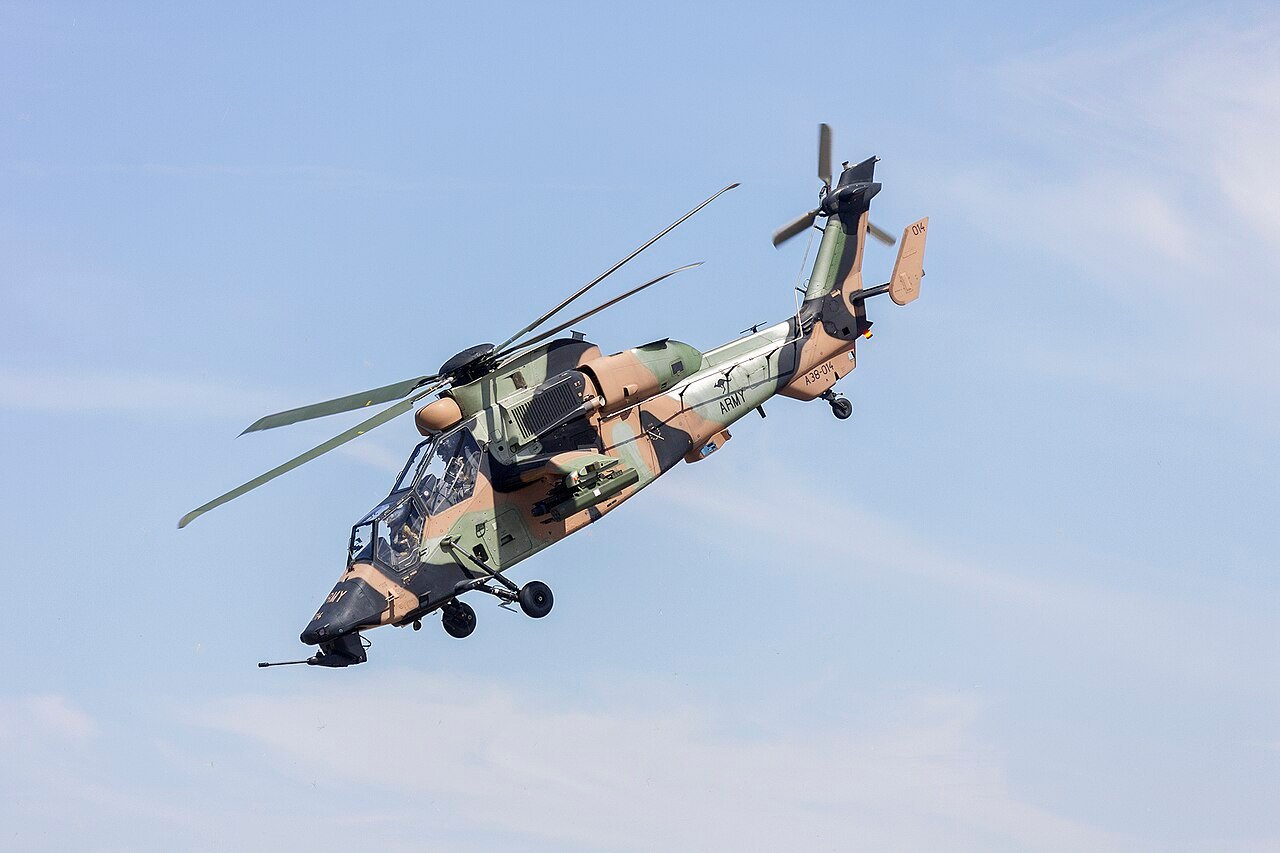
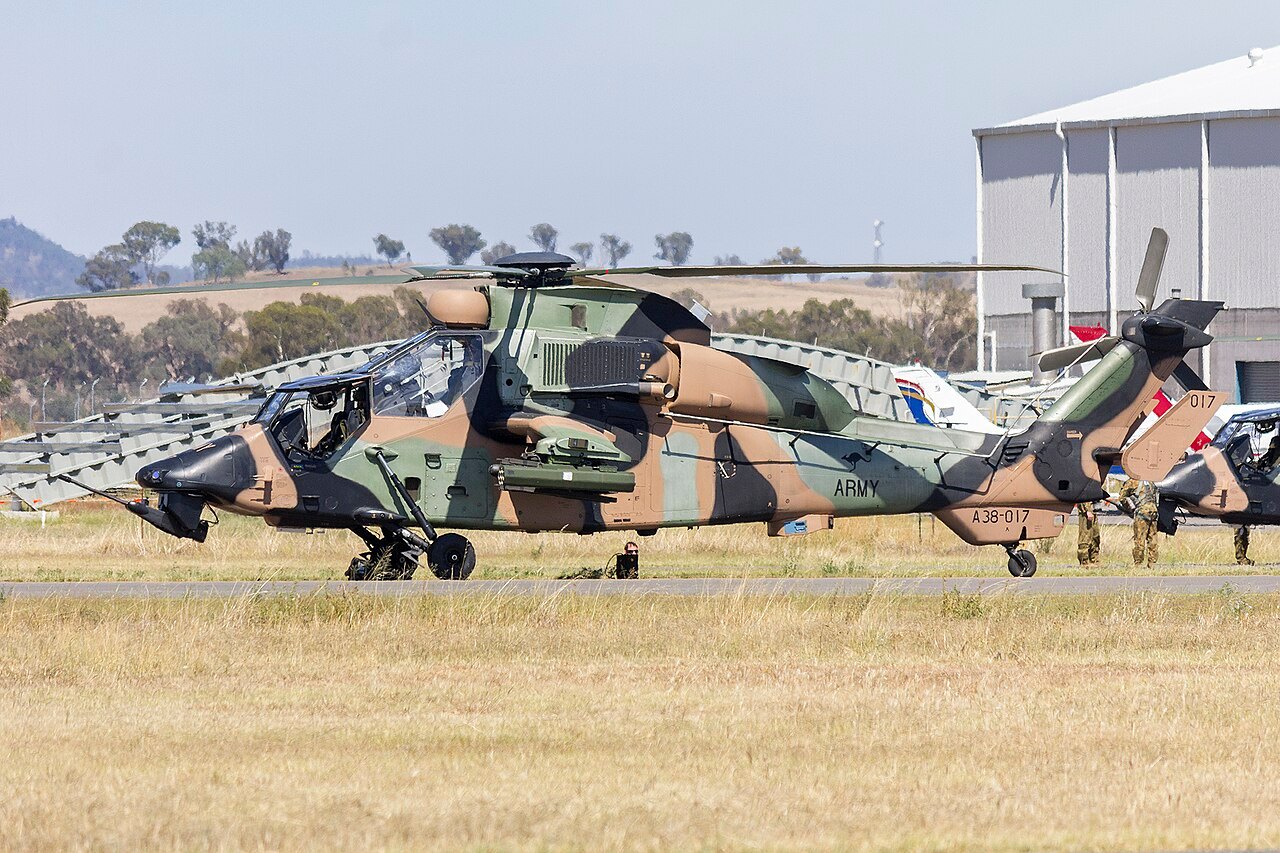
In December 2001 Eurocopter won the Australian Army’s AIR 87 competition for 22 armed reconnaissance helicopters. The Tiger ARH was a modified HAP with uprated engines, a laser designator for Hellfire missiles and 70 mm rockets; the first flew in February 2004 and deliveries began that December, most aircraft assembled in Brisbane.
The hoped-for off-the-shelf purchase became a developmental programme. In 2010, when the government was pressed to send Tigers to Afghanistan, Defence said they would not be fully operational until December 2012; final operational capability was declared only in 2016, with 76 capability deficiencies still to be fixed. The 2016 Defence White Paper announced the Tigers would be replaced from the mid-2020s, and in January 2021 Canberra chose the Boeing AH-64E Apache, buying 29 for about A$4.5 billion. Commentators noted the irony that flying hours and cost per hour had stabilised by then. In December 2025 reports said Australia was considering handing its 22 retiring Tigers to Ukraine.
What makes the Tiger special
Europe’s first all-composite helicopter
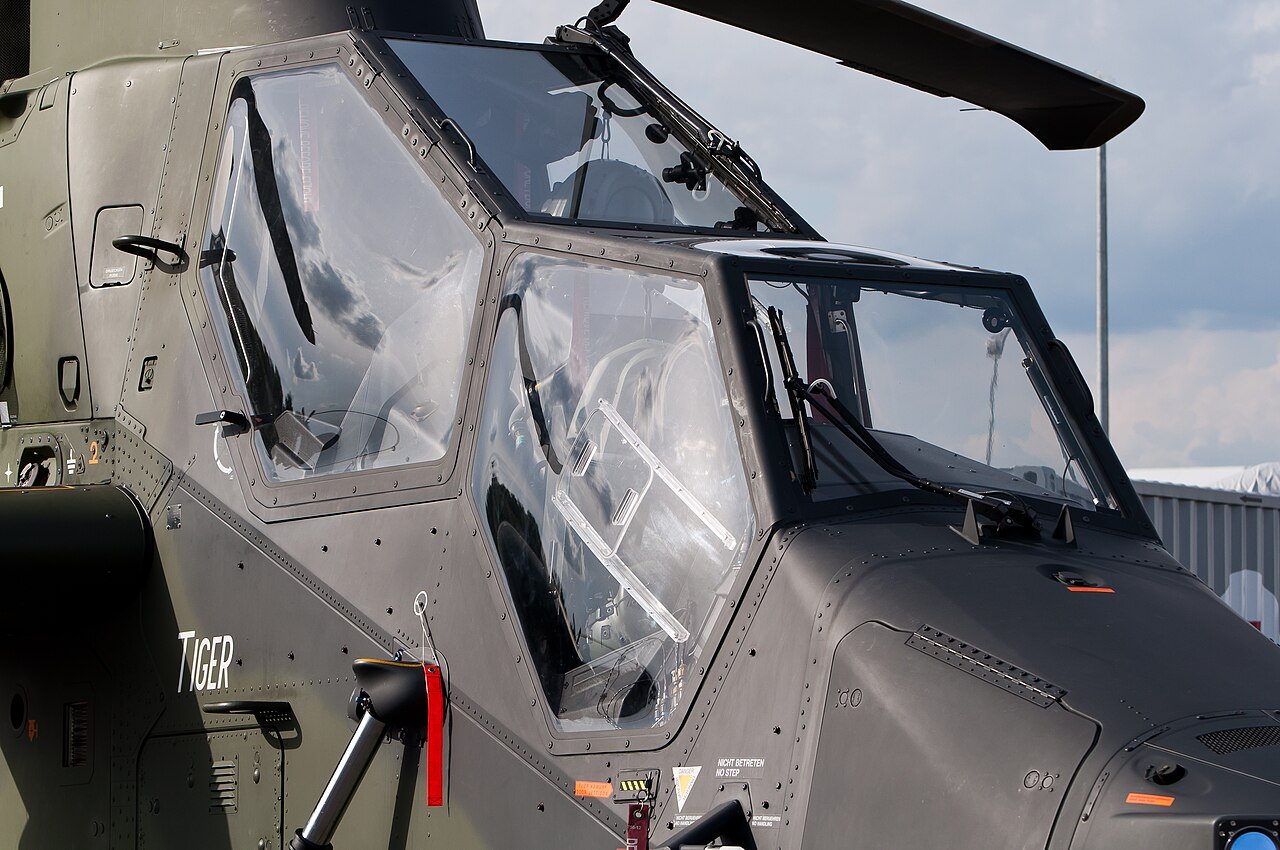
The Tiger was the first all-composite helicopter developed in Europe. About 80 per cent of the fuselage is carbon-fibre and Kevlar composite, with only about 11 per cent aluminium and 6 per cent titanium, and the tail section is entirely composite. That saved weight and helped the airframe tolerate battle damage. Combined with a narrow tandem fuselage, careful shaping to reduce its radar signature and infrared-suppressed exhausts, it made the Tiger a difficult target to detect for radars and thermal sights designed with heavier, metal helicopters in mind.
Built for agility
The Tiger’s four-blade rotor and compact, light airframe give it agility designed for nap-of-the-earth flying, ducking behind trees and ridges before popping up to fire. Two MTR390 turboshafts, developed jointly by MTU, Turbomeca and Rolls-Royce, power it, and the enhanced MTR390-E fitted to the HAD and planned for the Mk III produces about 14 per cent more power than the original engine, giving the heavier versions better performance in hot and high conditions such as Afghanistan and the Sahel. The two crew sit in tandem cockpits.
Sensors above the rotor
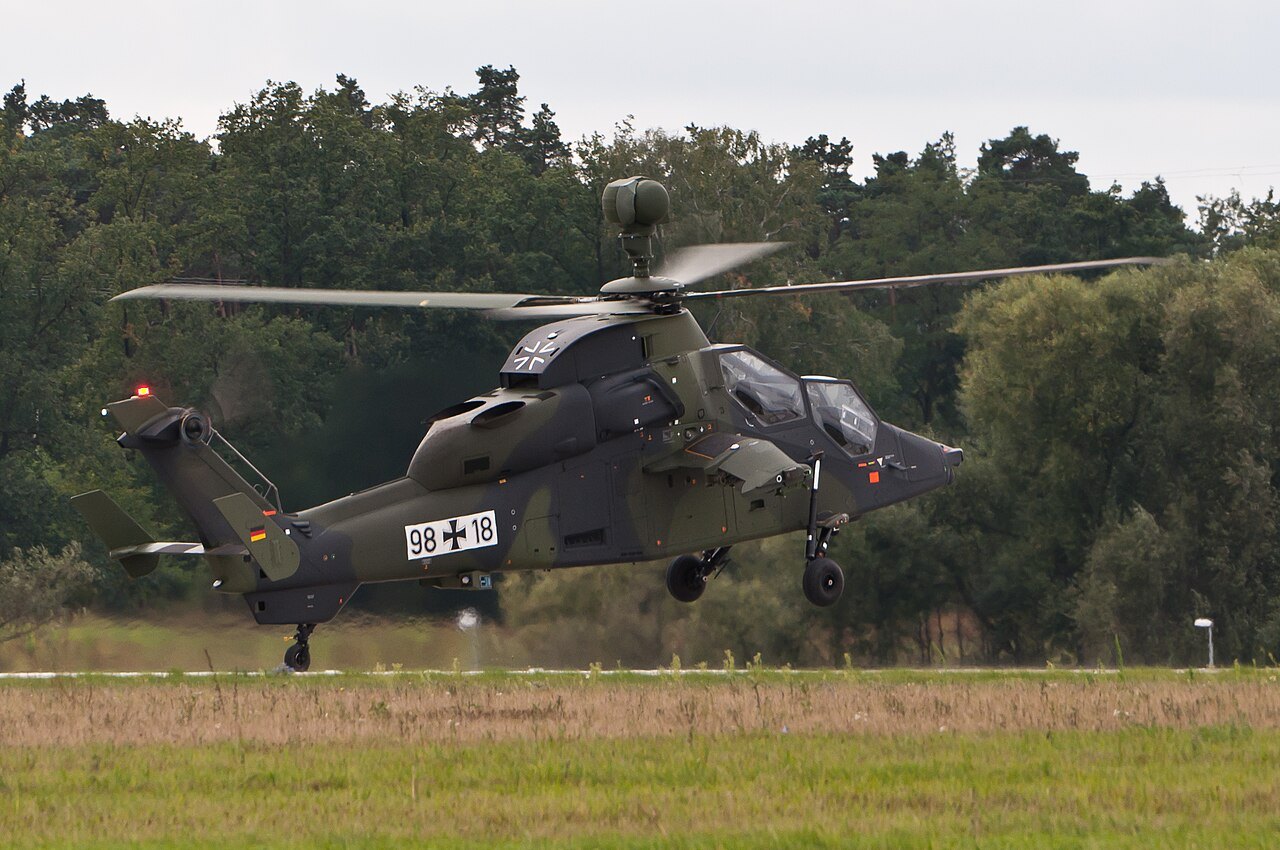
The German UHT carries the Osiris mast-mounted sight above the rotor, with infrared camera and laser rangefinder, letting it watch and fire from behind cover. French HAPs used a roof-mounted Strix sight and a 30 mm Nexter cannon under the nose; the HAD added Hellfire II missiles in French service and Rafael Spike-ER in Spanish service. Mistral or Stinger air-to-air missiles can be carried on the outer pylons, and German Tigers carry the PARS 3 LR fire-and-forget missile.
03The Tiger’s variants: HAP, UHT, HAD, ARH and Mk III
- HAP (Helicoptère d’Appui-Protection): French escort and fire-support version with 30 mm cannon, 68 mm rockets and Mistral missiles; first production HAP flew in March 2003; being converted to HAD standard.
- HAC: planned French anti-tank version; dropped in favour of the HAD.
- UHT (Unterstützungshubschrauber Tiger): German multi-role version with Osiris mast sight, HOT 3 and PARS 3 LR missiles, no fixed cannon; first delivered April 2005.
- HAD (Helicoptère d’Appui-Destruction): uprated MTR390-E engines, heavier payload, Hellfire II (France) or Spike-ER (Spain); production HAD first flew December 2007.
- ARH: Australian armed reconnaissance version with Hellfire and 70 mm rockets; 22 built, replaced by Apaches from 2025.
- Tiger Mk III: mid-life upgrade for France and Spain with new avionics, sights, data links and missiles; prototype due to fly in 2025, deliveries from late 2029.
Eurocopter Tiger HAD specifications
Specifications
- Crew
- 2 (pilot and weapon systems officer, tandem)
- Length
- about 14 m (46 ft)
- Main rotor diameter
- 13.0 m (42 ft 8 in)
- Height
- 3.84 m (12 ft 7 in)
- Empty weight
- 3,060 kg (6,746 lb)
- Max take-off weight
- 6,600 kg (14,550 lb)
- Powerplant
- 2 × MTR390-E turboshafts, 1,092 kW (1,464 shp) each
- Maximum speed
- 290 km/h (180 mph)
- Ferry range
- 1,130 km (702 mi) with external tanks
- Endurance
- about 2.5 hours on a standard mission
- Service ceiling
- 4,000 m (13,100 ft)
- Climb rate
- 10.7 m/s (2,100 ft/min)
- Armament
- 30 mm Nexter cannon in chin turret (HAP/HAD/ARH); Hellfire II, Spike-ER, PARS 3 LR or HOT 3 missiles; 68 mm or 70 mm rockets; Mistral or Stinger air-to-air missiles
Costs & production
- Unit cost
- €27 million (HAP) and €35.6 million (HAD), French average unit costs in 2012 euros excluding development and support, per the French Senate
- Cost per flight hour
- No official figure published by the European operators. Hedged estimate: well into five figures in US dollars per hour once support contracts are included, based on Australian and German reporting of high sustainment costs and low availability; operators’ actual figures vary widely
- Production
- 206 on order in 2012 (184 for France, Germany and Spain, 22 for Australia); German orders later cut
- Programme
- Franco-German agreement 1984; first flight 27 April 1991; French programme cost €6.3 billion (2012 euros) for 80 helicopters
04The Tiger’s operating costs: expensive to keep flying
The Tiger’s acquisition costs are unusually well documented. The French Senate’s 2013 budget report put France’s share of the programme at €6.3 billion (2012 euros) for 80 helicopters, with average unit costs, excluding development and support, of €27 million for the HAP and €35.6 million for the HAD.
Running costs are harder to pin down, but the pattern is clear. Australia’s Defence White Paper of 2016 cited high sustainment costs and the delays of shipping components to Europe for repair. In Germany, reporting by the Süddeutsche Zeitung put the fleet’s average operational readiness at only 26 per cent in 2020, and the Bundeswehr decided to take the Tiger out of operational service in 2032 rather than 2038. An honest estimate for a fully costed flight hour, including industrial support, is well into five figures in US dollars.
The Tiger from Franco-German treaty to Mk III
Agreement
France and Germany agree to develop a common combat helicopter.
Relaunch
After a cost crisis, the agreement is amended in November and full development approved in December.
First flight
Prototype PT1 flies on 27 April.
Production contract
France and Germany sign for 160 production aircraft on 18 June.
Australia orders
The Tiger ARH wins the AIR 87 competition for 22 helicopters.
Into service
The first HAP is delivered to France in March and the first UHT to Germany in April.
Afghanistan
Three French Tigers deploy to Kabul in July, the type’s first operational deployment.
Libya
French Tigers fly from the assault ship Tonnerre alongside British Apaches.
Mali
French Tigers join Operation Serval in January.
Fatal crash in Mali
A German Tiger crashes north of Gao on 26 July; both pilots are killed.
Apache for Australia
Canberra chooses the AH-64E to replace its Tigers from 2025.
Mk III planned
First upgraded Tiger Mk III due for delivery to France, with Spain following in 2030.
Stories & eyewitnesses: the Tiger in service and at war
Born of reconciliation
A Franco-German helicopter for a Cold War front.
Read the full story
PT1 takes to the air
27 April 1991.
Read the full story
Spike over the Atlantic coast
Arming the Spanish Tiger.
Read the full story
First war: Kabul, 2009
Three French Tigers go to Afghanistan.
Read the full story
From the sea to Libya
Tigers and Apaches together, 2011.
Read the full story
The Sahel
Mali, from 2013.
Read the full story
Gao, 26 July 2017
Two German pilots die in Mali.
Read the full story
Australia’s long wait
Tigers that could not go to Afghanistan.
Read the full story
Germany says goodbye early
Retirement brought forward to 2032.
Read the full story
Tigers for Ukraine?
A second life discussed in 2025.
Read the full story
The Tiger in pictures
Where the Tiger flies and flew
The Tiger’s record
The Tiger has flown combat operations with France in Afghanistan, Libya and the Sahel, and with Germany in Afghanistan and Mali. Losses have been few, but availability and support costs have shaped its career as much as its combat record.
See how training and combat types compare in the military aircraft statistics database. Figures are approximate.
Everything people ask about the Tiger
Can I fly in a Eurocopter Tiger?
Who operates the Tiger?
What is the difference between the Tiger HAP, HAD and UHT?
When did the Tiger first fly?
Where has the Tiger seen combat?
How much does a Tiger cost?
What is the Tiger Mk III?
You can’t fly the Tiger.
These, you can.
Most of this museum you can only look at. These genuine military jets you can fly yourself with MiGFlug — with aerobatics and time on the controls.
 Fly the L-39 AlbatrosThe world’s most-flown jet trainer — aerobatics included
 Fly the F-104 Starfighter“The missile with a man in it”
 Fly the MiG-21The Cold War’s most-produced jet
 Fly the T-33 Shooting StarAmerica’s first jet trainer
 Fly the DH VampireA piece of early jet history
 Fly the S.211Agile Italian jet trainer
 Fly the MB-326The classic Aermacchi jet
 Fly the MiG-15The Soviet legend of the Korean War
Continue the tour
Every fact, checked
- Tiger Multi-Role Combat HelicopterArmy Technology: production, variants, orders, weapons and Australian ARH
- Eurocopter TigerProgramme history compiled from Jane’s: 1984 agreement, contracts, prototypes and test hours
- Projet de loi de finances pour 2013 : Défense : équipement des forcesFrench Senate report: 206 Tigers on order, programme cost and unit costs
- Eurocopter Fires Spike Missile From HAD TigerSpaceWar, September 2008, on the HAD firing campaign in Spain
- Apache helicopters to be sent into Libya by BritainThe Guardian, May 2011, on British Apaches and French Tigers over Libya
- Mali: Bundeswehr sieht Schuld für “Tiger”-Absturz bei AirbusDer Spiegel, December 2018, on the 2017 Mali crash investigation
- Tigers not ready to fly: DefenceSydney Morning Herald, October 2010
- Tiger, Tiger, not so brightASPI The Strategist, February 2016, on the White Paper decision to replace the Tiger
- Australia chooses Apache as Tiger helicopter replacementASPI The Strategist: 29 Apaches for A$4.5 billion
- Update: Germany to replace Tiger attack helo with H145MJanes, May 2023
- Die Bundeswehr mustert den Kampfhubschrauber Tiger früher ausAerobuzz.de on retirement in 2032 instead of 2038
- Australia’s Unwanted Tiger Attack Helicopters May Go To Ukraine: ReportsThe War Zone, December 2025: ARH history and possible transfer