
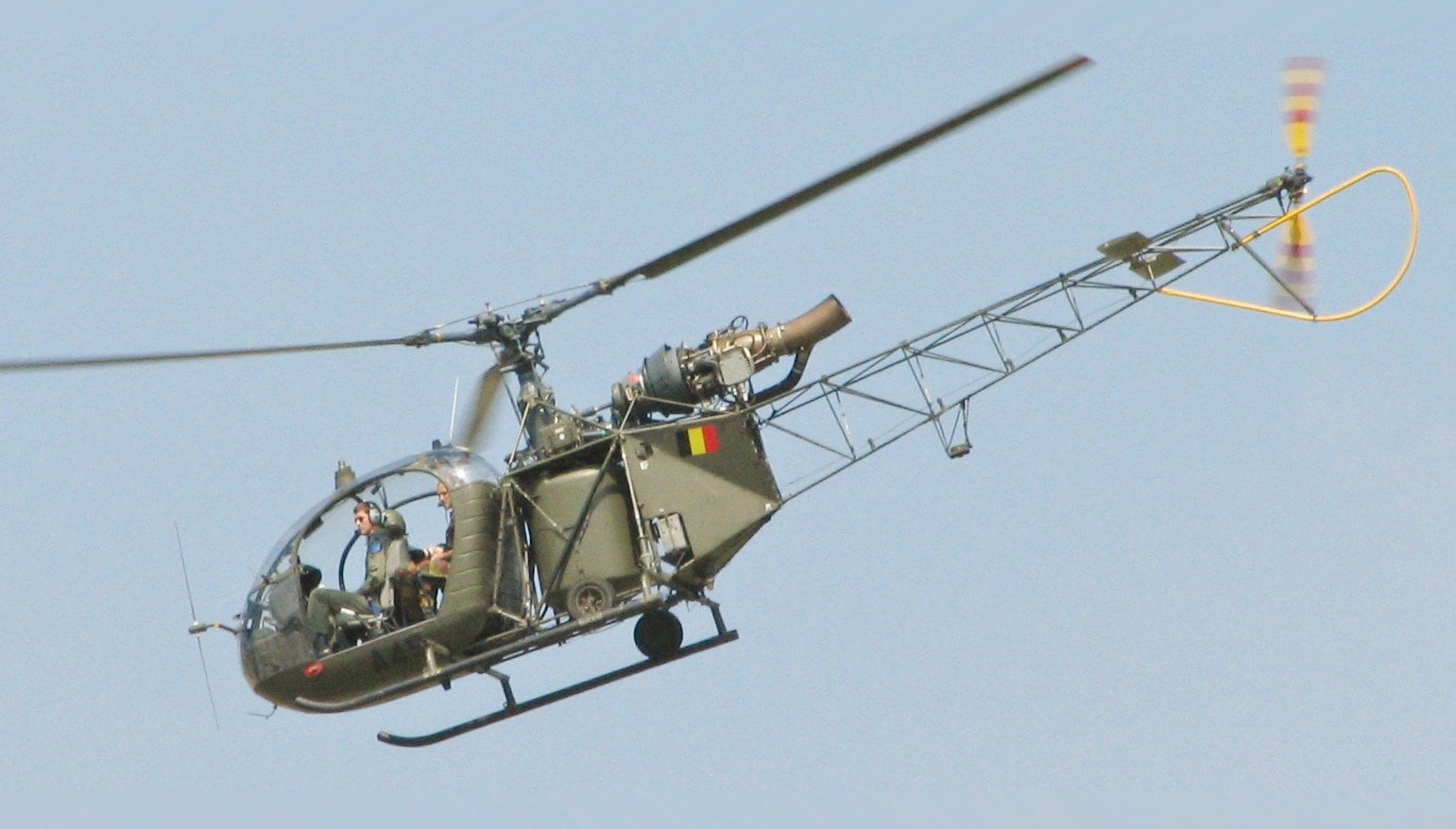
Sud Aviation Alouette II
The First Turbine Helicopter
The first production helicopter with a gas turbine, the Alouette II set altitude records, flew the first mountain rescues, armed itself with anti-tank missiles and fathered the Lama, which still holds the helicopter height record.
The Alouette II: how a French turbine changed the helicopter for ever
In the early 1950s the French helicopter industry had a deadline. Sud-Est’s piston-engined SE 3120 Alouette had broken records but was too complex to sell, and the government, which was paying, wanted a helicopter in production within two years or it would stop funding rotary-wing work. The answer came from Joseph Szydlowski of Turbomeca, whose small Artouste turbine offered far more power for its weight than any piston engine. Sud-Est drew up seven turbine designs, chose the simplest, and on 12 March 1955 the prototype SE 3130 flew. Within three months, on 6 June, Jean Boulet took a pre-production machine to 8,209 metres, a new helicopter altitude record. Turbine power had arrived, and it would never leave.
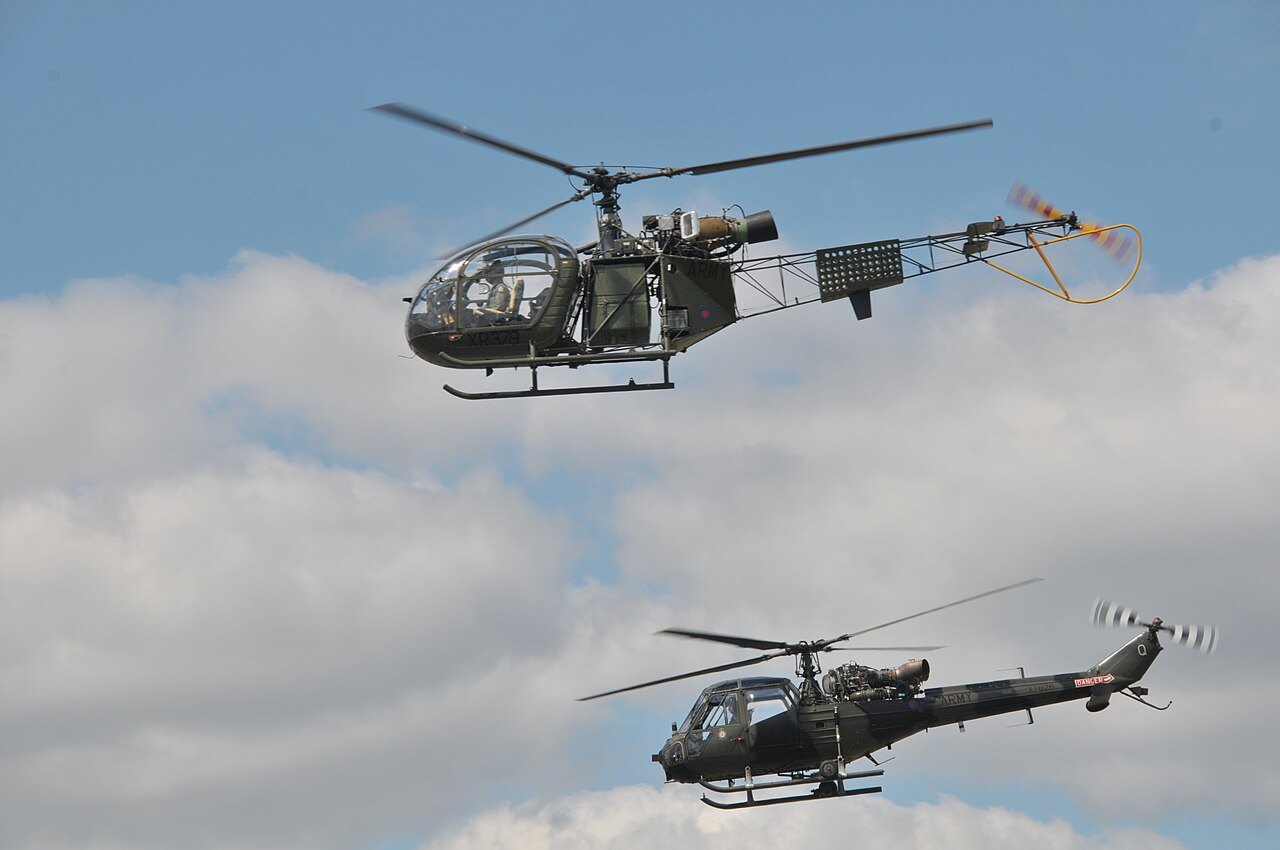
The production Alouette II of April 1956 was the first turbine-powered helicopter built in series anywhere in the world. It was spare and open: a glazed cabin for a pilot and up to four others, a lattice tail boom, skids, wheels or floats, and the Artouste mounted in the open behind the cabin. A governor controlled rotor speed automatically, so there was no twist-grip throttle, and there was no clutch. In 1958 Boulet took an Alouette II to 10,984 metres. The French Army received its first examples in 1957 and took them straight to Algeria, where they flew troops, casualties and, fitted with SS.10 or SS.11 wire-guided missiles, became some of the first armed helicopters anywhere.
More than 1,300 were built before production ended in 1975, flying in more than 80 countries and with 47 armed forces, from West Germany’s border police to the British Army Air Corps, Rhodesia, Sweden, Switzerland and Portugal. Licence production or sales arrangements followed in Brazil, Sweden, India and the United States. In 1969 Aérospatiale combined the light Alouette II airframe with the Alouette III’s engine to create the SA 315B Lama for India and Nepal, and in 1972 Boulet flew a Lama to 12,442 metres, an absolute helicopter altitude record that still stands. The Alouette II itself kept flying for decades in police, civil and military hands, and examples still appear at airshows and on civil registers today.
01The Alouette II and the Lama: from record-breaker to Himalayan workhorse
India and Nepal needed a helicopter that could work in the Himalayas, where even powerful medium helicopters struggled. Aérospatiale’s solution was to put the Alouette III’s Artouste III engine and dynamic systems into a reinforced Alouette II airframe. The resulting SA 315B Lama first flew on 17 March 1969, was certificated on 30 September 1970 and entered service in July 1971. In early Himalayan demonstrations a Lama with two crew landed and took off at 7,500 metres. It could lift 1,000 kg on a sling.
On 21 June 1972 Jean Boulet took off alone from Istres and climbed a Lama to 12,442 metres (40,814 ft). At the top, in air at about −63°C, the engine flamed out, and Boulet glided back down in what is thought to be the longest autorotation ever flown, landing safely without power. The record has stood for more than five decades, a point the FAI marked on its 50th anniversary.
India placed a large order in 1971 with licence production by HAL in Bangalore, where the first Indian-assembled Lama, called Cheetah, flew on 6 October 1972. Cheetahs became the lifeline of Indian troops on the Siachen Glacier, and HAL later developed the re-engined Cheetal and the armed Lancer. Brazil’s Helibras built the type as the Gavião. By December 1976, 191 Lamas had been ordered by 68 operators.
02The Alouette II at war: Algeria, Rhodesia and the first anti-tank helicopter
The Alouette II went to war almost as soon as it entered service. French forces in Algeria used it heavily from 1957 for liaison, observation and casualty evacuation, and as a troop carrier it could lift up to four equipped soldiers. Some were armed with Nord SS.10 or SS.11 wire-guided missiles, making the Alouette II the first helicopter anywhere to carry anti-tank guided weapons and one of the earliest helicopter gunships. The French Army added machine guns, and the French Navy fitted homing torpedoes for anti-submarine work.
In Rhodesia the Alouette II worked alongside the larger Alouette III with the Army and the British South Africa Police from the 1960s, flying reconnaissance, supply, casualty evacuation and communications relay in hot, high conditions. Its short range was stretched by fuel caches placed across the country, and it proved hardy and resistant to battle damage. Rhodesian modifications to armour, sights, refuelling and armament fed directly into the Fireforce doctrine that the Alouette III would later dominate.
What makes the Alouette II special
The Artouste turbine
Turbomeca’s Artouste II was a single-shaft turbine of about 400 hp, light and smooth compared with the radial piston engines of rival helicopters. At sea level the Alouette II used only around 300 hp of it, so performance held up at altitude and in tropical heat where piston helicopters lost power quickly. That reserve, rather than raw speed, is what set the records and sold the aircraft to mountain, jungle and desert operators alike. The same engine family went on to power the Alouette III and, through the Astazou, a whole generation of French helicopters.
No throttle, no clutch
A fuel governor held rotor speed constant, so the pilot did not need the twist-grip throttle of piston helicopters; raising the collective automatically called for more power. There was no clutch, which simplified the transmission. For pilots converting from piston types the workload dropped noticeably, and the Alouette II became a popular training helicopter. Its domed windscreen and open lattice tail gave an outstanding view for observation and photography, and its compact size let it land in clearings and on ships’ decks that larger helicopters could not use.
Hungry for grease
The design was simple but not maintenance-free. The main rotor head alone had 20 grease nipples to be lubricated every five flight hours, the tail rotor drive shaft was similarly demanding, and the engine was prone to ingesting dust, so some operators cleaned the sand filters after every landing. Later SA 318C Astazou models improved fuel economy, but the Alouette II remained a hands-on machine for its ground crews throughout its long career. Mechanics who knew it well still speak of it with affection, and with a grease gun close at hand.
03The Alouette II’s variants: from SE 3130 to the Lama
- SE 3130 Alouette II: initial version with the Turbomeca Artouste II of 400 hp.
- SE 313B Alouette II: Artouste IIC5 or IIC6 engine and higher maximum weight.
- SE 3131 Gouverneur: executive version with enclosed tail boom, abandoned in favour of the Alouette III.
- HKP 2: Swedish licence-built SE 3130.
- SA 3180 / SA 318C Alouette II Astazou: from 1964, with the more economical Turbomeca Astazou IIA, limited to 400 hp by the transmission.
- SA 315B Lama: Alouette II airframe with Alouette III engine and dynamics for hot and high work; first flight 1969.
- HAL Cheetah, Cheetal and Lancer: Indian Lama licence build, re-engined TM 333 version and armed version.
- Helibras Gavião: Brazilian Lama licence build from 1978.
Sud Aviation Alouette II (SE 313B) specifications
Specifications
- Crew
- 1 pilot
- Capacity
- Up to 4 passengers, or 2 external stretchers, or 500 kg underslung
- Length
- 9.66 m (31 ft 8 in)
- Main rotor diameter
- 10.20 m (33 ft 6 in)
- Height
- 2.75 m (9 ft 0 in)
- Empty weight
- 895 kg (1,973 lb)
- Max take-off weight
- 1,600 kg (3,527 lb)
- Powerplant
- 1 × Turbomeca Artouste IIC6 turboshaft, derated to 269 kW (360 shp)
- Maximum speed
- 185 km/h (115 mph)
- Cruise speed
- 170 km/h (106 mph)
- Range
- 565 km (351 mi) with maximum fuel
- Service ceiling
- 2,300 m (7,500 ft)
- Climb rate
- 4.2 m/s (820 ft/min)
- Armament
- Optional: Nord SS.10/SS.11 wire-guided missiles, machine guns, homing torpedo
Costs & production
- Cost per flight hour
- No official figure published. Hedged estimate: several hundred to around a thousand US dollars per hour for a privately operated example, based on typical fuel burn and overhaul reserves for single-turbine light helicopters of the period; the early Artouste is thirstier than modern engines
- Production
- More than 1,300 Alouette IIs, 1956–1975; Lama production in France, India (HAL) and Brazil (Helibras) continued long after
- Programme
- First flight 12 March 1955; first production aircraft April 1956; French certificate of airworthiness 2 May 1957
04The Alouette II’s operating costs: a turbine pioneer, priced as one
The Alouette II proved that turbine helicopters could be practical, but the early Artouste was a single-shaft engine with high fuel consumption by later standards. That is one reason Aérospatiale introduced the SA 318C Astazou in 1964, and why many air forces moved on to the Ecureuil family once it arrived. The grease-heavy rotor head and the need to clean sand filters added labour costs that no brochure mentioned.
No official cost per flight hour has been published for military Alouette IIs. The range above is an estimate for a privately operated aircraft, without military overheads, based on fuel, maintenance and overhaul reserves typical of light single-turbine helicopters; actual figures vary widely with utilisation, engine time remaining and parts availability for a type that left production in 1975.
The Alouette II from Marignane to the edge of space
First flight and first record
The SE 3130 flies on 12 March; on 6 June Jean Boulet sets a helicopter altitude record of 8,209 m.
World’s first production turbine helicopter
The first production Alouette II is completed in April; on 3 July it flies the first helicopter mountain rescue.
Certification and Mont Blanc
On 3 January it rescues a crashed S-58 crew on Mont Blanc; certification follows on 2 May.
To Algeria
French Army deliveries begin and the type enters heavy use in the Algerian War, some carrying SS.10 and SS.11 missiles.
10,984 m
Boulet retakes the helicopter altitude record on 13 June.
Astazou version
The SA 3180 Alouette II Astazou introduces a more economical engine.
Lama flies
The SA 315B Lama, an Alouette II airframe with Alouette III power, first flies on 17 March.
12,442 m
On 21 June Boulet sets the absolute helicopter altitude record in a Lama; HAL’s first Cheetah flies on 6 October.
Production ends
The last Alouette II is completed after more than 1,300 built.
Cheetal for the Army
India orders 20 re-engined Cheetals for high-altitude work around Siachen.
Prison break
On 1 July a hijacked Alouette II lands in the courtyard of Réau prison to free Rédoine Faïd.
Stories & eyewitnesses: the Alouette II and the Lama
Jean Boulet and the first turbine record
Three months after its first flight, the Alouette II owned the height record.
Read the full story
The first mountain rescue
Before it even entered civil service, the Alouette II was saving climbers.
Read the full story
Missiles over Algeria
French crews created one of the first armed helicopters.
Read the full story
40,814 feet, then silence
Boulet’s Lama record ended in the longest autorotation on record.
Read the full story
Cheetahs over Siachen
India’s licence-built Lamas became the lifeline of the world’s highest battlefield.
Read the full story
Watching the Iron Curtain
West German border police flew Alouettes along the inner German frontier.
Read the full story
The prison-break helicopter
In 2018 a hijacked Alouette II freed one of France’s most wanted men.
Read the full story
The Lancer controversy
An armed Indian Lama ended up in Nepal’s civil war.
Read the full story
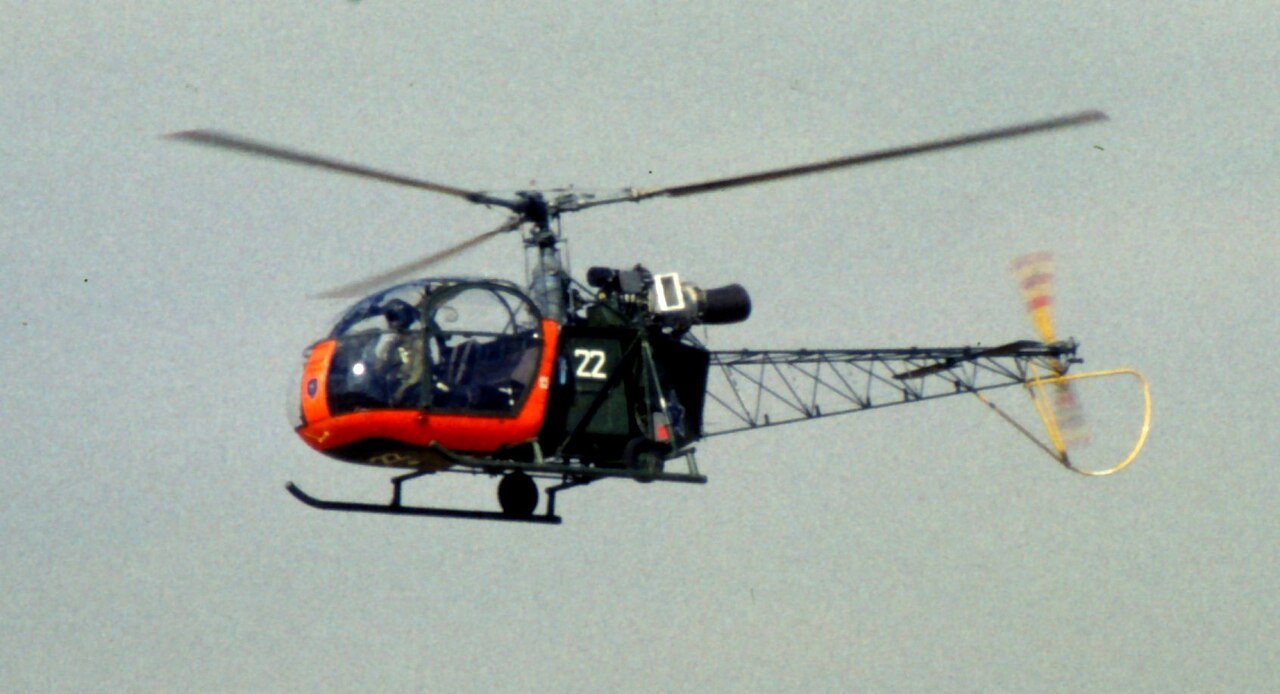
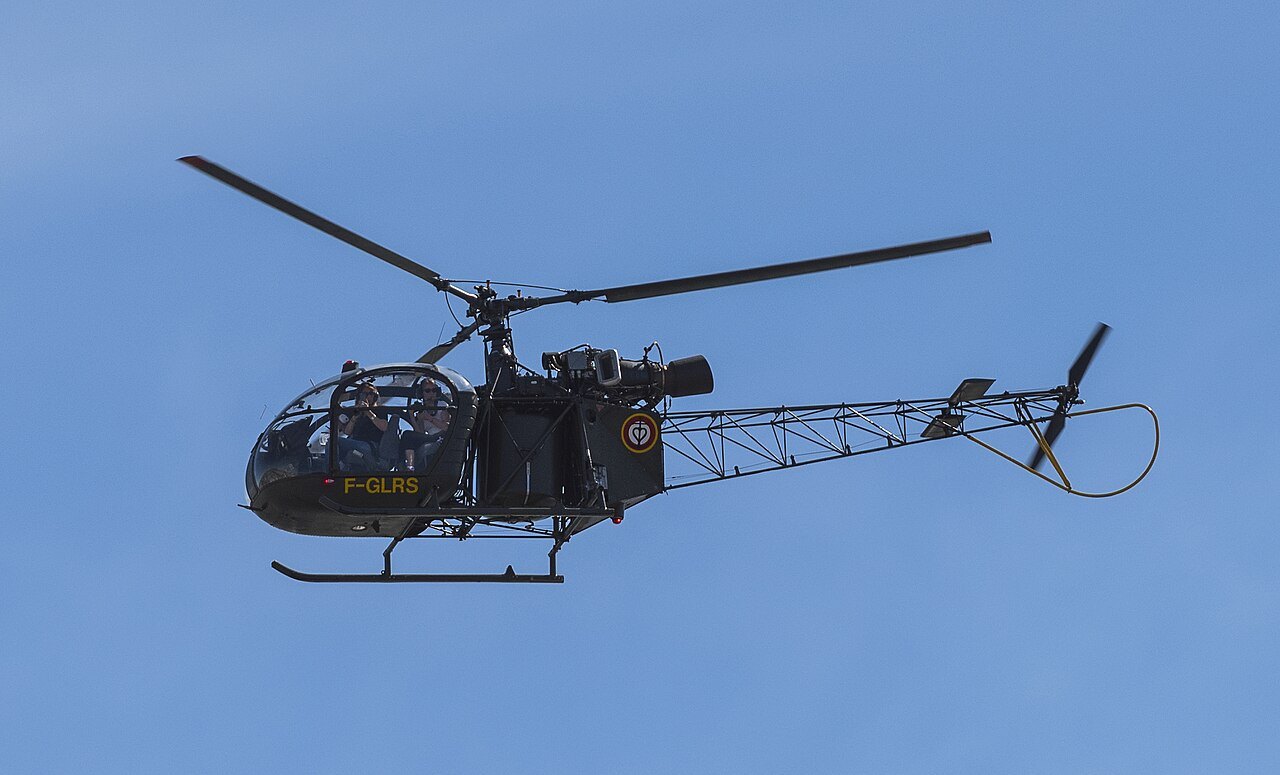
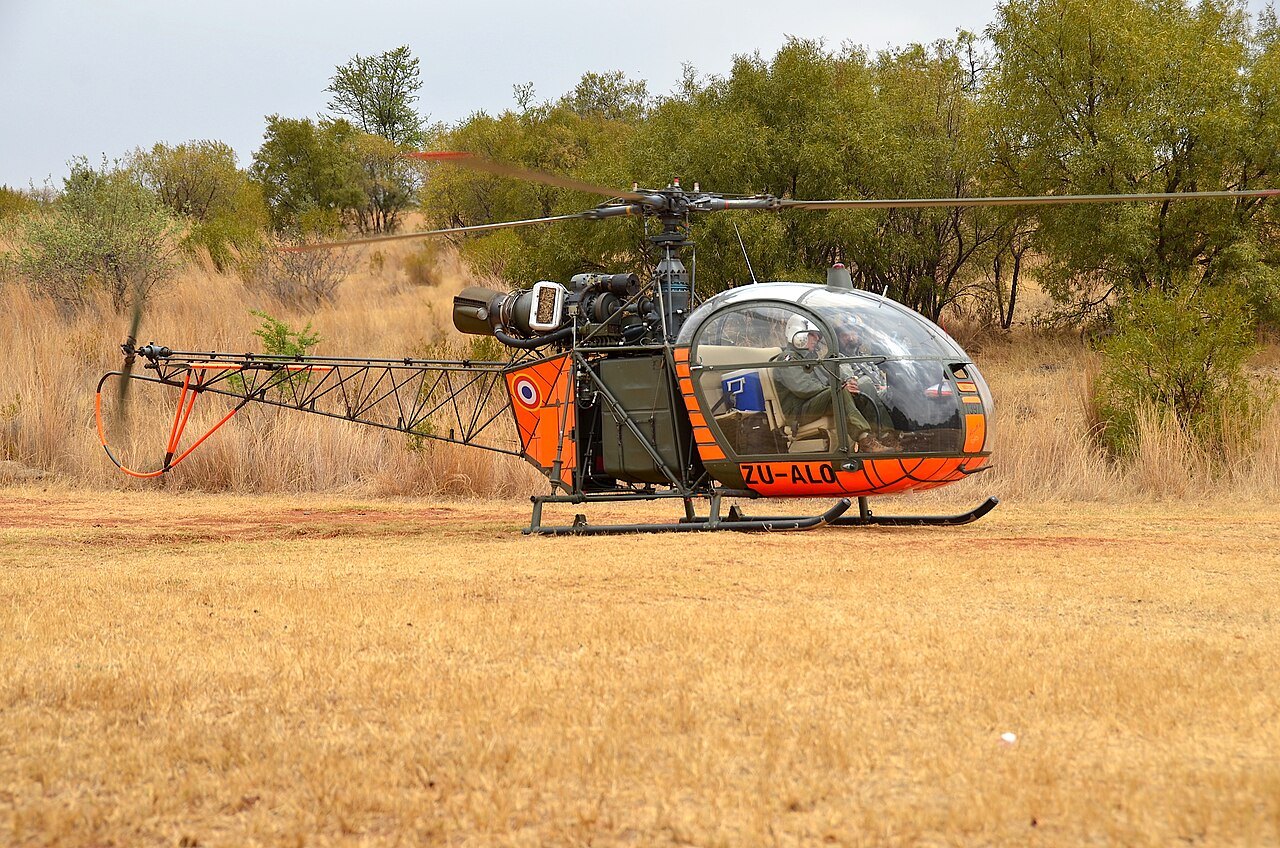
The Alouette II in pictures
Where the Alouette II flies and flew
The Alouette II’s record
The Alouette II saw combat in Algeria from 1957, pioneering armed helicopters with wire-guided missiles, and served in Rhodesia’s bush war and other conflicts. Its greatest legacy is in rescue and records, where it and the Lama set marks that still stand.
See how training and combat types compare in the military aircraft statistics database. Figures are approximate.
Everything people ask about the Alouette II
Can I fly in a Sud Aviation Alouette II?
Was the Alouette II the first turbine helicopter?
How many Alouette IIs were built?
What is the difference between the Alouette II and the Lama?
What is the helicopter altitude record?
Is the Alouette II still flying?
You can’t fly the Alouette II.
These, you can.
Most of this museum you can only look at. These genuine military jets you can fly yourself with MiGFlug — with aerobatics and time on the controls.
 Fly the L-39 AlbatrosThe world’s most-flown jet trainer — aerobatics included
 Fly the F-104 Starfighter“The missile with a man in it”
 Fly the MiG-21The Cold War’s most-produced jet
 Fly the T-33 Shooting StarAmerica’s first jet trainer
 Fly the DH VampireA piece of early jet history
 Fly the S.211Agile Italian jet trainer
 Fly the MB-326The classic Aermacchi jet
 Fly the MiG-15The Soviet legend of the Korean War
Continue the tour
Every fact, checked
- FAI Celebrates Anniversary Of 50-Year-Old Altitude RecordAVweb on Boulet’s 21 June 1972 Lama flight from Istres, flame-out and autorotation
- Indian Army orders Cheetal helicopters from HALOrder for 20 Cheetals, payload gain at altitude, Siachen role
- Prison break pilot of hijacked helicopter tells his storyThe Local on the 1 July 2018 Réau prison escape
- Type Certificate Data Sheet EASA.R.124 (SA 3180, SA 318B, SA 318C)Certification data for the Alouette II Astazou family
- Airbus Helicopters: Early history 1920–1990Manufacturer heritage on the SE 3130, Boulet’s records and the Alouette line
- The Illustrated Encyclopedia of HelicoptersGiorgio Apostolo, 1984: Alouette II and Lama development