
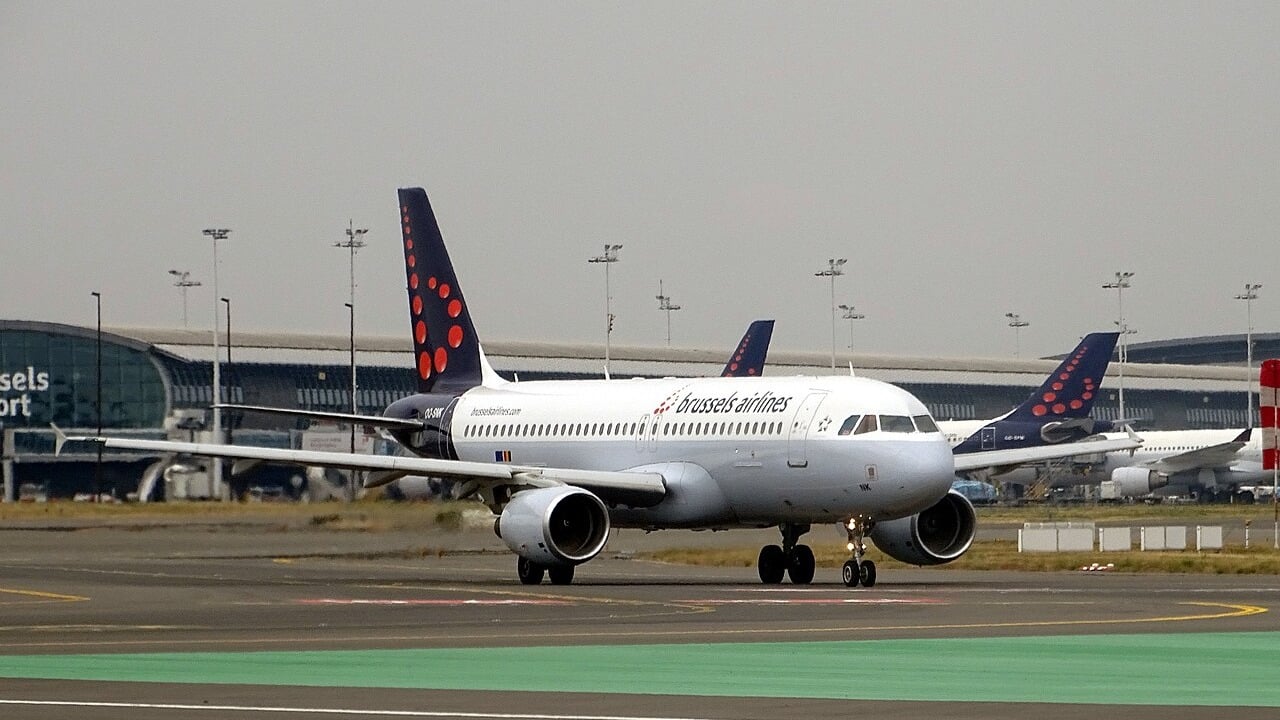
The decision landed on a Saturday afternoon, about thirty-six hours before it took effect. Skeyes, the state company that controls Belgian airspace, told the country’s airports and airlines that it would not be able to provide the usual air traffic control service on Monday 23 November. Not a reduced service. Not delays. Nothing scheduled at all, between 07:00 and 21:00 local time.
Brussels Airport did the arithmetic and published the answer in one flat sentence: every departure and every arrival inside that window is cancelled. Some 429 flights had been planned for Monday, carrying roughly 59,500 passengers. Brussels South Charleroi, forty-five minutes down the motorway, is in the same position for the same reason, and it is furious about it.
None of this is an aviation dispute. The controllers are joining a national demonstration in Brussels against the federal government’s austerity plans, alongside teachers, bus drivers and civil servants. Aviation is simply the loudest thing in Belgium that can be switched off. By Monday evening it will have been switched off for the eleventh time in eleven months.
Informazioni rapide
Che cosa: Skeyes suspends regular air traffic control services, Monday 23 November 2026
Quando: 07:00 to 21:00 Belgian time (06:00 to 20:00 UTC)
Perché: National trade union demonstration in Brussels against federal austerity measures
Controllers taking part: 60 per cent, per Skeyes via Brussels Airlines
Brussels Airport: all arrivals and departures in the window cancelled; 429 flights and about 59,500 passengers had been scheduled
Annunciato: Saturday afternoon, 21 November, roughly 36 hours ahead
Airports affected: Brussels, Antwerp, Charleroi, Kortrijk, Liège and Ostend, all controlled by Skeyes
Count: at least the eleventh national action since the De Wever government took office
What Skeyes Said, and Where It Did Not Say It
The wording is careful. Skeyes told Belgian media that the staffing levels it expected would not allow normal air traffic to be handled, and that it was therefore obliged to suspend the services concerned between 07:00 and 21:00. A minimum service remains for emergencies and other flights critical to safety. In Dutch, the line carried to VRT NWS reads: the safety of air traffic remains the absolute priority under all circumstances.
The figure behind that sentence is 60 per cent. That is the proportion of its controllers Skeyes expected to take part, according to what the company told Brussels Airlines and which the Belga news agency reported on Sunday morning. It is the only participation number anybody has published, and it explains why the answer is a shutdown rather than a thinned timetable: you cannot run a control centre on four tenths of a watch.
There is a curious gap in all this. Skeyes published nothing on its own website or in its own press room. The homepage news feed stops in mid-November; the press site has not moved since July. The announcement reached the public entirely through the airports, the airlines and the wires. For an organisation whose single product is certainty about where aircraft may go, that is an odd way to deliver the news that they may not go anywhere.
That is the airport’s own word, and it is worth noting because the wire copy softened it. Agence France-Presse and Xinhua both reported that a “majority” or “most” flights would go. The two versions are reconcilable: the 429-flight figure covers 06:00 to 22:00, a wider span than the strike window, so a handful of very early and very late movements sit outside it. Inside the window, the airport says, there is nothing.
The Numbers at Zaventem
A Brussels Airport spokesperson gave Belga the breakdown, and three outlets carry it identically: 429 flights planned between 06:00 and 22:00, of which 213 departures with about 28,000 passengers and 216 arrivals with 31,500. The arithmetic is consistent, which is more than can be said for most strike numbers.
Brussels Airlines, which has more at stake than anyone, was blunt about the timing rather than the politics.
That is the part that stings. As late as Friday lunchtime, neither Zaventem nor Charleroi had announced a single cancellation for Monday. The airport, the airline and their ground partners had spent weeks assessing a possible impact that looked, until Saturday teatime, close to zero. Lufthansa Group, which owns Brussels Airlines, issued its own travel-trade notice on Sunday morning confirming that Belgian airspace would be closed from 07:00 to 21:00 and that group flights at Brussels were among those cancelled.
Charleroi, and the Five Airports Nobody Mentions
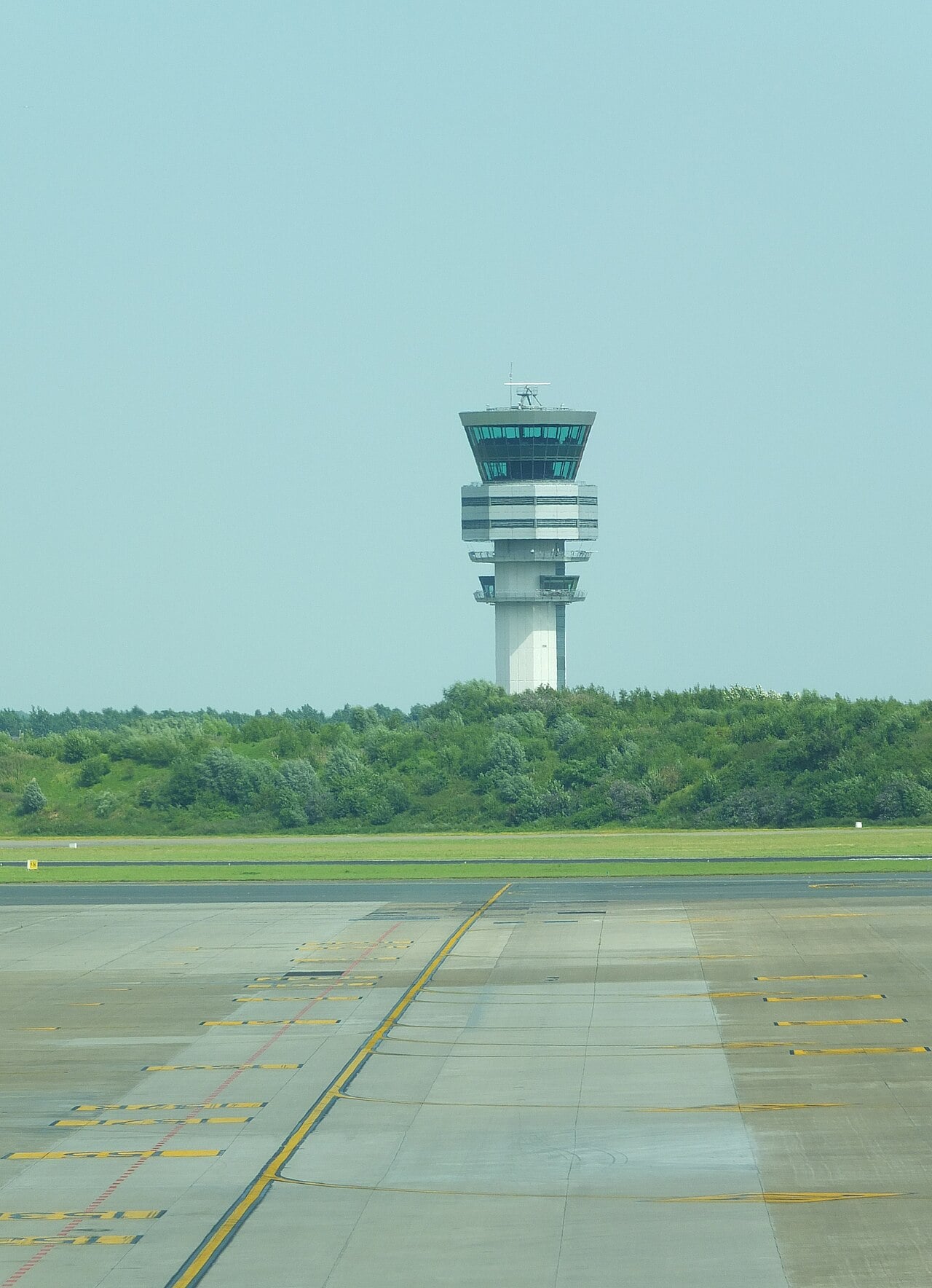
Skeyes is not only Brussels. The company works at six Belgian airports: Brussels, Antwerp, Charleroi, Kortrijk, Liège and Ostend. Its CANAC 2 centre manages the airspace over Belgium and part of Luxembourg up to 7,500 metres, which is roughly flight level 245. It employed 1,006 people in 2025 and handled 1,035,084 flights, better than 3,000 aircraft on an average day.
Brussels South Charleroi Airport had intended to operate normally on Monday and only found out otherwise with everyone else. Its reaction, reported by RTBF and AFP, was unusually sharp for an airport press line: without air traffic control, no flights can take off or land, the decision was taken at the last minute, and the consequences are disastrous. It has asked the authorities to put together a coordinated plan to keep Belgian airports working through actions like this one. Nobody has published a Charleroi movement count for Monday, and passengers there are being told not to travel to the airport without confirmation from their airline.
Liège matters too, and in a way the passenger numbers hide. It is one of Europe’s busiest cargo airports, the European hub for several freight operators and the staging point for a good deal of e-commerce traffic. A fourteen-hour hole in Belgian air traffic control on a Monday is not only 59,500 people who do not travel; it is a day of freight connections that do not make their onward flights.
Eleven Strikes in Eleven Months
The airlines’ own federation has started counting out loud. BAR Belgium, which represents around twenty-five carriers including Brussels Airlines and TUI fly Belgium, described Monday as the eleventh strike to hit Belgian airspace in eleven months, and called the pattern excessive, irresponsible and wholly disproportionate. L’Avenir and VRT NWS reach the same number from the other direction: at least the eleventh national action since the De Wever government took office.
The history is not kind reading for anyone trying to run a schedule out of Brussels. In calendar year 2025, strikes cost Brussels Airport 2,395 cancelled flights and more than 330,000 travellers, with air traffic disrupted on seven separate occasions. On 26 November 2025, the third day of a three-day national strike, every departure and more than half of all arrivals went; Charleroi cancelled everything. On 12 March 2026, Zaventem operated no departures at all.
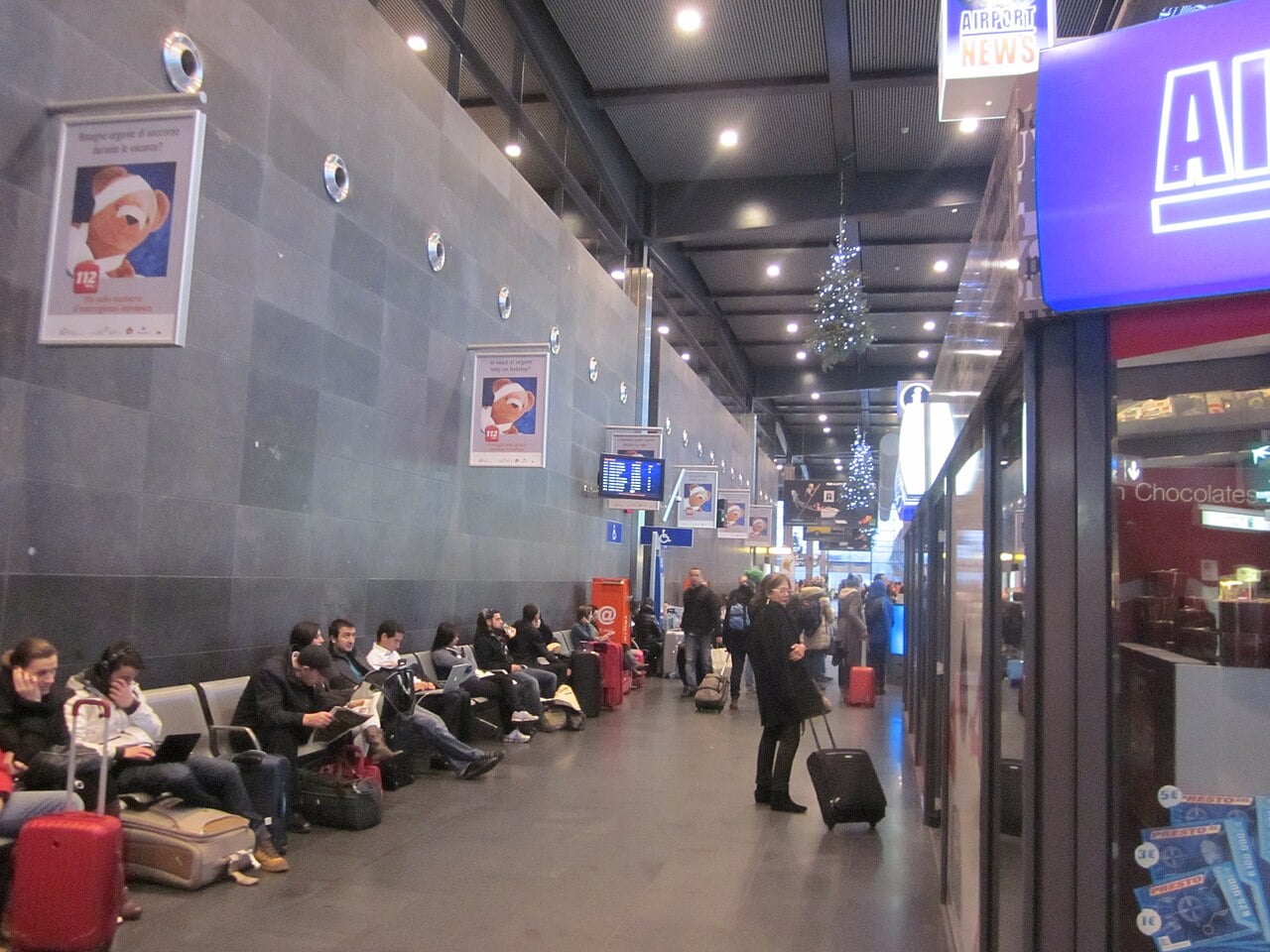
The footage above is from the November 2025 action, and the scenes in it are the ones Belgian travellers can expect again on Monday morning. What makes this one different is the mechanism. On 9 October 2026, about 140 flights were cancelled at Brussels because a single ground handler, Alyzia, was out; flights handled by its competitor went as planned, and Charleroi operated normally. In June, a spontaneous Skeyes walkout over the plan to centralise the Liège and Charleroi towers into a digital facility at Namur took out thirty passenger flights at Charleroi and around forty cargo movements at Liège before an agreement was reached the same evening.
This time it is the air navigation service provider itself, and that is why both airports go to zero rather than one of them limping. There is no competitor to switch to. Skeyes is the only organisation licensed to separate aircraft in Belgian airspace.
What Monday Does Not Do
It is worth being precise about the edges of this, because the headlines are not. Every source confining itself to the facts speaks about the airspace Skeyes controls and about flights to and from Belgian airports. Not one has reported anything about transit traffic, and no Eurocontrol statement, network advisory or reroute notice about 23 November exists in anything publicly reachable.
The geometry is at least clear. Skeyes works up to about 7,500 metres. Above that, the upper airspace over Belgium, the Netherlands, Luxembourg and north-west Germany is handled from Maastricht by Eurocontrol, not from Brussels, and Skeyes is a member of the FABEC functional airspace block alongside its neighbours. A high-level flight from London to Munich and a flight landing at Zaventem are not in the same hands. Whether that holds operationally on Monday is a question nobody has answered publicly, so we are not going to answer it for them.
What is certain is the ground picture. The demonstration gathers at Brussels-North from 10:00 and marches to Brussels-South along the inner ring; Brussels police expect road and tunnel closures from 09:00 to 15:00. Public transport will be heavily disrupted. The railways, unusually for a Belgian national action, were expected to run close to normal, because no rail strike notice was filed. The one way out of Belgium on Monday may well be the train.
Behind it sits a budget negotiation that has not closed. Prime Minister Bart De Wever’s Arizona coalition is trying to find roughly ten billion euros of savings; the King granted him an extra week to reach a deal on 16 November, the European Commission sounded an alert over Belgium’s deficit and debt on 17 November, and the talks were still going on 19 November. The unions — ACV/CSC, ABVV/FGTB and Synova — are marching into the middle of that, and the pensions, the indexation mechanism and the annualisation of working time are the files they name. The airports are the collateral, and everybody involved knows it.
Sources: Brussels Airport passenger information; Belga News Agency; RTBF; VRT NWS; L’Avenir; Brussels Times; Agence France-Presse; Anadolu; Lufthansa Group travel-trade notice; Skeyes corporate key figures and annual report; FGTB mobilisation page; aeroTELEGRAPH.

0 Comments