
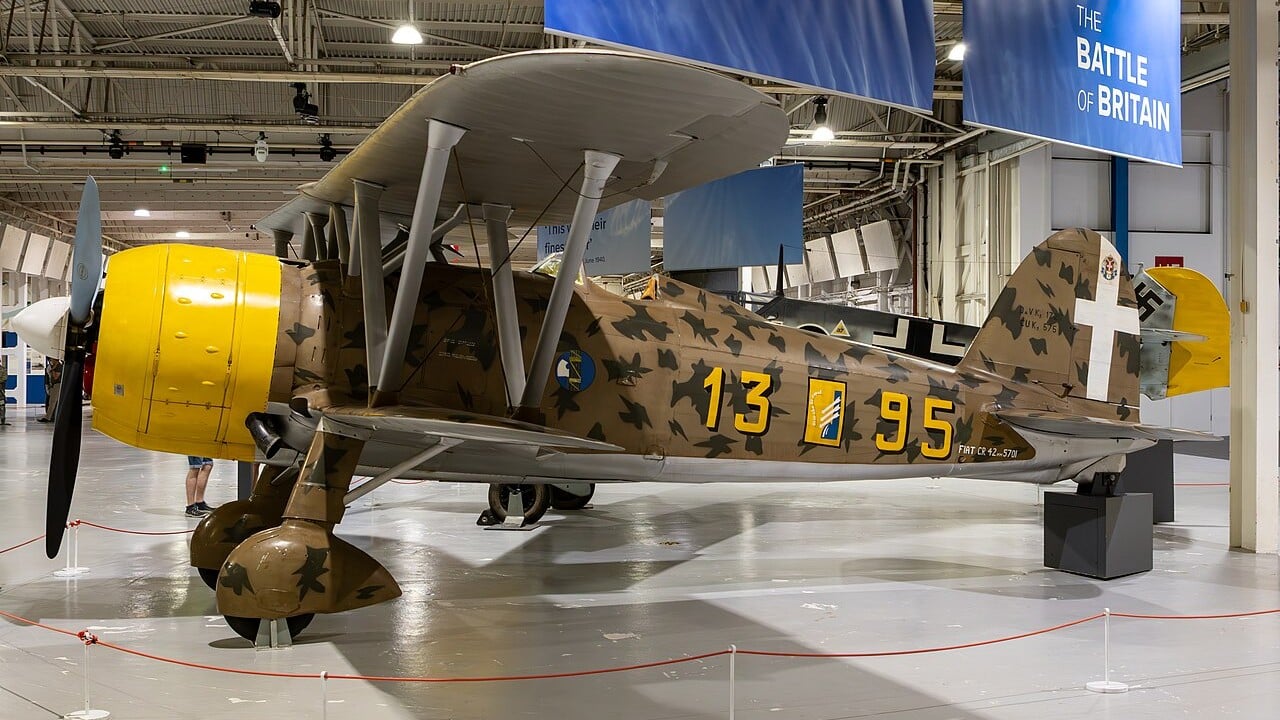
Around noon on 11 November 1940, Sergente Pilota Pietro Salvadori climbed out over the Belgian coast in an open-cockpit biplane. He was 23, flying with the Italian air corps sent to help the Luftwaffe against Britain, and his formation was heading for Harwich. Before the fighting began, an oil pipe in his engine broke. Salvadori fell behind, his engine overheating, and pressed on anyway.
He ended up putting his fighter down on the shingle beach at Orford Ness in Suffolk, where it gently nosed over. According to the RAF Museum, Salvadori was rather proud of the landing. His aircraft, a Fiat CR.42 Falco, survives to this day in the RAF Museum in London, the souvenir of one of the strangest chapters of the Battle of Britain.
Informazioni rapide
- Tipo: Single-seat biplane fighter, Fiat
- Developed from: Fiat CR.32
- Motore: Fiat A.74 supercharged radial
- Armamento: Typically two 12.7 mm Breda-SAFAT machine guns
- Velocità massima: Around 430 km/h
- Produzione: Around 1,800 (most likely estimate)
- Operatori: Italy, Belgium, Hungary, Sweden (as J 11), Germany
- Survivor in UK: MM5701, landed at Orford Ness on 11 November 1940, now at the RAF Museum London
The last of the biplane fighters
IL Fiat CR.42 Falco (Falcon) was a single-seat fighter developed from Fiat’s successful CR.32, the biplane that had done well for Italy in the Spanish Civil War. Fiat gave the new design a more powerful supercharged Fiat A.74 radial engine, a cleaner shape and a very strong structure built around a welded steel-tube fuselage.
The rest of the design was a careful blend of old and new. The engine sat under a NACA cowling with adjustable cooling flaps, and the forward fuselage was metal-skinned while the rear was covered in fabric. Only the upper wing carried ailerons. In its official evaluation the CR.42 beat a rival biplane, the Caproni Ca.165, which was faster but less manoeuvrable, a choice that said a lot about Italian priorities.
Its great quality was agility. With a very low wing loading, the CR.42 could out-turn almost anything in the sky, and the Regia Aeronautica, which prized manoeuvrability, liked it a great deal. The Falco entered service in 1939, just as monoplanes such as the Spitfire and the Bf 109 were making the biplane obsolete.
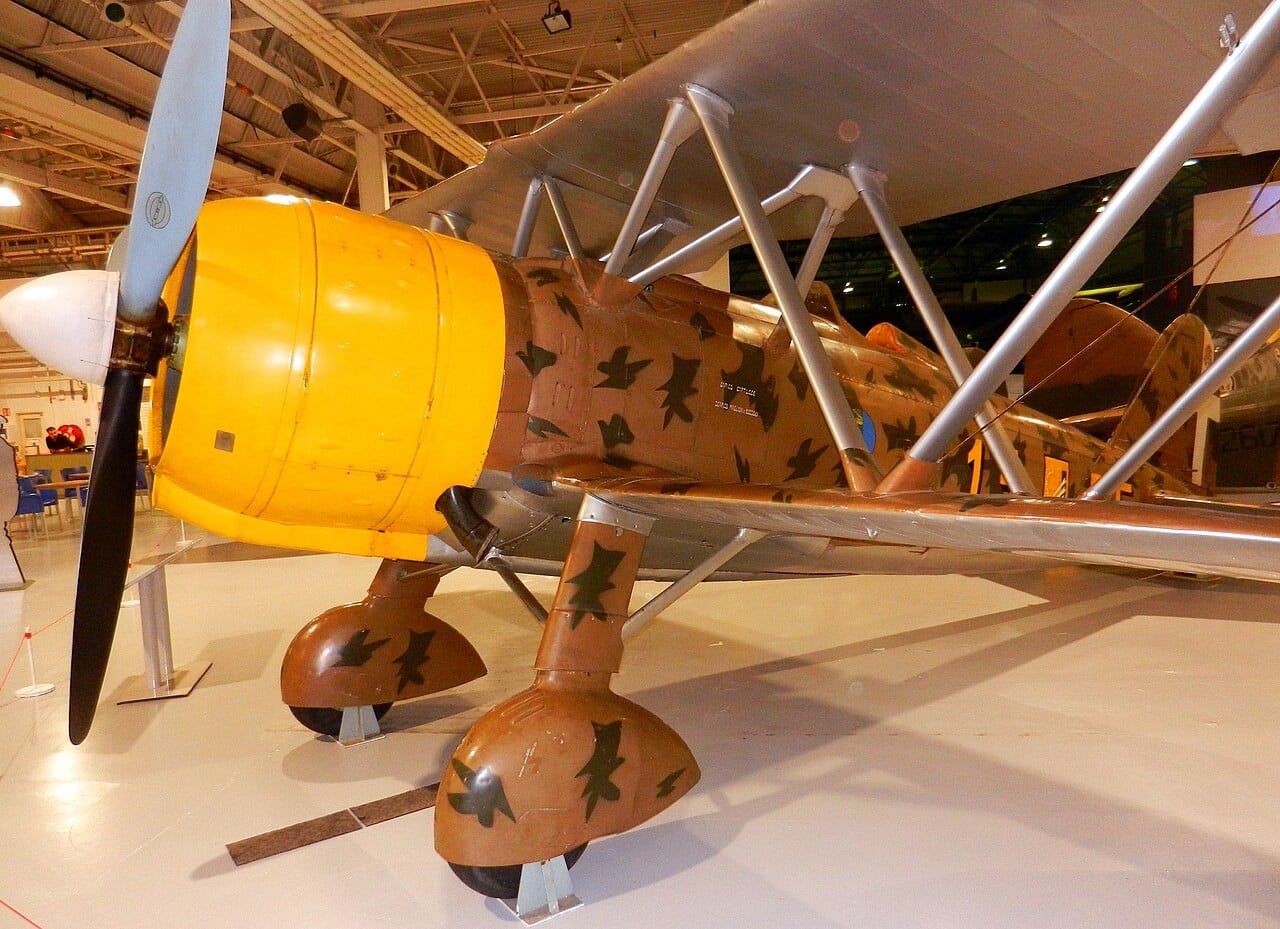
Italy built it anyway, and in large numbers. The RAF Museum describes the CR.42 as the last biplane fighter in production. Historians are not certain of the exact total, but the most likely estimate is around 1,800, which made it one of the most numerous Italian aircraft of the war. Typical armament was a pair of 12.7 mm Breda-SAFAT machine guns firing through the propeller, and top speed was around 430 km/h.
Aircraft Files tells the story of the Fiat CR.42 Falco, the last of the frontline biplane fighters.
A biplane in the Battle of Britain
In the autumn of 1940, Mussolini sent the Corpo Aereo Italiano, an air corps of some 200 aircraft, to bases in Belgium at Melsbroek, Chièvres, Maldegem and Ursel. According to the RAF Museum, the Luftwaffe was less than enthusiastic about its new partners. The CR.42s of 18° Gruppo flew up from northern Italy and, held up by bad weather, reached Ursel on 19 October.
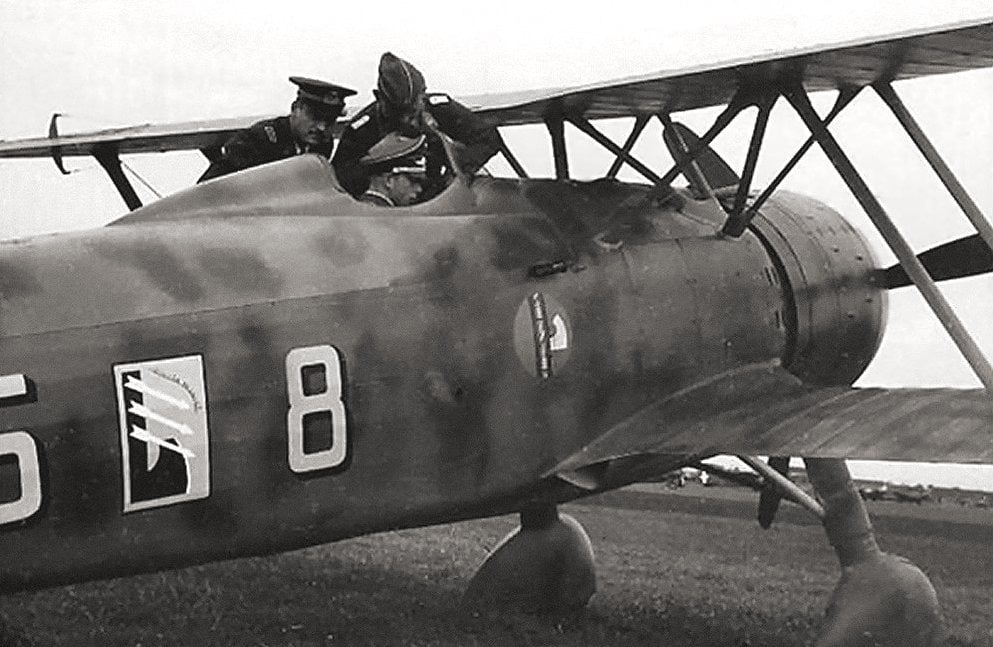
The problems were obvious from the start. The Falchi had open cockpits, many lacked radios, and with their limited fuel they could stay over England for only about ten minutes. The air corps began operations with a night raid on Harwich on 24 October. The Italian press reported it in glowing terms.
The biggest Italian operation came on 11 November 1940, when ten Fiat BR.20 bombers and some 40 CR.42s set out for Harwich. RAF Hurricanes and Spitfires intercepted. According to the RAF Museum, the Italians lost three bombers and three fighters, with three more bombers crashing on the way home, while the RAF lost no aircraft. Salvadori’s fighter was one of the CR.42s that never went home.
Salvadori himself was taken prisoner. When the British interrogated him, the RAF Museum records, he said he was happy to be out of the war and was unimpressed by his officers, by the Belgian weather, and by the Germans and their food.
The RAF made good use of its prize. The Falco was repaired, given the RAF serial BT474 and flown to Farnborough with a Hurricane escort, since it still wore Italian markings. In 1941 the Air Fighting Development Unit at Duxford flew it in mock dogfights against Hurricanes and in comparative trials against the Spitfire and naval fighters, to work out how best to fight it.
Mark Felton on the Italian air raids on England in 1940 and 1941.
The Italian air corps went home early in 1941. The RAF Museum’s verdict on the whole campaign is blunt: despite numerous claims, it shot down no British aircraft and lost around two dozen of its own.
Malta, the desert and the snow
The Battle of Britain was the CR.42’s least successful theatre. Elsewhere it did far better. Over Malta and North Africa in 1940 it fought Gloster Gladiators E Hawker Hurricanes, and Hurricane pilots quickly found that the nimble Italian biplane could out-turn them in a dogfight. Several RAF pilots learned the hard way not to follow a Falco into a turning fight.
The Falco also flew in the Battle of France, over Greece and Iraq, and later as a night fighter and ground-attack aircraft. Abroad, it served with Belgium, Hungary and Sweden. Sweden took 72 of them between 1940 and 1941 as the J 11, fitted with radios, armour plate behind the pilot and skis for operations from snow-covered fields in the far north.
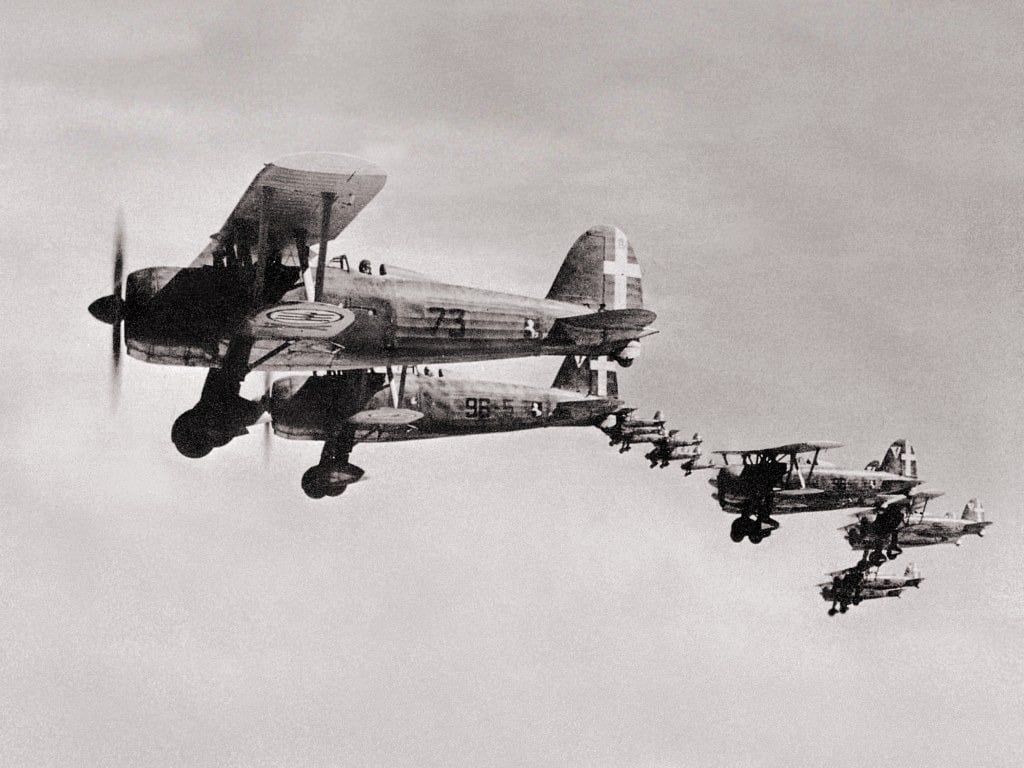
Fiat even tried to squeeze more speed from the airframe by fitting a Daimler-Benz DB 601 inline engine. The resulting CR.42DB reached 518 km/h in 1941 and is often described as the fastest biplane ever flown, but the project was dropped because a biplane offered no advantage over a monoplane.
Wartime footage of the CR.42 Falco in Regia Aeronautica service, colourised by Archives Reloaded.
After the Italian armistice in September 1943, surviving CR.42s were used as trainers, while the Germans seized others for ground-attack work. It was an extraordinary career for an aircraft that was obsolete before it entered service. Salvadori’s Falco at the RAF Museum is a reminder that the Battle of Britain was fought not only by Spitfires and Messerschmitts, but, briefly, by Italian biplanes as well.
Sources: RAF Museum (individual history of CR.42 MM5701; Battle of Britain Beacon), Wikipedia (Fiat CR.42 Falco), Wikimedia Commons


0 Comments