
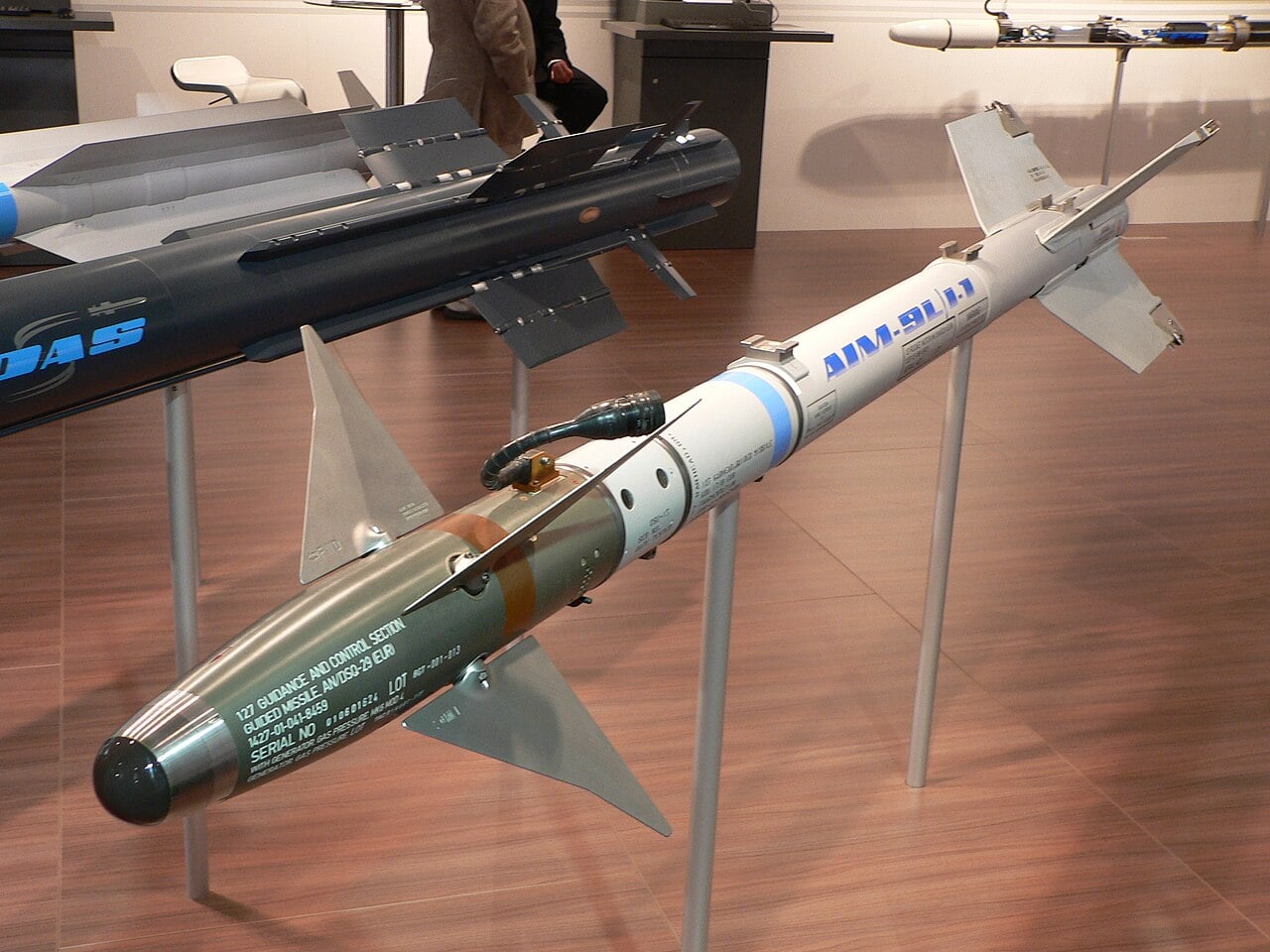
A heat-seeking missile finds its target by looking for infrared energy, the heat radiated by jet engines, exhaust plumes and hot airframes. The problem is that the detector doing the looking is itself warm, and a warm detector produces its own electronic noise, swamping the faint signal from a distant aircraft. The solution, used on most infrared missiles since the 1960s, is to freeze the detector.
Informazioni rapide
- Principio: Infrared detectors become far more sensitive when cooled, especially at longer wavelengths
- Typical method: Joule-Thomson cooling: high-pressure gas expands through a tiny orifice behind the detector
- Typical temperature: Around 77 K, roughly minus 196 °C, for indium antimonide detectors cooled with argon or nitrogen
- AIM-9B: Uncooled lead sulphide seeker; rear-aspect attacks only
- AIM-9D: Nitrogen-cooled lead sulphide seeker (US Navy, 1960s)
- AIM-9E / AIM-9F: Thermoelectric (Peltier) and carbon dioxide cooling respectively
- AIM-9L: Argon-cooled indium antimonide seeker, the first all-aspect Sidewinder, in production from 1978
Why Cold Helps
Every object emits infrared energy according to its temperature. A detector at room temperature generates thermal noise of its own and responds to its own surroundings, so a weak signal from a target miles away gets lost. Cooling cuts that noise dramatically and lets the detector use materials, such as indium antimonide, that respond at longer infrared wavelengths. Those wavelengths include the heat from an aircraft’s hot metal and from the air heated by friction on its skin, not just from the white-hot inside of its tailpipe.
How the Cooling Works
The common method is a Joule-Thomson cooler. Gas from a high-pressure bottle, usually argon or nitrogen, is forced through a tiny hole behind the detector. As it expands, it cools sharply, and with recirculation through a small heat exchanger it chills the detector to about 77 kelvin, roughly minus 196 °C. That is far colder than anywhere on the Earth’s surface. On a fighter, the coolant is supplied before launch, either from a bottle in the launch rail or from one inside the missile, so the seeker is ready when the pilot needs it.
The First Sidewinders Saw Only Tailpipes
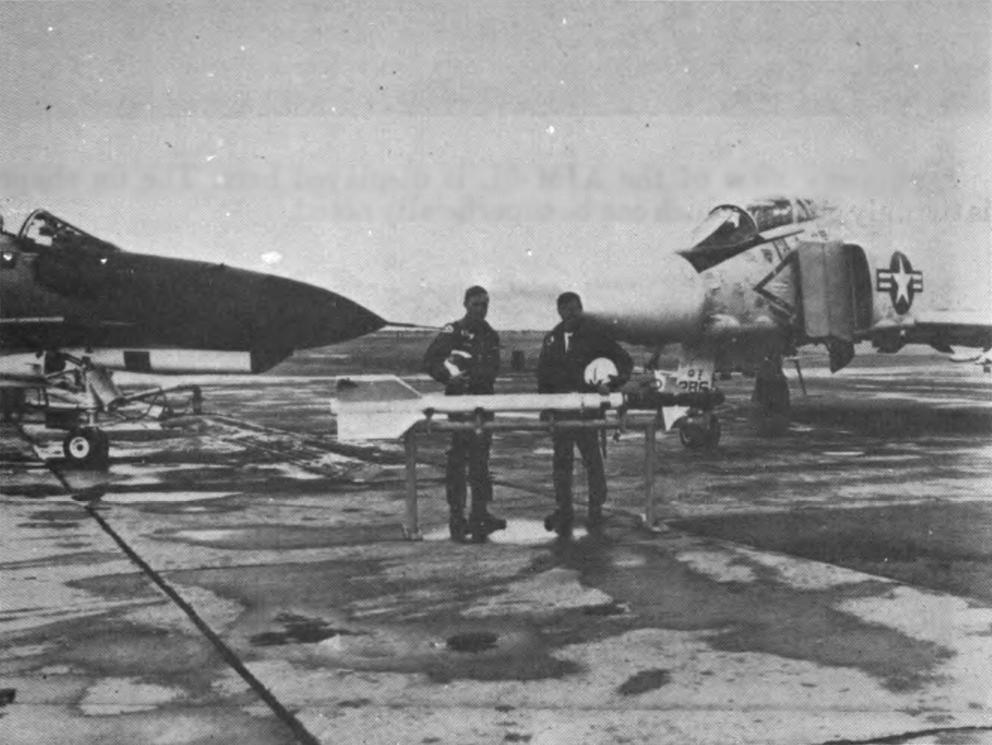
The original AIM-9B, which first scored in combat when Taiwanese F-86s shot down Chinese MiG-15s in September 1958, had an uncooled lead sulphide seeker. It could only see the hottest source available, the jet engine’s tailpipe, so pilots had to get behind their target and keep the sun and the ground out of the seeker’s view. The US Navy’s AIM-9D introduced nitrogen cooling in the 1960s, other versions tried thermoelectric and carbon dioxide cooling, and the argon-cooled indium antimonide seeker of the AIM-9L, in production from 1978, finally let a Sidewinder lock on to a target from the front or the side as well as from behind.
The Growl Is Real
The growl heard in fighter-pilot films is genuine. A Sidewinder’s seeker signal is fed to the pilot’s headset as an audio tone. When the seeker sees nothing it gives a low growl; when it locks on to a heat source the tone rises and becomes a steady, higher-pitched sound. Pilots still use it to judge whether the missile can see the target before they fire. We look at how the newest infrared sensors are used without a missile at all in Infrared Search and Track (IRST): How Fighters Hunt by Heat, and at the radar-guided alternative in How Does a Radar-Guided Missile Work? From Sparrow to AMRAAM.
What the Popular Explainer Gets Right
The usual explanation is accurate: a warm infrared detector mostly sees its own heat, gas from a bottle expands through a tiny hole to cool it to around minus 200 °C, the first Sidewinders had no cooler and could only see a jet’s tailpipe from behind, and the growl is a real sound the pilot hears. One refinement: the cooling is usually to about minus 196 °C, the temperature of liquid nitrogen, and early cooled versions used nitrogen, carbon dioxide or thermoelectric cooling before argon became standard.
Sources: Andreas Parsch, Directory of US Military Rockets and Missiles, Raytheon AAM-N-7/GAR-8/AIM-9 Sidewinder (designation-systems.net); Carlo Kopp, “The Sidewinder Story”, Air Power Australia.



0 Comments