
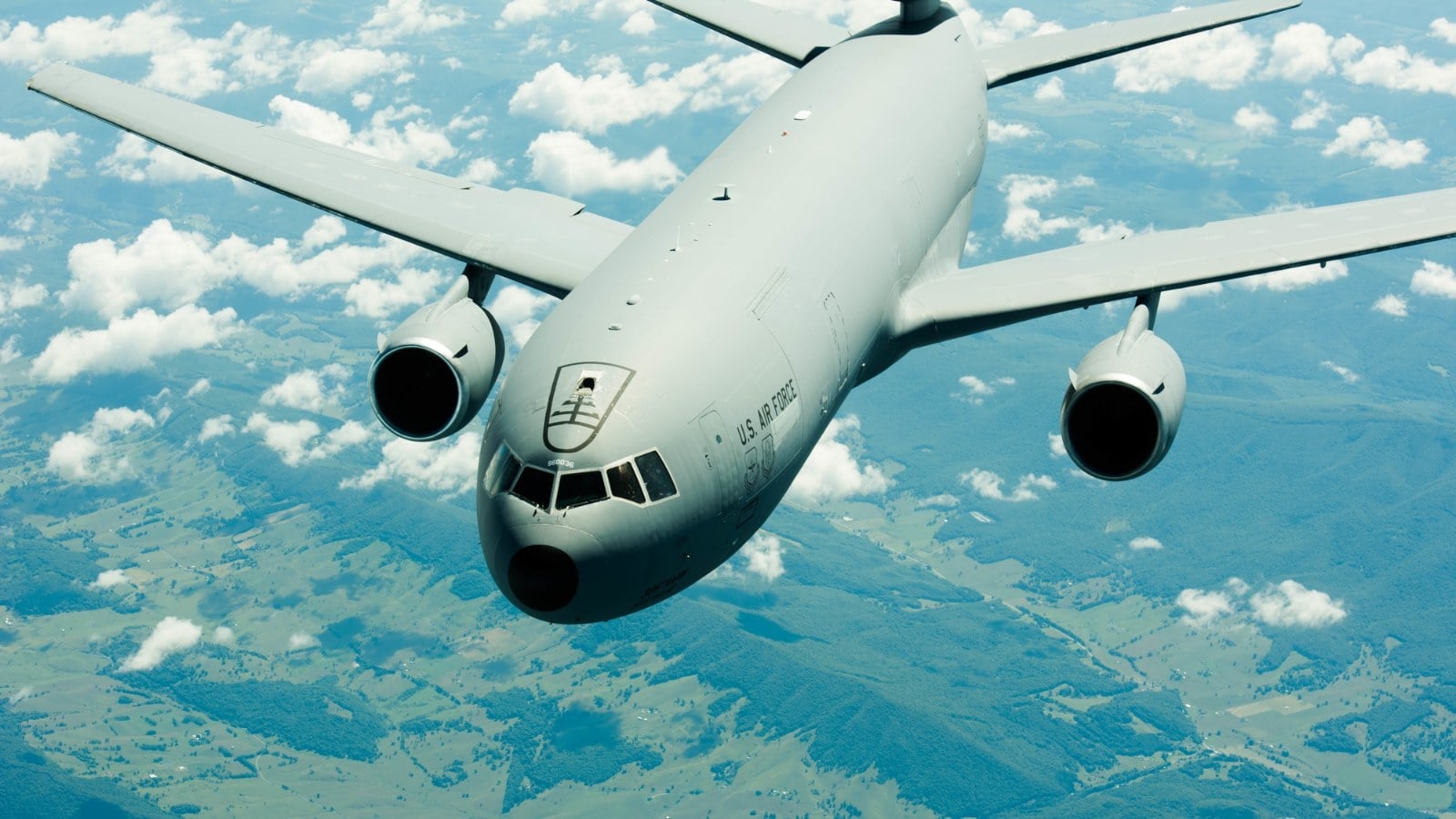
On 20 October 2026, a grey three-engined tanker that had spent years parked in the Arizona desert took off from Davis-Monthan Air Force Base and turned east. On paper it is no longer an Air Force jet. KC-10A Extender 86-0034 is now N82247, and it belongs to a private company.
The aircraft left the 309th Aerospace Maintenance and Regeneration Group – the famous boneyard – bound for San Antonio International Airport, Texas, as TWZ, The Aviationist and spotters on the ground all reported. It is the first KC-10 Extender for Omega Air Refueling, the contractor that already flies two former Royal Netherlands Air Force KDC-10 tankers.
The paperwork backs it up. The FAA aircraft registry lists Omega Air Inc of Selma, Texas, just outside San Antonio, as the owner of N82247, recorded as a McDonnell Douglas DC-10-30F, with a certificate issued on 6 October 2026. Two years after the Air Force said goodbye to its Extenders, one of them has a new job.
Informazioni rapide
Aeromobili: KC-10A Extender, former USAF serial 86-0034
New registration: N82247 (FAA lists it as a DC-10-30F)
Registered owner: Omega Air Inc, Selma, Texas
Partito: Davis-Monthan AFB, Arizona, 20 October 2026
Destinazione: San Antonio International Airport, Texas
USAF KC-10 fleet: 60 delivered; last one retired 26 September 2024
Omega tankers before N82247: Two ex-Dutch KDC-10s, one KDC-10-40, two KC-707s
Out of the boneyard
Departures from Davis-Monthan rarely go unnoticed, and this one was flagged within hours. The spotter account KIWA Spotter summed it up in a single line on X.
The jet flew without a refuelling boom, and that was expected. When the General Services Administration put ten retired KC-10 Extender tankers up for auction between 15 April and 6 May 2025, the aircraft were offered in non-flyable condition and without their refuelling booms.
According to TWZ, each of the auctioned jets was also missing one wing-mounted engine, and an Air Force spokesperson said that the winning bidder would need to work with Boeing to obtain a fly-away kit. Turning a stored hulk back into an airworthy aircraft is not a quick job, which makes this ferry flight a milestone in its own right.
Who bought the ten? The Aviationist cites an Aviation Week report that Omega bid for all available airframes, though that has not been officially confirmed, and TWZ describes N82247 as one of a set of KC-10As sold to the company. Omega has not publicly detailed its plans for the jets.
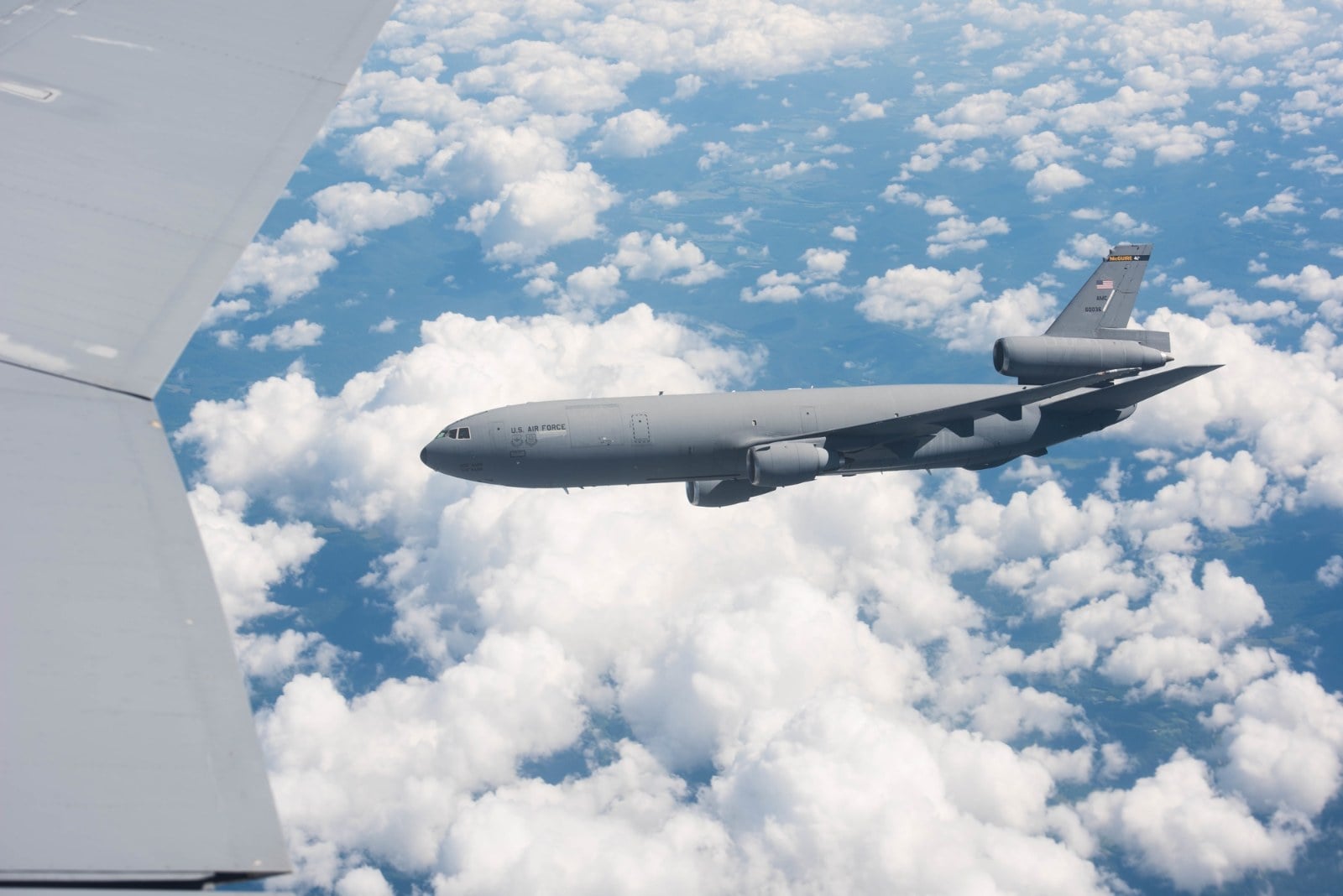
The tanker the Air Force let go
The KC-10 Extender is, at heart, a militarised DC-10 airliner. It first flew on 12 July 1980, and the Air Force took delivery of 60, the first of them in 1981. Three General Electric engines, a huge fuel load and a rare party trick made it valuable: both a centreline boom and a hose-and-drogue system, so it could refuel Air Force and Navy-style receivers on the same sortie.
One KC-10 was destroyed in a ground fire at Barksdale in 1987. The other 59 served until the Air Force began retiring them in favour of the KC-46A Pegasus. The first, 86-0036, flew to the boneyard in July 2020, and the last left Travis Air Force Base, California, for Davis-Monthan on 26 September 2024.
Even then, the Extender kept attracting interest. This month the Air Force was reported to be seeking industry interest in reactivating up to four stored KC-10s for an unnamed North African partner through foreign military sales – a sign that the jets in the desert are more than scrap.
The U.S. Air Force KC-10 says goodbye to the UK before retirement (BFBS Forces News)
Why a contractor wants a nearly 40-year-old tanker
Omega has been selling fuel by the hour to the US military for more than two decades, mostly to the Navy and Marine Corps. For years its tankers carried only hose-and-drogue gear, which left the Air Force’s boom-refuelled fleet out of reach. That changed in 2019, when Omega bought two Dutch KDC-10s; the first, T-264, left Eindhoven Air Base on 4 November 2019.
The boom has opened doors. In March 2024 an Omega KDC-10 refuelled a B-52 e un MC-130J over the Pacific, the first time a commercial tanker had done so for either type. In April 2025 one refuelled a C-17 Globemaster III over California.
Contract tankers do not fly into combat. Their value is in training, test and ferry missions, freeing up the Air Force’s own tankers for operational work. A KC-10 is a natural fit for a company that already knows the DC-10 airframe intimately, and both TWZ and The Aviationist note that a boom could be fitted again if Omega’s contracts call for it.
Every KC-10 Extender that left the Air Force in 2024 was expected to become a museum piece or a parts donor. On 20 October 2026, one of them simply changed employers.
Sources: TWZ, The Aviationist, FAA Aircraft Registry, U.S. Air Force, DVIDS, Air Force Global Strike Command, Flying Magazine, KIWA Spotter, BFBS Forces News
0 Comments