

Every drone shot down over Europe in the past year has been destroyed by something that cost more than the drone did. That is the arithmetic problem sitting underneath the whole counter-drone debate, and it is the reason a Dutch state secretary has just signed a letter of intent with an Australian laser company.
Derk Boswijk, the Netherlands State Secretary for Defence, signed this week with Electro Optic Systems. The subject is EOS’s Apollo High Energy Laser Weapon, and the ambition goes well beyond buying a few. The Netherlands wants the production line.
Informazioni rapide
- Who signed: Derk Boswijk, Netherlands State Secretary for Defence, with Electro Optic Systems of Australia
- Quando: Announced 24 to 25 September 2026
- Che cosa: A letter of intent, not a contract
- The system: EOS Apollo High Energy Laser Weapon, a counter-drone directed energy weapon
- Reported power: A 100 kW beam, with the wider Apollo family described elsewhere as spanning roughly 50 to 150 kW
- Reported rate: 20 to 50 drones per minute, at a cost per shot reported as under one dollar
- The industrial part: A possible EOS production facility in the Netherlands, supported by a Dutch-led European supply chain
- Quantities and price: Not disclosed. A figure of 71.4 million euros appears in reporting, but sources differ on whether it refers to this agreement or an earlier order
Why a laser, and why now
A one-way attack drone of the Shahed class costs somewhere in the tens of thousands of dollars. The surface-to-air missile that reliably kills it costs hundreds of thousands, sometimes more. An opponent who can build drones faster than you can build interceptors wins that exchange even when every single engagement succeeds.
A laser inverts it. The weapon consumes electricity rather than ordnance, so the marginal cost of an engagement collapses towards the price of running a generator. It also cannot run out of ammunition in the middle of a raid, which matters more than the headline cost, because the failure mode that actually loses a defended site is a magazine going empty during a saturation attack.

Note the word complement. EOS is not claiming a laser replaces missiles, and it should not. Lasers are line-of-sight weapons that lose effectiveness in cloud, fog, rain and dust, need dwell time on target rather than delivering instantaneous kinetic damage, and are limited in range by the atmosphere itself. Against a ballistic missile they are of little use. Against a swarm of small propeller-driven aircraft in clear weather, they are close to ideal.
The part that is actually unusual
Buying an Australian weapon is not remarkable. Agreeing to build it in Europe is.
Under the intended arrangements, EOS would carry out production in the Netherlands, supported by a Dutch-led European supply chain, and the Dutch Ministry of Defence intends to purchase a number of systems once the technology is matured. That turns a procurement into an industrial policy: the Netherlands is positioning itself as the European manufacturing base for a class of weapon that every NATO member is currently shopping for.
It is worth being clear about what has and has not happened. A letter of intent is a statement of direction. There is no contract, no quantity, no delivery date and no published price. The reported figures on power and engagement rate come from press reporting rather than from a published specification, and they do not fully agree with each other.
What is real is the direction of travel. A year of drone incursions over European airports and military sites has moved directed energy from a trade-show curiosity to something defence ministries are signing paperwork about.
Background on the Australian laser programme the Netherlands has now attached itself to.
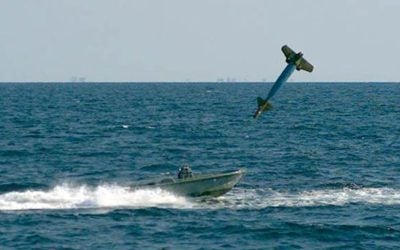
Sources: Electro Optic Systems; NL Times; Defence Industry Europe; defence-blog; MILMAG. Note on imagery: EOS has not released freely licensed photographs of Apollo, so the laser pictured above is a different system and is captioned as such.

0 Comments