
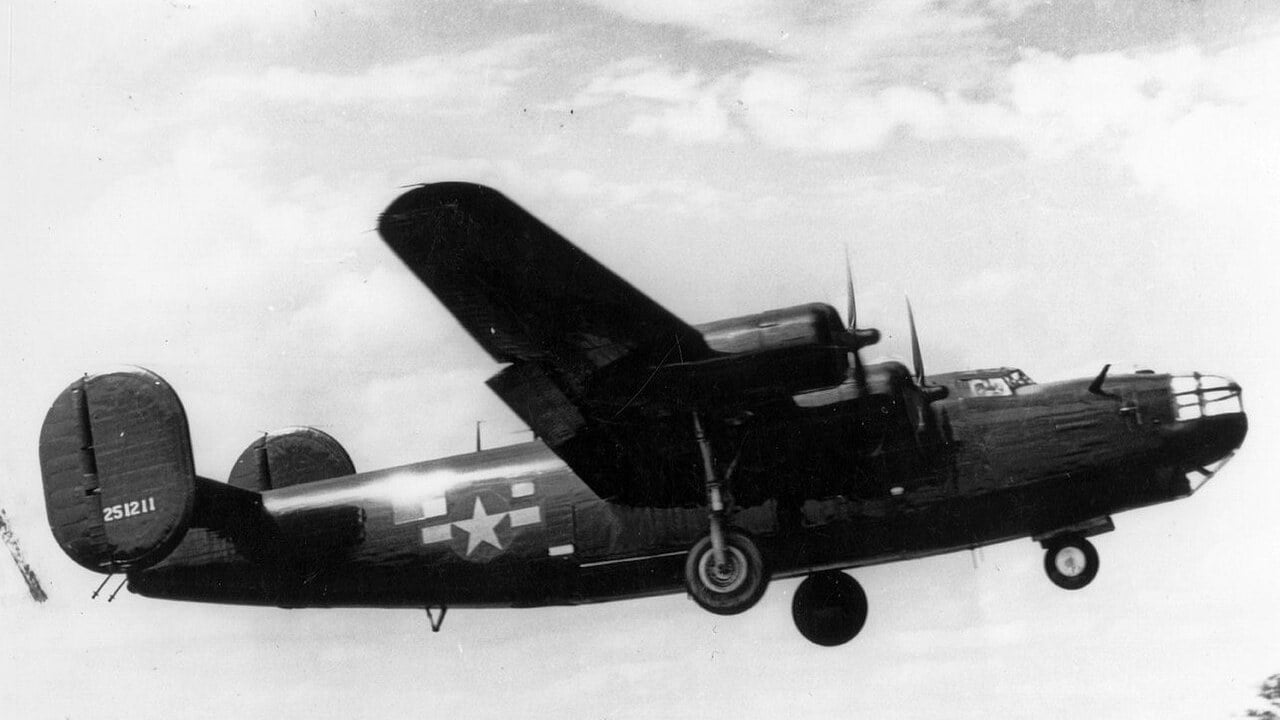
Four hundred feet above a moonlit field in occupied France, a bomber painted glossy black slows to just above stalling speed. Below, three flashlights in a row and a fourth at a right angle mark the spot. In the belly, a man in a padded jump suit sits on the edge of a round hole in the floor. When the light goes green, he is gone.
This was Operation Carpetbagger, the US Army Air Forces’ secret air war in Europe. From January 1944 to the spring of 1945, specially modified B-24 Liberators flew alone, at night and at low level, dropping weapons, radios and agents to resistance fighters from France to Norway.
Most of the people on their own base did not know what they did. Many of the crews only knew their half of the story. And the unit that did it became the ancestor of today’s US Air Force special operations.
Informazioni rapide
- Operazione: Carpetbagger: USAAF special operations for the OSS, working with Britain’s SOE
- Unità: 801st Bombardment Group (Provisional), redesignated 492nd Bombardment Group in August 1944
- Base: Harrington (Station 179), Northamptonshire, from spring 1944; first missions from Tempsford
- Aeromobili: Black-painted B-24 Liberators; also C-47s, A-26 Invaders and Mosquitos
- First mission: Night of 4–5 January 1944
- Consegnato: 1,860 sorties; 20,495 containers, 11,174 packages, more than 1,000 parachutists (January 1944–May 1945)
- Perdite: 25 B-24s lost, 8 damaged beyond repair; initially 208 men killed or missing
- Eredità: Forerunner of US Air Force special operations
From U-boat hunters to spy taxis
The Carpetbaggers began as submarine hunters. In 1943, the B-24s of the 22nd and 4th Antisubmarine Squadrons were flying patrols over the Bay of Biscay when the US Navy took over the anti-submarine mission. The Army Air Forces crews needed a new job.
In October 1943, at Bovingdon, Lieutenant Colonel Clifford Heflin and Major Robert Fish were told what it would be. Their crews would fly agents and supplies to resistance groups for the Office of Strategic Services, the American intelligence agency that preceded the CIA, working alongside Britain’s Special Operations Executive.
The RAF had been doing this since 1942 from Tempsford, where its special duties squadrons flew Halifaxes E Lysanders into occupied Europe. American crews trained with them, flying as co-pilots on British missions. On the night of 4–5 January 1944, the first American Carpetbagger missions took off from Tempsford.
Black Liberators
The B-24 was ideal for the job: long range, a deep fuselage and a big bomb bay. It still needed a lot of surgery. The ball turret came out, leaving a 44-inch opening in the floor, smoothly lined and covered by a hinged plywood door. Crews called it the “Joe hole,” after the “Joes” who jumped through it.
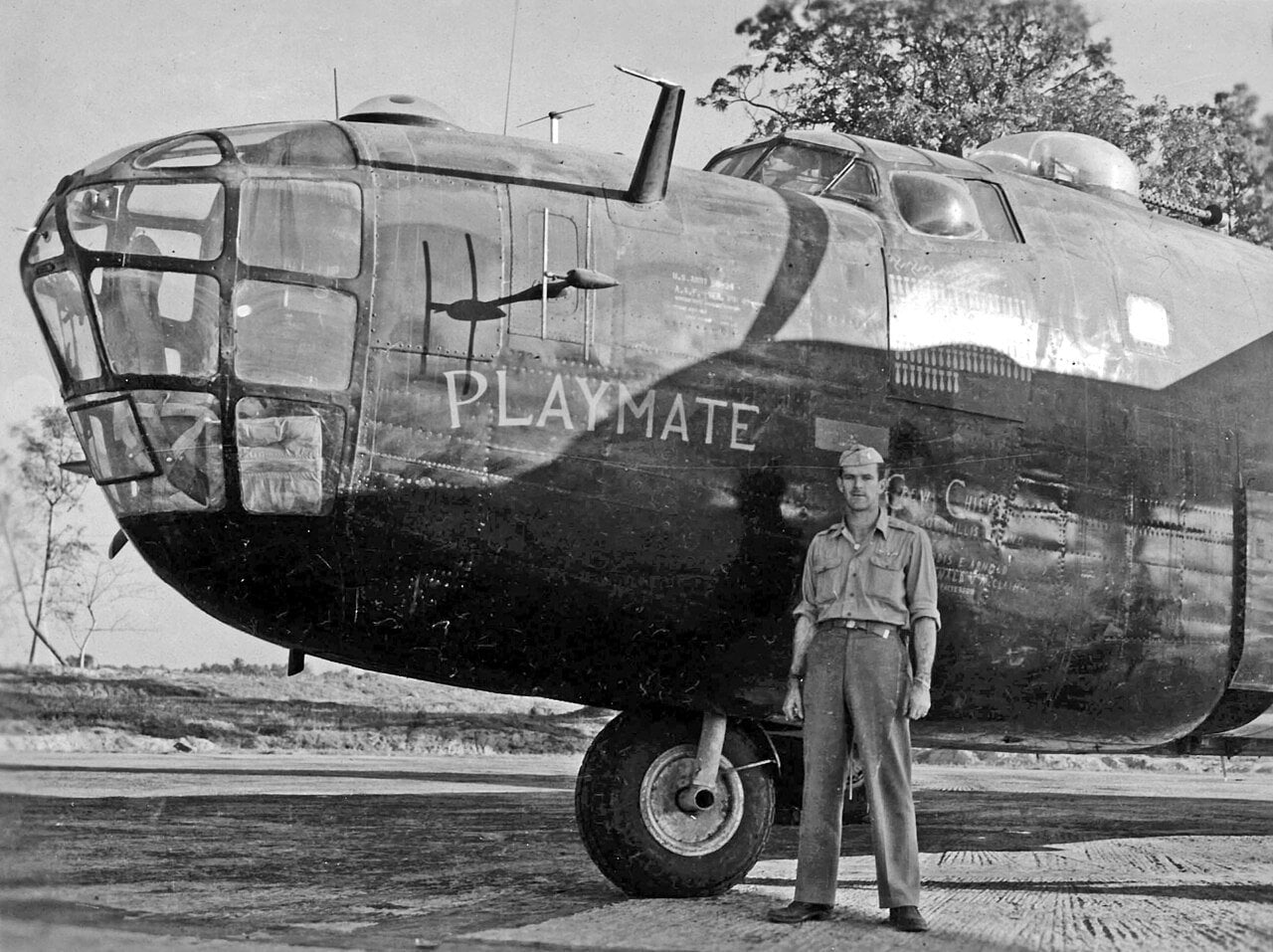
Bomb shackles were replaced with British release units to carry the cylindrical parachute containers. Waist guns and high-altitude oxygen gear were removed, flash suppressors and exhaust dampers fitted, and blister windows added so the pilot could see the ground. The aircraft were painted glossy black.
For navigation, the bombers carried Gee, and a Rebecca receiver that homed on a Eureka beacon carried by the reception party. Near the drop zone, an S-Phone gave crews a two-way radio link with the people on the ground, very hard for the Germans to intercept.
Wartime film from 1944 showing the stages of preparing a Carpetbagger supply mission, from the archive of l’Atelier des Archives.
Station 179
In spring 1944 the group settled at Harrington in rural Northamptonshire, known as Station 179, a quieter and more secure base than its earlier homes. It grew from two squadrons to four, as the 788th and 850th Bomb Squadrons joined ahead of D-Day, under the name 801st Bombardment Group (Provisional).
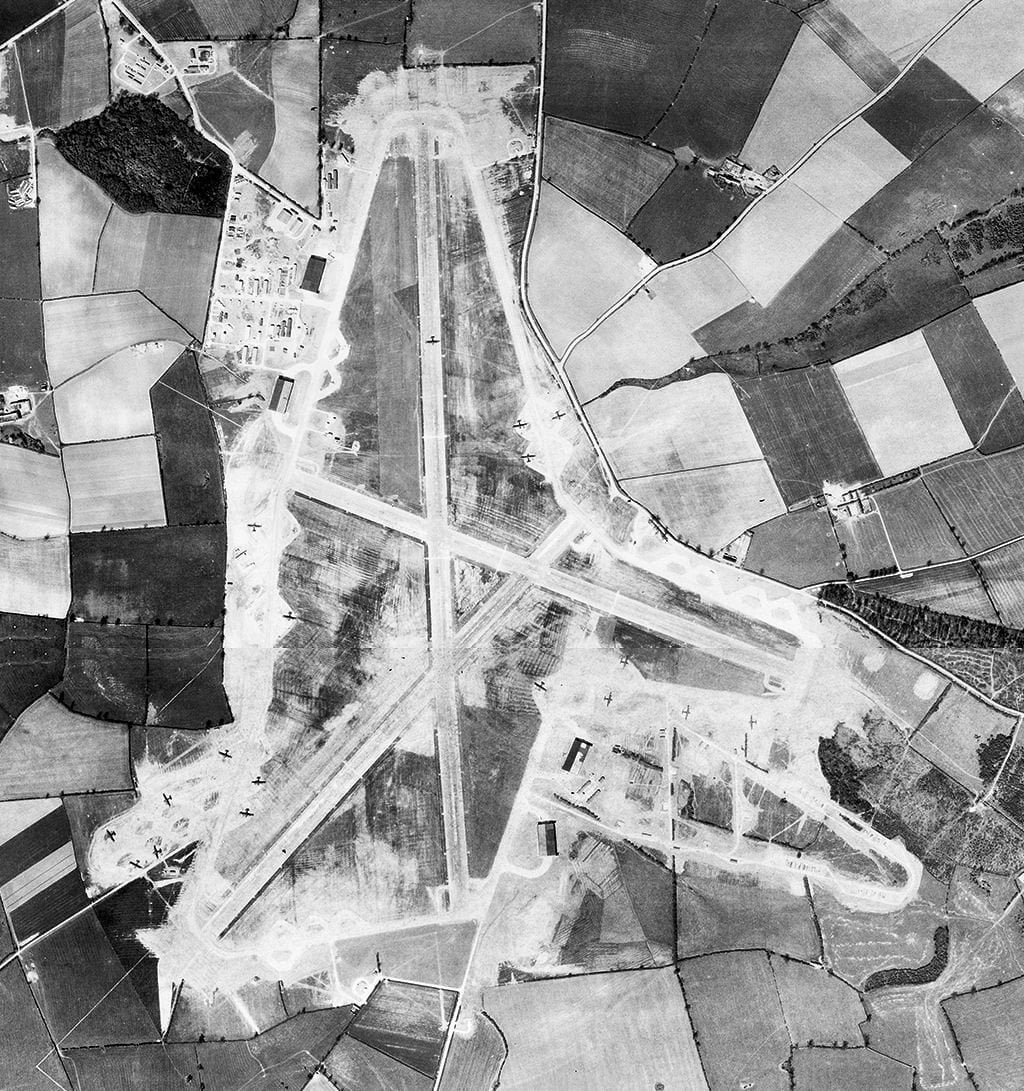
Secrecy went far beyond a normal bomber base. Ground crews were told the black aircraft were for night pathfinding. Packers did not know where the loads were going. On the aircraft, often only the pilot and navigator knew the destination, and agents boarded at the last minute.
Missions were flown in the moon periods, each aircraft on its own route. Crews crossed the coast high enough to stay clear of light flak, then dropped to a few hundred feet to read the landscape by moonlight: rivers, lakes, railway lines and towns. Staying low also made it harder for night fighters to attack from below.
Over the drop zone, the B-24 slowed to about 120 miles per hour at around 400 feet. Agents went first, supplies on a second pass. Afterwards pilots often flew on deeper into enemy territory, so that an observer could not identify the field from where the bomber turned. Containers held rifles, explosives, ammunition and even bicycles; packages carried food, clothing, radio sets and carrier pigeons.
The summer of 1944
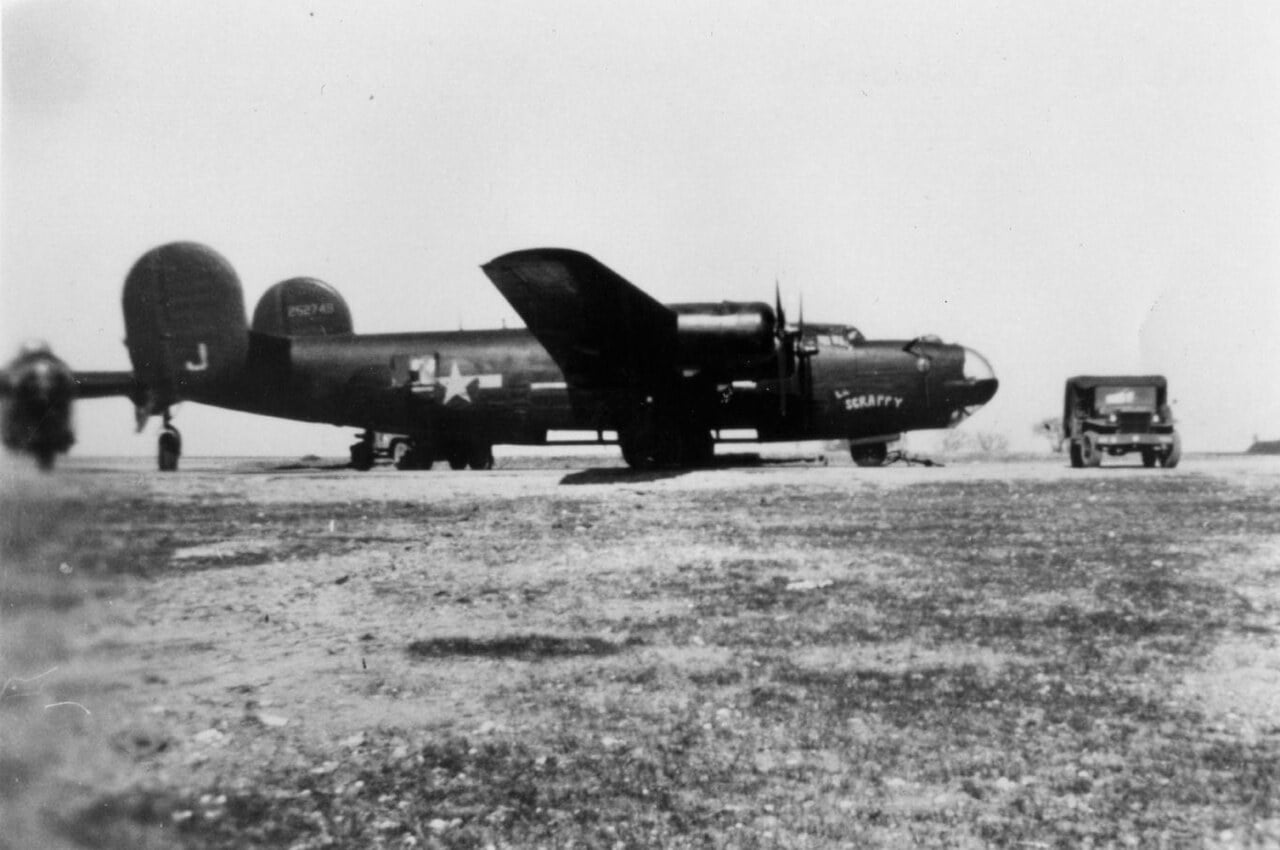
The invasion of France brought the peak. In July 1944 alone, the Carpetbaggers dropped at least 4,680 containers, 2,909 packages and 62 parachutists, according to the National Museum of the US Air Force. In August the group took over the designation of the disbanded 492nd Bombardment Group.
It was dangerous work. On the night of 27–28 April 1944, the B-24 Worry Bird hit a hill at its drop zone near Saint-Cyr-de-Valorges in the Loire and broke apart. Five of its crew died. Two of the three survivors were taken in by the Maquis, lived with them for three months, and were finally picked up by an RAF Hudson.
Once most of France was liberated in September 1944, the main French drops ended. The Carpetbaggers stripped their B-24s for a different job and hauled more than 800,000 gallons of fuel to the advancing armies in little more than a week. Some crews later flew night bombing missions, while others brought home evaders who had escaped across occupied territory or walked out of Switzerland.
Air Force Special Operations Command: Carpetbagger veteran Bill Becker recalls night missions in black B-24s to drop OSS agents.
Into Germany
The secret war resumed in the spring of 1945, now over the Netherlands, Denmark, Norway and Germany itself. Over heavily defended Germany, the group also used fast A-26 Invaders, as well as C-47s E Mosquitos for special tasks. Operations at Harrington wound down at the end of April 1945.
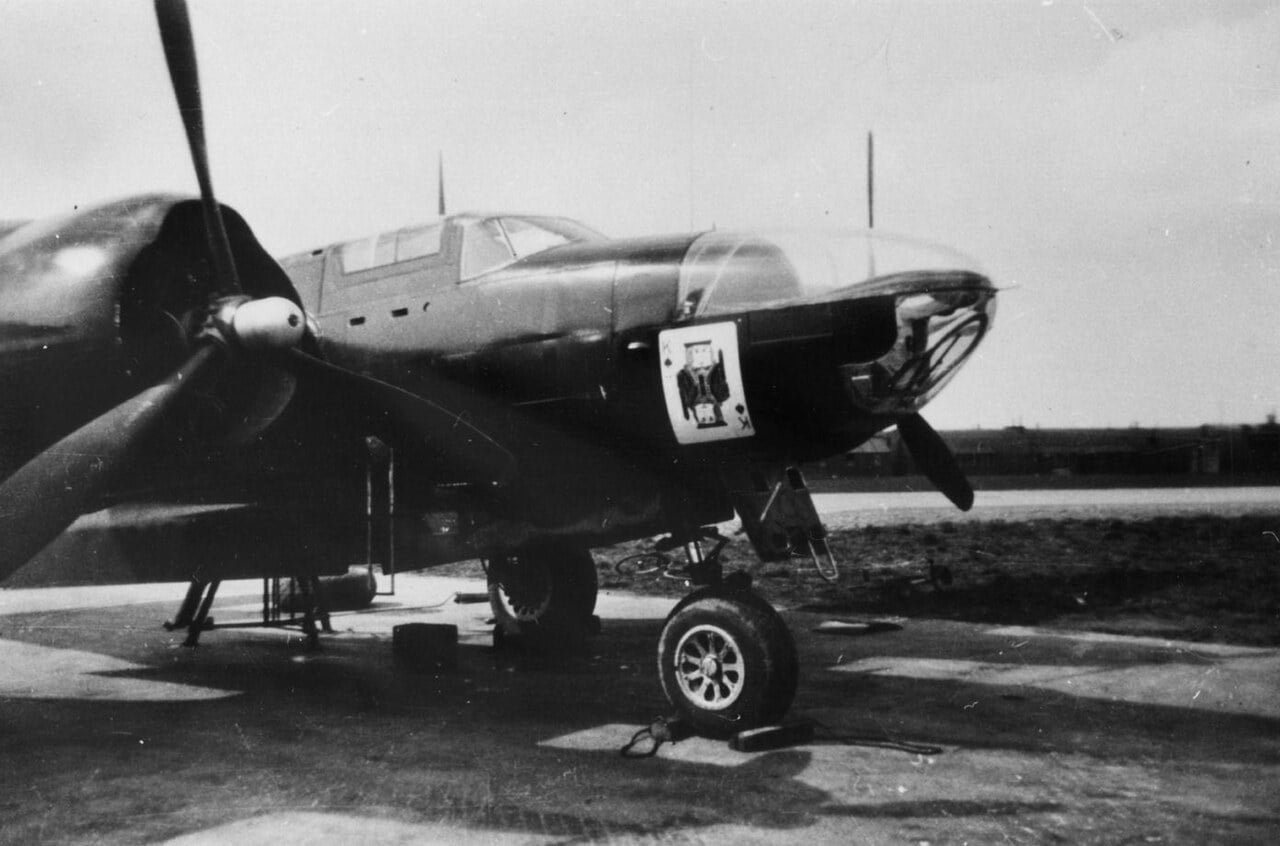
The final tally, from January 1944 to May 1945, was 1,860 sorties, 20,495 containers, 11,174 packages and more than 1,000 parachutists, some 4,500 tons of supplies in all. It cost 25 Liberators shot down, eight more damaged beyond repair, and an initial count of 208 men killed or missing. Many of the missing later came home with the help of the resistance.
Pioneer PBS: veteran Robert Holmstrom on his secret OSS Carpetbagger missions over occupied Europe.
The 801st/492nd is generally recognised as the forerunner of today’s Air Force Special Operations Command, and its number lives on in the 492nd Special Operations Wing. The black Liberators never bombed a city or fought a famous battle. They did something quieter: they put the tools of resistance into the hands of people fighting from inside the occupied countries.
Sources: Wikipedia (Operation Carpetbagger), National Museum of the US Air Force (Operation Carpetbagger fact sheet), Harrington Aviation Museums, HistoryNet / Storia dell'aviazione (Don Hollway, 2019), Concord Free Public Library oral history collection
0 Comments