
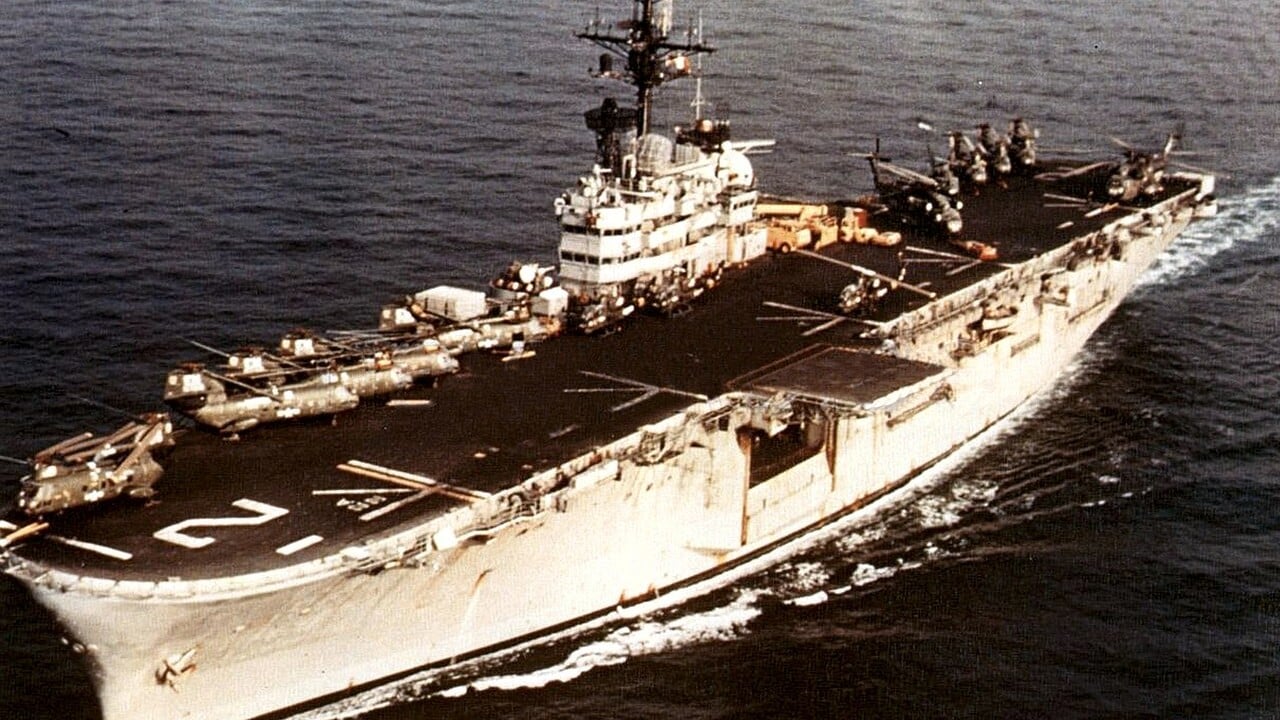
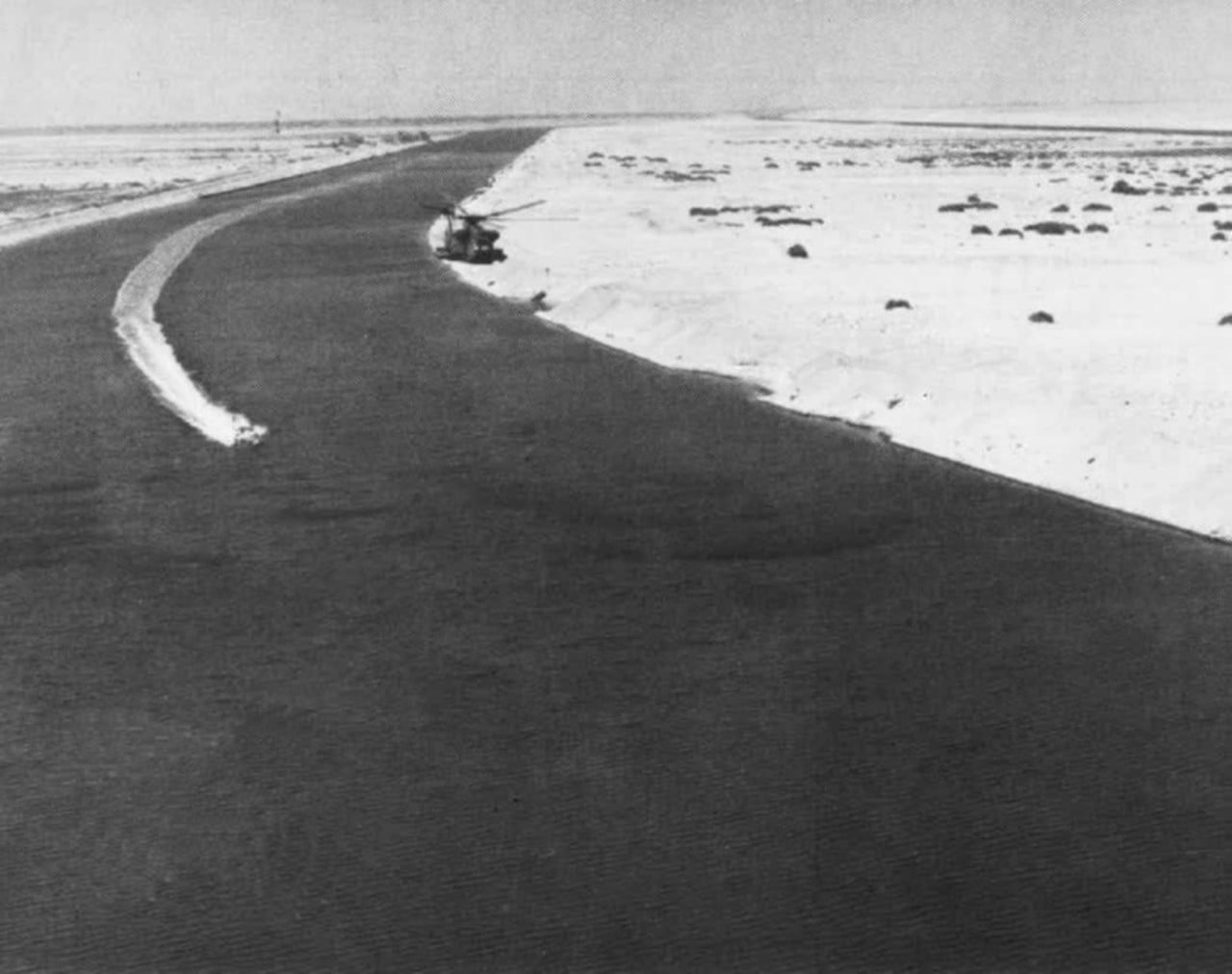
In April 1974, a big grey American helicopter lifted off an assault ship anchored off Port Said, picked up a strange sled from a team ashore and dropped it into the water. Then it flew low and slow over the sea, dragging the sled behind it like a water-skier. The Suez Canal, closed since the Six-Day War of 1967, was being swept for mines from the air.
This was Operation Nimbus Star, the US Navy’s part in the international effort to reopen the canal after the 1973 October War. It was flown by a squadron barely three years old, using a type of mine warfare the Navy had bet its future on, in a waterway full of sunken ships, unexploded shells and political tension.
Informazioni rapide
- Operazione: Nimbus Star, US airborne mine sweeping of the Suez Canal
- Quando: Second half of April to early June 1974
- Unità: Helicopter Mine Countermeasures Squadron 12 (HM-12)
- Aeromobili: Sikorsky RH-53D Sea Stallion towing Mk 105 magnetic sleds
- Ships: USS Iwo Jima (LPH-2), later USS Inchon (LPH-12)
- Swept: About 7,600 linear miles in some 500 hours on station
- Partner: Royal Navy (Rheostat), French Navy, Egyptian forces; Soviet squadron in the south
- Risultato: Canal reopened to traffic on 5 June 1975
A canal full of war
The Suez Canal had been blocked since June 1967, when the Six-Day War left Israeli troops on its east bank and Egyptian troops on its west. Fourteen merchant ships caught in the Great Bitter Lake were trapped there for years. Six years of fighting, including the War of Attrition and the Egyptian crossing of October 1973, left the waterway littered with wrecks and ordnance.
After the 1973 war, Egypt wanted the canal open again, and a deal was reached to clear it. Two separate coalitions answered. A Western group of the United States, Britain and France took the canal itself, while a Soviet squadron, led by the helicopter cruiser Leningrad, worked on the southern approaches in the Gulf of Suez. The US effort ran under three code names: Nimbus Star for mine sweeping, Nimbus Moon for training Egyptian clearance teams on land and underwater, and Nimrod Spar for raising wrecks.
The Navy’s helicopter bet
The tool the US Navy chose was new. In 1971 it had borrowed 15 CH-53A Sea Stallions from the Marine Corps and on 1 April that year set up HM-12 at Norfolk, Virginia, the world’s first helicopter mine countermeasures squadron. In 1973 Navy minesweeping helicopters cleared American mines from North Vietnamese waters during Operation End Sweep, and the purpose-built RH-53D began arriving that year.
The RH-53D was a CH-53 Sea Stallion built for the job, with automatic flight controls for long periods of low, steady flight, extra fuel, an in-flight refuelling probe and two .50-calibre machine guns for detonating mines that came to the surface. The Navy received 30 of them. Its main sweep for Suez was the Mk 105, a hydrofoil sled towed behind the helicopter that generated a magnetic field to trigger influence mines.
Writing in the US Naval Institute’s Proceedings in September 1974, Cdr. R. L. Schreadley described how the Navy had decided that helicopters would henceforth provide its mine countermeasures capability.
Not everyone was convinced. Writing in the US Naval Institute’s Proceedings in September 1974, while the Suez sweeps were in the news, retired Commander R. L. Schreadley warned that helicopters could sweep but could not yet hunt mines, and depended on support ships for heavy equipment.
AP Archive newsreel from 27 April 1974 explaining the US minesweeping effort in the Suez Canal.
Seven thousand miles of canal
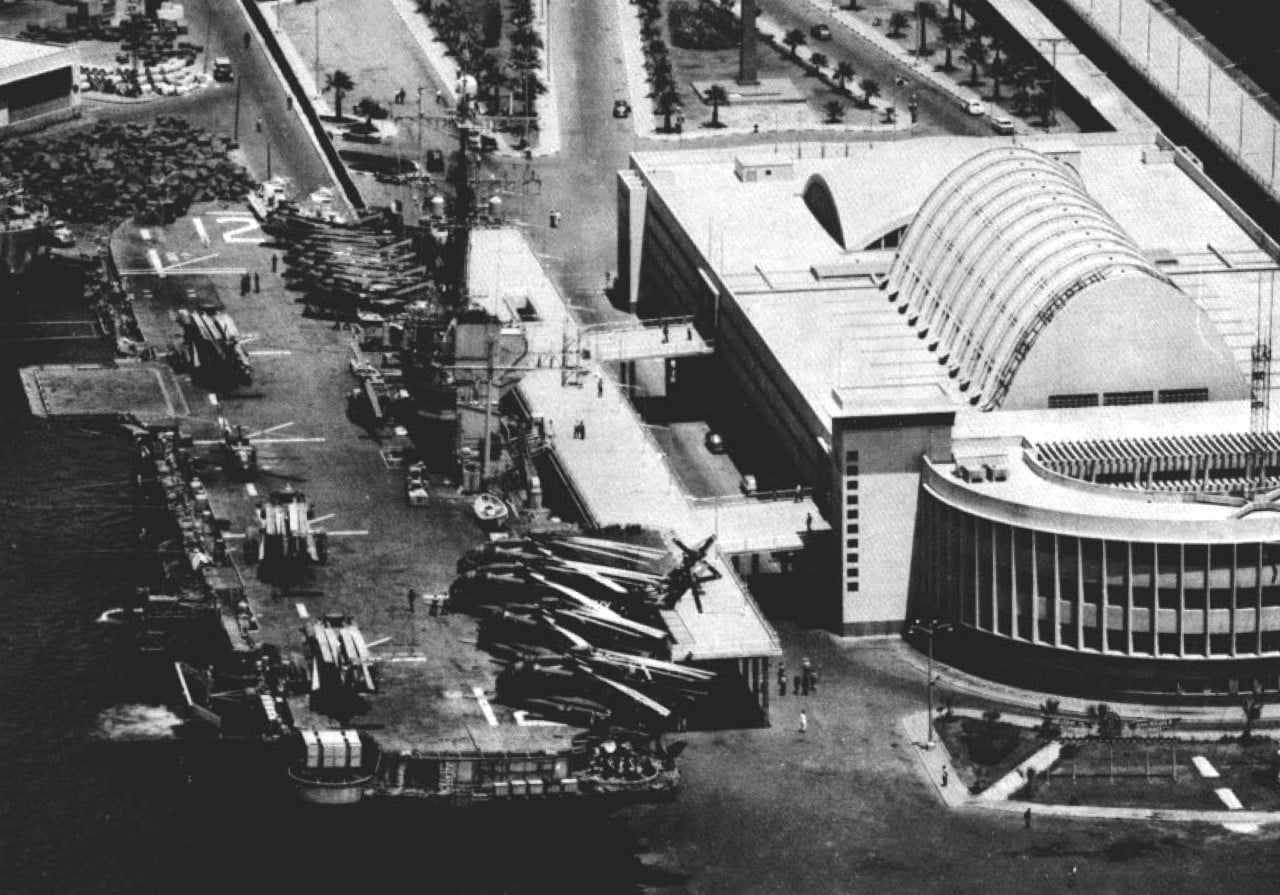
The amphibious assault ship USS Iwo Jima deployed more than a month early, with only five days’ notice, and became flagship of Task Force 65. The RH-53Ds were flown to RAF Akrotiri in Cyprus, prepared there and embarked. A detachment of Marine CH-46 Sea Knights from HMM-261 stood by for search and rescue.
According to the Royal Navy mine warfare historian Captain Chris O’Flaherty, the Americans chose airborne sweeping because of reports that an Israeli aircraft had dropped a Mk 36 Destructor mine, which has a very sensitive magnetic fuze, into the canal. A helicopter towing a sled is far safer over such a mine than a ship’s steel hull.
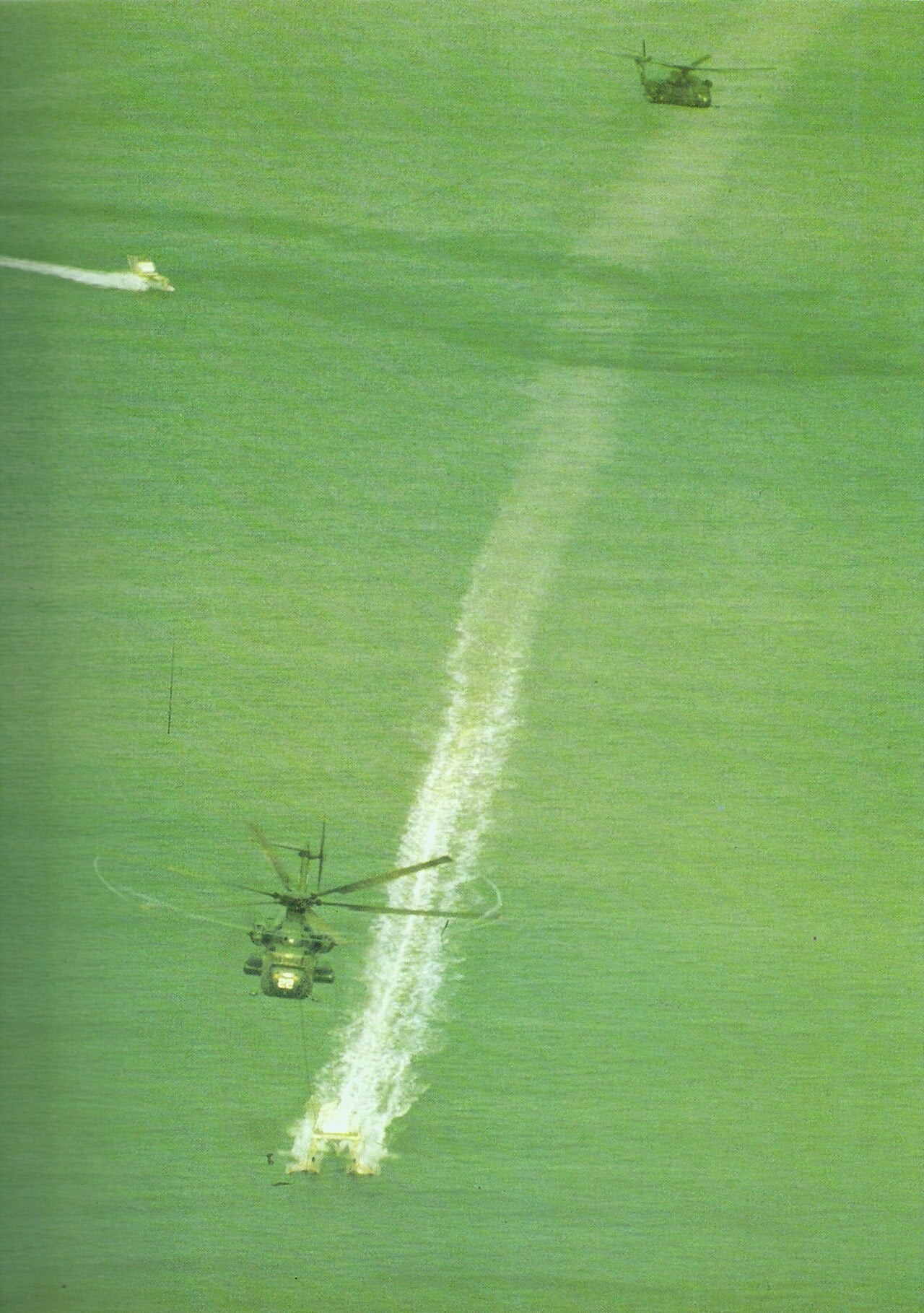
Sweeping began off Port Said in the second half of April 1974. Over the next six weeks the helicopters worked their way south through the canal, the Bitter Lakes, Lake Timsah and Suez Bay, pulling their sleds through each area several times. By the time the sweeping phase ended in early June, the Sea Stallions had covered some 7,600 linear miles in about 500 hours on station. USS Inchon later took over from Iwo Jima.
There was a moment of comedy. Reports came in of up to eight mines exploding behind the helicopters. When the Western forces compared notes with the Egyptian Army, they found the bangs had come from Egyptian disposal teams blowing up old ordnance on the banks, carelessly timed to coincide with the passing helicopters.
British Movietone newsreel on the 1974 Suez Canal clearance.
Ships, divers and a porcelain lavatory pan
The helicopters were only the first layer. British minehunters of Operation Rheostat followed close behind, working five days on and two days off in temperatures up to 41 degrees Celsius. On 26 June 1974 they entered the Great Bitter Lake and freed the fourteen merchant ships that had been trapped there since 1967. French minehunters and divers searched the shallow banks, and American divers trained and advised Egyptian teams on the canal bed.
The scale of the debris was enormous. Thousands of unexploded items were found in the canal and its harbours: rockets, mortar bombs, mines, shells and bomblets, along with sunken pontoon bridges, boats, vehicles and aircraft wreckage. Salvage teams under Nimrod Spar lifted ten wrecks out of the channel, finishing in December 1974.
In 1975, at Egypt’s invitation, British minehunters made one last check of the canal between 19 April and 4 June. This time they found old vehicles, oil drums, beer cans and an almost intact porcelain lavatory pan.
Reopened, two hours later
The Suez Canal reopened to traffic on 5 June 1975, eight years after it closed, and only two hours after the last check sweep was completed. President Anwar Sadat marked the occasion aboard a warship. The canal stayed open, although a merchant ship was damaged by an apparent mine explosion in the main channel in July 1975.
AP Archive footage of President Sadat aboard a warship at the reopening of the Suez Canal in June 1975.
For the US Navy, Nimbus Star proved that helicopters could sweep a busy, strategic waterway quickly and safely, and airborne mine countermeasures became a permanent part of its toolkit. The same RH-53D type flew in the failed 1980 Iran hostage rescue, Operation Eagle Claw, and its successor, the MH-53E Sea Dragon, carried the sled-towing mission on for decades. It all started with a helicopter and a sled off Port Said in the spring of 1974.
Sources: Wikipedia (1974 Suez Canal Clearance Operation; Sikorsky CH-53 Sea Stallion), Project Vernon / Capt. Chris O’Flaherty RN, US Naval Institute Proceedings (1974) and Naval History (2020), GlobalSecurity.org, US Naval History and Heritage Command via MarineLink, AP Archive
Header photo: US Navy / Wikimedia Commons, public domain
0 Comments