
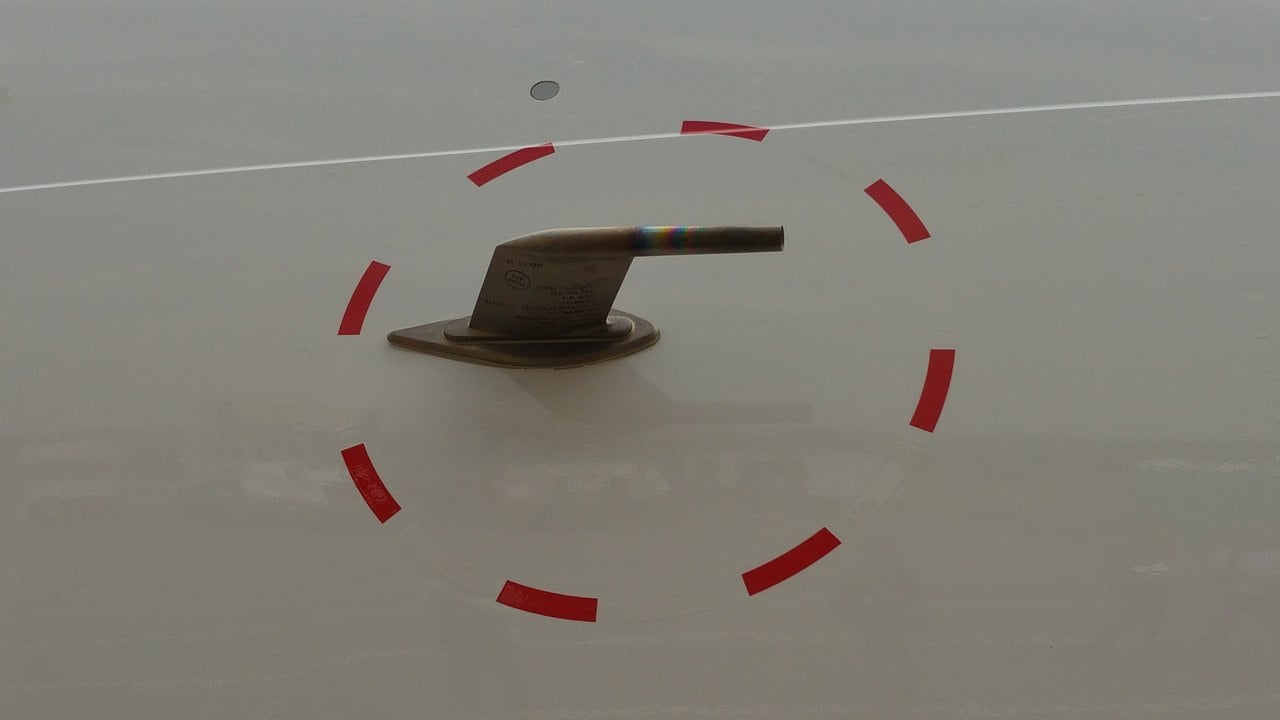
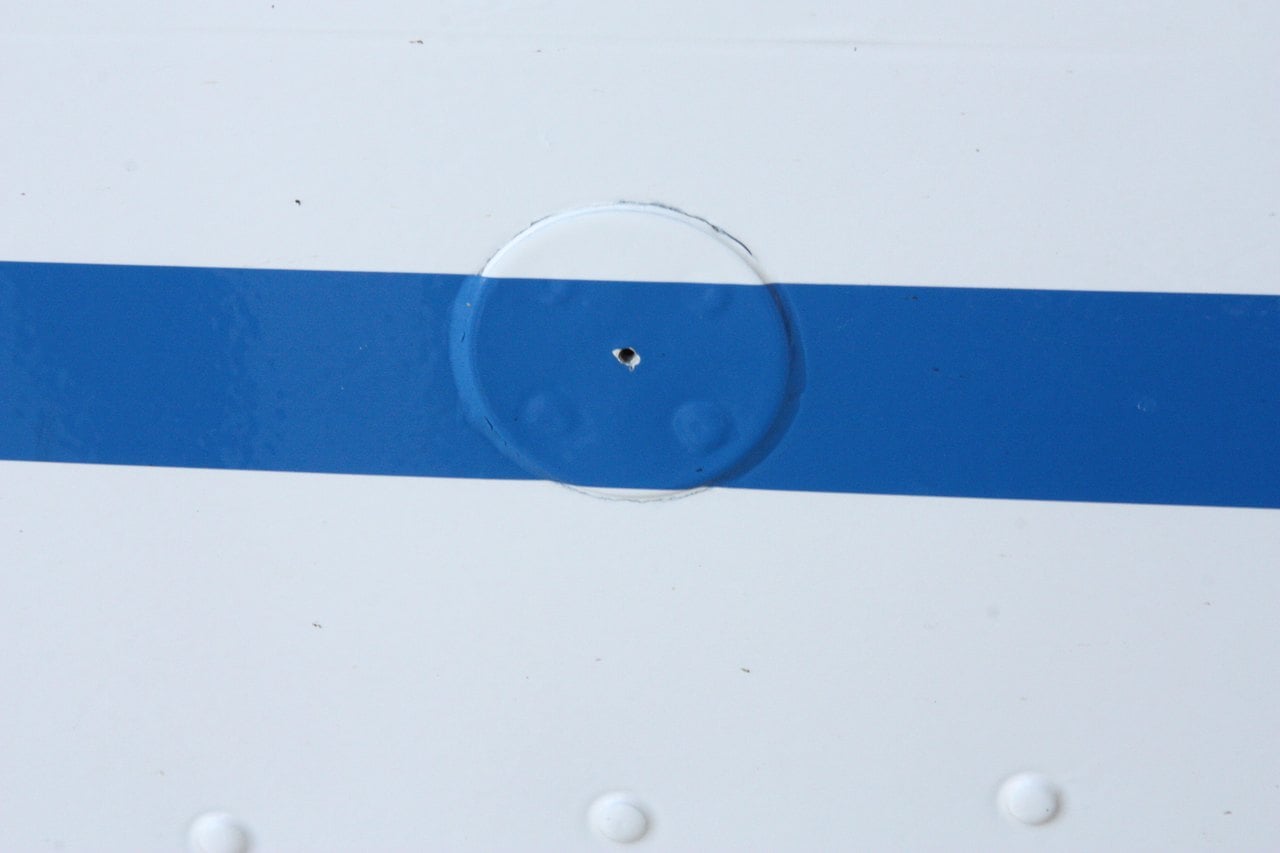
Look under the left wing of a Cessna 172 and you will find a small bent metal tube pointing forward into the airflow. Walk round to the side of the fuselage and there is a hole smaller than a pencil lead. Together, those two openings tell the pilot how fast the aircraft is flying, how high it is and whether it is climbing or descending.
This is the pitot-static system, and it is one of the first things a student pilot learns to check on the walk-around. It is also one of the simplest systems on any aircraft: no electronics needed, just air pressure, a few pipes and three clever instruments. When it fails, though, it can fool a pilot in ways that are hard to believe until you understand how it works.
Informazioni rapide
- Che cos'è: Air-pressure system feeding the basic flight instruments
- Pitot tube: Forward-facing opening; senses total (ram) pressure
- Static port: Flush side opening; senses ambient static pressure
- Instruments: Airspeed indicator (pitot and static), altimeter and vertical speed indicator (static only)
- Speed formula: Airspeed from the difference between total and static pressure (Bernoulli)
- Blocked pitot: Airspeed falls to zero, or acts like an altimeter if the drain hole is also blocked
- Blocked static: Altimeter freezes, VSI reads zero, airspeed wrong
- Backup: Alternate static source in the cockpit on many light aircraft
Two kinds of pressure
The whole system rests on one idea. Static pressure is the ordinary air pressure around the aircraft, the same pressure a barometer reads. The FAA’s Pilot’s Handbook of Aeronautical Knowledge describes it as always present, whether the aircraft is moving or at rest. Dynamic pressure is the extra pressure created by moving through the air, and it exists only when the aircraft is in motion.
The pitot tube is open at the front and points straight into the airflow, so it collects both: the static pressure plus the dynamic pressure, known together as total or ram pressure. The static port is a small flush hole on the side of the fuselage, placed where the air flows past undisturbed, so it senses only the static pressure.
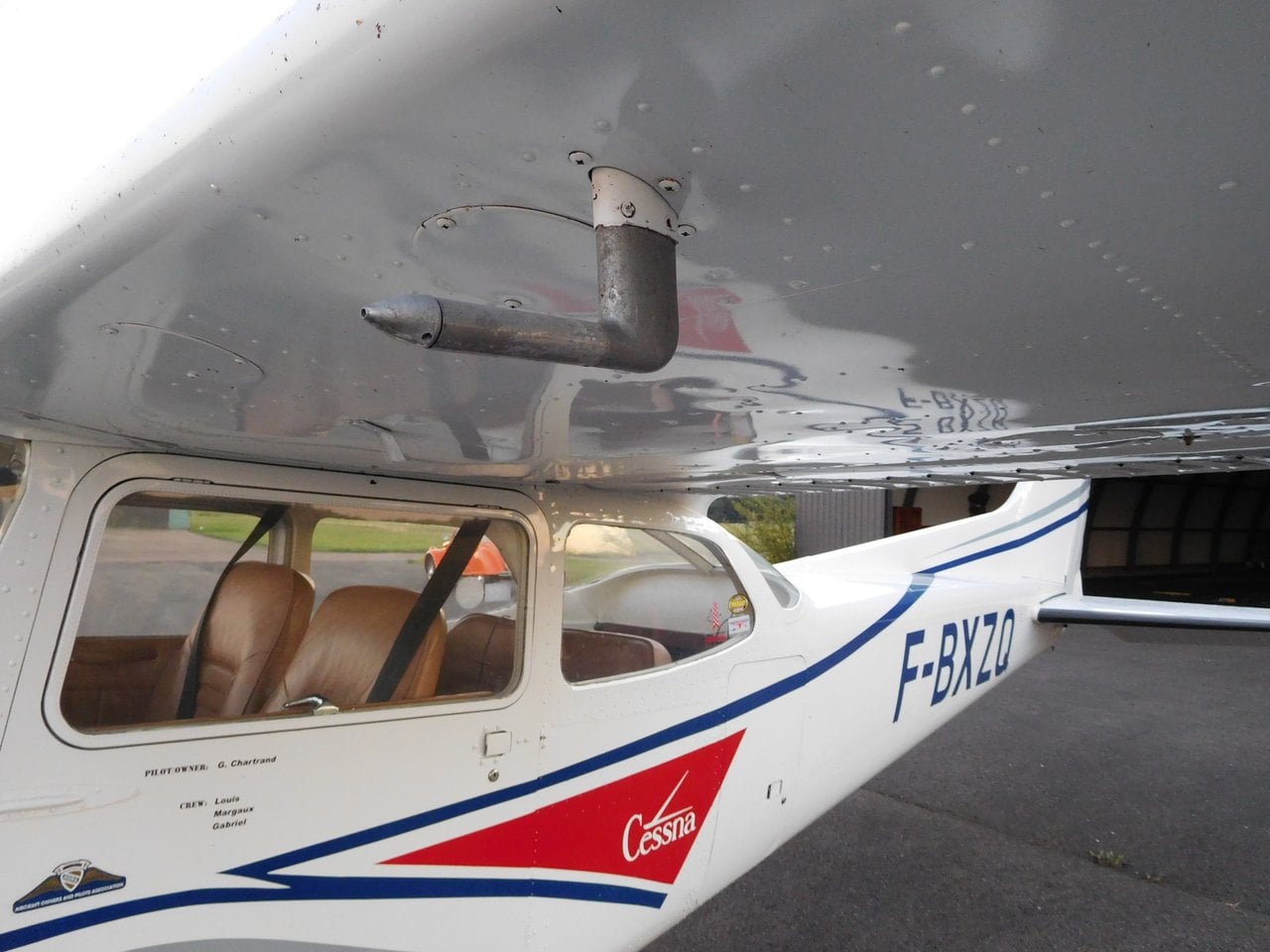
The tube is named after Henri Pitot, an 18th-century French engineer who, as Encyclopaedia Britannica records, devised a tube with an opening facing the flow to measure the speed of water in rivers and canals. The aviation version adds side holes or a separate static source, a design NASA notes is also called a Prandtl tube.
Embry-Riddle Aeronautical University’s SpecialVFR series walks through the pitot-static instruments.
Three instruments, two pipes
The FAA handbook lists three instruments on the system: the airspeed indicator, the altimeter and the vertical speed indicator. Only one of them uses both pipes.
IL airspeed indicator is a diaphragm inside a sealed case. Ram air from the pitot tube flows into the diaphragm; static air from the static port fills the case around it. The difference between the two is the dynamic pressure, and the diaphragm expands or contracts with it, driving the needle through a set of levers. NASA’s Glenn Research Center shows the maths: Bernoulli’s equation turns that pressure difference into speed, once air density is known.
IL altimeter uses only static pressure. Sealed aneroid wafers expand as the outside pressure falls in a climb and contract as it rises in a descent, and the mechanism turns that into feet. The vertical speed indicator also uses only static pressure, but it compares the pressure now with the pressure a moment ago through a calibrated leak, so it shows the rate of change: climbing, level or descending.
There is a neat consequence. Because the airspeed indicator measures pressure, not ground speed, wind counts too. The handbook points out that facing a 70-knot wind on the ground produces the same dynamic pressure as flying through still air at 70 knots. Park into a strong wind and the needle can lift off the stop before you have moved an inch.
When the pitot tube blocks
Ice, water, dirt and insects are the enemy. That is why pitot tubes wear red “remove before flight” covers on the ground, why many have heaters, and why every pre-flight checklist includes looking into the openings.
If ice blocks the front of the pitot tube but the small drain hole behind it stays open, the trapped air leaks out, the pressure in the line falls to outside pressure, and the airspeed indicator drops towards zero. The FAA notes this is not usually instantaneous but happens very quickly.
The stranger failure happens when both the opening and the drain hole block. Now the air in the pitot line is trapped. Speed up or slow down and the needle does not move. But climb, and the outside static pressure in the case falls while the trapped pressure stays the same, so the indicated airspeed rises. Descend and it falls. The airspeed indicator has quietly turned into an altimeter.
Why a fully blocked pitot tube turns the airspeed indicator into an altimeter.
A pilot climbing in cloud with a frozen pitot tube sees the airspeed creeping up and may pull the nose higher to slow down, when in reality the aircraft is getting slower. That is why instructors drill the habit of cross-checking airspeed against attitude and power, and why pitot heat goes on before entering visible moisture.
When the static port blocks
Block the static port instead and every instrument on the system is affected. According to the FAA, trapped static pressure freezes the altimeter at the altitude where the blockage occurred, and the vertical speed indicator shows a continuous zero. The airspeed indicator keeps working but reads wrong: too low when climbing above the blockage altitude, too high when descending below it.
Many light aircraft have an answer in the cockpit: an alternate static source, a valve that takes static pressure from inside the cabin. Because air flowing round the fuselage lowers the cabin pressure slightly, the handbook says the altimeter then reads a little high, the airspeed reads high, and the vertical speed indicator shows a brief climb. If there is no alternate source, the FAA describes a last resort.
From Cessnas to stealth bombers
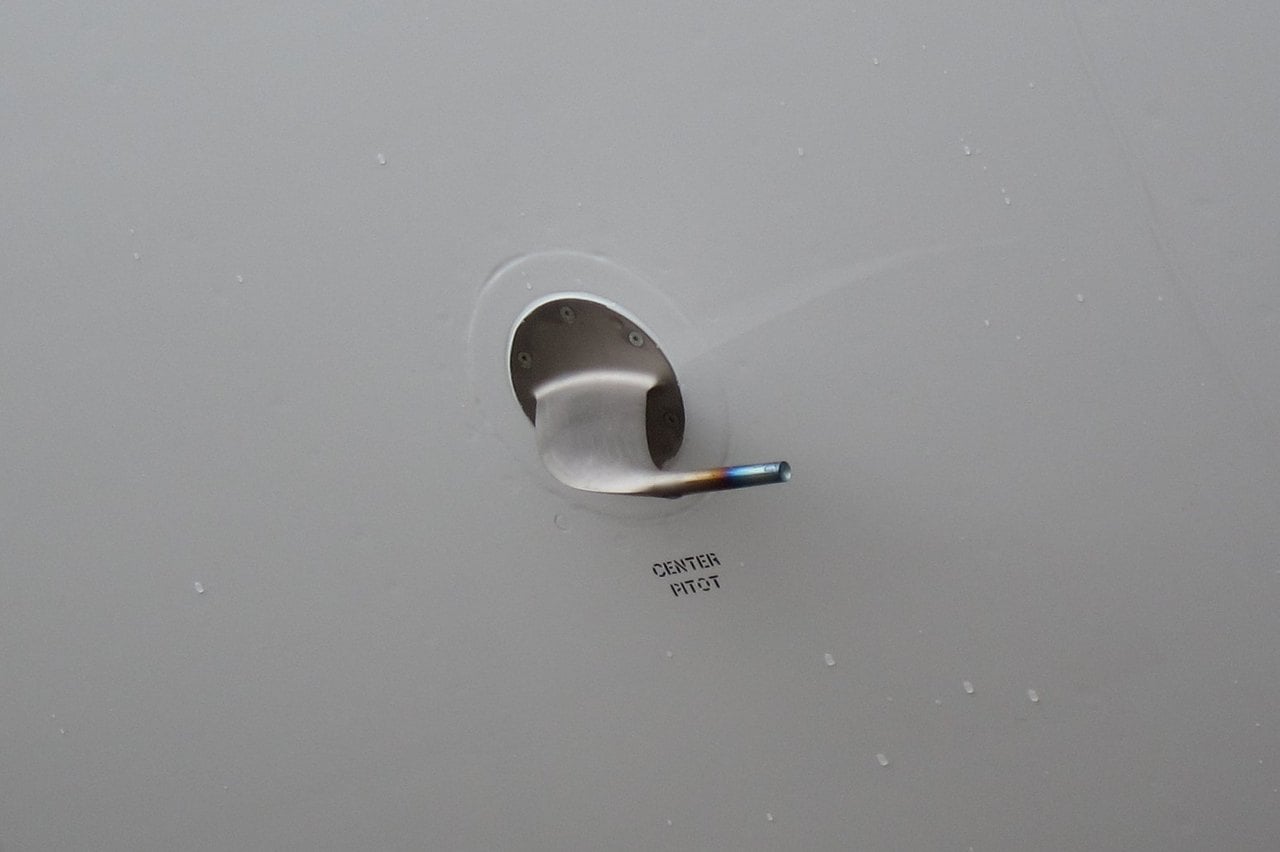
Airliners use the same physics with more redundancy. A Boeing 787 or Airbus A320 has several heated pitot probes and static ports, feeding air data computers that cross-check each other rather than mechanical dials. NASA notes that after reports of icing on airliner pitot-static probes, heaters were installed so that the probes were not clogged by ice build-up.
Even the most advanced aircraft depend on clean air data. On 23 February 2008 a Spirito B-2 crashed on take-off from Andersen Air Force Base on Guam. The accident board reported that moisture had got into three of the bomber’s 24 air data sensors, which detect air pressure, giving the flight computers false data. The B-2 pitched up, stalled and crashed; both pilots ejected.
That is the lesson every student pilot learns with a fingertip on a Cessna’s static port. The instruments are only as good as the air that reaches them, so the walk-around check of two small holes is never a formality.
Pilot Institute on the pitot-static system and the failures every pilot needs to recognise.
Next time you board an airliner, look just below and behind the cockpit windows. Those small angled probes are pitot tubes, and the flush plates near them are static ports. Every speed and altitude the pilots see starts right there.
Sources: Federal Aviation Administration (Pilot’s Handbook of Aeronautical Knowledge, FAA-H-8083-25, chapter 8), NASA Glenn Research Center (Beginner’s Guide to Aeronautics), Encyclopaedia Britannica, Air & Space Forces Magazine (June 2008), Associated Press

0 Comments