
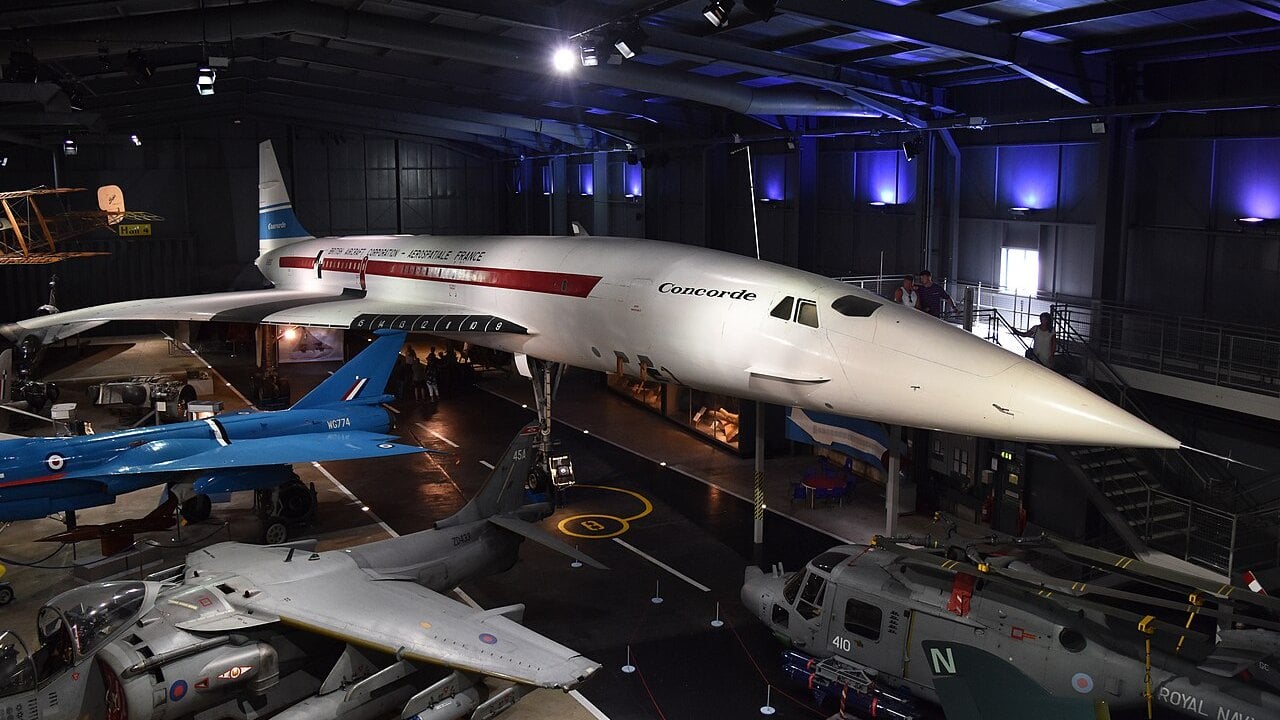
On 9 April 1969, thousands of people lined the airfield at Filton, near Bristol, to watch the first British-built Concorde take to the air. At the end of the runway, a young flight test engineer named John Dickens stood ready with a big-format camera that could only run for a short time. He had to start it at exactly the right moment.
So he talked to the pilot by radio and counted him down. The pilot was Brian Trubshaw, chief test pilot of the British Aircraft Corporation, and the most famous test pilot in Britain for the next decade.
Twenty-two minutes later Trubshaw put Concorde 002 down at RAF Fairford, and Britain had its supersonic airliner in the air. It was the high point of a career that had begun in RAF bombers and the royal family’s own flight.
Informazioni rapide
- Nome: Ernest Brian Trubshaw, CBE, MVO (1924 to 2001)
- Nato: Liverpool, 1924; grew up in Llanelli, Wales
- RAF: From 1942: Bomber Command, Transport Command, the King’s Flight
- Pilota collaudatore: Vickers-Armstrongs from 1950; later chief test pilot of BAC
- Types tested: Valiant, Vanguard, VC10, BAC One-Eleven, Concorde
- Concorde 002 first flight: 9 April 1969, Filton to RAF Fairford, 22 minutes
- Later career: Head of the British Aerospace Filton works 1980 to 1986; CAA board 1986 to 1993
- Morto: March 2001, Gloucestershire, aged 77
A boy from Llanelli
Ernest Brian Trubshaw was born in Liverpool in 1924 but grew up in south Wales, where his family ran the Western Tinplate Works in Llanelli. According to a local history of the family, he was ten and on holiday when an aircraft carrying the Prince of Wales landed on the beach at Pembrey near his home, and the sight stayed with him.
After Winchester College he joined the Royal Air Force in 1942, aged 18, and learned to fly in the United States. He flew Stirling bombers with Bomber Command in the last part of the war, then moved to Transport Command.
When the war ended he was picked for the King’s Flight, flying King George VI and other members of the royal family. He was made a Member of the Royal Victorian Order in 1948 and became a friend of Prince Philip.
Thirty years with Vickers
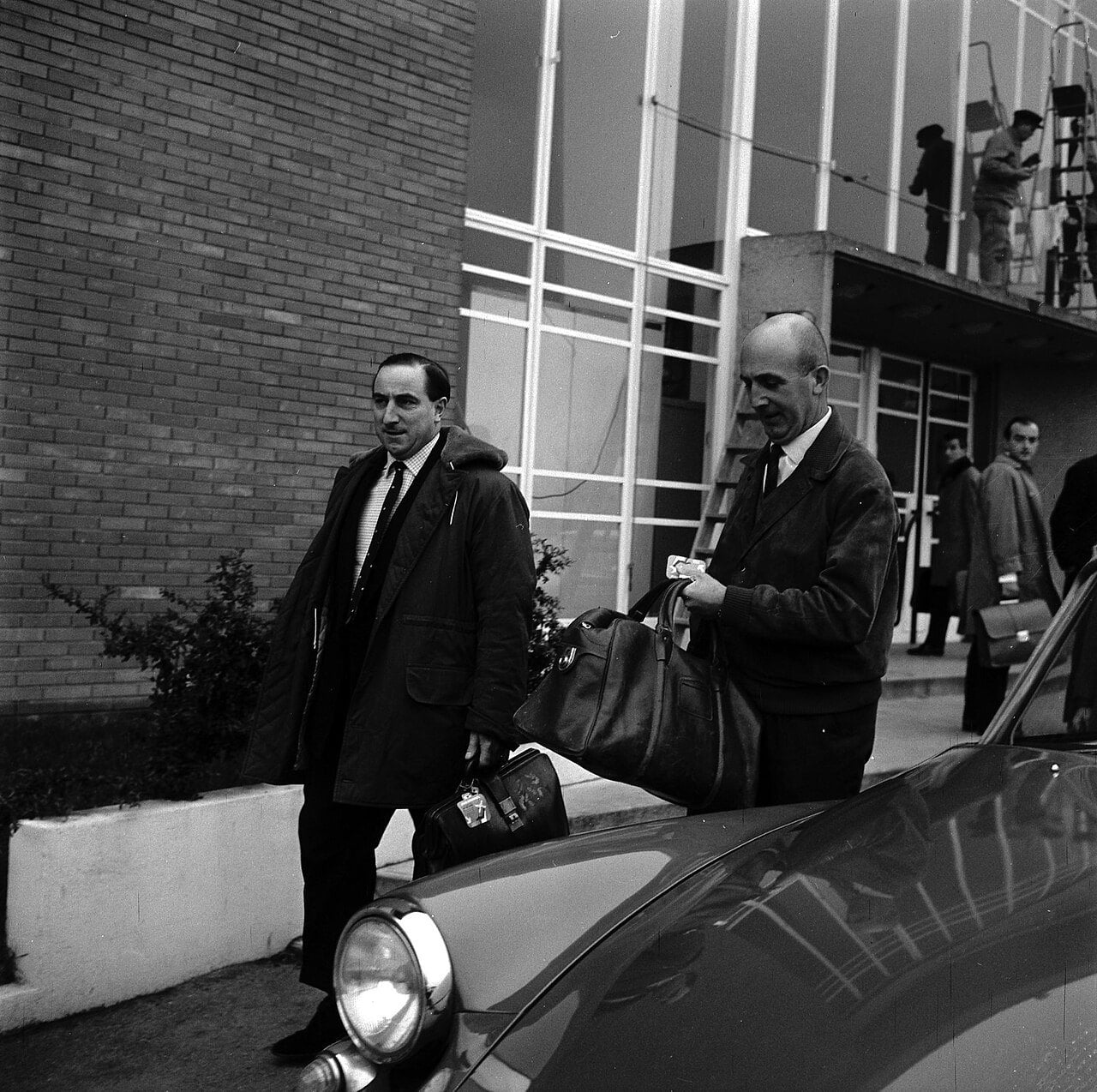
In 1950 Trubshaw left the RAF to join Vickers-Armstrongs as a test pilot, and he stayed with the company and its successors for more than three decades. He test flew the Viscount, the Vickers Valiant V-bomber, the Vanguard airliner, the VC10 e il BAC One-Eleven.
By the mid-1960s he had succeeded Jock Bryce as chief test pilot, by then of the British Aircraft Corporation. When Britain and France agreed to build a supersonic airliner together, the work was split between BAC at Filton and Sud Aviation at Toulouse, and Trubshaw became chief test pilot of the British side.
He was an apparent contradiction: a burly, sporty man who had played cricket for Winchester and the RAF and later took up golf, yet famously modest, private and shy of the press.
His French counterpart was André Turcat, director of flight testing at Sud Aviation. The two men would share the programme’s greatest moments, and the honour of making its first flights in each country.
British Movietone colour news of Britain’s Concorde making its maiden flight in April 1969.
Wizard
Turcat flew first. The French prototype, Concorde 001, made its maiden flight from Toulouse on 2 March 1969. Just over a month later it was Trubshaw’s turn, in Concorde 002, with John Cochrane in the right-hand seat. The plan was a 22-minute hop from the factory at Filton to the flight test base at RAF Fairford in Gloucestershire.
It was not entirely smooth. Both radio altimeters failed during the flight, and Concorde touched down at Fairford with a slight bounce. Then the normally press-shy Trubshaw climbed down and summed it up in the words that made headlines.
Not everyone shared the mood. The minister of technology, Tony Benn, whose Bristol constituency depended on the aircraft industry, was deeply impressed by what he saw. Yet he also thought the picnic atmosphere at Filton felt more like a local cricket match than a technological breakthrough.
Benn had good reason to be nervous. Harold Wilson’s government had tried to pull out of the Anglo-French treaty soon after taking office in 1964, and backed down only when it became clear the French could sue. Even in 1969 ministers were weighing cancellation, while 16,000 people worked on Concorde, 8,000 of them in Bristol alone.
In the end the cabinet decided to postpone any decision on withdrawal and to slow down the funding for research and development instead. The test pilots kept flying, with the project’s political future still uncertain.
Selling Concorde to the world
Over the following years Trubshaw flew Concorde through its long test programme and showed it off around the world, including on a 1972 sales tour. Take-offs and landings had to be tested again and again in different climates and at different altitudes, at airports from Madrid and Casablanca to Johannesburg, before airlines could carry passengers.
He was appointed CBE in 1970. Concorde finally entered service with British Airways and Air France in 1976.
British Pathé: Concorde 002 takes off with Brian Trubshaw at the controls, and André Turcat congratulates the British crew.
Trubshaw became the public face of the programme. The Associated Press interviewed him on 4 June 1973, the day after the Soviet Union’s rival supersonic airliner, the Tu-144, crashed at the Paris Air Show. For more on that rivalry, see our comparison of Concorde and the Tu-144.
From the cockpit to the boardroom
In 1980 Trubshaw became divisional director and general manager of the Filton works of British Aerospace, which had absorbed BAC. He retired from the company in 1986, having flown more than 100 aircraft types, and then served on the board of the Civil Aviation Authority until 1993. He also wrote a book, Concorde: The Inside Story.
Trubshaw died at his home near Tetbury in Gloucestershire in March 2001, aged 77. At his memorial service at St Clement Danes, the RAF church in London, Lord Tebbit, himself a former pilot, called him a great aviator and a very good man.
AP Archive: Brian Trubshaw interviewed on 4 June 1973.
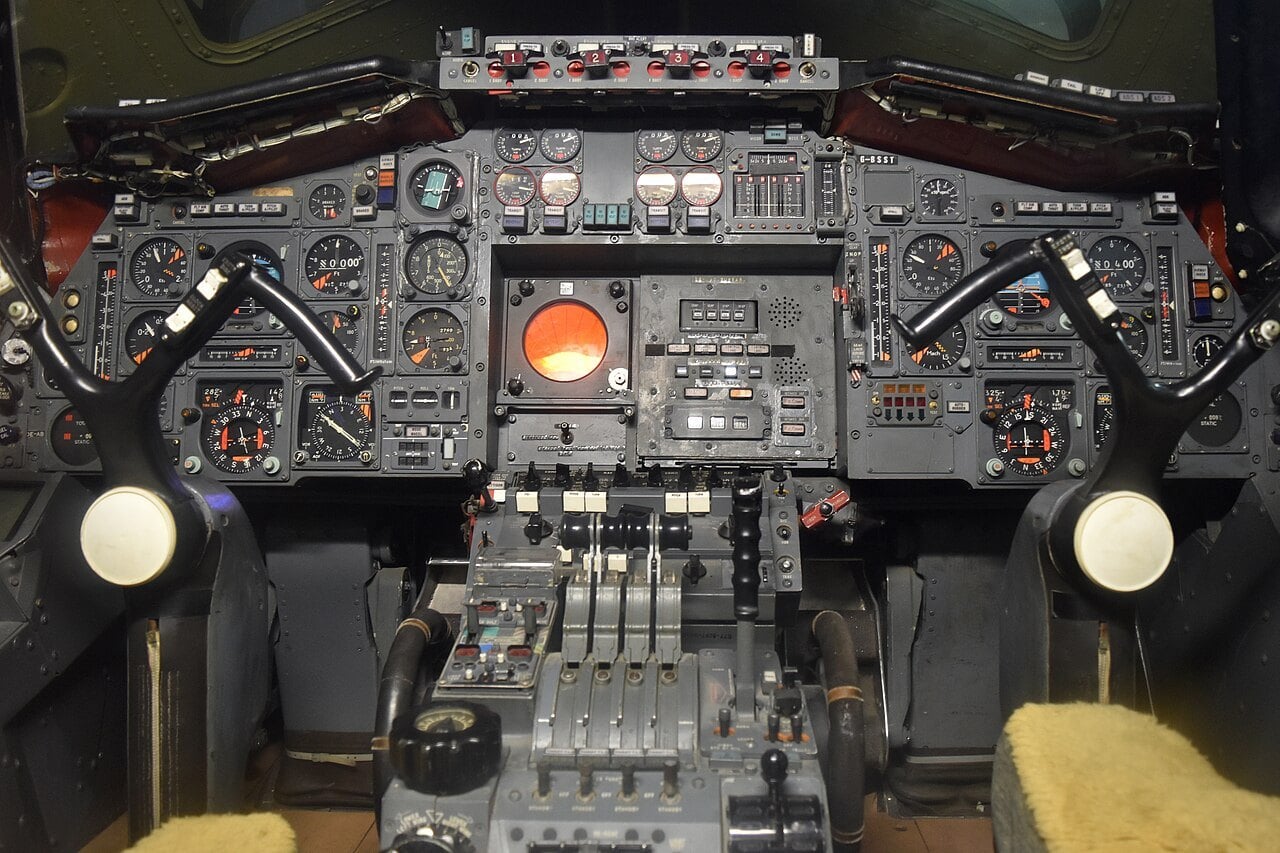
Concorde 002 is preserved today at the Fleet Air Arm Museum at Yeovilton, its cockpit exactly as Trubshaw knew it. And when the last Concorde of all landed at Filton in November 2003, it came home to the runway where a test pilot from Llanelli had first lifted a British Concorde into the sky.
Sources: History of Government blog, GOV.UK (Concorde’s first British test flight 50 years on, 2019), Lancashire Post (Emma Harris, 2019), Llanelli Community Heritage (John Simon, 2012), Lives Retold, British Pathé, AP Archive
0 Comments