
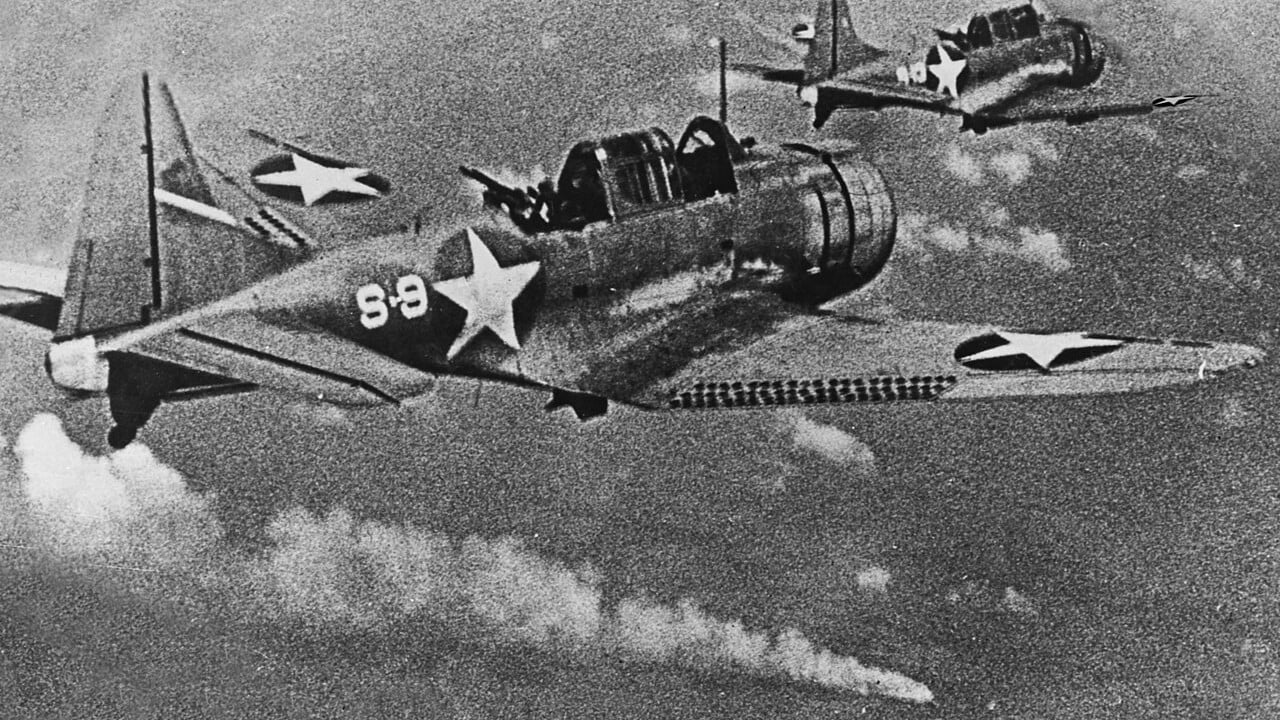
Lieutenant Commander Wade McClusky should have turned back. His two squadrons of dive bombers from USS Enterprise had been searching for the Japanese carriers without finding them, and they were burning fuel they would need to get home. Then, far below, he spotted a single Japanese destroyer steaming at full speed, its white wake pointing like a finger.
He followed it. Minutes later, on the morning of 4 June 1942, the Imperial Japanese Navy’s carrier striking force came into view, and the aircraft McClusky’s men were flying went into the history books. It was the Douglas SBD Dauntless, a two-seat scout and dive bomber that was neither fast nor glamorous, and that knocked out four Japanese fleet carriers in a single day.
This is the story of the plane its own crews nicknamed “Slow But Deadly”, and of the young men who rode it straight down.
Informazioni rapide
- Aeromobili: Douglas SBD Dauntless, two-seat carrier scout and dive bomber
- Designer: Ed Heinemann’s team at Douglas, developed from the Northrop BT-2
- In servizio: SBD-1 to the Marine Corps late 1940; SBD-2 to the Navy early 1941
- Engine (SBD-5): One Wright R-1820-60 Cyclone radial, 1,200 hp
- Top speed (SBD-5): 255 mph (410 km/h)
- Dive: About 70 degrees, slowed by perforated split dive flaps
- Midway: 4 June 1942: SBDs sank or fatally damaged Akagi, Kaga, Sōryū and Hiryū
- Costruito: Nearly 6,000; the last left El Segundo on 21 July 1944
A bomber built to fall
The SBD grew out of the Northrop BT-1 and BT-2, and when Douglas took over Northrop in 1937, a team under Ed Heinemann turned the design into the Dauntless. The Marine Corps got the first SBD-1s in late 1940 and the Navy its SBD-2s in early 1941. By the time Japan attacked Pearl Harbor, the Dauntless was the US Navy’s main carrier-based scout and dive bomber.
Its secret was in the wings. Big perforated split flaps opened like a cheese grater and acted as dive brakes. According to the Pearl Harbor Aviation Museum, they let an SBD dive at about 70 degrees while holding its speed to around 240 knots, slow enough for the pilot to keep correcting his aim as the ship below twisted and turned. Bombs were released at roughly 1,500 to 2,000 feet, followed by a pull-out of up to six g.
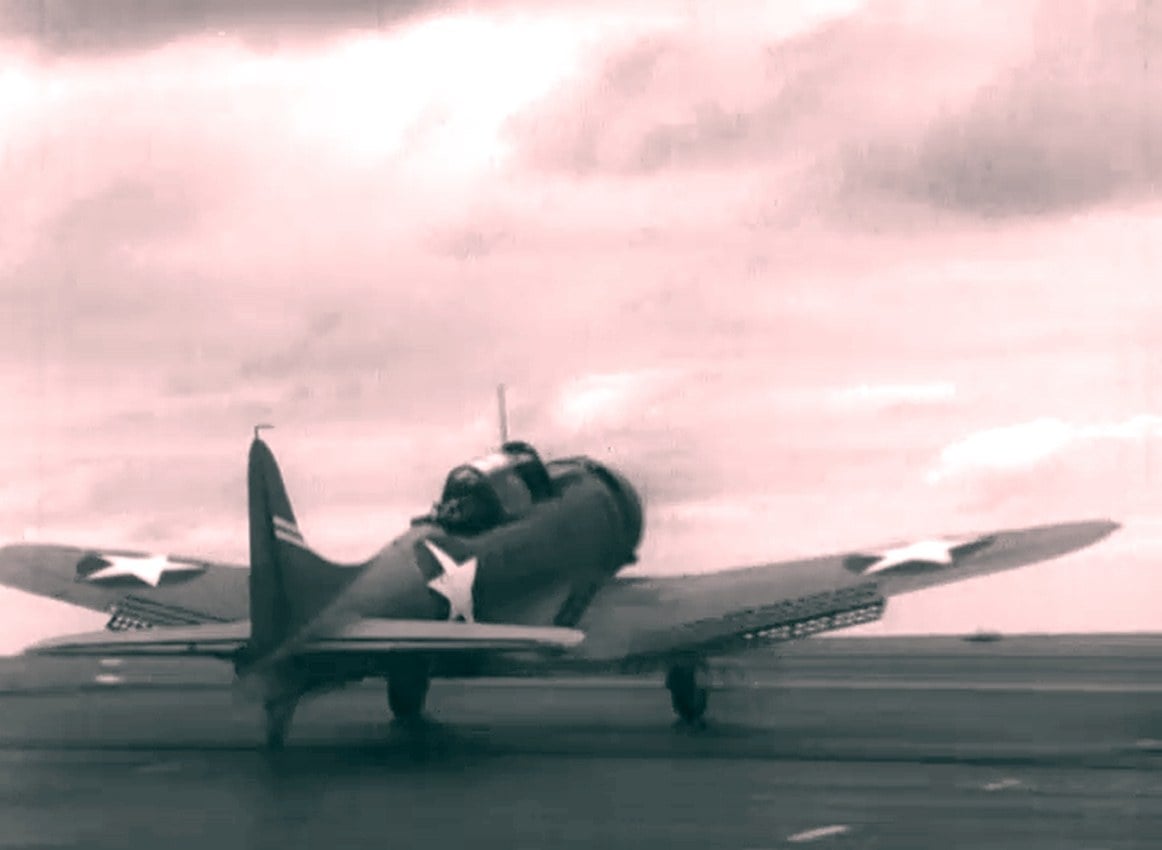
The Dauntless was also unusual for what it lacked. Its wings did not fold, a choice Douglas made in favour of structural strength. That cost deck space, but it gave the Navy an aircraft tough enough to survive the violence of a near-vertical dive, again and again.
It had another trick. With two forward-firing .50-calibre guns and one or two .30-calibre guns for the gunner in the back, the SBD could look after itself. The Pearl Harbor Aviation Museum counts it among the few bombers in history with more air combat victories than losses.
Smithsonian Channel explains the physics, and the danger, of the near-vertical dive-bombing attacks flown in aircraft like the SBD Dauntless.
The morning of 4 June 1942
By the time McClusky found the enemy, the Battle of Midway had already been brutal for the Americans. Land-based bombers from Midway Atoll had attacked without result. The torpedo squadrons had gone in low and slow, mostly without fighter cover, and had been cut to pieces by the Japanese Zero fighters, a sacrifice Afterburner told in I bombardieri siluranti mandati a morire a Midway.
That sacrifice was not wasted. When the dive bombers arrived, the Japanese combat air patrol was down low, chasing the last torpedo planes of Yorktown’s VT-3. Three SBD squadrons, McClusky’s VS-6 and VB-6 from Enterprise and Lieutenant Commander Max Leslie’s VB-3 from Yorktown, arrived almost at once and from different directions. Below them, the Japanese hangar decks were crowded with fuelled and armed aircraft, with bombs and torpedoes stacked nearby.
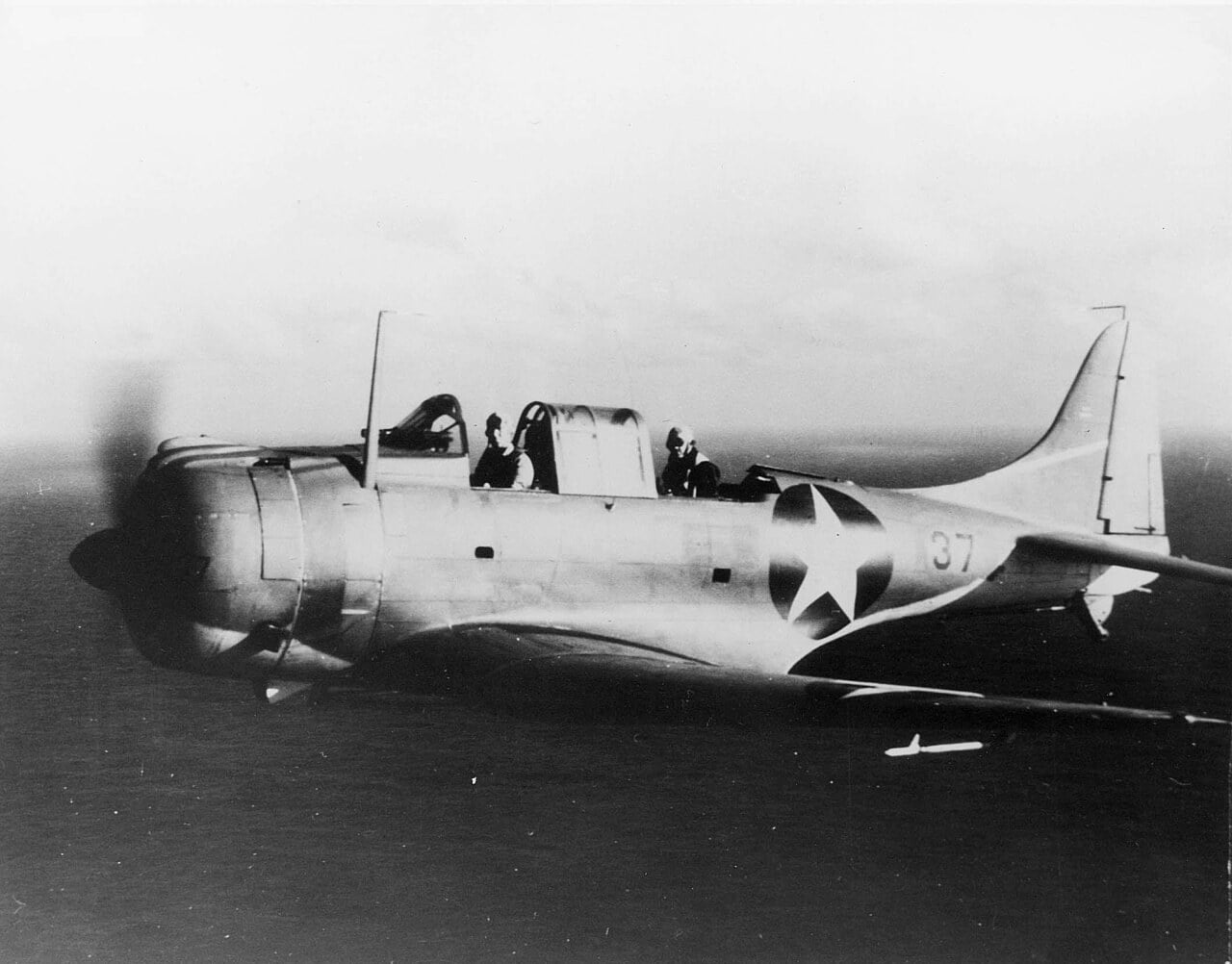
At 10:22 the Enterprise squadrons tipped over. A mix-up sent both squadrons at the carrier Kaga, which took several direct hits; one landed on or just in front of her bridge and killed her captain. Leslie’s VB-3 went for Sōryū and scored at least three hits. Within six minutes, both carriers were ablaze from stem to stern.
Dick Best and the bomb that killed Akagi
Lieutenant Richard “Dick” Best, commanding VB-6, saw the error as it happened. He and his two wingmen pulled out of their dive on Kaga, judged that she was finished, and headed for the flagship Akagi instead. Three Dauntlesses against a fleet carrier.
Akagi took only one direct hit, almost certainly Best’s. It struck the edge of the midships elevator and burst in the upper hangar among the armed and fuelled aircraft. The fires could not be stopped. Aboard was Mitsuo Fuchida, who had led the attack on Pearl Harbor six months earlier.
In the late afternoon, a scout found the last Japanese carrier, Hiryū, after her aircraft had crippled Yorktown. Enterprise launched 24 dive bombers, including Yorktown’s orphaned VB-3. Four or possibly five bombs hit her, and she burned until she sank the next morning. Best flew on that strike too, and according to historian Stephen L. Moore he may have been the first pilot to bomb two Japanese carriers in one day.
Best never flew in combat again. That night he began coughing blood; caustic soda from a faulty oxygen system had activated latent tuberculosis, and he was medically retired in 1944. In the view of Admiral Chester Nimitz, McClusky’s decision to keep searching “decided the fate of our carrier task force and our forces at Midway.”
The plane with more than 200 holes
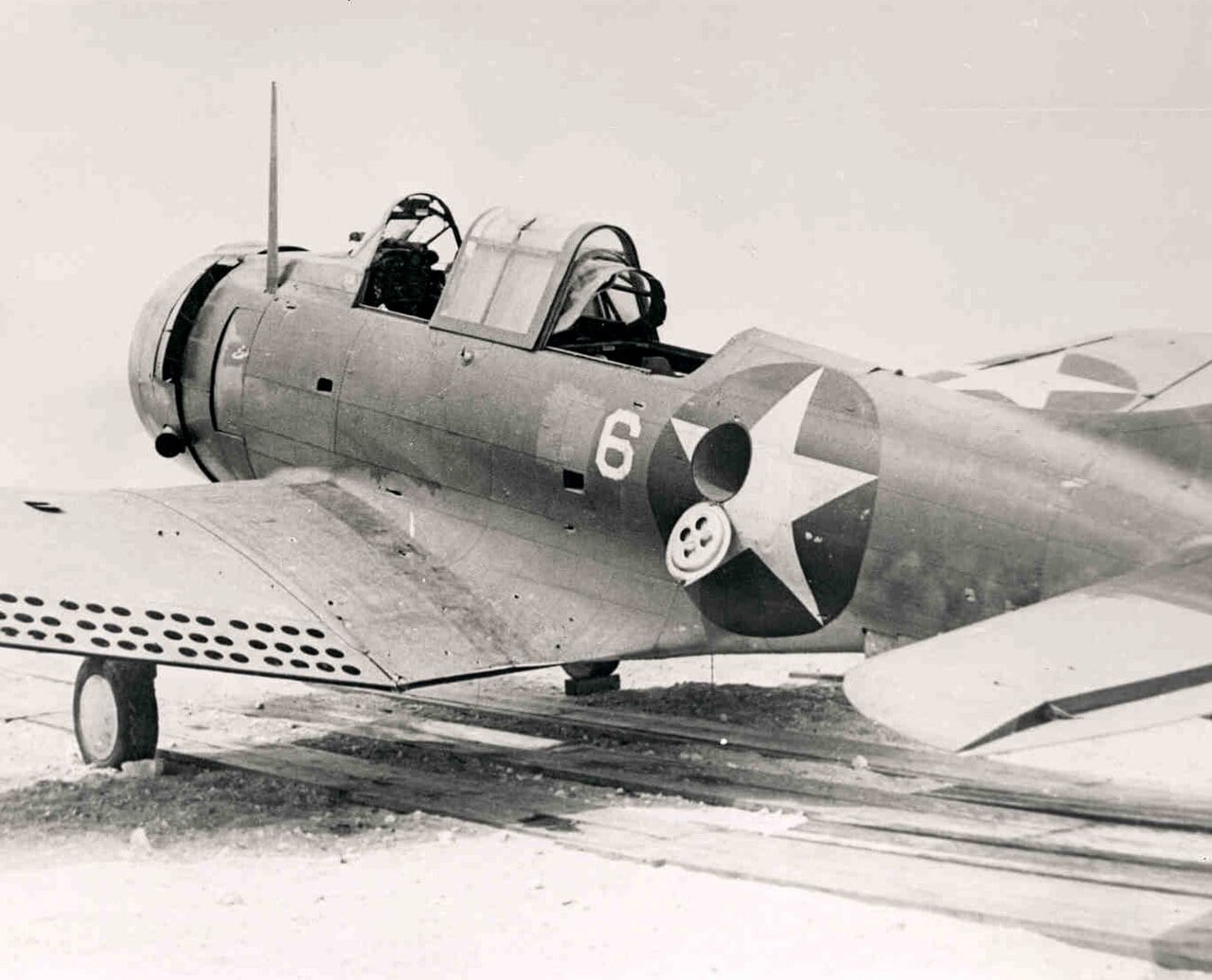
Not every Dauntless at Midway was flown by veterans. The Marines of VMSB-241, flying from the atoll itself, had only just converted to the SBD and were not trained in its dive-bombing technique. They used shallower glide attacks instead, and many were shot down, including the aircraft of their commander, Major Lofton Henderson.
One of their aircraft, SBD-2 BuNo 2106, was flown by First Lieutenant Daniel Iverson with Private First Class Wallace Reid as his gunner. They attacked Hiryū without scoring a hit, Reid was wounded in the foot, and Iverson brought the bomber home to a one-wheel landing with more than 200 bullet holes in it.
BuNo 2106 survived the battle, only to be ditched in Lake Michigan during carrier training in June 1943. Divers raised it in January 1994, and after seven years of restoration it went on display at the National Naval Aviation Museum at Naval Air Station Pensacola. It is the last surviving aircraft known to have fought in the Battle of Midway.
John Ford’s Oscar-winning 1942 documentary The Battle of Midway, filmed on the atoll during the Japanese attack.
Slow, but deadly to the end
Midway was not the Dauntless’s only big day. SBDs had already sunk the light carrier Shōhō at the Coral Sea a month earlier, and they went on to sink the carrier Ryūjō in August 1942 and fight through the whole Guadalcanal campaign. The newer SB2C Helldiver began replacing them in 1944, yet many pilots preferred the lighter, better-handling Dauntless for carrier landings.
Nearly 6,000 were built before the last one left Douglas’s El Segundo plant on 21 July 1944. The record they left with US Naval Aviation e il Marine Corps includes, by the Navy’s wartime count, six Japanese carriers, 14 cruisers and six destroyers sunk.
It was never the fastest aircraft over the Pacific. It did not need to be. On one June morning in 1942, a few dozen of them fell out of the sky at 70 degrees, and the war in the Pacific turned with them.
Sources: Wikipedia (Douglas SBD Dauntless; Battle of Midway; Richard Halsey Best), Pearl Harbor Aviation Museum, HistoryNet, Vintage Aviation News, US Navy (Naval History and Heritage Command photo records)
0 Comments