The runway at RAF Lyneham on the morning of 22 July 1966 held one of the least likely aeroplanes in Britain: a Lightning interceptor with no canopy, a disarmed ejection seat, its undercarriage pinned down, and a man in the cockpit who was wearing no helmet, had no radio, and had never flown a jet in his life.
None of that was a problem, because the aircraft was not supposed to leave the ground. Wing Commander Walter Holden, known to everyone as Taffy, was chasing an electrical fault that only revealed itself at high power. The test was simple: run the engines up, throttle back, brake, repeat.
On one of those runs the throttles went one notch too far, past the gate and into full reheat, and the second Lightning ever built took a 39-year-old engineering officer flying for twelve minutes.
Quick Facts
Who
Wing Commander Walter “Taffy” Holden, engineering officer, No. 33 Maintenance Unit
When
22 July 1966
Where
RAF Lyneham, Wiltshire
Aircraft
English Electric Lightning F.1, serial XM135, the second production Lightning
Configuration
Canopy removed, ejection seat inert, undercarriage pinned down, no radio, no helmet
Flying experience
Trained on Tiger Moth, Harvard and Chipmunk during an RAF cadetship. Never flown a jet
Time airborne
About 12 minutes
Approaches
Two abandoned, landed on the third with a tailstrike
The aircraft today
On display at the Imperial War Museum, Duxford, since 1974
A test that did not involve flying
No. 33 Maintenance Unit at Lyneham was a storage and disposal outfit, and XM135 was passing through it. The fault was the kind that engineers hate: intermittent, and only present under takeoff power. Someone had to sit in the cockpit and reproduce it. No test pilot was available, so the unit's commanding officer did it himself.
It is worth being precise about Holden's background, because the story is usually told as though a random mechanic climbed in. He had earned pilot's wings during an RAF cadetship and had flown Tiger Moths, Harvards and Chipmunks. He was, however, an engineer by trade and by posting, years out of currency, and he had never flown anything with a jet engine. Some accounts call him a qualified pilot and others say he was not one at all. The useful truth sits in between, and either way nothing in his logbook had prepared him for a Lightning.
The jet was rigged so that flight was impossible by design. The canopy was off so electrical looms could be run out of the cockpit. The ejection seat was made safe. The undercarriage was pinned down. Communication with the ground crew was by hand signal.
A Lightning in RAF service. The type climbed at a rate that embarrassed almost everything else in the sky, which is exactly what made an accidental takeoff so alarming. Photo: Wikimedia Commons, CC BY 2.0
Past the gate
On the Lightning, the throttles pass a detent before entering reheat. Holden pushed them past it. Both Avons lit, and the aircraft began accelerating down the runway with a man aboard who could not talk to anybody and could not get out.
“Yes, I did use some expletives but I had no time to think of getting out of reheat”
Wing Commander Walter “Taffy” Holden — Recalling the moment the afterburners lit
By the time he had wrestled the throttles back, there was not enough runway left to stop. What lay ahead of him was a fuel bowser crossing the strip, a de Havilland Comet lifting off, and, past the airfield boundary, a village. Lyneham was a Transport Command station, so there was a great deal of large aluminium about.
He pulled back on the stick. It was the only option that did not end in a fireball.
Twelve minutes, no canopy, no radio
What followed is the part that still makes pilots wince. Holden was now airborne in a supersonic interceptor with the slipstream tearing through an open cockpit, no helmet, no radio, no ejection seat worth the name, and no training on the type. The Lightning is not a forgiving aeroplane to learn on. It was built to get to altitude faster than anything else in Europe, and it drinks fuel doing it.
He worked the aircraft out as he went, flew a circuit, and set up to land. The first approach was wrong on speed and height, so he went around. The second was wrong too. He went around again.
“My only priority was to save my own skin, I was not thinking about the non insured loss”
Wing Commander Walter “Taffy” Holden — On his thinking during the flight
On the third approach he got it down. He also, by his own account, forgot a fundamental point about the machine he was flying.
“I plonked it down at about the right position off the runway threshold, but just forgot that I was in a nose wheel aircraft”
Wing Commander Walter “Taffy” Holden — On the landing that ended the flight
Holden had learned to fly taildraggers, which are landed nose-high. The Lightning has tricycle gear and does not appreciate the same treatment. The tail struck the runway and severed the brake parachute cable, which removed his best means of slowing down. He stopped on brakes alone, burning them out, with roughly a hundred yards of runway to spare.
The inquiry, and the aircraft that outlived it
There was an inquiry, as there had to be. It cleared Holden of breaching flight orders and concluded that he had saved both himself and the aeroplane. Air Marshal Sir Kenneth Porter reviewed the proceedings and, in the most magnificently understated question in the file, invited Holden to agree that the test would have been better left to an experienced and current Lightning test pilot.
“With the limited flying experience I had, the test would have been better left to an experienced and current Lightning test pilot”
Air Marshal Sir Kenneth Porter — Putting the point to Holden at the inquiry, which Holden accepted
Holden's career survived. He stayed in the RAF, retired in the following decade, and died in 2016 at the age of 90. XM135 was repaired, went back to work, and finished its flying life with 1,343 hours on the airframe. The Imperial War Museum acquired it in 1974, and it has been at Duxford ever since, with a plaque in the cockpit that tells visitors what happened on that runway.
The clip above is the one worth your time: Holden himself, decades later, back beside the aircraft that took him for a ride.
When you could book a Lightning yourself
Here is the part of the story that lands closer to home. For a stretch of the 2000s, a civilian could do deliberately what Holden did by accident: buy a seat in an English Electric Lightning and go supersonic in it.
MiGFlug offered those Lightning flights to its own customers, alongside rides in the Blackburn Buccaneer. Paying passengers went supersonic to altitudes around 50,000 feet, in the same type of aircraft that had taken Taffy Holden into the air without asking him first.
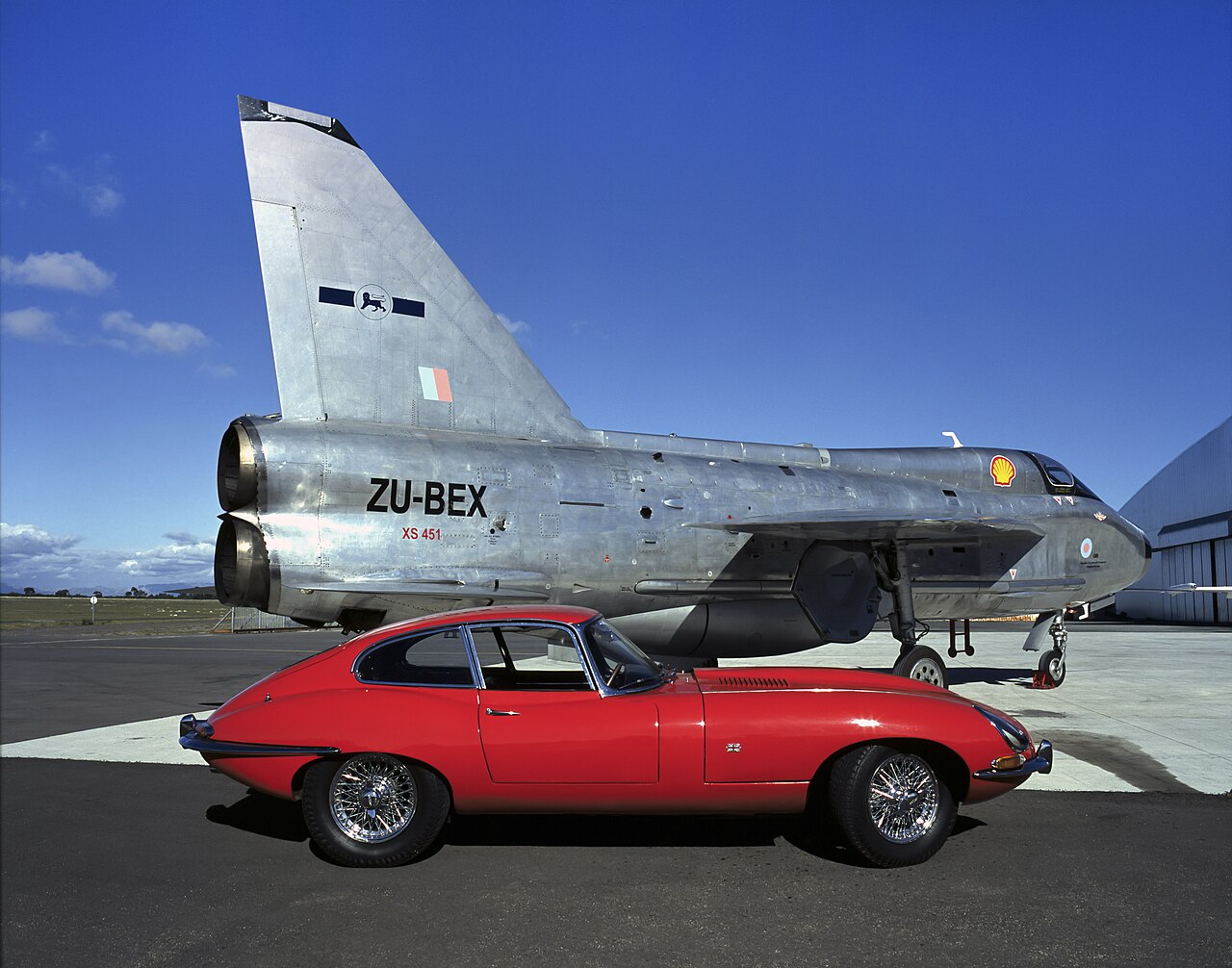
A Lightning T5 in Cape Town in 2002. For a few years this was the only place on earth a civilian could buy a ride in one. Photo: Wikimedia Commons, CC BY-SA 3.0
MiGFlug’s Lightning flights ran until 2010. Nobody has offered them since.
YqD2DKvYyJE" style="position:absolute;top:0;left:0;width:100%;height:100%;border:0" allowfullscreen>
Why the story keeps circulating
It resurfaces every few years on social media, usually stripped down to the punchline: engineer accidentally takes off in a fighter jet. The details are what make it worth retelling, and most of them survive checking. The canopy really was off. The seat really was inert. He really did go around twice before getting it down, and he really did break the tail on the aircraft that is now a museum piece.
What the punchline misses is the judgement involved. Holden had seconds to decide between hitting a fuel bowser, hitting a Comet full of people, or committing to a takeoff in an aeroplane he did not know how to fly. He chose the option that put only himself at risk, and then he flew it well enough to bring the aircraft home in one repairable piece. That is not an accident. That is an engineer who understood exactly what he was sitting in.
Sources: Wikipedia, Old Haltonians Association, Plane Historia, Thunder and Lightnings, Imperial War Museums, South African Civil Aviation Authority reporting
Frequently Asked Questions
Who was Taffy Holden?
Wing Commander Walter "Taffy" Holden, an RAF engineering officer with No. 33 Maintenance Unit at RAF Lyneham. On 22 July 1966 he accidentally took off in an English Electric Lightning while running ground tests, and flew for about twelve minutes before landing it.
How did Taffy Holden accidentally take off in a Lightning?
He was chasing an intermittent electrical fault that only appeared at high power, which meant running the engines up and throttling back repeatedly. On one run the throttles went one notch too far, past the detent and into full reheat. Both Avon engines lit and the aircraft accelerated down the runway.
Was Taffy Holden a pilot?
Partly, and the truth sits between the two versions usually told. He had earned pilot’s wings during an RAF cadetship and flown Tiger Moths, Harvards and Chipmunks, but he was an engineer by trade and posting, years out of currency, and had never flown anything with a jet engine.
What condition was the aircraft in?
Rigged so that flight was supposed to be impossible. The canopy was removed so electrical looms could run out of the cockpit, the ejection seat was made safe, and the undercarriage was pinned down. Holden had no helmet and no radio, and communicated with the ground crew by hand signal.
How did he land it?
With difficulty. He abandoned two approaches before getting it down on the third, striking the tail on landing. He was airborne for roughly twelve minutes.
What happened to the aircraft, XM135?
It survived and is on display at the Imperial War Museum at Duxford, where it has been since 1974. XM135 was the second production Lightning built.
Could a civilian ever fly in a Lightning?
Yes, for a period in the 2000s. MiGFlug offered Lightning flights to its own customers, alongside rides in the Blackburn Buccaneer, taking paying passengers supersonic to altitudes around 50,000 feet. Those flights ran until 2010 and nobody has offered them since.
On the night of 14/15 May 1982, D Squadron SAS raided the Argentine airstrip on Pebble Island in the Falklands and destroyed eleven aircraft, including six Pucaras.
Why pilots switch their altimeters to 1013.25 hPa or 29.92 inHg, why the US transition altitude is 18,000 ft while Europe’s varies, and how RVSM added six flight levels.





0 Comments