
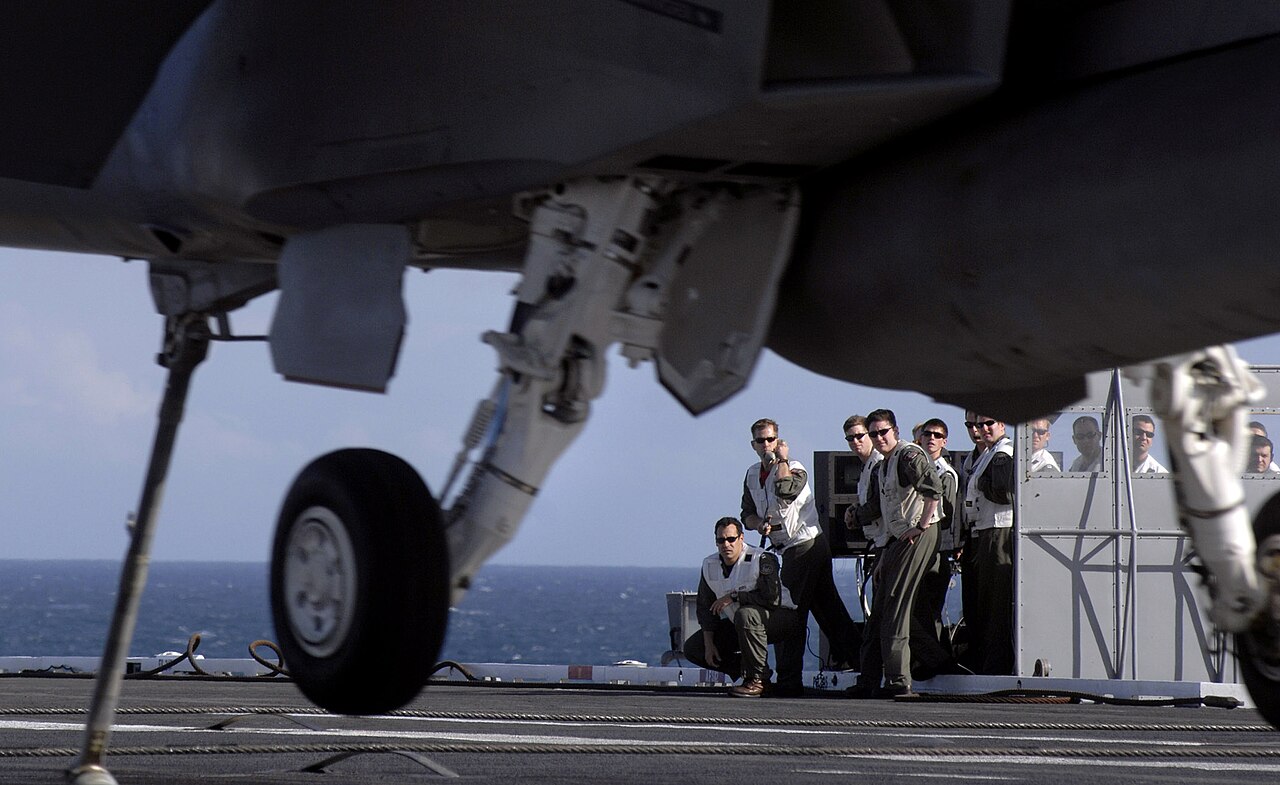
On every carrier landing, a small group of pilots stands on a platform at the back left edge of the flight deck, inches from the landing area. One holds a radio handset and a small switch box. If the approaching jet is drifting low, he tells the pilot. If the jet is about to land somewhere it should not, he presses a button and red lights tell the pilot to go around. Afterwards, he grades the landing.
He is the landing signal officer, or LSO, and the Navy's nickname for him has stuck since the 1920s: "paddles". For an aviator flying a jet onto a ship at night, the LSO is the last check before the deck.
Quick Facts
- Role: Naval aviator who supports the safe recovery of aircraft on a carrier
- Nickname: "Paddles" (US Navy), "batsman" (Royal Navy)
- Origin: USS Langley, the first US carrier, in the 1920s
- Tools today: Radio handset, pickle switch, wave-off and cut lights, optical landing system
- Grades: OK underline (5), OK (4), Fair (3), Bolter (2.5), No Grade (2), Technique wave-off (1), Cut (0)
- Training: LSO School, NAS Oceana, Virginia
From Waving Hats to Waving Paddles
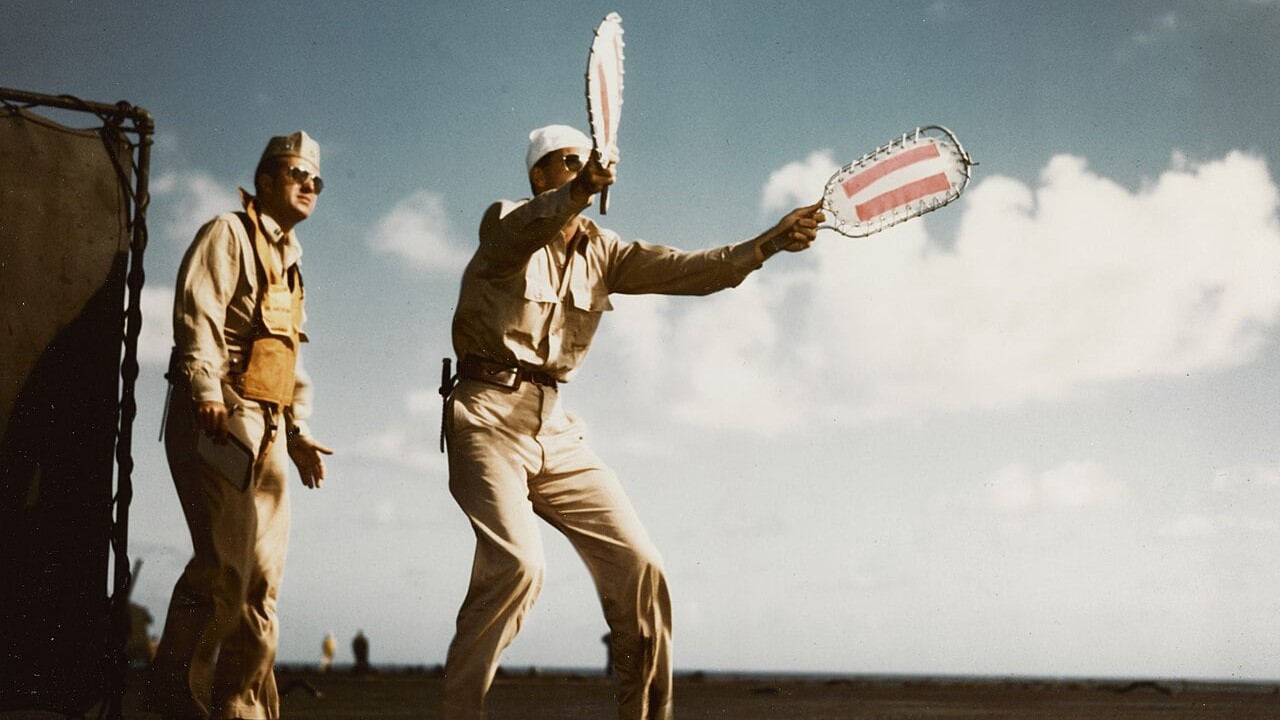
US carrier aviation began aboard USS Langley in 1922. The ship's executive officer, Kenneth Whiting, is credited with watching landings from the deck and signalling pilots by holding a sailor's white hat in each hand. That turned into the brightly coloured paddles of the Second World War, when LSOs used them to show an approaching pilot whether he was high, low, fast or slow, and when to cut power and drop onto the deck.
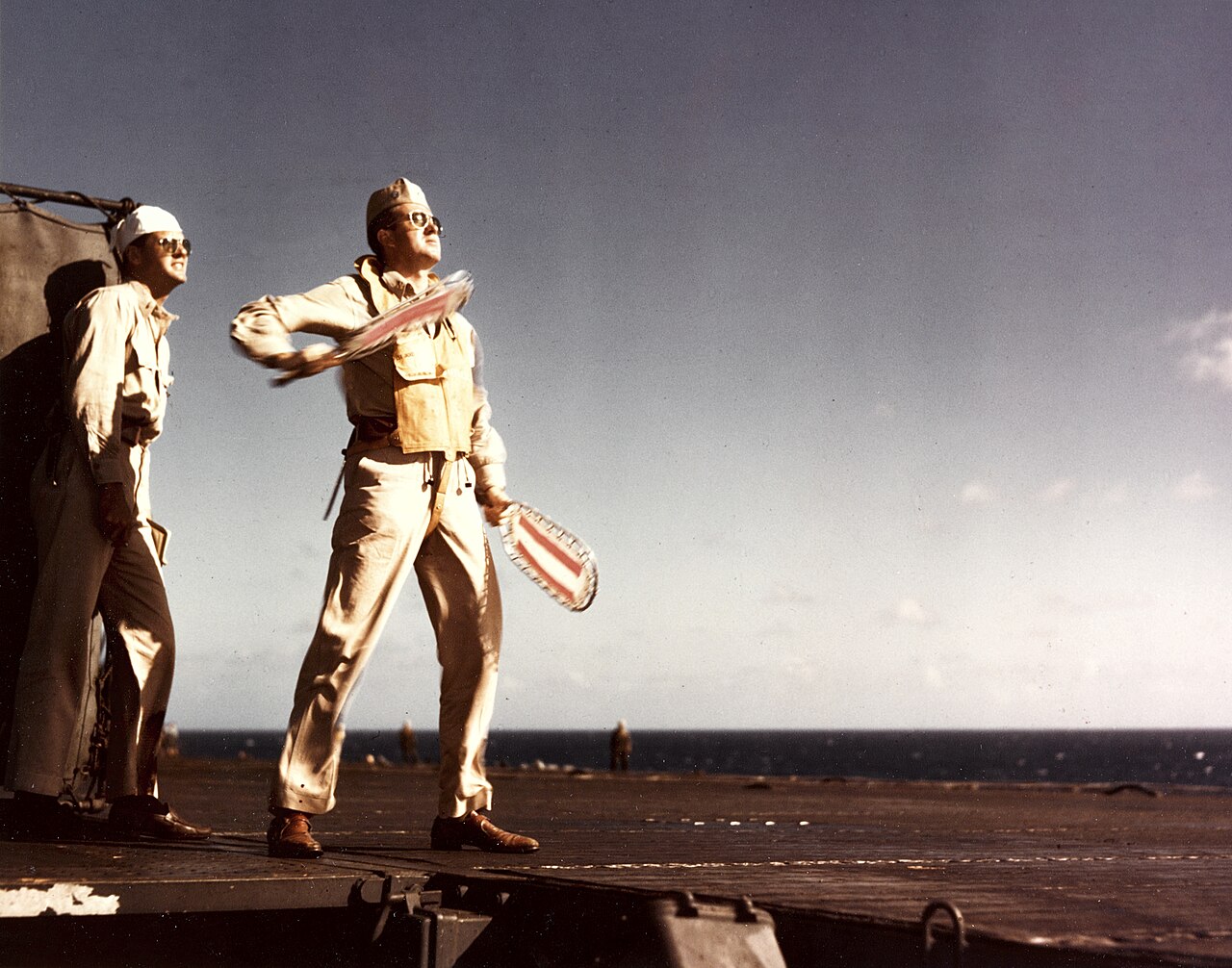
From the 1950s, mirror and then Fresnel-lens optical landing systems let pilots see their own glide path, and the LSO's job moved from hand signals to the radio. The paddles are gone, but the nickname and the platform stayed.
A 1963 US Navy training film on the work of landing signal officers.
What the LSO Does Today
Today's LSOs are carrier pilots themselves, selected from junior aviators in Navy and Marine Corps squadrons. On the platform, the controlling LSO watches the approach, glide slope and angle of attack and talks to the pilot by radio about power, glide path and centreline. A backup LSO watches line-up and whether the landing area is clear. In his hand is the pickle switch, which controls the lights of the optical landing system, including the flashing red wave-off lights that order a go-around.
Roberts decided to become an LSO after a friend was killed in an accident in 1998, hours after both had finished carrier qualifications aboard USS John F. Kennedy. He went on to wave the first F-35C landings on a carrier and the first arrested landings on USS Gerald R. Ford.
The Grade Sheet Every Pilot Fears
Every carrier landing is graded and debriefed. The scale runs from an "OK underline" for a perfect pass (5 points), through "OK" (4) and "Fair" (3), to a bolter, when the hook misses every wire and the jet has to fly off again (2.5), "No Grade" for gross but safe deviations (2), a technique wave-off (1) and a "Cut" for an unsafe pass (0). Pilots aim for a specific target wire, and the grades go up on the squadron board for everyone to see.
LSOs learn the job step by step: a field qualification for practice landings ashore, the formal course at LSO School at Naval Air Station Oceana, then squadron, wing, training, staff and force qualifications. The best air wing LSOs are among the most respected pilots on the ship.
Growler Jams shows how landing signal officers grade a carrier landing.
The Smithsonian National Air and Space Museum on the role of the landing signal officer.
Sources: Wikipedia (Landing signal officer); US Navy public affairs (Hanging up RJ's paddles, 2018); US Navy / National Archives photographs; Smithsonian NASM

0 Comments