
On 15 January 1936, the crew of the British research ship Discovery II, near the Bay of Whales, sighted what the world had been searching for since late November: two living men at Little America, the camp Richard Byrd had abandoned on the Ross Ice Shelf.
One was Lincoln Ellsworth, an American millionaire’s son who had spent years and a fortune trying to fly across Antarctica. The other was his Canadian pilot, Herbert Hollick-Kenyon. Seven and a half weeks earlier they had taken off from the other side of the continent, and soon afterwards their radio had gone silent.
They had done it. They had made the first flight across Antarctica. They just had not been able to tell anyone.
Quick Facts
- Flight: First flight across Antarctica
- Crew: Lincoln Ellsworth (navigator, expedition leader) and Herbert Hollick-Kenyon (pilot)
- Aircraft: Northrop Gamma Polar Star, NR-12269
- Take-off: 23 November 1935, Dundee Island, Weddell Sea
- Landings: Four en route; out of fuel on 5 December about 25 miles (40 km) short of Little America
- Distance flown: About 2,400 miles (3,862 km)
- Rescue: Sighted by RRS Discovery II on 15 January 1936 after a six-day walk and weeks at Little America
- Aircraft today: Smithsonian National Air and Space Museum, donated April 1936
The explorer who used aircraft
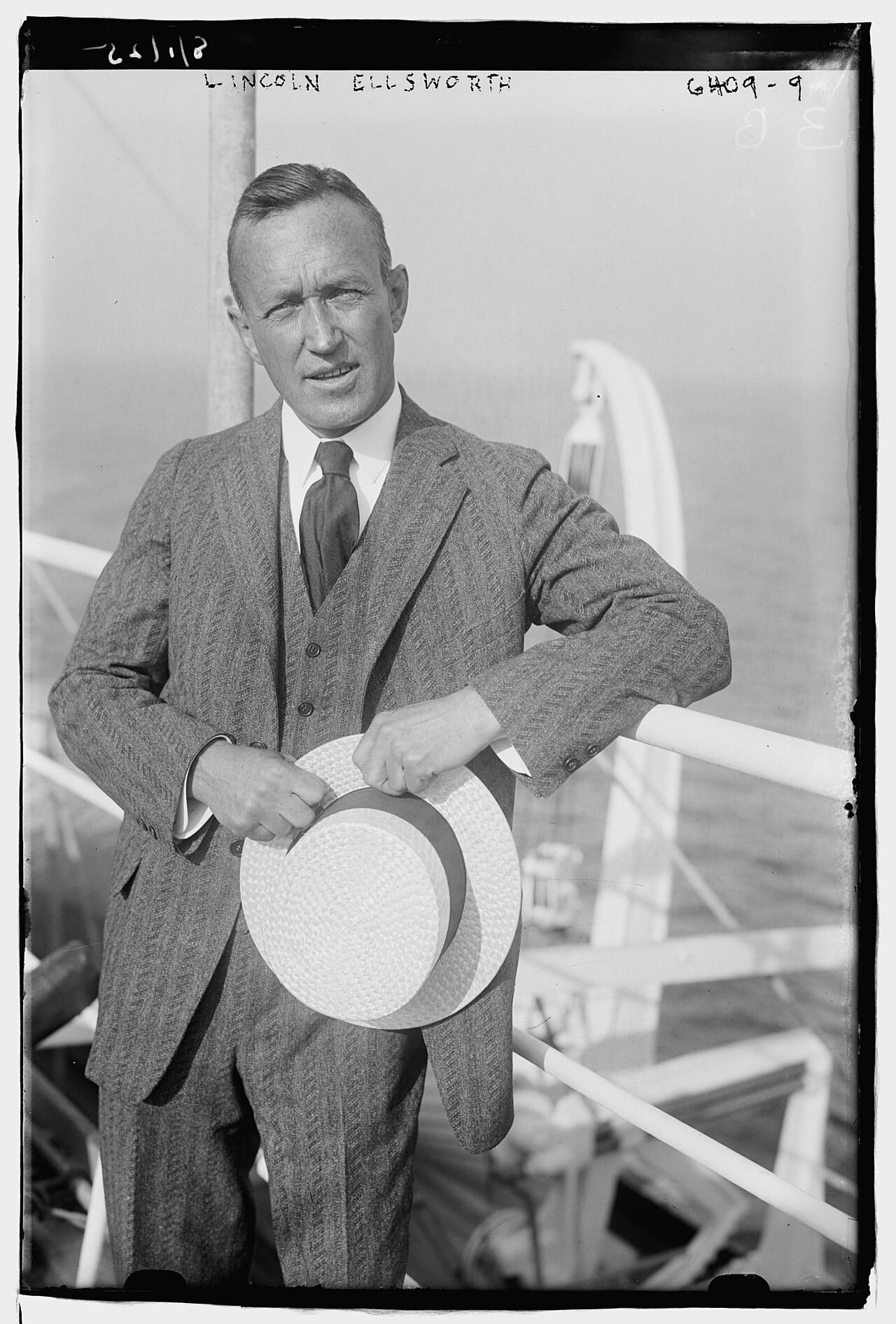
Ellsworth was the son of a wealthy Chicago coal mine owner, and he had been on polar expeditions since 1925, when he joined the Norwegian explorer Roald Amundsen. He later crossed the Arctic with Amundsen and the Italian airship designer Umberto Nobile aboard the airship Norge. The Smithsonian puts his place in aviation history plainly: it was earned by his use of the aeroplane for exploration, not by his skill as a pilot.
By the 1930s, Antarctica was the great unmapped prize, and aircraft were the way to see it. Ellsworth bought a former Norwegian herring boat, renamed it Wyatt Earp after his hero, and ordered an aircraft from the newly formed Northrop Corporation of Inglewood, California.
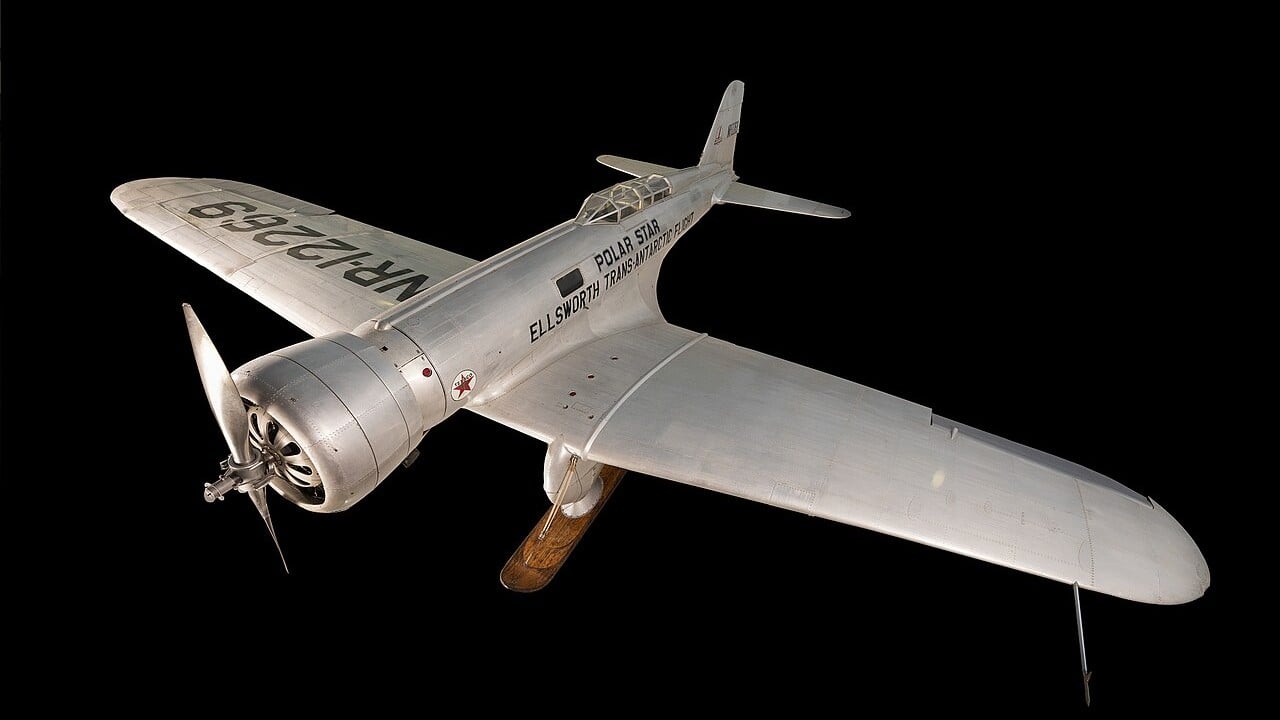
That aircraft was a Northrop Gamma, one of the first two the company built in 1933. It was a low-wing, all-metal monoplane with a single radial engine and two seats in tandem with dual controls. Ellsworth named it Polar Star and gave it the registration NR-12269.
Two years of false starts
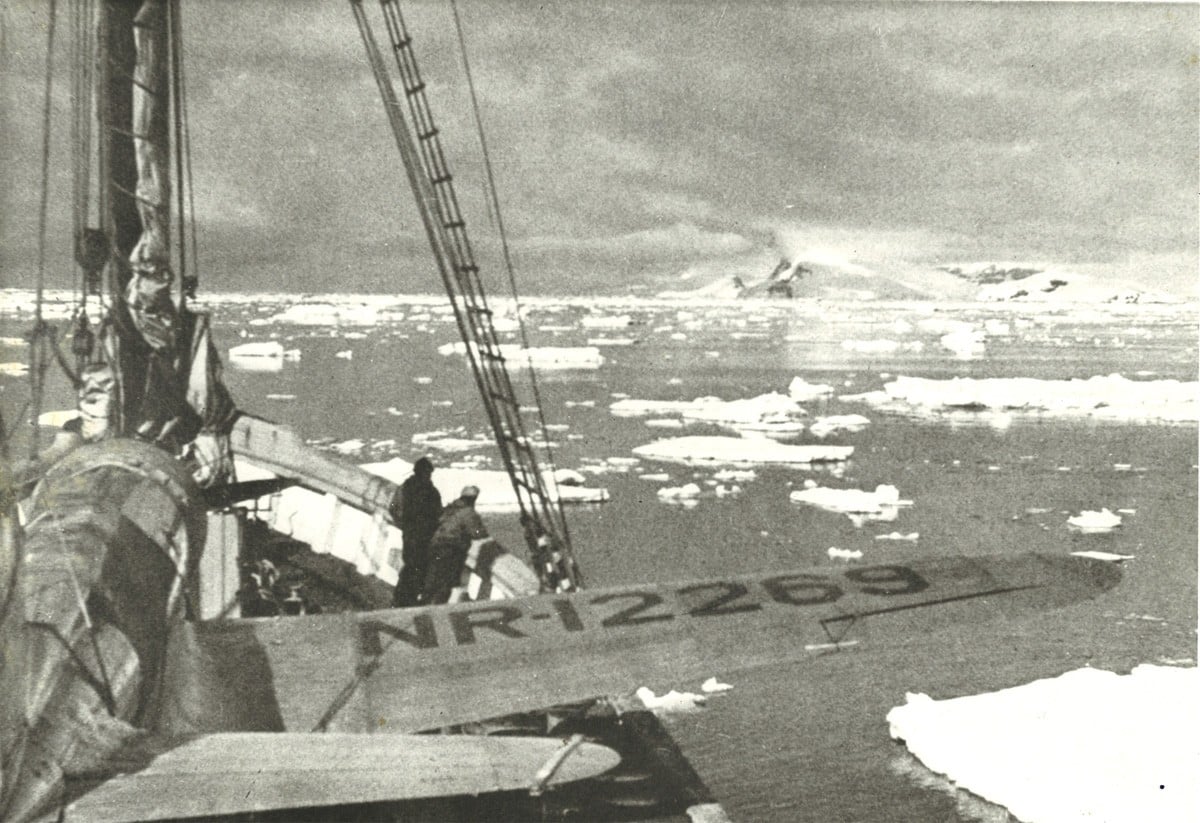
Nothing went right at first. In January 1934 the expedition reached the Bay of Whales with Bernt Balchen as pilot, but the ice under the Polar Star broke apart and one ski slipped through a crack. The aircraft was saved after hours of work, but it had to go back to the United States for repairs.
The expedition returned in September 1934. This time a broken connecting rod sent the aircraft to Magallanes in Chile for repair, and by the time it was back, the snow runway was unusable. On 3 January 1935, Ellsworth and Balchen finally flew from Snow Hill Island towards Graham Land, but cloud and snow turned them back after several hours.
For the next season Ellsworth had a new pilot. Herbert Hollick-Kenyon was a Canadian pilot with years of flying in western Canada behind him. He would fly; Ellsworth would navigate.
Archive footage from CriticalPast of Sir Hubert Wilkins and Lincoln Ellsworth preparing during one of Ellsworth’s expeditions.
Across the unknown
On 23 November 1935, the Polar Star took off from Dundee Island in the Weddell Sea and headed across the continent towards Little America on the Ross Sea.
They flew at around 13,400 feet. Crossing the 12,000-foot peaks of the Eternity Range, the two men became the first people to see western Antarctica. Ellsworth named part of the territory below them James W. Ellsworth Land, after his father.
Their radio fell silent early in the flight. Time magazine reported it went quiet about a third of the way to Little America; Australian records say it was broken in a landing. Either way, from that moment on, nobody outside the cockpit knew where they were.
The Polar Star landed four times on the way. At their third camp a blizzard blew through the night and packed the inside of the aircraft solid with drifted snow. According to the Smithsonian, the two explorers spent a whole day scooping it out with a teacup.
Out of fuel, 25 miles short
On 5 December, after about 2,400 miles in the air, the engine ran out of fuel. Hollick-Kenyon put the Polar Star down safely on the Ross Ice Shelf, about 25 miles (40 kilometres) short of Little America.
The two men set off on foot. It took them six days to walk the rest of the way. At Little America they moved into the camp Byrd had left behind, and settled down to wait for a ship.
The outside world, meanwhile, assumed the worst. Sir Hubert Wilkins, aboard Wyatt Earp, planned a search. In Australia, the government decided to send a rescue expedition. The Royal Australian Air Force prepared a Westland Wapiti and a de Havilland Gipsy Moth for Antarctic conditions, and a team led by Flight Lieutenant Eric Douglas sailed south with them aboard Discovery II.
The National Oceanography Centre looks at a model of the seaplane used in the rescue of the two polar explorers.
Found at Little America
Discovery II reached the Bay of Whales in January 1936 and sighted the two men on 15 January. They had been alone on the ice for almost two months, and the radio message that went out from the ship carried the news the world had been waiting for: Ellsworth and Hollick-Kenyon were safe.
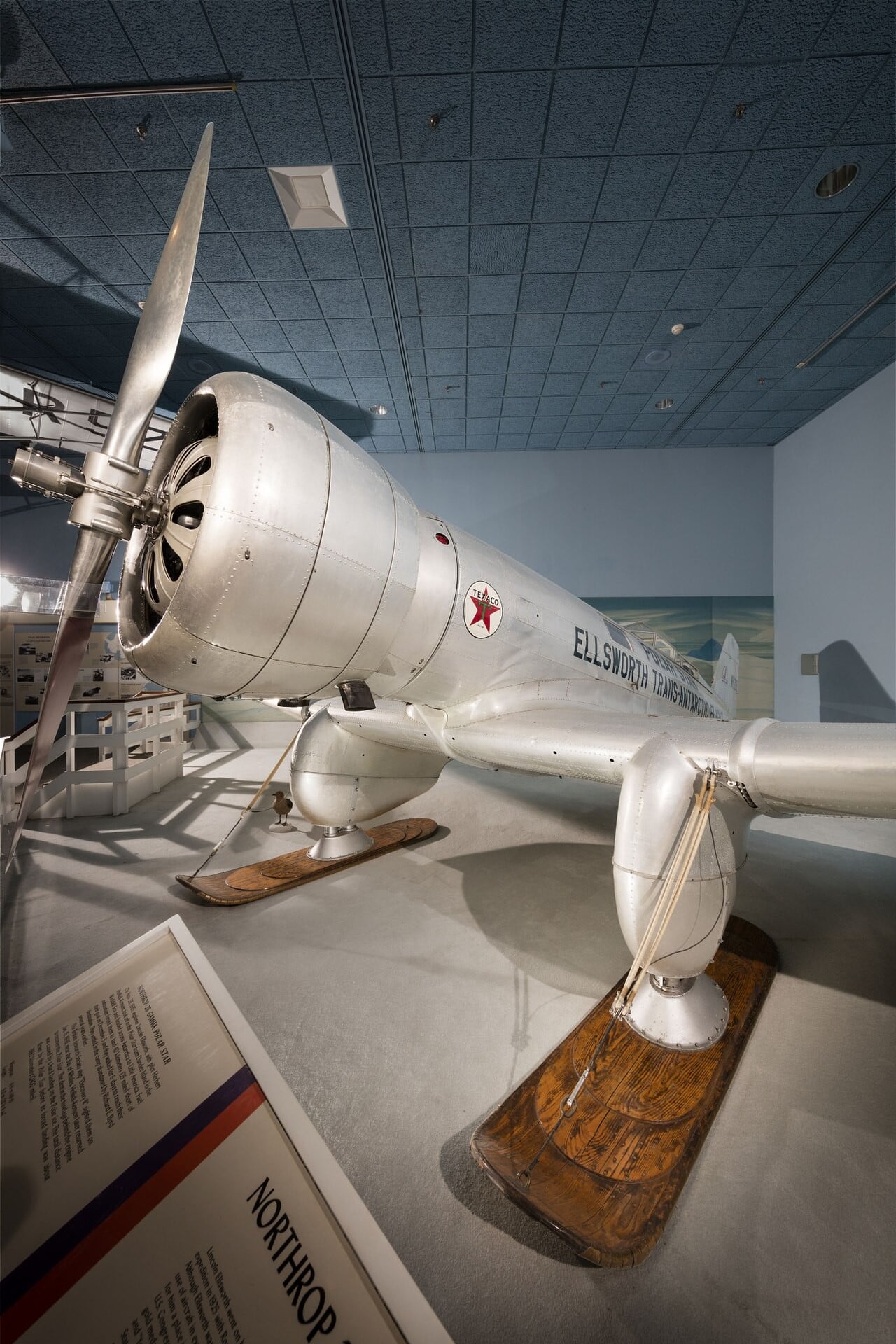
The flight earned Ellsworth a special gold medal from the US Congress, voted for his Antarctic exploration and for claiming roughly 350,000 square miles of the continent on behalf of the United States. Hollick-Kenyon later went back to the ice to recover the Polar Star, and in April 1936 Ellsworth donated it to the Smithsonian.
Reuters archive footage from 1936 of the discovery of Lincoln Ellsworth and Herbert Hollick-Kenyon in Antarctic waters.
The Smithsonian still has it, dented fuselage and all. The dent behind the engine came from a hard landing on the polar ice. It is a small, silver monoplane, the first to cross the last continent, and its two-man crew finished the job on foot.
Sources: Smithsonian National Air and Space Museum (Northrop Gamma Polar Star), National Archives of Australia (Rescue in the Antarctic), Time (Transport: Antarctic Mystery, 27 January 1936), Australian National Maritime Museum, Library of Congress
Header photo: Smithsonian National Air and Space Museum via DPLA / Wikimedia Commons, CC0
0 Comments