
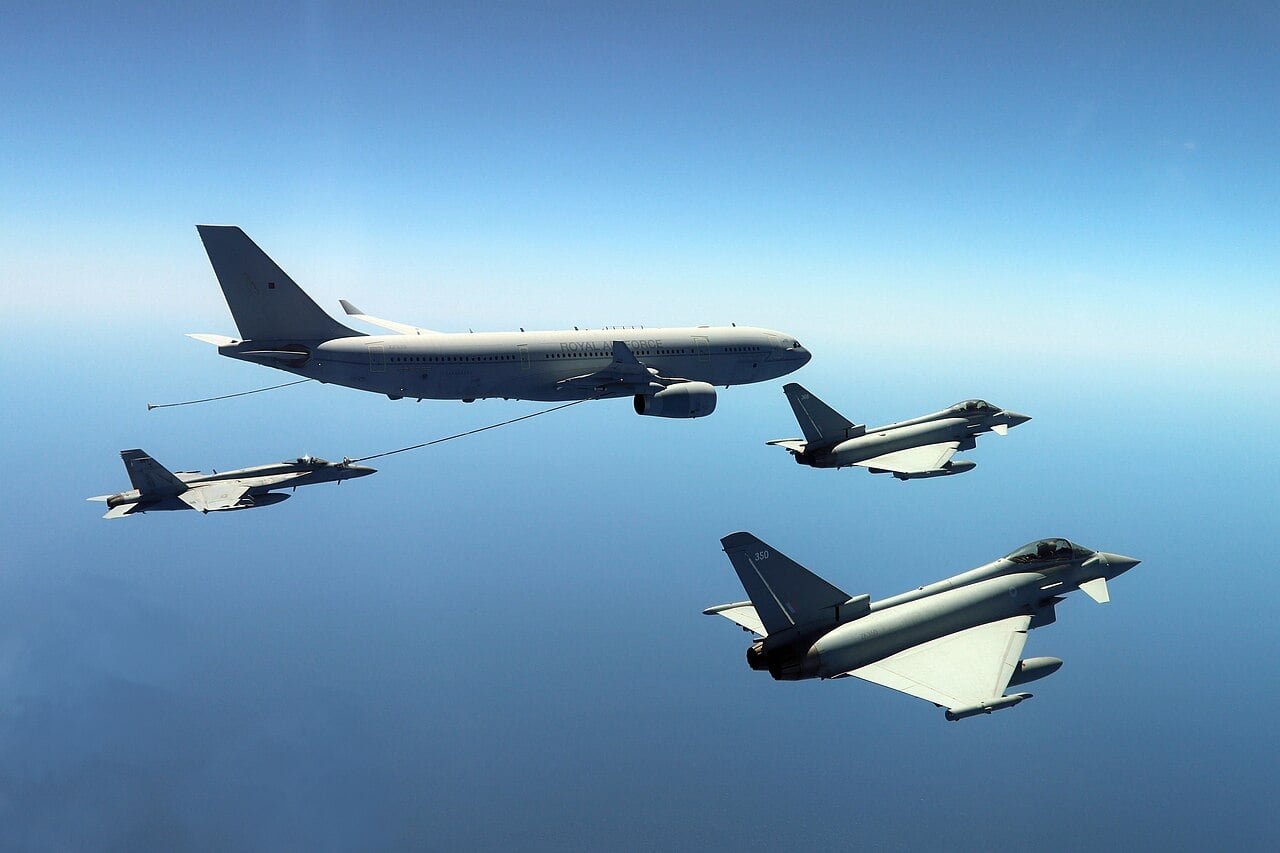
Sixteen thousand feet above the North Sea, 32 nautical miles north-north-east of Cromer, an RAF Voyager tanker was passing fuel to a Typhoon on 18 February 2026. Then something black and circular flashed towards the windscreen and passed 100 to 150 feet over the cockpit. The captain ducked on instinct.
Five days later, a Typhoon pilot practising air combat further up the coast watched a black circular object, about the size of a car tyre, pass directly above the jet. Both incidents happened in February. They became front-page news only on 16 October 2026, when The Telegraph published details from Royal Air Force incident logs.
The RAF drone near-misses were reported to the police and, according to the logs, triggered "multiple different external investigations". Eight months on, nobody has said publicly what the objects were or where they came from.
Quick Facts
- Incident 1: 18 February 2026, Voyager tanker refuelling a Typhoon, 32 NM NNE of Cromer, Norfolk
- Altitude: FL160 (about 16,000 ft) in the Airprox report; The Telegraph reported about 17,000 ft
- Incident 2: 23 February 2026, Typhoon in simulated air combat, Danger Area D323 off the north-east coast, about 12,000 ft
- Description: Black, circular object; second one likened to a car tyre
- Airprox risk: Category B (Voyager) and Category C (Typhoon)
- Made public: The Telegraph, 16 October 2026, from RAF incident logs
- Investigation: Reported to police; "multiple different external investigations"
- Drone ceiling: Normal UK limit for small drones is 400 ft
Two Incidents, Five Days Apart
The first encounter sits in the public record as Airprox 2026012, assessed by the UK Airprox Board at its meeting on 22 April 2026. The board's summary puts the Voyager at FL160 in clear weather with one receiver on the hose, flying a towline in the block between 14,000 and 17,000 feet. The captain, the non-handling pilot, saw the object for only a few seconds.
Nobody else on the tanker's flight deck saw it, but one of the Typhoon pilots did and agreed with the description. The Swanwick military controller had nothing on radar, logged the position and warned a second formation joining the tanker. The Telegraph's figure of about 17,000 feet is a little higher than the FL160 in the Airprox summary.
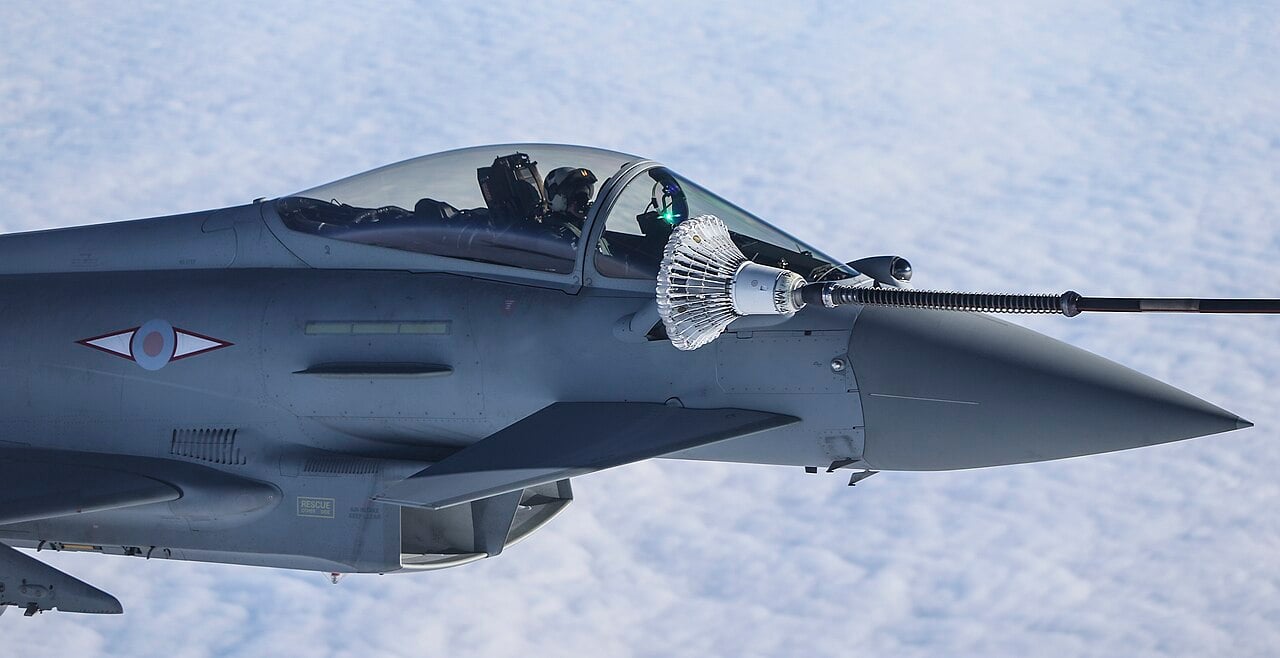
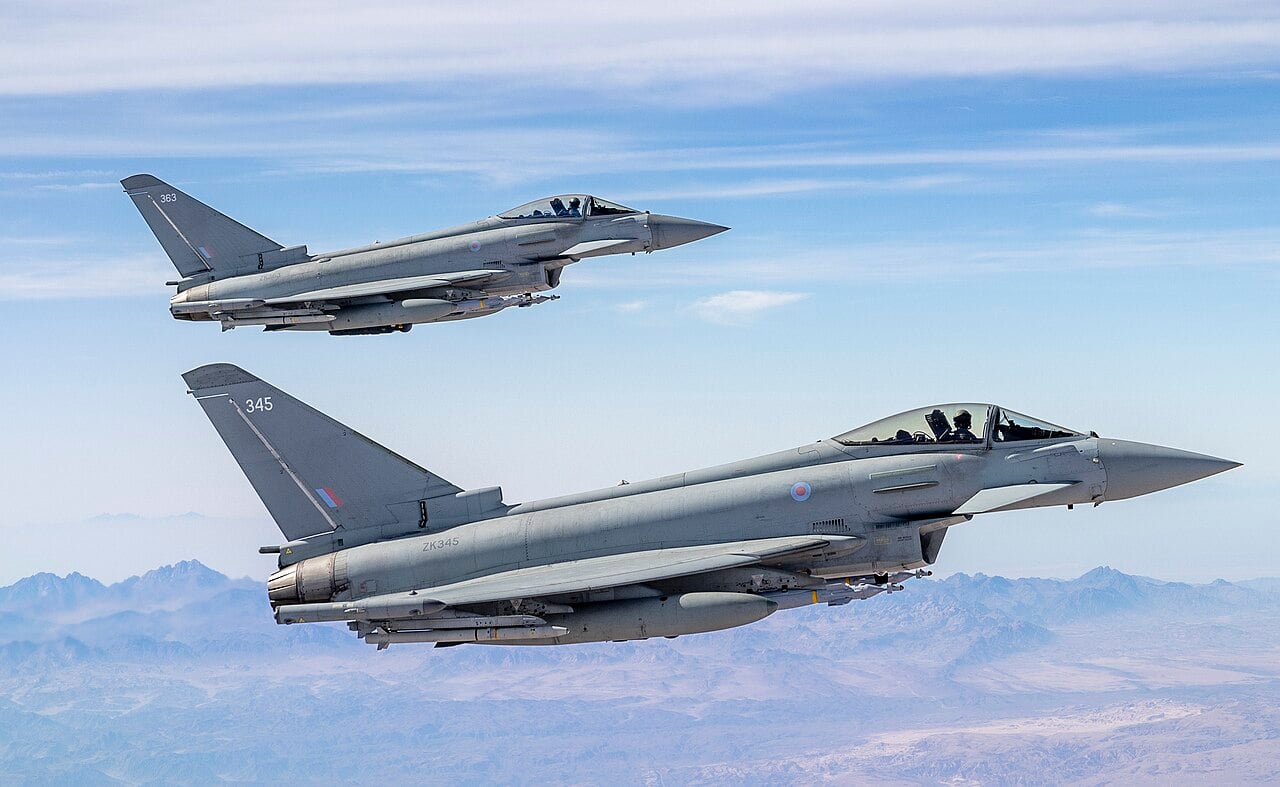
The second case, Airprox 2026014, came on 23 February at 15:21. A Typhoon was manoeuvring against another jet in Danger Area D323, a military training area over the North Sea off north-east England, and was flying straight and level at 300 knots and 12,000 feet when the pilot saw the object about 300 feet above, tracking east.
The pilot moved away from the spot and reported an Airprox a few minutes later. The controller's notes record the drone as 200 feet above the Typhoon at 12,500 feet. LBC reports that the sighting was passed to North Yorkshire Police.
What the Airprox Board Could and Could Not Say
The board is careful with its words. In both cases it said the reported altitude and description were not enough to determine what the object was. The Voyager pilot admitted it could have been a balloon or something similar.
The risk ratings say the rest. The Voyager event was graded Category B: safety much reduced, not assured. The Typhoon event was Category C: safety reduced, but no risk of collision.
A third case appears in the board's September 2026 summary. On 28 May a Typhoon 19 nautical miles north-east of Skegness, at about 10,500 feet, passed a dark, rectangular object that the pilot believed was a quadcopter. This time it was big enough to show up on the Head-Up Display recording, and the board judged it could have been a drone.
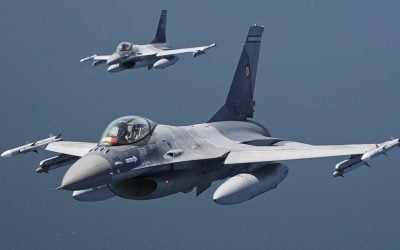
BFBS Forces News footage of an RAF Voyager refuelling a Typhoon, the kind of sortie the first drone encounter interrupted over the North Sea.
Police, Investigations and a Careful MoD
The Ministry of Defence has not commented on the incidents directly. Its statement leans on a phrase it has used before: drone sightings are not necessarily hostile.
According to LBC, a spokesperson also said improved detection had increased the military's ability to record and assess possible drone activity, and that more than £2 billion is going into air defence and counter-drone capabilities, including the Typhoon fleet.
The altitude is what makes these cases odd. Small drones in the UK are normally limited to 400 feet. An object at 12,000 to 16,000 feet over open sea, with no radar return, could be many things: a stray balloon, a large military-grade drone, or something else that controllers simply could not see.
For the pilots, the label matters less than the closing speed. A Voyager on a towline is heavy, slow to manoeuvre and tied to its receivers. A Typhoon at 300 knots covers 150 metres a second. Anything solid passing within 100 feet leaves no time to react.
A Pattern Over Europe's Bases
Britain has seen this before. In November 2024 the US Air Force confirmed small drones over RAF Lakenheath, RAF Mildenhall and RAF Feltwell in Suffolk and Norfolk. Since then airports and air bases across Europe have been shut or put on alert by sightings that often went unexplained.
LBC also cites an International Institute for Strategic Studies report on a Russian drone surveillance campaign over European military sites between August 2024 and February 2026. The report links the flights to tankers in Russia's sanctions-dodging "shadow fleet". Nothing published so far ties the North Sea objects to that campaign, and the Telegraph logs do not name a source.
What remains is a pair of eyewitness reports, a radar screen that showed nothing and two Airprox files that end without an answer. Until one of those "external investigations" reports back, the RAF's mystery drones stay exactly that.
Sources: The Telegraph, Evening Standard/Yahoo News, LBC, GB News, Kyiv Post/TVP World, UK Airprox Board (Airprox 2026012, 2026014, 2026089), Military Times, Wikipedia (Airbus Voyager)

0 Comments