
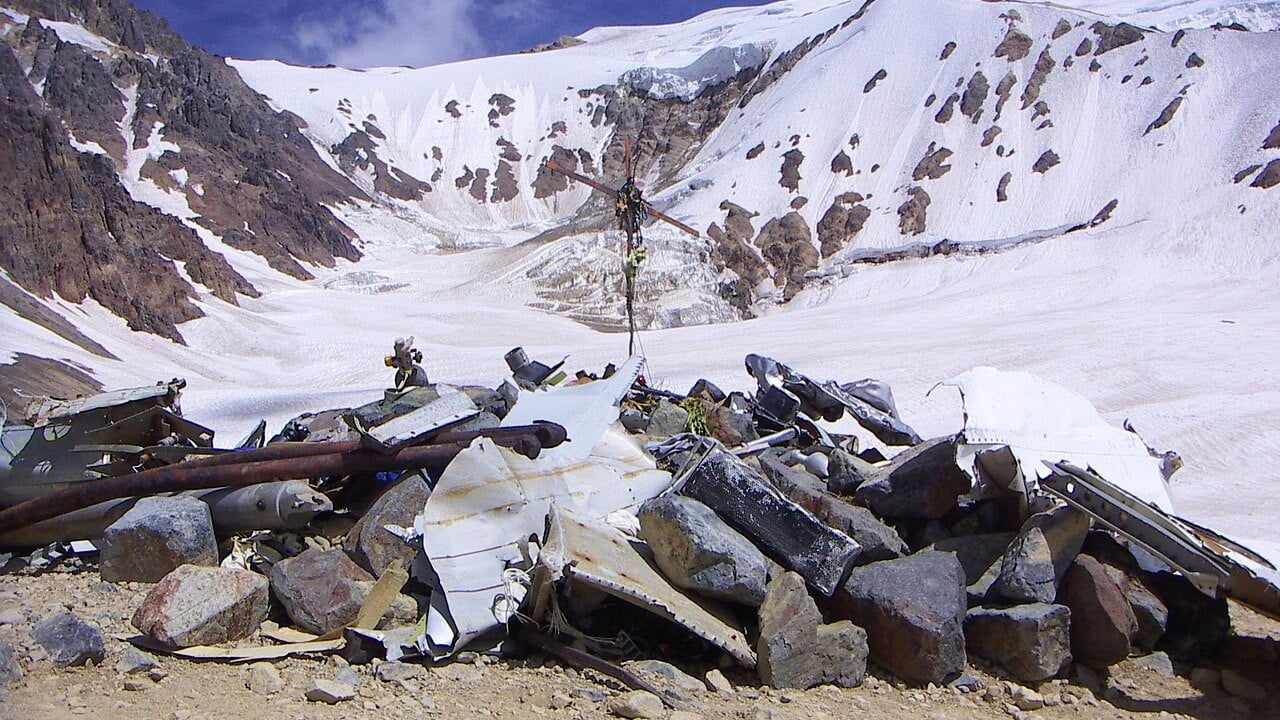
Fifty-four years ago today, a twin-turboprop of the Uruguayan Air Force took off from Mendoza in Argentina with 45 people on board, bound across the Andes for Santiago. Many of them were young men from the Old Christians Club rugby team of Montevideo, on their way to play a match in Chile with friends and family along for the trip.
They never arrived. In cloud over the high cordillera, the aircraft began its descent too early and struck a mountain ridge. What followed became one of the most famous survival stories of the 20th century: 72 days on a glacier at more than 3,600 metres, with no proper clothing, almost no food, and a search that was called off after eight days.
Sixteen people came home. This is how.
Quick Facts: Uruguayan Air Force Flight 571
Date of crash: 13 October 1972
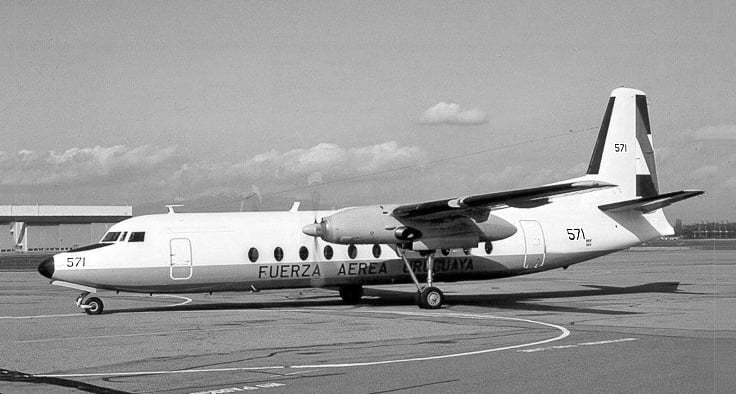
Aircraft: Fairchild FH-227D, registration T-571
Route: Montevideo to Santiago, via Mendoza
On board: 45 (40 passengers, 5 crew)
Cause: Controlled flight into terrain after a premature descent over the Andes
Crash site: Malargüe Department, Mendoza Province, Argentina, about 3,660 m
Search called off: 21 October 1972
Rescue: 22 and 23 December 1972, after 72 days
Survivors: 16 of 45
A Navigation Error in Cloud
The flight had begun the day before, on 12 October, when the chartered FH-227D left Montevideo for Santiago. Bad weather over the mountains forced an overnight stop in Mendoza. On the afternoon of Friday, 13 October, the crew took off again at 2:18pm to cross the Andes.
The co-pilot, Lieutenant Colonel Dante Héctor Lagurara, was flying the aircraft under training. Believing they had passed over Curicó in Chile, on the far side of the mountains, he began the descent towards Santiago. In fact they were still between 60 and 70 kilometres east of Curicó, deep in the Andes. The official investigation blamed pilot error leading to controlled flight into terrain.
The aircraft hit a ridge, lost both wings and its tail, and the fuselage slid about 725 metres down a glacier before coming to rest. Several people died in the impact and many more were badly hurt. Roberto Canessa later told National Geographic that in its final moments the pilot "began to climb, until the plane was nearly vertical and it began to stall and shake."
The Search Is Called Off
Search aircraft flew over the mountains, but the fuselage was white and the glacier was white, and the wreck was not spotted. On 21 October, eight days after the crash, the search was called off. The survivors heard the news on a small transistor radio.
They had almost nothing to eat, a little chocolate and some snacks shared out in tiny portions, and the nights were far below freezing. They insulated the broken fuselage with luggage and seat cushions and huddled together to survive.
As the days passed, the survivors faced the decision that made the story famous. With no food and no rescue coming, they agreed, after long and painful debate, to eat the bodies of those who had died. Several of them were devout Catholics, and the choice weighed heavily on them.
On the night of 29 October, an avalanche buried the fuselage while they slept, killing eight more people. Others died of their injuries in the weeks that followed. In all, 29 of the 45 on board lost their lives.
7NEWS Spotlight's documentary on the Andes disaster, with survivors' accounts. Viewed more than 12 million times.
Ten Days Across the Mountains
By December the survivors knew nobody was coming. On 12 December, Nando Parrado, Roberto Canessa and Antonio Vizintín set out to walk out of the mountains. After about three days, Vizintín returned to the fuselage and the other two went on alone.
Parrado and Canessa climbed high into the mountains, saw nothing but peaks in every direction, and kept walking west. Parrado later recalled saying to his friend: "Roberto, can you imagine how beautiful this would be if we were not walking dead?"
After about nine days they reached a river valley in Chile, where they met a Chilean muleteer, Sergio Catalán. Parrado wrote him a note explaining who they were.
Catalán went for help. The two men were taken to Los Maitenes, and on 22 December the Chilean Air Force flew rescuers into the mountains to the fuselage. The last survivors were brought out on 23 December. After 72 days, 16 people came home.
A Story That Never Went Away
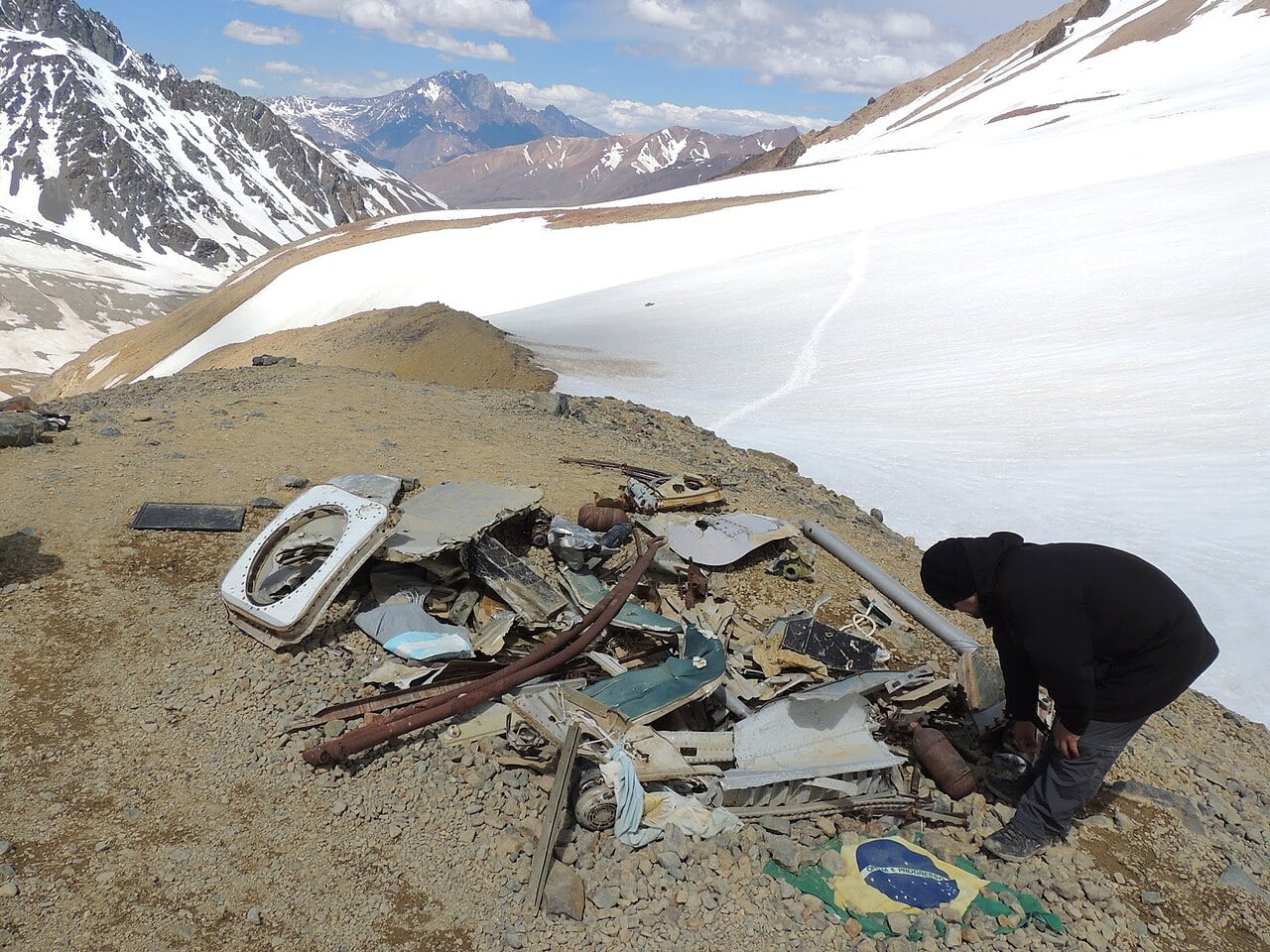
The survivors' story was told in Piers Paul Read's 1974 book Alive, which became the 1993 film of the same name, with Parrado as technical adviser. Parrado's own memoir, Miracle in the Andes, followed in 2006. In 2023 the Spanish director J. A. Bayona released Society of the Snow, based on Pablo Vierci's 2008 book, and brought the story to a new generation.
For pilots, Flight 571 remains a case study in controlled flight into terrain, the kind of accident that modern terrain-warning systems and satellite navigation were built to prevent. A crew that believed it had crossed the mountains descended into them.
For everyone else, it is a story about what people will do to stay alive and to bring each other home.
Nando Parrado talks about surviving the 1972 Andes crash.
Nando Parrado on Skavlan, describing how he survived the crash of Flight 571.
Sources: Wikipedia (Uruguayan Air Force Flight 571); National Geographic (Worrall, 2016); Nando Parrado, Miracle in the Andes (2006); Piers Paul Read, Alive (1974).
0 Comments