
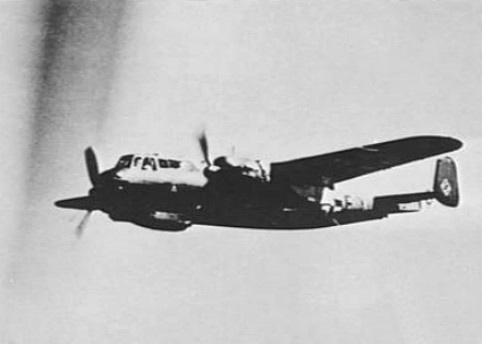
Dornier Do 217
The Luftwaffe’s most capable medium–heavy bomber of the early-to-mid war — a much larger, harder-hitting grandchild of the Do 17 that carried out the first successful guided-weapon attacks in history, sinking the Italian battleship Roma with a radio-controlled bomb in September 1943.
The Dornier Do 217: the enlarged Dornier bomber that fired the first shot of the guided-weapons age
If the Dornier Do 17 was the slim, elegant “Flying Pencil” that opened the Second World War, the Do 217 was what the same design office built once the war turned serious. It looks, at a glance, like a Do 17 that has been inflated: the same twin-engine layout and family resemblance, but bigger in every dimension, far heavier, and vastly more capable. Where the Do 17 could lug barely a tonne of bombs a short distance, the Do 217 could carry several times that load, fly further, and reach out over the sea to strike ships. It became, for a crucial period of the war, the Luftwaffe’s most powerful and versatile medium bomber.
The Do 217 grew directly out of the Dornier bomber line — Do 17, then the export-oriented Do 215, and finally this much larger machine. Dornier did not simply scale the Do 17 up; the Do 217 was substantially redesigned, with a deeper fuselage that could actually swallow a worthwhile bomb bay, more powerful engines, and a stronger structure. The first prototype, the Do 217 V1, flew in 1938. Early development was troubled — the V1 was lost in a crash — and it took time and a change of powerplant before the type settled down. By 1940–41 the definitive early bomber, the Do 217E, was entering Luftwaffe service.
Most Do 217 bombers were powered by two BMW 801 air-cooled radial engines, the same big, powerful radial that drove the Focke-Wulf Fw 190 fighter. Later high-performance versions — the Do 217K and, especially, the Do 217M — switched to Daimler-Benz DB 603 liquid-cooled inline engines, and the same inline powerplant appeared on the dedicated night fighters. That flexibility, radial or inline depending on the job, is worth remembering: it is one reason the Do 217 could be adapted to so many different roles as the war went on.
And the roles were remarkably varied. The Do 217 was a level bomber and, at least in intention, a dive bomber — some early variants carried an extraordinary umbrella-like air brake that unfolded from the tail cone to steady the aircraft in a dive, though it proved troublesome and was often removed. It was a night bomber over Britain. It was a long-range maritime and anti-shipping striker ranging out over the Atlantic and the Mediterranean. And, in its Do 217J and Do 217N forms, it was a radar-equipped night fighter defending the Reich against RAF Bomber Command, bristling with cannon and, on some aircraft, upward-firing guns.
But the Do 217’s real claim on history is narrower and far more significant than “a good, flexible bomber.” In 1943, Do 217s of the specialist unit Kampfgeschwader 100 (KG 100) became the aircraft that opened the age of precision-guided weapons. They carried two revolutionary German munitions: the Fritz X, a radio-guided, armour-piercing bomb steered onto its target by an operator watching a flare in its tail, and the Henschel Hs 293, a rocket-boosted, radio-guided glide bomb designed to be flown into the side of a ship. These were not unguided bombs prayed onto a target — they were the world’s first genuinely operational guided weapons, and the Do 217 was the platform that made them work in combat.
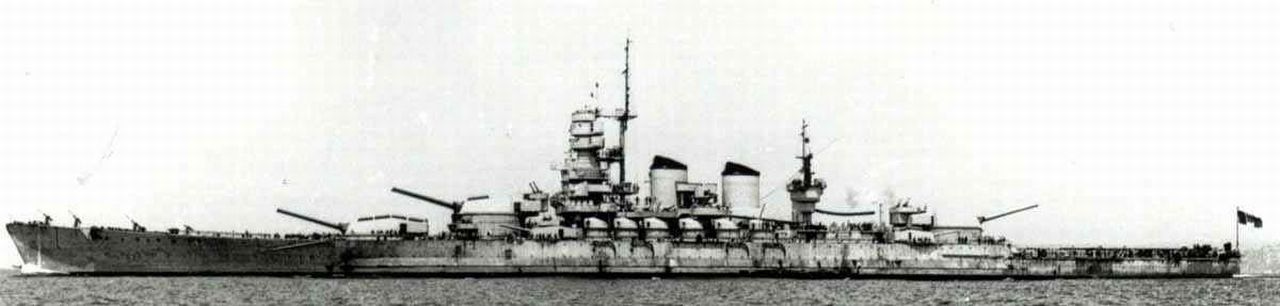
The results were shattering. On 27 August 1943, over the Bay of Biscay, an Hs 293 launched from a Do 217 sank the Royal Navy sloop HMS Egret — by most accounts the first warship in history destroyed by a guided missile in action. Two weeks later came the blow that still defines the type. On 9 September 1943, as the Italian fleet steamed out to surrender to the Allies, Do 217s of KG 100 attacked with Fritz X guided bombs. One or more struck the brand-new battleship Roma, detonated her magazines, broke her in two and sent her to the bottom, killing more than 1,250 of her crew — among them the Italian fleet commander. Her sister ship was also hit and damaged. In a single afternoon, a handful of twin-engine bombers had sunk a modern battleship from high altitude with a weapon nobody on the receiving end fully understood.
Over the following months the guided-weapon Do 217s went on to damage and sink Allied warships off the Salerno and Anzio beachheads — among their victims the US cruiser Savannah and the British battleship Warspite, both badly hurt by Fritz X, and the cruiser HMS Spartan, sunk by an Hs 293 off Anzio. For a brief, dangerous window the Allied fleets had no reliable answer, and the campaign forced the rapid development of radio jamming and new tactics. It was, quite literally, the dawn of the precision-guided munition, and it was flown into being from the bomb bays and wing racks of the Dornier Do 217.
The Do 217 also took its turn over Britain. In the winter and spring of 1944 the Luftwaffe mounted Operation Steinbock — the “Baby Blitz” — a last concentrated bombing campaign against London and southern England, and Do 217 units were part of the force. By then, though, the aircraft was fighting an increasingly hopeless battle against a mature, radar-directed British night-defence system, and losses were heavy for meagre results. Production wound down through 1943–44 in favour of newer types, and the Do 217 was gradually withdrawn from front-line bombing, lingering longest in the maritime-strike and night-fighter roles.
Around 1,900 Do 217 were built — the exact figure varies between sources — a modest number for a wartime bomber, reflecting how quickly German priorities shifted. And unlike the Do 17, whose single salvaged wreck was raised from the sea, no complete Do 217 survives anywhere in the world today. The type was so thoroughly used up and scrapped that only fragments, recovered components and long-running reconstruction efforts remain. For an aircraft that changed how wars would be fought, it left behind astonishingly little metal.
It is easy, eighty years on, to lose sight of how radical all this was. In 1943 the idea that a bomber could sink a battleship by steering a bomb onto it from miles away was the stuff of science fiction; the Allied crews on the receiving end initially struggled even to describe what was happening to them. That the aircraft making it real was a conventional-looking twin-engine bomber — no rocket plane, no secret marvel, just an enlarged Dornier — only makes the achievement stranger and more important.
This page tells the whole story: the Do 17 lineage and the leap in size and power; the BMW radials and DB inlines; the dive brakes, the night fighters and the maritime strikers; and above all the guided-weapon campaign of 1943 that makes the Dornier Do 217 one of the genuinely pivotal aircraft of the Second World War — the machine that fired the opening shot of the precision-weapons era.
How the Dornier Do 217 was built: a bigger Dornier, radial power and the first guided weapons
Three design decisions defined the Do 217 — the enlarged airframe, the multi-role flexibility, and the guided-weapon capability that made it historically pivotal.
The Do 217 is best understood as a deliberate correction of the Do 17’s single great weakness — its tiny payload — without throwing away the Dornier family’s virtues of clean lines and honest handling. Everything about the aircraft was scaled up to let it carry more, further, and hit harder, and then adapted, again and again, to whatever the war demanded next.
Three design choices define it: the enlarged, deep-bellied airframe and its big radial engines; the multi-role flexibility that let one bomber become a dive bomber, a maritime striker and a night fighter; and — the feature that matters most historically — its ability to carry and guide the first practical precision weapons. Read the three cards below with that framing in mind.
A Do 17 grown up: size, structure and BMW 801 power
Dornier took the Do 17 layout and enlarged it into a genuinely capable bomber: a deeper fuselage with a real bomb bay, a stronger structure and far more power. Most bomber variants used two BMW 801 air-cooled radials — the same engine as the Fw 190 fighter — giving the Do 217E a heavy internal-and-external load of up to around 4,000 kg, several times the Do 17’s. It was heavier and less nimble than its ancestor, but for the first time a Dornier medium bomber could carry a war-winning weight of bombs.
One airframe, many missions — including dive brakes and night fighters
The Do 217 was startlingly versatile. Early E-variants carried an unusual umbrella-like air brake that opened from the tail cone for dive-bombing (awkward in service, and frequently deleted). Later the DB 603-engined Do 217M refined the level bomber; the Do 217J and Do 217N became radar-equipped night fighters with heavy forward cannon and, on some, upward-firing Schräge Musik guns; and dedicated versions ranged far out to sea on maritime patrol and anti-shipping strike.
The guided-weapon carrier: Fritz X and Hs 293
The Do 217’s defining role was as the launch aircraft for the world’s first operational guided weapons. Specially equipped K and E variants of KG 100 carried the Fritz X radio-guided armour-piercing bomb and the rocket-boosted Hs 293 glide bomb, each steered by an operator in the aircraft after release. From these Dorniers, in 1943, guided munitions sank and crippled major warships — the beginning of precision-guided warfare.
The Dornier Do 217 in detail: lineage, engines, guided weapons and the raids that defined it
01The Dornier Do 217’s origins: how the Do 17 grew into a real bomber+
The Do 217 is the last and largest of a family that began with the Do 17 “Flying Pencil” and passed through the export-oriented Do 215. Where the Do 17 had been optimised for speed at the cost of payload, the Do 217 was Dornier’s answer to the obvious question: what if the same clean, twin-engine layout were enlarged enough to carry a bomb load worth the name?
It was not a simple scaling-up. The Do 217 received a deeper, roomier fuselage, a stronger structure, more powerful engines and a much larger bomb bay. The first prototype, the Do 217 V1, flew in 1938 but was lost in an early crash, and the programme suffered further teething troubles before the design matured. By 1940–41 the Do 217E was in Luftwaffe service as a genuinely capable medium bomber — the aircraft the Do 17 had never been able to be.
02The Dornier Do 217’s engines: BMW 801 radials and DB 603 inlines by variant+
The Do 217’s powerplant changed with its role and its generation. The great majority of bomber variants — the Do 217E and the guided-weapon-carrying Do 217K — used two BMW 801 air-cooled radial engines, the same big fourteen-cylinder radial that powered the Focke-Wulf Fw 190. These gave the aircraft its characteristic blunt-nosed engine nacelles and reliable, if thirsty, power.
Later high-performance versions moved to the Daimler-Benz DB 603, a large liquid-cooled inline engine. The Do 217M was essentially a DB 603-engined counterpart to the radial Do 217K, and the same inline powerplant drove the dedicated Do 217N night fighter (the radial-engined night fighter being the Do 217J). Exact power figures vary by sub-type, but the broad rule holds: BMW 801 radials on most bombers, DB 603 inlines on the later high-altitude and night-fighter machines. Where this page gives a single figure, treat it as representative and verify by variant.
The choice of engine mattered for more than speed. The air-cooled BMW 801 was rugged and tolerant of battle damage, which suited a bomber flying long overwater missions where a coolant leak could be fatal; the liquid-cooled DB 603 offered better high-altitude performance, valued in the night fighter and the pressurised high-altitude Do 217P. The pressurised Do 217P was a small-run reconnaissance version built to fly above the reach of most interceptors — yet another illustration of how far one basic airframe was stretched across the war.
03The Dornier Do 217 and the Fritz X: sinking the battleship Roma+
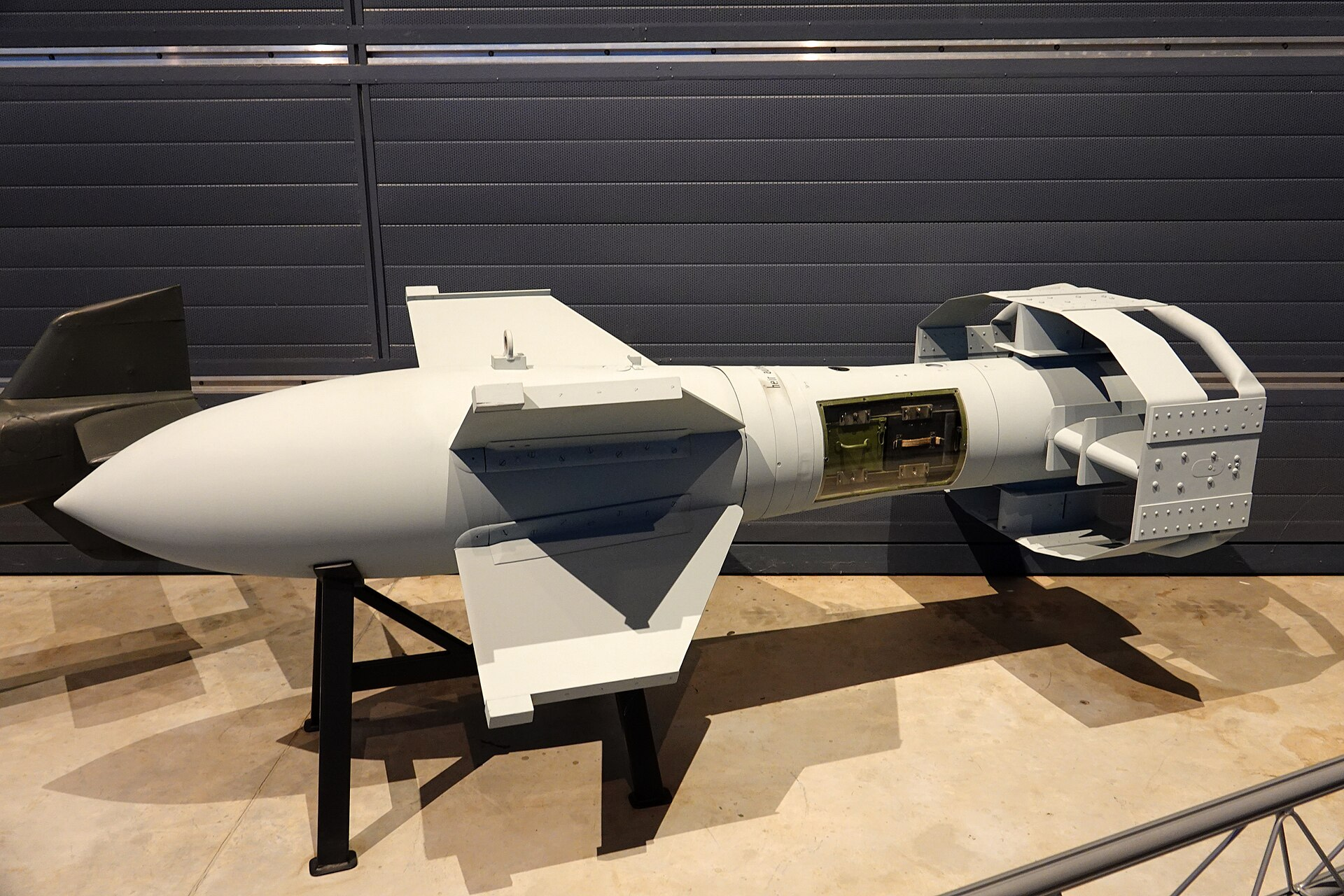
The single most important fact about the Do 217 is that it was the aircraft that carried the Fritz X into successful combat. The Fritz X — formally the Ruhrstahl SD 1400 X, and known by several names — was a heavy, armour-piercing bomb of around 1,360 kg fitted with steerable tail fins and a radio receiver. Dropped from high altitude, it was guided by a bomb-aimer in the launching aircraft who tracked a flare in its tail and steered it onto the target by radio. It was, in effect, the first practical precision-guided bomb.
On 9 September 1943 the weapon made history. As the Italian battle fleet sailed out to surrender following Italy’s armistice with the Allies, Do 217K-2 aircraft of the specialist unit III./KG 100 attacked with Fritz X bombs. The new battleship Roma was hit, her magazines exploded, and she broke apart and sank with the loss of more than 1,250 men — figures are commonly cited as over 1,300 — including the Italian fleet commander, Admiral Carlo Bergamini. Her sister ship was also struck and damaged. It was the first time a guided weapon had sunk a capital ship, and it was done by twin-engine Dornier bombers.
Precise attribution — how many bombs hit, from exactly which aircraft — is debated, as such things always are, and the casualty figure varies between accounts. But the essential fact is not in doubt: a Do 217 dropped the guided bomb that sank the Roma, and the age of precision-guided munitions began that afternoon over the Tyrrhenian Sea.
04The Dornier Do 217 and the Hs 293: the first warship sunk by a guided missile+
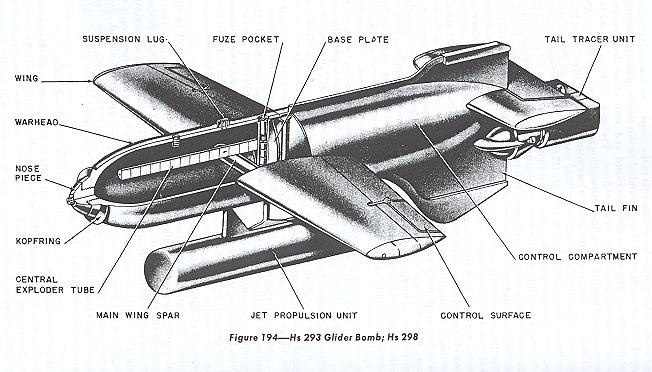
Alongside the Fritz X, KG 100’s Do 217s carried a second revolutionary weapon: the Henschel Hs 293. Where the Fritz X was a steered free-fall bomb for armoured targets, the Hs 293 was a small, rocket-boosted, radio-guided glide bomb — closer to a cruise missile in concept — intended to be flown into the unarmoured sides of ships. After release the underslung rocket motor accelerated it ahead of and below the launch aircraft, and the operator then guided it visually onto the target by radio.
On 27 August 1943, over the Bay of Biscay, Do 217s of II./KG 100 attacked a Royal Navy anti-submarine group with Hs 293s and sank the sloop HMS Egret — by most accounts the first warship ever destroyed by a guided missile in combat. A Canadian destroyer was damaged in the same action. Together, the Fritz X and the Hs 293, both carried by the Do 217, gave Germany a brief but genuine monopoly on precision anti-ship attack.
05The Dornier Do 217 at Salerno and Anzio: crippling the Allied fleets+
The guided-weapon campaign did not end with the Roma. Through the autumn of 1943 and into 1944, Do 217s of KG 100 hunted Allied shipping supporting the invasion of Italy. Off the Salerno beachhead in September 1943, Fritz X hits severely damaged the US light cruiser Savannah and, days later, the British battleship Warspite, putting both out of action for long periods. Other warships and transports were sunk or damaged by Fritz X and Hs 293 attacks.
Off Anzio in early 1944 the campaign continued: the British cruiser HMS Spartan was sunk by an Hs 293, along with destroyers, transports and Liberty ships. For a period the Allied navies had no reliable defence, and the threat drove a crash programme of radio-jamming, evasive tactics and eventually a shift in how invasion fleets were protected. The Do 217’s guided weapons had, briefly, made large warships dangerously vulnerable — a strategic shock out of all proportion to the small number of aircraft involved.
The list of victims and near-victims from this campaign reads like a roll-call of the Allied Mediterranean fleet: the Roma sunk and her sister damaged; the cruisers Savannah and Uganda hit; the veteran battleship Warspite crippled and towed away for repair; Spartan and destroyers lost off Anzio; troopships and merchantmen sunk with heavy loss of life. No previous air weapon had achieved such results against defended, manoeuvring warships, and the shock rippled all the way up to the highest levels of Allied command, where the guided-bomb threat was treated with deadly seriousness.
06The Dornier Do 217 over Britain: the ‘Baby Blitz’ of 1944+
The Do 217 also served as a conventional night bomber against Britain. Its most concentrated effort came in early 1944 with Operation Steinbock — nicknamed the “Baby Blitz” — a last major Luftwaffe bombing campaign against London and southern England between January and May 1944. Do 217 units flew alongside Ju 88s, Ju 188s and the troubled He 177 in a force assembled for one final show of offensive strength in the West.
It failed. By 1944 British night defences — radar, ground control, and capable night fighters like the Mosquito — were formidable, and the attacking bombers suffered heavy losses for limited damage. Steinbock consumed aircraft and trained crews that Germany could not replace, and it marked effectively the end of the Do 217’s career as a front-line night bomber over England.
07The Dornier Do 217 as a night fighter: the J and N variants+
As the strategic bombing of Germany intensified, the Do 217 found an important second career defending the Reich at night. The Do 217J was a night-fighter conversion of the radial-engined bomber, its glazed nose replaced by a solid one packed with forward-firing cannon and machine guns and fitted with early Lichtenstein airborne radar. The later Do 217N used the DB 603 inline engines for better performance.
These were big, heavy night fighters — less agile than purpose-built types — but their heavy armament made them dangerous to RAF bombers, and some carried upward-firing Schräge Musik cannon to attack bombers from below. The Do 217 night fighters were ultimately overshadowed by the Ju 88 and Bf 110 in the role, but they were an important stop-gap and equipped several night-fighter units during the crucial middle years of the bombing war.
08The Dornier Do 217’s maritime role: hunting ships over the Atlantic and Mediterranean+
Beyond the famous guided-weapon strikes, the Do 217 was a workhorse of the German maritime-strike effort. Its range and load made it well suited to long overwater patrols, and units based in occupied France and around the Mediterranean used it against convoys and warships with conventional bombs, torpedoes and, in the specialist units, the guided weapons.
This maritime focus is a large part of why the Do 217 matters more than its modest production numbers suggest. Concentrated in a few skilled units and armed with novel weapons, a small number of Do 217s could threaten targets — capital ships, cruisers, heavily defended convoys — that ordinary level bombers could rarely touch. It was a preview of how a handful of aircraft with precision weapons could reshape a naval campaign.
The trade-off was exposure. Guiding a Fritz X or an Hs 293 meant the Do 217 had to hold a steady, predictable course while the operator flew the weapon down — precisely the moment at which the bomber was most vulnerable to fighters and flak. As Allied fighter cover thickened over the Mediterranean and the Bay of Biscay through 1944, that steady run became increasingly lethal for the attackers, and the guided-weapon crews paid a heavy price for each success. The window in which the Do 217 could operate its wonder weapons with relative freedom was narrow and closing fast.
09The Dornier Do 217’s dive-bombing experiment: the umbrella tail brake+
One of the Do 217’s stranger features was its early attempt at dive-bombing. To let so large an aircraft bomb accurately in a dive, some early E-variants were fitted with an extraordinary air brake at the very tail: a cluster of hinged slats that opened outward like the ribs of an umbrella to increase drag and hold the aircraft steady in its dive.
In practice the device was troublesome and unreliable, and dive-bombing a machine the size of the Do 217 was always an awkward proposition. The tail brake was frequently removed or omitted, and the Do 217 settled into life as a level bomber, maritime striker and — most importantly — guided-weapon carrier, roles in which precise dive-bombing was unnecessary. The umbrella brake survives mainly as a curiosity, a reminder of how hard German designers pushed the dive-bombing doctrine of the late 1930s.
10The Dornier Do 217’s specifications and performance: reading the numbers+
Quoted Do 217 figures vary widely because the type spanned radial and inline engines and several roles. A representative Do 217E-2 reached roughly 515 km/h at altitude; the DB 603-engined Do 217M could manage around 555–560 km/h. Range figures of roughly 2,000–2,500 km and a service ceiling in the region of 7,500–9,000 m are commonly cited, with a crew of four in the bomber versions.
The headline capability is load: up to around 4,000 kg of bombs, or a single heavy guided weapon such as the 1,360 kg Fritz X, or one or two Hs 293. Wherever this page gives a single number, read it as a commonly cited estimate for a specific variant; the specification table below flags the values most often disputed. The consistent theme is that the Do 217 traded the Do 17’s lightness for real hitting power.
11The Dornier Do 217’s operating costs and value: figures that were never really recorded+
Like all wartime German aircraft, the Do 217 was built inside a planned war economy. Its cost was set in Reichsmarks, distorted by forced and slave labour and by fluctuating material supply, and never expressed in the transparent, per-flight-hour terms used for modern aircraft. There is therefore no reliable, comparable “unit cost” or “cost per flight hour” for the Do 217 in the sense the rest of this museum uses those terms.
And there is no operating cost today, for the simplest possible reason: there is no airworthy Do 217 anywhere in the world, and — because no complete airframe survives — there never will be. Any figure presented as the Do 217’s “cost per hour to fly” is not grounded in reality.
12The Dornier Do 217 versus the He 177 and Ju 88: where it fitted in+
The Do 217 occupied an interesting middle ground in the Luftwaffe bomber force. It was bigger and more capable than the Ju 88 medium bomber, yet far more reliable and mature than the trouble-plagued Heinkel He 177 heavy bomber, whose coupled engines were notorious for catching fire. For much of 1942–43 the Do 217 was, in practical terms, the most capable bomber the Luftwaffe could actually rely on in numbers.
That reliability is why it, rather than the glamorous He 177, carried the guided weapons into their first successful actions. When the Luftwaffe needed a steady, capable platform to loft a Fritz X from high altitude and hold formation while the operator guided it down, the Do 217 was the sensible choice. Its role was ultimately overtaken by newer types and by Germany’s collapsing production priorities, but for a critical period it was the backbone of German precision maritime strike.
13The Dornier Do 217 on the Eastern Front and other theatres+
Although the Do 217 is best remembered for the Mediterranean guided-weapon campaign and the raids on Britain, it also served on the Eastern Front, flying conventional bombing missions over Soviet territory from 1941 onward. It appeared, in smaller numbers, across most of the theatres where the Luftwaffe’s medium bombers operated.
Its numbers were never large — around 1,900 built across all versions — so it rarely dominated any single front the way the Ju 88 or He 111 did. Instead the Do 217 tended to be concentrated where its particular strengths mattered: long-range and maritime strike, specialist guided-weapon work, and night-fighter defence of the Reich. It was a specialist’s bomber as much as a mass-produced workhorse.
This selective deployment reflected a hard strategic reality. By the time the Do 217 was fully mature, Germany was fighting a losing war of production against opponents who out-built it many times over, and every airframe had to be used where it counted most. Spreading a modest fleet of capable but expensive bombers thinly across every front made no sense; concentrating them for decisive blows — a guided-weapon strike on a fleet, a night-fighter screen over a threatened city — did. The Do 217’s career is, in that sense, a study in doing a lot with a little, right up to the point where there was simply too little left to matter.
14The Dornier Do 217’s myths and disputed figures+
Several details of the Do 217 story are genuinely contested and deserve careful hedging. Production totals are usually given as around 1,900 aircraft, but sources differ on exactly how prototypes, sub-variants and conversions are counted, and figures ranging from the 1,700s to over 1,900 appear in reputable references. Performance numbers likewise vary between the radial and inline versions.
Even the famous Roma sinking is surrounded by uncertainty over precise details — how many Fritz X struck home, the exact casualty figure (commonly cited as more than 1,250 and often as over 1,300), and the fine points of the attack. What is not in dispute is the essential achievement: Do 217s carried the first guided weapons into successful combat, sank a battleship and crippled cruisers with them, and thereby opened the precision-weapons era. Throughout this page contested figures are flagged as commonly cited estimates.
15The Dornier Do 217’s crews and units: KG 100, KG 2 and the guided-weapon Gruppen+
The Do 217’s most famous work was done by a small number of specialist units, and above all by Kampfgeschwader 100 (KG 100) — the Luftwaffe’s dedicated guided-weapon and pathfinder wing. Its Gruppen were the ones that took the Fritz X and Hs 293 to sea: II./KG 100 pioneered the Hs 293 attacks over the Bay of Biscay, and III./KG 100 flew the Fritz X missions that sank the Roma and struck the Salerno and Anzio fleets. Mastering the guided weapons demanded specialist training that ordinary bomber crews did not have — a bomb-aimer had to fly the weapon by eye and radio all the way to impact while the pilot held a long, exposed run.
Conventional Do 217 bombing over Britain and the Baby Blitz was flown largely by KG 2, while the night-fighter Do 217J and N equipped several Nachtjagd units defending the Reich. The concentration of the type’s decisive capability in just a few Gruppen is part of its story: a relatively small number of highly trained crews, flying a modest number of aircraft, achieved effects out of all proportion to their strength. It also meant those crews were irreplaceable, and the attrition of 1943–44 — over the Mediterranean, over Britain and over Germany — steadily wore down the expertise that made the guided-weapon campaign possible in the first place.
16How the Allies learned to beat the Dornier Do 217’s guided bombs+
The guided-weapon strikes of 1943 caused something close to panic in Allied navies, because for a few months there was no reliable defence. A Fritz X falling from 6,000 m or an Hs 293 skimming in from a Do 217 could not be dodged the way a torpedo or a level-bombing pattern could, and the weapons could hit from outside the range of much of a ship’s anti-aircraft fire.
The answer, once the Allies understood what they were facing, was electronic. Both weapons were steered by radio command, so the counter was to jam that radio link. British and American scientists rushed jamming transmitters to sea, worked out the German control frequencies from captured equipment and wreckage, and fitted warships and specialist vessels with sets designed to swamp the guidance signal. Combined with tighter fighter cover over the beachheads, aggressive smoke screens and evasive steering, jamming steadily blunted the threat through 1944.
It is a striking early example of the measure-and-countermeasure cycle that has defined electronic warfare ever since. The Do 217 and its weapons did not just open the age of guided munitions — they forced the invention of the electronic defences that every navy has relied on against such weapons from that day to this.
17The Dornier Do 217’s influence: ancestor of the guided bomb and anti-ship missile+
The Do 217’s guided weapons were captured, studied and copied by the very powers they had been used against. The concepts pioneered by the Fritz X and Hs 293 — a steerable, remotely guided munition that could be flown onto a precise point on a ship — fed directly into post-war Allied and Soviet weapons development, and the lineage runs unbroken to the laser-guided bombs and anti-ship missiles of the modern era.
Seen that way, the Do 217 sits at a genuine hinge in military history. Every precision-guided bomb dropped since, every sea-skimming anti-ship missile, every drone strike guided onto a single vehicle, descends conceptually from the weapons that KG 100’s Dorniers flew into combat in 1943. Few aircraft of the war — indeed few aircraft of any war — can claim to have opened an entire era of weapons technology. The Do 217, for all that it is half-forgotten and leaves no survivor to stand beside, is one of them.
18The Dornier Do 217 today: no complete survivor, only relics and reconstruction+
Unlike the Do 17 — whose single salvaged airframe was famously raised from the Goodwin Sands — the Do 217 left almost nothing behind. No complete, intact Do 217 survives anywhere in the world. The type was used hard, lost in large proportion to its small production run, and scrapped almost in its entirety after the war.
What remains is fragmentary: recovered wreck components, individual parts held in collections, and long-running reconstruction and research efforts, some associated with German museums and enthusiasts, that aim to piece together or represent the type. Visitors hoping to see a Do 217 will find relics, sections and reproductions rather than a whole aircraft. For a bomber that changed the course of weapons history, the physical legacy is heartbreakingly thin — which makes honest storytelling, rather than a preserved airframe, the main way its significance is kept alive.
The Dornier Do 217’s design in depth: from enlarged bomber to guided-weapon platform
To understand the Do 217 you have to understand what Dornier was trying to fix. The Do 17 had been a beautiful failure of specialisation: so slim and clean that it was briefly one of the fastest bombers in the world, but with a bomb bay too small to matter in a long war. The Do 217 reversed that priority. Dornier kept the recognisable twin-engine, twin-finned Dornier configuration but built it around a deep fuselage with a large internal bomb bay, accepting extra weight and drag in exchange for genuine offensive capability.
The powerplant story reflects the aircraft’s dual nature. Fitting two big BMW 801 radials gave the bomber versions ample power and commonality with the Fw 190 fighter programme, while the switch to Daimler-Benz DB 603 inlines on the later Do 217M and the Do 217N night fighter chased higher speed and better high-altitude performance. That an airframe could accept both a fat air-cooled radial and a slim liquid-cooled inline speaks to how soundly it was engineered — and it let the Do 217 be continually re-roled as the war’s demands changed.
Structurally the Do 217 was a conventional but robust all-metal, stressed-skin aircraft, and it retained the Dornier twin-fin tail that gave the type its family look and improved the rear gunner’s field of fire. Defensive armament grew heavier than the Do 17’s feeble hand-aimed guns, with powered positions and heavier-calibre weapons on later variants, though like all German bombers the Do 217 remained vulnerable to well-handled fighters in daylight.
But the aspect of the design that truly sets the Do 217 apart is not its airframe or its engines — it is what it was made to carry. The specialist guided-weapon variants were fitted with the transmitters, controls and racks needed to launch and steer the Fritz X and the Hs 293, and the crews were trained in a wholly new kind of attack: release the weapon, then fly steadily while an operator guided it by radio all the way to impact. This demanded a stable, capable aircraft and a disciplined crew, and the Do 217 provided both. In that sense its most important design feature was its role as a flying launch platform for the first generation of precision weapons.
There is a neat historical symmetry here. The Do 17 had been optimised, brilliantly and narrowly, for one fading idea — the fast unescorted day bomber. The Do 217, its direct descendant, ended up embodying the opposite lesson: that the future of air power lay not in raw speed but in the precise delivery of a decisive weapon. The same design office, in the space of a few years, moved from the last word in one era of bombing to the first word in the next.
Dornier Do 217 specifications: dimensions, performance, weapons and cost data
Representative figures spanning the radial-engined Do 217E and the DB 603-engined Do 217M. Values marked “est.” or “disputed” vary between sources and sub-variants — they are given as commonly cited estimates and flagged for the fact-check pass.
| يكتب | Twin-engine medium–heavy bomber / anti-ship strike / night fighter |
|---|---|
| طاقم | 4 (bomber versions: pilot, bomb-aimer, radio operator, gunner) |
| طول | ~17.0–18.9 m (varies by variant; ~18.2 m for Do 217E) |
| طول الجناحين | ~19.0 m |
| ارتفاع | ~5.0 m (est.) |
| الوزن الفارغ | ~8,850 kg (est., Do 217E) |
| أقصى وزن للإقلاع | ~16,700 kg (est., disputed) |
| First flight | 1938 (Do 217 V1 prototype) |
| In service | ~1940/41–1945 |
| Number built | ~1,900 all variants (disputed; figures vary) |
| Engines (Do 217E/K) | 2 × BMW 801 air-cooled radial, ~1,500–1,580 PS each (est.) |
|---|---|
| Engines (Do 217M/N) | 2 × Daimler-Benz DB 603 inline, ~1,750 PS each (est.) |
| Max speed | ~515 km/h (Do 217E) to ~557 km/h (Do 217M) at altitude (est.) |
| سرعة الإبحار | ~400 km/h (est.) |
| يتراوح | ~2,000–2,500 km depending on load (disputed) |
| سقف الخدمة | ~7,500–9,000 m by variant (est.) |
| Bomb load | Up to ~4,000 kg internal and external |
| Guided weapons | 1 × Fritz X (~1,360 kg) or 1–2 × Hs 293 (specialist KG 100 variants) |
| Defensive armament | Multiple MG 15 / MG 131 machine guns; heavier on later variants |
| Unit cost | Not reliably recorded (wartime planned economy; Reichsmark pricing not comparable) |
| Cost per flight hour | Not applicable — no surviving / airworthy example exists |
Cost note: the Do 217 was produced within Germany’s wartime command economy using forced labour and controlled prices, so no meaningful unit cost or cost-per-flight-hour figure survives in the commercial sense used elsewhere in this museum. There is likewise no operating cost today because no Do 217 is airworthy — indeed no complete example survives at all.
Dornier Do 217 variants: from the E bomber to the guided-weapon K and the N night fighter
The Do 217 spawned bomber, maritime-strike, night-fighter, high-altitude and guided-weapon versions. The main variants are summarised below; sources differ on some production and equipment details.
| Do 217 V1–V-series | Prototypes and pre-series aircraft from the first 1938 flight through engine and configuration trials |
|---|---|
| Do 217E | First major production bomber; BMW 801 radial engines; early E-variants had the umbrella-type tail dive brake |
| Do 217E-5 | Maritime-strike variant equipped to carry and guide the Hs 293 glide bomb (KG 100) |
| Do 217K | Bomber with a redesigned, fully glazed rounded nose; BMW 801 radials |
| Do 217K-2/K-3 | Guided-weapon carriers for the Fritz X (and Hs 293); the K-2 sank the battleship Roma |
| Do 217M | DB 603 inline-engined bomber counterpart to the K; the M-11 also carried the Fritz X |
| Do 217J | Night-fighter / intruder conversion; solid gun nose, Lichtenstein radar; BMW 801 radials |
|---|---|
| Do 217N | DB 603 inline-engined night fighter; heavy cannon, some with upward-firing Schräge Musik |
| Do 217P | Small-run high-altitude reconnaissance version with a pressurised cabin and DB 603 engines |
| Do 217R / conversions | Late conversions used as launch aircraft and for special trials (details vary) |
| Guided weapons carried | Fritz X (Ruhrstahl SD 1400 X) radio-guided armour-piercing bomb; Henschel Hs 293 rocket-boosted glide bomb |
| Total built | ~1,900 Do 217 of all variants (disputed; figures vary between sources) |
The Dornier Do 217 timeline: from enlarged Dornier to the first guided-weapon strikes
Dornier Do 217 stories: the guided weapons, the ships and the crews
Twelve short, expandable stories from the life of the Do 217 — tap any card to read the full account.
The lineage
From Flying Pencil to heavy hitter
The Do 217 was the Do 17’s much bigger, far more capable descendant.
Read the full story
The Do 217 shared the Do 17’s twin-engine, twin-finned Dornier look but was enlarged in every dimension to carry a real bomb load.
Where the “Flying Pencil” could barely lift a tonne of bombs, the Do 217 could carry around 4,000 kg — or a single heavy guided weapon. It was the aircraft the Do 17 had never been able to be, and it corrected its ancestor’s central weakness completely.
27 Aug 1943
The first missile kill
An Hs 293 from a Do 217 sank HMS Egret in the Bay of Biscay.
Read the full story
On 27 August 1943, Do 217s of II./KG 100 attacked a Royal Navy group over the Bay of Biscay with Henschel Hs 293 guided glide bombs.
The sloop HMS Egret was hit and sank — by most accounts the first warship in history destroyed by a guided missile in action. A Canadian destroyer was damaged in the same attack. It was a quiet milestone that opened a terrifying new chapter in naval warfare.
9 Sep 1943
Sinking the Roma
A Do 217’s Fritz X sent an Italian battleship to the bottom.
Read the full story
As Italy’s fleet sailed to surrender on 9 September 1943, Do 217K-2 aircraft of III./KG 100 attacked with Fritz X radio-guided bombs.
The new battleship Roma was struck, her magazines exploded, and she broke apart and sank with the loss of more than 1,250 men — commonly cited as over 1,300 — including the Italian fleet commander. It was the first time a guided weapon had sunk a capital ship.
The attack stunned both sides. A handful of twin-engine bombers had destroyed a modern battleship from high altitude with a weapon the Allies barely understood, and the age of precision-guided munitions had begun.
The weapon
What the Fritz X actually was
A steerable, armour-piercing bomb guided by radio.
Read the full story
The Fritz X — Ruhrstahl SD 1400 X — was a heavy armour-piercing bomb of around 1,360 kg fitted with steerable tail fins and a radio receiver.
Dropped from high altitude, it was guided by an operator in the Do 217 who tracked a bright flare in its tail and steered it onto the target by radio. Against heavily armoured warships it was devastating; against its Do 217 launch platform it demanded a steady run and a disciplined crew.
Salerno
Crippling the invasion fleet
Fritz X hits knocked out a US cruiser and a British battleship.
Read the full story
Off the Salerno beachhead in September 1943, guided-weapon Do 217s of KG 100 struck the Allied support fleet.
Fritz X hits severely damaged the US light cruiser Savannah and, days later, the British battleship Warspite, putting both out of action for months. For a period the Allied navies had no reliable defence against the new weapon.
Anzio
Death off the beachhead
An Hs 293 sank the cruiser HMS Spartan.
Read the full story
The guided-weapon campaign continued off Anzio in early 1944, where Do 217s of KG 100 hunted the ships supporting the landings.
The British cruiser HMS Spartan was sunk by an Hs 293, along with destroyers, transports and Liberty ships. The threat forced a crash programme of radio jamming and new tactics to protect invasion fleets.
Night defence
When the bomber hunted bombers
The Do 217J and N defended the Reich at night.
Read the full story
As RAF Bomber Command’s night offensive grew, the Do 217 was converted into a night fighter — the radial-engined Do 217J and the DB 603-powered Do 217N.
With a solid nose full of cannon, early Lichtenstein radar and, on some aircraft, upward-firing Schräge Musik guns, these big night fighters were dangerous to RAF bombers even if they were less agile than purpose-built types.
The umbrella tail
A dive brake like no other
Early Do 217s carried a strange petal-like air brake at the tail.
Read the full story
To let so large an aircraft dive-bomb, some early Do 217E aircraft were fitted with an air brake at the tail cone that opened outward like the ribs of an umbrella.
It was troublesome and unreliable, and dive-bombing a machine this size was always awkward. The device was often removed, and the Do 217 settled into life as a level bomber, maritime striker and guided-weapon carrier.
Two engines, two hearts
BMW radial or DB inline
The Do 217 flew behind both radial and inline power.
Read the full story
Most Do 217 bombers used two BMW 801 air-cooled radials — the same engine as the Fw 190 fighter — with their characteristic blunt nacelles.
Later high-performance versions, including the Do 217M bomber and the Do 217N night fighter, switched to slim Daimler-Benz DB 603 liquid-cooled inlines. That the same airframe accepted both speaks to how soundly it was engineered.
Baby Blitz
One last raid on Britain
Do 217s joined the failed 1944 Steinbock campaign.
Read the full story
In early 1944 the Luftwaffe mounted Operation Steinbock — the “Baby Blitz” — a last concentrated bombing campaign against London and southern England.
Do 217 units flew alongside Ju 88s and He 177s, but mature British night defences inflicted heavy losses for little result. Steinbock effectively ended the Do 217’s career as a front-line night bomber over England.
The reckoning
How the Allies fought back
Jamming and new tactics blunted the guided-weapon threat.
Read the full story
The shock of the Fritz X and Hs 293 forced a rapid Allied response: radio-jamming equipment, evasive manoeuvring, and changes to how invasion fleets were screened and protected.
The window of German advantage was brief. But for a few dangerous months in 1943–44, the Do 217 and its guided weapons had made even battleships and cruisers feel vulnerable — a strategic shock far larger than the small number of aircraft involved.
Vanished
The bomber that left no survivor
No complete Do 217 exists anywhere today.
Read the full story
Unlike the Do 17, whose single wreck was raised from the sea, the Do 217 left almost nothing behind. No complete, intact example survives anywhere in the world.
The type was used hard, lost in large proportion to its small production run, and scrapped almost in its entirety. Only fragments, recovered components and long-running reconstruction efforts remain — a heartbreakingly thin legacy for an aircraft that changed weapons history.
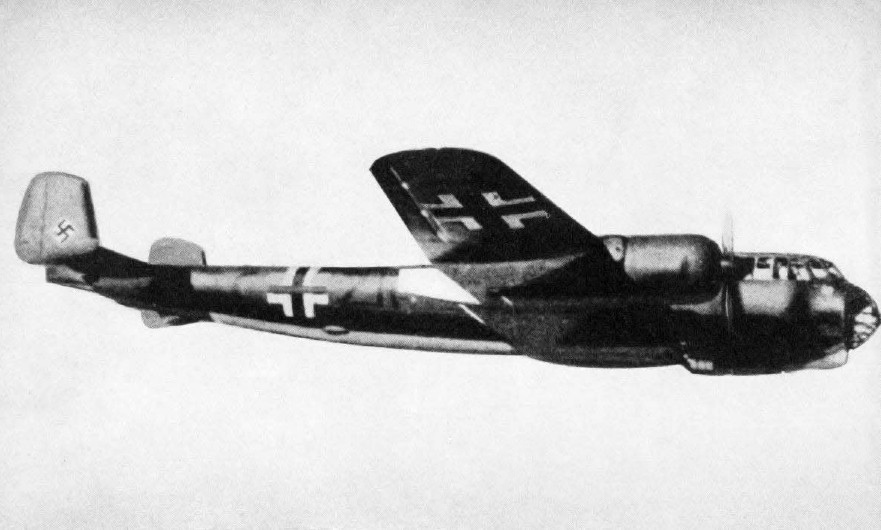
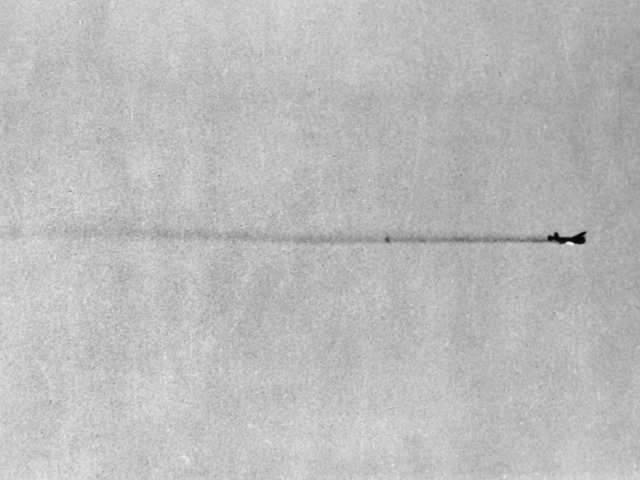
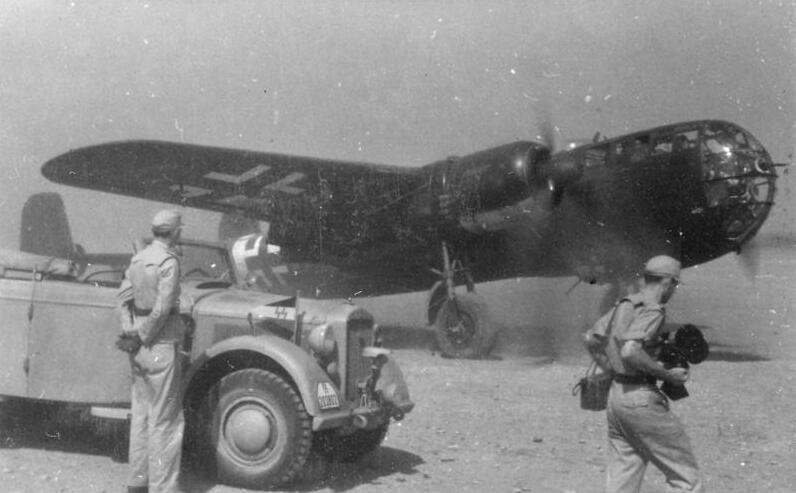
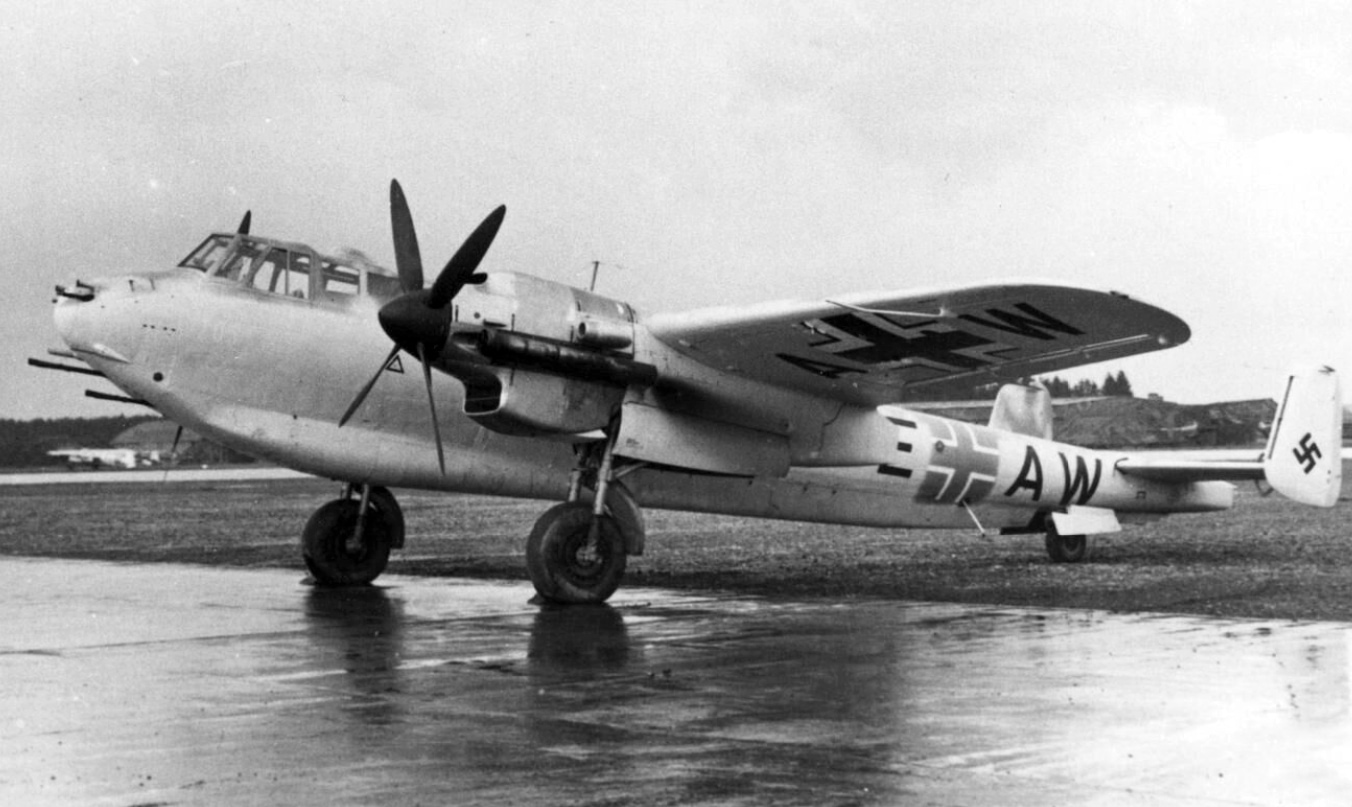
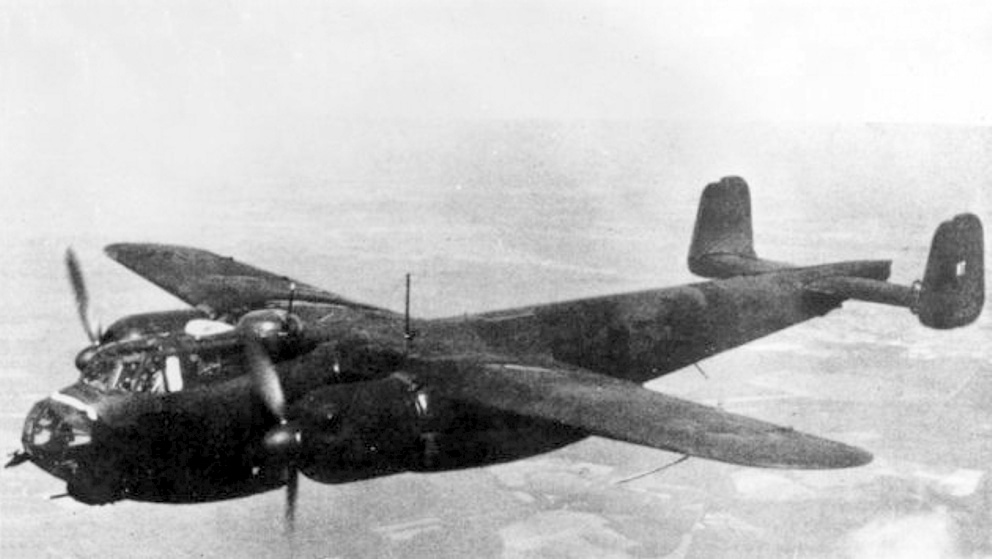
Dornier Do 217 photos: the bomber, the night fighter and the guided weapons
Genuine wartime photographs and museum images, each credited to its Wikimedia Commons source and licence. Scroll for more.
Dornier Do 217 on film: original wartime footage of the bomber
Genuine Luftwaffe wartime film of the Do 217, with original German narration and English subtitles, preserved by a war-archive channel.
“Maintenance of the Dornier Do 217 bomber” — original German wartime film with English subtitles, via Look in The Past War Archives (approx. 351,000 views). Authentic primary-source footage of the type in service.
Where the Dornier Do 217 flew and fought: an operations overview
Germany (blue) was the origin and operator; camouflage marks the WWII theatres — night bombing of Britain including the 1944 “Baby Blitz”, anti-shipping strikes in the Mediterranean and over the Atlantic, and the Eastern Front; grey shows other operators (captured examples used or evaluated after Italy’s armistice, and an interned aircraft in Switzerland); light grey marks where relics and reconstruction survive. Hover or tap a country for detail. Note: “Russia” stands in for the wartime USSR.
The Dornier Do 217’s war record at a glance
Approximate, widely cited figures — the Do 217’s significance lies less in numbers than in what its guided weapons achieved.
The Dornier Do 217’s legacy: the birth of precision-guided warfare
The Do 217’s legacy is out of all proportion to the roughly 1,900 examples built. Most wartime bombers are remembered, if at all, for the tonnage they dropped or the campaigns they flew. The Do 217 is remembered for something far more consequential: it was the aircraft from which precision-guided weapons first went to war and worked. Every guided bomb and anti-ship missile that followed traces a line back to the Fritz X and Hs 293 falling from KG 100’s Dorniers in 1943.
That achievement carried a heavy human cost on both sides. The sinking of the Roma killed more than 1,250 Italian sailors in minutes; the strikes off Salerno and Anzio killed and maimed the crews of Allied warships and merchant ships. These were not abstract technical milestones but lethal attacks on crowded ships, and any honest account of the Do 217 has to hold the innovation and the killing in the same frame. The dawn of precision weapons was also, immediately, a dawn of new ways to sink ships full of men.
It is worth being clear-eyed about the Do 217 as a machine, too. It was a sound, capable, adaptable bomber — more reliable than the disastrous He 177, more capable than the Ju 88 — but it was not a war-winner in the conventional sense, and its numbers were never large enough to dominate a front. Its importance is concentrated: a specialist aircraft, in specialist units, wielding a genuinely revolutionary capability at a decisive moment.
The Allied response to the guided-weapon threat is part of the legacy too. The shock of 1943 spurred rapid development of radio jamming, new escort tactics and eventually the electronic-warfare mindset that shapes naval air defence to this day. In forcing that response, the Do 217 did not just open the precision-weapons era — it helped invent the countermeasures era that has run alongside it ever since.
And then there is the strange emptiness of the aircraft’s physical legacy. No complete Do 217 survives. For an aircraft of such historical weight, that absence is jarring: there is no airframe in a museum hall to stand beneath, only fragments, recovered parts and the patient work of reconstruction. The Do 217’s memory rests almost entirely on documents, photographs and the record of what it did, rather than on preserved metal.
There is a final irony worth dwelling on. The Do 217 is far less famous than the Do 17, even though it was the more important aircraft by almost any measure — bigger, more capable, more widely useful, and historically pivotal in a way the Do 17 never was. The Do 17 is remembered because of its nickname, its role in the Battle of Britain, and the photogenic drama of a wreck raised from the sea. The Do 217 is half-forgotten precisely because it left no such wreck to raise, and because its greatest achievements happened far out over the Mediterranean, against ships, in a campaign that never captured the public imagination the way the Blitz did.
That is precisely why the Do 217 earns its place in this museum. Not because you can walk around one — you cannot — but because its story marks a genuine hinge in the history of warfare. The same Dornier design office that built the elegant, obsolete Do 17 went on to build the aircraft that fired the opening shot of the guided-weapons age. In the corroded absence of any survivor, telling that story accurately is the only monument the Do 217 has — and it is a story that changed how every war since has been fought.
Dornier Do 217: frequently asked questions
Can I fly in a Dornier Do 217?+
No. There is no airworthy Dornier Do 217 anywhere in the world, and there never will be — because no complete Do 217 survives at all. Only fragments, recovered components and long-running reconstruction efforts remain. There is no restored aircraft, and certainly nothing you can fly in or book.
However, you can fly in several genuine military jets today. MiGFlug offers flights in aircraft such as the L-39 Albatros and the Hawker Hunter, and has flown fighter jets including the MiG-29. Explore what is bookable right now at migflug.com/flights-prices.
What was so significant about the Dornier Do 217?+
The Do 217 was the Luftwaffe’s most capable medium–heavy bomber of the early-to-mid war, but its real significance is historic: it was the aircraft that carried the first operational guided weapons into successful combat. Do 217s of Kampfgeschwader 100 used the radio-guided Fritz X bomb and the Hs 293 glide bomb to sink and cripple major warships in 1943, opening the age of precision-guided munitions.
Did a Dornier Do 217 really sink the battleship Roma?+
Yes. On 9 September 1943, as the Italian fleet sailed out to surrender to the Allies, Do 217K-2 aircraft of III./KG 100 attacked with Fritz X radio-guided bombs. The battleship Roma was hit, her magazines exploded, and she broke apart and sank with the loss of more than 1,250 of her crew — often cited as over 1,300 — including the Italian fleet commander. It was the first time a guided weapon had sunk a capital ship. Fine details such as the exact number of hits and casualties vary between sources.
What were the Fritz X and Hs 293?+
They were the world’s first operational guided weapons, both carried by the Do 217. The Fritz X (Ruhrstahl SD 1400 X) was a heavy, radio-guided, armour-piercing bomb steered onto armoured warships from high altitude. The Hs 293 was a smaller, rocket-boosted, radio-guided glide bomb — closer to a cruise missile — designed to be flown into the unarmoured sides of ships. In both cases an operator in the launching Do 217 guided the weapon by radio after release.
How is the Do 217 related to the Do 17?+
The Do 217 is a much larger, heavier and more capable development of the Do 17 “Flying Pencil”, by way of the export Do 215. Dornier kept the recognisable twin-engine, twin-finned layout but enlarged the aircraft to carry a real bomb load — up to around 4,000 kg, several times what the Do 17 could manage. Think of the Do 217 as the grown-up successor that corrected the Do 17’s central weakness: its tiny payload.
What engines did the Dornier Do 217 use?+
It depended on the variant. Most bomber versions — the Do 217E and the guided-weapon Do 217K — used two BMW 801 air-cooled radial engines, the same radial that powered the Fw 190 fighter. Later high-performance versions, including the Do 217M bomber and the Do 217N night fighter, used Daimler-Benz DB 603 liquid-cooled inline engines. The broad rule: BMW 801 radials on most bombers, DB 603 inlines on the later and night-fighter variants.
How fast was the Do 217 and how much could it carry?+
A radial-engined Do 217E reached roughly 515 km/h at altitude, while the DB 603-powered Do 217M could manage around 555–560 km/h. It could carry up to about 4,000 kg of bombs, or a single heavy guided weapon such as the 1,360 kg Fritz X, or one or two Hs 293. These figures vary between sub-variants and sources and should be treated as commonly cited estimates.
Was the Dornier Do 217 used as a night fighter?+
Yes. As the strategic bombing of Germany intensified, the Do 217 was converted into a night fighter. The radial-engined Do 217J and the DB 603-powered Do 217N carried a solid nose full of forward-firing cannon, early Lichtenstein airborne radar, and on some aircraft upward-firing Schräge Musik guns. They were big and less agile than purpose-built night fighters, but their heavy armament made them dangerous to RAF bombers.
Why did some Do 217s have an umbrella-like tail?+
To dive-bomb. Some early Do 217E aircraft carried an unusual air brake at the tail cone that opened outward like the ribs of an umbrella, increasing drag to steady the big aircraft in a dive. It proved troublesome and unreliable, and dive-bombing a machine that size was always awkward, so the device was frequently removed. The Do 217 settled into life as a level bomber, maritime striker and guided-weapon carrier.
How many Dornier Do 217 were built?+
Around 1,900, though the exact figure varies between sources depending on how prototypes, sub-variants and conversions are counted; figures from the 1,700s to over 1,900 appear in reputable references. It was a modest production run for a wartime bomber, reflecting how quickly German priorities shifted to other types.
How many Dornier Do 217 survive today?+
None as complete aircraft. Unlike the Do 17, whose single wreck was raised from the Goodwin Sands, no complete or intact Do 217 survives anywhere in the world. Only fragments, recovered wreck components and long-running reconstruction and research efforts remain. Anyone hoping to see a Do 217 will find relics and reproductions rather than a whole airframe.
Did the Do 217 bomb Britain?+
Yes. Do 217 units flew night raids against Britain, most notably as part of Operation Steinbock — the “Baby Blitz” — between January and May 1944. By then British night defences of radar, ground control and Mosquito night fighters were formidable, and the attacking bombers suffered heavy losses for limited damage. Steinbock effectively ended the Do 217’s career as a front-line night bomber over England.
Where can I see a Dornier Do 217 today?+
Nowhere as a complete aircraft — there is no intact Do 217 on display anywhere in the world. A number of museums and collections, particularly in Germany, hold Do 217 relics, recovered wreck sections and individual components, and there have been efforts to recover and reconstruct parts of the type. But there is no whole airframe to walk around, as there is for many other WWII bombers. What survives are fragments and the historical record.
What was Kampfgeschwader 100 (KG 100)?+
KG 100 was the specialist Luftwaffe wing most associated with the Do 217’s guided-weapon attacks. Its Gruppen carried the Fritz X and Hs 293 into combat: II./KG 100 pioneered the Hs 293 glide-bomb strikes over the Bay of Biscay, and III./KG 100 flew the Fritz X missions that sank the battleship Roma and crippled Allied warships off Salerno and Anzio in 1943. Flying the guided weapons demanded specialist training, and the wing’s crews were, for a time, among the most dangerous anti-ship aviators in the world.
Was the Do 217 a good aircraft?+
As a machine, yes — it was a sound, capable and unusually adaptable bomber, more reliable than the trouble-plagued He 177 and more capable than the Ju 88, able to serve as a level bomber, dive bomber, maritime striker and night fighter. It was never built in war-winning numbers, and as a conventional bomber it was eventually overtaken. But its role as the platform for the first successful guided weapons makes it one of the genuinely pivotal aircraft of the war.
No complete Do 217 exists anywhere, and none will ever fly again. But you can strap into a genuine military jet, pull real G and take the controls yourself. Here is a selection of what MiGFlug makes bookable.No Dornier Do 217 survives. Real jet flights do.
Explore the Do 217’s Dornier ancestor and Luftwaffe contemporaries
Dornier Do 17The slim “Flying Pencil” — the Do 217’s smaller, lighter ancestor that opened the war.View in the museumJunkers Ju 88The Luftwaffe’s versatile workhorse bomber, flown alongside and against the Do 217’s roles.View in the museumHeinkel He 111The other backbone medium bomber of the Luftwaffe’s campaigns over Britain and beyond.View in the museumDornier Do 217: sources and further reading