
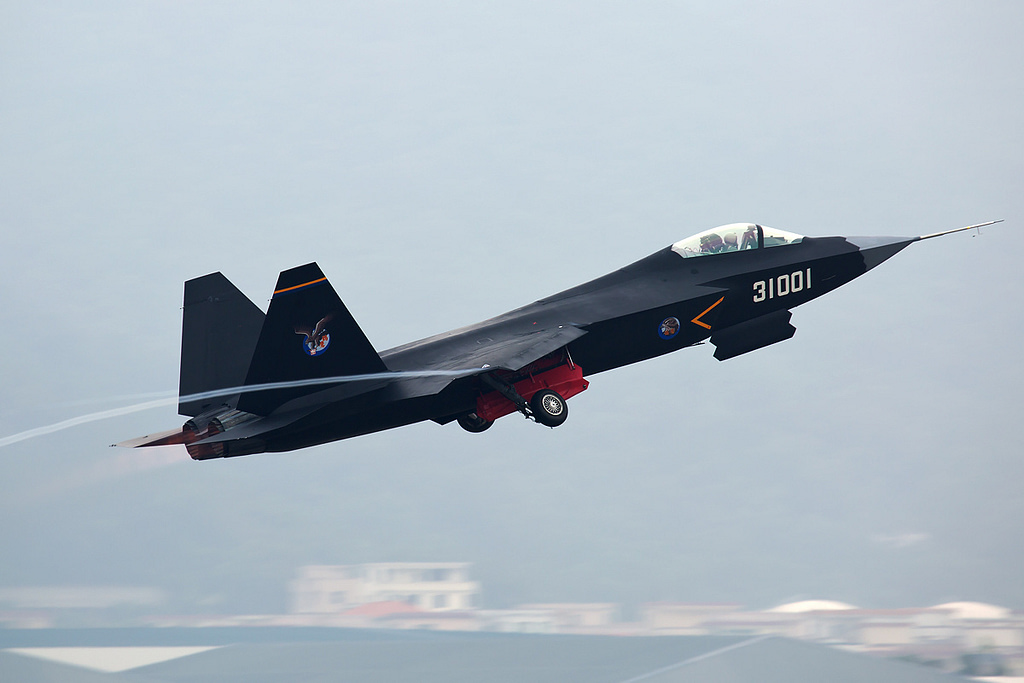
Shenyang FC-31 / J-35
China’s second stealth fighter
A twin-engine, medium-weight fifth-generation design developed by Shenyang into the carrier-based J-35 and the land-based J-35A. Much about it is unconfirmed — almost every figure below is a reported estimate, not official data.
The FC-31 / J-35: China’s second stealth fighter
The aircraft now generally known as the J-35 began life as the FC-31, a twin-engine stealth-fighter demonstrator built by the Shenyang Aircraft Corporation (SAC). Reported to have first flown on 31 October 2012, the demonstrator was widely described as a company-funded project rather than an aircraft formally commissioned by the Chinese military at that stage. It made China the second country, after the United States, to fly more than one stealth-fighter design — alongside the larger, heavier Chengdu J-20.
Over the following decade the design evolved. A revised second prototype flew in 2016, and the programme is reported to have shifted toward a naval future: a carrier-capable variant, the J-35, is said to have first flown around 2021, apparently intended to operate from the PLA Navy’s catapult-equipped carrier Fujian. A land-based variant, the J-35A, was publicly unveiled at the Zhuhai Airshow in November 2024 — the clearest official sign that the design had moved beyond a demonstrator toward a fielded fighter.
Analysts frequently frame the J-35 as a smaller, more numerous complement to the J-20, loosely echoing the way the F-35 sits alongside the F-22 in American service. That comparison is an outside interpretation, not an official Chinese statement, and it should not be read as a claim of capability parity. The aircraft’s general shape — a faceted, blended forebody, side intakes and an internal weapons bay — also invites frequent comparison with Lockheed Martin’s F-35. Similar silhouettes, however, can reflect convergent stealth-design choices as much as anything else, and outward resemblance reveals little about internal systems.
What is genuinely established is fairly limited: the aircraft exists, has flown in several prototype forms, has a carrier variant (J-35) and a land variant (J-35A), and is reported to be entering PLA Navy service in the mid-2020s. Almost everything else — its engines, weight, radar, weapons load, true stealth signature, cost and production numbers — rests on photographs, airshow appearances, satellite imagery and Chinese state media rather than independently verified data. For that reason, careful coverage hedges nearly every performance figure as reported, estimated أو believed, and this page does the same.
01The FC-31, J-31 and J-35: untangling the designations
The name history is genuinely confusing, and much of it is unofficial. FC-31 (“Fighter China”) was an export-oriented company designation for the original demonstrator. J-31 was a tentative label widely used by outside observers, but it was reportedly never confirmed as an official PLA designation. J-35 refers to the more mature operational programme; the carrier variant is the J-35, and the land-based air-force variant, publicly shown in 2024, is the J-35A. In short, the shifting names track the aircraft’s evolution from a private demonstrator toward a fielded military type — and some designation details are still not fully pinned down by independent analysts.
What makes the FC-31 / J-35 notable
A twin-engine medium stealth design
Unlike the single-engine F-35, the FC-31 / J-35 uses two engines. It shows the visible hallmarks of a low-observable fighter — a faceted, blended airframe, edge-aligned surfaces, angled tails, diverterless supersonic inlets and an internal ventral weapons bay to carry munitions without signature-spoiling external stores. These traits indicate stealth intent; the aircraft’s actual radar cross-section, which depends on coatings, materials and tolerances that cannot be judged from photographs, has not been publicly established.
An engine that keeps changing
The powerplant has been one of the programme’s most persistent open questions. Early demonstrators reportedly flew on Russian RD-93 engines (an RD-33 derivative), later said to give way to the domestic WS-13, with reporting increasingly pointing to a newer WS-19 (and in some accounts a WS-21). Which engine actually equips production aircraft is not firmly confirmed, and at least one leaked assessment reportedly questioned the newer engines’ performance. Treat any thrust, speed or supercruise claim as an estimate.
Adapted for the carrier deck
The naval J-35 is reported to add folding wings, strengthened dual-wheel nose gear with a catapult launch bar, and reinforced structure for catapult launch and arrested recovery — for operation from Fujian (Type 003), the only non-US carrier fitted with electromagnetic catapults. The land-based J-35A visibly differs, with a lighter structure, a single nose wheel and no catapult bar. Catapult launches of the J-35 from Fujian have been shown in PLA Navy footage, though full operational readiness is harder to verify independently.
02The FC-31 / J-35’s engines: why the powerplant is still a question mark
Engine maturity has long been viewed as a potential constraint on Chinese fighter programmes, and the J-35 is a case in point. The lineage most often reported runs from the Russian RD-93, to the domestic WS-13 family, toward a more capable WS-19 (“Huangshan”), with a WS-21 mentioned in some accounts as an interim step. Sources disagree over which engine flies on current aircraft, and whether it enables supercruise. None of this is officially confirmed by China, and independent analysts caution that leaked performance claims — positive or negative — are difficult to verify. Any specific thrust figure attached to the type should be read as an estimate.
03The FC-31 / J-35 and the F-35: similar shape, different machine
The J-35 is routinely compared to the F-35, and some commentators allege design influence aided by cyber-espionage. Analysts urge caution: broadly similar stealth silhouettes recur across fifth-generation designs — the South Korean KF-21 and Indian AMCA share comparable layouts — because similar requirements tend to produce similar shapes. A clear configuration difference is that the J-35 is twin-engine while the F-35 is single-engine. Claims that the two aircraft are equivalent in stealth, sensors, software or networking, or that one is simply a copy of the other, are not supported by public evidence, and should be treated with caution in either direction.
Full specifications (estimated)
China has released almost no official data on the FC-31 / J-35. Every figure below is a reported estimate — many trace back to the original FC-31 demonstrator and may no longer hold for the J-35A. Treat them as order-of-magnitude, not confirmed.
Airframe & Performance (estimated)
- طاقم
- 1
- طول
- ~17.3 m (reported)
- طول الجناحين
- ~11.5 m (reported)
- ارتفاع
- ~4.8 m (estimated)
- الوزن الفارغ
- ~17,000 kg (estimated, low confidence)
- Max takeoff weight
- ~28,000 kg (estimated)
- Max speed
- ~Mach 1.8 (estimated)
- نطاق القتال
- ~1,200 km (FC-31-era estimate)
- سقف الخدمة
- ~20,000 m (estimated)
Propulsion, Systems & Programme
- Engines
- 2 × turbofan — RD-93 / WS-13, WS-19 or WS-21 (reported)
- Thrust
- Not officially disclosed
- Weapons
- Internal ventral bay + external hardpoints; PL-10 / PL-15 family (reported)
- Radar
- AESA (type undisclosed)
- First flight
- 31 October 2012 (FC-31 demonstrator, reported)
- Variants
- FC-31 / J-31 · J-35 (carrier) · J-35A (land)
- Unit cost
- No reliable public figure
- Cost per flight hour
- No reliable public figure
04The FC-31 / J-35’s cost: why no reliable price exists
There is no reliable public unit-cost or cost-per-flight-hour figure for the FC-31 / J-35. It is a Chinese state programme, not sold on an open market, and Beijing has disclosed neither procurement prices nor operating costs. Any dollar figure circulating online — whether for the aircraft or a reported export version — is speculative. The same caution applies to production numbers: some 2025–26 reports infer roughly 30 airframes built in under a year from apparent serial numbers, but those are estimates drawn from imagery, not official data.
From demonstrator to carrier fighter
FC-31 demonstrator flies
The Shenyang FC-31 technology demonstrator (serial 31001) is reported to make its first flight on 31 October, a company-funded project rather than a commissioned military programme.
Public debut at Zhuhai
The FC-31 / J-31 appears publicly at Airshow China in Zhuhai, giving outside observers their first close look at the aircraft.
Revised prototype
A reworked second prototype flies with aerodynamic and airframe refinements over the original demonstrator.
Naval J-35 first flight
A navalised prototype, later associated with the J-35 designation, is reported to fly, apparently aimed at carrier operations.
J-35A unveiled
China publicly presents the land-based J-35A at the Zhuhai Airshow in November, near the PLA Air Force’s 75th anniversary — the first official acknowledgement of an air-force variant.
Carrier catapult tests
PLA Navy footage shows a J-35 launching from the carrier Fujian via electromagnetic catapult; analysts note the trials likely occurred earlier in the year.
Fujian commissioned
The Type 003 carrier Fujian is commissioned, with the J-35 reported as part of its intended air wing.
Reported export talk
Pakistan is widely reported as a prospective first export customer for a J-35 derivative, though no deliveries have been independently confirmed.
Twelve things to know about the FC-31 / J-35
A 2012 debut over Shenyang
The aircraft that became the J-35 first flew as a company-funded demonstrator in 2012.
Read the full story
From FC-31 to J-31 to J-35
The jet has carried at least three labels, and observers often used them interchangeably.
Read the full story
Two stealth fighters, one new member
With the J-35 alongside the J-20, China is reported to be the only nation besides the US fielding two stealth-fighter designs.
Read the full story
Built for the deck of the Fujian
The naval J-35 is reported to be designed for catapult launches from China’s newest carrier.
Read the full story
The J-35A takes the stage at Zhuhai
In November 2024, China publicly unveiled a land-based version of the fighter.
Read the full story
The powerplant puzzle
What actually powers the J-35 has been one of its most persistent open questions.
Read the full story
Familiar silhouette, different machine
The J-35 is often compared to the F-35, but the two are not equivalents.
Read the full story
A fighter wrapped in secrecy
Much of what is said about the J-35 remains unconfirmed or state-sourced.
Read the full story
The reported Pakistan deal
Pakistan is widely reported to be pursuing the J-35, but no delivery has been confirmed.
Read the full story
Angles, coatings and an internal bay
The design shows the hallmarks of a low-observable fighter, though its true signature is unknown.
Read the full story
What a stealthy carrier jet could mean
If it matures as reported, the J-35 would change the shape of Chinese naval aviation.
Read the full story
Reports of a fast assembly line
Some accounts suggest the J-35 is being built at a notable pace, though numbers are unverified.
Read the full story
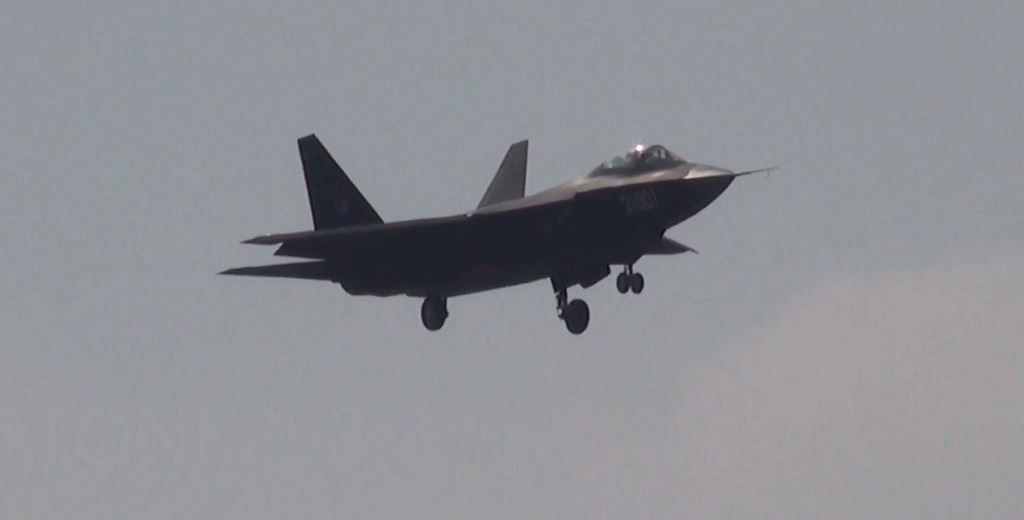
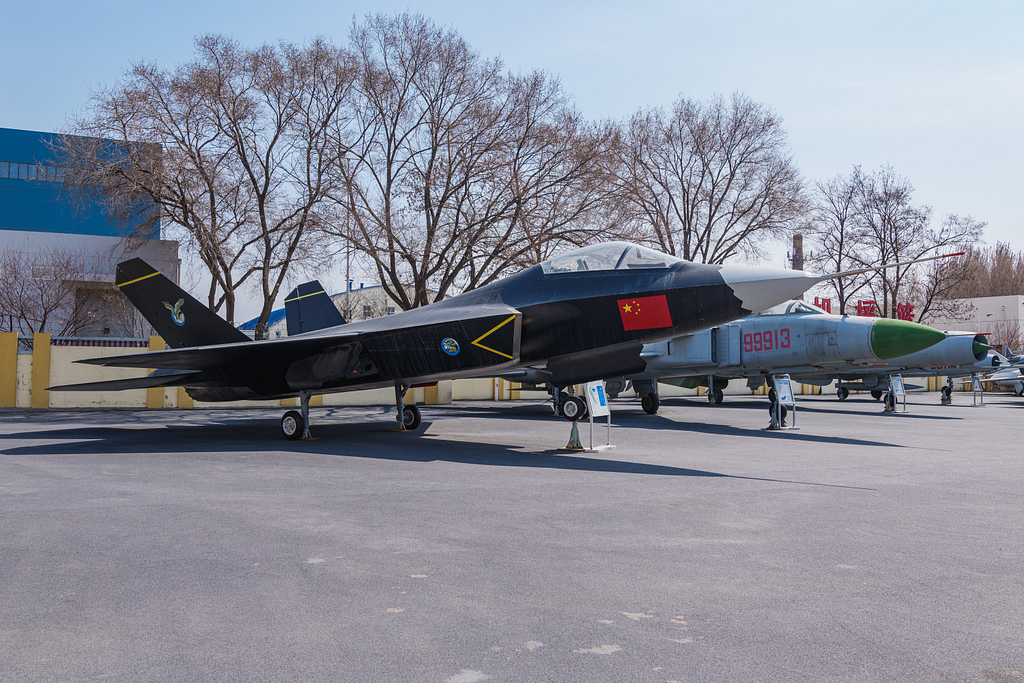
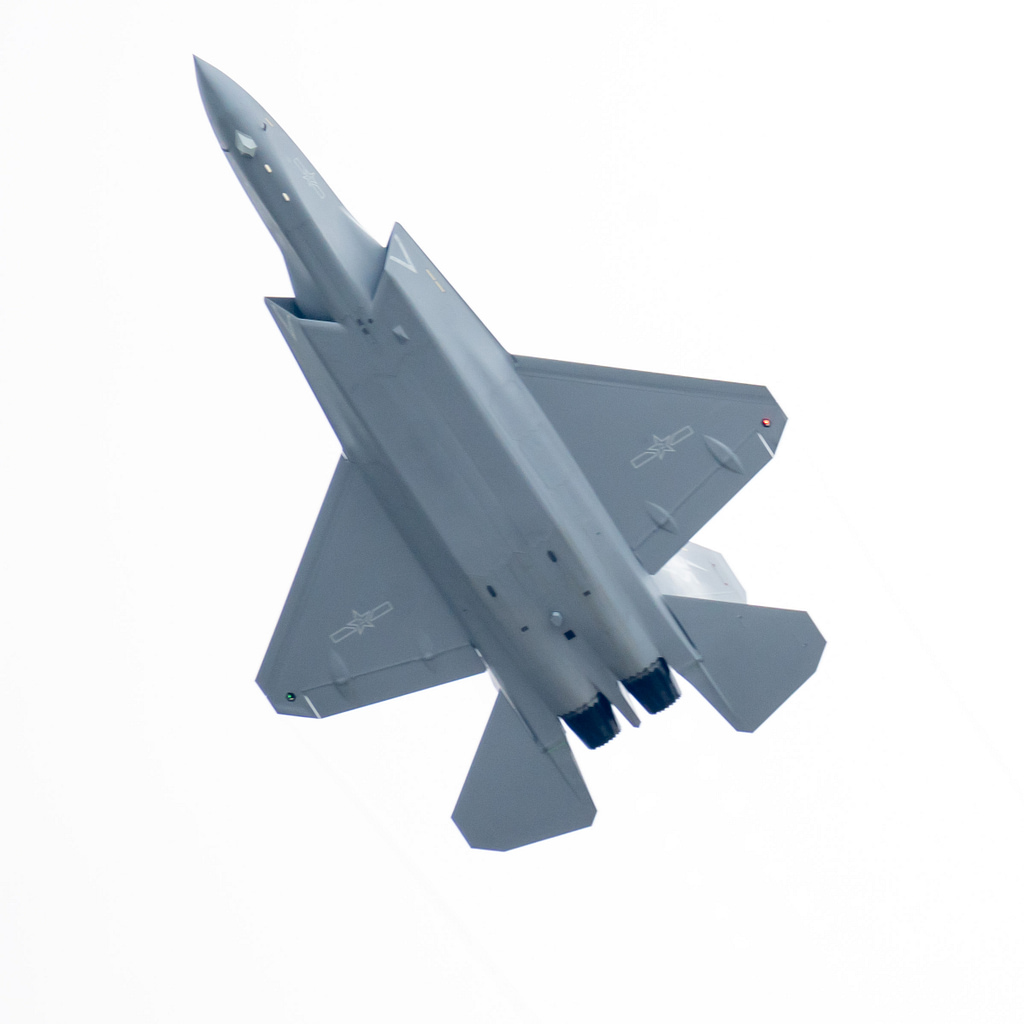
The FC-31 / J-35 in pictures
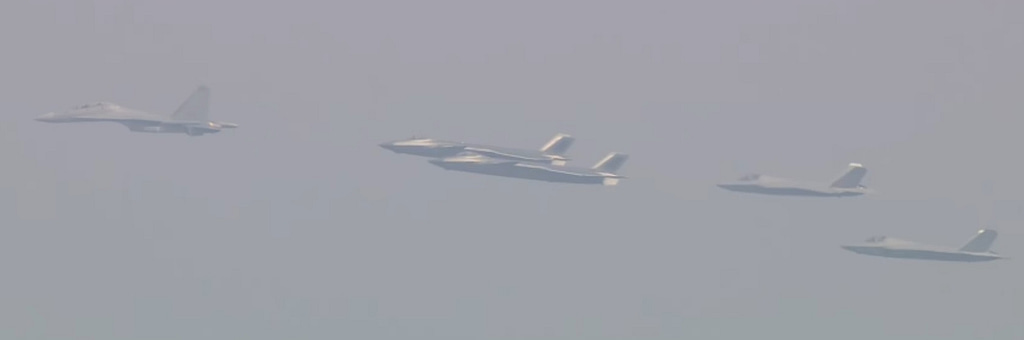
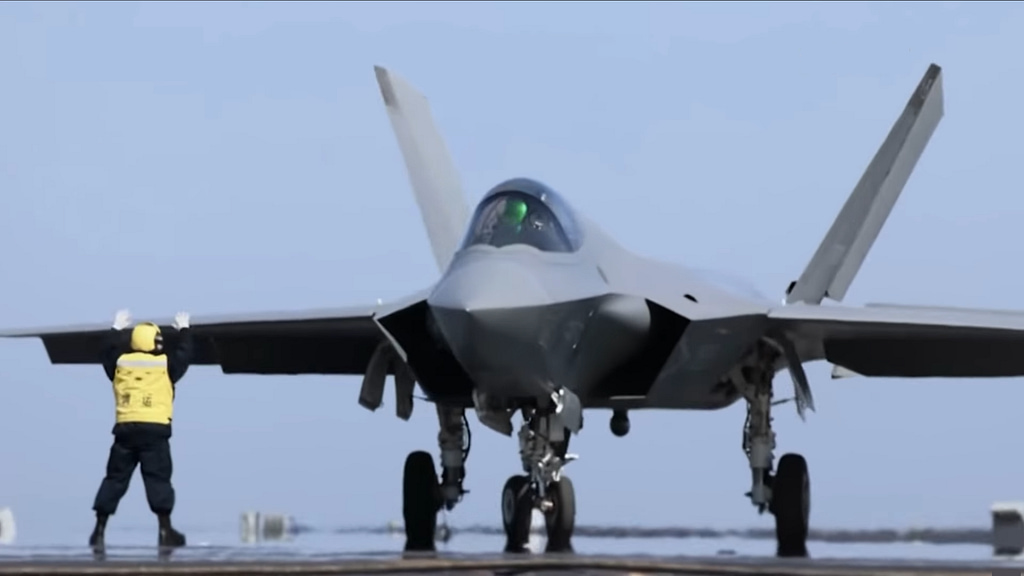
Where the FC-31 / J-35 operates
An unproven newcomer
The FC-31 / J-35 has no known combat record. It has never been reported in action, and its real-world effectiveness is untested in the public record. What can be said is deliberately narrow, and every figure here is reported or estimated rather than confirmed.
Compare the combat record of every military aircraft. Figures as of July 2026; all J-35 data is reported or estimated.
Everything people ask about the FC-31 / J-35
Can I fly in an FC-31/J-35?
What is the difference between the FC-31, J-31 and J-35?
Is the J-35 a copy of the F-35?
What engines does it use?
Is it in service yet?
Can it operate from Chinese aircraft carriers?
Did Pakistan order it?
How stealthy is it, and how good is it really?
You can’t fly the J-35.
These, you can.
Some legends only live in museums — others are fuelled and waiting. MiGFlug has put civilians in real military jet cockpits since 2004.
 Fly the L-39 AlbatrosThe world’s most-flown jet trainer — aerobatics included
 Fly the F-104 Starfighter“The missile with a man in it”
 Fly the MiG-21The Cold War’s most-produced jet
 حلّق بطائرة تي-33 شوتينغ ستارAmerica’s first jet trainer
 Fly the DH VampireA piece of early jet history
 Fly the S.211Agile Italian jet trainer
 Fly the MB-326The classic Aermacchi jet
 Fly the MiG-15The Soviet legend of the Korean War
Continue the tour
Every fact, checked
- The War Zone — China’s J-35A Officially Breaks CoverThe clearest account of the FC-31 to J-31 to J-35 to J-35A designation history and the land-versus-naval airframe differences.
- The Diplomat — Assessing the J-35ARigorous, well-hedged analysis of role, engines, spec caveats and the “F-35 copy” debate.
- Defense News — J-35A at ZhuhaiReporting on the official public debut of the land-based variant in November 2024.
- The Aviationist — Carrier J-35 First FlightContemporaneous record of the navalised prototype’s first flight and its carrier features.
- USNI News — Fujian Catapult TestsConfirms J-35 electromagnetic-catapult launches from the carrier Fujian.
- Naval News — Fujian CommissionedThe carrier’s commissioning, with the J-35 named as part of its intended air wing.
- Breaking Defense — Reported Pakistan OfferPrimary sourcing on the reported, unconfirmed Pakistan export offer.
- 19FortyFive — Reported Production RampOpen-source estimates of production pace, with explicit “estimates, not confirmed” caveats.