

Sopwith Dolphin
The Sopwith 5F.1 Dolphin was one of the strangest-looking and most under-rated British fighters of 1918 — a fast, strong, high-flying gun platform whose pilot literally poked his head up through a gap in the top wing to see the whole sky.
The Sopwith Dolphin’s story: the odd-looking fighter that let its pilot see everything
By 1917 the Royal Flying Corps needed a scout that could do more than turn tightly. It needed to climb high, hit hard, take punishment and — above all — let the pilot see the enemy before the enemy saw him. Herbert Smith’s answer at Sopwith was the 5F.1 Dolphin, and it solved the visibility problem in the most literal way imaginable.
The rotary-engined Sopwith Camel had made the company famous, but it was a specialist: brilliant in a dogfight below about 12,000 feet, tiring and blind above it. The war in the air was moving upward, where reconnaissance aircraft and the new German fighters operated, and the Camel’s rotary engine ran out of breath. What the RFC wanted for 1918 was a fighter built around a powerful stationary engine, heavy armament and a genuinely commanding view.
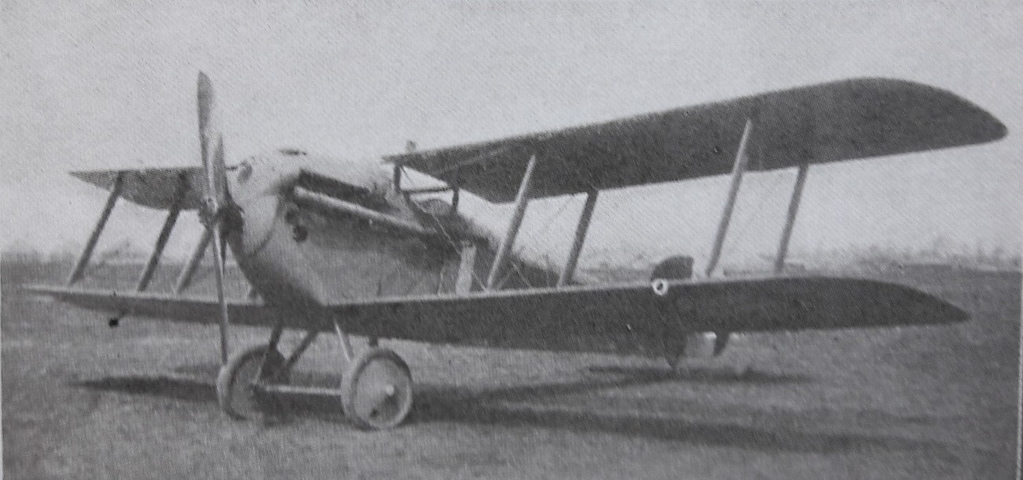
Smith gave it exactly that. The Dolphin was a two-bay biplane built around the water-cooled Hispano-Suiza 8 V8, an engine of French design already proving itself in the S.E.5a and the SPAD. To get the pilot’s eyes above the top wing rather than behind it, Smith did something almost no other designer dared: he set the lower wing forward of the upper — a pronounced backward, or negative, stagger — and cut a large opening in the centre of the top wing so the pilot’s head sat up through it. Seated high, with the upper wing at shoulder height and a clear gap in front of his face, the Dolphin pilot enjoyed an all-round field of view, and an upward view in particular, that few contemporaries could match.
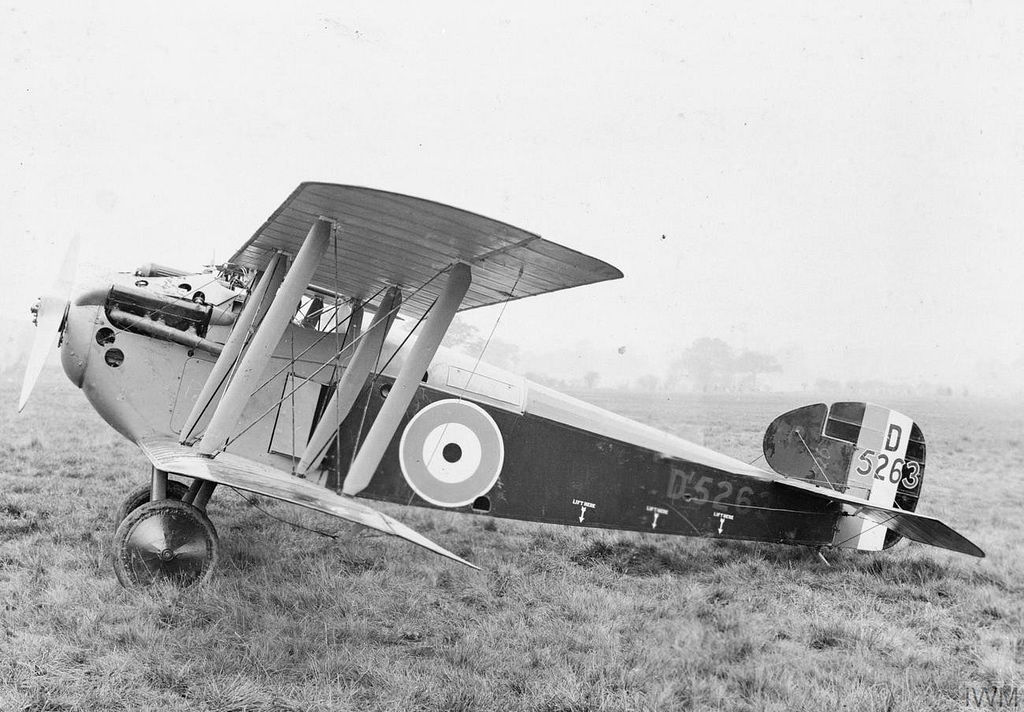
On that clear view the designers hung a genuinely fearsome armament. Two synchronised .303-inch Vickers machine guns fired through the propeller in the usual way, and to that Sopwith added mounts for one or two .303-inch Lewis guns on the front spar of the upper wing, angled upward to fire over the propeller arc into the belly of an enemy above. On paper the Dolphin was among the most heavily armed single-seat fighters of the war. In practice pilots were divided about the wing-mounted Lewis guns — awkward to aim, awkward to reload standing in the cockpit, and prone to being left off altogether — so many Dolphins flew with the two reliable Vickers and no more.
It is important to be honest about the aircraft’s troubles, because they shaped its reputation. The early production standard used a geared version of the 200 hp Hispano-Suiza, and that geared engine was, at first, unreliable — reduction gears failed, cooling was fussy, and squadrons in early 1918 spent as much time nursing engines as fighting. And there was the layout itself. Pilots looked at that head-through-the-wing arrangement and worried, reasonably, about what would happen to their neck and skull if the aircraft turned over on its back on landing or nosed into the ground. Some units fitted overturn pylons or “crash” structures above the wing to give the pilot’s head some protection; the fear was real even if actual injuries were relatively rare.
Once those problems were understood and managed, opinion swung firmly in the Dolphin’s favour. It was fast, it climbed and fought well at height, it was strong enough to make an excellent ground-attack machine during the desperate fighting of the German spring offensives of 1918, and that panoramic view made it a superb gun platform. Squadrons that had been wary came to like it a great deal. The most successful Dolphin pilot, the Canadian Major Albert Desbrisay Carter of No. 19 Squadron, was credited with around 31 victories flying the type in just a few months — a tally that says a good deal about the aeroplane as well as the man.
The catch, as with the closely related Snipe, was timing. The Dolphin reached the front in strength only in the spring of 1918, so its combat career was measured in months rather than years. Roughly 1,500 or more were built — figures vary between sources — and by the Armistice it equipped several RAF fighter squadrons on the Western Front, with a handful earmarked for the American Expeditionary Force. Then the guns fell silent, and the type’s real second act happened elsewhere.
Production tells its own story. The Dolphin was not a hand-built rarity but a mass-produced fighter, turned out by Sopwith itself and by contractors including Darracq Motor Engineering and Hooper & Co. Roughly 121 had been delivered by the end of 1917, and the pace quickened through 1918 as the airframe proved itself and the engine supply steadied. Exactly how many were completed is uncertain — figures commonly cited range from about 1,500 to well over two thousand, depending on whether one counts British and French-built machines and orders cut short by the Armistice — but by any measure it was built in serious numbers.
In the field the Dolphin earned a second, grimmer reputation as a ground-attack aircraft. During the German spring offensives of 1918, when the front was moving and every aeroplane was needed low down, Dolphin squadrons carried small bombs and used their guns against troops, transport and artillery on the ground. It was dangerous, unglamorous work in the reach of every rifle and machine gun below, and the Dolphin’s strength and stable gun platform made it well suited to it — even if the role wasted the high-altitude qualities that made the design special in the first place.
After the war the Dolphin’s story continued in unexpected places. Britain retired it quickly, declaring it obsolete by 1921, but Poland acquired a number and flew them during the Polish–Soviet War of 1919–1921, and Canada and the United States each held on to a few for evaluation. It is that scattered, low-key afterlife — and the survival of a single genuine airframe — that keeps the odd, clever, honest little Dolphin from being forgotten entirely.
01
How the Sopwith Dolphin’s negative-stagger wing gave the pilot his all-round view
+
The Dolphin’s defining feature is the pronounced backward stagger of its wings: the lower wing is set forward of the upper by roughly a foot, the reverse of the normal arrangement. Herbert Smith did this to put the pilot’s eye-line above and behind the top wing’s trailing edge, and then went further by cutting a large cut-out in the centre section directly in front of the cockpit.
The result was that the pilot sat with his head up in the airflow, the upper wing spars close beside his shoulders, and an almost uninterrupted view forward, upward and to the sides. In an era when many pilots were shot down by an enemy they never saw, that view was a genuine tactical advantage, especially against aircraft attacking from above — the classic killing position.
The price was a strange, unmistakable silhouette and a cockpit that felt exposed. But the aerodynamic and structural penalties of the negative stagger were modest, and the visibility payoff was large, which is why the layout — however odd it looked — was a sound piece of engineering rather than a gimmick.
02
Why Sopwith Dolphin pilots worried about the “head through the wing” cockpit
+
The same feature that gave the Dolphin its view also gave its pilots pause. With the head sitting up through the top wing, a nose-over on a soft or shell-cratered field — a common enough accident in 1918 — raised the fear that the wing structure could come down on the pilot’s neck or skull.
Squadrons responded in practical ways. Some fitted raised steel overturn pylons or a strengthened structure above the centre section, intended to take the weight of an inverted landing and keep it off the pilot’s head. Others simply trained crews carefully and accepted the risk. Records suggest serious head injuries from overturns were not, in fact, common, but the psychological effect of the layout was real and colours many first-hand accounts.
It is a good example of how a design can be sound on the numbers yet still unsettle the people who have to fly it — and of how quickly aircrew adapt once they trust an aeroplane.
The wider point is that the Dolphin asked its pilots to accept an unfamiliar bargain: a small, deliberate increase in perceived risk in exchange for a large, real gain in the one thing that most often decided air combat in 1918 — seeing the other aeroplane first. Once squadrons had flown the type for a few weeks, most concluded the bargain was a good one, and the complaints faded into the routine grumbling that attends every new aircraft.
How the Sopwith Dolphin was built: engine, guns and that unmistakable wing
Hispano-Suiza 8 V8
A water-cooled Hispano-Suiza 8 V8 of around 200 horsepower replaced the rotary engines of earlier Sopwiths. It gave the Dolphin strong high-altitude performance — but the early geared 200 hp version was troublesome, and reliability only came with careful handling and later engine standards.
Two Vickers plus Lewis guns
Two synchronised .303 Vickers guns fired through the propeller, with provision for one or two upward-angled .303 Lewis guns on the upper-wing front spar. It was heavy armament for 1918 — though pilots often found the wing Lewis mounts awkward and flew without them.
Negative-stagger biplane
A two-bay biplane with the lower wing set forward of the upper and a cut-out for the pilot’s head, giving an outstanding all-round view. The airframe was strong and made a fine gun platform and ground-attack machine.
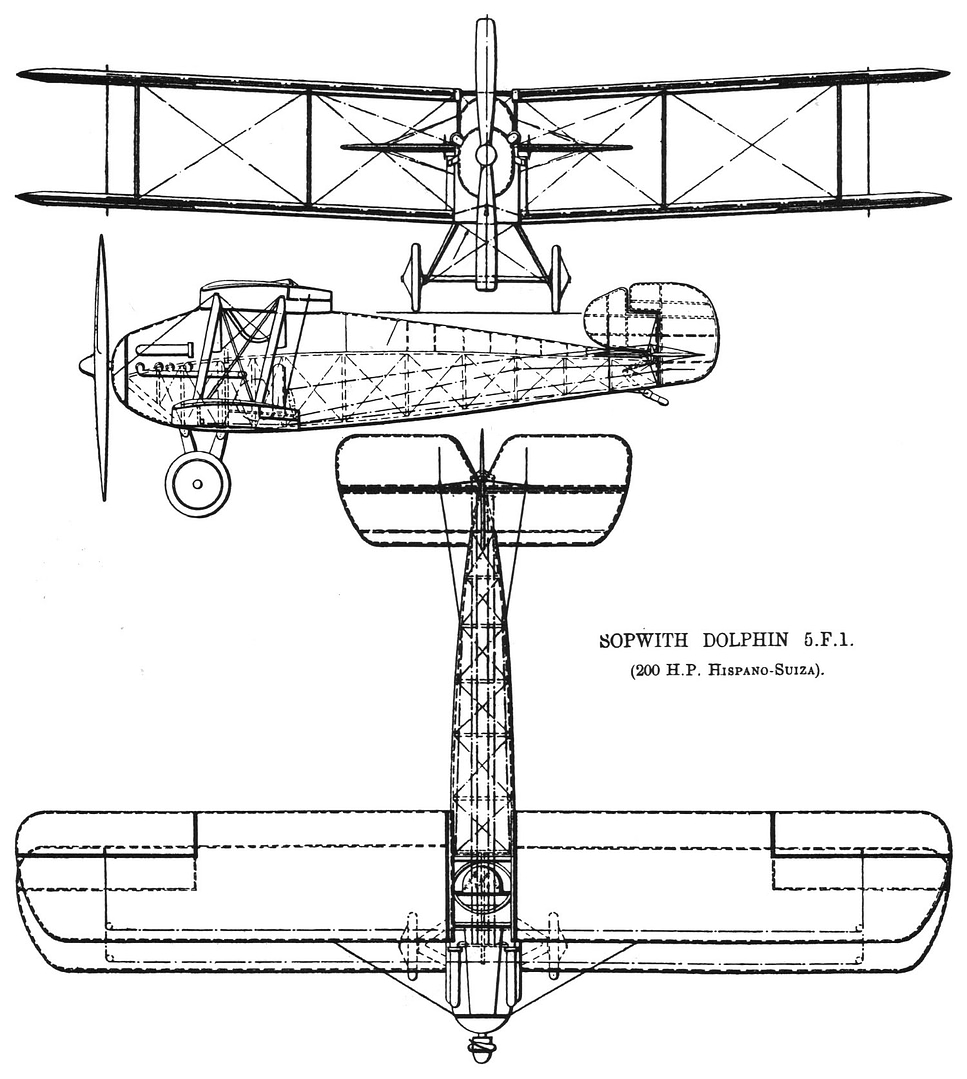
Structurally the Dolphin was a conventional wire-braced, fabric-covered wood biplane of its day — spruce and ash framing, a plywood-and-fabric fuselage forward, and the deep radiator and V8 nose that mark out the Hispano-Suiza-engined fighters. What made it unusual was arrangement rather than construction: the geometry of the wings, the height of the seat, and the density of guns and structure packed around the cockpit.
03
The Sopwith Dolphin’s engine problem: the geared Hispano-Suiza and how it was fixed
+
The Hispano-Suiza 8 was one of the great engines of the war, but the specific version chosen for the early Dolphin — a geared 200 hp unit — gave persistent trouble in service. The reduction gearing could fail, and the whole installation demanded careful cooling and maintenance that hard-pressed front-line squadrons in early 1918 struggled to provide.
Several answers emerged. A direct-drive variant, sometimes rated as high as 300 hp, offered more power (the Mk II), while other aircraft had the reduction gear removed and reverted to a simpler, more dependable 200 hp direct-drive arrangement (the Mk III). As the engines matured and crews learned their ways, the Dolphin’s serviceability improved markedly, and the aircraft’s reputation improved with it.
It is worth stating plainly that engine figures for the Dolphin vary between sources and versions; the “200 hp” and “300 hp” numbers should be read as nominal ratings for different marks rather than a single fixed value.
The Hispano-Suiza 8 itself was one of the most important aero-engines of the era — a compact, water-cooled V8 designed by the Swiss engineer Marc Birkigt and built under licence across the Allied nations. It powered the S.E.5a and the French SPAD fighters as well as the Dolphin, and its combination of light weight and reliable power (once the geared versions’ teething troubles were cured) helped define what a modern fighter could do at altitude. The Dolphin’s fortunes rose and fell with this engine more than with any other single factor.
04
The Sopwith Dolphin’s armament: two Vickers, a pair of Lewis guns, and a lot of debate
+
The Dolphin’s core armament was two belt-fed, synchronised .303 Vickers guns firing forward through the propeller — the standard, reliable British fighter battery of the period. What set the Dolphin apart was the provision for additional Lewis guns mounted on the front spar of the upper wing, angled upward to fire over the propeller disc.
In theory this let a Dolphin sit beneath an enemy two-seater or scout and rake it from below, a deadly position. In practice the wing-mounted Lewis guns were hard to aim precisely, awkward to reload while flying, and their mounting was disliked by many pilots. Some flew with a single Lewis, some with two, and a great many left them off entirely and relied on the twin Vickers. One machine is recorded as carrying only a single Lewis gun.
The upshot is that the Dolphin’s paper armament of up to four guns overstates its typical fit — but even the practical loadout of two synchronised Vickers made it a serious fighting aeroplane.
The idea behind the upward-firing guns was sound and ahead of its time: an attacker sitting below and behind an enemy is very hard to see and can rake the vulnerable underside. The same principle would reappear, in far more lethal form, in the “Schräge Musik” upward guns fitted to German night fighters a generation later. On the Dolphin the concept was limited by the practicalities of a windblown open cockpit and hand-loaded drums, which is why so many pilots quietly reverted to the guns they could rely on.
Sopwith Dolphin specifications: dimensions, performance and cost
| طاقم | 1 (single seat) |
|---|---|
| طول | 6.78 m (22 ft 3 in) |
| طول الجناحين | 9.91 m (32 ft 6 in) |
| ارتفاع | 2.59 m (8 ft 6 in) |
| منطقة الجناح | ≈24.5 m² (263 sq ft) |
| Wing configuration | Two-bay biplane, backward (negative) stagger ≈12 in |
| الوزن الفارغ | ≈660 kg (≈1,460 lb) |
| Loaded weight | ≈890 kg (≈1,960 lb, four guns) |
| محرك | Hispano-Suiza 8 water-cooled V8 |
|---|---|
| Power | ≈200 hp (geared, Mk I); up to ≈300 hp (direct-drive Mk II) — varies by mark |
| أقصى سرعة | ≈211 km/h (131 mph) at low level; ≈195 km/h (121.5 mph) at 10,000 ft — estimates vary |
| Climb | ≈12 min to 10,000 ft (3,050 m) |
| سقف الخدمة | ≈6,100 m (20,000 ft) |
| Endurance | ≈1 h 45 min – 2 h |
| التسليح | 2 × synchronised .303 Vickers; provision for 1–2 upward-firing .303 Lewis |
| Unit cost | Not reliably recorded (WWI) |
| Cost per flight hour | Not reliably recorded (WWI) |
| Number built | ≈1,500 or more (estimates vary, up to ~2,000+) |
Figures for First World War aircraft vary widely between sources, marks and individual airframes. Speeds, weights, engine ratings and production totals here are given as representative estimates and should be read as such; where sources disagree markedly the range is noted.
05
Sopwith Dolphin variants: the Mk I, Mk II and Mk III explained
+
The Dolphin is usually described in three main forms, distinguished mainly by their engines. The Mk I was the principal production and service version, powered by the geared 200 hp Hispano-Suiza — the version most Dolphins flew, and the one whose early engine troubles are best documented.
The Mk II used a higher-powered direct-drive Hispano-Suiza, sometimes quoted at around 300 hp, and was associated with French-built machines and experiments to give the airframe more performance. The Mk III reverted to a simpler direct-drive 200 hp installation with the reduction gearing removed, trading a little theoretical power for much better reliability.
Because the marks overlap and sources use the designations inconsistently, treat these as a guide to the family rather than a rigid catalogue. The through-line is a search for a dependable way to get Hispano-Suiza power into a very good airframe.
France also built Dolphins under licence and experimented with alternative installations, and various one-off armament and equipment trials were carried out on individual airframes during 1918 — including the single machine recorded with just one Lewis gun. None of these changed the essential character of the aeroplane, which remained, in all its forms, a fast, high-flying, heavily armed single-seater with an unmistakable view.
06
The Sopwith Dolphin’s operating costs: why the honest answer is “not recorded”
+
Modern aircraft pages carry neat figures for unit cost and cost per flight hour. For a 1918 fighter, those numbers essentially do not exist in any comparable form. Wartime procurement was handled through government contracts, bulk orders and cost-plus arrangements that were never expressed as a tidy “per flight hour” rate, and the surviving records are patchy.
What can be said is that the Dolphin was a mass-produced wooden fighter of its day, built in the hundreds by Sopwith and by contractors such as Darracq and Hooper, using a relatively expensive imported-design engine. Its running cost was dominated by that Hispano-Suiza V8 — fuel, coolant, and the skilled maintenance the geared engine demanded — rather than by the airframe.
So the cost rows on this page read “not reliably recorded (WWI)”. That is the honest position, and it is the same for the Camel, the Snipe and the S.E.5a.
For readers used to modern comparisons — where a jet’s cost per flight hour is a headline figure — it is worth remembering how different the 1918 world was. Airframes were cheap relative to the engines that powered them; aircrew were trained in weeks; and machines were expected to last only a short operational life before being written off or replaced. The economics of a wartime fighter were dominated by the sheer scale of production and by the value of the trained pilot inside, far more than by any per-hour running cost.
The Sopwith Dolphin’s timeline: from drawing board to obsolescence
1917
Herbert Smith designs the Sopwith 5F.1 Dolphin around the Hispano-Suiza V8, with negatively staggered wings and a cut-out for the pilot’s head. Prototypes fly during the year and testing begins.
Late 1917
Production is ordered on a large scale from Sopwith and contractors; roughly 121 Dolphins are delivered by the end of the year, though front-line units are not yet equipped.
February 1918
No. 19 Squadron RAF/RFC takes the Dolphin into front-line service on the Western Front, the first unit to do so.
Spring–summer 1918
Nos. 23, 79 and 87 Squadrons re-equip. During the German spring offensives the Dolphin is used hard for high patrol, escort and low-level ground attack. Major A. D. Carter of No. 19 becomes the top Dolphin ace with around 31 victories.
October 1918
Five Dolphins are purchased for the American Expeditionary Force; the type is evaluated by American and Allied units.
11 November 1918
The Armistice ends the fighting with the Dolphin equipping several RAF fighter squadrons. A few continue with the Army of Occupation in the Rhineland (Bickendorf) into 1919.
1919–1921
Poland operates Dolphins during the Polish–Soviet War. British production ends in 1919 and the RAF declares the type obsolete by 1921; Canada and the USA retain a small number.
The Sopwith Dolphin in service: fourteen short stories
A fighter with a view
The RFC wanted a 1918 scout that could fight high and see everything. Herbert Smith’s Dolphin answered by lifting the pilot’s head clear of the top wing — an unusual solution to an old, deadly problem.
Head through the wing
The lower wing was set forward of the upper, and a cut-out let the pilot’s head sit up in the open. It looked bizarre, but it gave an all-round, especially upward, field of view that few fighters could match.
The Hispano gamble
A water-cooled Hispano-Suiza V8 of around 200 hp gave the Dolphin its height and speed. The early geared version was unreliable, and squadrons in early 1918 fought the engine as much as the enemy.
Two Vickers, two Lewis
Twin synchronised Vickers plus provision for upward-firing Lewis guns on the wing made the Dolphin heavily armed on paper. In practice many pilots disliked the Lewis mounts and flew with the two Vickers alone.
First into action
No. 19 Squadron was the first to take the Dolphin to the Western Front, followed by Nos. 23, 79 and 87. The type arrived just as the fighting reached its most intense.
Major Carter’s tally
The Canadian Major Albert Desbrisay Carter became the most successful Dolphin pilot, credited with roughly 31 victories on the type in only a few months — evidence of a very good gun platform in capable hands.
Down in the mud
During the German spring offensives the strong Dolphin was thrown into low-level ground attack — bombing and strafing troop concentrations — a punishing role that its sturdy airframe took in its stride.
A fighter that liked height
Where the rotary Camel struggled, the Hispano-engined Dolphin thrived, patrolling and fighting well above 15,000 feet with a service ceiling around 20,000 feet. High work was its element.
The exposed head
Pilots worried that a nose-over could bring the wing down on their heads. Some units fitted overturn pylons above the centre section for protection; serious injuries proved rare, but the unease was real.
Five for the Americans
The American Expeditionary Force bought five Dolphins for evaluation. The type was tested by American units but the war ended before it could see U.S. combat.
Occupation and end
A few Dolphins served with the Army of Occupation in the Rhineland into 1919. Britain retired the type quickly, declaring it obsolete by 1921.
Dolphins in the East
Poland acquired around ten Dolphins and flew them during the Polish–Soviet War of 1919–1921 — the type’s most significant post-war combat use, far from the Western Front.
C3988
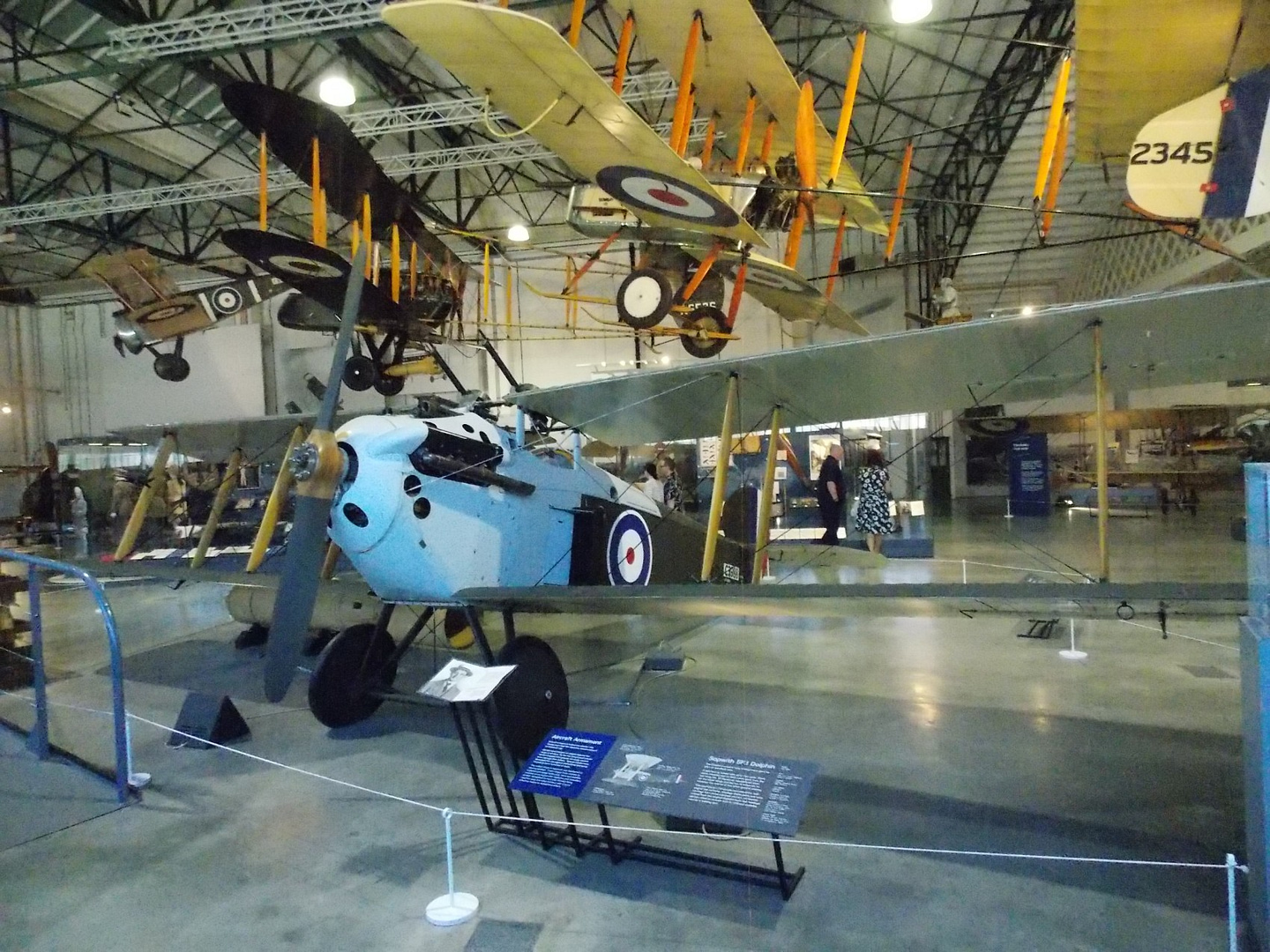
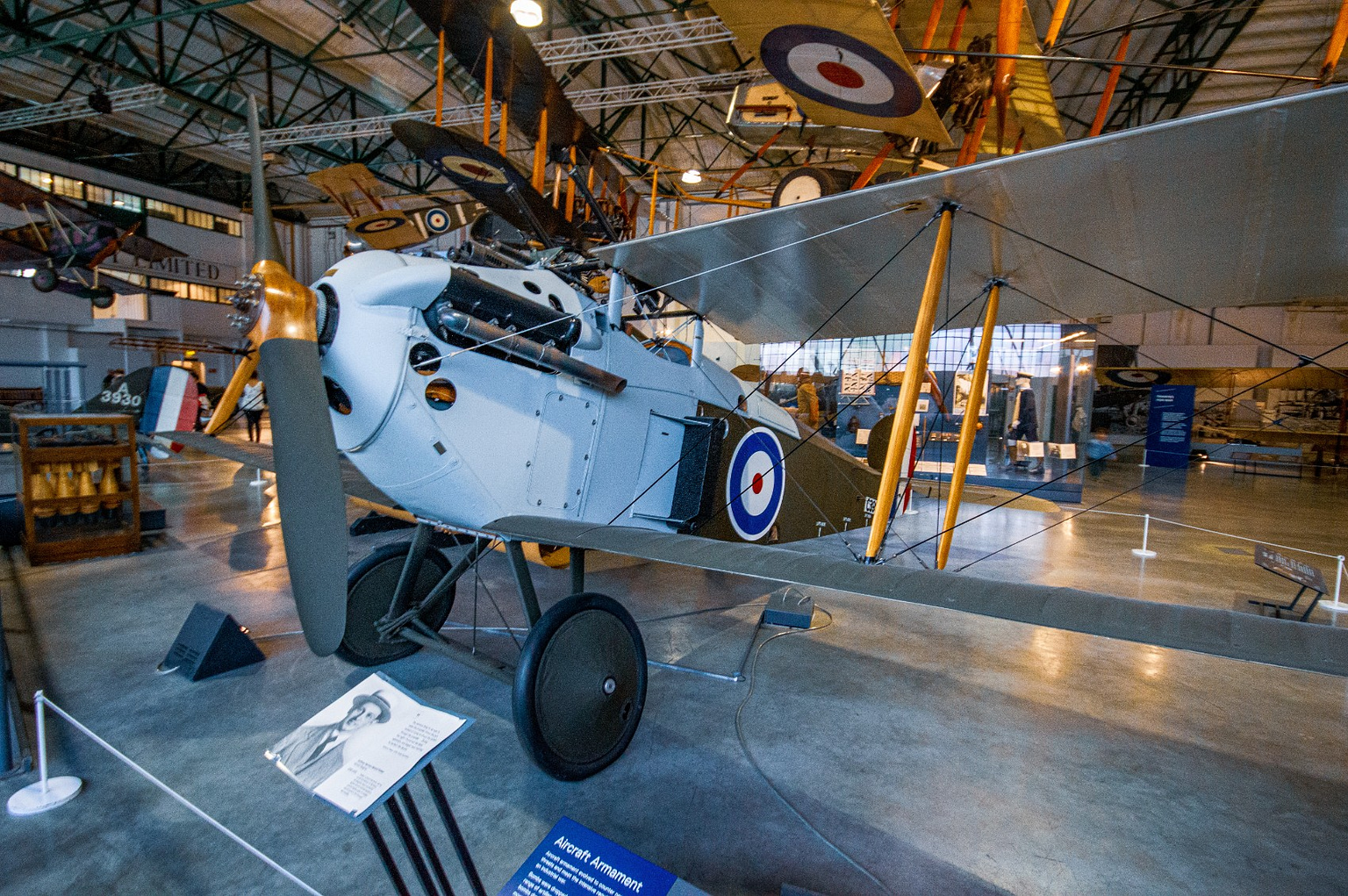
The sole surviving original Dolphin, serial C3988, was rebuilt over many years and is displayed at the RAF Museum London — the only genuine example left in the world.
Under-rated
Overshadowed by the Camel and the S.E.5a, the Dolphin is now remembered as one of the best British fighters of 1918: fast, strong, high-flying and clever, if let down early by its engine.
Sopwith Dolphin photographs: originals, survivors and reproductions

The Sopwith Dolphin on film: a documentary look at an under-rated fighter
The best way to get a feel for the Dolphin’s odd layout and its place in 1918 is to see it explained in full. This documentary from the Skynea History channel walks through the aircraft’s design, its engine troubles, its combat service and why it is remembered as an under-appreciated workhorse of the First World War.
“Sopwith Dolphin – An Underappreciated Workhorse”, Skynea History (YouTube). A focused ~16-minute documentary on the type’s design and service; chosen as a dependable, on-topic overview rather than for view count, as no high-traffic film exists for this obscure aircraft.
Sopwith Dolphin operations map: origin, fronts, operators and survivors
The Dolphin was a British fighter of a single year of war, but its story touches several countries: designed and built in the United Kingdom, fought over France and Flanders and briefly over German lines in 1918, bought in small numbers by the United States, flown in combat by Poland after the war, and now preserved in Britain and Canada. Toggle the categories below to explore where the Dolphin came from, where it served, and where it survives.
The colours follow the four categories in the legend. Britain, as the aircraft’s home and manufacturer, is shown in blue. The Western Front theatres of France, Belgium and Germany — where Dolphin squadrons fought and, briefly, occupied — are marked in the service pattern. The post-war and other operators, Poland, Canada and the United States, are shaded separately, and the countries that hold surviving airframes or reproductions are picked out again in the survivors category. Because several countries belong to more than one group, the tooltip lists every category that applies while the map shows the highest-priority colour.
The Sopwith Dolphin by the numbers
The numbers capture the Dolphin’s paradox: built in large quantity, flown by a top ace to real success, and capable of fighting at heights the Camel could not reach — yet in service for only a handful of years before it was retired and half-forgotten.
The Sopwith Dolphin today: the last original and the reproductions keeping it flying
Very few Dolphins outlived the scrapping of the post-war fleets, and for decades it looked as though none had survived at all. That a genuine example exists at all is the result of a long, patient rebuild — and the type’s presence in the air today rests entirely on reproductions.
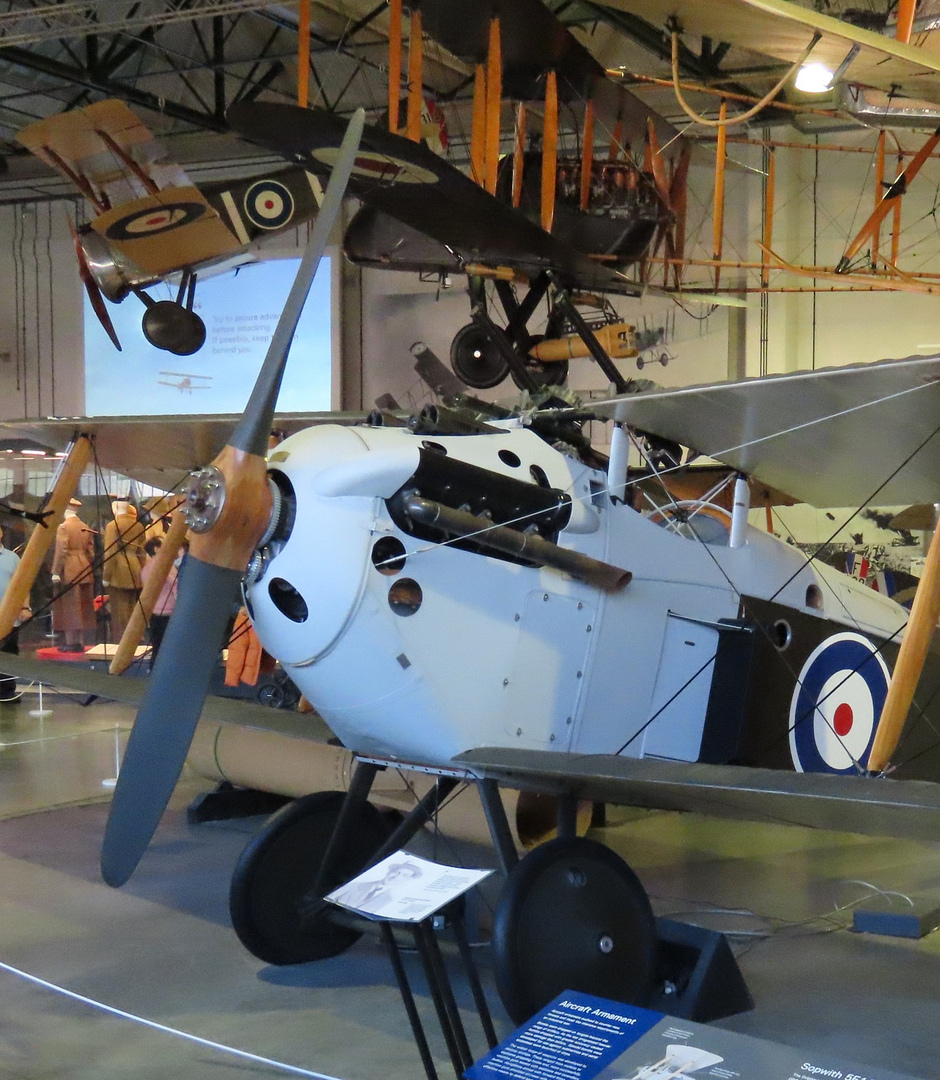
The most complete genuine Dolphin is serial C3988, held by the RAF Museum. Assembled and restored over many years from surviving original components and fresh structure, it is displayed at the museum’s London site and is the only original Sopwith Dolphin in the world. Standing beside it, the strangeness of the design becomes obvious: the low-set upper wing, the forward-thrown lower wing, and the open frame where the pilot’s head once sat.
There is also a Dolphin preserved at the Canada Aviation and Space Museum in Ottawa, reflecting the type’s small Canadian connection — Canada operated a handful post-war and the Dolphin’s top ace, Major A. D. Carter, was Canadian. That aircraft is best described as a composite or reproduction rather than a wholly original airframe; as with much of the Dolphin’s story, the precise provenance deserves a careful, hedged description rather than a bold claim.
Beyond the museums, the Dolphin lives on through reproductions. Several flying replicas have been built by dedicated vintage-aviation groups, and it is these — not any original — that let modern audiences see a Dolphin in the air, with its unmistakable silhouette against the sky. No genuine original is airworthy, and none is likely to be.
07
The Sopwith Dolphin C3988: how the world’s only original was rebuilt
+
C3988 is the reason anyone can study a real Dolphin at all. Like many surviving First World War aircraft, it is the product of a long conservation effort that combined genuine period components with newly made structure to present the aeroplane as it appeared in 1918. The work spanned many years, reflecting both the scarcity of parts and the care taken to get the unusual airframe right.
Displayed at the RAF Museum London, C3988 lets visitors see the features that words struggle to convey: how low the upper wing sits, how far forward the lower wing is set, and just how exposed the pilot’s position really was. For a type that served for barely a year and was then almost entirely scrapped, the survival of even one example is a small miracle of preservation.
It also serves a scholarly purpose. Because so few original Dolphins survive, C3988 is the primary physical reference for anyone building a reproduction or researching the type’s construction, and the care taken over its rebuild reflects that responsibility. In effect, the world’s understanding of how a real Dolphin was put together rests to a large degree on this one aeroplane.
08
Reproduction Sopwith Dolphins: keeping an odd shape in the air
+
Because no original Dolphin flies, every airborne Dolphin you might see today is a reproduction. Vintage-aviation enthusiasts have built flying replicas that recreate the aircraft’s distinctive layout, sometimes with modern engines standing in for the temperamental Hispano-Suiza, allowing crowds to watch the strange biplane manoeuvre as it would have a century ago.
These aircraft are labours of love, and they matter: they turn a static museum curiosity back into a living machine, and they remind audiences that the Dolphin was not a failed experiment but a capable, front-line fighter. As always with reproductions, it is worth being clear that they are new-build tributes rather than surviving wartime airframes.
For the visitor, the distinction between original and reproduction is less important than the experience of seeing the shape move. A Dolphin taxiing out, the pilot’s head high above the wing, is a sight almost no one alive has witnessed in an original — and the reproductions are the only way to recover it. In that sense they do the same job as the museum’s C3988, from the opposite direction: one preserves the substance, the others preserve the motion.
The Sopwith Dolphin in context: where it sits among the fighters of 1918
To understand the Dolphin you have to place it beside its rivals and stablemates. It was one answer to the central question of 1918 fighter design: how to combine speed, height, firepower and vision in a single small aeroplane.
Look backward from the Dolphin and you see the rotary-engined Sopwiths — the Pup, the Triplane and the Camel — light, nimble and deadly down low, but blind above and short of breath at height. The Dolphin kept the Sopwith virtues of strength and manoeuvrability but swapped the rotary for a water-cooled V8, trading a little low-level agility for far better high-altitude performance and a steadier gun platform.
Look sideways and you see its true peer, the Royal Aircraft Factory S.E.5a, which used the same family of Hispano-Suiza engines to similar effect: fast, strong, good at height, and a superb platform for its guns. The Dolphin matched it in most respects and beat it for sheer visibility, but the S.E.5a’s slightly simpler layout and gentler reputation won it the larger share of fame. Alongside both stood the Sopwith Snipe, the rotary-engined fighter chosen as the RAF’s post-war standard — a reminder that the service hedged its bets between rotary and inline power right to the end of the war.
Look forward and you see why the Dolphin was retired so fast. Peacetime budgets were tiny, the Hispano-Suiza was demanding to maintain, and the RAF standardised on a small number of types. The Dolphin, brilliant but niche and a little troublesome, was an easy candidate to drop. That it then found a second life in Poland, of all places, is a fitting coda for an aircraft that never quite fitted the mould.
That Polish chapter deserves a word of its own. In the chaotic fighting of the Polish–Soviet War of 1919–1921 — a conflict fought with whatever aircraft the new Polish state could beg, buy or capture — a batch of ex-British Dolphins gave real service in a fighter and ground-attack role, far from the Western Front skies they were designed for. It is a reminder that the life of a First World War aircraft did not end at the Armistice: the surplus machines of 1918 fought on in the smaller wars that followed, and the Dolphin was among them.
09
Sopwith Dolphin versus S.E.5a: two Hispano-Suiza fighters compared
+
The Dolphin and the S.E.5a were the two great British inline-engined fighters of the war’s final year, and they shared a great deal: the Hispano-Suiza V8, strong airframes, good speed and a liking for height. Both were steadier and faster than the rotary Camel, and both made excellent gun platforms.
Where they differed was in emphasis and detail. The S.E.5a offered a clean, conventional layout that pilots found easy and forgiving, and it was built in very large numbers. The Dolphin offered heavier potential armament and a dramatically better field of view, at the cost of a stranger, more exposed cockpit and, early on, a less reliable engine installation. In capable hands they were closely matched; history simply remembered the S.E.5a more kindly.
If you had to sum the difference in a sentence, it would be this: the S.E.5a was the safe, superb, conventional choice, and the Dolphin was the bolder, cleverer, slightly riskier one. The RAF, sensibly, used both — and a pilot lucky enough to fly either was flying one of the finest fighters in the world in 1918.
10
Why the Sopwith Dolphin’s reputation has grown with time
+
For decades the Dolphin was a footnote — the odd-looking Sopwith with the pilot’s head through the wing. More recent assessments have been far kinder. Historians now emphasise its genuine strengths: high-altitude performance the Camel could not match, a superb view, heavy armament, and real success in the hands of pilots like Major Carter.
The rehabilitation is partly a correction of the record. The Dolphin’s early engine troubles were real but were largely solved; its exposed cockpit frightened pilots but rarely hurt them; and its short service life owed more to the timing of the Armistice than to any failing of the aircraft. Seen clearly, it stands as one of the most capable and forward-looking British fighters of 1918 — which is exactly why it repays a closer look today.
There is also a lesson in the Dolphin about how reputations form. The aircraft that become legends are often those that arrive early, serve long, and photograph well; the ones that arrive late and look strange tend to be overlooked, however good they are. The Dolphin is a corrective to that tendency — a reminder that the “famous” aircraft of a war are not always the best, and that the historical record rewards a second, more careful reading.
Sopwith Dolphin: frequently asked questions
Can I fly in a Sopwith Dolphin?
No. The Sopwith Dolphin was a single-seat fighter, only one genuine original survives (in a museum), and there is no two-seat or passenger version — so a Dolphin flight is not something anyone can book, and MiGFlug does not offer it.
However, you can fly in several genuine military jets today. MiGFlug arranges flights in aircraft such as the MiG-29, the L-39 Albatros and other fighters, including aerobatics and even edge-of-space missions. Explore the options on the MiGFlug flights & prices page.
Was the Sopwith Dolphin a good aircraft?
Yes — once its early problems were sorted. It was fast, strong, climbed and fought well at altitude, made an excellent gun platform thanks to its superb view, and served as a capable ground-attack machine in 1918. Its reputation suffered early on from an unreliable geared engine and from pilots’ unease about the exposed cockpit, but squadrons that persevered rated it highly. It is now widely seen as one of the best, and most under-rated, British fighters of the war.
Why did the Sopwith Dolphin’s wings have backward (negative) stagger?
To improve the pilot’s view. By setting the lower wing forward of the upper and cutting an opening in the top wing, designer Herbert Smith let the pilot’s head sit up above and through the wing, giving an outstanding all-round and upward field of view. In an era when many pilots were shot down by an enemy they never saw, that visibility was a genuine advantage.
Was it dangerous to fly with your head through the wing?
Pilots worried about it. The concern was that a nose-over or overturn on landing could bring the wing structure down on the pilot’s neck or head. Some units fitted raised overturn pylons above the centre section for protection. In practice serious head injuries from overturns were relatively rare, but the fear was real and features in many first-hand accounts — a case of a sound design that still unsettled the people flying it.
What engine did the Sopwith Dolphin use, and was it reliable?
A water-cooled Hispano-Suiza 8 V8, generally around 200 horsepower. The early geared 200 hp version was troublesome — the reduction gearing failed and the installation needed careful maintenance — which hurt the Dolphin’s early reputation. Later a direct-drive version (sometimes quoted near 300 hp) and a simplified 200 hp direct-drive arrangement improved matters, and serviceability got much better as crews learned the engine.
How was the Sopwith Dolphin armed?
With two synchronised .303-inch Vickers machine guns firing forward through the propeller, plus provision for one or two upward-angled .303 Lewis guns mounted on the front spar of the upper wing. That made it heavily armed for 1918, but many pilots found the wing Lewis mounts awkward to aim and reload and flew with the two Vickers alone.
Which squadrons flew the Sopwith Dolphin?
On the Western Front the main RAF/RFC Dolphin squadrons were Nos. 19, 23, 79 and 87, with No. 141 among units associated with home-defence trials. No. 19 was the first to take it into action, in February 1918.
Who was the top-scoring Sopwith Dolphin pilot?
The Canadian Major Albert Desbrisay Carter of No. 19 Squadron was the most successful Dolphin pilot, credited with roughly 31 victories on the type in only a few months of 1918.
How many Sopwith Dolphins were built?
Estimates vary. Around 1,500 or more are commonly cited, with some sources putting total production higher, above two thousand. About 121 had been delivered by the end of 1917 before large-scale front-line use began in 1918. Treat the exact figure as uncertain.
What was the Sopwith Dolphin’s top speed and ceiling?
Roughly 211 km/h (about 131 mph) at low level, falling to around 195 km/h (121.5 mph) at 10,000 feet, with a service ceiling near 20,000 feet (about 6,100 m). As with all its figures, sources differ, so these are best read as representative estimates.
Did the United States use the Sopwith Dolphin?
Only in a very small way. Five Dolphins were bought for the American Expeditionary Force in October 1918 and the type was evaluated, but the war ended before it saw any American combat.
Did Poland use the Sopwith Dolphin?
Yes. After the First World War Poland acquired a number of Dolphins — around ten — and flew them during the Polish–Soviet War of 1919–1921. This was the type’s most significant post-war combat use.
How is the Dolphin different from the Sopwith Camel and Snipe?
The Camel and Snipe were rotary-engined dogfighters that excelled at lower altitudes; the Dolphin used a water-cooled Hispano-Suiza V8, which gave it much better high-altitude performance. Its backward-staggered wings and head-through-the-wing cockpit gave a far better view than either, and its twin-Vickers-plus-Lewis armament was heavier. In short, the Dolphin was the high-flying, hard-hitting member of the late-war Sopwith family.
Are there any surviving Sopwith Dolphins?
Just one genuine original: serial C3988, rebuilt over many years and displayed at the RAF Museum London. A composite/reproduction Dolphin is preserved at the Canada Aviation and Space Museum, and a number of flying reproductions have been built. There is no airworthy original.
Why isn’t the Sopwith Dolphin as famous as the Camel?
Timing and image. The Camel arrived earlier, shot down more aircraft and became a legend; the Dolphin reached the front only in 1918, served for a short time, and looked strange rather than glamorous. Its early engine troubles didn’t help. Historians have since reassessed it as one of the finest British fighters of the war’s final year.
Where can I see a Sopwith Dolphin today?
The only genuine original, C3988, is at the RAF Museum London. A composite/reproduction example is at the Canada Aviation and Space Museum in Ottawa, and flying reproductions appear at vintage-aviation events. If you want to actually fly in a historic-style military aircraft, see the MiGFlug flights & prices page.
Fly a real fighter yourself
The Sopwith Dolphin is a museum piece: single-seat, one original left, and not something anyone can book a ride in. But the same thrill it gave its 1918 pilots — power, height and the horizon tipping around you — is very much available today. MiGFlug puts civilians in the cockpit of genuine military jets and warbirds.
Explore more First World War fighters
Sources & further reading on the Sopwith Dolphin
- RAF Museum — Sopwith Dolphin 5FI (C3988)Collection record for the sole surviving original Dolphin, with provenance and technical notes.
- Imperial War MuseumsWartime photographs and archive film of Dolphins in RAF service on the Western Front, 1918.
- historyofwar.org — Sopwith 5F.1 DolphinDetailed specifications, variants, engine marks and squadron service history.
- San Diego Air and Space Museum archivesPeriod photographs of Dolphin squadrons, several released into the public domain.
- Canada Aviation and Space MuseumHome of a preserved composite/reproduction Sopwith Dolphin in Ottawa.
- J. M. Bruce, “British Aeroplanes 1914–1918”The standard scholarly reference on RFC/RAF aircraft, including the Dolphin’s design and development.
- The Aerodrome — WWI aces and aircraftBiographical records of Dolphin pilots such as Major A. D. Carter and their victory tallies.
- Flight / Flightglobal archiveContemporary and retrospective coverage of Sopwith fighters and the Hispano-Suiza engine.
- Skynea History (YouTube)“Sopwith Dolphin – An Underappreciated Workhorse”, the documentary embedded above.
- MiGFlug — Afterburner magazineMiGFlug’s own aviation writing at migflug.com/jetflights, and current flights at flights & prices.