
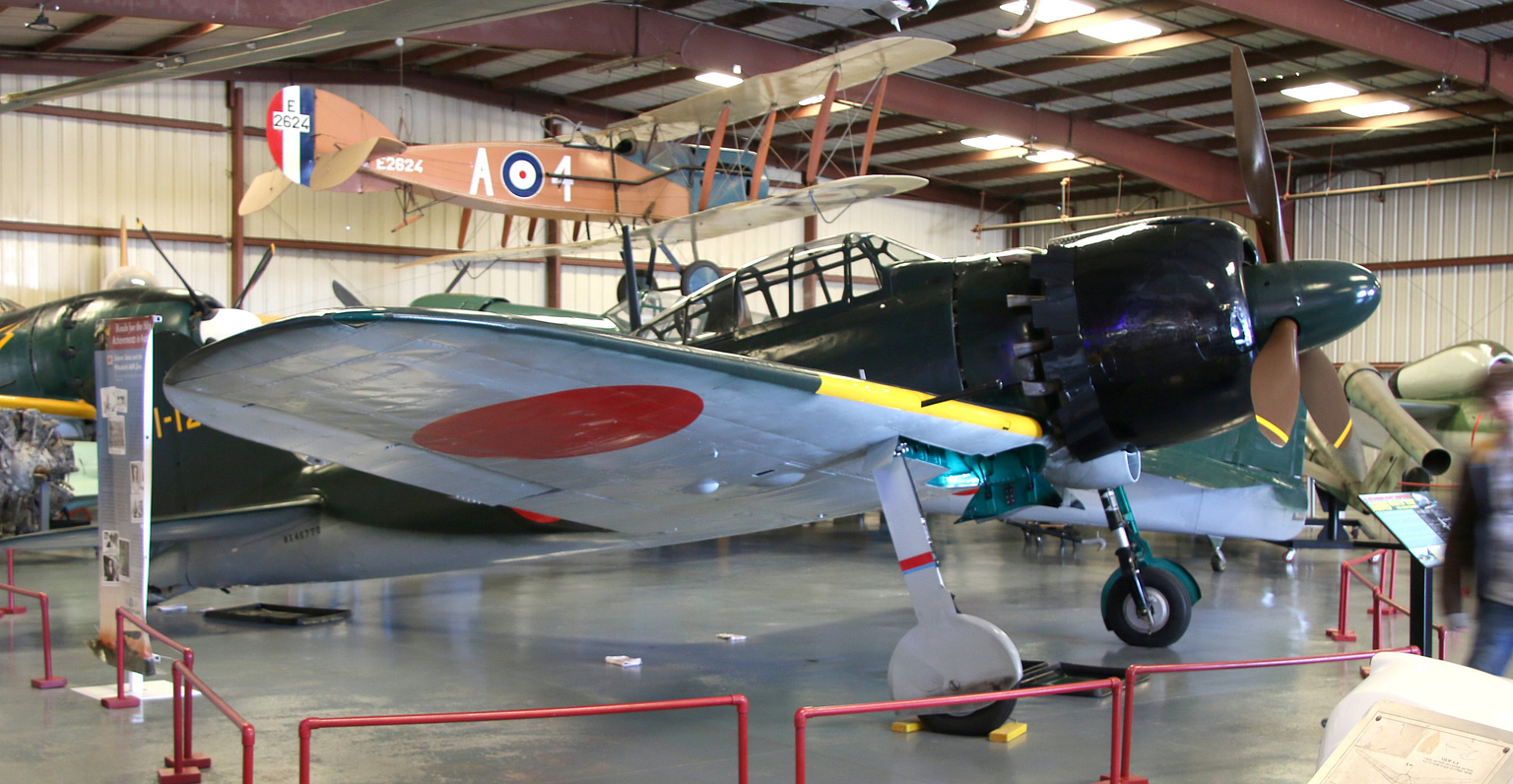
Mitsubishi A6M
“Zero”
The Imperial Japanese Navy’s carrier fighter — light, long-ranged and astonishingly agile. It dominated the skies over the Pacific in 1941–42, before Allied tactics and newer fighters exposed the price of its featherweight design.
The fighter that ruled the early Pacific
In 1937 the Imperial Japanese Navy issued a demanding specification — the 12-shi requirement — for a new carrier fighter that had to combine long range, heavy armament, high speed and exceptional manoeuvrability all at once. At Mitsubishi, designer Jiro Horikoshi concluded the only way to meet such contradictory demands was to make the aircraft as light as humanly possible. The result, first flown on 1 April 1939 and adopted in 1940 as the Type 0 Carrier Fighter, became known to the world as the Zero.
When it appeared over China and then swept across the Pacific in December 1941, the Zero stunned its opponents. Its range let it escort strikes far beyond what Allied planners believed possible; its low wing loading gave it a turning circle few fighters could match. In the opening months of the Pacific war — over Pearl Harbor, the Philippines and the Dutch East Indies — it out-ranged and out-turned nearly everything sent against it, and Allied pilots were soon warned never to dogfight a Zero.
That dominance rested on a gamble. To save weight the Zero carried no armour plate and no self-sealing fuel tanks, so it burned readily when hit, and its controls grew heavy and unresponsive at high speed. Once the Allies understood these weaknesses — helped by a nearly intact example, the Akutan Zero, recovered in 1942 — and fielded faster, sturdier fighters such as the F6F Hellcat and F4U Corsair, the Zero’s edge collapsed. By 1944 it was outclassed, and late in the war many were expended in kamikaze attacks. Around 10,939 were built, more than any other Japanese aircraft.
01The Zero’s featherweight gamble: range and agility bought by sacrificing protection
Jiro Horikoshi’s design met the Navy’s contradictory demands through relentless weight-saving. The Zero used a new lightweight aluminium alloy (Sumitomo’s extra-super-duralumin), a slender structure and the smallest practical engine — and it deleted the armour and self-sealing fuel tanks that Western fighters increasingly carried. The pay-off was extraordinary range and a turning performance that dazzled opponents in 1941–42.
The price was survivability. Without armour behind the pilot or protected tanks, a Zero that took hits could burn or break up where a Wildcat, Hellcat or Corsair would absorb the damage and fly home. As the war turned, that trade — agility and reach in exchange for protection — increasingly favoured the Allies, whose pilots learned to fight on their own terms rather than the Zero’s.
What makes it special
A fighter built around lightness
Every part of the Zero was shaped by the drive to save weight. It used a new lightweight aluminium alloy, a thin monocoque structure, and — most controversially — no armour and no self-sealing fuel tanks. The result was a very low wing loading that gave the Zero a tight turn and a light, responsive feel at combat speeds, at the cost of durability under fire.
Range that redrew the map
Powered by a compact, fuel-efficient Nakajima Sakae radial and carrying a droppable belly tank, the Zero could reach roughly 3,000 km — a figure that let it escort bombers on missions Allied intelligence had assumed were impossible. That reach was as important to Japan’s early victories as the fighter’s agility.
Superb at low speed, stiff at high speed
The Zero’s low wing loading made it a peerless turner at moderate speeds, but the same light structure meant its ailerons stiffened sharply as speed rose, and it could not follow heavier fighters in a high-speed dive. Allied pilots learned to exploit exactly this — using speed, altitude and team tactics rather than turning with it.
02The Akutan Zero: how a crash-landed fighter in the Aleutians handed the Allies its secrets
On 4 June 1942, during the Aleutians campaign, a Zero flown by petty officer Tadayoshi Koga was hit by ground fire and force-landed on Akutan Island. The boggy ground flipped the aircraft and killed the pilot, but left the airframe largely intact. Recovered weeks later by a US Navy party, it was shipped to San Diego, repaired and test-flown — the first flyable Zero the Allies had studied in detail.
The evaluation confirmed what combat had begun to show: the Zero was a superb low-speed turner but stiffened badly at high speed, could not dive with heavier fighters, and had no protection for pilot or fuel. Those findings helped validate the dive-and-zoom and team tactics — such as the Thach Weave — that Allied pilots used to blunt the Zero’s advantages in the following years.
03The Zero’s armament: two cannon, two machine guns, and a magazine problem
The A6M2 carried a mixed battery: two 20 mm Type 99 cannon in the wings and two 7.7 mm Type 97 machine guns in the cowling. The cannon hit hard, but early versions had a low muzzle velocity and only about 60 rounds per gun, which made them difficult to aim at range and quick to run dry. The rifle-calibre cowl guns rarely had the punch to bring down sturdier Allied aircraft on their own. Later variants improved the cannon’s velocity and ammunition supply.
Full specifications
Figures are for the A6M2 Model 21, the main early-war variant; later marks such as the A6M5 differed in engine, speed and armament.
Airframe & Performance
- طاقم
- 1
- طول
- ~9.06 m
- طول الجناحين
- ~12.0 m
- ارتفاع
- ~3.05 m
- الوزن الفارغ
- ~1,680 kg
- Max takeoff weight
- ~2,796 kg
- Max speed
- ~533 km/h (331 mph)
- سقف الخدمة
- ~10,000 m
- يتراوح
- ~3,105 km (with drop tank)
- معدل الصعود
- ~15.7 m/s
Propulsion, Armament & Cost
- محرك
- 1 × Nakajima Sakae 12 radial
- Power
- ~940 hp (Sakae 12); ~1,130 hp (Sakae 21)
- Cannon
- 2 × 20 mm Type 99
- Machine guns
- 2 × 7.7 mm Type 97
- Bombs
- Up to 2 × 60 kg (or a single larger bomb)
- First flight
- 1 April 1939
- Built
- ~10,939 (1939–1945)
- Unit cost
- No reliable public figure (wartime production)
- Cost per flight hour
- No meaningful figure exists
04The Zero’s cost: why no meaningful price exists
The A6M was a wartime product of the Imperial Japanese state, built by Mitsubishi and Nakajima under military direction and never sold on an open market. As a result there is no reliable flyaway unit price or cost-per-flight-hour figure for the type in the public record, and comparisons in modern dollars are not meaningful. What is well documented is the scale: with about 10,939 aircraft completed, the Zero was produced in greater numbers than any other Japanese aircraft of the war.
From carrier fighter to last-ditch weapon
The requirement
The Imperial Japanese Navy issues the demanding 12-shi specification for a long-range, agile carrier fighter.
First flight
Jiro Horikoshi’s prototype flies on 1 April, its performance made possible by radical weight-saving.
Combat debut
Adopted as the Type 0 Carrier Fighter, the Zero enters service and sees its first combat over China.
The Pacific onslaught
Zeros escort the attack on Pearl Harbor and sweep across the Philippines and the Dutch East Indies.
The Akutan Zero
A nearly intact A6M2 is recovered in the Aleutians in June and later test-flown, exposing the fighter’s weak points.
The Allies respond
Faster, sturdier fighters — the F6F Hellcat and F4U Corsair — and new tactics begin to erode the Zero’s dominance.
Outclassed
By the Marianas campaign the Zero is outmatched; late in the year it is increasingly used in kamikaze attacks.
War’s end
Production ends with the Japanese surrender; around 10,939 Zeros had been built, more than any other Japanese aircraft.
Twelve Zero stories
The impossible specification
The Navy’s 12-shi requirement demanded range, speed, firepower and agility all at once.
Read the full story
The man who saved every gram
Jiro Horikoshi’s obsession with weight defined the whole aircraft.
Read the full story
The range that shocked the Allies
The Zero could escort strikes far beyond what its opponents believed possible.
Read the full story
“Never dogfight a Zero”
Early Allied pilots learned the hard way not to turn with it.
Read the full story
The prize in the Aleutians
A crash-landed Zero on Akutan Island gave the Allies their first flyable example.
Read the full story
Fighting on your own terms
Allied pilots learned to use speed and teamwork instead of turning.
Read the full story
The cost of no armour
The same lightness that made the Zero deadly also made it fragile.
Read the full story
Two cannon and a short magazine
The Zero’s hard-hitting cannon ran dry quickly.
Read the full story
Overtaken by the Hellcat
New American fighters reversed the balance of the Pacific air war.
Read the full story
The Zero over Darwin
Even the Spitfire found the Zero a difficult opponent.
Read the full story
From fighter to kamikaze
Late in the war, outclassed Zeros were turned into guided weapons.
Read the full story
The survivors that still fly
A handful of restored Zeros keep the type in the air today.
Read the full story
The Zero in pictures
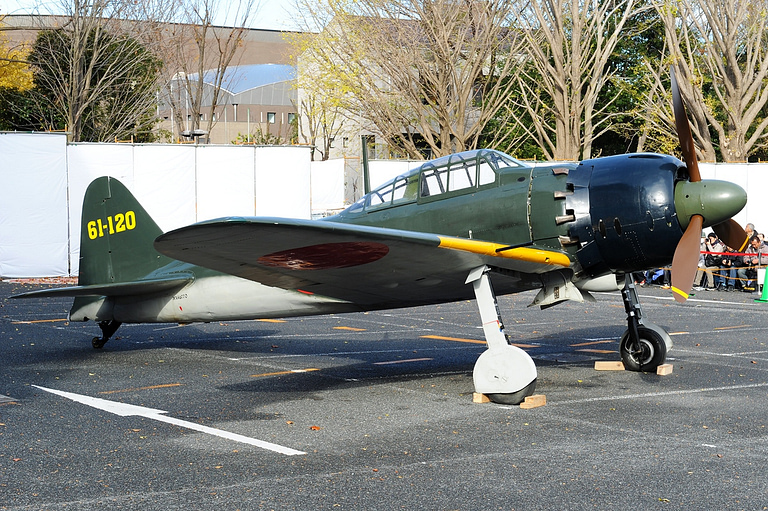
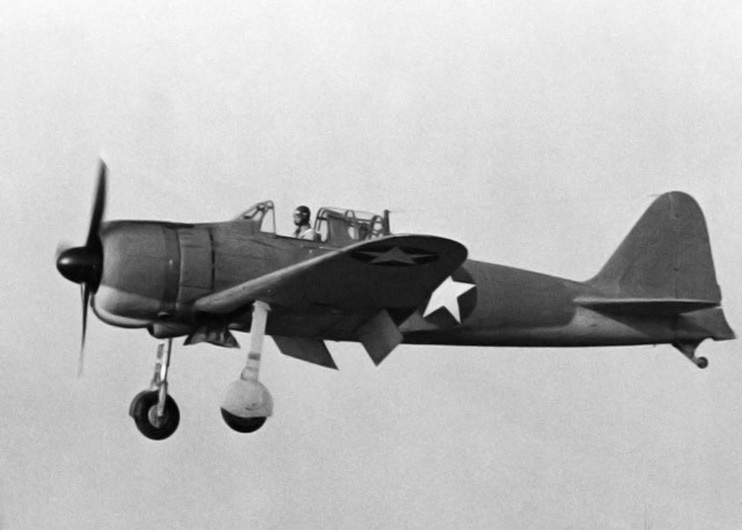
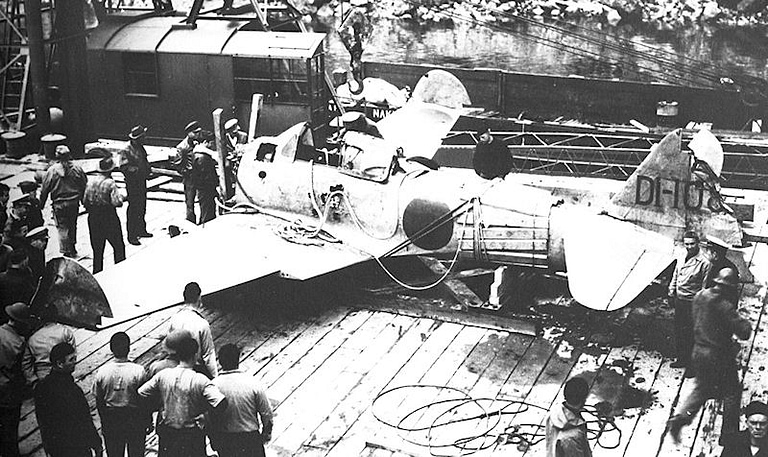
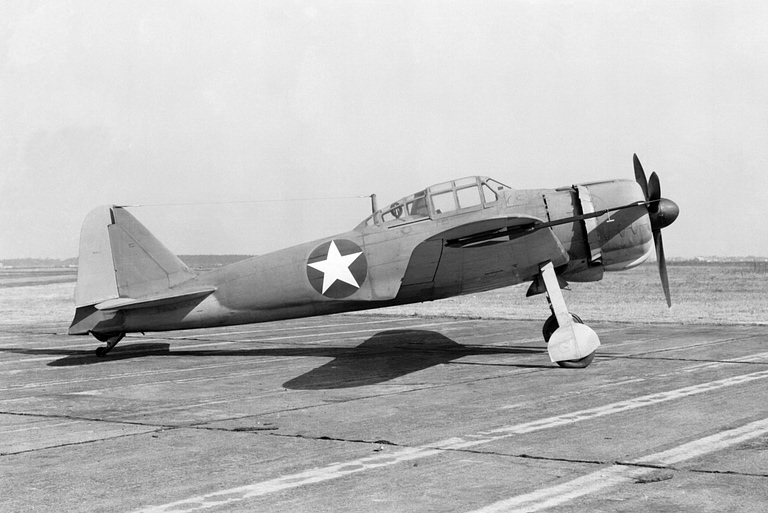
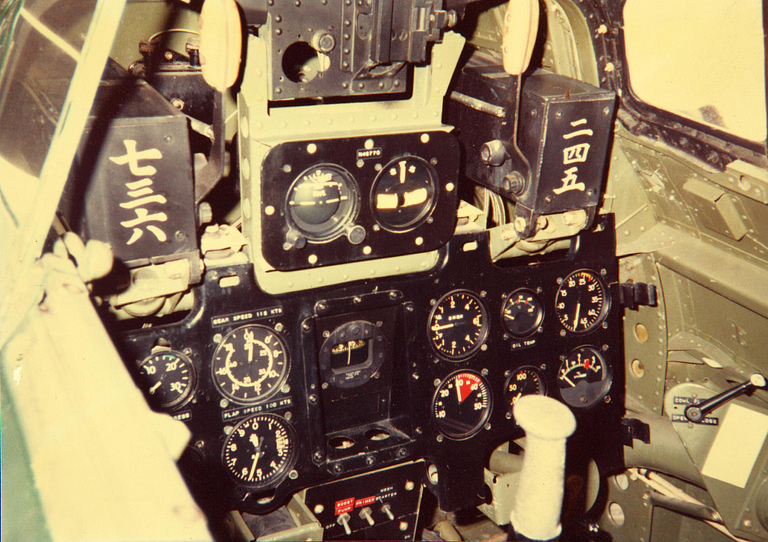
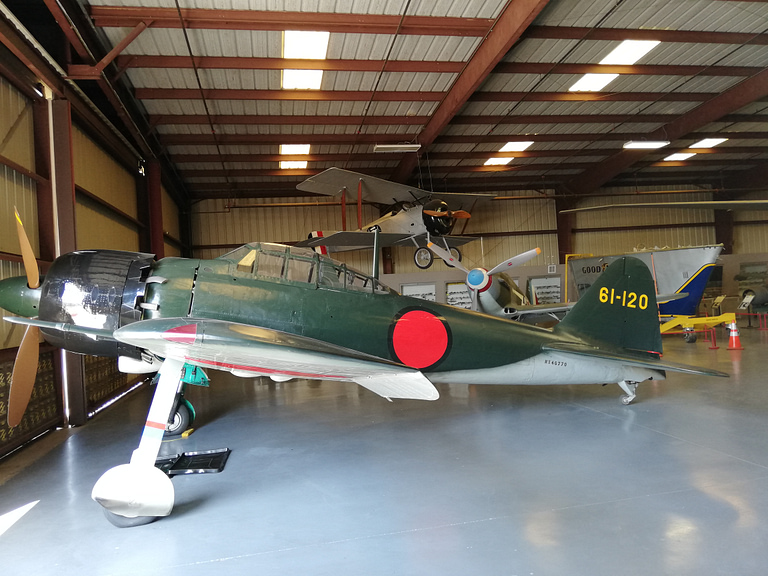
The Zero in motion
A curated video feature for the Mitsubishi A6M Zero is coming soon. In the meantime, explore the photo gallery above and the operator map below.
Where the Zero flew
The record that defines it
The Zero’s record is inseparable from the early Pacific war. In 1941–42 it out-ranged and out-turned nearly everything the Allies could field, escorting the attacks on Pearl Harbor, the Philippines and the Dutch East Indies and giving Japan air superiority across a vast theatre. But it was built without armour or self-sealing tanks, and once the Allies understood its weaknesses — helped by the captured Akutan Zero — and fielded the Hellcat and Corsair, its dominance collapsed. Late in the war, many Zeros were expended in kamikaze attacks.
Compare the combat record of every military aircraft. Figures as of July 2026.
Everything people ask about the A6M Zero
Can I fly in an A6M Zero?
Why was the Zero so feared early in the war?
Why did the Zero become obsolete?
What was the Akutan Zero?
How many Zeros were built?
Are any Zeros still flying?
What does “Zero” mean?
You can’t fly the Zero.
These, you can.
Some legends only live in museums — others are fuelled and waiting. MiGFlug has put civilians in real military jet cockpits since 2004.
 Fly the L-39 AlbatrosThe world’s most-flown jet trainer — aerobatics included
 Fly the F-104 Starfighter“The missile with a man in it”
 Fly the MiG-21The Cold War’s most-produced jet
 حلّق بطائرة تي-33 شوتينغ ستارAmerica’s first jet trainer
 Fly the DH VampireA piece of early jet history
 Fly the S.211Agile Italian jet trainer
 Fly the MB-326The classic Aermacchi jet
 Fly the MiG-15The Soviet legend of the Korean War
Continue the tour
Every fact, checked
- Smithsonian National Air and Space Museum — Mitsubishi A6M ZeroReference collection entry, design background and preserved airframe.
- Military Factory — Mitsubishi A6M ZeroSpecification baseline, variants and production figures.
- The National WWII MuseumPacific air-war context and the Zero’s early dominance.
- The Aviation Geek ClubThe Akutan Zero recovery and the tactics that followed.
- Imperial War MuseumsReference for wartime service and the Zero’s design trade-offs.
- Naval History and Heritage CommandUS Navy accounts of Pacific combat and the captured Zero.
- Planes of Fame Air MuseumAn airworthy A6M restored with an original Sakae engine.
- Encyclopædia Britannica — ZeroOverview of the designation, designer and service history.