
Short Sunderland
The RAF’s great four-engine flying boat — a genuine flying ship with bunks and a galley, the U-boat-hunting mainstay of the Atlantic that the Luftwaffe called the “Flying Porcupine”.
القصة
The Short Sunderland: the flying ship that hunted the U-boats
The Short Sunderland was less an aircraft than a ship that flew. A great four-engine flying boat with a deep, boat-shaped hull, two decks, a wardroom, a galley with a cooker and bunks for its large crew, it patrolled the grey wastes of the Atlantic for hours on end, watching for submarines and shepherding the convoys on which Britain’s survival depended. It was one of the defining aircraft of the maritime war — and so bristling with guns that its German opponents are said to have christened it the “Flying Porcupine”.
Its origins were civil. In the 1930s Short Brothers built the elegant Empire, or C-Class, flying boats that carried mail and passengers across the routes of the British Empire in considerable comfort. When the Air Ministry sought a modern long-range maritime reconnaissance flying boat, Short adapted that proven hull and wing into a military machine: the Sunderland. It first flew in 1937 and entered RAF service in 1938, in time to become a mainstay of Coastal Command when war came the following year.
“A ship with wings — galley, bunks and wardroom aboard, and enough guns to make a night-fighter think twice.”— the character of the Sunderland in a sentence
What the Sunderland did, above all, was fly the long watch over the sea. In the Battle of the Atlantic, the deadliest and longest campaign of the war, the greatest threat to Britain was the U-boat, and the greatest weapon against the U-boat was air power. Aircraft forced submarines to dive, kept them from the surface where they were fast and could recharge, and hunted and killed them outright. The Sunderland, with its enormous range and endurance — patrols of thirteen hours or more were routine — could reach far out into the ocean where shorter-ranged aircraft could not, closing the deadly “air gaps” where U-boats had once operated with impunity.
It grew steadily more deadly as the war went on. Fitted with air-to-surface radar to find surfaced submarines by day or night, and armed with depth charges tuned for shallow settings, the Sunderland became a genuine submarine-killer, credited alone or in concert with sinking a substantial number of U-boats across the war. It also grew forward-firing guns to fight its way through the flak that late-war U-boats put up when caught on the surface. It was patient, dangerous, and enormously important work, flown far from home over a hostile ocean.
The “Flying Porcupine” nickname came from its teeth. The Sunderland carried a formidable defensive armament — power-operated turrets in the nose and tail, and guns in the beam and dorsal positions — and it used them to good effect. In one celebrated action in 1940, a single Sunderland set upon by a formation of Junkers Ju 88 fighters fought back so fiercely that it shot down or drove off its attackers and brought its crew home. Stories like that, whether or not every detail survives scrutiny, cemented the aircraft’s reputation as a flying fortress of the sea that predators attacked at their peril.
Life aboard was unlike almost any other aircraft. On patrols that could last most of a day, the crew of ten to thirteen lived aboard their flying ship: cooking hot meals in the galley, resting in bunks between watches, moving about a two-deck interior more like a small vessel than a warplane. This domesticity was not luxury but necessity — a rested, fed crew flew better and watched harder on the fourteenth hour of a patrol, when a momentary lapse could mean a U-boat slipping through.
The Sunderland was more than a submarine-hunter. It flew air-sea rescue, plucking downed airmen and shipwrecked sailors from the water. It evolved through successive marks, the later Mk V swapping the original Bristol Pegasus radials for American Pratt & Whitney Twin Wasps that gave better performance and reliability. And it had a remarkable second life after the war: Sunderlands flew in the Berlin Airlift, landing on the lakes near the city to bring in supplies (their salt-resistant marine hulls ideal for carrying salt), and they served through the Korean War, flying patrols from Japan. Around 749 were built, and the type soldiered on with the RAF until 1959 and with the Royal New Zealand Air Force into the 1960s — among the last operational military flying boats. Its civil derivatives, the Sandringham and Solent, carried passengers in the grand flying-boat manner into the post-war years. Several Sunderlands survive in museums around the world, and to stand beneath one is to understand at once why its crews thought of it not as a plane, but as a ship.
01The Sunderland’s origins: from the Empire flying boat to a warplane+
The Sunderland was born from luxury. In the 1930s Short Brothers built the Empire (C-Class) flying boats, graceful four-engine machines that carried mail and passengers in comfort along the air routes of the British Empire. Their large, efficient hull and wing were exactly what a long-range military flying boat needed.
When the Air Ministry called for a modern maritime-reconnaissance flying boat, Short developed the Sunderland from that civil design, militarising the hull, adding turrets and a bomb load, and strengthening the structure for war. It first flew in 1937 and entered RAF service in 1938. The civil pedigree gave the Sunderland its roomy, seaworthy hull and its comfortable interior — qualities that would prove unexpectedly valuable on the long patrols to come.
02A flying ship: the hull and living quarters+
More than almost any other aircraft, the Sunderland was a genuine ship of the air. Its deep, boat-shaped hull had two decks, and the interior included a wardroom, a galley with a cooker for hot meals, bunks for off-watch crew, a workshop with tools and spares, and stowage for the anchor and mooring gear every flying boat needed. The crew even used nautical language, and the aircraft was moored, beached and handled like a vessel.
This was not indulgence. On patrols lasting well over half a day, the ability to feed and rest the ten-to-thirteen-man crew directly affected how well they did the job — a warm, rested lookout on the thirteenth hour was far more likely to spot the feather of a periscope than an exhausted, frozen one. The flying-ship interior was a practical answer to the brutal demands of very long over-water patrol.
03The “Flying Porcupine”: defensive armament and the Ju 88 legend+
The Sunderland’s nickname — the “Flying Porcupine”, or Stachelschwein, reportedly bestowed by Luftwaffe crews — came from its heavy defensive armament. Power-operated turrets in the nose and tail, plus guns in beam and dorsal positions, gave it a spiky, all-round sting that made attacking it a genuinely dangerous proposition for a fighter.
The reputation was earned in action. In one much-recounted engagement in 1940, a lone Sunderland attacked by a formation of Junkers Ju 88s fought back so effectively that it downed or drove off its assailants and escaped. Such actions — and the type’s general refusal to be an easy victim — gave rise to the porcupine nickname. As with many wartime stories the finer details deserve some caution, but the underlying truth is sound: the Sunderland was very well defended, and it bit back hard.
04The anti-U-boat war: radar, depth charges and kills+
The Sunderland’s central mission was hunting submarines. Early in the war its ability to do so was limited, but as technology matured it became a formidable U-boat killer. Air-to-surface-vessel (ASV) radar let it detect surfaced submarines by day, at night and in poor visibility; depth charges with shallow settings, dropped in a straddle across a diving boat, gave it a genuine killing weapon; and later aircraft added forward-firing guns to suppress the flak that surfaced U-boats put up to fight back.
Across the war Sunderlands were credited, alone or jointly with ships and other aircraft, with sinking a significant number of U-boats, and with damaging and harassing many more. Just as important as the confirmed kills was the deterrent effect: a Sunderland overhead forced submarines to dive, blinding them and slowing them, and kept them away from the convoys. In the long attritional Battle of the Atlantic, that constant pressure was decisive.
05Coastal Command and the Battle of the Atlantic+
The Sunderland was one of the signature aircraft of RAF Coastal Command, the force charged with the maritime war: anti-submarine patrol, convoy escort, reconnaissance and anti-shipping strikes. The Battle of the Atlantic — the struggle to keep the sea lanes to Britain open against the U-boats — was the longest campaign of the war and, in Churchill’s judgement, the one thing that truly frightened him.
Long-range aircraft were the key to winning it, and the Sunderland’s enormous endurance let it patrol far out into the ocean and escort convoys through the dangerous mid-Atlantic. Working alongside the American-built Catalina and, later, very-long-range Liberators, the Sunderland helped close the air gaps where U-boats had hunted freely, contributing directly to the turning of the Atlantic battle in the Allies’ favour in 1943.
06Long endurance and the flying-boat way of war+
Endurance was the Sunderland’s defining quality. Patrols of thirteen hours or more were routine, and the aircraft could range far out over the ocean and loiter for hours in the patrol area — exactly what anti-submarine work demanded. As a flying boat it did not need a runway; it operated from sheltered water, which suited a global maritime war fought from bases scattered around coasts and islands.
The flying-boat approach had costs, too: performance was modest, the aircraft was large and relatively slow, and operating from water brought its own hazards of weather, swell and mooring. But for the specific job of very-long-range ocean patrol in the 1940s, before land-based aircraft had the range and before mid-ocean airfields existed, the big flying boat was an outstanding solution — and the Sunderland was among the very best of the breed.
07The Mk I to Mk V evolution: Pegasus to Twin Wasp+
The Sunderland improved steadily through its marks. The early Mk I and Mk II were powered by Bristol Pegasus radial engines and progressively gained better turrets and, crucially, radar. The Mk III, the major wartime production version, introduced a revised planing hull that improved the aircraft’s behaviour on the water.
The most significant change came with the Mk V, which replaced the increasingly overtaxed Pegasus engines with American Pratt & Whitney R-1830 Twin Wasp radials. The Twin Wasps gave more power, better high-altitude performance and greater reliability, and cured the tendency of the older engines to be worked beyond their limits by the ever-heavier late-war aircraft. The Mk V became the definitive Sunderland and the version that soldiered on into the post-war years.
08Air-sea rescue: the Sunderland as lifeboat+
Because it could land on the open sea, the Sunderland was ideally suited to air-sea rescue, and it saved many lives in that role. It could alight beside downed aircrew or shipwrecked sailors in the water, take them aboard through its hull hatches, and fly them to safety — something no landplane could do.
This humane, dangerous work — landing a large aircraft on an open ocean swell was never routine — ran alongside the Sunderland’s combat missions throughout the war and after it. For a downed airman drifting in a dinghy in a cold sea, the sight of a Sunderland settling onto the water nearby was, quite literally, salvation. It is one of the aircraft’s most sympathetic and least-celebrated contributions.
09The Berlin Airlift on the lakes+
One of the Sunderland’s more remarkable post-war chapters was the Berlin Airlift of 1948–49. When the Soviet Union blockaded West Berlin, the Allies supplied the city entirely by air, and RAF Sunderlands took part — flying from the Elbe near Hamburg and alighting on the Havel lake inside Berlin to unload their cargo.
The Sunderlands had one particular advantage: their marine hulls were built to resist salt water and corrosion, which made them ideal for carrying the corrosive cargo of salt that ordinary transport aircraft struggled with. It was an inspired, improbable use of a maritime patrol aircraft — a flying boat helping to keep a landlocked city alive by landing on its lakes — and a vivid illustration of the type’s versatility.
Design & Engineering
How the Sunderland was built: a seaworthy hull, four engines and endurance
The Sunderland was engineered as a true flying boat — a large, seaworthy hull carrying four engines, a heavy defensive battery and enough fuel and stores for patrols measured in half-days.
A boat-shaped hull
A deep, two-deck planing hull built to take off and land on water and to ride out swell at its moorings — with a galley, bunks and wardroom inside for the large crew on very long patrols.
Four radials for range
Four Bristol Pegasus radials (later Pratt & Whitney Twin Wasps on the Mk V) driving the big flying boat on patrols of thirteen hours and more — endurance, not speed, was the design’s whole point.
Guns, radar and depth charges
Power turrets in nose and tail plus beam guns gave the “Flying Porcupine” its sting; ASV radar found surfaced U-boats, and depth charges on retractable racks gave it the means to sink them.
تحديد
Short Sunderland specifications: dimensions, performance and cost
| يكتب | Four-engine maritime patrol / ASW flying boat |
| طاقم | ~10–13 |
| طول | ~26.0 m (85 ft 4 in) — approx. |
| طول الجناحين | ~34.4 m (112 ft 9 in) — approx. |
| ارتفاع | ~10.0 m (32 ft 10 in) — approx. |
| الوزن الفارغ | ~15,660 kg (~34,500 lb) — approx. |
| Max takeoff weight | ~27,200 kg (~60,000 lb) — Mk V, approx. |
| Engines | 4 × Bristol Pegasus (Mk I–III) or P&W R-1830 Twin Wasp (Mk V) |
| Power | ~1,065 hp (Pegasus) / ~1,200 hp (Twin Wasp) each |
| التسليح | Up to ~16 .303 in (and some .50 in) MG in turrets/beam; ~2,000 lb bombs / depth charges |
| Max speed | ~336 km/h (~210 mph) — est. |
| Typical endurance | ~13 hours or more on patrol |
| يتراوح | ~4,700 km (~2,900 mi) — est. |
| سقف الخدمة | ~4,900 m (~16,000 ft) — est. |
| First flight | 16 October 1937 |
| Introduced | 1938 (RAF) |
| Retired | 1959 (RAF); RNZAF into the 1960s |
| Number built | ~749 (figures vary) |
| Main variants | Mk I, II, III, V (Mk IV became the Seaford) |
| Unit cost | not reliably recorded (wartime UK) |
| Cost per flight hour | not reliably recorded (wartime) |
| Programme cost | not reliably recorded (wartime) |
| Fleet flight hours | not reliably recorded (wartime) |
10The Sunderland’s marks and its Korean War service+
The Sunderland was built in a series of marks — Mk I, II, III and V being the main service versions, with detail improvements in turrets, radar, hull form and engines along the way (the enlarged Mk IV was developed into a separate type, the Seaford). The Mk III was the major wartime version and the Mk V, with Twin Wasp engines, the definitive late and post-war one.
The type’s combat career did not end in 1945. During the Korean War, RAF Sunderlands of the Far East Flying Boat Wing flew maritime patrol and blockade missions from Iwakuni in Japan, operating over Korean waters. It was a striking demonstration of the design’s longevity that a flying boat conceived in the mid-1930s was still flying front-line patrols in a jet-age war in the early 1950s.
11The Sunderland’s operating costs: what the records show+
As with other British wartime aircraft, there is no reliable, transparent public figure for the Sunderland’s unit cost, cost per flight hour or total programme cost. It was procured by a wartime state economy that did not publish such accounts in a consistent, comparable form, and surviving records are incomplete. Any single figure quoted for it should be treated with caution.
In broad terms, a large four-engine flying boat was an expensive and manpower-intensive aircraft to build, operate and maintain — it needed marine facilities, moorings and beaching gear as well as ordinary airfield support, and it carried a big crew. That cost was justified by a capability nothing cheaper could match: very-long-range ocean patrol. We list the cost fields as “not reliably recorded” rather than invent numbers.
12The civil Sandringham and Solent, and foreign operators+
The Sunderland’s hull lived on in civil aviation. After the war, Sunderlands were converted, and further developed, into the Short Sandringham and Short Solent airliners, which carried passengers in the spacious, comfortable style of the great flying-boat era for airlines including BOAC. These graceful machines were among the last of the big passenger flying boats, and a few survive in museums as reminders of that vanished way of travel.
Militarily, the Sunderland served well beyond the RAF. The Royal Australian, Canadian, New Zealand and South African air forces all operated it, and after the war the French Aeronavale and the Royal Norwegian Air Force flew Sunderlands on maritime patrol. New Zealand kept the type in service longest of all, flying Sunderlands into the 1960s — a measure of how useful the big flying boat remained even into the jet age.
13Surviving Sunderlands: where to see one+
Because it was built in reasonable numbers and served long into the post-war years, the Sunderland has left several survivors, more than many wartime types. Complete examples are preserved at major museums including the Royal Air Force Museum and the Imperial War Museum in the United Kingdom, and others survive in New Zealand and elsewhere, along with civil Sandringham/Solent derivatives in collections around the world.
No Sunderland flies today — keeping a large four-engine flying boat airworthy is an enormous undertaking — but the surviving static examples let visitors walk through the two-deck hull and see the galley, bunks and gun positions for themselves. To stand inside one is the best way to grasp what the crews meant when they called it a ship rather than a plane.
Timeline
The Short Sunderland through the years
Short Brothers’ Empire (C-Class) civil flying boats provide the hull and wing from which the military Sunderland is developed to an Air Ministry requirement.
The Sunderland makes its maiden flight on 16 October 1937, a large four-engine maritime patrol flying boat.
The Sunderland enters RAF service, equipping Coastal Command squadrons at home and abroad ahead of the coming war.
The Sunderland begins its long war over the sea, and a celebrated 1940 action against Ju 88s helps earn it the “Flying Porcupine” nickname.
ASV radar and improved depth charges turn the Sunderland into a genuine U-boat killer, extending air cover far out into the ocean.
With air cover closing the mid-ocean gaps, the Battle of the Atlantic swings against the U-boats; long-range aircraft like the Sunderland are central to the victory.
Sunderlands patrol the invasion approaches and continue the anti-submarine and rescue work through to the end of the war in Europe.
RAF Sunderlands join the Berlin Airlift, alighting on the Havel lake to bring supplies — their salt-resistant hulls ideal for carrying salt into the city.
RAF Sunderlands of the Far East Flying Boat Wing fly maritime patrol and blockade missions from Japan over Korean waters.
The RAF retires its Sunderlands in 1959; the Royal New Zealand Air Force flies them into the 1960s, among the last operational military flying boats.
Stories & Eyewitnesses
The Short Sunderland in stories: the moments that defined it
An airliner turned warship, a flying ship with a galley, a porcupine that fought off fighters, a U-boat killer, a lifeboat and a Cold War workhorse — the Sunderland’s history told through the moments that stuck.
The Empire’s Child
An airliner gone to war
The Sunderland grew from Short’s elegant Empire passenger flying boats.
Before it hunted submarines, the Sunderland’s hull carried mail and passengers in comfort as the Short Empire flying boat. The Air Ministry saw the military potential in that big, seaworthy design and had Short turn it into a warplane.
The civil pedigree gave the Sunderland its roomy hull and comfortable interior — qualities that turned out to matter enormously on very long patrols.
A Ship That Flew
Galley, bunks and a wardroom
Inside, the Sunderland was more vessel than aircraft.
The Sunderland had two decks, a galley with a cooker, bunks, a wardroom and a workshop. Crews cooked hot meals and slept in shifts on patrols that lasted most of a day, using nautical language and treating their aircraft like a small ship.
It was practical, not luxurious: a fed, rested crew watched the sea harder on the thirteenth hour, when a lapse could let a U-boat slip through.
The Flying Porcupine
Spiky and well defended
Its heavy gun armament earned it a German nickname.
Bristling with power turrets and beam guns, the Sunderland was a dangerous target for any fighter. Luftwaffe crews reportedly called it the “Flying Porcupine” — Stachelschwein — for its all-round sting.
It was a nickname the aircraft earned by fighting back hard whenever it was attacked over the sea.
One vs Many
The Ju 88 action
A single Sunderland once fought off a formation of Ju 88 fighters.
In a famous 1940 engagement, a lone Sunderland attacked by several Junkers Ju 88s fought back so fiercely that it downed or drove off its assailants and brought its crew home — an action that helped cement the “Porcupine” reputation.
As with many wartime stories the details deserve some caution, but the essence is well attested: the Sunderland was no easy kill.
U-Boat Killer
Radar, depth charges, results
Fitted with radar and depth charges, the Sunderland sank submarines.
As ASV radar and better depth charges arrived, the Sunderland became a genuine U-boat killer, credited alone or jointly with sinking a substantial number of submarines across the war and forcing many more to dive and break off.
Its constant presence over the convoys was as valuable as any single kill, denying the U-boats the surface they needed.
The Long Watch
Thirteen hours over the sea
Endurance was the Sunderland’s superpower.
Patrols of thirteen hours or more were routine. The Sunderland could reach far out into the ocean and loiter for hours where shorter-ranged aircraft could not, helping to close the deadly mid-Atlantic air gaps.
It was patient, gruelling, vital work — the long watch on which the safety of the convoys depended.
Life Aboard
Home on the ocean
The crew of a dozen lived aboard their flying ship.
On its marathon patrols the Sunderland’s crew of ten to thirteen cooked, ate, rested and worked aboard a two-deck interior more like a small vessel than a warplane, standing watches and swapping duties through the long hours.
This domesticity aboard a combat aircraft was almost unique, and it was a direct answer to the demands of very-long-range patrol.
Pegasus to Twin Wasp
Better engines, more range
The Mk V swapped British radials for American Twin Wasps.
Early Sunderlands used Bristol Pegasus engines, which the ever-heavier aircraft eventually overtaxed. The definitive Mk V fitted American Pratt & Whitney Twin Wasp radials, giving more power, better altitude performance and greater reliability.
The Twin Wasp Mk V became the standard late-war and post-war Sunderland, and the version that served on for years afterwards.
Rescue from the Sea
The flying lifeboat
Able to land on the open sea, the Sunderland saved many lives.
Because it could alight on the water, the Sunderland flew air-sea rescue, settling beside downed airmen and shipwrecked sailors and lifting them aboard through its hull hatches — something no landplane could do.
Landing a large aircraft on an ocean swell was never routine, but for men adrift in a cold sea, a Sunderland arriving overhead meant survival.
Salt over Berlin
Flying boats on the Havel
Sunderlands flew the Berlin Airlift, landing on the city’s lakes.
During the 1948–49 Berlin Airlift, RAF Sunderlands flew from the Elbe and alighted on the Havel lake to unload supplies for the blockaded city. Their salt-resistant marine hulls made them ideal for carrying corrosive cargoes of salt.
It was an inspired, improbable use of a maritime patrol aircraft — a flying boat helping to keep a landlocked city alive.
Korea’s Flying Boats
Still on patrol in the jet age
RAF Sunderlands flew patrols in the Korean War from Japan.
During the Korean War, RAF Sunderlands of the Far East Flying Boat Wing flew maritime patrol and blockade missions from Iwakuni in Japan, operating over Korean waters into the early 1950s.
That a flying boat designed in the mid-1930s was still flying front-line patrols in a jet-age war says a great deal about how good the basic design was.
The Airliners
Sandringham and Solent
The Sunderland’s hull lived on as elegant post-war airliners.
After the war the Sunderland was developed into the civil Short Sandringham and Short Solent airliners, which carried passengers in the spacious comfort of the flying-boat era for airlines including BOAC.
They were among the last of the great passenger flying boats, and a few survive as reminders of a vanished, romantic way of travel.
The Survivors
Ships you can still walk through
Several Sunderlands survive in museums around the world.
Thanks to reasonable production numbers and long service, several Sunderlands survive, at the RAF Museum and IWM in Britain and in museums in New Zealand and elsewhere, along with civil Sandringham/Solent derivatives.
None flies today, but walking through a preserved hull — past the galley, bunks and gun positions — is the best way to understand why crews called it a ship, not a plane.
Photo Gallery
The Short Sunderland in photographs
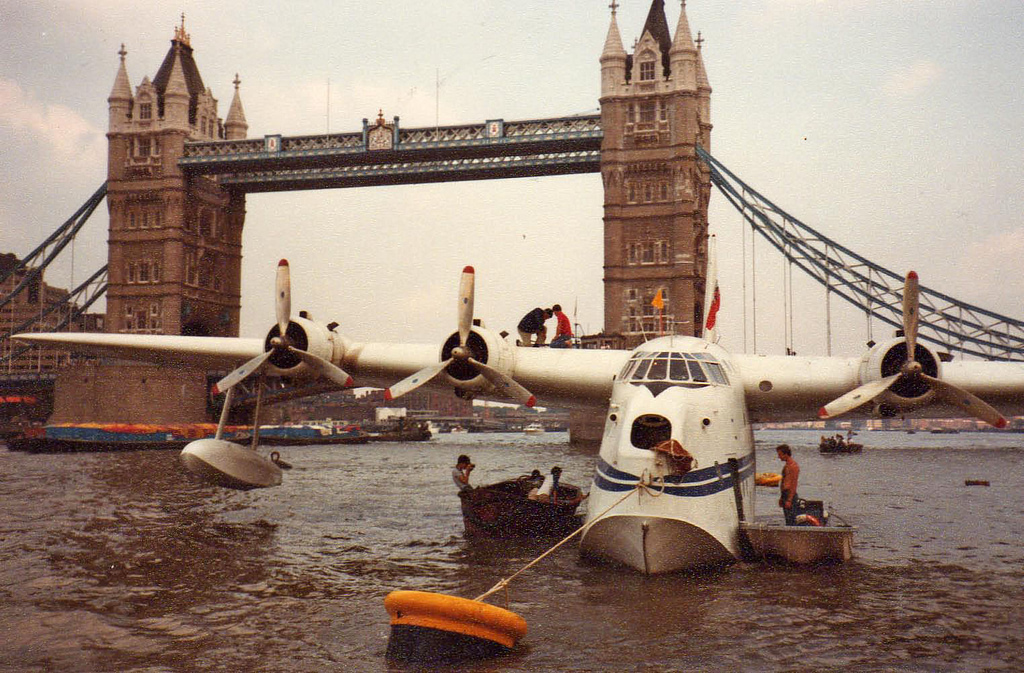
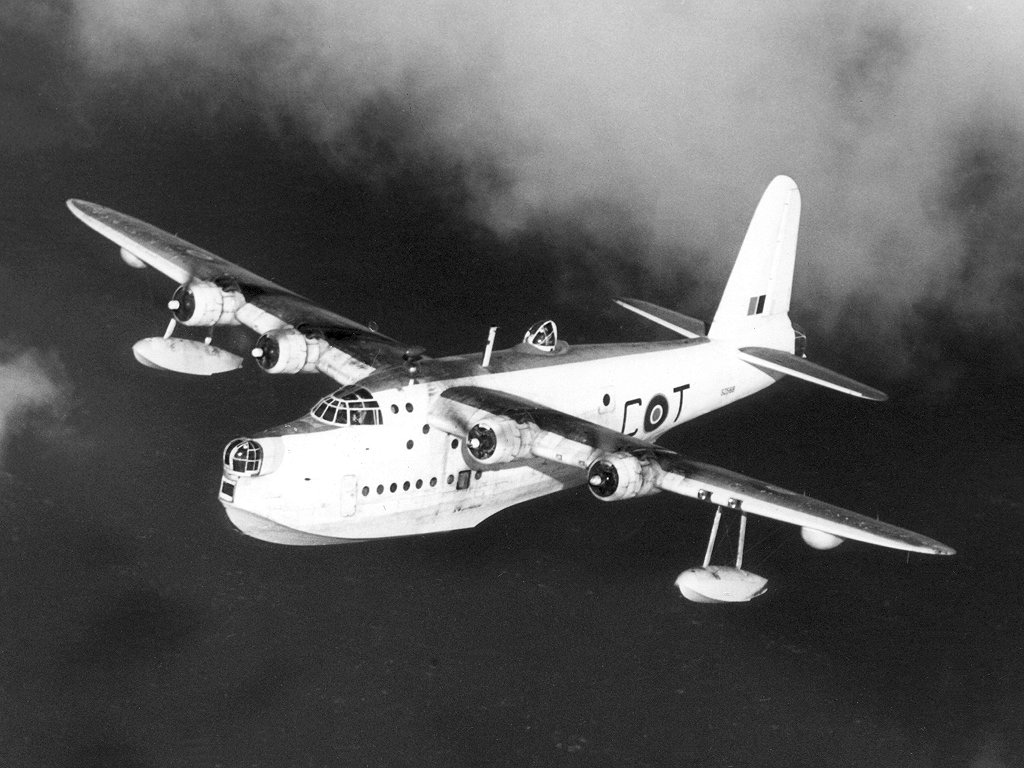
Wartime and museum photographs of the Sunderland, each credited to its source and licence. Click any photo to enlarge.
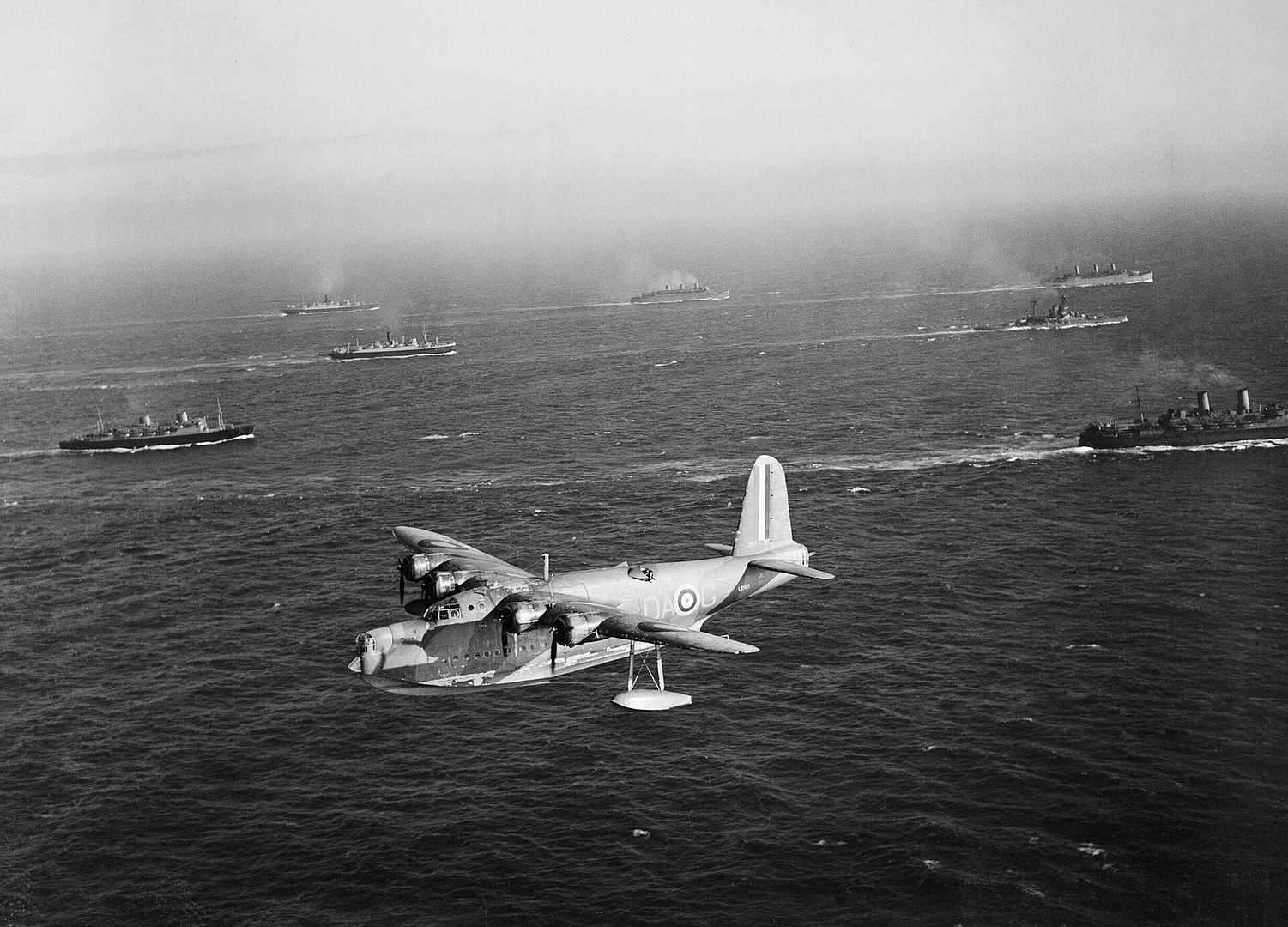
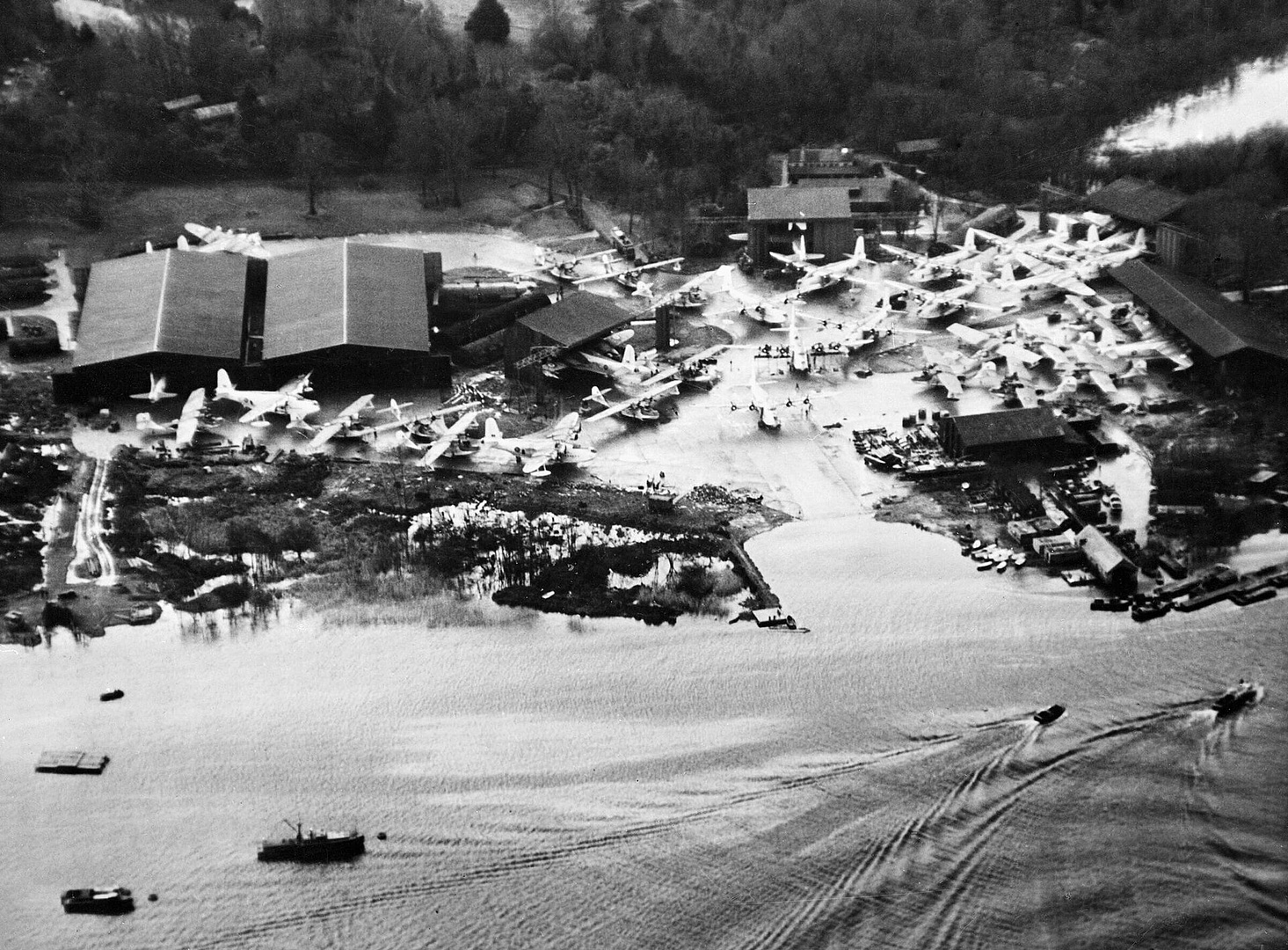


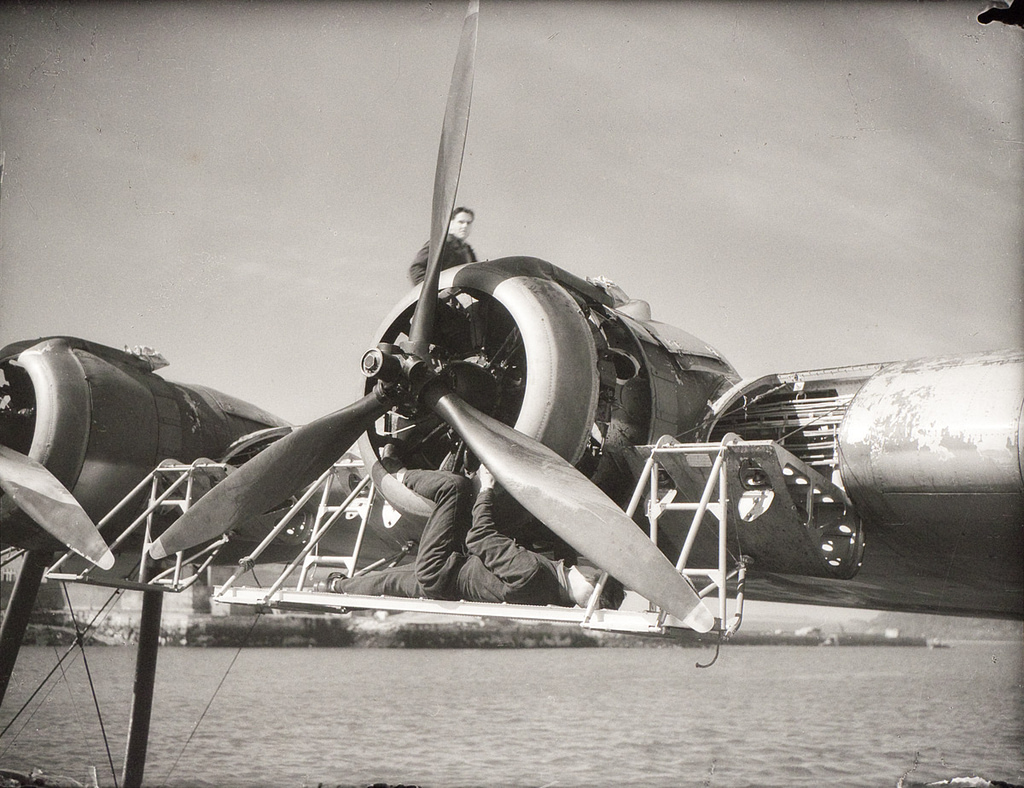
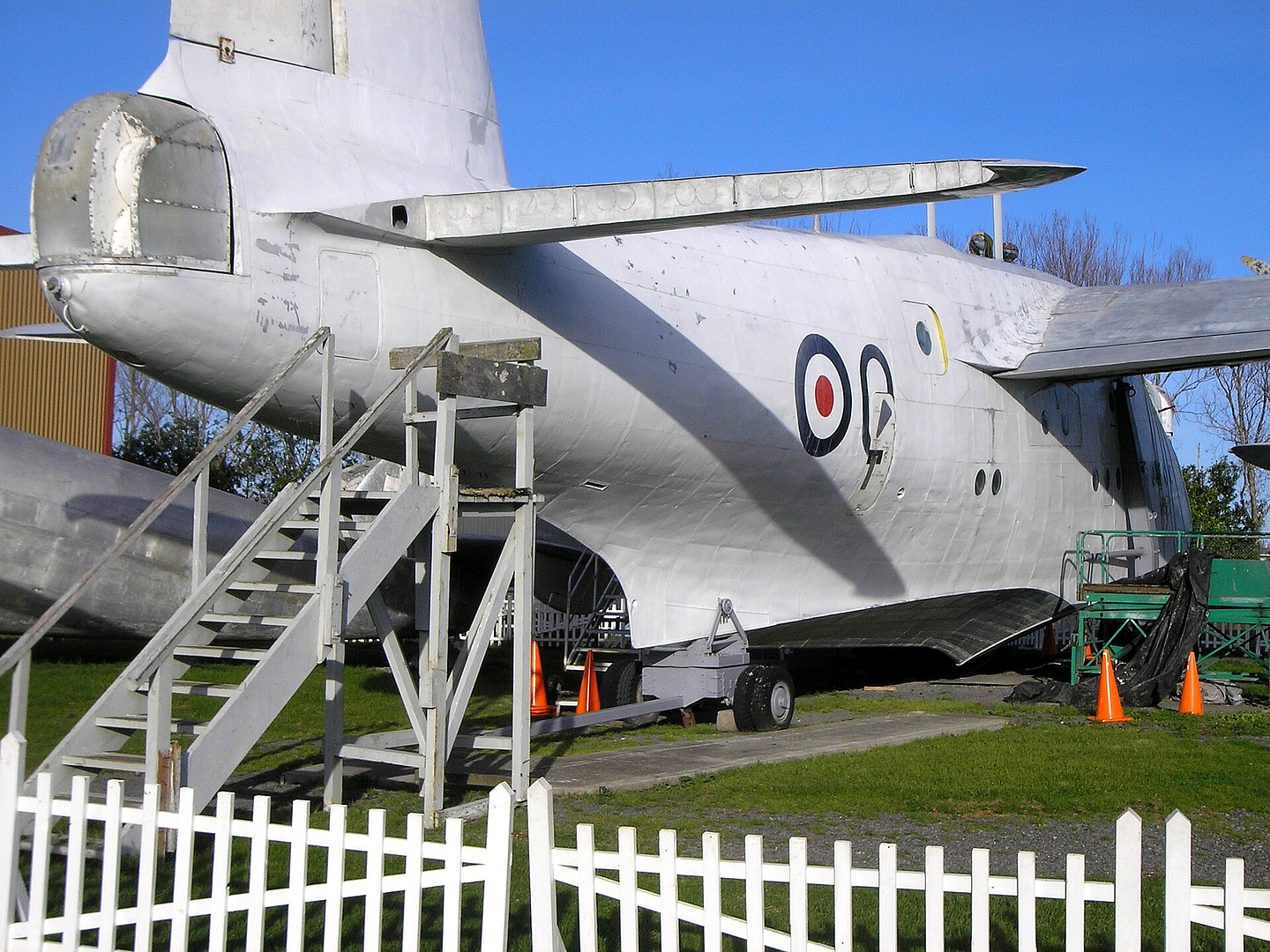
On Film
The Short Sunderland on video: a documentary history
A detailed look inside the Sunderland — the flying ship, its crew, its guns and its long war over the Atlantic.
“Inside The Cockpit — Short Sunderland” by Military Aviation History (approx. 550,000 views at time of writing; running time ~49 minutes). A thorough, well-sourced look at the aircraft and its operation.
Operations Overview
Where the Short Sunderland flew: an operator map
Designed and built in Britain and flown by the RAF and the Commonwealth across the Atlantic and beyond, with post-war service in France, Norway and elsewhere. Toggle the categories; hover or tap a country for detail. Figures are approximate and hedged.
Categories: Design & Manufacture (United Kingdom) · RAF & Commonwealth Operators (Australia, Canada, New Zealand, South Africa) · Other Allied Operators (France, Norway) · Surviving Airframe (preserved examples, including in the UK and New Zealand). Operator list is approximate and hedged.
Service Record
The Sunderland’s record: the long watch over the Atlantic
The Sunderland’s contribution was measured in convoys shepherded, submarines forced under and lives saved across a very long career.
Questions & Answers
Short Sunderland: your questions answered
Can I fly in a Short Sunderland?
No — there is no airworthy Short Sunderland anywhere today, and no bookable Sunderland flight experience; MiGFlug does not offer one. Several are preserved as static museum exhibits (you can walk through a hull at the RAF Museum, IWM and other collections), but keeping a large four-engine flying boat flying is beyond anyone at present. If what you actually want is the real thing — strapping into a genuine military aircraft and flying it — you very much can do that today in other types. MiGFlug arranges flights in real fighter jets and warbirds around the world. Start here: migflug.com/flights-prices.
Why was the Sunderland called the “Flying Porcupine”?
Because of its heavy defensive armament. The Sunderland carried power-operated gun turrets in the nose and tail plus beam and dorsal guns, giving it an all-round sting that made it a dangerous target for fighters. Luftwaffe crews reportedly nicknamed it the “Flying Porcupine” (Stachelschwein), and celebrated actions in which Sunderlands fought off attacking Ju 88s reinforced the name.
What made the Sunderland good at hunting submarines?
Endurance, sensors and weapons. Its huge range and endurance — patrols of thirteen hours or more — let it cover the far reaches of the ocean where U-boats operated; air-to-surface radar let it find surfaced submarines in poor visibility and at night; and depth charges gave it the means to sink them. Just as important, a Sunderland overhead forced U-boats to dive, keeping them off the surface and away from the convoys.
What was it like inside a Sunderland?
Remarkably like a ship. The Sunderland had a deep, two-deck hull with a galley (including a cooker for hot meals), bunks for off-watch crew, a wardroom and a workshop, to sustain a crew of ten to thirteen on patrols lasting most of a day. Crews used nautical terms and treated the aircraft like a small vessel — which, in effect, it was.
What engines did the Sunderland use, and how far could it fly?
Early marks used four Bristol Pegasus radials; the definitive Mk V switched to four American Pratt & Whitney Twin Wasp radials for more power and reliability. Range was roughly 4,700 km, and typical patrol endurance was around thirteen hours or more — the long legs that made it so valuable for ocean patrol. Top speed was modest, only about 336 km/h, but for this aircraft endurance always mattered far more than speed.
Did the Sunderland serve after WWII, in the Berlin Airlift and Korea?
Yes, on both. RAF Sunderlands took part in the 1948–49 Berlin Airlift, alighting on the Havel lake to bring supplies into the blockaded city — their salt-resistant marine hulls made them ideal for carrying salt. And during the Korean War, RAF Sunderlands flew maritime patrol and blockade missions from Iwakuni in Japan. The type served the RAF until 1959 and the RNZAF into the 1960s.
How many Sunderlands were built, and do any survive?
Around 749 were built (figures vary between sources). Thanks to reasonable numbers and long post-war service, several survive as static museum exhibits — complete examples are preserved at the RAF Museum and the Imperial War Museum in Britain and at museums in New Zealand and elsewhere, along with civil Sandringham and Solent derivatives. None is airworthy today.
Was the Short Sunderland a good aircraft?
For its role, it was outstanding. It was seaworthy, immensely long-ranged, well defended and versatile, and it did vital work in the Battle of the Atlantic, in air-sea rescue and long after the war. Its weaknesses were those inherent in a big flying boat — modest speed, high cost and the complications of operating from water — but as a very-long-range ocean-patrol aircraft of its era, the Sunderland was among the best in the world.
Fly For Real
You can’t fly the Short Sunderland — but these, you can
No Sunderland flies today, and none is a bookable ride. The urge behind it — to strap into a real military aircraft and actually fly — is very much still bookable. MiGFlug puts you in genuine fighters and warbirds around the world.
Fighter Jet Flights
Take the controls of a real ex-military jet with an experienced pilot.
Warbird experiences
Fly in a genuine piston-engined warbird from the Sunderland’s era.
All flights are operated by MiGFlug’s vetted partners with professional pilots. Browse every option and current pricing at migflug.com/flights-prices. MiGFlug does not operate Short Sunderland flights — no airworthy example exists.
Related Aircraft
If the Short Sunderland interests you, explore these
Sources & Further Reading
Where this Short Sunderland history comes from
Note on figures: dimensions, performance and production numbers for the Sunderland vary between sources and by mark, and are hedged here as approximate. Cost fields are listed as not reliably recorded because trustworthy wartime UK cost data is not available. The “Flying Porcupine” nickname and the famous Ju 88 action are widely reported and are presented here with appropriate caution. Several Sunderlands survive as static museum exhibits; none is airworthy.