
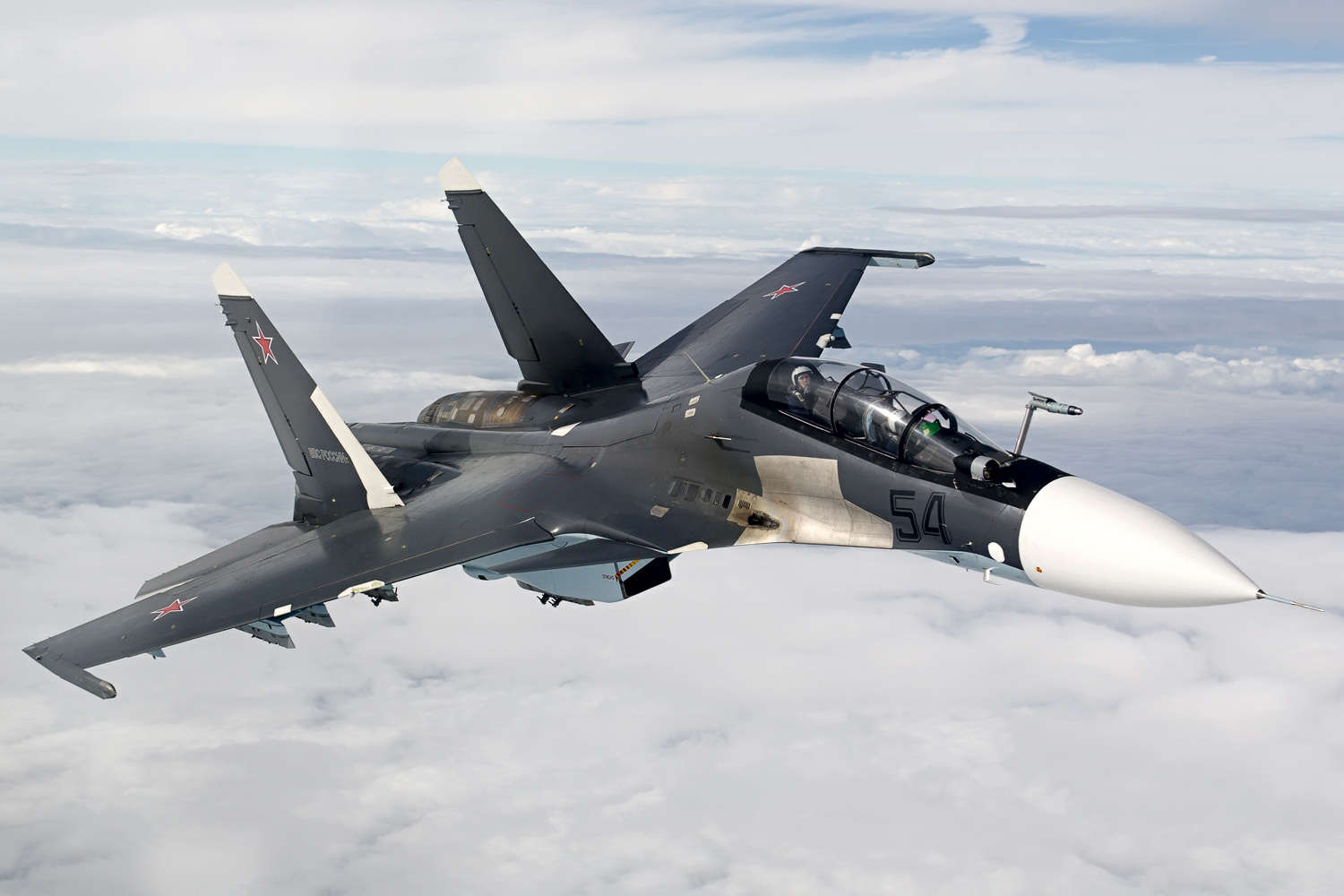
Sukhoi Su-30
“Flanker-C”
The two-seat, thrust-vectoring multirole Flanker — a supermaneuverable heavyweight that grew from a Cold-War interceptor into the best-selling fighter family Russia has ever exported, and the backbone of the Indian Air Force.
The Flanker that learned to do everything
The Su-30 began life as a chore. In the mid-1980s the Soviet air-defence force needed a two-seater that could loiter for hours over the Arctic and act as a flying command post, vectoring single-seat Su-27s toward intruders. Sukhoi took the twin-stick Su-27UB trainer, added an aerial-refuelling probe and better navigation, and flew the result — the Su-27PU — in December 1989. Renamed Su-30, it looked like a niche interceptor with a short future.
Instead it became a dynasty. After the Soviet collapse cut domestic orders, Sukhoi turned the design into a multirole export fighter, the Su-30MK, with a heavier weapons load and a takeoff weight pushed toward 38 tonnes. Two factories then split the family: Irkut in Siberia built the agile, canard-and-thrust-vectoring branch, while KnAAPO at Komsomolsk built a strike-optimised branch with neither. Buyers effectively chose between a dogfighter and a bomb-truck wearing the same silhouette.
The flagship arrived through India. Co-developed from a 1996 deal, the Su-30MKI married AL-31FP thrust-vectoring engines and foreplane canards to a multinational avionics suite, and is licence-built by Hindustan Aeronautics (HAL). India now flies the largest Flanker fleet on earth. Russia fields the domestic Su-30SM and re-engined SM2; more than a dozen other air forces fly export variants. Few post-Cold-War fighters have spread so far.
01The Su-30’s two bloodlines: why not every Flanker has canards
The Su-30 is really two aircraft sharing a name. The Irkut line builds the canard, thrust-vectoring, air-superiority-leaning branch — India’s MKI, Malaysia’s MKM, Algeria’s MKA and Russia’s domestic SM/SM2. The KnAAPO line at Komsomolsk-on-Amur builds a strike-optimised branch with no canards and no thrust vectoring — China’s MKK and the anti-ship MK2 series flown by Vietnam, Indonesia, Venezuela, Uganda and others. The two branches use different radars and different structural reinforcement, so a customer’s choice of factory shaped what the jet could do. It is why a Malaysian Su-30 can tumble through post-stall manoeuvres a Chinese Su-30 cannot.
What makes the Su-30 special
Thrust vectoring & canards
On the Irkut branch, two AL-31FP afterburning turbofans (~12,500 kgf each in reheat) have nozzles that deflect in the vertical plane, canted so differential deflection also gives yaw control. Paired with foreplane canards, this lets the Su-30 hold controlled flight at extreme angles of attack and perform post-stall manoeuvres — the direct heir of the Su-27’s legendary Pugachev’s Cobra. It is genuine supermaneuverability, not just an airshow trick.
Two crew for the long haul
Unlike single-seat rivals, the Su-30 carries a pilot plus a rear-seat weapons systems officer. On multi-hour strike or maritime missions the back-seater runs the radar, electronic warfare and complex weapons like BrahMos while the pilot flies — a real workload advantage. The rear cockpit can even act as a command node cueing other aircraft, echoing the type’s origins as a flying command post.
Big radar, heavy load, long legs
The MKI carries the large N011M Bars passive electronically scanned radar, backed by an infrared search-and-track. Twelve hardpoints lift up to ~8,000 kg of missiles and bombs — from R-77 air-to-air rounds to the ~2.5-tonne BrahMos cruise missile on Indian jets. Internal fuel gives roughly 3,000 km of range, stretched toward 8,000 km with two aerial refuellings via the retractable probe.
02The Su-30’s supermaneuverability: from the Cobra to the Kulbit
At the 1989 Paris Air Show, Sukhoi test pilot Viktor Pugachev pitched an Su-27 to a near-vertical, tail-first attitude while still tracking down the runway, then recovered — the manoeuvre the West named Pugachev’s Cobra. Western engineers had assumed any fighter doing that would stall and depart. On the thrust-vectoring Su-30MKI and Su-30SM, the Cobra evolved into sustained tumbling manoeuvres — the kulbit or “Frolov’s Chakra” — that keep the jet controllable at airspeeds where a conventional fighter is simply falling. In a close fight, that post-stall control can point the nose and its missiles at an opponent no fly-by-wire limiter would allow.
03The Su-30MKI’s BrahMos: the heaviest missile ever carried by a fighter
On 22 November 2017 an Indian Air Force Su-30MKI became the first aircraft in the world to launch the air-breathing BrahMos-A — a roughly 2.5-tonne, Mach-2.8 supersonic cruise missile with a range around 300 km. Fitting it meant strengthening the jet’s centreline and years of joint software work by the IAF, HAL and BrahMos Aerospace. Around 40 airframes were modified to carry one missile each, turning the MKI into a long-range, standoff precision-strike platform able to hit ships and hardened targets from well outside most air defences. It was reportedly used operationally during the May 2025 India–Pakistan clashes.
Full specifications
Airframe & Performance
- طاقم
- 2 (pilot + weapons systems officer)
- طول
- ~21.9 m
- طول الجناحين
- ~14.7 m
- ارتفاع
- ~6.4 m
- Max takeoff weight
- ~34,500–38,800 kg (variant-dependent)
- Max speed
- ~Mach 2 · ~2,120 km/h at altitude
- سقف الخدمة
- ~17,300 m
- يتراوح
- ~3,000 km · up to ~8,000 km with two refuellings
- نطاق القتال
- ~1,500 km (mission-dependent)
- نقاط تثبيت
- 12 · up to ~8,000 kg ordnance
Propulsion & Systems
- Engines
- 2 × Saturn AL-31FP (SM2: AL-41F-1S)
- Thrust (each)
- ~12,500 kgf with afterburner
- Thrust vectoring
- Yes on Irkut line (MKI/MKM/MKA/SM); no on KnAAPO line (MKK/MK2)
- Radar
- N011M Bars PESA (MKI) · varies by variant
- Cannon
- 1 × GSh-30-1 30 mm (150 rounds)
- First flight
- December 1989 (as Su-27PU)
- Built
- 630+ across all variants
- Unit cost
- ~$35–50 million (export estimate)
- Cost per flight hour
- No reliable public figure
04The Su-30’s price: why the numbers are estimates
Export Su-30s are sold in government-to-government package deals that bundle spares, weapons, training and support, so a clean flyaway unit price is rarely published. Open-source figures for recent contracts cluster very roughly in the $35–50 million range per aircraft, but that varies widely with variant, avionics fit and the size of the support package — India’s HAL-built MKIs, with their multinational avionics, are often cited higher. No credible cost-per-flight-hour figure exists in open sources. Treat any precise dollar figure attached to a Su-30 as an estimate, not a quoted price.
From interceptor to export blockbuster
Su-27PU first flight
The two-seat, refuellable interceptor that becomes the Su-30 flies at Irkutsk — the same year the Su-27 Cobra debuts at Paris.
Su-30MK export path
A multirole demonstrator flies with a heavier weapons load, opening the commercial family that will spread worldwide.
First Su-30MKI
The India-co-developed prototype flies with thrust-vectoring engines and canards — the definitive Flanker.
China’s Su-30MKK
KnAAPO’s strike Flanker — no canards, no thrust vectoring — flies in 1999; PLAAF deliveries begin in 2000.
MKI enters IAF service
The Su-30MKI joins the Indian Air Force; HAL licence production follows, building the world’s largest Flanker fleet.
Cope India
IAF Flankers rout USAF F-15Cs in an exercise (under restrictive rules), fuelling the debate that helped fund the F-22.
Su-30SM at war
Russia fields the domestic Su-30SM (2012); it makes its combat debut flying top cover over Syria from 2015.
BrahMos and beyond
An MKI fires the first air-launched BrahMos (2017); re-engined Su-30SM2s fly in Ukraine and new export deals continue.
From the flight line: twelve Su-30 stories
The interceptor that became a dynasty
The Su-30 was born to babysit other jets, not to dogfight.
Read the full story
Pugachev’s Cobra stops Paris cold
A jet rears up like a snake at 120 degrees nose-up — and keeps flying.
Read the full story
The 9-to-1 that scared Washington
Indian Flankers beat America’s best fighter — and Congress noticed.
Read the full story
Two factories, two very different Flankers
Not all Su-30s have those famous canards.
Read the full story
India builds its own Russian fighter
Most of India’s Flankers are made in Nashik, not Irkutsk.
Read the full story
The big-eye Bars
A radar the size of a dustbin lid, feeding a two-man crew.
Read the full story
The world’s heaviest fighter missile
A 2.5-tonne supersonic cruise missile bolted under a fighter.
Read the full story
Flankers as bodyguards over Latakia
Russia’s newest two-seater went to war as a bouncer.
Read the full story
Vulnerable even at supersonic speed
A drone boat reportedly shot down a supersonic fighter.
Read the full story
A new heart for an old Flanker
Russia gave the Su-30 the Su-35’s engines.
Read the full story
From Algiers to Caracas
The Flanker that speaks a dozen languages.
Read the full story
Two brains beat one
On a long strike, the back-seater is the secret weapon.
Read the full story
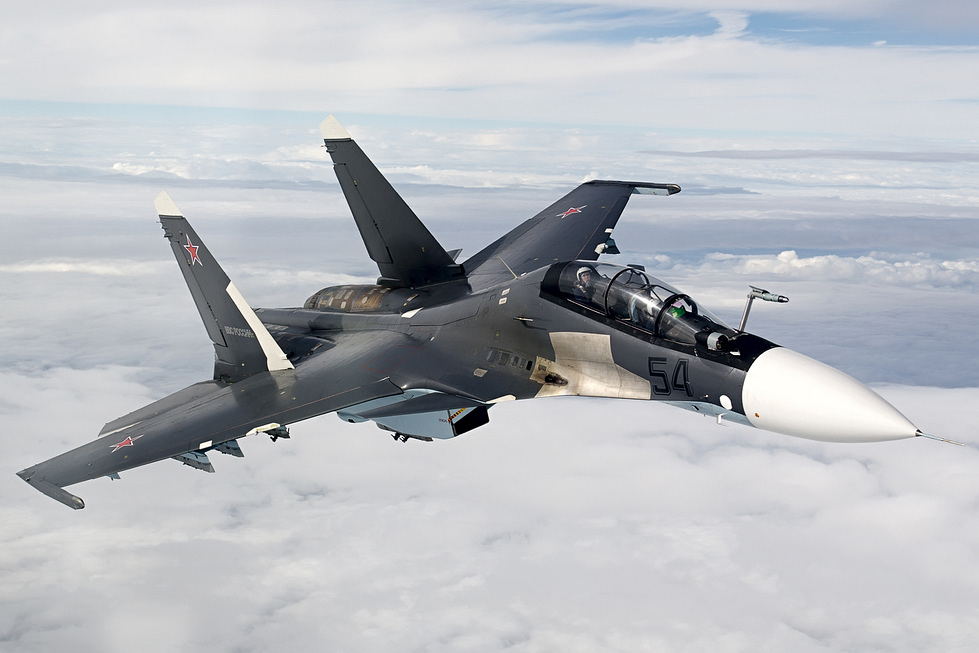
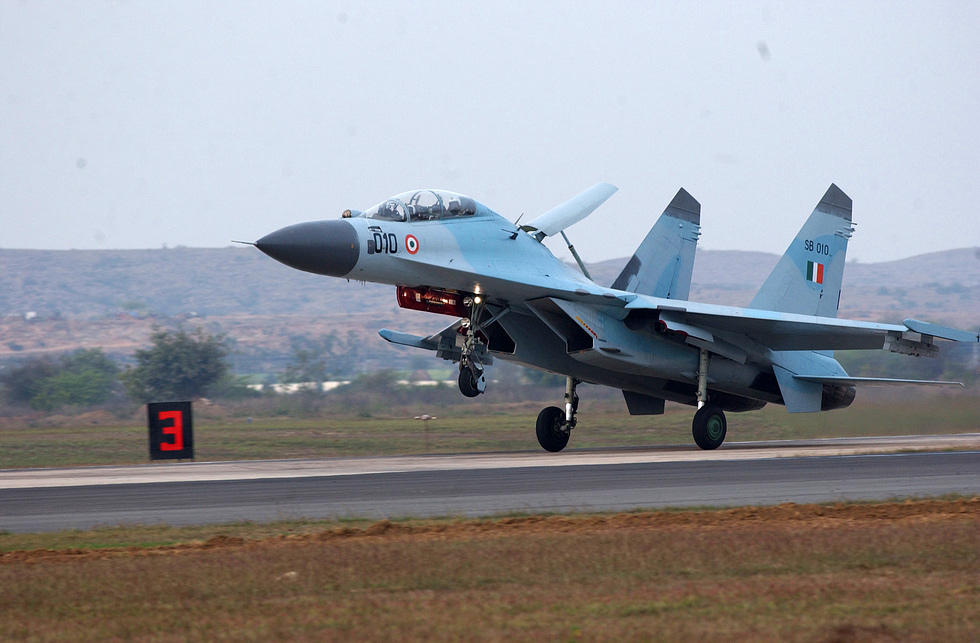
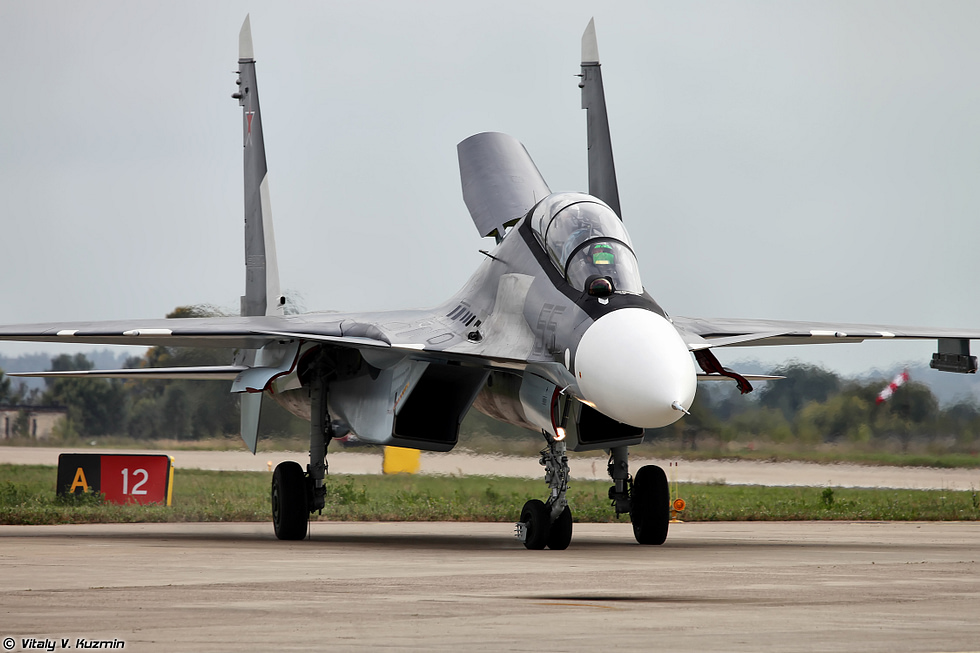
The Su-30 in pictures
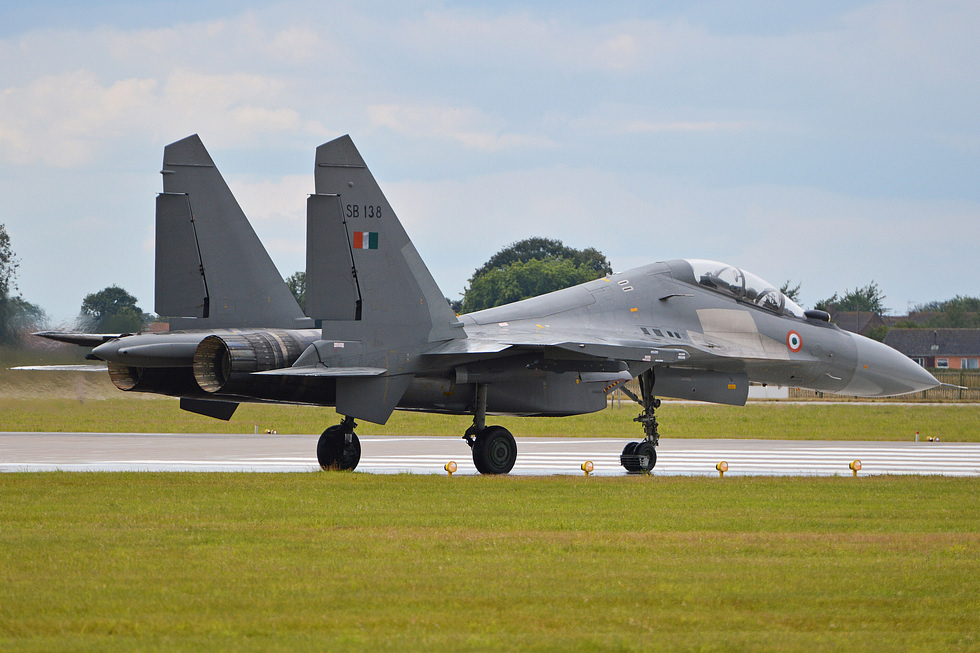
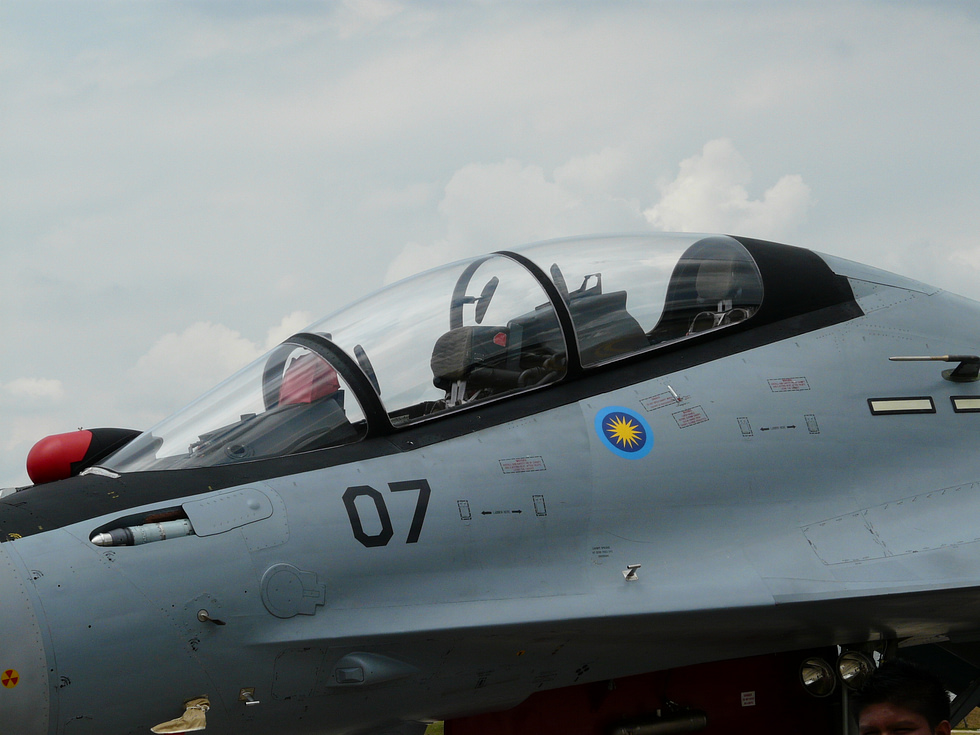
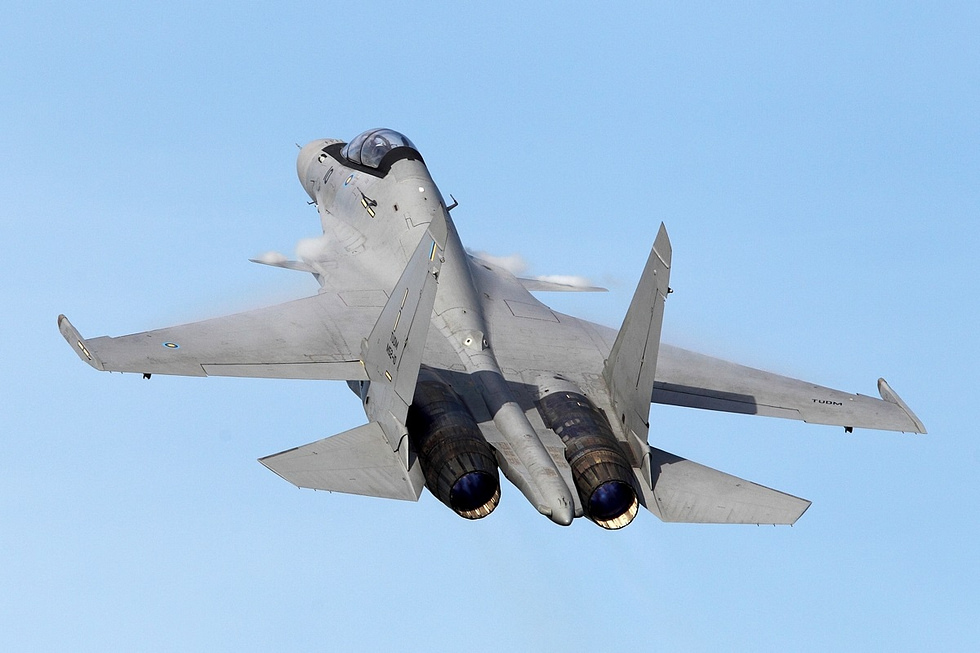
The Su-30 in motion
Video coming soon — we are curating the best Su-30 flight-display footage, from the kulbit at MAKS to low-level strike runs. In the meantime, explore the gallery and the twelve stories above.
The Su-30 in motion
Australian Military Aviation History — one of the most-watched Su-30 films on YouTube.
Where the Su-30 flies
What the Su-30 has actually done
The Su-30’s record is mixed and, in places, hotly contested. It has shone in exercises, pioneered air-launched cruise-missile strikes, and flown in Syria and Ukraine — where it has also taken losses. Claims around the India–Pakistan clashes of 2019 and 2025 are disputed by both sides and are not independently confirmed; we present them with that caveat, and note that no Su-30 loss in those clashes has been independently verified.
Compare the combat record of every military aircraft. Figures as of July 2026 and, where contested, presented neutrally.
Everything people ask about the Su-30
Can I fly in a Su-30?
How fast is the Su-30?
Does the Su-30 really have thrust vectoring?
What is the difference between the Su-30MKI and the Su-30MKK?
Su-30 or Su-35 — what is the difference?
Does the Su-30 have a gun?
Is the Su-30 still in service?
What is the Su-30’s combat record?
You can’t fly the Su-30.
These, you can.
Some legends only live in museums — others are fuelled and waiting. MiGFlug has put civilians in real military jet cockpits since 2004.
 Fly the L-39 AlbatrosThe world’s most-flown jet trainer — aerobatics included
 Fly the F-104 Starfighter“The missile with a man in it”
 Fly the MiG-21The Cold War’s most-produced jet
 حلّق بطائرة تي-33 شوتينغ ستارAmerica’s first jet trainer
 Fly the DH VampireA piece of early jet history
 Fly the S.211Agile Italian jet trainer
 Fly the MB-326The classic Aermacchi jet
 Fly the MiG-15The Soviet legend of the Korean War
Continue the tour
Every fact, checked
- Airforce Technology — Su-30MKI project profileDimensions, engines, Bars radar, weapons and Indian development and fleet figures.
- GlobalSecurity.org — Su-30Su-27PU origins, the Irkut and KnAAPO production lines and the Su-30MK export lineage.
- The Aviationist — Cope India 2004The reported 9:1 result, the restrictive rules of engagement and the F-22 debate.
- BrahMos AerospaceThe first air-launched BrahMos from an Su-30MKI (22 November 2017) and missile data.
- The War ZoneReported Su-30 losses over the Black Sea, including drone-boat AIM-9 engagements.
- Military Watch MagazineSu-30SM2 modernisation, the AL-41F engine and export developments.
- Key AeroVariant overviews, operator updates and Flanker-family production history.
- FlightGlobalWorld air-forces fleet data used to cross-check operator numbers.