
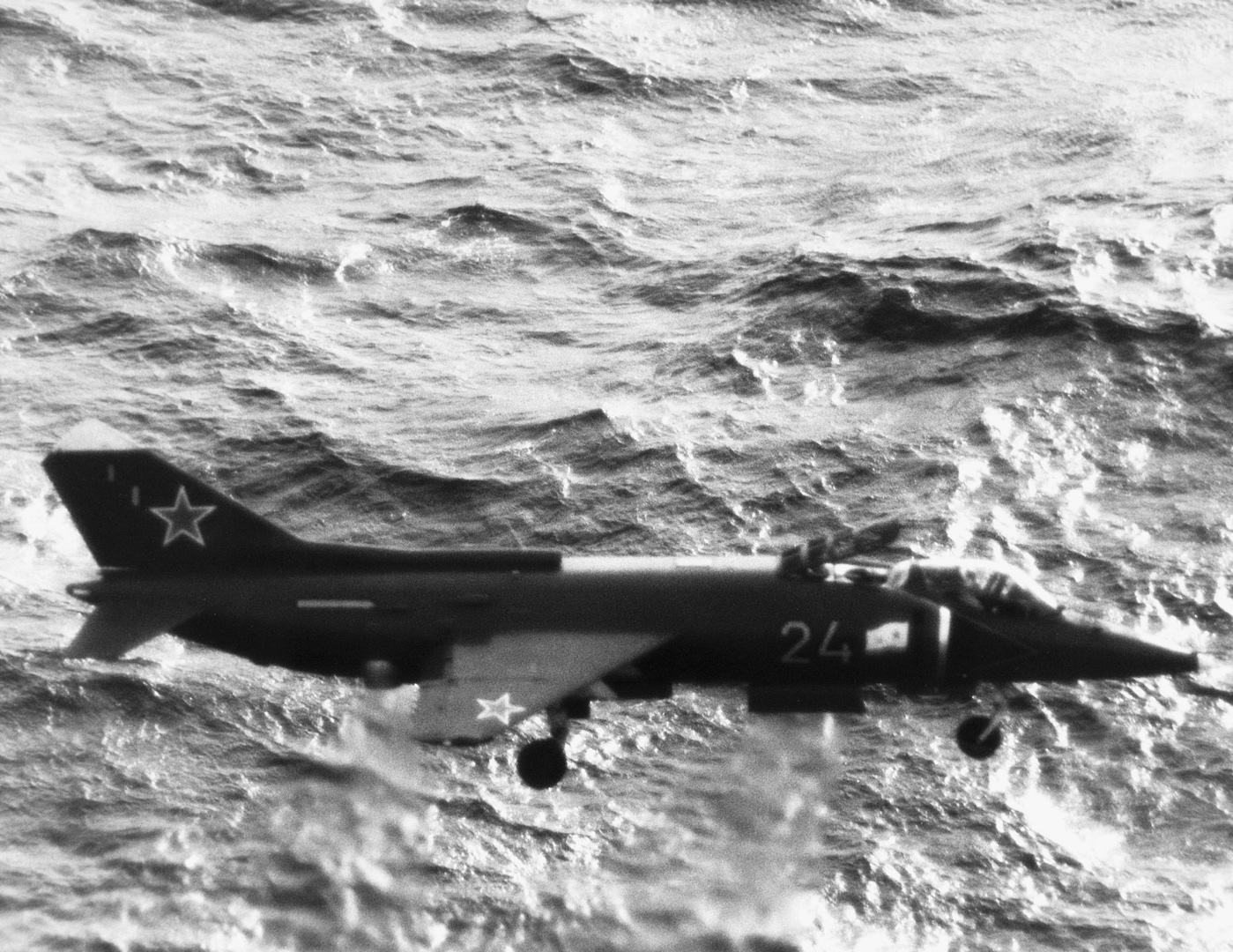
Yakovlev Yak-38
“Forger”
The Soviet Navy’s only operational vertical-takeoff fighter — a three-engine carrier jet that could rise straight off a deck, but struggled to carry much once it did.
The Yak-38 Forger: the Soviet Navy’s vertical-takeoff gamble
The Yak-38 was the Soviet Union’s first — and only — operational vertical- and short-takeoff-and-landing (VTOL/STOVL) combat jet. When the Soviet Navy laid down its Kiev-class ships in the late 1960s, it needed a fixed-wing aircraft that could fly from their short decks without steam catapults. Yakovlev, which had spent most of a decade experimenting with jet lift on the ungainly Yak-36 “Freehand” testbed, answered with the Yak-36M — redesignated Yak-38 in service. It first flew on 15 January 1971 and joined the fleet aboard the carrier Kiev in 1976.
Its defining feature was a three-engine layout. Where Britain’s Harrier used a single engine with four swivelling nozzles, the Yak-38 used three: one vectored-thrust cruise engine in the tail, plus two dedicated lift jets standing almost vertically behind the cockpit. The lift jets fired only for takeoff, hover and landing; in level flight they were simply dead weight and drag. To manage the split-second dangers of the hover, the jet carried a world-first automatic ejection system wired to fire the pilot the instant the aircraft departed control on takeoff or landing.
The result was an aircraft that could do the trick but struggled to do the job. Range and payload were poor, and in hot or high-altitude conditions the lift engines lost so much thrust that the Forger could barely lift a useful weapon load — a limitation brutally exposed during a 1980 test deployment to Afghanistan, where the jets could reportedly carry only a token pair of small bombs and flew mostly in the cool of early morning. A high accident rate — commonly cited as around a third of the fleet lost — underlined how unforgiving the VTOL regime was. The Yak-38 is widely remembered less as a successful warplane than as a technology stepping-stone.
That stepping-stone pointed somewhere. Yakovlev’s intended successor, the supersonic Yak-141, flew but was cancelled as the Soviet Union collapsed. In the mid-1990s Lockheed Martin briefly cooperated with Yakovlev and reportedly obtained Yak-141 documentation — fuelling an enduring, and genuinely contested, claim that Soviet VTOL work helped inform the STOVL F-35B. The Yak-38 itself was withdrawn in the early 1990s, having proved that Soviet naval VTOL was possible — even if it was never quite practical.
01The Yakovlev Yak-38 Forger’s origins: from the Yak-36 “Freehand” to a carrier fighter
Yakovlev began serious jet-VTOL research around 1960. Its testbed, the Yak-36 “Freehand”, used twin vectored turbojets and in 1966 became one of the first jets to take off vertically, hover, transition to wing-borne flight and land vertically. But it lacked the thrust and range to be a weapon — it was a flying laboratory, not a fighter.
The lessons produced the combat-oriented Yak-36M: a slimmer airframe with a completely different propulsion philosophy of one cruise engine plus two lift jets, folding wings for hangar stowage, and naval systems for the Kiev-class ships. Redesignated Yak-38, it entered Soviet Naval Aviation service on 11 August 1976. A two-seat trainer, the Yak-38U “Forger-B”, followed to teach the demanding transition between vertical and forward flight.
What makes the Yak-38 Forger special
A three-engine VTOL arrangement
The Forger’s signature is its combined propulsion: one rear vectored-thrust cruise engine (Tumansky/Soyuz R-27V-300) with two rotating nozzles, plus two dedicated lift jets (Rybinsk RD-36-35VFR) mounted vertically behind the cockpit. The lift jets provided vertical thrust for takeoff, hover and landing, then shut down — leaving them as pure dead weight and internal volume in cruise, one root cause of the type’s short range.
The automatic ejection seat
A lift-engine failure or excessive bank in the hover was effectively unrecoverable, and gave a pilot no time to react. So the Yak-38’s seat was wired to fire automatically — without any pilot command — if the jet departed controlled flight during takeoff or landing (commonly cited as past roughly 60° of bank). It is widely regarded as the first automatic ejection system on a fixed-wing fighter, and is credited with saving several pilots.
Naval STOVL from Kiev-class ships
The Yak-38 was the Soviet Navy’s first operational fixed-wing carrier aircraft, flying from the Project 1143 Kiev-class ships — officially rated as “heavy aviation cruisers” bristling with anti-ship missiles. It used vertical and, later, short-takeoff techniques, folded its wings for hangar stowage, and in 1983 even flew from a civilian roll-on/roll-off ship to prove dispersed basing.
02The Yak-38 Forger’s three engines versus the Harrier’s one: two answers to the same problem
Both the Yak-38 and the Harrier had to solve the same puzzle — how to make a jet hover — and chose opposite paths. The Harrier used a single Pegasus engine whose four vectoring nozzles swivelled together, so all of its thrust was available in both hover and cruise. The Yak-38 split the task: a rear cruise engine for forward flight and two separate lift jets for the vertical phases. The Soviet scheme used simpler nozzles on the main engine, but the two lift jets added weight, drag and failure modes, took up fuel volume, and reportedly needed overhaul after very few running hours. Western assessments generally rated the Forger behind the Sea Harrier in sensors, weapons, range and payload; its clearest advantages were the automatic ejection seat and, later, automated engine-transition control.
03The Yak-38 Forger and the F-35B: what the Yak-141 successor did and did not pass on
The Yak-38 was always seen as an interim step toward a supersonic VTOL fighter. That successor, the Yak-141 (Yak-41) “Freestyle”, flew in the late 1980s but never entered production — undone by accidents, the Soviet collapse and lost funding. In the mid-1990s Lockheed Martin and Yakovlev entered a brief cooperation, and Lockheed reportedly received Yak-141 technical documentation. This underpins the widely repeated claim that Soviet VTOL work informed the F-35B. It should be treated with care: the two designs share a broadly similar STOVL layout (lift device forward, vectoring nozzle aft) and a documented brief corporate cooperation occurred, but a direct causal design lineage is contested and not firmly established — several analysts argue the resemblance is largely convergent engineering rather than a copied blueprint.
Yak-38 Forger full specifications
Figures are broadly for the improved Yak-38M; sources vary, and contested values (especially range and combat radius) are hedged. Performance fell sharply in hot or high-altitude conditions.
Airframe & Performance
- 全体人员
- 1
- 长度
- ~16.4 m (53 ft 8 in)
- 翼展
- ~7.3 m (folds to ~4.9 m)
- 高度
- ~4.25 m (13 ft 11 in)
- Max takeoff weight
- ~11,300 kg (commonly cited)
- Max speed
- ~Mach 0.95 (~1,050 km/h), subsonic
- 设备天花板
- ~11,000–12,000 m
- 作战半径
- Short — reportedly ~150–200 km typical
Propulsion, Payload & Cost
- Cruise engine
- 1 × Tumansky/Soyuz R-27V-300 vectored-thrust
- Lift engines
- 2 × Rybinsk RD-36-35VFR lift jets
- Ordnance
- ~2,000 kg across 4 underwing hardpoints
- Typical weapons
- GSh-23 gun pod, R-60 (AA-8) missiles, Kh-23, bombs, rockets
- First flight
- 15 January 1971
- Built
- ~231 (all variants, incl. Yak-38M & Yak-38U)
- Unit cost
- No reliable public figure (Soviet costs undisclosed)
- Cost per flight hour
- No reliable public figure
04The Yak-38 Forger’s operating costs: why the real burden was measured in lost airframes
Soviet military procurement and operating costs were never publicly disclosed, so any dollar figure for the Yak-38 would be pure speculation — and this page does not invent one. What is documented is the aircraft’s real-world operational burden. The two lift jets reportedly needed overhaul after only a couple of dozen running hours, keeping availability low and maintenance crews busy. And the accident record was severe: sources commonly cite that roughly a third of the fleet was lost to accidents over the type’s life. In practical terms, the Forger was expensive not in rubles that anyone published, but in airframes and in the constant care its unforgiving VTOL system demanded.
From the Freehand testbed to fleet retirement
Yakovlev begins jet-VTOL research
The Yakovlev OKB starts exploring vertical-lift jet flight, the work that will lead to the Yak-36 and eventually the Yak-38.
Yak-36 “Freehand” proves the concept
The experimental Yak-36 completes a full vertical-takeoff, hover, transition and vertical-landing cycle — but lacks the range and payload to fight.
Yak-36M first flight
The combat-oriented Yak-36M — later the Yak-38 — makes its maiden flight on 15 January 1971 with its new three-engine layout.
Enters service aboard Kiev
The Yak-38 joins Soviet Naval Aviation on 11 August 1976, flying from the lead Kiev-class carrier as the fleet’s first fixed-wing type.
Yak-38U trainer enters service
The two-seat Yak-38U “Forger-B” arrives to teach the demanding VTOL transition; it carries a stepped second cockpit and no weapons.
Afghanistan trial exposes the limits
Operation Romb sends four Yak-38s to Shindand; hot-and-high air guts lift-engine thrust, and the jets can carry only token loads.
Armed intercept over the Arabian Sea
Two armed Yak-38s from the carrier Minsk intercept aircraft from USS Enterprise — a rare moment of the Forger looking the part.
Improved Yak-38M in service
The Yak-38M brings uprated engines and detail improvements, but the type’s core range and payload limits remain.
Retired with the Soviet collapse
The Yak-38 is withdrawn as the USSR dissolves; its supersonic successor, the Yak-141, is cancelled before entering production.
Twelve Yak-38 Forger stories
From Freehand to Forger
The whole programme traces to the ungainly Yak-36 “Freehand” testbed.
Read the full story
Three engines, one hover
Unlike the single-engine Harrier, the Forger used a cruise engine plus two lift jets.
Read the full story
The seat that fired itself
The Yak-38’s ejection seat could punch the pilot out automatically.
Read the full story
Humbled at Shindand
In 1980 the desert heat robbed the Forger of nearly all its lift.
Read the full story
One in three lost
Sources commonly cite that about a third of the fleet was destroyed in accidents.
Read the full story
The twenty-two-hour lift jets
The two lift jets reportedly needed overhaul after only a couple of dozen hours.
Read the full story
Confronting the Enterprise
In 1982 armed Yak-38s intercepted aircraft from a US carrier.
Read the full story
Not a carrier, on paper
The ships that carried it were officially “heavy aviation cruisers.”
Read the full story
Fighter from a cargo ship
In 1983 the Soviets flew Yak-38s from a civilian merchant vessel.
Read the full story
The two-seater with a hump
The Yak-38U stretched the fuselage and stacked a second cockpit.
Read the full story
Behind the Sea Harrier
Western assessments generally rated the Forger below the Sea Harrier.
Read the full story
The stepping-stone to the F-35B?
The Forger’s cancelled successor sits at the heart of a contested claim.
Read the full story
The Yak-38 Forger in pictures
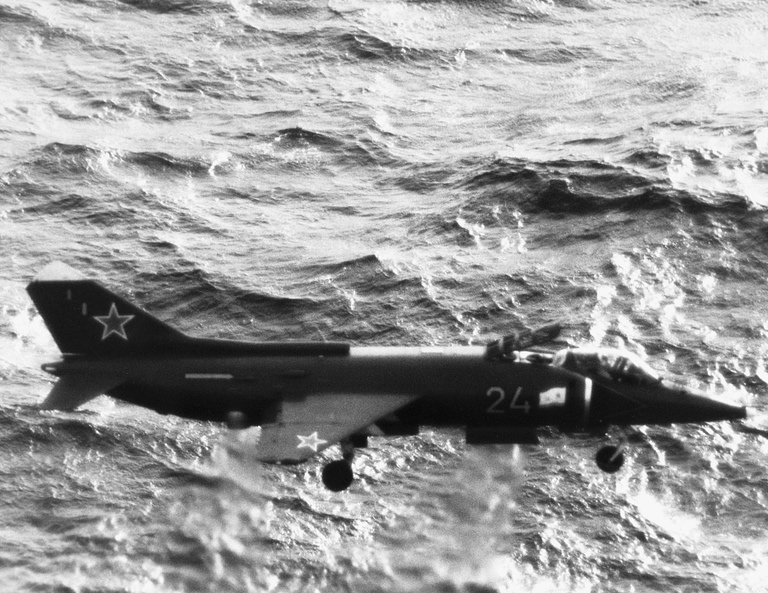
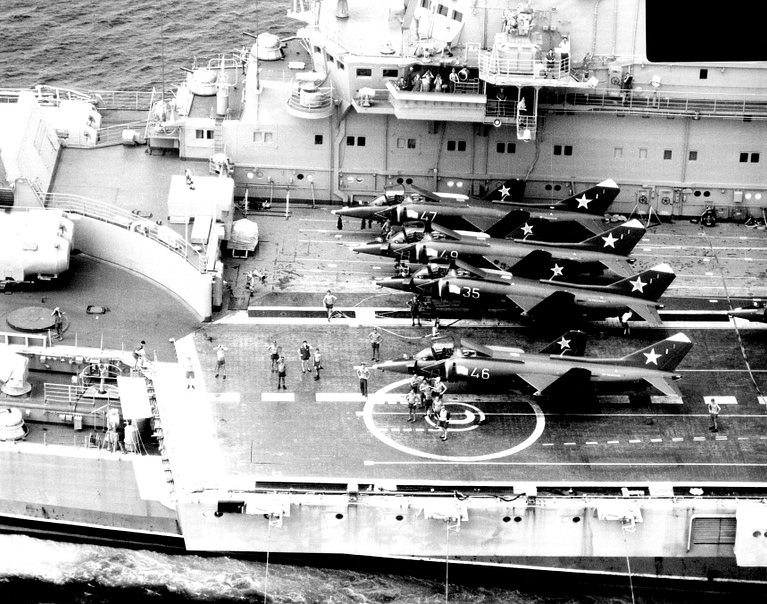
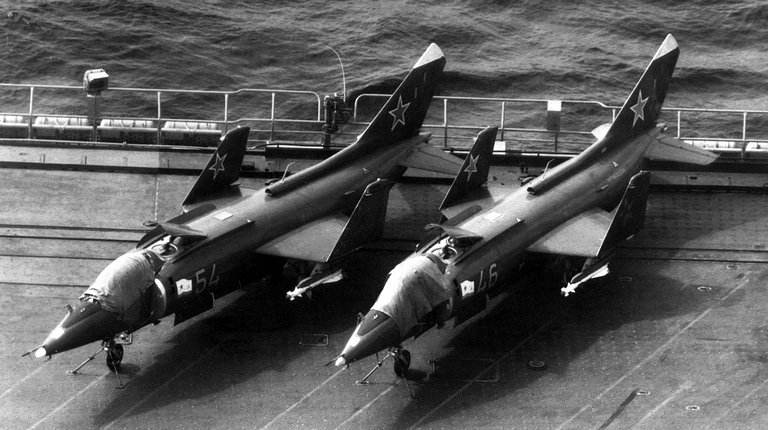
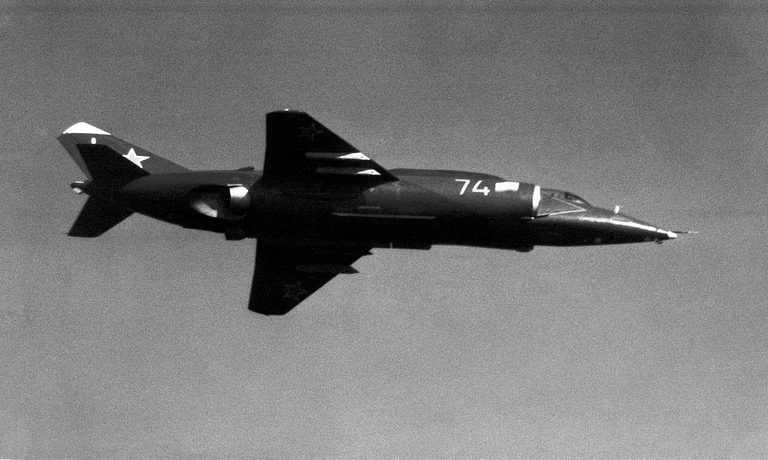
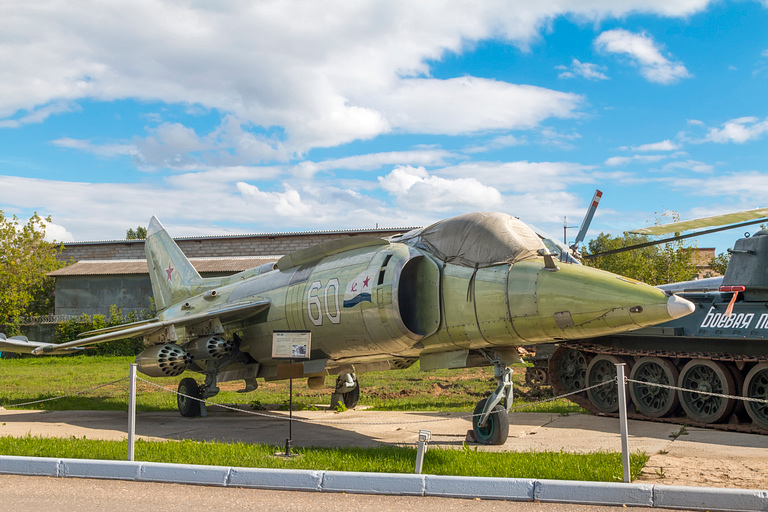
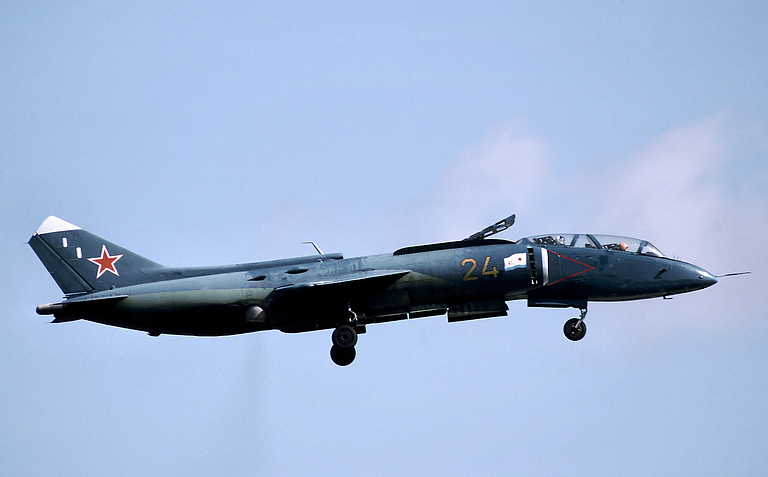
The Yak-38 Forger in motion
A curated video feature for the Yak-38 Forger is coming soon. In the meantime, explore the photo gallery above and the operations map below.
Where the Yak-38 Forger operated
The record that defines the Yak-38
The Yak-38 scored no aerial victories and fought no war; its record is one of hard-won experience rather than combat success. Its single operational test under fire — the 1980 Operation Romb deployment to Afghanistan — exposed how badly its VTOL performance collapsed in heat and altitude, and it flew only about a dozen largely inconclusive sorties. At sea it served aboard the four Kiev-class ships until the early 1990s, and in 1982 armed Forgers from Minsk intercepted US carrier aircraft over the Arabian Sea. Set against those thin operational credits is a severe safety record: sources commonly cite that roughly a third of the fleet was lost to accidents.
Compare the combat record of every military aircraft. Figures as of July 2026; contested values are hedged.
Everything people ask about the Yak-38 Forger
Can I fly in a Yak-38?
Why did the Yak-38 have three engines when the Harrier had one?
What was special about its ejection seat?
What happened when the Yak-38 was sent to Afghanistan?
Was the Yak-38 supersonic?
Did the Yak-38 really inspire the F-35B?
Who operated the Yak-38, and is it still in service?
You can’t fly the Yak-38.
These, you can.
Some legends only live in museums — others are fuelled and waiting. MiGFlug has put civilians in real military jet cockpits since 2004.
 Fly the L-39 AlbatrosThe world’s most-flown jet trainer — aerobatics included
 Fly the F-104 Starfighter“The missile with a man in it”
 Fly the MiG-21The Cold War’s most-produced jet
 驾驶T-33流星战斗机America’s first jet trainer
 Fly the DH VampireA piece of early jet history
 Fly the S.211Agile Italian jet trainer
 Fly the MB-326The classic Aermacchi jet
 Fly the MiG-15The Soviet legend of the Korean War
Continue the tour
Every fact, checked
- Military Factory — Yakovlev Yak-38 (Forger)Specifications, variant build numbers, armament and the Yak-36 development lineage.
- Naval-Aviation.com — Yakovlev Yak-38 “Forger”The three-engine layout, service dates, Kiev-class deployment and Harrier comparison.
- Military Aviation Videos — The forgotten Soviet VTOL jetsOperation Romb in Afghanistan, the accident rate and lift-engine service life.
- Vintage Aviation News — First untethered flight of the Yak-36Dated milestones for the Yak-36 “Freehand” VTOL precursor.
- UAS Vision — Yakovlev Yak-38Prototype dates, the 1982 Minsk/Enterprise intercept and the automatic ejection system.
- Russia Beyond — Is the Yak-141 the “father” of the F-35B?The Lockheed–Yakovlev cooperation and a hedged view of the F-35B lineage claim.
- The National Interest — The Yak-41 and the F-35BA skeptical counterpoint on how much the Yak-141 really influenced the F-35B.
- RuAviation — Yak-38M carrier-based strike fighterYak-38M engine upgrades and the automatic-ejection trigger logic.