
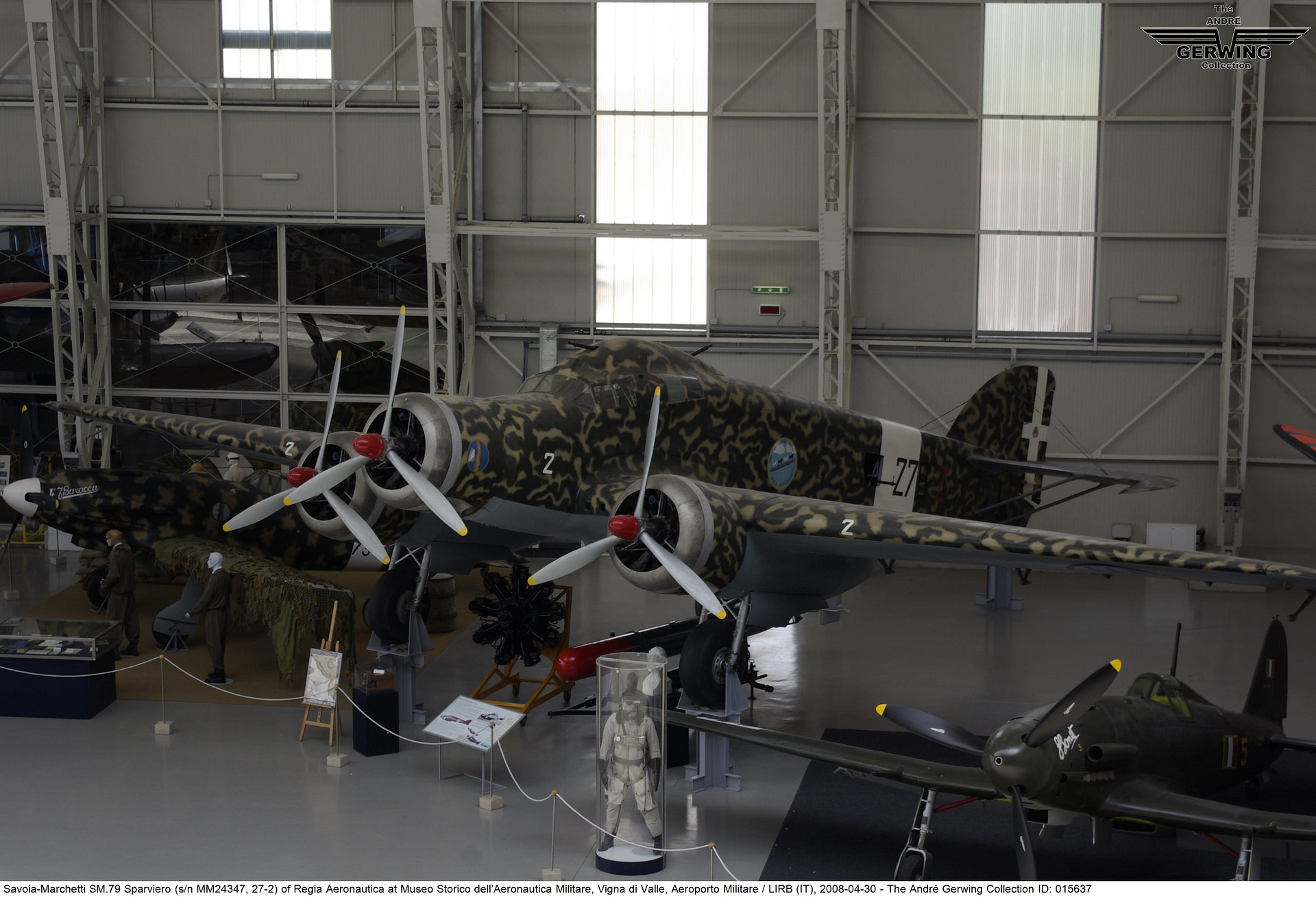
Savoia-Marchetti SM.79 Sparviero
Fast, tough and unmistakable, the Savoia-Marchetti SM.79 Sparviero was the most important Italian bomber of the Second World War — a three-engined “damned hunchback” that began as a record-breaking airliner and became the most feared torpedo bomber in the Mediterranean.
The Savoia-Marchetti SM.79 Sparviero: the record-breaking airliner that became Italy’s deadliest torpedo bomber
Begin with a fast, elegant civil transport that shattered world speed and distance records in the mid-1930s, give it a military nose, a bomb bay and a distinctive humped back, and you arrive at the Savoia-Marchetti SM.79 Sparviero — the three-engined “Sparrowhawk” that became the single most important, and most feared, Italian aircraft of the Second World War.
The SM.79 did not start life as a weapon. In the autumn of 1934 Alessandro Marchetti’s design bureau at Savoia-Marchetti flew a sleek, low-wing, three-engined monoplane intended as a fast eight-passenger airliner and mail carrier. It was a product of the golden age of Italian aviation, when Italo Balbo’s mass formation flights across the Atlantic had made Italian air power a matter of national pride, and speed records were pursued as instruments of prestige. The little transport delivered handsomely: through 1935, 1936 and beyond, specially prepared SM.79s set a string of recognised world records for speed over distance carrying commercial payloads, and Italian crews flew them on long-distance demonstration flights that made headlines around the world.
The most famous of these triumphs came in August 1937, when a team of military SM.79s painted with a cartoon “Sorci Verdi” (green mice) badge swept the first three places in the gruelling Istres–Damascus–Paris air race, beating aircraft from across Europe over thousands of kilometres. For a fascist regime that treated aviation as propaganda, it was a gift: proof, seemingly, that Italian industry could build aircraft that were not merely beautiful but genuinely fast and reliable over enormous distances. That reputation for speed and endurance was no accident of tuning — it was built into the airframe, and it would shape the Sparviero’s whole military career.
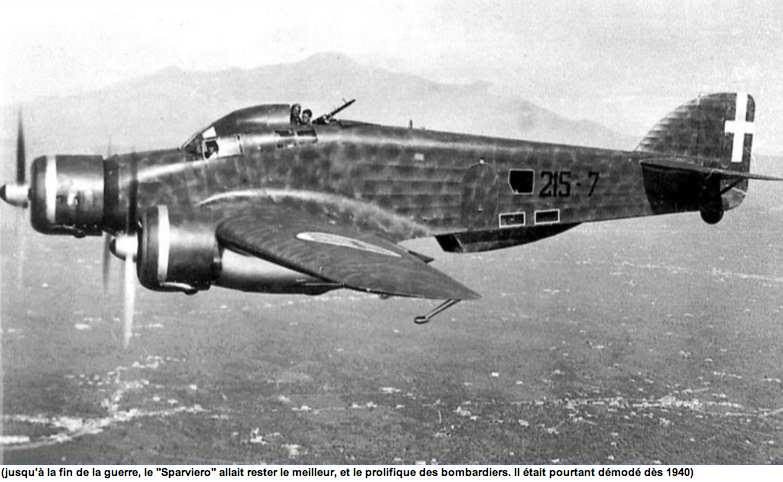
Turning the record-breaker into a bomber meant adding a bomb bay, defensive guns and a crew station for a bomb-aimer, and it was here that the aircraft acquired its unmistakable silhouette. Behind and above the cockpit, Savoia-Marchetti added a raised dorsal position — a hump housing a fixed, forward-firing 12.7 mm Breda-SAFAT heavy machine gun that the pilot aimed by pointing the whole aeroplane. That bulging dorsal gondola gave the SM.79 the humpbacked profile that Italian crews affectionately turned into a nickname: il gobbo maledetto, “the damned hunchback,” or simply il gobbo, “the hunchback.” Few aircraft have ever worn an insult so proudly.
A record-breaking airliner turned bomber, humpbacked and trimotored, that Italian crews nicknamed il gobbo maledetto — the damned hunchback — and flew straight down the throats of the Royal Navy.
Under the skin the Sparviero was a period piece in the best sense: a mixed-construction machine of wood and metal, with a wooden wing and a fuselage of welded steel tube covered in a patchwork of duralumin, plywood and fabric. That construction was cheap, forgiving and easy to repair in the field, and combined with three engines it made the SM.79 famously tough — able to absorb battle damage, fly home on two engines and put down on rough desert strips that would have wrecked a more delicate aircraft. Powered by three radial engines (early SM.79-I aircraft used roughly 780-horsepower Alfa Romeo 126 radials; the definitive SM.79-II adopted more powerful Piaggio or Alfa Romeo units of around 860 to 1,000 hp, though figures vary between sources and sub-types), it was fast for a bomber of its generation and, crucially, hard to catch at low level.
The Sparviero first went to war not over the Mediterranean but over Spain. From 1937 the Aviazione Legionaria — the Italian expeditionary air arm supporting Franco’s Nationalists — flew SM.79s as fast bombers in the Spanish Civil War, where their speed made them difficult targets and confirmed the type as the backbone of Italy’s bomber force. By the time Italy entered the Second World War in June 1940, the SM.79 was the most numerous bomber in the Regia Aeronautica and the aircraft on which Italian bombing doctrine was built.
Numbers tell part of the story. When Italy went to war in June 1940 the Regia Aeronautica had more SM.79s than any other bomber, and the type served on every front the Italians fought: over Malta and the French Riviera in the opening days, across the Western Desert of Libya and Egypt, in the mountains of Greece and Albania, over Yugoslavia, and from the far-flung airfields of Italian East Africa in Ethiopia, Eritrea and Somalia. Wherever the Regia Aeronautica appeared between 1940 and 1943, the humpbacked trimotor was likely to be there — which is precisely why so much of Italy’s air war is, in effect, the story of the Sparviero.
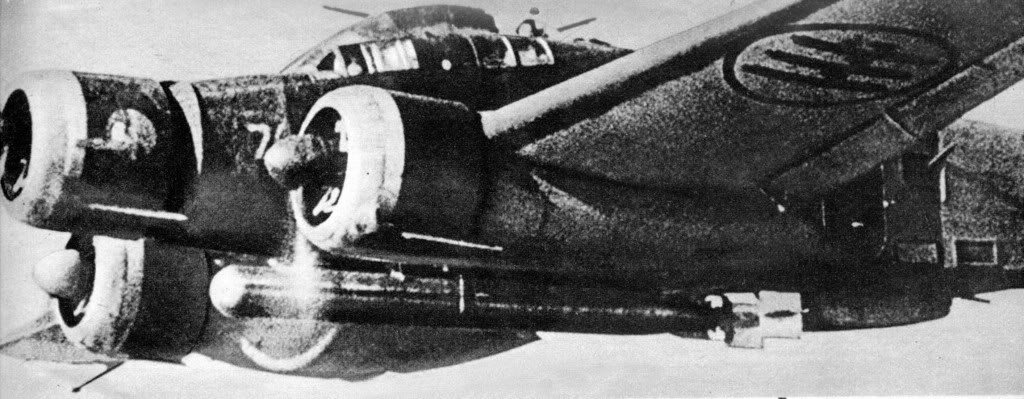
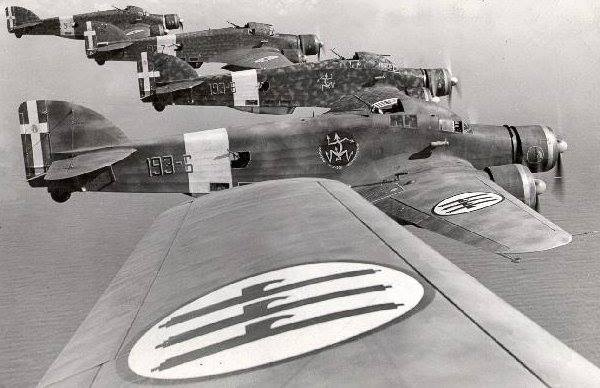
But it was one particular mission that made the Sparviero legendary. As a conventional high-level bomber the SM.79 was competent but unremarkable — like every medium bomber of its day, dangerous to the enemy only when escorted, and vulnerable to fighters when not. What transformed its reputation was the aerial torpedo. From 1940 the Regia Aeronautica developed specialist torpedo-bomber squadrons, the reparti aerosiluranti, and the strong, fast, low-flying SM.79 proved the ideal mount. Skimming the waves toward British convoys and Royal Navy warships in the teeth of anti-aircraft fire, the SM.79 crews pressed home attacks with a determination that won the grudging respect of their enemies. Through the convoy battles for Malta, off the North African coast and across the central Mediterranean from 1940 to 1943, the aerosiluranti damaged and sank merchant ships and warships and made the Sparviero the most respected Italian aircraft of the war.
The armistice of 8 September 1943 split Italy in two, and the Sparviero with it. In the German-occupied north, torpedo units of Mussolini’s fascist Aeronautica Nazionale Repubblicana (ANR) flew on against Allied shipping; in the Allied south, SM.79s served the Italian Co-Belligerent Air Force, mostly in transport and maritime roles. Like several Italian aircraft of its generation, the Sparviero thus ended the war flying, in effect, on both sides of a divided nation. Abroad, export and licence versions had already spread the design well beyond Italy: Yugoslavia, Romania and Iraq all operated Sparvieros, several in twin-engined export forms with different engines, and after the war Lebanon and Spain flew surviving aircraft on as transports well into the 1950s.
Roughly 1,300 to 1,350 SM.79s were built in all — the exact total is disputed between sources — making it by a wide margin the most-produced Italian bomber of the war and one of the most numerous trimotor combat aircraft ever built. That production run, its long record-breaking prelude and its deadly torpedo-bomber career together explain why the Sparviero, alone among Italian bombers, is remembered as a genuinely important aircraft rather than a footnote.
Today only a handful survive, all of them static museum exhibits — there is no airworthy SM.79 anywhere in the world. The pages that follow trace how a fast airliner became a bomber, how the humpbacked “Gobbo” was designed and armed, the low-level torpedo war that made its name, the way it came to fly on both sides after 1943, and where the last few Sparvieros can be seen today.
01The Savoia-Marchetti SM.79’s origins: the airliner that broke world records
The SM.79 was born as a commercial aircraft. Its direct ancestor was a fast passenger transport that Savoia-Marchetti flew in 1934, developed from the company’s line of trimotor airliners. The prototype was conceived to carry a handful of passengers at high speed, and from the outset it was pitched as a record-breaker as much as a workhorse — a way of demonstrating Italian aeronautical prowess to the world.
It succeeded spectacularly. Between 1935 and 1938 specially prepared SM.79s set a long series of internationally recognised records for speed carrying payloads over set distances, and Italian crews flew widely publicised long-distance flights. The showpiece was the August 1937 Istres–Damascus–Paris race, in which the “Sorci Verdi” SM.79s took the first three places against strong international competition. These achievements were not just propaganda: they proved the airframe had genuine speed and long-range endurance, qualities that carried straight over into its military career. When the Regia Aeronautica needed a modern fast bomber, the record-breaking transport was the obvious starting point.
02Why the Savoia-Marchetti SM.79 was called il gobbo — the hunchback
The Sparviero’s most famous feature is the reason for its nickname. To turn the clean airliner into a bomber, the designers added a raised structure immediately behind the cockpit: a dorsal “hump” or gondola that housed a fixed, forward-firing 12.7 mm Breda-SAFAT machine gun aimed by the pilot, and above the bomb-aimer’s and gunners’ stations. Viewed from the side this bulge broke the smooth line of the fuselage and gave the aircraft a distinctly humpbacked, almost hunched profile.
Italian crews, with the dark affection soldiers reserve for the machines that carry them, christened it il gobbo maledetto — “the damned hunchback” — usually shortened to il gobbo, “the hunchback.” The official name was far grander: Sparviero, “sparrowhawk,” in keeping with the Regia Aeronautica’s taste for birds and mythological titles. But it was the affectionate insult that stuck, and it remains the name by which the SM.79 is best known to this day. The hump was not mere ballast, either: that forward-firing gun turned the bomber into a machine that could shoot its way onto a target, and it became one of the type’s signature features.
03The Savoia-Marchetti SM.79’s three engines and mixed wood-and-metal construction
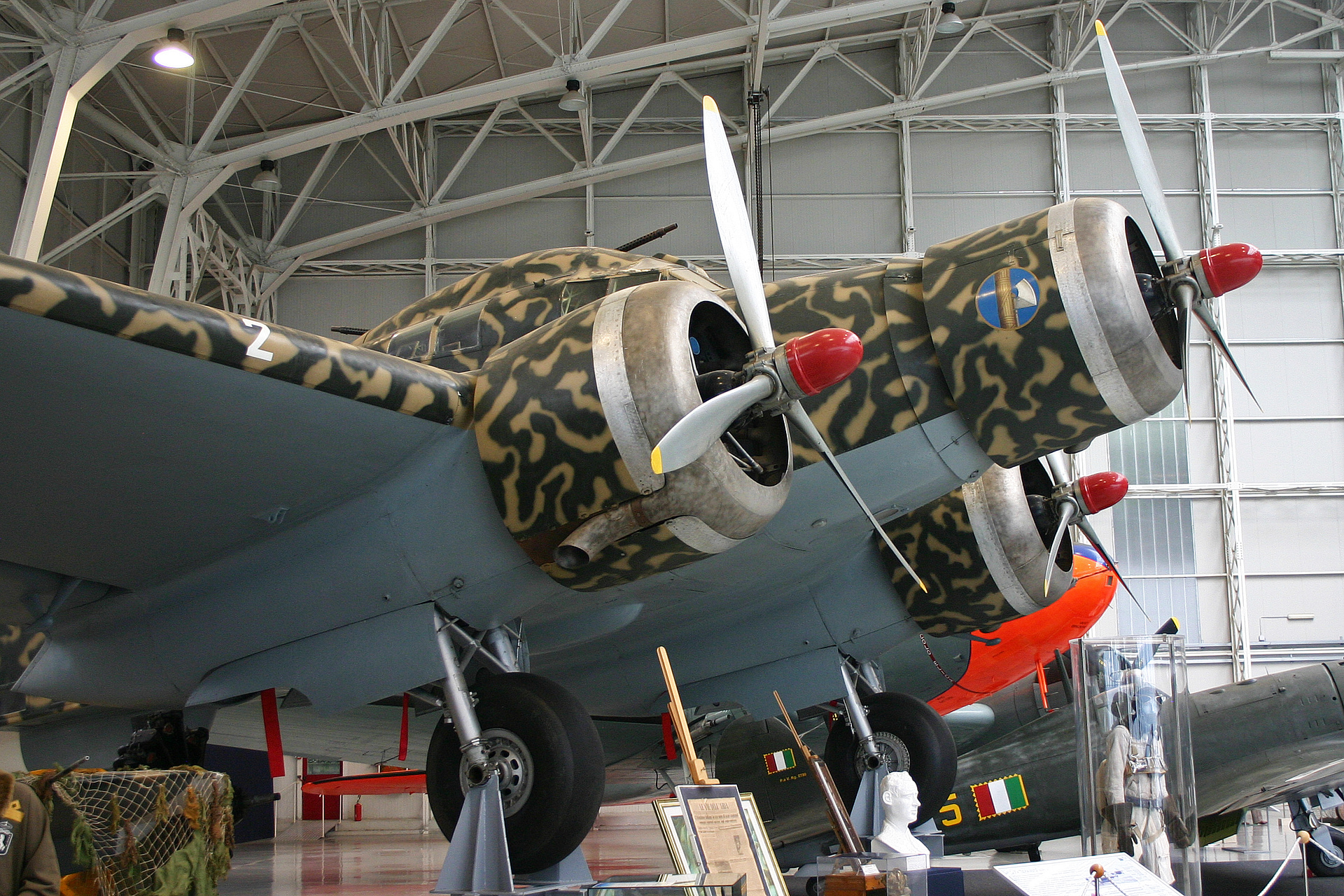
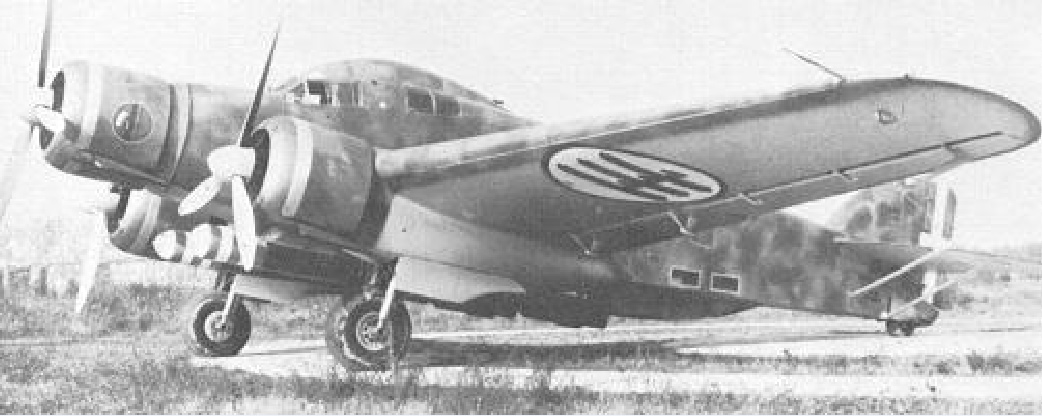
Two features defined the Sparviero’s character: its trimotor layout and its mixed construction. Three radial engines — one in the nose and one on each wing — gave the SM.79 both good performance and a valuable margin of safety. A crew could lose an engine to flak or mechanical failure and still fly home, a genuine advantage on long over-water torpedo sorties and desert operations far from base. The trimotor arrangement was, by the late 1930s, going out of fashion elsewhere in favour of twin-engined bombers, which is part of why the SM.79’s silhouette looks so distinctively of its era.
The airframe was equally characteristic of Italian practice of the period: a wooden wing, and a fuselage built up from a welded steel-tube framework clad in a mixture of light alloy (duralumin) panels forward, plywood and fabric further aft. Purists sometimes sneer at “wood-and-fabric” aircraft, but the mix was deliberate and effective. It economised on scarce strategic metals, it was simple to build and, above all, it was easy to repair: battle damage could be patched by field workshops with basic materials, keeping serviceability high in the primitive conditions of North African and Mediterranean airfields. Combined with three engines, that toughness gave the Sparviero a reputation for bringing its crews home that its pilots valued more than any performance figure.
04Who designed and built the Savoia-Marchetti SM.79 Sparviero?
The SM.79 was designed by Alessandro Marchetti, the technical director of the Società Italiana Aeroplani Idrovolanti Savoia-Marchetti (SIAI-Savoia-Marchetti), one of Italy’s leading aircraft manufacturers of the interwar years. Marchetti had made his name with a series of fast, clean trimotor transports and flying boats, and the SM.79 was the culmination of that line — the “SM” and the number denoting a Savoia-Marchetti design in the company’s sequence.
Because the type was needed in large numbers, production was not confined to Savoia-Marchetti’s own factories. The SM.79 was built under licence by other Italian firms as well, and export and licence-built versions were produced or assembled abroad, notably the twin-engined variants for Romania. This broad industrial base is one reason the Sparviero reached production totals — commonly cited at roughly 1,300 to 1,350 aircraft — far beyond any other Italian bomber, even as more modern designs struggled to leave the drawing board. Marchetti’s airliner-turned-bomber had become the workhorse of the Regia Aeronautica.
What made the Savoia-Marchetti SM.79 so effective
Three things defined the Sparviero as a fighting machine: a fast, record-bred trimotor airframe, a rugged mixed-construction body that shrugged off damage, and — the making of its legend — the ability to carry and deliver an aerial torpedo at wave-top height.
Speed bred from a record-breaker
The Sparviero inherited the aerodynamics of an airliner built to break records. Fast for a bomber of the late 1930s (roughly 430–460 km/h depending on variant), it was hard to intercept, especially at low level over the sea, where its torpedo crews made their attacks.
Rugged trimotor toughness
Three radial engines and a wood-and-metal airframe made the SM.79 famously survivable. Crews brought battle-damaged aircraft home on two engines, and field workshops patched wood and fabric that would have grounded an all-metal type — keeping serviceability high in desert conditions.
A torpedo under the belly
The Sparviero’s defining weapon was the 450 mm aerial torpedo. Strong enough to carry it and fast and low enough to deliver it, the SM.79 became the mount of the Regia Aeronautica’s specialist aerosiluranti — the most feared Italian strike aircraft of the Mediterranean war.
05The Savoia-Marchetti SM.79’s armament: guns, the “hunchback” gondola and the torpedo
The Sparviero’s gun armament was arranged around its humped profile. The signature weapon was a fixed 12.7 mm Breda-SAFAT heavy machine gun mounted in the dorsal hump, firing forward over the cockpit and aimed by the pilot — an offensive gun that let the bomber shoot at what it was attacking. Rearward defence came from a second 12.7 mm gun in a dorsal position firing aft over the tail, and a third 12.7 mm gun in a ventral gondola covering the underside and rear, supplemented on many aircraft by a hand-held 7.7 mm lateral gun that could be moved between beam windows. Exact fits varied between variants and over time.
For strike work the SM.79 could carry up to around 1,250 kg of bombs internally as a level bomber. But its most important load was slung externally: the torpedo version carried one 450 mm aerial torpedo (the aircraft was capable of carrying two, though a single torpedo was the normal operational load) on an offset rack beneath the fuselage. This combination — heavy defensive machine guns, a forward-firing gun in the hump, and an externally carried torpedo — is what made the humpbacked Sparviero both instantly recognisable and genuinely dangerous.
06How the Savoia-Marchetti SM.79 aerosilurante attacked ships
Torpedo bombing was among the most dangerous forms of air attack in the Second World War, and the SM.79 crews practised it with exceptional determination. To deliver a torpedo, the aircraft had to descend to just a few dozen metres above the sea, fly straight and level directly toward its target to release the weapon at the correct range and height, and then break away — all through the concentrated anti-aircraft fire of an alerted convoy or warship. There was no jinking on the run-in; the attack demanded nerve, precise flying and a strong airframe.
The Sparviero suited the task perfectly. It was fast and low-sitting, its three engines gave it a margin against battle damage, and its wooden structure absorbed punishment. Italian torpedo crews developed tactics of attacking in loose groups from several directions to split a ship’s defensive fire, pressing in to short range before releasing. British sailors who faced them came to respect the aerosiluranti as skilled and courageous opponents — a reputation earned the hard way, in repeated low-level attacks against some of the best-defended targets afloat.
07The Savoia-Marchetti SM.79 as a level bomber: competent, but not the legend
It is worth being honest about the Sparviero’s ordinary bombing role, because it is a very different story from the torpedo legend. As a conventional level bomber the SM.79 was a solid, average medium bomber of its generation — reasonably fast, adequately armed, able to carry a useful bomb load, but no more revolutionary than the German, British or Soviet twin-engined bombers it flew alongside and against. Its bombsight, bomb load and accuracy were unremarkable, and like every medium bomber of the era it was dangerously exposed to enemy fighters when it flew without escort.
The SM.79 dropped a great many bombs in Spain, over Malta, in the Balkans, in North and East Africa and elsewhere, and in that role it was a workhorse rather than a war-winner. What lifted the Sparviero above the ruck of competent medium bombers was not level bombing at all but the specialist torpedo mission — a role that played directly to the airframe’s strengths of speed, toughness and low-level handling, and in which its crews achieved results and a reputation out of all proportion to the aircraft’s otherwise middling qualities.
08The Savoia-Marchetti SM.79’s variants: SM.79-I, SM.79-II, the twin-engined SM.79B and beyond
The Sparviero was produced in a number of forms. The initial military bomber was the SM.79-I, powered by three Alfa Romeo 126 RC.34 radials of roughly 780 hp each. The definitive wartime version was the SM.79-II, re-engined with more powerful radials — commonly the Piaggio P.XI RC.40 of around 1,000 hp or the Alfa Romeo 128 of around 860 hp, figures varying between sources — and it was this version that equipped most of the torpedo units. A late, cleaned-up development, sometimes designated SM.79-III, dispensed with the ventral gondola and added a forward-firing 20 mm cannon.
For export, Savoia-Marchetti also built a distinctly different twin-engined version, the SM.79B, which replaced the three-engine layout with two more powerful engines and a fully glazed “greenhouse” nose in place of the trimotor’s stepped cockpit. This twin-engined line was tailored to customers who wanted specific powerplants: it was supplied to Iraq and, most significantly, formed the basis of the aircraft licence-built in Romania (as the JRS-79B / JIS-79B) with in-line engines. Yugoslavia bought a version known as the SM.79K. These export and licence variants spread the Sparviero’s basic design well beyond Italy and account for the type’s appearance in air arms across the Balkans and the Middle East.
The Savoia-Marchetti SM.79’s war: Spain, the Malta convoys and the Mediterranean torpedo battle
From its combat debut in Spain to the desperate convoy battles for Malta and its service on both sides after the 1943 armistice, the Sparviero was at the centre of Italy’s air war — above all as the low-level torpedo bomber that made the Mediterranean deadly for Allied shipping.
The SM.79 went into action for the first time over Spain. From 1937 the Aviazione Legionaria, Italy’s expeditionary force fighting for Franco’s Nationalists, operated Sparvieros as fast day bombers. Their speed made them hard for Republican fighters to catch, and the Spanish experience confirmed the type as the Regia Aeronautica’s standard bomber and shaped the tactics and confidence its crews carried into the wider war that followed.
When Italy entered the Second World War in June 1940, the SM.79 was the most numerous bomber in Italian service, deployed from Italy, Sicily, Sardinia, Libya and the Italian East African empire. In the war’s opening phase it flew conventional bombing raids: against Malta, against French targets, and in the East African campaign against British forces in Sudan, Kenya and the Horn of Africa. In these operations the Sparviero performed like any competent medium bomber of 1940 — effective against undefended targets, but increasingly vulnerable as British fighter strength grew, and unable on its own to force a decision.
The turning point was the aerial torpedo. Italy had experimented with air-dropped torpedoes before the war, and in the summer of 1940 the Regia Aeronautica stood up its first specialist torpedo-bomber unit. The strong, fast, low-flying SM.79 proved an almost ideal torpedo aircraft, and over 1940–41 the reparti aerosiluranti grew into the most effective strike force Italy possessed. Their hunting ground was the central Mediterranean, and their quarry was the lifeline of British sea power there: the convoys fighting through to the besieged island of Malta, and the Royal Navy warships that escorted them.
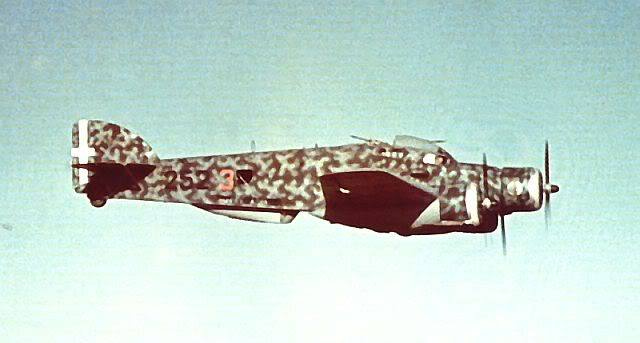
The mechanics of the campaign were unforgiving. Italy and the Axis needed to run fuel, tanks and men across the Mediterranean to sustain Rommel’s army in North Africa, while starving the British garrison on Malta; Britain needed to do the reverse, and to keep Malta alive as a base from which to attack the Axis convoys. The sea between Sicily and Tunisia became one of the most contested stretches of water in the world, and the SM.79 aerosiluranti were among the sharpest instruments either side possessed for closing it. Operating from Sardinia, Sicily and North African strips, they could reach far out to sea, and their speed and low-level approach gave defenders little warning.
The convoy battles that followed were among the hardest-fought sea-air actions of the war. Time and again through 1941 and 1942, formations of SM.79s bored in at wave-top height against convoys ringed with anti-aircraft guns and covered by carrier fighters, releasing their torpedoes at close range and breaking away through a wall of fire. The great Malta convoy operations — including the climactic August 1942 battle known to the British as Operation Pedestal — saw the aerosiluranti, alongside German aircraft, Italian and German submarines and motor torpedo boats, inflict heavy losses on merchant ships and their escorts. Italian torpedo crews damaged and sank a range of Allied vessels across the campaign, and though claims and confirmed results (as always in air-sea warfare) must be treated with caution, there is no doubt the Sparviero units were a serious and sustained threat that the Royal Navy had to plan around.
It was in this role that the SM.79 earned something rare for an Axis aircraft: the respect of its enemies. British accounts of the Mediterranean war repeatedly acknowledge the skill and courage of the Italian torpedo-bomber crews, who attacked with a persistence that cost them dearly. Individual Italian aces of the aerosiluranti, such as Carlo Emanuele Buscaglia, became national figures. For all Italy’s wider difficulties in the air, the torpedo-armed Sparviero was a weapon the Allies genuinely feared.
Then came the armistice. On 8 September 1943 Italy signed a ceasefire with the Allies, and the country — and its air force — split. In the German-occupied north, the fascist Aeronautica Nazionale Repubblicana re-formed torpedo units around surviving SM.79s and continued to attack Allied shipping into 1944, a bitter continuation of the Mediterranean torpedo war now fought against former allies. In the Allied-aligned south, the Italian Co-Belligerent Air Force flew its SM.79s mainly in transport and maritime-patrol roles. As with several Italian types, the Sparviero thus finished the war serving, in effect, on both sides of a divided nation.
The SM.79’s story did not end in 1945. Export customers had operated the type before and during the war — Yugoslavia, Romania and Iraq among them — and a number of aircraft survived the conflict in foreign hands or were passed on afterwards. Lebanon flew ex-Italian Sparvieros as transports into the 1950s, and Spain, which had operated the type since the civil war, kept SM.79s in service in secondary roles for years after the war. It was a quiet, unglamorous coda for an aircraft that had been, for three years, the sharpest edge of Italian air power at sea.
09The Savoia-Marchetti SM.79 and the Malta convoys: Operation Pedestal and the torpedo war
The struggle to supply Malta was one of the decisive campaigns of the Mediterranean war, and the SM.79 was central to the Axis effort to strangle it. Malta sat astride the convoy routes between Italy and North Africa; so long as it held, its aircraft, submarines and ships savaged the convoys carrying fuel and supplies to Rommel’s army. The Axis response was to besiege the island from the air and to attack every British convoy that tried to relieve it — and torpedo-armed Sparvieros were a principal weapon in those attacks.
The best-known of these battles was Operation Pedestal in August 1942, a maximum-effort British attempt to fight a large convoy through to Malta. Attacked relentlessly for days by Axis aircraft — including Italian torpedo bombers — submarines and light surface craft, the convoy lost most of its merchant ships, though just enough got through (most famously the tanker Ohio) to keep Malta alive. The Sparviero units were part of a combined Axis assault rather than acting alone, and untangling exactly which ship fell to which weapon is notoriously difficult. But Pedestal stands as the archetype of the war the aerosiluranti fought: repeated, costly, low-level torpedo attacks against a heavily defended convoy, pressed home with a determination that even their opponents acknowledged.
10The Savoia-Marchetti SM.79 after the 1943 armistice: flying on both sides
Italy’s armistice with the Allies on 8 September 1943 tore the country and its armed forces in two, and the SM.79 fleet split with them. In the north, occupied by Germany, Mussolini’s puppet Italian Social Republic raised a new air arm, the Aeronautica Nazionale Repubblicana (ANR). Its torpedo squadrons flew surviving Sparvieros against Allied shipping and landings — including operations against the Anzio beachhead in 1944 — continuing the low-level torpedo war, now against the very Allies with whom the south had made peace.
South of the line, the Italian Co-Belligerent Air Force, fighting alongside the Allies, operated its SM.79s largely in transport, liaison and maritime roles, their bombing and torpedo days mostly behind them. This division — the same type of aircraft flown by Italians on opposite sides of a civil war within a world war — is one of the poignant features of the SM.79’s late history, shared with other Italian aircraft such as the Macchi fighters. By 1945 the Sparviero’s front-line combat career was effectively over, but its service was not: transport and second-line flying would keep the type in the air, at home and abroad, for years to come.
11Why the Savoia-Marchetti SM.79 is remembered when other Italian bombers are forgotten
Italy built many bombers in the Second World War, most of which are now remembered — if at all — only by specialists. The SM.79 is the exception, and there are clear reasons why. It was built in far larger numbers than any other Italian bomber, so it was everywhere the Regia Aeronautica fought. It had a long and genuinely glamorous prelude as a record-breaking airliner, which gave it fame before the war even began. And it had an instantly recognisable shape — three engines and a humped back — that made it a symbol of Italian aviation.
Above all, it had the torpedo war. In an air force whose overall wartime record was mixed, the aerosiluranti and their Sparvieros were a real success story: a weapon that seriously threatened Allied sea power in the Mediterranean and won the respect of a formidable enemy. That combination — ubiquity, a record-breaking backstory, a unique silhouette and a single role in which it genuinely excelled — is why the “damned hunchback” is the one Italian bomber of the war that non-specialists still remember, and why it earns a place in a museum devoted to the most significant aircraft ever flown.
12The Savoia-Marchetti SM.79’s torpedo aces: Buscaglia and the aerosiluranti
The reputation of the SM.79 is inseparable from the men who flew it against ships. The Regia Aeronautica’s torpedo-bomber squadrons — the reparti aerosiluranti — attracted some of Italy’s most determined airmen, and a handful became national heroes. The best known is Carlo Emanuele Buscaglia, whose name became a byword for the Italian torpedo arm; his unit was later renamed in his honour. Other pioneers, including Carlo Faggioni and Guido Robone, helped develop and prove the low-level torpedo tactics that made the SM.79 so dangerous.
What these men and their crews did was extraordinarily hazardous. Attacking a defended convoy meant flying straight and level at wave-top height into concentrated anti-aircraft fire, often against warships bristling with guns and covered by carrier-borne fighters. Losses were heavy and casualties among the small, elite torpedo units were severe. Yet they pressed their attacks with a persistence that their British opponents openly admired — a rare tribute paid to an enemy in the bitter Mediterranean war. The aerosiluranti and their Sparvieros were, by common consent, the most effective offensive weapon the wartime Regia Aeronautica ever wielded.
13The Savoia-Marchetti SM.79 compared to the Heinkel He 111 and other WWII medium bombers
Set against the medium bombers of the other major powers, the SM.79 was a broadly comparable but distinctive machine. In speed, bomb load and defensive armament it sat in the same class as the German Heinkel He 111, the British Vickers Wellington and the various twin-engined bombers of the period — competent, useful, but none of them war-winners on their own, and all vulnerable to modern fighters without escort. Where the Sparviero differed was its layout: three engines where almost every rival used two, and mixed wood-and-metal construction where others were increasingly all-metal.
Those differences cut both ways. The trimotor arrangement gave the SM.79 an extra margin of safety and reliability, valuable on long over-water and desert sorties, at the cost of the drag and complexity of a third engine. The wooden structure was easy to repair but limited the airframe’s development potential. In the level-bombing role, then, the Sparviero was neither better nor worse than its foreign contemporaries — it was simply Italian, and idiosyncratic. Its real edge lay elsewhere: no other nation made such effective, sustained use of the air-launched torpedo, and it was that speciality, rather than any advantage as a conventional bomber, that set the SM.79 apart from the He 111 and the rest.
Savoia-Marchetti SM.79 Sparviero full specifications
Figures are broadly representative of the definitive wartime SM.79-II and are drawn from established reference sources. Many values differ between references, variants and sub-types — especially engine power, speed and production totals — so contested figures are flagged.
| 全体人员 | 5–6 (pilot, co-pilot, flight engineer, radio operator/gunner, bomb-aimer/gunners; varied by variant and mission) |
|---|---|
| Engines | Three radial engines (trimotor). SM.79-I: 3 × Alfa Romeo 126 RC.34, ~780 hp each. SM.79-II: 3 × Piaggio P.XI RC.40 (~1,000 hp) or Alfa Romeo 128 (~860 hp) — figures vary |
| 最高速度 | ~430–460 km/h (~267–286 mph), depending on variant and source |
| Cruising speed | ~370–390 km/h (~230–242 mph) — approximate |
| 设备天花板 | ~6,500–7,000 m (~21,300–23,000 ft) — figures vary |
| 范围 | ~1,900–2,600 km (~1,180–1,615 mi) depending on load and variant |
| Defensive armament | Typically 3 × 12.7 mm Breda-SAFAT machine guns (1 fixed forward in dorsal hump, 1 dorsal aft, 1 ventral) + 1 × 7.7 mm lateral gun; fit varied |
| Offensive load (bomber) | Up to ~1,250 kg of bombs internally |
| Offensive load (torpedo) | 1 × 450 mm aerial torpedo (capable of 2; one was the normal operational load) |
| 长度 | ~15.6 m (~51 ft 3 in) |
|---|---|
| 翼展 | ~21.2 m (~69 ft 7 in) |
| 高度 | ~4.1 m (~13 ft 5 in) |
| 机翼面积 | ~61.7 m² (~664 sq ft) |
| 空重 | ~7,700 kg (estimate; varies) |
| Loaded / max take-off weight | ~10,500–11,300 kg (estimate; varies by variant) |
| Construction | Mixed: wooden wing; welded steel-tube fuselage clad in duralumin, plywood and fabric |
| First flight | Late 1934 (civil transport prototype) |
| Service entry | 1936 (Regia Aeronautica); combat debut 1937 (Spain) |
| Number built | ~1,300–1,350 (figures vary widely between sources) |
| Designer | Alessandro Marchetti |
| 制造商 | Savoia-Marchetti (SIAI) and licensees, Italy; export/licence versions abroad |
| Unit cost | Not reliably recorded (WWII) |
| Cost per flight hour | Not applicable — no airworthy example |
Values marked “estimate,” “varies” or “approximate” should be treated with caution. Engine type and power, top speed, weights, range and total production in particular differ between references and between the many SM.79 sub-variants (SM.79-I, SM.79-II, SM.79-III, the twin-engined SM.79B and licence-built versions).
14The Savoia-Marchetti SM.79’s world records: the speed-and-distance flights of the 1930s
Before it dropped a single bomb, the SM.79 was famous as a record-breaker. In the mid-to-late 1930s specially prepared examples set a long series of internationally recognised records for speed carrying commercial payloads over measured distances — the kind of records that demonstrated an aircraft’s combination of speed, load and endurance rather than raw dash. Italian crews also flew widely publicised long-distance demonstration flights that kept the type in the world’s newspapers.
The showpiece was the Istres–Damascus–Paris race of August 1937, over roughly 6,200 km, in which SM.79s of the “Sorci Verdi” team took the first three places against strong international competition. For the fascist regime it was priceless propaganda; for the aircraft it was proof of genuine capability. Those record flights were not a sideshow to the SM.79’s military career but its foundation: the speed and long-range endurance that won the races were exactly the qualities that later made the bomber hard to catch and the torpedo aircraft able to range far out to sea.
15The Savoia-Marchetti SM.79’s export and licence versions: Yugoslavia, Romania, Iraq and Brazil
The Sparviero was widely exported, often in forms quite different from the standard Italian trimotor. Yugoslavia bought a batch known as the SM.79K in the late 1930s. Iraq received the twin-engined SM.79B export version. Most significant of all, Romania adopted the twin-engined line and built it under licence as the JRS-79B (and related JIS-79B), powered by in-line engines — Romanian-built Sparvieros served on the Eastern Front alongside Germany. A number of SM.79s were also supplied for civil use, including examples that reached Brazil as fast transports.
These exports matter for two reasons. First, they make the SM.79 a genuinely international aircraft, flown by air arms across the Balkans and the Middle East, not just an Italian curiosity. Second, they are a frequent source of confusion: a “SM.79” in Romanian, Iraqi or Yugoslav service may be a twin-engined machine with a glazed nose and entirely different engines, looking quite unlike the humpbacked Italian trimotor. When you see a photograph captioned “SM.79,” it is always worth checking whether it shows the classic three-engined Regia Aeronautica bomber or one of these distinctive export variants.
16The Savoia-Marchetti SM.79’s operating costs: why there is no cost-per-hour figure
Unlike the modern jets in the MiGFlug fleet, the Sparviero has no meaningful operating-cost figure. Wartime unit costs for Italian aircraft were not reliably or consistently recorded, and the economic disruption of 1940s Italy — followed by the chaos of the armistice and occupation — makes any single production-cost number misleading. The honest entry in the specifications table is simply “not reliably recorded.”
More fundamentally, there is no airworthy Savoia-Marchetti SM.79 anywhere in the world. Every surviving original is a static museum exhibit, so there is no fuel bill, no maintenance programme and no cost-per-flight-hour to quote — hence “not applicable” in the table. If you want to know what operating and flying a genuine military aircraft actually costs today, the jets MiGFlug flies are a far better guide than a bomber that has not flown for more than half a century.
17How to recognise a Savoia-Marchetti SM.79: three engines, a hump and a low stance
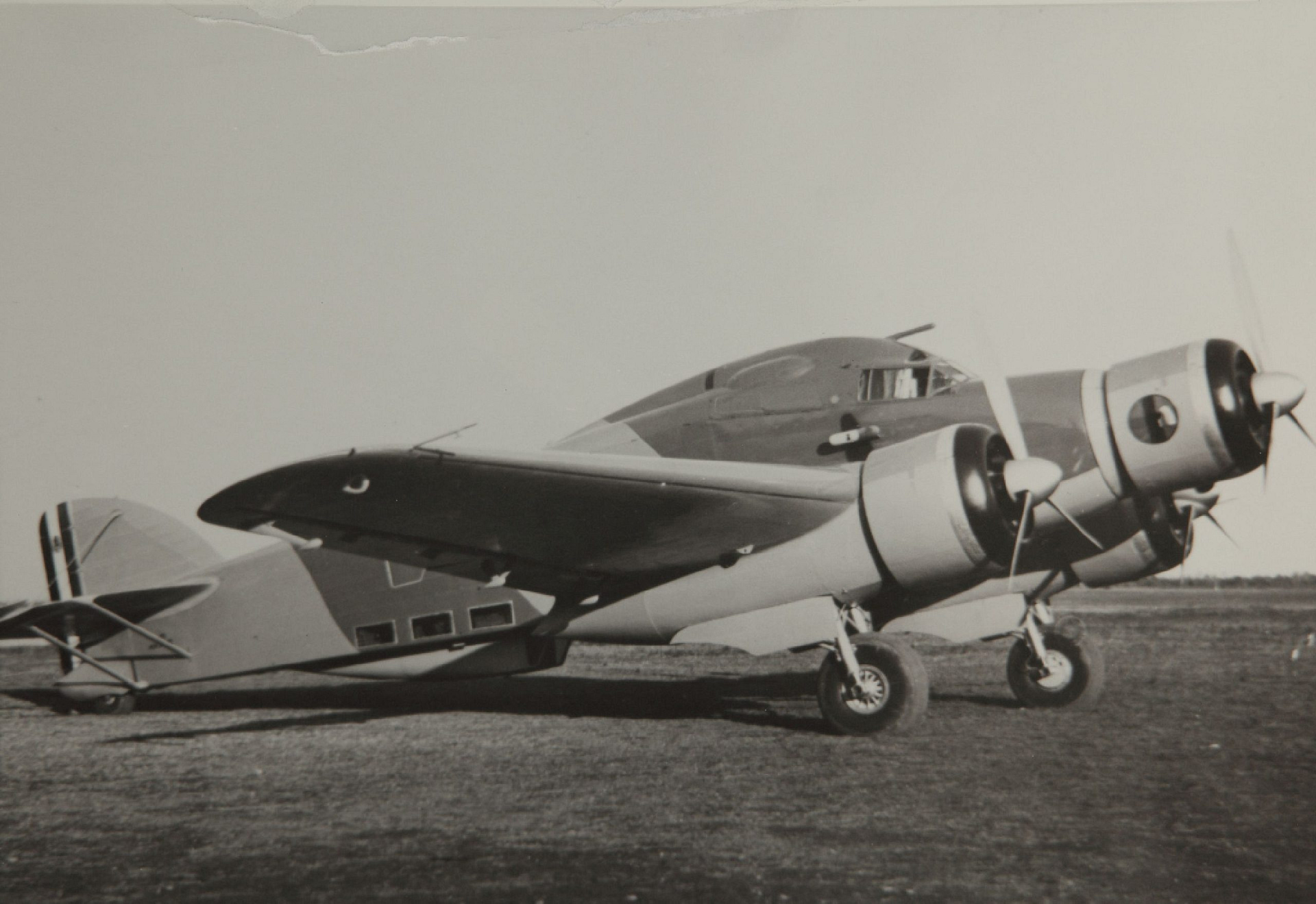
The classic Italian SM.79 is one of the easier wartime aircraft to identify once you know the tells. It is a large, low-wing monoplane with three radial engines — one in the nose, one on each wing — which immediately sets it apart from the twin-engined bombers that dominated every other air force. Its second signature is the dorsal “hump” behind the cockpit, the raised gondola that earned it the gobbo nickname and that breaks the top line of the fuselage. A ventral gondola beneath the fuselage and, on torpedo aircraft, a torpedo slung off-centre under the belly complete the picture.
The trap for the unwary is the export versions. The twin-engined SM.79B and the Romanian licence-built JRS-79B have only two engines and a fully glazed nose, so they lack both the nose engine and the stepped cockpit of the trimotor — they look like a different aircraft altogether, which in many respects they are. If you are looking at a preserved machine and want to be sure it is the definitive Italian Sparviero, count the engines (three) and look for the hump: those two features, together, are unique to the SM.79.
The Savoia-Marchetti SM.79 Sparviero: from record-breaker to torpedo bomber
A record-breaking airliner. Savoia-Marchetti flies the fast trimotor transport prototype from which the SM.79 is derived — designed as much to break records as to carry passengers.
World records. Specially prepared SM.79s set a string of recognised world records for speed with payload over distance, and fly widely publicised long-distance demonstrations.
Into service. The militarised SM.79 bomber, with its bomb bay, defensive guns and humped dorsal gondola, enters Regia Aeronautica service.
Combat debut in Spain. The Aviazione Legionaria flies SM.79s as fast bombers for Franco’s Nationalists in the Spanish Civil War. “Sorci Verdi” SM.79s sweep the Istres–Damascus–Paris race.
Italy enters WWII. The SM.79 is the Regia Aeronautica’s most numerous bomber, flying conventional raids against Malta, France and in East Africa.
The torpedo units form. The Regia Aeronautica stands up its first specialist torpedo-bomber unit; the fast, tough, low-flying SM.79 proves an ideal aerosilurante.
The convoy battles. SM.79 torpedo bombers attack Malta convoys and Royal Navy warships at wave-top height, damaging and sinking Allied ships and earning their enemies’ respect.
Operation Pedestal. Italian torpedo bombers join the massed Axis assault on the great Malta convoy, which loses most of its merchantmen but gets just enough through to save the island.
The armistice. Italy changes sides. The SM.79 fleet splits: ANR torpedo units in the north continue attacking Allied shipping; Co-Belligerent SM.79s in the south fly transport roles.
Both sides. ANR Sparvieros attack the Anzio landings and Allied convoys, while southern SM.79s serve the Allied cause — the same bomber flown by Italians against Italians.
Foreign afterlife. Lebanon and Spain fly surviving SM.79s as transports and second-line aircraft into the 1950s; Romanian and other export machines are retired.
Survivors. Only a handful of SM.79s survive, all static museum exhibits — notably at the Italian Air Force Museum, Vigna di Valle. None is airworthy.
Twelve things worth knowing about the Savoia-Marchetti SM.79
Scroll through the episodes and details that make the “damned hunchback” the one Italian bomber of the war that everyone remembers.
An airliner first
The Sparviero began as a fast civil transport, not a bomber. Flown in 1934 to carry a handful of passengers at high speed, it was built to break records — and did, repeatedly. When Italy needed a modern fast bomber, this record-breaking airliner was the ready-made answer.
Sparrowhawk and hunchback
Officially it was the Sparviero — “sparrowhawk.” But the humped gondola behind the cockpit gave it a bulging back, and crews nicknamed it il gobbo maledetto, “the damned hunchback.” The affectionate insult, not the grand official name, is the one that stuck.
Green mice over Europe
In August 1937 a team of SM.79s marked with a cartoon “Sorci Verdi” (green mice) badge took the first three places in the Istres–Damascus–Paris air race, over some 6,200 km. It was a propaganda triumph — and proof the airframe had real speed and endurance.
Three engines and a hump
The SM.79 is one of the most recognisable aircraft of the war: a low trimotor with an engine in the nose and one on each wing, and a raised dorsal hump housing a forward-firing gun. By the late 1930s three-engined bombers were going out of fashion, which makes the silhouette look distinctively of its moment.
Wood, steel and fabric
Under its skin the Sparviero mixed a wooden wing with a welded steel-tube fuselage clad in duralumin, plywood and fabric. Unfashionable, perhaps — but tough, cheap and easy to repair. Field workshops patched battle damage that would have grounded an all-metal aircraft, keeping serviceability high in the desert.
Blooded in Spain
The SM.79 first fought in the Spanish Civil War from 1937, flown by Italy’s Aviazione Legionaria for Franco’s Nationalists. Its speed made it hard to intercept, and Spain confirmed it as the backbone of the Regia Aeronautica’s bomber force for the wider war to come.
A torpedo under the belly
The Sparviero’s fame rests on one weapon: the 450 mm aerial torpedo. Strong, fast and able to fly low over the sea, the SM.79 became the mount of the Regia Aeronautica’s specialist torpedo squadrons — the aerosiluranti — and the most feared Italian strike aircraft of the Mediterranean.
Down among the waves
A torpedo run meant descending to a few dozen metres, flying straight at the target through a wall of anti-aircraft fire, releasing at close range and breaking away. It took nerve and a strong aircraft. SM.79 crews did it again and again against the best-defended convoys afloat.
The convoy battles
The struggle to supply Malta was decisive in the Mediterranean, and torpedo-armed Sparvieros were a principal Axis weapon against the relief convoys. In battles like Operation Pedestal in August 1942 they helped inflict heavy losses on merchant ships and their Royal Navy escorts.
Feared by the enemy
For an Axis aircraft, the SM.79 earned something rare: the genuine respect of its opponents. British accounts of the Mediterranean war repeatedly praise the skill and courage of the Italian torpedo crews, who pressed home their attacks at terrible cost. Aces such as Carlo Emanuele Buscaglia became national figures.
A bomber of the civil war
After the September 1943 armistice the SM.79 flew on both sides: ANR torpedo units in the German-held north attacked Allied shipping, while Co-Belligerent SM.79s in the south served the Allies. The same aircraft, flown by Italians against Italians — one of the war’s quiet tragedies.
Foreign service and survivors
Exported before the war to Yugoslavia, Romania and Iraq, and flown post-war by Lebanon and Spain, the Sparviero served abroad well into the 1950s. Today only a handful survive as museum exhibits — most famously at Vigna di Valle — and none is airworthy.
Savoia-Marchetti SM.79 Sparviero in photographs
Wartime images and surviving museum aircraft. Click any photograph to enlarge. All images are public domain or Creative Commons, credited in the captions.
The Savoia-Marchetti SM.79 Sparviero on video
A well-researched history of the Sparviero from Military Aviation History, an established aviation-history channel, covering the type’s record-breaking origins, its design and its Mediterranean torpedo-bomber career.
“The Savoia-Marchetti SM.79 ‘Sparviero’ — Italy’s Workhorse of WW2” — Military Aviation History (an established aviation-history channel, ~468,000 subscribers), published November 2017, roughly 183,000 views at the time of writing. A thorough, well-sourced overview of the type and its Mediterranean service.
Where the Savoia-Marchetti SM.79 flew
Designed and built in Italy; flown in combat by the Regia Aeronautica across the Mediterranean, North Africa and Italian East Africa, in the Spanish Civil War, and — after the 1943 armistice — by the fascist ANR; exported to Yugoslavia, Romania and Iraq and flown post-war by Lebanon and Spain; and preserved today in a handful of museums. Hover (or tap on mobile) a country for details; use the buttons to toggle categories.
The Savoia-Marchetti SM.79 by the numbers
The Sparviero was the backbone of the Regia Aeronautica’s bomber force from the Spanish Civil War through 1943, and — as a specialist torpedo bomber — the most feared Italian strike aircraft of the Mediterranean. After the armistice it served both the fascist ANR in the north and the Co-Belligerent Air Force in the south, and abroad with Yugoslavia, Romania, Iraq, Lebanon and Spain.
Savoia-Marchetti SM.79 Sparviero: your questions answered
Can I fly in a Savoia-Marchetti SM.79 Sparviero?
No. There is no airworthy Savoia-Marchetti SM.79 anywhere in the world — every surviving original is a static museum exhibit, and MiGFlug does not offer flights in this aircraft. However, you can fly in several genuine military jets and fighters today. MiGFlug flies aircraft such as the Hawker Hunter, MiG-29 Fulcrum, MiG-15, L-39 Albatros, F-104 Starfighter and T-33 Shooting Star. See the full list and prices at migflug.com/flights-prices.
Why was the SM.79 called the “hunchback” (il gobbo)?
Because of the raised dorsal gondola behind the cockpit. To turn the clean airliner into a bomber, Savoia-Marchetti added a hump housing a fixed forward-firing 12.7 mm machine gun and crew stations. That bulge broke the smooth line of the fuselage and gave the aircraft a humpbacked profile, so Italian crews nicknamed it il gobbo maledetto — “the damned hunchback,” usually shortened to il gobbo. Its official name was far grander: Sparviero, “sparrowhawk.”
How many engines did the Savoia-Marchetti SM.79 have?
Three. The classic SM.79 was a trimotor, with one radial engine in the nose and one on each wing. The SM.79-I used Alfa Romeo 126 radials of about 780 hp each; the definitive SM.79-II used more powerful Piaggio or Alfa Romeo radials of roughly 860–1,000 hp. Confusingly, the export SM.79B and the Romanian licence-built version were twin-engined machines with a glazed nose, so a small number of “SM.79s” had only two engines.
What was the SM.79’s most important role?
Torpedo bombing. As a conventional level bomber the SM.79 was competent but unremarkable. What made it famous was its role as an aerosilurante — a torpedo bomber. From 1940 the Regia Aeronautica’s specialist torpedo squadrons flew the fast, tough, low-flying Sparviero against British convoys and Royal Navy warships in the Mediterranean, pressing home wave-top attacks that won the respect of their enemies.
How fast was the Savoia-Marchetti SM.79?
Its top speed is usually given as around 430–460 km/h (about 267–286 mph) depending on the variant and the source. That was fast for a bomber of the late 1930s and early 1940s, and — combined with its low-level handling — made it hard to intercept, especially on torpedo attacks skimming the sea.
Did the SM.79 really start as a record-breaking airliner?
Yes. The SM.79 was derived from a fast civil transport flown in 1934, and specially prepared examples set a string of internationally recognised world records for speed with payload over distance between 1935 and 1938. In August 1937 the “Sorci Verdi” team of SM.79s took the first three places in the Istres–Damascus–Paris air race. Those record flights proved the airframe had the speed and endurance that later made it a formidable bomber.
What was the SM.79’s armament?
The classic Italian SM.79 typically carried three 12.7 mm Breda-SAFAT machine guns — one fixed and firing forward in the dorsal hump, one firing aft over the tail, and one in a ventral gondola — plus a hand-held 7.7 mm lateral gun; fits varied by variant. As a bomber it could carry up to about 1,250 kg of bombs; as a torpedo bomber it carried one 450 mm aerial torpedo (it was capable of two, but one was the normal load).
How many Savoia-Marchetti SM.79s were built?
Roughly 1,300 to 1,350, though the exact figure is disputed between sources. Whatever the precise total, it was by a wide margin the most-produced Italian bomber of the Second World War and one of the most numerous trimotor combat aircraft ever built — the aircraft was everywhere the Regia Aeronautica fought.
Did the SM.79 fight on both sides after the 1943 armistice?
In effect, yes. After Italy’s armistice with the Allies on 8 September 1943, torpedo units of the fascist Aeronautica Nazionale Repubblicana (ANR) in the German-occupied north continued attacking Allied shipping — including the Anzio beachhead in 1944 — while SM.79s of the Italian Co-Belligerent Air Force in the south served the Allied cause, mostly in transport roles. The same type was thus flown by Italians on opposite sides of a divided nation.
Which countries operated the Savoia-Marchetti SM.79?
Italy was by far the largest operator, flying the SM.79 with the Regia Aeronautica, the Aviazione Legionaria in Spain, the fascist ANR and the Co-Belligerent Air Force. It was also exported: Yugoslavia bought the SM.79K, Iraq the twin-engined SM.79B, and Romania built the twin-engined version under licence as the JRS-79B and flew it on the Eastern Front. After the war Lebanon and Spain operated surviving aircraft as transports, and some SM.79s reached Brazil for civil use.
Was the SM.79 a good aircraft?
It depends on the role. As a level bomber it was an average medium bomber of its generation — solid but unremarkable, and, like all such aircraft, vulnerable to fighters without escort. As a torpedo bomber it was genuinely excellent: fast, rugged and low-flying, ideally suited to the aerosilurante mission, and flown with a skill and courage that even its British opponents acknowledged. It was also famously tough, able to absorb battle damage and fly home on two engines.
What does “Sparviero” mean?
“Sparviero” is Italian for “sparrowhawk.” It followed the Regia Aeronautica’s fondness for naming aircraft after birds and predators. In practice, though, the aircraft is far better known by its unofficial nickname, il gobbo (“the hunchback”), earned by its distinctive humped back.
What is the difference between the SM.79 and the twin-engined SM.79B?
The standard SM.79 is a three-engined (trimotor) aircraft with an engine in the nose and a stepped cockpit. The SM.79B was an export version that replaced this with two more powerful engines and a fully glazed “greenhouse” nose — so it has only two engines and looks quite different. The SM.79B line was supplied to Iraq and formed the basis of the aircraft Romania built under licence as the JRS-79B. When you see a two-engined “SM.79,” it is one of these export machines, not the classic Italian trimotor.
Did the SM.79 see combat before World War II?
Yes. The Sparviero’s combat debut came in the Spanish Civil War from 1937, where Italy’s Aviazione Legionaria flew it as a fast bomber for Franco’s Nationalists. Its speed made it hard to intercept, and the Spanish experience confirmed the type as the backbone of the Regia Aeronautica’s bomber force by the time Italy entered the wider war in 1940.
Are there any surviving Savoia-Marchetti SM.79s?
Only a small number survive, all as static museum exhibits. The best-known is at the Italian Air Force Museum (Museo storico dell’Aeronautica Militare) at Vigna di Valle, near Rome. One SM.79 was for many years displayed in Lebanon before being returned to Italy and restored. None of the survivors is airworthy, so the Sparviero can only be seen on the ground.
Where can I see a Savoia-Marchetti SM.79 today?
The best-known example is at the Italian Air Force Museum (Museo storico dell’Aeronautica Militare) at Vigna di Valle on Lake Bracciano, near Rome, which preserves an SM.79 Sparviero. A small number of other survivors exist, including an aircraft that spent years in Lebanon before returning to Italy. All are static exhibits — there is no flying SM.79 anywhere in the world.
What is an aerosilurante (torpedo bomber)?
An aerosilurante is Italian for a torpedo bomber — an aircraft that attacks ships with an air-dropped torpedo rather than bombs. The Regia Aeronautica’s reparti aerosiluranti were its specialist torpedo squadrons, and the SM.79 was their principal aircraft. Attacking meant flying low and straight over the sea to release a 450 mm torpedo at close range, then breaking away through the target’s anti-aircraft fire — one of the most dangerous forms of air attack of the war.
Did the Savoia-Marchetti SM.79 sink famous ships?
SM.79 torpedo bombers damaged and sank a range of Allied merchant ships and warships in the Mediterranean between 1940 and 1943, particularly during the Malta convoy battles such as Operation Pedestal in August 1942. As always in air-sea warfare, individual claims are hard to verify and results were usually achieved as part of combined Axis assaults involving aircraft, submarines and light surface craft, so specific attributions should be treated with caution. What is not in doubt is that the aerosiluranti were a serious, sustained threat that the Royal Navy had to plan around.
Fly a real fighter jet with MiGFlug
The SM.79 lives only in museums now. But the thrill of a fast military aircraft is very much bookable today — from Cold War jets to warbird-era classics, flown with professional pilots.