
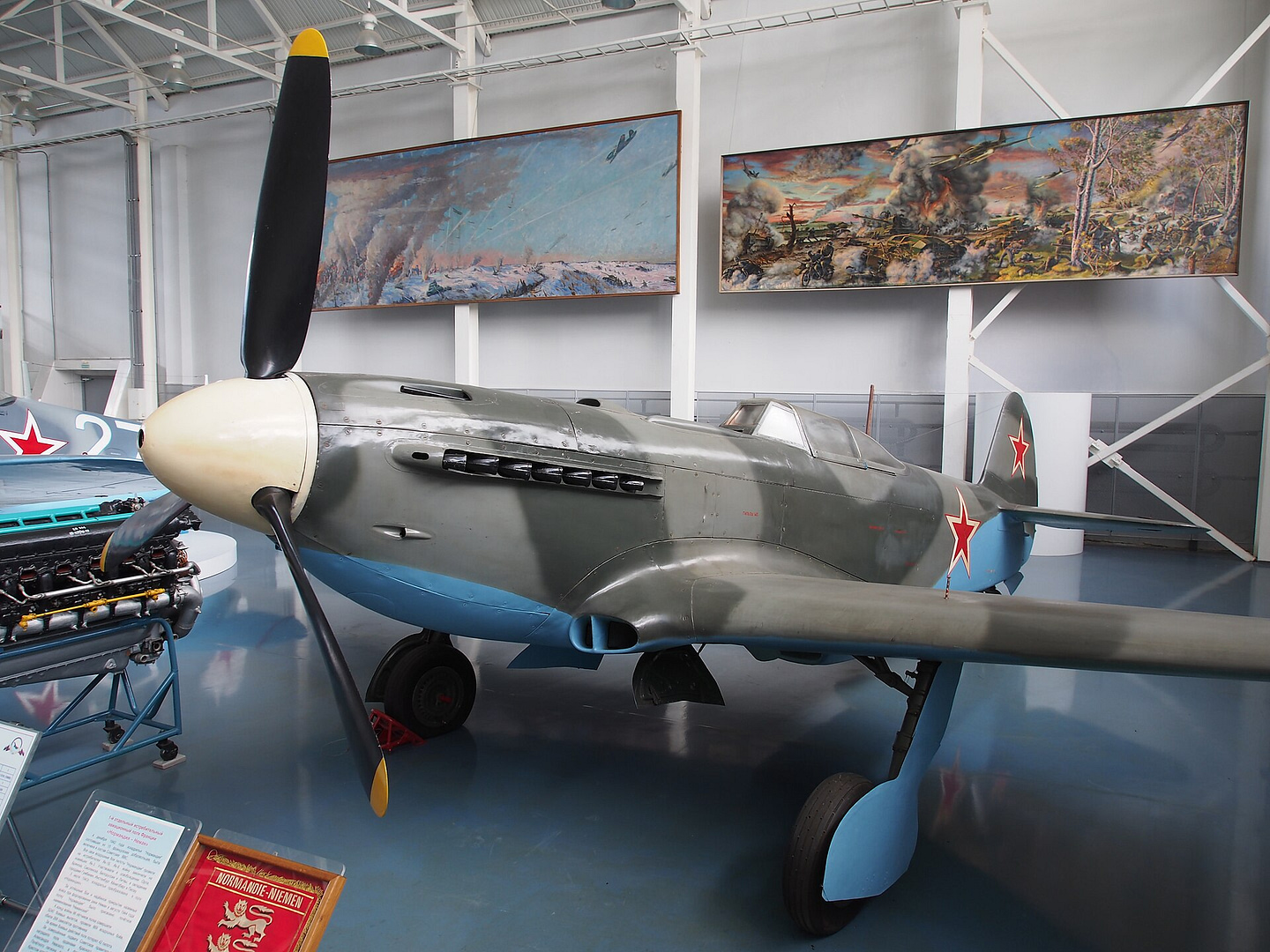
Yak-9
The Red Air Force’s workhorse fighter
The most-produced Soviet fighter of the war — a light, versatile Yakovlev that gave the VVS the numbers and the punch to wrest air superiority from the Luftwaffe.
The Yak-9: the fighter that took back the sky
The Yak-9 was the last and most refined of Alexander Yakovlev’s wartime fighters, a direct descendant of the Yak-1 and Yak-7. Where its predecessors mixed wood and fabric, the Yak-9 adopted metal wing spars — a small change that freed up weight and volume for more fuel, heavier guns and a whole family of specialised versions.
Above all, it was built to be built. With Soviet industry racing to replace catastrophic early-war losses, the Yak-9 was designed for mass production by a semi-skilled workforce. The result was staggering: 16,769 were produced, making it the most numerous Soviet fighter of the Second World War and the numerical backbone of the VVS from 1943 onward.
It was less a single aircraft than a toolkit. Long-range Yak-9D and Yak-9DD variants escorted bombers deep into enemy territory; the Yak-9T carried a 37 mm cannon firing through the propeller hub, and the Yak-9K an enormous 45 mm gun, for smashing tanks, trains and river craft. There were photo-reconnaissance and two-seat trainer versions, and finally the high-performance Yak-9U.
From the Battle of Kursk in the summer of 1943, Yak-9s helped the Red Air Force claw back air superiority from the Messerschmitt Bf 109G and Focke-Wulf Fw 190. In the low- and medium-altitude fighting that defined the Eastern Front, the light, nimble Yak was in its element.
Pilots liked it. It was easy to fly and forgiving — an important quality when replacement pilots reached the front with only a handful of training hours. It never had the firepower or high-altitude reach of Western fighters, but it did not need to: it was tuned precisely for the war the Soviets were fighting.
The Yak-9 outlived the war. It equipped the Free French Normandie-Niémen regiment, served with Soviet satellite air forces, and fought again over Korea in North Korean hands. It was the fighter that carried the VVS from the depths of 1942 to victory — and one of the great production aircraft of the piston era.
01Why the Yak-9 mattered: quantity was a quality all its own
The Yak-9 is often overshadowed by flashier Western fighters, but its contribution was decisive in the most literal sense: there were simply enough of them, in the right place, tuned for the right fight. By concentrating on low- and medium-altitude performance, easy handling and mass production, Yakovlev built an aircraft that ordinary pilots could fight in and Soviet factories could turn out by the tens of thousands.
That combination — good enough, available everywhere, and endlessly adaptable — is what let the VVS overwhelm a technically sophisticated but numerically stretched Luftwaffe. The Yak-9 was the workhorse that made Soviet air superiority a matter of arithmetic.
How Yakovlev built a fighter for total war
Engineered for the factory
The Yak-9 was designed as much for the production line as for the sky. Metal wing spars replaced the wood of earlier Yaks, simplifying construction and freeing weight, while the whole airframe was laid out so that a semi-skilled wartime workforce could turn out fighters by the thousand. Quantity was built into the blueprint.
One hub, many guns
Like all the Yak fighters, the Yak-9 mounted its main weapon as a “motornaya pushka” — a cannon firing straight through the propeller hub. That layout let Yakovlev bolt on ever-bigger guns: the standard 20 mm ShVAK, the 37 mm of the tank-busting Yak-9T, and the massive 45 mm of the Yak-9K, all without redesigning the wing.
Tuned for the Eastern Front
Soviet air combat was fought low, where bombers, tanks and troops were. The Yak-9 was optimised for exactly that arena: light, agile and quick at low and medium altitude, if short-legged and lightly armed by Western standards. It was a scalpel shaped for one very specific war.
02The family tree: a version for every mission
No single Yak-9 tells the whole story. The long-range Yak-9D and ultra-long-range Yak-9DD escorted bombers and even shuttled over the Balkans; the Yak-9T and Yak-9K turned the fighter into an anti-armour and anti-shipping weapon; the Yak-9U, with the more powerful Klimov VK-107 engine and cleaned-up aerodynamics, was among the best Soviet piston fighters of the war. One airframe, stretched across a dozen roles.
Yakovlev Yak-9 — by the numbers
Airframe & performance
- 全体人员
- 1
- 长度
- 8.55 m (28 ft 1 in)
- 翼展
- 9.74 m (31 ft 11 in)
- 空重
- ~2,350 kg (5,180 lb)
- Max takeoff weight
- ~3,080 kg (6,790 lb)
- Max speed
- ~591 km/h (367 mph); up to ~690 km/h (429 mph) in the Yak-9U
- 设备天花板
- ~10,850 m (35,600 ft)
- 范围
- ~875 km (545 mi); up to ~2,285 km in the Yak-9DD
Powerplant, armament & programme
- 引擎
- Klimov VK-105PF V-12, ~1,240 hp (VK-107A, ~1,650 hp, in the Yak-9U)
- 武器
- 1 × 20 mm ShVAK + 1–2 × 12.7 mm UBS MGs; 37 mm (Yak-9T) or 45 mm (Yak-9K) in gun variants
- First flight
- 6 July 1942 (Yak-7DI prototype)
- Built
- 16,769 (1942–1948)
- Operators
- Soviet Union, France, Poland, Yugoslavia, North Korea & others
- Cost per flight hour
- Not recorded — retired from front-line service in the 1950s
- Variants
- Yak-9 / 9T / 9K / 9D / 9DD / 9U / 9P
03Why the numbers vary so much
The Yak-9 spanned six years and many marks, from the wood-and-metal 1942 original to the all-metal, VK-107-powered Yak-9U and the postwar Yak-9P. Speed, weight, range and armament all shifted between versions, so the figures above are representative rather than definitive. Contemporary Soviet performance data also came from tightly controlled test conditions, and are best treated as indicative.
From the brink of 1942 to victory and beyond
From Yak-1 to Yak-9
Yakovlev refines his line of light fighters. The Yak-7DI prototype — effectively the first Yak-9 — makes its first flight on 6 July 1942, as the Soviet Union fights for survival.
Baptism over Stalingrad
The Yak-9 enters service in late 1942 and is thrown straight into the enormous air battles over Stalingrad, quickly proving itself against the Luftwaffe’s best.
Kursk and the turning tide
At the Battle of Kursk and after, sheer numbers of Yak-9s help the Red Air Force wrest air superiority from the Bf 109G and Fw 190.
The specialist Yaks
Long-range (D/DD) and big-gun (T/K) variants appear, turning the fighter into an escort, tank-buster and ship-killer. The Free French Normandie-Niémen regiment re-equips with Yaks.
The Yak-9U and the drive to Berlin
The high-performance Yak-9U, with the VK-107 engine, reaches front-line units. On 22 March 1945 a Yak-9 pilot even claims a Messerschmitt Me 262 jet.
After the war
The Normandie-Niémen pilots fly their Yaks home to France. The all-metal Yak-9P serves Soviet allies, and Yak-9s fight again over Korea before fading into retirement.
Eight chapters in the Yak-9’s war
Taking back the sky
In the huge air battles of 1943, Yak-9s in growing numbers helped the Red Air Force wrest control of the air from the Luftwaffe.
The full story
The French squadron that chose the Yak
A regiment of Free French volunteers fought on the Eastern Front in Soviet Yaks — and grew so attached to them that they flew their fighters home to France.
The full story
A cannon that fired through the propeller
The Yak-9T mounted a 37 mm cannon in the nose, firing straight through the propeller hub — a gun powerful enough to wreck a bomber or an armoured vehicle in a single hit.
The full story
The Yak-9K’s oversized gun
If the 37 mm was heavy, the Yak-9K’s 45 mm cannon was enormous — about the largest gun ever fitted to a single-engine fighter of the era.
The full story
The Yak that escorted bombers deep
Standard Yaks were short-legged, so Yakovlev built long-range Yak-9D and ultra-long-range Yak-9DD versions to escort bombers far behind the front.
The full story
A piston fighter downs an Me 262
In the war’s final weeks, a Yak-9 pilot claimed one of the fastest aircraft in the world — a Messerschmitt Me 262 jet.
The full story
The Yak-9 goes to war again
Five years after 1945, the Yak-9 fought a second war — this time over Korea, in North Korean hands.
The full story
The most-produced Soviet fighter
With 16,769 built, the Yak-9 was the most numerous Soviet fighter of the war — the aircraft that, more than any other, filled the VVS’s ranks.
The full story
The Yak-9 in pictures
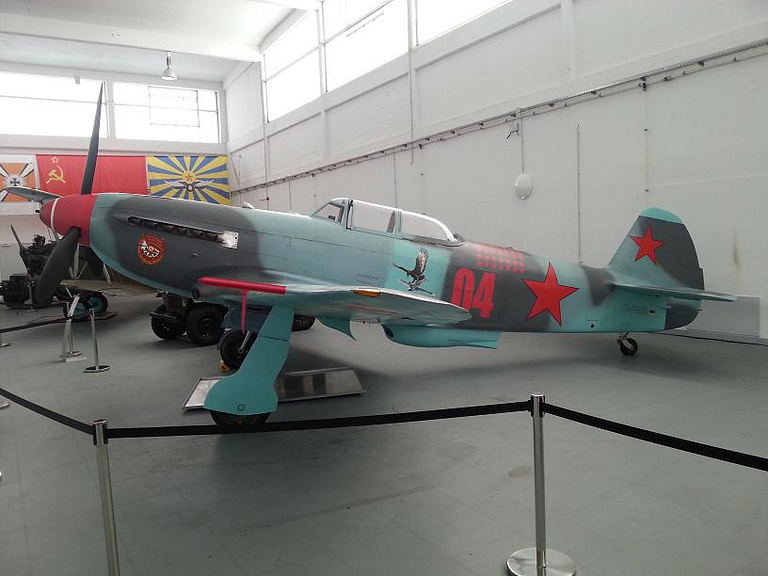
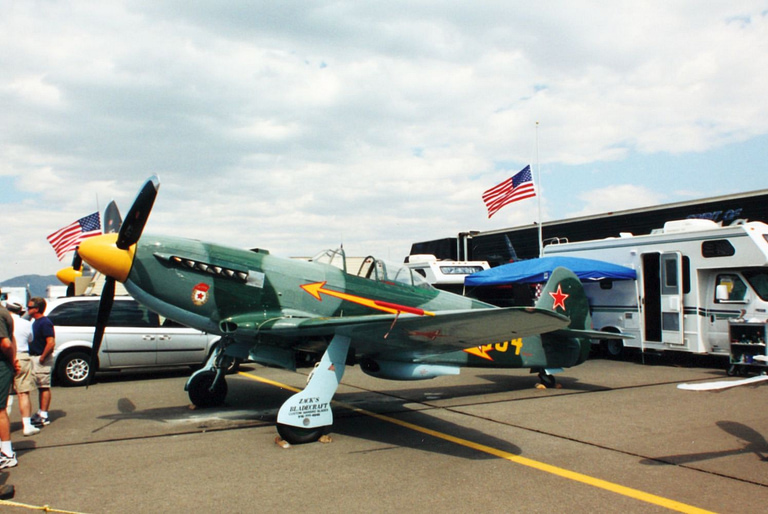
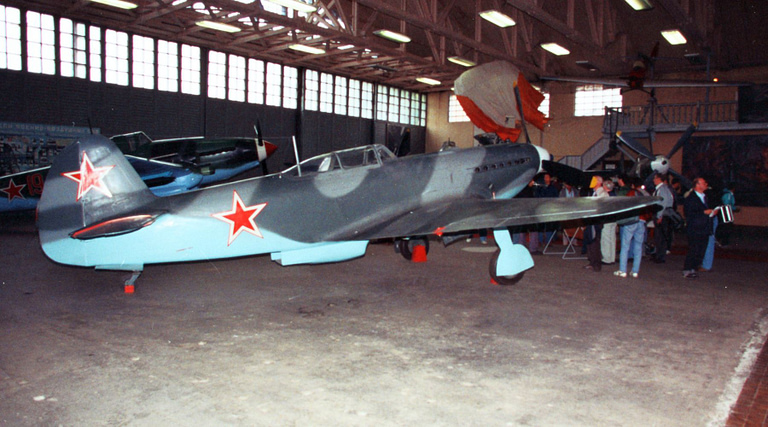
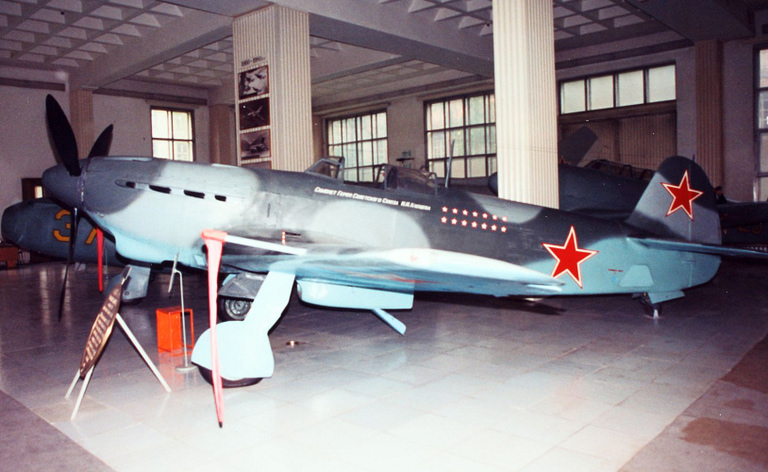
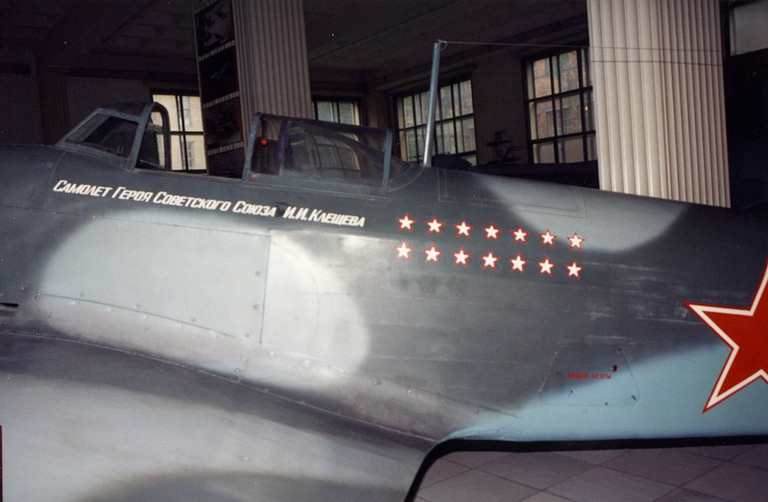
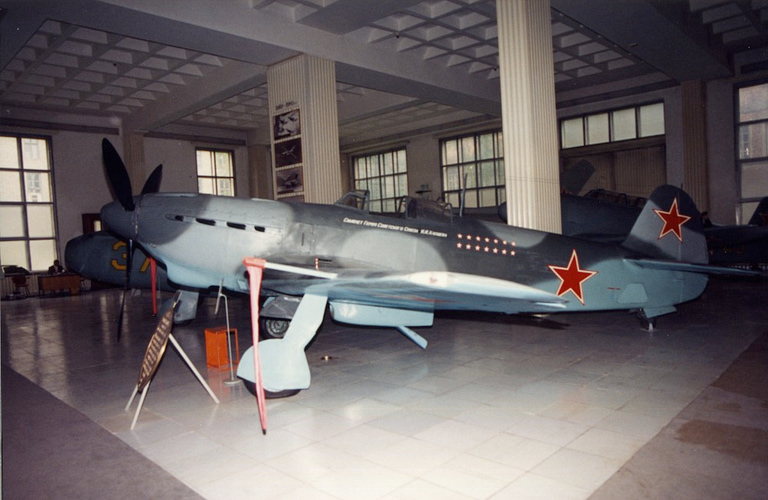
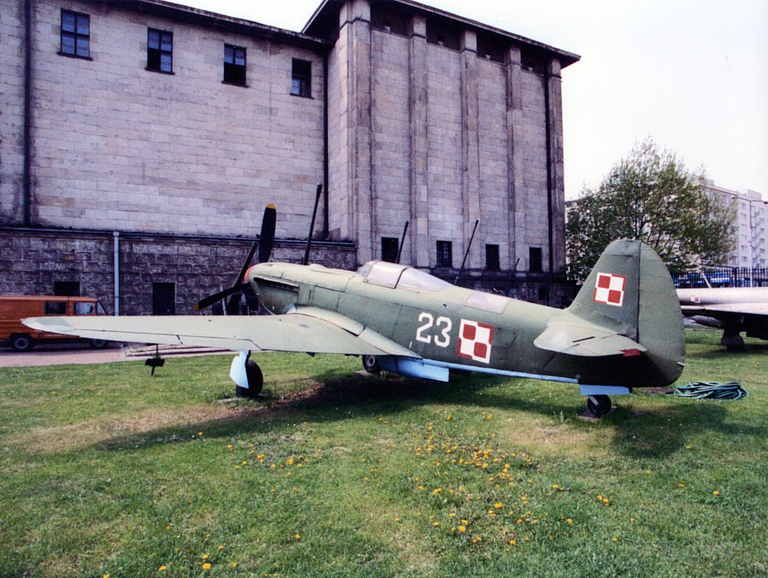
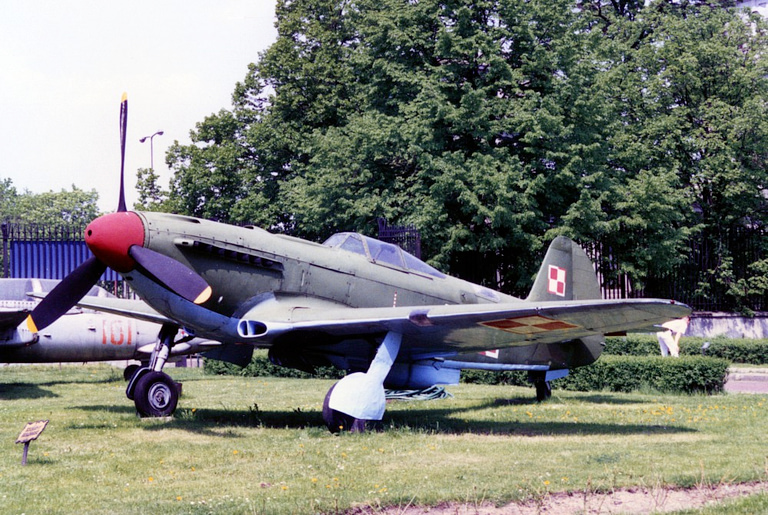
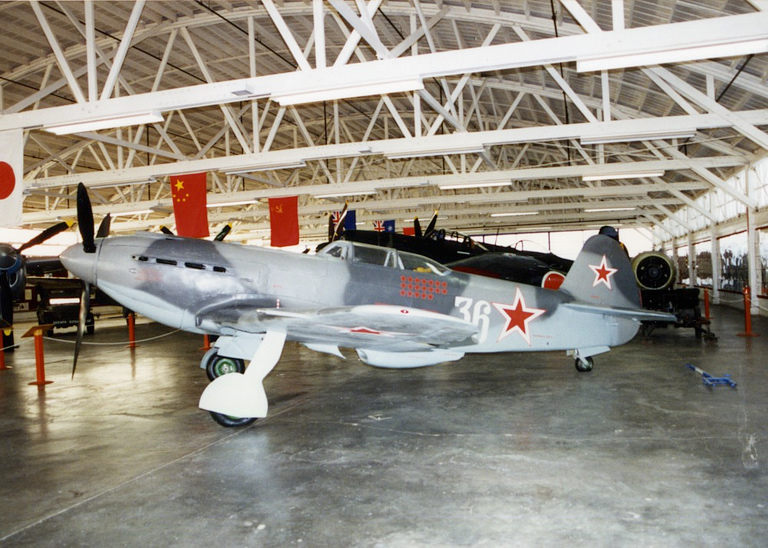
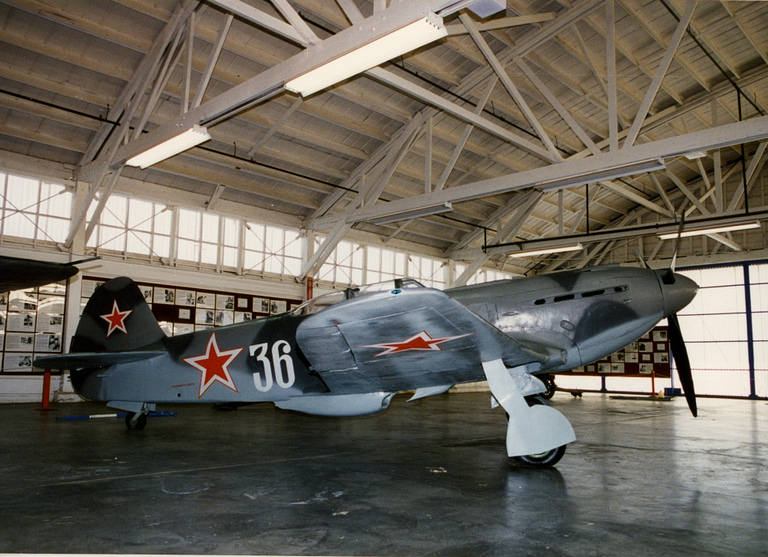
See the Yak-9 up close
The Yak-9 was really a whole family of fighters. This deep-dive looks at one of its most extreme members — the Yak-9T and its huge 37 mm hub cannon — and what happens when you bolt a very big gun onto a very light fighter.
Video: “When a Perfect Gun Turned a Good Fighter Useless — the Yak-9T and NS-37 story” by Paper Skies (~1.3M views). Embedded via YouTube.
Where the Yak-9 fought
The Yak-9, by the numbers
The Yak-9 was the workhorse of Soviet fighter aviation in the second half of the Second World War, flying escort, interception, ground-attack and anti-armour missions from Stalingrad to Berlin. Its story is one of scale: not the highest-scoring individual fighter, but the one that equipped more Soviet regiments than any other and, by sheer numbers, helped decide the air war in the East.
Soviet-era records vary and are sometimes incomplete; the figures above reflect commonly cited production and loss totals and should be read as indicative of the type’s enormous scale rather than as exact accounts.
Yakovlev Yak-9 — questions & answers
Can you fly a Yakovlev Yak-9 today?
Only just. A small number of Yak-9s have been restored to airworthiness — some rebuilt in the 1990s with modern engines — and a few appear at airshows, but there are no public Yak-9 flights. If you want to fly a real fighter yourself, MiGFlug offers cockpit experiences in genuine jet fighters you can actually strap into.
Was the Yak-9 a good fighter?
In its element, yes. At the low and medium altitudes where the Eastern Front air war was fought, the Yak-9 was fast, agile and easy to fly. It lacked the high-altitude performance and heavy firepower of some Western fighters, but it was precisely tuned for the war the Soviets were actually fighting.
What made the Yak-9T special?
The Yak-9T carried a 37 mm cannon firing through the propeller hub — powerful enough to destroy a bomber or an armoured vehicle with a single hit, though its heavy recoil and small ammunition load made it a specialist’s weapon.
How many Yak-9s were built?
16,769 were produced between 1942 and 1948, making the Yak-9 the most-produced Soviet fighter of the Second World War and one of the most-built fighters in history.
Did the Yak-9 fight in the Korean War?
Yes. North Korea operated a force of Yak-9s at the start of the Korean War in 1950, flying early ground-attack missions before jet-age opposition swept the piston fighters from the sky.
You can’t fly a Yak-9 — but you can fly a fighter jet
The Yak-9’s war belongs to history, but the thrill of flying a real fighter doesn’t. With MiGFlug you can strap into a genuine jet — from the L-39 Albatros to a MiG-29 at the edge of space — with an experienced fighter pilot beside you.
 Fly the L-39 AlbatrosThe world’s most-flown jet trainer — aerobatics included
 Fly the F-104 Starfighter“The missile with a man in it”
 Fly the MiG-21The Cold War’s most-produced jet
 驾驶T-33流星战斗机America’s first jet trainer
 Fly the DH VampireA piece of early jet history
 Fly the S.211Agile Italian jet trainer
 Fly the MB-326The classic Aermacchi jet
 Fly the MiG-15The Soviet legend of the Korean War
Related aircraft
Where these facts come from
- The Museum of Flight — Yakovlev Yak-9USurviving airframe & type history
- Vintage Aviation News — Yak-9U profileRestoration & variant detail
- San Diego Air & Space MuseumArchive photography of the type
- Imperial War MuseumsEastern Front operational context
Figures are drawn from museum and reference sources and cross-checked; where sources differ, the most commonly cited value is given. Performance and armament varied considerably across the Yak-9’s many marks.