
Messerschmitt
Bf 109
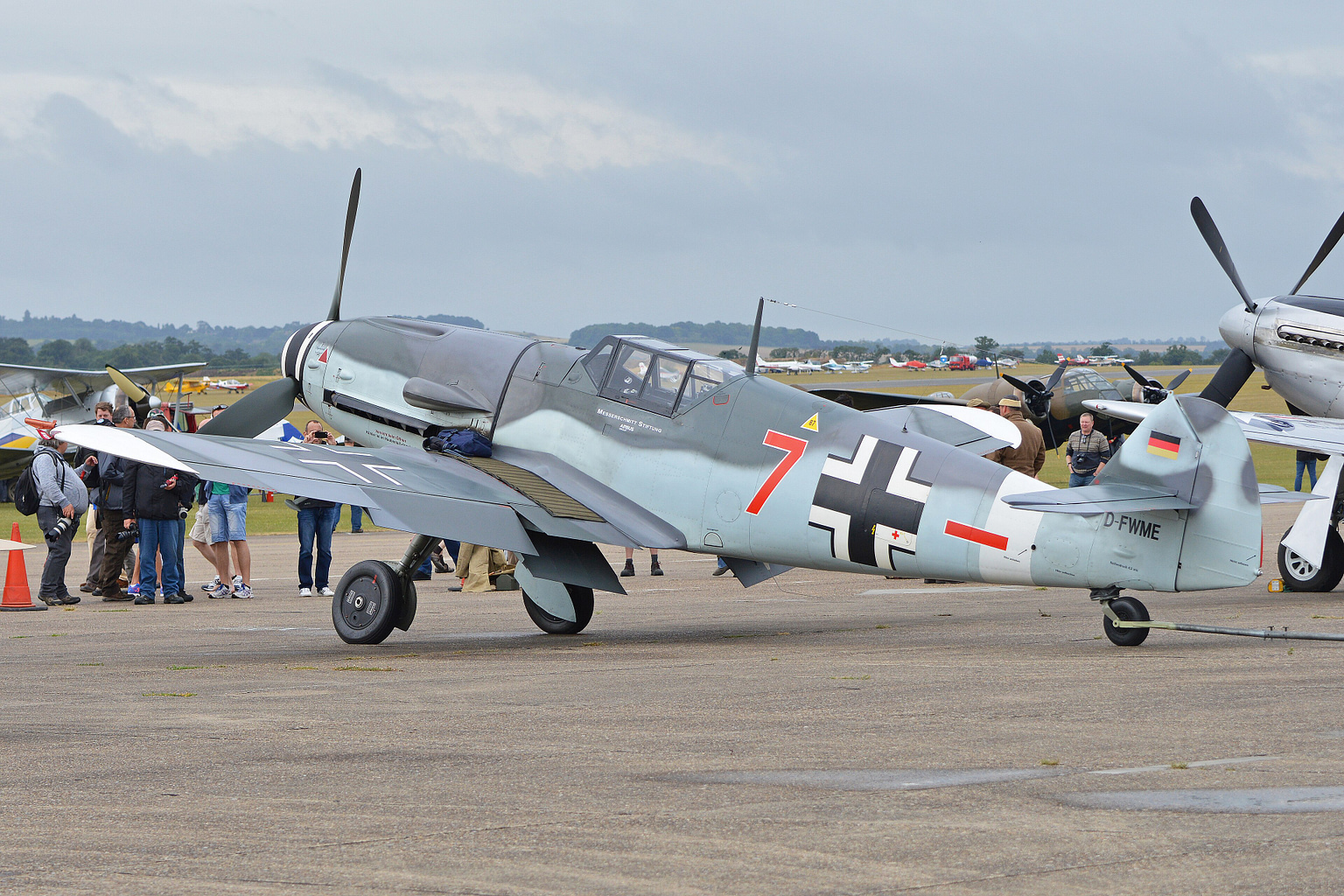
The most-produced fighter aircraft in history — a small, light, fuel-injected monoplane that fought from the Spanish Civil War to 1945, became the great rival of the Spitfire in the Battle of Britain, and lived on after the war as the Spanish Buchón and the Czech-built Avia S-199.
The most-produced fighter ever built
The Messerschmitt Bf 109 was designed by Willy Messerschmitt and Robert Lusser at the Bayerische Flugzeugwerke — the source of the “Bf” prefix — in answer to a 1934 German requirement for a modern single-seat fighter. It was one of the first genuinely modern combat aircraft: an all-metal, low-wing cantilever monoplane with a stressed-skin structure, an enclosed cockpit, retractable gear and automatic leading-edge slats. The design philosophy was simple and radical: wrap the smallest, lightest possible airframe around the most powerful available engine.
The prototype first flew in late 1935 — on an imported Rolls-Royce Kestrel, for want of a ready German engine. The type matured through the E “Emil”, the refined F “Friedrich”, the mass-produced G “Gustav” and the final K “Kurfürst”, its Daimler-Benz inverted-V12 defining it throughout. With roughly 34,000 built across all marks, it is the most-produced fighter aircraft in history.
It stayed in front-line service from the Spanish Civil War through the entire Second World War, a span few contemporaries matched, and in 1940 it was the principal fighter opponent of the Supermarine Spitfire. Its story did not end in 1945: Czechoslovakia built the Avia S-199 and Spain the Hispano HA-1112 “Buchón”, the latter famously re-engined with the very Rolls-Royce Merlin it had once fought.
01The Bf 109’s numbers: how a small 1935 fighter became the most-produced ever
Production totals for the Bf 109 are large enough that sources disagree at the margins — figures cluster around 34,000, with some references citing closer to 35,000. What is undisputed is the ranking: no other fighter aircraft has been built in greater numbers. From 1937 to 1945 the type poured out of German and licensed factories in a continuous stream of marks — B, D, E, F, G and K — and production actually peaked late in the war despite Allied bombing.
That scale shaped the entire air war Germany fought. It also outlived the parent state: post-war licence and derivative production in Czechoslovakia (Avia S-199) and Spain (Hispano HA-1112) kept 109-pattern airframes rolling out and flying into the 1960s, and it is those Spanish Buchóns that make up many of the “109s” still seen flying today.
What makes the Bf 109 special
A small, light airframe with slats
Messerschmitt minimised size and weight, then added automatic leading-edge slats that deployed at low speed to delay the stall and preserve aileron control in tight turns. The result was an exceptional power-to-weight ratio and lively performance from a compact structure — a genuinely advanced approach for 1935 that let a highly loaded wing stay controllable at the edge of flight.
The injected DB inverted-V12
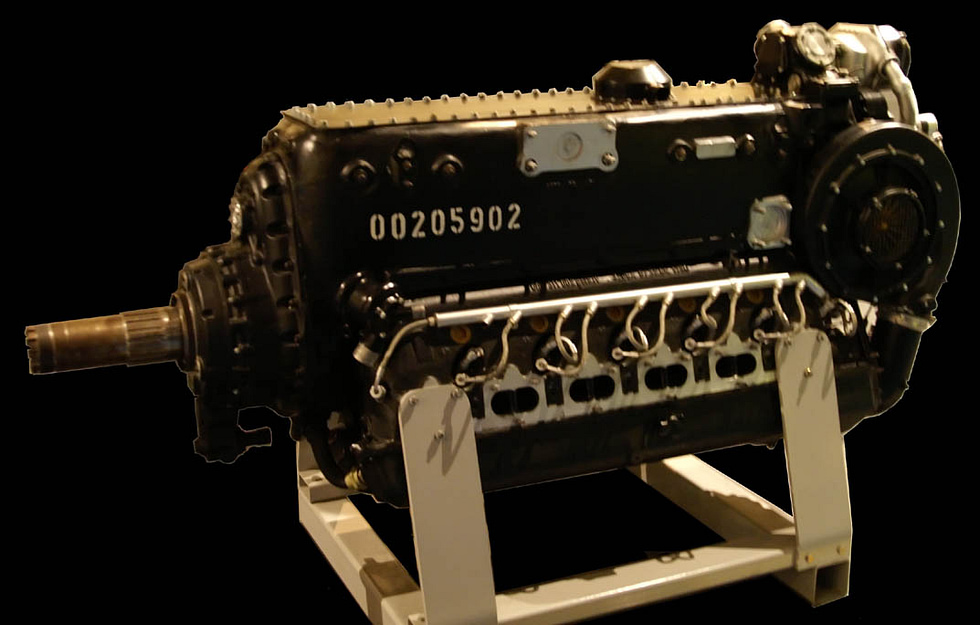
Ten/Ta/To Daimler-Benz DB 601/605 was an inverted-V12: mounting the cylinders below the crankshaft lowered the thrust line and improved forward visibility. Crucially, its direct fuel injection kept the engine running smoothly under negative-g manoeuvres, where early carburettor-fed Merlins would momentarily cut out — a real early-war tactical edge, later mitigated on the Merlin side by “Miss Shilling’s orifice”.
The narrow, splayed undercarriage
To keep the wing simple and light, the main gear attached to the fuselage and splayed outward on a very narrow track. That eased wing manufacture and off-wing servicing, but made the aircraft notoriously twitchy on take-off and landing — a design trade-off that contributed to a high rate of ground and taxiing accidents throughout its long career.
02The Bf 109’s injected engine: the negative-g advantage of 1940
In the Battle of Britain the Bf 109E’s DB 601 had a small but real edge over the Spitfire and Hurricane: pushed into a sudden dive, its direct fuel injection kept feeding the engine, while the carburettor-fed Merlin could briefly starve of fuel under negative g and splutter. RAF pilots learned to half-roll and pull rather than simply bunt into a dive to follow. It was never decisive on its own — but it was exactly the kind of detail that separated closely matched fighters flown by well-trained crews.
03The Bf 109’s short legs: a fighter that ran out of sky over England
The same light-airframe philosophy that made the 109 nimble also gave it limited internal fuel. Over southern England in 1940 that meant only minutes of combat time before Luftwaffe pilots had to turn for home, a constraint that shaped and limited the German bomber-escort campaign. Range was the persistent strategic weakness of an otherwise excellent short-range fighter — a recurring theme for aircraft optimised above all for climb and dash.
Full Bf 109 specifications
Airframe & Performance
- Posádka
- 1
- Délka
- ~8.95 m (sources 8.85–8.95 m)
- Rozpětí křídel
- 9.92 m
- Výška
- ~3.4 m
- Prázdná hmotnost
- ~2,000 kg
- Max weight
- ~3,150 kg
- Max speed
- ~640 km/h (G-6; varies ~620–640)
- Servisní strop
- ~12,000 m
Propulsion & Systems
- Motor
- Daimler-Benz DB 605 inverted-V12
- Power
- ~1,475 hp (~1,085 kW)
- Vyzbrojení
- 1 × 20/30 mm cannon + 2 × 13 mm MG 131
- First flight
- 1935
- Introduced
- 1937 (B variant)
- Built
- ~34,000 (all marks)
- Unit cost
- ~42,000 RM (indicative, poorly documented)
04The Bf 109’s cost and figures: why the numbers carry footnotes
Representative specifications here are for a mid-war G-6, but the type varied widely across two decades of production, so single figures are always approximations. Length is cited between 8.85 and 8.95 m; G-6 top speed between about 620 and 640 km/h depending on engine rating and loadout. The often-repeated unit cost of around 42,000 Reichsmarks is poorly documented and varied by mark and year — treat it as indicative only. Where sources disagree we have used common mid-range values and flagged them, in keeping with a neutral engineering-history treatment.
The Bf 109 through the years
The requirement
The German air ministry issues a specification for a modern single-seat monoplane fighter.
First flight
The prototype Bf 109 V1 flies, powered — for want of a German engine — by an imported Rolls-Royce Kestrel.
Service and combat debut
The B variant enters Luftwaffe service and is combat-tested by the Condor Legion in the Spanish Civil War.
The Emil at war
The DB 601-powered E “Emil” is in wide service at the outbreak of the Second World War.
Battle of Britain
The 109E fights the Spitfire and Hurricane over England — closely matched rivals whose edge shifted with altitude and tactics.
Friedrich and the wider war
The refined F enters service; the type deploys on the Eastern Front and in North Africa.
The Gustav
The DB 605-powered G “Gustav” becomes the most-produced variant of the whole family.
Peak output
The final K “Kurfürst” is fielded and production peaks despite heavy Allied bombing.
Life after the war
Derivatives are built abroad: the Avia S-199 in Czechoslovakia (flown by Israel in 1948) and the Merlin-engined Hispano HA-1112 “Buchón” in Spain, which flew into the 1960s.
Twelve Bf 109 stories
The most-produced fighter ever
About 34,000 airframes — no fighter has been built in greater numbers.
Read the full story
Bf 109 versus Spitfire
The Battle of Britain’s headline matchup.
Read the full story
The injected V12 that did not cough
A small negative-g advantage in 1940.
Read the full story
The gear that bit back
A narrow track and a hard reputation on the ground.
Read the full story
The Spanish Buchón with a British heart
A Messerschmitt powered by a Rolls-Royce Merlin.
Read the full story
Stars of “Battle of Britain” (1969)
Spanish Buchóns played the Luftwaffe on screen.
Read the full story
Israel’s first fighter was a “109”
The Avia S-199, 1948.
Read the full story
The record tallies
The highest individual scores in aviation history.
Read the full story
Slats that saved the stall
Automatic leading-edge devices.
Read the full story
Blooded over Spain
The Condor Legion, 1937.
Read the full story
The short-legs problem
A fighter that ran out of sky.
Read the full story
The warbirds that still fly
A handful airworthy in 2026.
Read the full story
The Bf 109 in pictures
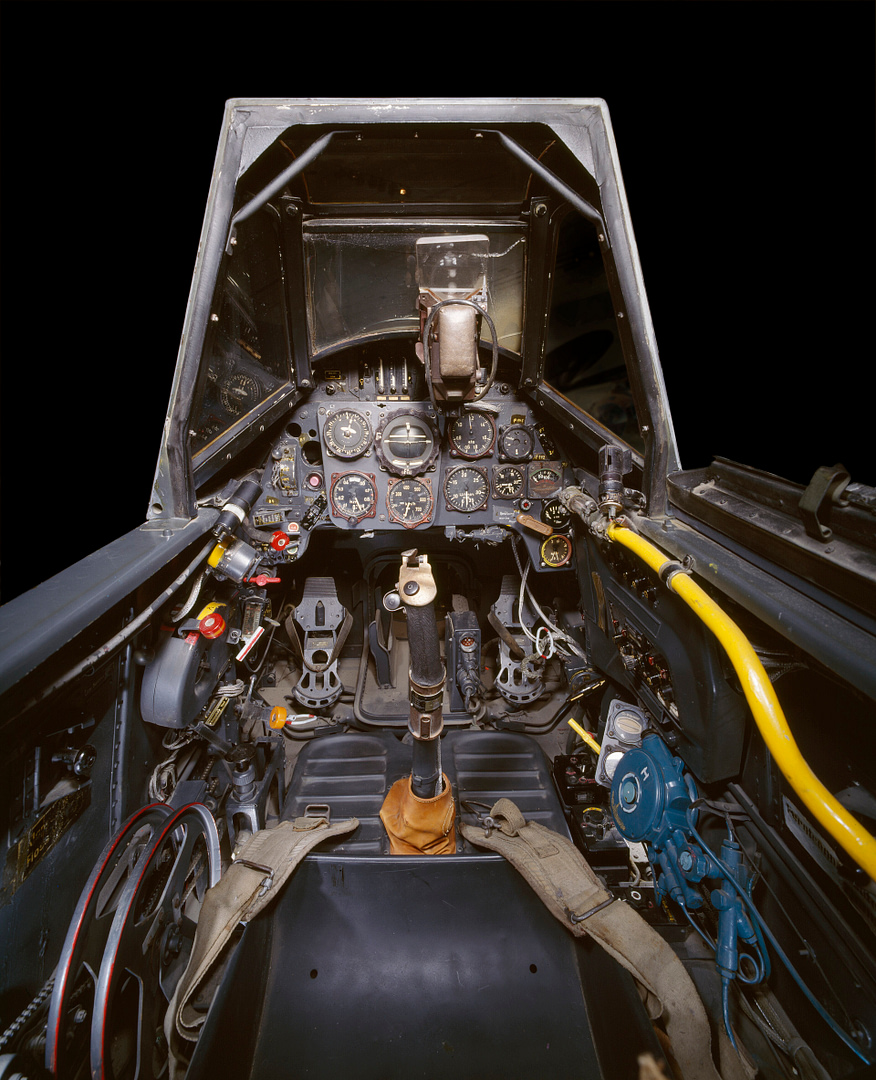
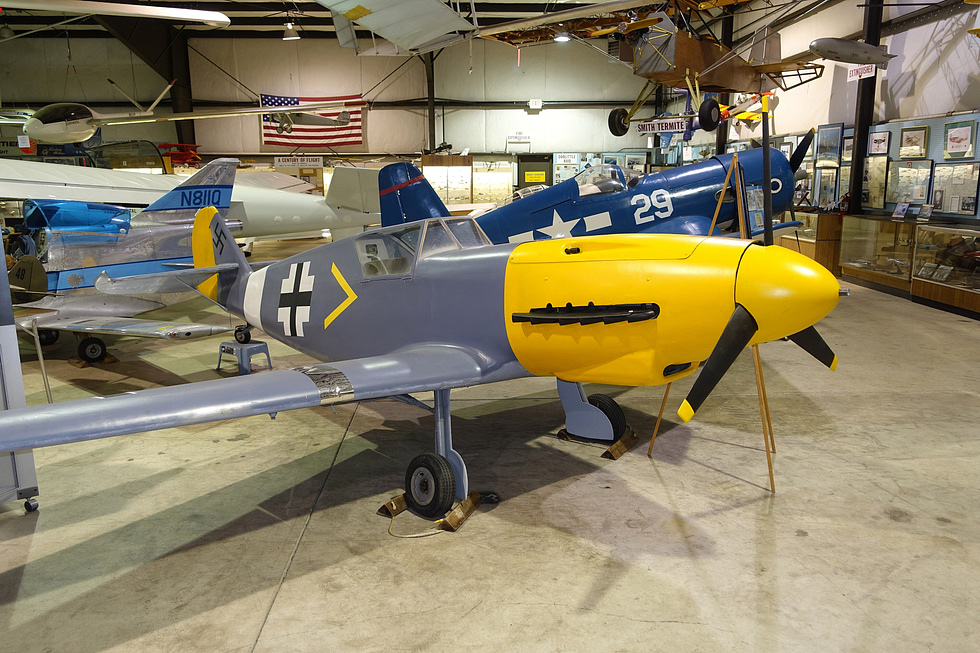
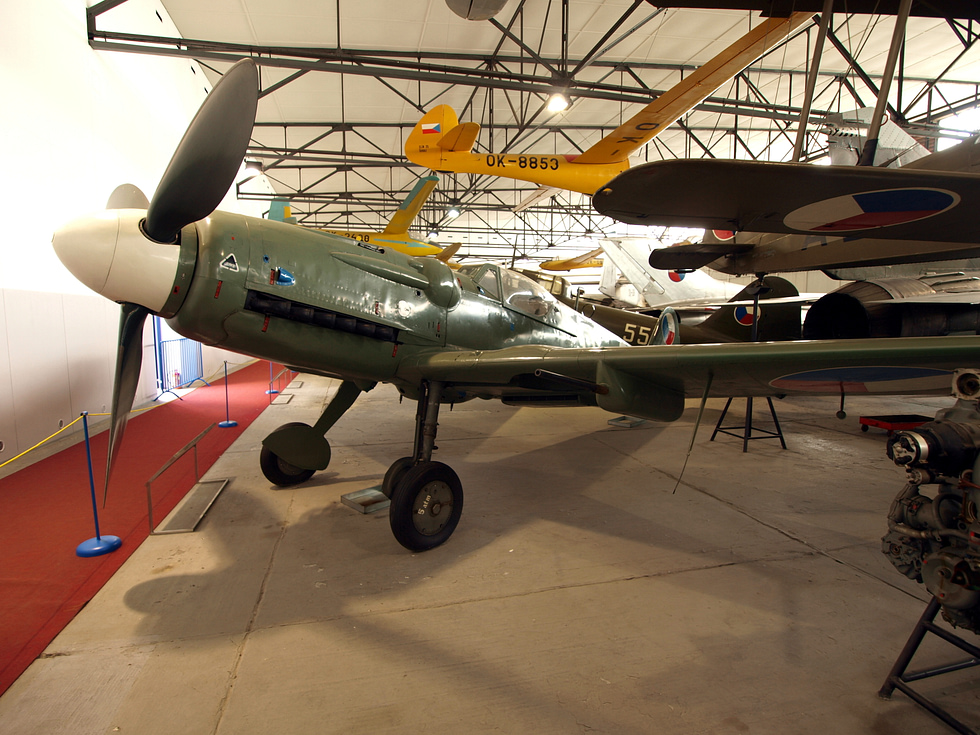
The Bf 109 in motion
A flying-display video of a surviving Bf 109 warbird will be added here.
Where the Bf 109 flew
A fighter in every wartime sky
The Bf 109 fought from the Spanish Civil War in 1937 to the last day of the Second World War, on every front Germany contested — the Battle of Britain, North Africa, the Mediterranean, the Eastern Front and the Defence of the Reich. Its published victory records are among the highest in aviation history, but individual WWII tallies rely on wartime claim records and are best cited as credited claims rather than audited totals.
Compare the combat record of every military aircraft. Figures as of July 2026.
Everything people ask about the Bf 109
Can I fly in a Bf 109?
How fast was the Bf 109?
Is the Bf 109 still flyable today?
How did it compare to the Spitfire?
How many Bf 109s were built?
How does the Buchón relate to the Bf 109?
What was the Avia S-199?
You can’t fly the Bf 109.
These, you can.
Some legends only live in museums — others are fuelled and waiting. MiGFlug has put civilians in real military jet cockpits since 2004.
 Fly the L-39 AlbatrosThe world’s most-flown jet trainer — aerobatics included
 Fly the F-104 Starfighter“The missile with a man in it”
 Fly the MiG-21The Cold War’s most-produced jet
 Leťte s T-33 Shooting StarAmerica’s first jet trainer
 Fly the DH VampireA piece of early jet history
 Fly the S.211Agile Italian jet trainer
 Fly the MB-326The classic Aermacchi jet
 Fly the MiG-15The Soviet legend of the Korean War
Continue the tour
Every fact, checked
- Encyclopaedia Britannica — Bf 109History, design and specifications overview.
- flugzeuginfo.net — Bf 109 technical dataIndependent specification and production cross-check.
- Smithsonian Magazine — the Avia S-199The Czech fighter that helped Israel win its War of Independence.
- Planes of Fame — Hispano HA-1112-M1L BuchónThe Merlin-engined Spanish 109 derivative.
- The Aviationist — the 1969 film’s aircraftHow Spanish Buchóns stood in for the Luftwaffe on screen.
- Smithsonian Magazine — Erich HartmannThe most successful fighter pilot of all time, in context.
- Dinger Aviation — the engines of the Bf 109DB 601/605 and the fuel-injection story.
- National Air and Space Museum — Bf 109 G-6/R3Smithsonian object record.