
General Dynamics F-111
“Aardvark”
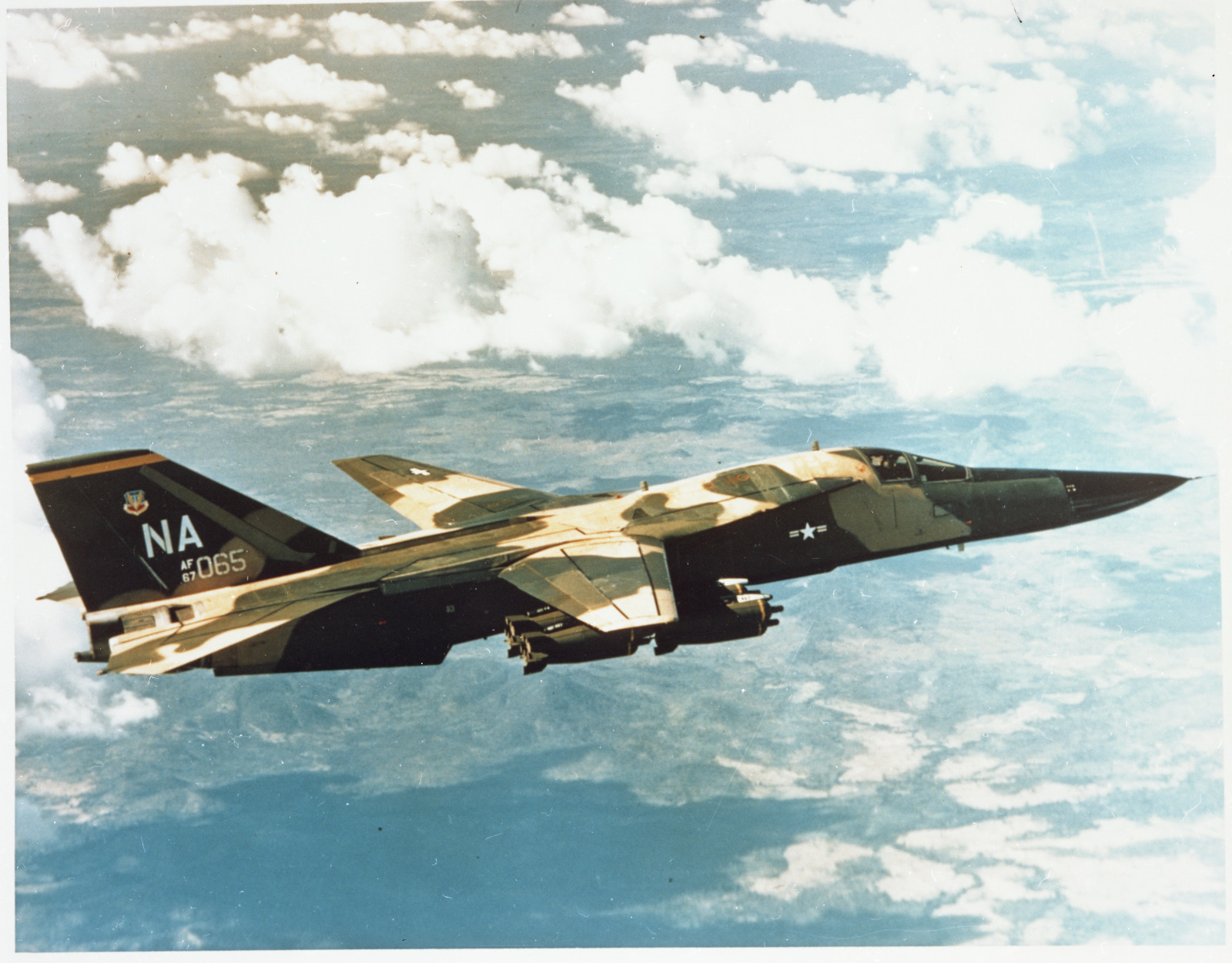
The world’s first production swing-wing aircraft — a troubled political experiment that became one of the most feared low-level strike jets ever flown, hurling itself at the ground at 200 feet in the dark to deliver the bomb load of four Phantoms.
The jet that had to be everything to everyone
The F-111 was born not from an air force requirement but from a political idea. In 1961, US Secretary of Defense Robert McNamara ordered that a single airframe — the Tactical Fighter Experimental, or TFX — satisfy two utterly different needs: the Air Force wanted a fast, long-range, low-level strike aircraft, while the Navy wanted a carrier-based fleet-defence interceptor. Merging them promised savings through commonality. Almost nobody in either service believed it could work.
General Dynamics won the contentious contract in December 1962 and, lacking carrier experience, teamed with Grumman for the naval F-111B. The Navy version was the compromise that broke: too heavy for carrier decks and never able to meet its performance goals, it was cancelled in 1968 after only seven were built. The Navy walked away with the swing wing, TF30 engines, Phoenix missile and AWG-9 radar and turned them into the F-14 Tomcat.
The Air Force’s F-111A survived — barely. Its 1968 combat debut over Vietnam was a disaster, with three jets lost in weeks to a stabiliser fault. Yet the machine underneath the scandal was extraordinary: a variable-sweep wing and terrain-following radar let it scream in under enemy radar at night, in any weather, faster and lower than anything else in the sky. By 1991 it was destroying Iraqi tanks one by one from the dark. The Aardvark went from national embarrassment to the strike aircraft everyone else wanted.
01The TFX scandal: how McNamara forced one F-111 to be two aircraft — and why the Navy version died
McNamara’s insistence on a joint USAF/USN aircraft made the TFX one of the most politically charged procurement fights of the Cold War. The Air Force wanted a heavy, fast interdiction striker; the Navy wanted a loitering fleet-defence interceptor to carry the big AIM-54 Phoenix missile. Forcing both roles into one airframe produced an aircraft that was a reasonable Air Force striker and an unworkable Navy fighter.
The Boeing design was preferred by the evaluation boards, but the General Dynamics bid won on grounds of commonality — a decision that drew a Senate investigation. The naval F-111B, built with Grumman, came out overweight and underpowered for carrier operations; it was cancelled in 1968 after seven airframes. Crucially, the Navy kept the best ideas — the variable-sweep wing, the TF30 engine, the AWG-9 radar and the Phoenix missile — and Grumman recycled them into the F-14 Tomcat. The F-111, in a sense, gave birth to its own replacement in Navy service while going on to a long and effective Air Force career.
What makes the F-111 special
The swing wing and the radar that flew it into the dirt
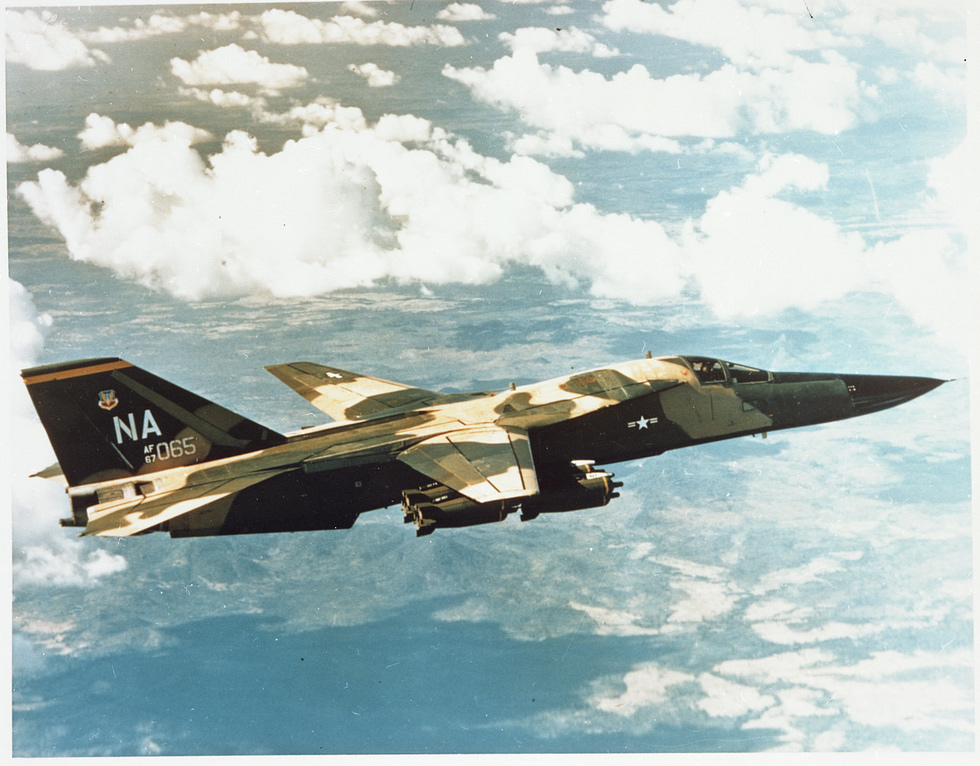
The F-111 was the first production variable-geometry aircraft, its wings sweeping from 16° for slow, efficient loiter to 72.5° for a Mach-2 dash. Paired with it was the real breakthrough: a terrain-following radar coupled to the autopilot that could fly the jet hands-off at just 200 ft above the ground, at night and in cloud, hugging hills and valleys automatically to slip under enemy radar.
Afterburning turbofans and continental range
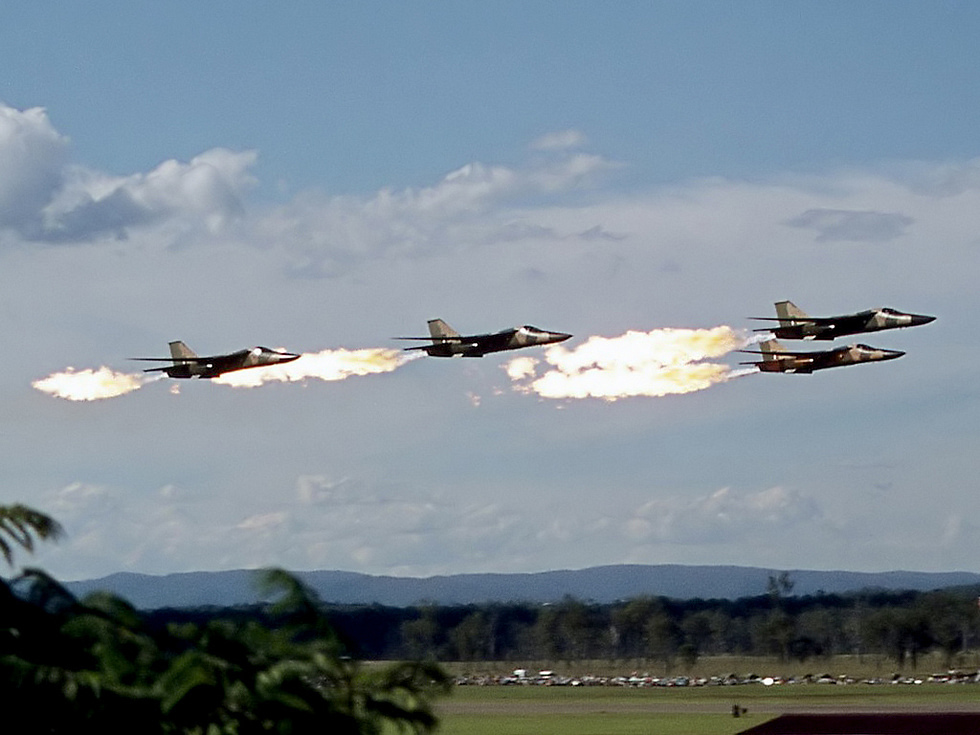
Two Pratt & Whitney TF30 afterburning turbofans — the first afterburning turbofans in service — gave the Aardvark both economical cruise and supersonic dash. Combined with a large internal fuel load, they gave it the range to strike deep without tankers: F-111Fs flew the 1986 Libya raid as a round trip of some 6,400 miles, the longest fighter combat mission in history at the time.
A cockpit that ejected as a capsule — and a huge bomb load
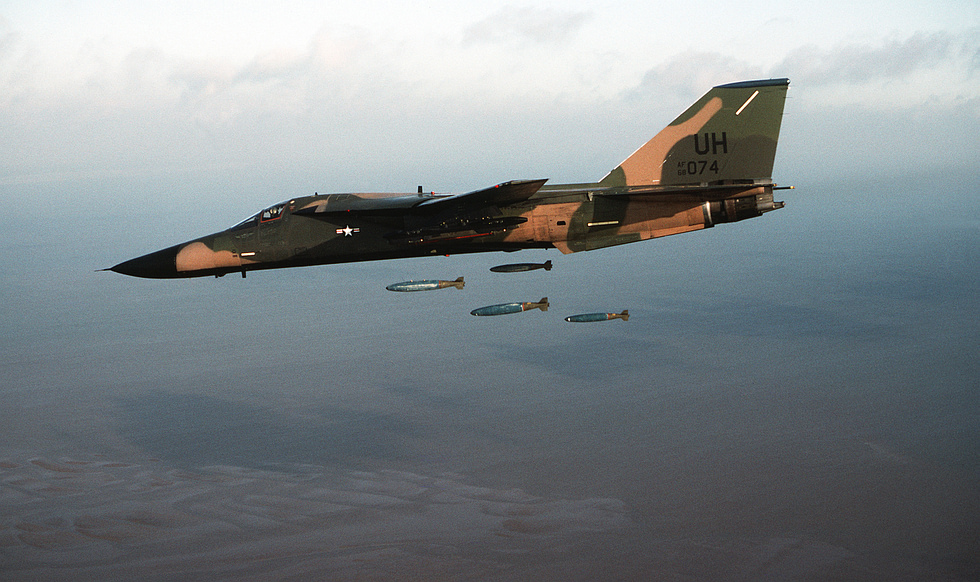
Instead of ejection seats, the two crew sat side by side in a sealed crew escape capsule: in an emergency the entire cockpit blew clear, parachuted down and could even float, doubling as a survival raft. Behind them the F-111 could haul up to around 14,000 kg of ordnance — famously the bomb load of four F-4 Phantoms — on internal bay and swivelling wing pylons.
02The F-111’s terrain-following radar: hands-off flight at 200 feet in the dark
The heart of the F-111 as a weapon was its automatic terrain-following radar (TFR). Two independent radar channels scanned the ground ahead and fed the autopilot, which pitched the aircraft up and over ridges and back down into valleys without the pilot touching the stick — at 200 ft and 480 knots or more, in total darkness or thick weather. It was a genuinely nerve-shredding way to fly: the system was designed to command a climb, not a dive, if it ever failed, so a fault meant the jet zoomed skyward rather than into a hillside. This capability let a single Aardvark penetrate defences that would have shredded a formation of conventional bombers, and it made the type the West’s premier all-weather night striker for two decades.
03The F-111’s crew escape capsule: ejecting the whole cockpit
The F-111 did not use conventional ejection seats. Instead the entire two-seat cockpit section was a self-contained escape capsule. Pulling the handle fired an explosive guillotine that severed the module from the fuselage; a rocket motor blasted it clear, and a large parachute lowered the whole capsule — crew still strapped inside, pressurised and protected — to the ground or water. Airbags cushioned the landing, and the sealed module could float, acting as a life raft at sea. The system worked across the entire flight envelope, from the runway to supersonic speed at altitude, and saved numerous crews over the type’s career, though it was heavy and complex compared with ordinary seats.
Full specifications (F-111F)
Airframe & Performance
- Posádka
- 2 (pilot & weapons officer, side-by-side)
- Délka
- ~22.4 m
- Rozpětí křídel
- 19.2 m spread · 9.75 m swept
- Wing sweep
- 16° to 72.5°
- Výška
- ~5.22 m
- Max takeoff weight
- ~45,000 kg
- Max speed
- ~Mach 2.5 at altitude
- Servisní strop
- ~20,000 m
- Combat range
- ~1,900 km on internal fuel (mission-dependent)
Propulsion & Systems
- Engines
- 2 × Pratt & Whitney TF30-P-100
- Thrust (each)
- ~112 kN with afterburner
- Attack radar
- AN/APQ-161 + terrain-following radar
- Targeting
- AN/AVQ-26 Pave Tack (laser designation)
- Ordnance
- up to ~14,000 kg internal + external
- First flight
- 21 December 1964
- Built
- 563 (all variants, 1964–1976)
- Unit cost
- ~$10 million (1970s, approx.)
- Cost per flight hour
- No firm public figure — famously maintenance-heavy
04The F-111’s running costs: the jet that ate a quarter of the maintenance budget
The F-111 was capable but famously expensive to keep flying. Its complex swing-wing mechanism, terrain-following radar and dense avionics demanded heavy maintenance: one widely repeated figure holds that the type made up around nine percent of Tactical Air Command’s fleet yet consumed roughly 25 percent of its maintenance budget. No single reliable public cost-per-flight-hour figure exists for the type, and unit-cost numbers vary with variant and accounting method — the low-eight-figure dollar range often quoted should be treated as an approximation, not a sourced flyaway price. Those high running costs, more than any lack of capability, helped drive the F-111 out of US service in the 1990s in favour of the cheaper-to-operate F-15E Strike Eagle and B-1B Lancer.
From political scandal to strike legend
TFX launched
Robert McNamara orders a single airframe to meet both USAF strike and USN fleet-defence needs — the origin of the F-111.
General Dynamics wins
General Dynamics beats Boeing for the contract on grounds of commonality, triggering a Senate investigation.
First flight
The F-111A flies for the first time from Carswell AFB, Texas, on 21 December — the first swing-wing production aircraft airborne.
Service and setback
The F-111A enters USAF service in 1967. In 1968 the F-111B naval version is cancelled and the Combat Lancer debut over Vietnam loses three jets.
Australia joins
The Royal Australian Air Force takes delivery of the F-111C — the export variant that would fly longer than any other.
El Dorado Canyon
F-111Fs strike Libya from British bases in a 6,400-mile round trip — then the longest fighter combat mission in history.
Desert Storm
F-111Fs drop most of the war’s laser-guided bombs and destroy over 1,500 Iraqi armoured vehicles in “tank plinking”; an EF-111 downs a Mirage without firing.
Retirement
The USAF retires its F-111s by 1998; the RAAF flies the last Aardvark until 3 December 2010, closing a 46-year story.
From the cockpit: twelve F-111 stories
One jet for two masters
McNamara forced the Air Force and Navy to share a single airframe — against the wishes of both.
Read the full story
The award that reached the Senate
Boeing’s design was preferred on merit; General Dynamics won on commonality, and Congress wanted to know why.
Read the full story
The F-111B that never went to sea
Too heavy for carrier decks, the naval Aardvark was cancelled after seven were built.
Read the full story
Combat Lancer’s disastrous debut
Three of six deployed F-111As were lost in a matter of weeks — and not to the enemy.
Read the full story
“Whispering Death”
On its return to Vietnam the F-111 flew thousands of night strikes almost unheard — and unhit.
Read the full story
The wing that changed shape
Sweeping from 16 to 72.5 degrees, the F-111 could loiter slow or dash at Mach 2 — on the same wing.
Read the full story
The longest combat mission
F-111Fs flew from England to Libya and back — 6,400 miles — when France and Spain refused overflight.
Read the full story
Tank plinking
Using laser-guided bombs and Pave Tack, F-111Fs picked off Iraqi tanks one by one in the dark.
Read the full story
A kill without a shot
An unarmed EF-111A Raven downed an Iraqi Mirage F1 — by making it fly into the ground.
Read the full story
The Raven and the bomber
Beyond the striker, the F-111 spawned a radar-jamming Raven and a nuclear FB-111 bomber.
Read the full story
The Aardvark down under
The RAAF flew the F-111 for 37 years and gave the world the unforgettable “dump and burn.”
Read the full story
The template for a generation
From the Tomcat to the Tornado, the F-111’s ideas flew on long after it retired.
Read the full story
The Aardvark in pictures
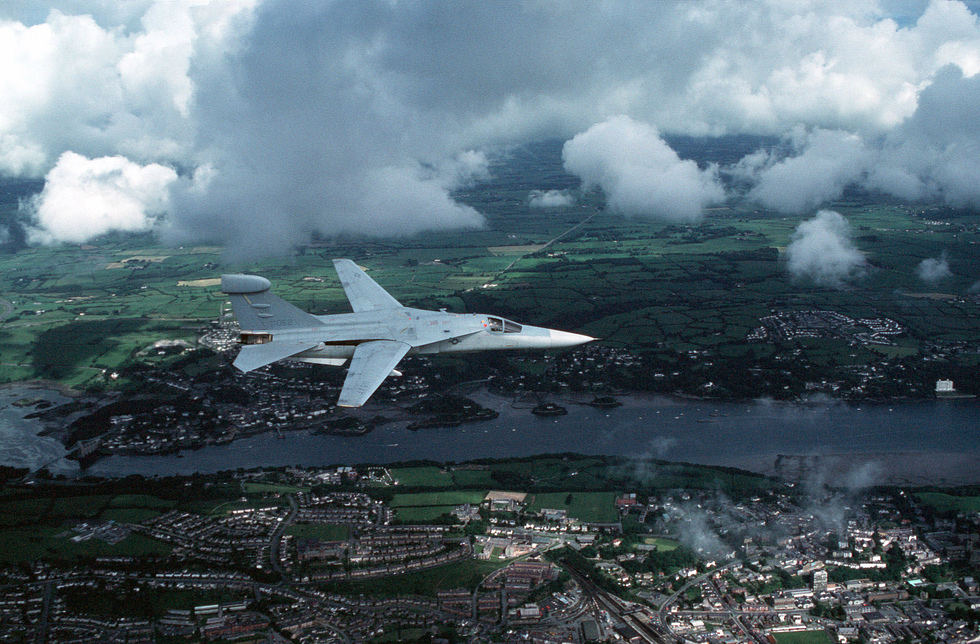
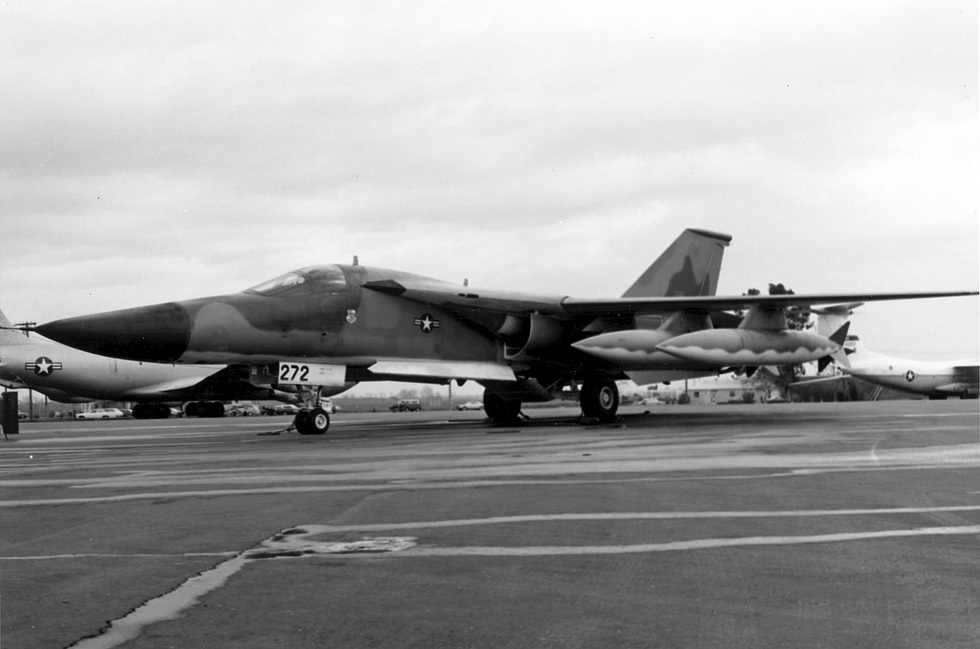
The F-111 Aardvark in motion
A dedicated F-111 Aardvark video feature is coming soon. In the meantime, explore the story, specifications and photo gallery above — and see where the Aardvark served on the operations map below.
Where the F-111 flew
The score that defines it
The F-111 was a striker, not a dogfighter — its record is written in precision bombs delivered at night, not air-to-air kills. After a catastrophic start over Vietnam it became the most effective strike aircraft of the 1991 Gulf War, and even scored a bizarre air-to-air victory without firing a shot.
Compare the combat record of every military aircraft. Figures as of July 2026 and, for contested combat claims, should be read as best estimates.
Everything people ask about the F-111 Aardvark
Can I fly in an F-111?
Why is the F-111 called the “Aardvark”?
What made the F-111 special?
Did the F-111 have ejection seats?
Why was the Navy F-111B cancelled?
Did an F-111 ever shoot down an aircraft?
How good was the F-111 in the Gulf War?
When did the F-111 retire?
You can’t fly the F-111.
These, you can.
Some legends only live in museums — others are fuelled and waiting. MiGFlug has put civilians in real military jet cockpits since 2004.
 Fly the L-39 AlbatrosThe world’s most-flown jet trainer — aerobatics included
 Fly the F-104 Starfighter“The missile with a man in it”
 Fly the MiG-21The Cold War’s most-produced jet
 Leťte s T-33 Shooting StarAmerica’s first jet trainer
 Fly the DH VampireA piece of early jet history
 Fly the S.211Agile Italian jet trainer
 Fly the MB-326The classic Aermacchi jet
 Fly the MiG-15The Soviet legend of the Korean War
Continue the tour
Every fact, checked
- National Museum of the US Air Force — F-111F fact sheetOfficial specifications, service history and Gulf War record.
- Smithsonian National Air and Space MuseumTFX programme background and the F-111B naval cancellation.
- Air & Space / Smithsonian MagazineDetailed history of the failed Navy F-111B and its legacy in the F-14.
- RAAF MuseumAustralian F-111C service, the “Pig,” the dump-and-burn and 2010 retirement.
- The Aviation Geek ClubThe EF-111A Raven’s unarmed Mirage kill and El Dorado Canyon accounts.
- We Are The MightyThe 1991 EF-111 air-to-air victory scored without firing a shot.
- Air & Space Forces MagazineDesert Storm “tank plinking” and F-111F precision-strike effectiveness.
- The National InterestTFX controversy, terrain-following radar and the Aardvark’s redemption.