
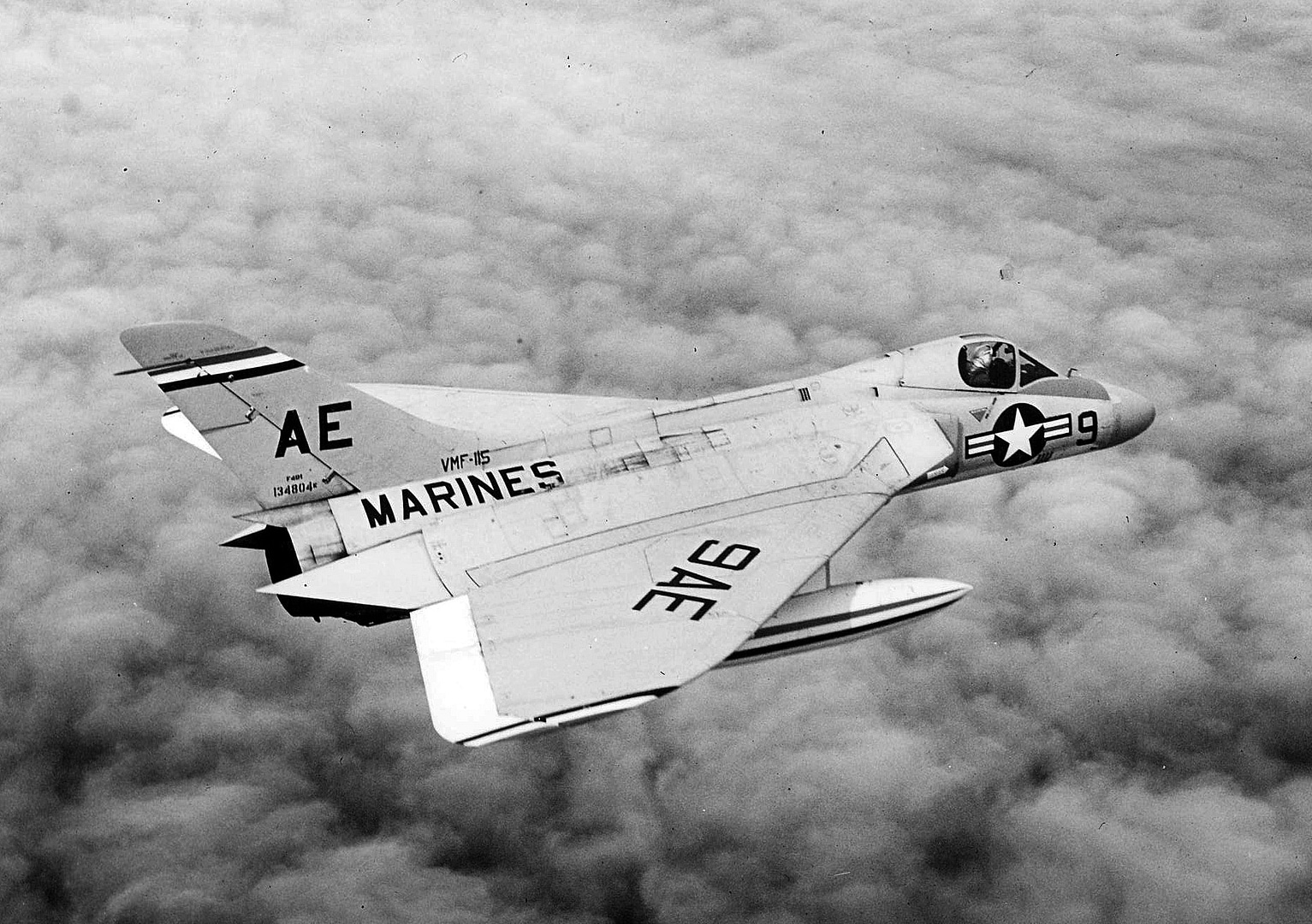
Douglas F4D Skyray
“Ford”
The US Navy’s bat-winged delta interceptor — a rapid-climbing carrier fighter shaped by captured German delta research, and the only Navy fighter ever to hold the world absolute speed record.
The Navy’s bat-winged bomber-killer
In 1947 the US Navy went looking for something it had never had: a carrier fighter that could scramble off the deck and climb to a high-altitude bomber faster than anything afloat. The job fell to Douglas Aircraft’s El Segundo shop and its chief engineer, the legendary Ed Heinemann. To reach the climb rates the Navy wanted, Heinemann’s team reached back to wartime German aerodynamics — the delta-wing research of Dr. Alexander Lippisch, designer of the rocket-powered Me 163 Komet. Douglas engineers mined captured wind-tunnel data and consulted Lippisch directly.
The result, first flown on 23 January 1951, looked like nothing else on a flight deck: a rounded, low-aspect-ratio delta — a “bat-wing” or “manta-ray” planform with no horizontal tail, controlled in pitch and roll by elevons, exactly like the Komet. The enormous wing gave it low wing loading, high-altitude reach and a savage rate of climb. On 3 October 1953 a prototype flown by Lt Cdr James Verdin snatched the world absolute speed record at 752.944 mph — the only US Navy fighter ever to hold it.
Entering fleet service in 1956, the Skyray earned the nickname “Ford” — simply how “F4D” sounds spoken fast — and a reputation as a spectacular climber that could be a handful to land. It set five time-to-climb records in 1958 and served the Navy and Marines as a dedicated interceptor, including with the only Navy squadron ever placed under NORAD. Yet its front-line career lasted barely eight years: faster, longer-legged jets like the F-8 Crusader overtook it, and the Ford was retired in 1964.
01The Douglas F4D Skyray’s origins: how captured German delta research shaped a Navy fighter
The Skyray traces its shape to a 1947 US Navy study into delta-wing interceptors able to climb fast enough to catch high-altitude bombers. Heinemann’s Douglas team drew on the delta research of Alexander Lippisch, whose tailless designs had produced the wartime Me 163 Komet. Working from captured German wind-tunnel data — and, by several accounts, consulting Lippisch himself — they arrived at a rounded modified delta with roughly 52.5° of leading-edge sweep, rounded tips and no horizontal stabilizer.
It is worth hedging the neat “Lippisch designed it” story often told: Lippisch inspired and informed the wing, but the Skyray was very much a Douglas aircraft, refined through the company’s own testing. The final planform was a practical compromise for carrier operations rather than a straight copy of any German design.
What makes it special
A modified delta straight out of Lippisch’s notebook
The Skyray’s defining feature is its rounded, low-aspect-ratio “bat-wing” delta — about 52.5° of sweep, rounded tips, no horizontal tail, with pitch and roll handled by elevons like the Me 163 Komet. The huge ~557 sq ft wing gave very low wing loading, so the aircraft could turn and climb hard and reach high altitude. It is one of the very few operational US carrier aircraft to trace its aerodynamics so directly to wartime German delta research.
The J57 and the “ten-minute killer” climb
The Skyray was designed around the Westinghouse J40, which failed — so production aircraft used the excellent Pratt & Whitney J57-P-8 afterburning turbojet (~10,200 lb dry, ~16,000 lb in reheat). Bolted to the light, big-winged airframe, it produced an initial climb reportedly near 18,300 ft/min. Squadron lore held that from detection an enemy bomber had about ten minutes to live — the Ford’s whole reason for being.
An airframe that outlived its engine
Few fighters had a rockier propulsion history. The XF4D-1 first flew on an interim Allison J35, set its 1953 speed record on the afterburning Westinghouse J40-WE-8, and only reached the fleet on the P&W J57 after the troubled J40 programme collapsed. The Skyray is a textbook case of a well-designed airframe surviving the failure of the engine it was built around.
02The F4D Skyray’s engine saga: the Westinghouse J40 that never delivered
Like several early-1950s Navy jets, the Skyray was designed around the Westinghouse J40, a turbojet the Navy expected to power a whole generation of aircraft. It proved chronically underpowered and unreliable, and the programme became one of the great engine fiascos of the era, dragging down or delaying multiple projects. The Skyray was among the few to survive it, by re-engining with Pratt & Whitney’s J57. Ironically, the prototype still set the 1953 world speed record on a J40-WE-8 — a rare bright moment for the doomed engine.
03The F4D Skyray’s handling: a record-setter that demanded respect on the ball
The same big delta wing that made the Ford climb like a rocket made it tricky at low speed. Pilots described marked Dutch-roll tendencies — a wallowing, half-roll, half-sideslip behaviour — that made instrument approaches and carrier landings demanding. It was agile and immensely powerful, but not forgiving; the Skyray rewarded skill and punished inattention, especially at night and in weather, which is exactly where an all-weather interceptor had to work.
Full specifications
Figures are for the production F4D-1 (redesignated F-6A in 1962). Sources differ slightly on a few values — these are the most commonly cited; contested figures are flagged.
Airframe & Performance
- Posádka
- 1
- Délka
- ~13.8 m (45 ft 3 in)
- Rozpětí křídel
- ~10.2 m (33 ft 6 in)
- Výška
- ~3.96 m (13 ft)
- Plocha křídla
- ~51.8 m² (557 sq ft)
- Prázdná hmotnost
- ~7,270 kg (16,024 lb)
- Max takeoff weight
- ~12,300 kg (27,116 lb)
- Max speed
- ~Mach 1.05 · ~722 mph (1,162 km/h)
- Initial climb rate
- ~18,300 ft/min (~93 m/s)
- Servisní strop
- ~55,000 ft (some sources ~48,000 ft)
Propulsion, Armament & Cost
- Motor
- 1 × Pratt & Whitney J57-P-8 turbojet
- Tah
- ~16,000 lb (~71 kN) with afterburner
- Vyzbrojení
- 4 × 20 mm cannon + rockets / AIM-9 Sidewinders
- Rozsah
- ~700 mi normal · ~1,200 mi max
- First flight
- 23 January 1951
- Number built
- ~420 (sources give 419–421)
- Unit cost
- Not reliably documented
- Cost per flight hour
- No reliable public figure
04The F4D Skyray’s operating costs: why no reliable figure exists
The Skyray was a 1950s US Navy programme retired in 1964, long before the era of published life-cycle cost data, and no consistent period flyaway unit price appears in the open record. Any precise dollar figure attached to the type today should be treated as an estimate rather than a sourced number. There is likewise no reliable cost-per-flight-hour figure for the F4D in open sources — unsurprising for an aircraft that left service more than sixty years ago.
From German deltas to the boneyard
Requirement issued
The US Navy studies a delta-wing, rapid-climb interceptor; Douglas and Ed Heinemann begin work, drawing on Lippisch’s delta research.
First flight
The XF4D-1 prototype flies on 23 January, initially on an interim Allison J35 turbojet.
World speed record
Lt Cdr James Verdin sets the world absolute speed record at 752.944 mph over the Salton Sea — on the ill-fated J40 engine.
Collier Trophy
The Skyray programme shares in the Collier Trophy, aviation’s premier award, for the year’s achievement.
Enters service
The F4D-1 joins the fleet with the production Pratt & Whitney J57 engine, first with squadron VC-3.
Five climb records
Marine Major Edward LeFaivre sets five FAI time-to-climb records at Point Mugu, reaching ~49,000 ft in 2 min 36 sec.
Redesignated F-6A
Under the new tri-service system the F4D-1 becomes the F-6A Skyray; the NORAD squadron VFAW-3 stands down by 1963.
Retirement
Overtaken by faster, longer-ranged jets, the Ford is retired from front-line service and flown to the desert boneyard.
Twelve Skyray stories
A rocket plane’s DNA in a Navy jet
The Skyray’s delta wing traces back to Alexander Lippisch and the Me 163 Komet.
Read the full story
The only Navy fighter to be fastest on Earth
On 3 October 1953 the Skyray held the world absolute speed record — the only US Navy fighter ever to do so.
Read the full story
Five records in one climb
In 1958 a Marine major set five time-to-climb records in a single programme.
Read the full story
Why they called it the Ford
“F4D” spoken fast becomes “Ford” — and the name stuck.
Read the full story
The Navy squadron that answered to the Air Force
VFAW-3 was the only US Navy squadron ever placed under NORAD.
Read the full story
The worst Dutch roller in the fleet
A record-setting climber that could be a real handful to land.
Read the full story
The engine that never showed up
The Skyray was built around the Westinghouse J40 — which failed.
Read the full story
The ten-minute killer
The Ford’s whole purpose was to reach a bomber before it could strike.
Read the full story
“I could just pop off the MiGs”
A famous Marine aviator’s verdict on the Skyray’s performance.
Read the full story
The interceptor that never fought
The Skyray stood alert through the tensest years of the Cold War but never fired in anger.
Read the full story
The Skylancer that flew for the Moon
A cancelled Skyray derivative became one of Neil Armstrong’s test aircraft.
Read the full story
From the boneyard to the museum floor
A brief but record-studded career, preserved in a handful of museums.
Read the full story
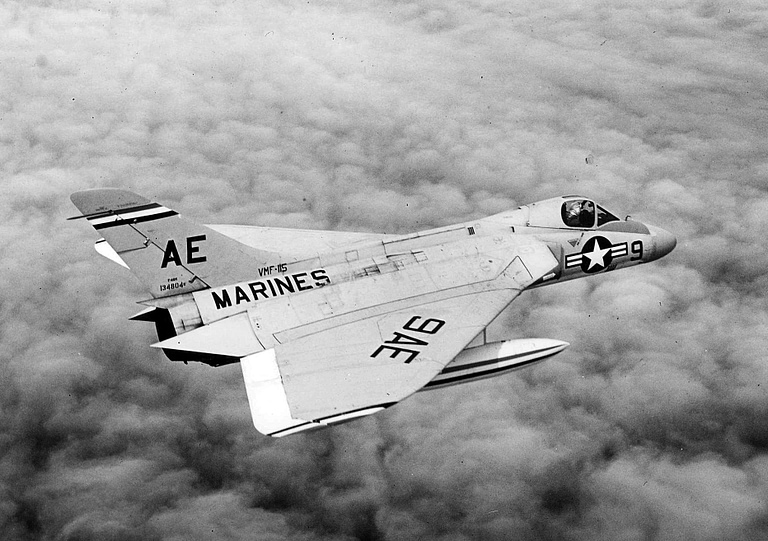
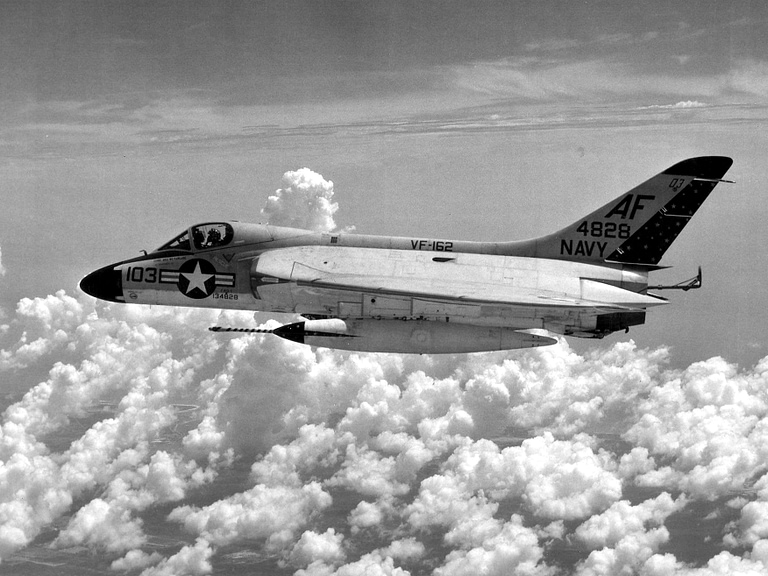
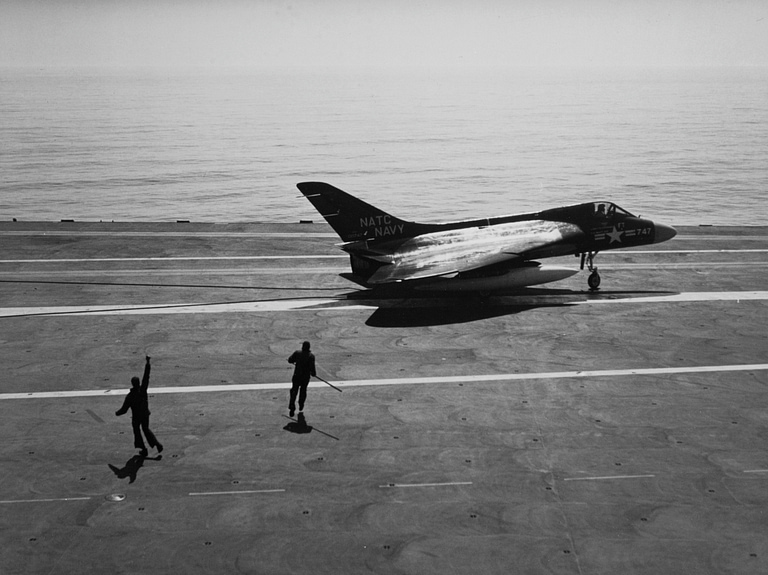
The Skyray in pictures
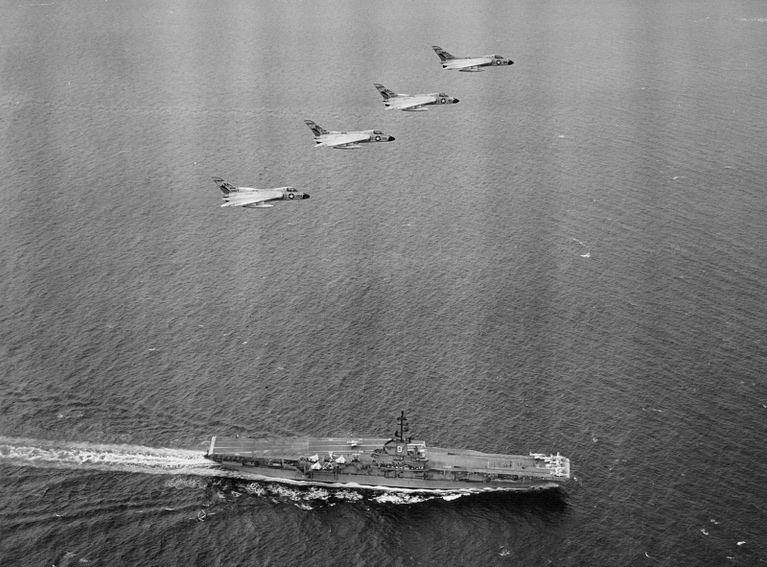
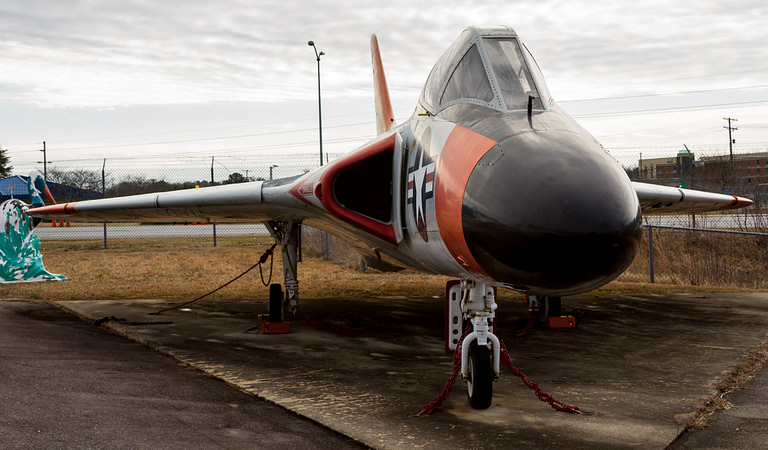
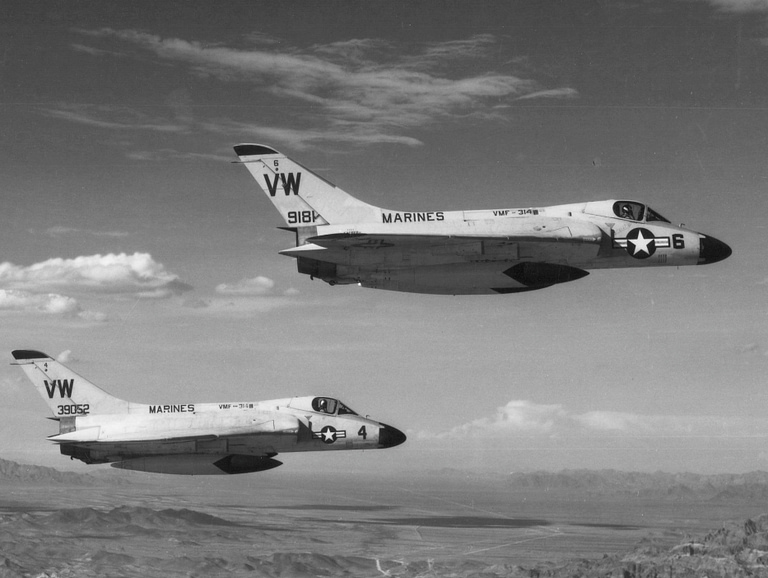
The Skyray in motion
A curated video feature for the Douglas F4D Skyray is coming soon. In the meantime, explore the photo gallery above and the operator map below.
Where the Skyray flew
Where the record stands
The Skyray has no confirmed air-to-air combat record. It was built to intercept high-altitude bombers, and it stood alert through some of the tensest years of the Cold War — including VFAW-3’s deployment to Key West during the 1962 Cuban Missile Crisis — but the bombers it was meant to kill never came. Its legacy is written in world records and rapid climbs, not in kills.
Compare the combat record of every military aircraft. Figures as of July 2026.
Everything people ask about the F4D Skyray
Can I fly in an F4D Skyray?
Why was it nicknamed the “Ford”?
What records did the Skyray set?
Did the F4D Skyray ever see combat?
Was it a true delta wing?
What happened to the F5D Skylancer?
Where can I see a Skyray today?
You can’t fly the Skyray.
These, you can.
Some legends only live in museums — others are fuelled and waiting. MiGFlug has put civilians in real military jet cockpits since 2004.
 Fly the L-39 AlbatrosThe world’s most-flown jet trainer — aerobatics included
 Fly the F-104 Starfighter“The missile with a man in it”
 Fly the MiG-21The Cold War’s most-produced jet
 Leťte s T-33 Shooting StarAmerica’s first jet trainer
 Fly the DH VampireA piece of early jet history
 Fly the S.211Agile Italian jet trainer
 Fly the MB-326The classic Aermacchi jet
 Fly the MiG-15The Soviet legend of the Korean War
Continue the tour
Every fact, checked
- National Naval Aviation Museum — F4D-1 SkyrayOfficial Navy museum page: designer, dates, records, VFAW-3/NORAD and the nickname.
- This Day in Aviation — 3 October 1953Sourced account of Verdin’s speed record with exact speeds, FAI file and aircraft.
- This Day in Aviation — F4D climb recordsFAI file numbers and times for Major LeFaivre’s 1958 time-to-climb records.
- Smithsonian Air & Space — “Beautiful Climber”Feature on the Lippisch influence, handling reputation, pilots and the Collier Trophy.
- Smithsonian NASM — Westinghouse J40-WE-8Authoritative on the J40 powering the record flight and the J57 production switch.
- Joe Baugher — Douglas F4D-1 (F-6A) SkyrayDetailed reference for specifications, weights, engine variants and service dates.
- Pima Air & Space Museum — Douglas F4D-1Museum specification sheet and production and service summary.
- Vintage Aviation News — F5D-1 SkylancerThe Skylancer derivative, its cancellation and the NASA / Armstrong / Dyna-Soar connection.