
Fairey Albacore
The biplane built to retire the Swordfish — enclosed, heated, torpedo-armed and modern for 1940 — that quietly outworked its reputation and was still outlived by the very aircraft it was meant to replace.
The Fairey Albacore: the replacement that got replaced first
The Fairey Albacore was designed to do one clear job: send the antiquated Fairey Swordfish into honourable retirement. It was newer, faster, better sheltered and better equipped — and by almost any drawing-office measure it was the superior aeroplane. Yet the Albacore is remembered chiefly for the irony at the heart of its career. The fabric-covered “Stringbag” it was built to replace stubbornly refused to die, and in the end the Swordfish outlasted the Albacore in front-line service by more than a year.
The requirement came from the Air Ministry’s Specification S.41/36, issued in the mid-1930s when the Swordfish was only just entering service. The Royal Navy wanted a torpedo-spotter-reconnaissance aircraft that kept the Swordfish’s virtues — short-deck manners, a heavy warload, a three-man crew for over-water navigation — while dragging the concept a decade forward. Fairey’s answer, first flown on 12 December 1938, looked at a glance like a Swordfish that had been to finishing school: a bigger, cleaner biplane with a powerful sleeve-valve radial, hydraulically operated flaps, and — the detail every crew noticed first — a fully enclosed, heated cockpit.
For men who had spent North Atlantic and Mediterranean nights freezing in the Swordfish’s open cockpits, that glazed canopy alone felt like science fiction. The Albacore added a windscreen wiper, a proper heater, and stowage for the observer’s charts that did not blow away at 90 knots. It could carry the same 18-inch torpedo as the Swordfish, or an equivalent load of bombs, depth charges or parachute flares. On paper the Fleet Air Arm had exactly the modern torpedo bomber it had asked for.
“The Albacore was a better aeroplane than the Swordfish in almost every particular — except the ones that mattered most to the men who had to fly it off a pitching deck at night.”— A recurring judgement in Fleet Air Arm histories of the type
The trouble was the engine, and the intangibles. The Bristol Taurus — a compact, high-revving fourteen-cylinder sleeve-valve radial — ran hot and, in its early forms, unreliably. Crews learned to distrust it. And where the Swordfish was famously forgiving, floating onto the deck at a walking pace and shrugging off abuse, the heavier Albacore was merely competent. It was faster, yes, but not decisively so; more comfortable, certainly, but no more survivable. It never earned the fierce affection that made the Swordfish a legend. Crews called it the “Applecore.”
None of which stopped it from doing solid, unglamorous war work. Albacores flew at the Battle of Cape Matapan, ran the gauntlet of the Malta convoys, dropped flares over the desert at El Alamein, struck at the Tirpitz off Norway, and patrolled the Channel and the Indian Ocean. They torpedoed, bombed, spotted for battleships’ guns, hunted submarines and lit the night for others. Around 800 were built before production ended in 1943 — and then the type was withdrawn from British carrier decks while the Swordfish, impossibly, soldiered on to the last day of the war. The Albacore was itself replaced by the monoplane Fairey Barracuda, closing a strange loop: a stopgap that outlived neither the aircraft ahead of it nor the one behind.
It is worth pausing on that word ‘stopgap,’ because it captures the whole tragedy of the Albacore’s timing. It was conceived to bridge the gap between the Swordfish and the fully modern monoplane torpedo bomber that everyone knew was coming. But the gap it was meant to bridge turned out to be one the Swordfish was perfectly happy to hold on its own, and the monoplane — the Barracuda — arrived soon enough to make the Albacore’s window very narrow indeed. An aircraft designed as a bridge found the far bank already occupied and the near bank in no hurry to be left. That is not a criticism of the design so much as an observation about the pace of the war and of aviation in those years.
To understand why the Albacore is remembered the way it is, it helps to remember what the Fleet Air Arm was in the 1930s. Carrier aviation had spent years split awkwardly between the Royal Navy and the RAF, and the aircraft it inherited were often compromises. Into that world the Swordfish arrived and, against every expectation, became beloved — slow, ungainly, but so honest and so capable that crews forgave it everything. Fairey’s task with the Albacore was therefore harder than it looked: not merely to build a better aircraft, but to out-perform an emotional attachment. That is a very difficult thing to do with an engine crews did not trust.
And yet the modern verdict on the Albacore has softened. Freed from the direct comparison with a legend, it reads today less as a failure than as a capable, hard-working, genuinely modern naval aircraft that had the bad luck to be measured against one of the most loved machines in aviation history — and to be born just as the biplane era ended. It did difficult jobs in dangerous places and did most of them well. If it never became a legend, it was, at the very least, a thoroughly useful aeroplane. This page tries to give it that fair hearing while being honest about the engine, the reputation, and the irony that defines it.
How the Fairey Albacore came to be: Specification S.41/36 and a Swordfish in a hurry
The Albacore was born from a paradox. In the mid-1930s the Fleet Air Arm was only just receiving the Fairey Swordfish, an aircraft that would go on to become one of the most celebrated naval types of all time. And yet, even as the Swordfish entered service, the Air Ministry was already looking past it. Aviation was advancing so quickly in that decade that an aircraft could be conceived, built and rendered old-fashioned in the time it took to equip the squadrons. So, to Specification S.41/36, Fairey was asked to design the Swordfish’s successor almost before the Swordfish had proved itself.
The brief was clear enough: keep the essential virtues — the three-man crew, the heavy warload, the low approach speed, the ability to torpedo, bomb, reconnoitre and spot — but modernise the whole package. Give the crew shelter. Give it more power and more speed. Fit it with the flaps and instruments a modern aircraft ought to have. Fairey, with its deep experience of naval aircraft, was the natural choice, and the result first left the ground on 12 December 1938. On the surface it was everything the specification asked for.
But the timing was cruel. By the time the Albacore reached the squadrons in 1940, the war was already on, the Swordfish had begun writing its legend, and the truly modern replacement — the monoplane Barracuda — was itself in development. The Albacore thus arrived as a modern biplane in an age that was rapidly leaving the biplane behind, tasked with unseating an aircraft that was busy becoming immortal. It is hard to imagine a more difficult set of circumstances into which to launch a competent, unspectacular new design.
How the Fairey Albacore was built: a modern biplane, one troublesome engine
The Albacore was a deliberate compromise — a 1930s attempt to modernise the torpedo-bomber without abandoning the biplane layout that made carrier operations so forgiving. It kept the formula that worked — a big-winged biplane, a three-man crew, a heavy warload and low landing speeds — and modernised almost everything around it. The result was an aircraft that looked backward and forward at once: unmistakably a biplane of the old school, yet fitted with the power, shelter and equipment of a new generation. Three design choices, more than any others, defined it.
An enclosed, heated cockpit
The single most-praised feature. A glazed canopy over all three crew stations, cockpit heating and a windscreen wiper transformed long over-water sorties compared with the open Swordfish — a genuine leap in crew endurance and, arguably, in operational effectiveness at night and in the cold.
The Bristol Taurus radial
A compact fourteen-cylinder, two-row, air-cooled sleeve-valve radial of roughly 1,065–1,130 hp. It gave the Albacore more power and speed than the Swordfish — but ran hot and, early on, proved unreliable. The engine, more than the airframe, shaped the type’s mixed reputation.
A torpedo bomber, still a biplane
Fairey kept the fabric-and-metal biplane wings, hydraulic flaps and rugged fixed undercarriage that suited short, pitching decks. It could lift an 18-inch torpedo, up to around 2,000 lb of bombs, depth charges or flares, and carried a three-man crew for the demanding job of naval navigation and strike.
01The Fairey Albacore’s airframe and flaps: why Fairey stayed with the biplane+
By the late 1930s the monoplane was clearly the future, and Fairey knew it — the company was already working on the Barracuda. But carrier aviation set hard limits: approach speeds had to be low enough to trap safely on a short, moving deck, and the aircraft had to tolerate heavy, off-centre loads and rough arrivals. The biplane’s large wing area delivered that low-speed docility, and the Albacore added large hydraulically operated flaps — usable as dive brakes — to sharpen its bombing and steepen its approach. The result was an aircraft that could be flown onto a deck slowly and predictably while carrying a warload the size of the aircraft itself. It was, in effect, the last serious refinement of the naval biplane torpedo bomber before the monoplane took over entirely.
The structure itself was conventional for its day: a metal frame with fabric covering over much of the airframe, folding wings for hangar stowage below decks, and a fixed, rugged undercarriage that could absorb the punishment of carrier landings. Nothing here was revolutionary, and that was deliberate. Fairey’s aim was a dependable, buildable, maintainable aircraft that squadrons and dockyard workshops could keep flying in wartime conditions, not a technical showpiece. In that narrow sense the airframe succeeded — it was the engine bolted to the front of it, not the wings behind, that caused the trouble.
02The Fairey Albacore’s Bristol Taurus engine: power bought at the price of reliability+
The Taurus was Bristol’s attempt to squeeze high power from a small-diameter sleeve-valve radial, and it was mechanically ambitious for its day. In the Albacore it drove a three-blade propeller and lifted the top speed to roughly 160 mph — a useful margin over the Swordfish. But the tightly cowled engine ran hot, suffered cooling and reliability problems in service, and never inspired the confidence a carrier crew needs over a cold sea at night. Improved Taurus marks eased the worst of it, but the engine’s reputation stuck. Many accounts single it out as the principal reason the Albacore failed to displace the Pegasus-engined Swordfish, whose older radial was simply trusted. It is a recurring lesson in aviation: a better airframe can be undone by a less dependable engine.
The sleeve-valve principle — which replaced conventional poppet valves with a moving sleeve around the cylinder — promised smoother running, better breathing and higher power for a given frontal area. Bristol pursued it hard, and on later, larger engines such as the Hercules and Centaurus it eventually paid off handsomely. But the Taurus was an earlier, smaller step on that road, and it carried the teething troubles of a new technology into front-line naval service at exactly the wrong moment. For a crew a hundred miles out over a hostile sea, the theoretical elegance of the sleeve valve counted for nothing against the practical question of whether the engine would still be running on the way home.
03The Fairey Albacore’s weapons and equipment: torpedo, bombs, depth charges and flares+
The Albacore’s reason for existing hung under its belly and wings. Its primary weapon was a single 18-inch aerial torpedo of roughly 1,600 lb, delivered in the classic low, straight, terrifyingly exposed run that all torpedo-bomber crews dreaded. Alternatively it could carry up to about 2,000 lb of bombs for level or shallow-dive attack, or depth charges for anti-submarine work. A defensive armament of one or two .303-inch machine guns in the rear cockpit gave the observer/gunner a chance against fighters — modest protection typical of the breed. Crucially, the Albacore was also a fine flare-dropper and reconnaissance-spotter: it could illuminate a night battlefield or a convoy for others to attack, and it spotted the fall of shot for the fleet’s big guns.
That versatility — strike, recce, spotting, illumination, anti-submarine — is why the type earned its keep even as its glamour faded. A single squadron of Albacores could, in the course of a campaign, torpedo a warship one week, bomb a harbour the next, hunt a U-boat on a convoy run, and then spend a night hanging flares over a battlefield for the army. That flexibility mattered enormously to a Fleet Air Arm that was always short of aircraft and had to make every airframe count across a bewildering range of tasks. The Albacore was, in the truest sense, a maid of all work.
What it was like to fly and fight the Fairey Albacore
To fly the Albacore was to experience the moment when naval aviation was changing beneath the pilot’s feet — an aircraft that still handled like a biplane but carried the comforts and complications of something newer. The impressions that survive from those who flew it are consistent, and they line up neatly with the aircraft’s wider reputation.
Pilots coming from the Swordfish found the Albacore heavier on the controls and less instantly forgiving, but appreciably more civilised. The enclosed cockpit changed everything about endurance: a crew could complete a long night sortie over the Mediterranean or the Arctic without the cold-induced exhaustion that dogged Swordfish operations. Visibility for the deck landing was good, the large hydraulic flaps gave a controllable, steep approach, and the aircraft carried its heavy loads honestly. In the hands of a competent crew it was a thoroughly capable naval aircraft — steady on instruments, tractable at low speed, and forgiving enough of the abuse that carrier flying inevitably involves.
What it lacked was the Swordfish’s uncanny margin of safety. The Swordfish could be flown so slowly, and would hang so patiently on its controls near the stall, that it seemed almost impossible to kill. The heavier Albacore was merely good, and good is not the same as unkillable when you are trying to trap onto a heaving deck in filthy Atlantic weather at night. Crews who valued that last ounce of docility — and in torpedo aviation, many did — kept a quiet loyalty to the older aircraft that the newer one never quite dislodged.
In combat the Albacore was, like every torpedo bomber of its generation, brutally vulnerable during the attack itself. A torpedo run demanded a low, straight, steady approach at little more than 90 knots, holding course into the teeth of a warship’s massed anti-aircraft fire until the weapon was released at close range — a profile that gave the enemy gunners an almost stationary target and gave the crew nowhere to hide. Losses in such attacks could be severe, and every torpedo airman knew it. Where the Albacore truly excelled was in the roles that played to patience and reach rather than speed: shadowing enemy fleets for hours, spotting the fall of shot for the fleet’s big guns, dropping flares to turn night into a killing ground for others, and hunting submarines on long, cold patrols. It was a workhorse, not a thoroughbred — and it flew in some of the Royal Navy’s most consequential actions of the war.
06The Fairey Albacore’s many roles: torpedo, bomber, spotter, flare-dropper, sub-hunter+
The Albacore is filed under ‘torpedo bomber,’ but that label undersells how versatile it actually was. Its designated role — TSR, torpedo-spotter-reconnaissance — already bundled three jobs into one airframe, and in practice it did more. As a torpedo aircraft it made the classic low, straight attack with an 18-inch torpedo. As a level or shallow-dive bomber it delivered bombs against ships and shore targets. As a spotter it circled over a naval action, radioing corrections so that battleships and cruisers could walk their gunfire onto targets over the horizon. As a reconnaissance and shadowing aircraft it found and tracked enemy fleets, the vital first step of any naval battle. As a flare-dropper it illuminated targets at night for other attackers — the role it flew so effectively at El Alamein. And as an anti-submarine aircraft it carried depth charges on long convoy patrols. Few aircraft of the war were asked to do so many different things, and the Albacore’s ability to switch between them is a large part of why it earned its keep even as a fighting reputation eluded it.
07The Fairey Albacore versus the Fairey Swordfish: a fair comparison+
It is worth setting the two aircraft side by side honestly, because the comparison is the key to the whole story. The Albacore was faster (roughly 160 mph against the Swordfish’s ~140), better protected from the elements, better equipped, and fitted with more modern features such as hydraulic flaps and improved instruments. On almost every measurable axis it was the more advanced machine. But the advantages were incremental rather than transformational, and they came with a cost: a more complex, less reliable engine and a heavier aircraft that gave up some of the Swordfish’s astonishing low-speed forgiveness. Crucially, the Swordfish could do things the Albacore could not do better — and it kept doing them, from anti-submarine convoy escort to the famous strike at Taranto and the pursuit of the Bismarck — while proving able to carry new weapons like air-to-surface radar and rockets. The result was that the Fleet Air Arm had no compelling reason to give the Swordfish up, and every reason to be wary of a temperamental replacement. The Albacore was better; the Swordfish was better enough, and trusted. That distinction decided the contest.
08The Fairey Albacore among its contemporaries: how the world’s torpedo bombers compared+
Placed against the carrier torpedo bombers of the other great naval powers, the Albacore looks like exactly what it was: a late, refined biplane in a world that had already moved to the monoplane. The United States Navy had entered the war with the Douglas TBD Devastator, a monoplane that was itself soon shown to be obsolete and was replaced by the far more capable Grumman TBF Avenger. Japan fielded the Nakajima B5N “Kate,” a fast, clean monoplane that delivered devastating torpedo attacks at Pearl Harbor and against Allied carriers in 1942. Against machines like these, the fabric-and-strut Albacore was slow and old-fashioned before it even reached the squadrons.
Yet the comparison is not entirely unkind to the British aircraft. Carrier torpedo attack in this era was a brutal, high-loss business for everyone — the Devastator was slaughtered at Midway, and even the excellent Avenger and Kate suffered terribly when they pressed home their attacks. The biplane’s low speed, so often mocked, also made it a superb short-deck aircraft and a steady weapons platform, and the Fleet Air Arm’s peculiar mix of small, slow carriers and appalling North Atlantic weather rewarded docility over raw performance. The Albacore, and the Swordfish beside it, belonged to a distinctly British answer to naval air power — one that valued reliability, low landing speed and versatility over the speed that mattered so much in the Pacific. Judged by that yardstick rather than by the Pacific one, it was far from the worst of its breed.
Fairey Albacore specifications, dimensions and performance
Figures are drawn from standard reference sources and vary between marks and loadings; treat performance numbers as representative estimates for the type rather than exact values for any one airframe.
| Typ | Carrier-borne torpedo / reconnaissance / bomber biplane |
|---|---|
| Posádka | 3 (pilot, observer, telegraphist / air gunner) |
| Délka | ~12.1 m (39 ft 10 in) |
| Rozpětí křídel | ~15.2 m (50 ft 0 in) |
| Výška | ~4.3 m (14 ft 2 in) |
| Prázdná hmotnost | ~3,290 kg (7,250 lb) (est.) |
| Max takeoff weight | ~5,700 kg (12,600 lb) (est.) |
| First flight | 12 December 1938 |
| Introduced | 1940 (No. 826 Squadron, Fleet Air Arm) |
| Withdrawn (FAA front line) | 1943 (RAF / RCAF use into 1944) |
| Number built | ~800 (figures vary) |
| Motor | 1 × Bristol Taurus II / XII, 14-cylinder air-cooled sleeve-valve radial |
|---|---|
| Power | ~1,065–1,130 hp (varies by mark) |
| Maximální rychlost | ~259 km/h (161 mph) (est.) |
| Cruising speed | ~225 km/h (140 mph) (est.) |
| Rozsah | ~1,500 km (930 mi) (est.) |
| Servisní strop | ~6,300 m (20,700 ft) (est.) |
| Defensive armament | 1–2 × 0.303 in machine guns (rear cockpit) |
| Warload | 1 × 18-in torpedo (~1,600 lb), or up to ~2,000 lb bombs / depth charges / flares |
| Unit cost | Not reliably recorded (WWII) |
| Cost per flight hour | Not reliably recorded (WWII) |
| Programme cost | Not reliably recorded (WWII) |
04The Fairey Albacore’s variants and production: how ~800 were built+
Unlike many wartime types the Albacore was not spun off into a long family of marks; it was essentially a single operational type refined in detail, chiefly around successive versions of the Bristol Taurus engine. A prototype batch flew from December 1938, and production ran from 1939 until 1943, when the line closed in favour of the Barracuda. Total production is usually quoted at around 800 aircraft — sources differ on the exact figure and on the precise split between batches, so the round number is the honest one. All were built by Fairey.
That relatively modest total, for an aircraft meant to re-equip the entire torpedo-bomber force, is itself a measure of how the Albacore’s career was overtaken by events — and by the monoplane. Compare it with the roughly 2,400 Swordfish that were built, many of them after the Albacore had entered service, and the story tells itself: the factory kept turning out the aircraft the Albacore was supposed to replace, in far greater numbers, long after its intended successor was in the fleet. When production choices vote against you that clearly, no amount of drawing-office superiority can save a design’s reputation.
05The Fairey Albacore’s operating costs: why the numbers were never recorded+
Modern encyclopedia readers expect a unit price and a cost-per-flight-hour, but for a wartime naval type built in the tens of hundreds those figures were never captured in any way that survives usefully. Wartime accounting bundled airframe, engine, weapons and naval infrastructure together, prices shifted constantly under emergency production, and the Fleet Air Arm did not track per-hour operating costs the way a modern air arm does. Rather than invent a number, we record it plainly: the Fairey Albacore’s unit cost, cost per flight hour and programme cost are not reliably documented.
What can be said with confidence is the shape of the economics rather than the figures. The Albacore was a conventional, fabric-and-metal biplane built with established techniques — cheap and quick to produce by the standards of the war, far less costly than the all-metal monoplanes that followed it, and a small fraction of the price of even a single flight in one of the jets in the flyable line-up further down this page. In wartime, of course, the true ‘cost’ of an aircraft was measured less in pounds than in trained crews and in the losses of a torpedo run pressed home against a defended ship. By that grim accounting, torpedo aviation was among the most expensive work in the war — and no ledger ever captured it.
09The Fairey Albacore at night: flares, radar and the naval dark+
Some of the Albacore’s most valuable work was done in the dark, and this is where its enclosed, heated cockpit and three-man crew paid off most clearly. Naval warfare in the 1940s did not stop at nightfall; fleets manoeuvred, convoys ran and submarines surfaced under cover of darkness, and an aircraft that could find, illuminate and attack targets at night was worth a great deal. The Albacore’s ability to hang parachute flares over a target — famously at El Alamein, but also over ships and harbours — turned the naval and desert dark into something others could fight in.
Night flying over the sea was, and is, one of the most demanding disciplines in aviation: no horizon, no landmarks, and a moving airfield to return to. It placed enormous weight on the observer’s navigation and on the crew’s endurance, and it was precisely here that the Albacore’s creature comforts translated into capability. A crew that was warm, sheltered and able to work its charts without frostbite could sustain the concentration that night operations demanded far longer than a Swordfish crew exposed to the elements. In the roles that hinged on patience and endurance rather than speed, the ‘better’ aircraft genuinely was better — and the record of its night work bears that out.
The Fairey Albacore in Fleet Air Arm service: squadrons, carriers and shore bases
The Albacore equipped a substantial number of Fleet Air Arm squadrons from 1940 onward, and understanding its service means understanding where and how those squadrons flew. It went to sea aboard many of the Royal Navy’s fleet carriers of the period — ships such as HMS Formidable, HMS Victorious, HMS Illustrious, HMS Indomitable and HMS Furious — where it flew the torpedo, reconnaissance and spotting duties that were the reason carriers existed. From those decks came its most famous actions, from Matapan to the Tirpitz strikes.
But the Albacore was not only a carrier aircraft. Large parts of its war were fought from shore, particularly around the Mediterranean, where squadrons operated from Malta and from desert and coastal airfields in Egypt and the wider North African theatre. From these land bases the type flew anti-shipping strikes, minelaying sorties, night flare-dropping missions and reconnaissance, ranging out over the sea lanes that decided the Mediterranean campaign. This dual life — carrier deck and dusty airstrip alike — was typical of Fleet Air Arm operations in a war fought across enormous distances with never quite enough aircraft to go round.
By 1943, as the Barracuda came on stream and the Albacore was withdrawn from the fleet, its remaining service passed increasingly to RAF Coastal Command units and to the Royal Canadian Air Force, which flew it on night operations over the Channel and the North Sea. That final chapter — the anti-E-boat patrols of 1944, screening the D-Day fleet — saw an aircraft already considered obsolete still finding useful work at the decisive hour. Few types are asked to serve so far past their prime, and fewer still do it as quietly and capably as the Albacore did.
It is worth remembering the human scale behind all this. Each Albacore carried three men — a pilot, an observer and a telegraphist/air gunner — and a squadron was a tight community of aircrew and the ground crews who kept the temperamental Taurus engines running in conditions ranging from a rolling carrier hangar in an Atlantic gale to a sand-blown desert strip. The Albacore’s story is really their story: the fitters coaxing a difficult engine into life before a dawn strike, the observers bent over charts in the dark, the pilots holding a steady course down a wall of tracer to release a torpedo. The aircraft is what survives in the record, but it was always the crews who did the fighting, and it is worth naming them in any honest account of what the type achieved.
The Fairey Albacore: a wartime timeline
The Air Ministry issues Specification S.41/36 for a Swordfish replacement — a modern torpedo-spotter-reconnaissance biplane for the Fleet Air Arm.
The prototype Albacore makes its first flight, powered by the Bristol Taurus and featuring the enclosed, heated cockpit that would be its signature.
The Albacore enters Fleet Air Arm service with No. 826 Squadron, initially flying anti-shipping and minelaying sorties over the North Sea and Channel.
Albacores from HMS Formidable take part in the Battle of Cape Matapan, their torpedo attacks helping to slow Italian warships so the British battle fleet can close and destroy them in a night action.
Albacores fly intensively in the Mediterranean — covering the Malta convoys, striking Axis shipping off North Africa, and operating from carriers and desert airstrips alike.
Albacores from HMS Victorious attack the German battleship Tirpitz off Norway. The torpedoes are evaded, but the strike shows the type reaching into Arctic waters.
Carrier Albacores support the Eastern Fleet during the Japanese Indian Ocean raid and fly strikes during Operation Ironclad, the invasion of Vichy-held Madagascar.
At the Second Battle of El Alamein, Fleet Air Arm Albacores drop parachute flares to illuminate Axis positions for RAF night bombers — a quiet but important pathfinding role.
Production ends after around 800 aircraft. The Albacore is withdrawn from British carrier decks in favour of the monoplane Fairey Barracuda — while the Swordfish it was meant to replace flies on.
RAF and Royal Canadian Air Force Albacores fly night anti-E-boat and anti-shipping patrols over the Channel and off Normandy around D-Day, in the type’s last major operational chapter.
The Albacore is gone from the front line while the Swordfish serves to VE-Day. No complete original airframe survives; the Fleet Air Arm Museum later works to compile one from recovered parts.
The Fairey Albacore in action: twelve moments from its war
From Matapan to the Normandy night, a dozen episodes that show what the “Applecore” actually did — and why its record is better than its reputation. Tap any card to read the story. Taken together they trace an aircraft that was present, and useful, at a surprising number of the naval war’s turning points.
Cape Matapan, 1941
The night the Albacore helped sink a fleet
At the Battle of Cape Matapan on 28–29 March 1941, torpedo aircraft from HMS Formidable — Albacores among them — pressed home attacks on the Italian fleet in the Ionian Sea. A torpedo hit on the battleship Vittorio Veneto and later damage to the heavy cruiser Pola slowed the Italians and threw their withdrawal into confusion. That delay let Admiral Cunningham’s battleships close in the dark and, in a devastating few minutes of point-blank gunfire, destroy three Italian cruisers and two destroyers. Matapan was one of the Royal Navy’s most complete victories of the war, and it hinged on exactly the kind of patient torpedo work the Albacore was built for. For a type so often written off, it is a remarkable line on the record.
Malta convoys
Running the gauntlet of the central Mediterranean
Through 1941 and 1942 the Albacore was a fixture over the desperate battles to keep Malta supplied. Flying from carriers and from the island’s own cratered airfields, Albacore crews mounted torpedo strikes against Italian and German shipping, shadowed enemy fleets, and flew anti-submarine patrols across a sea that Axis aircraft dominated by day. The convoys were fought through under near-constant air attack, and losses among the strike aircraft were heavy. It was attritional, unglamorous, indispensable work — the sort that keeps an island fortress alive and rarely makes the headlines. The Albacore’s reach and warload made it well suited to it, even as its reputation lagged behind its usefulness.
El Alamein, 1942
Lighting the desert night
At the Second Battle of El Alamein in October and November 1942, Fleet Air Arm Albacores took on a role few associate with a naval torpedo bomber: pathfinding. Flying over the Western Desert at night, they hung strings of parachute flares above Axis positions, turning the darkness into a slow, flickering daylight so that RAF Wellingtons and the Eighth Army’s guns could see and strike their targets. It was demanding, dangerous flying — loitering low over a defended battlefield — and it made a real contribution to the decisive land battle of the North African campaign. It is a perfect illustration of the Albacore’s knack for the useful, patient job rather than the glamorous one.
Tirpitz, March 1942
The strike that missed the giant
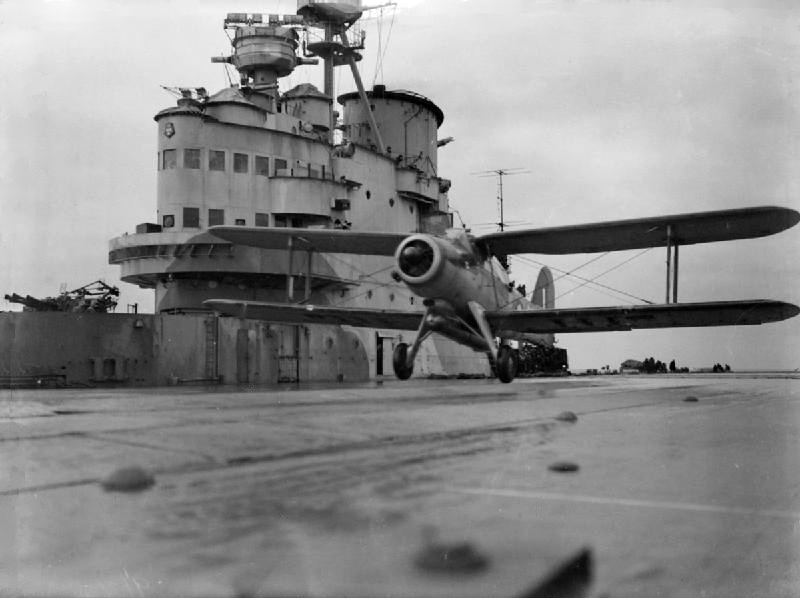
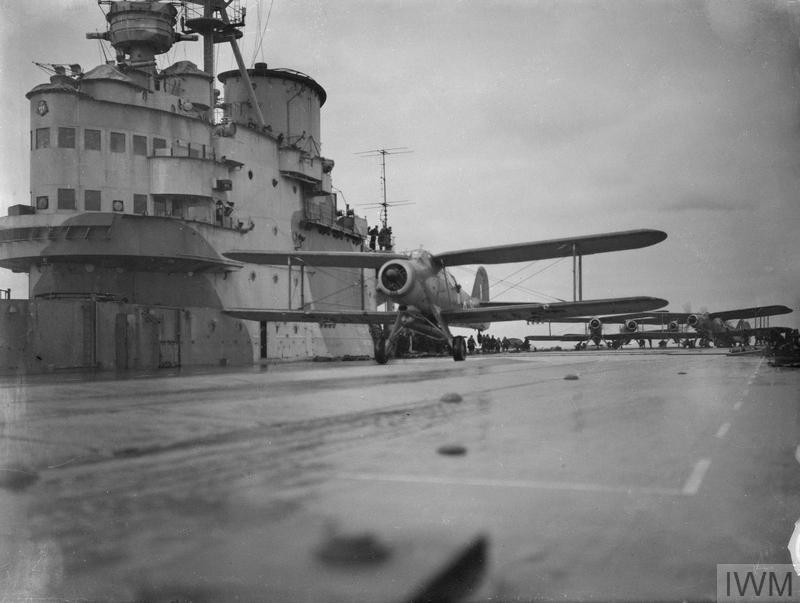
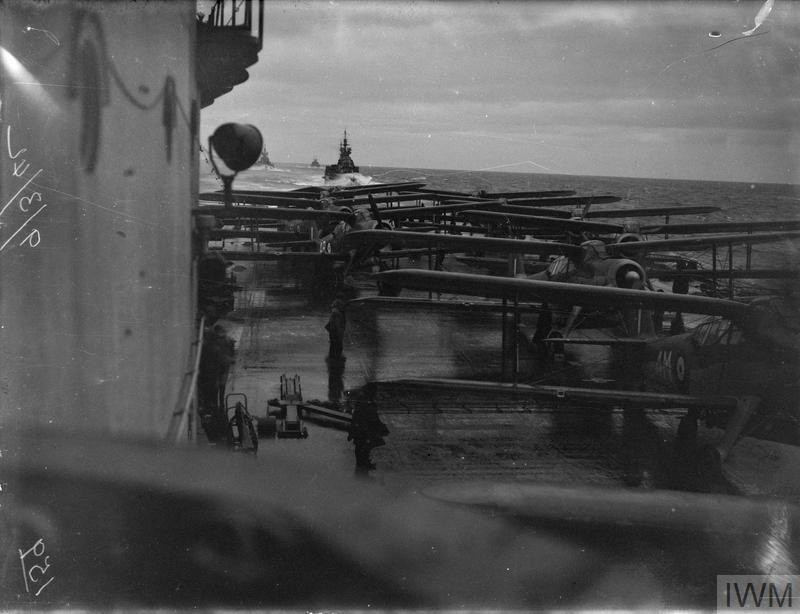
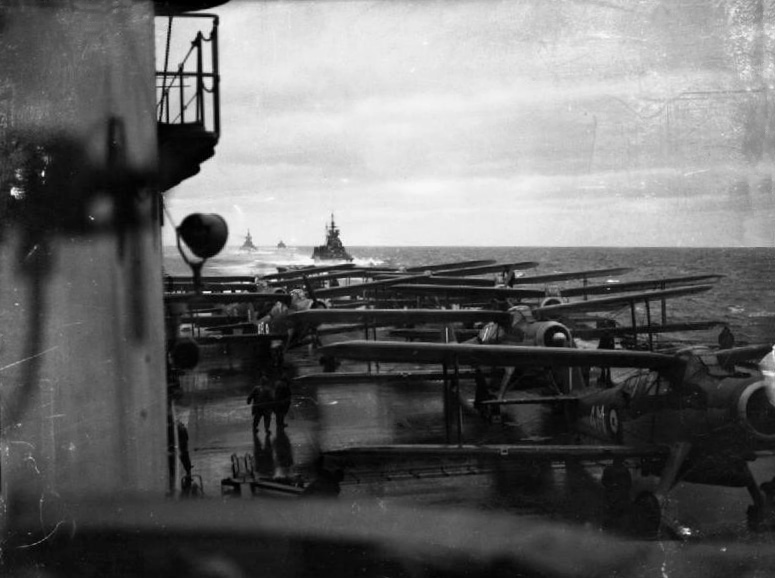
On 9 March 1942 Albacores from HMS Victorious located and attacked the German battleship Tirpitz off the Norwegian coast as she returned from an operation against the Arctic convoys. Attacking through heavy anti-aircraft fire, the crews launched their torpedoes, but the big ship combed the tracks and evaded them all, and two Albacores were shot down. The attack failed to score a hit — yet the fact that slow biplanes had found and engaged the Kriegsmarine’s most feared warship in Arctic waters was itself significant. Several of this page’s photographs come from Victorious during these very operations.
Indian Ocean, 1942
Screening the Eastern Fleet
When Admiral Nagumo’s carrier force — the same that had struck Pearl Harbor — swept into the Indian Ocean at Easter 1942, the British Eastern Fleet found itself dangerously outmatched. Carrier-borne Albacores flew the reconnaissance, shadowing and strike sorties a hard-pressed fleet demanded, helping to screen the approaches to Ceylon (Sri Lanka) at a moment when the whole Indian Ocean seemed about to fall open. Outclassed by the fast Japanese carrier aircraft, the Albacore crews nonetheless did their duty in one of the war’s tensest naval stand-offs. It was a reminder of how globally the type ranged.
Madagascar, 1942
Strikes over Operation Ironclad
During Operation Ironclad in May 1942 — the British seizure of the Vichy-French island of Madagascar to deny its ports to Japanese submarines — Albacores flew from Royal Navy carriers on bombing and gunnery-spotting sorties in support of the landings. Operating off a tropical coast thousands of miles from home, they attacked shore batteries and shipping and directed naval gunfire. Ironclad was the first large-scale Allied amphibious operation of the war, and the Albacore was there for it, another far-flung theatre added to a surprisingly wide-ranging career.
The Channel, 1944
Night hunters off Normandy
In the run-up to and aftermath of D-Day, RAF and Royal Canadian Air Force Albacore units flew night anti-E-boat and anti-shipping patrols over the English Channel. Their job was to find and attack the German fast attack craft that threatened the vast, vulnerable invasion fleet, hunting them in the dark with bombs and flares. By 1944 the Albacore was thoroughly obsolescent, yet it was still earning its keep at the decisive moment of the war in the West. It was, fittingly, the type’s last major operational chapter — a night-hunting coda to a career spent doing the unglamorous jobs well.
The RCAF
A Canadian squadron on the Albacore
Beyond its main service with the Fleet Air Arm, the Albacore was flown by the RAF and by the Royal Canadian Air Force. No. 415 Squadron RCAF — aptly nicknamed the “Swordfish” squadron — operated Albacores on anti-shipping and anti-E-boat work over the Channel before moving on to other aircraft. That Commonwealth service is a reminder that the Albacore was not solely a Royal Navy story: it was flown by several air arms, in a range of roles, across several theatres, by aircrew from across the Commonwealth.
The observer’s war
Navigation over an empty sea
Much of the Albacore’s value lay in its three-man crew, and above all in the observer — the navigator, bomb-aimer, gunnery-spotter and second pair of eyes who made long over-water operations possible. Finding a moving fleet in an empty ocean, plotting a torpedo attack, spotting the fall of a battleship’s shells or aiming a stick of flares all fell to him, by hand, at night, in a cramped cockpit. The Albacore’s great gift to these men was shelter: the enclosed, heated cabin made exacting chart-work survivable in cold and weather that left open-cockpit Swordfish crews numb and exhausted. If the Albacore is under-appreciated, so too is the skilled, unglamorous work it let its observers do.
The Applecore
A nickname, and a mixed verdict
Crews called it the “Applecore” — affectionate enough, but never the fierce, protective love that the Swordfish inspired. The Albacore was respected for its comfort, its warload and its steadiness, and distrusted for its temperamental engine. It did its duty competently without ever quite winning hearts, and that emotional gap matters to how the type is remembered. History tends to lionise the beloved underdog and shrug at the capable workhorse — which is much of why the aircraft the Albacore failed to replace is a legend, while the Albacore itself is a footnote.
Swordfish vs Albacore
Why the Stringbag outlasted it
Here is the central irony of the whole story. The Albacore was designed for one purpose — to replace the Fairey Swordfish — and it was withdrawn from British carrier decks in 1943, while the Swordfish it was meant to retire flew on in front-line service until the end of the war in 1945. A troublesome, unreliable Bristol Taurus engine, the absence of any decisive performance advantage, and the Swordfish’s almost supernatural docility and forgiveness combined to keep the older aircraft in the fight longer. The replacement was replaced first. Few aircraft careers contain a neater, more instructive reversal.
Replaced in turn
Handing over to the Barracuda
Just as the Albacore had been meant to supersede the Swordfish, it was itself superseded — by the monoplane Fairey Barracuda, which took over the Fleet Air Arm’s carrier torpedo- and dive-bombing role. The Albacore thus occupies a strange position in history: the last British biplane torpedo bomber, a genuinely modern refinement of an idea whose time had already passed. Caught between the fabric-winged Swordfish behind it and the all-metal monoplanes ahead, it was a transitional aircraft in the truest sense — competent, capable, and overtaken by the pace of the war it was built to fight.
The Fairey Albacore in photographs
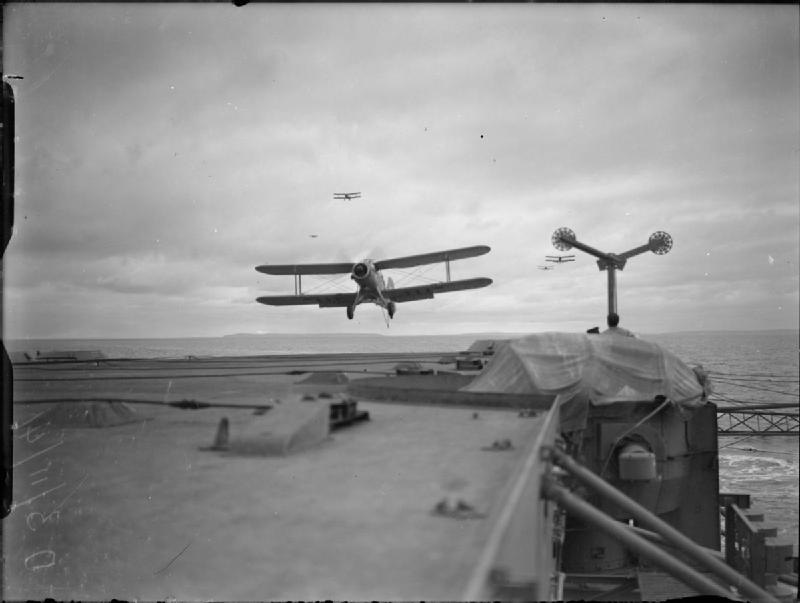
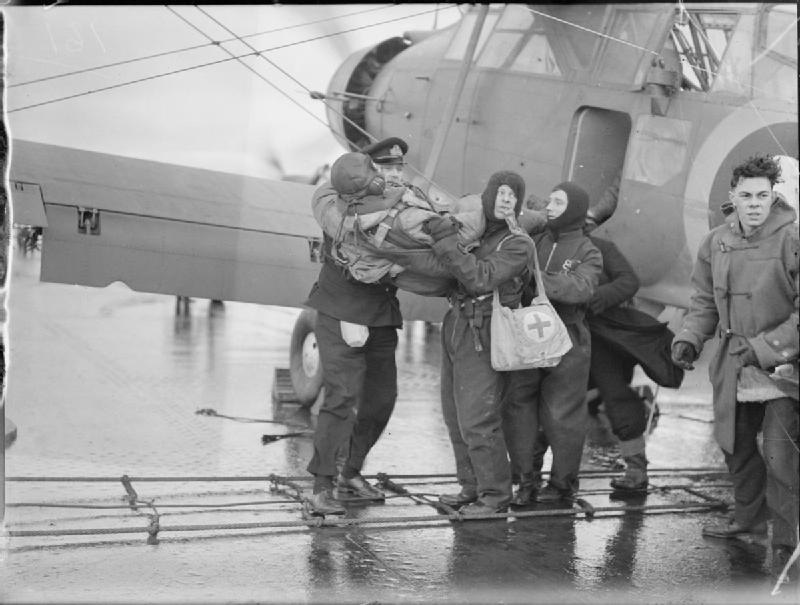
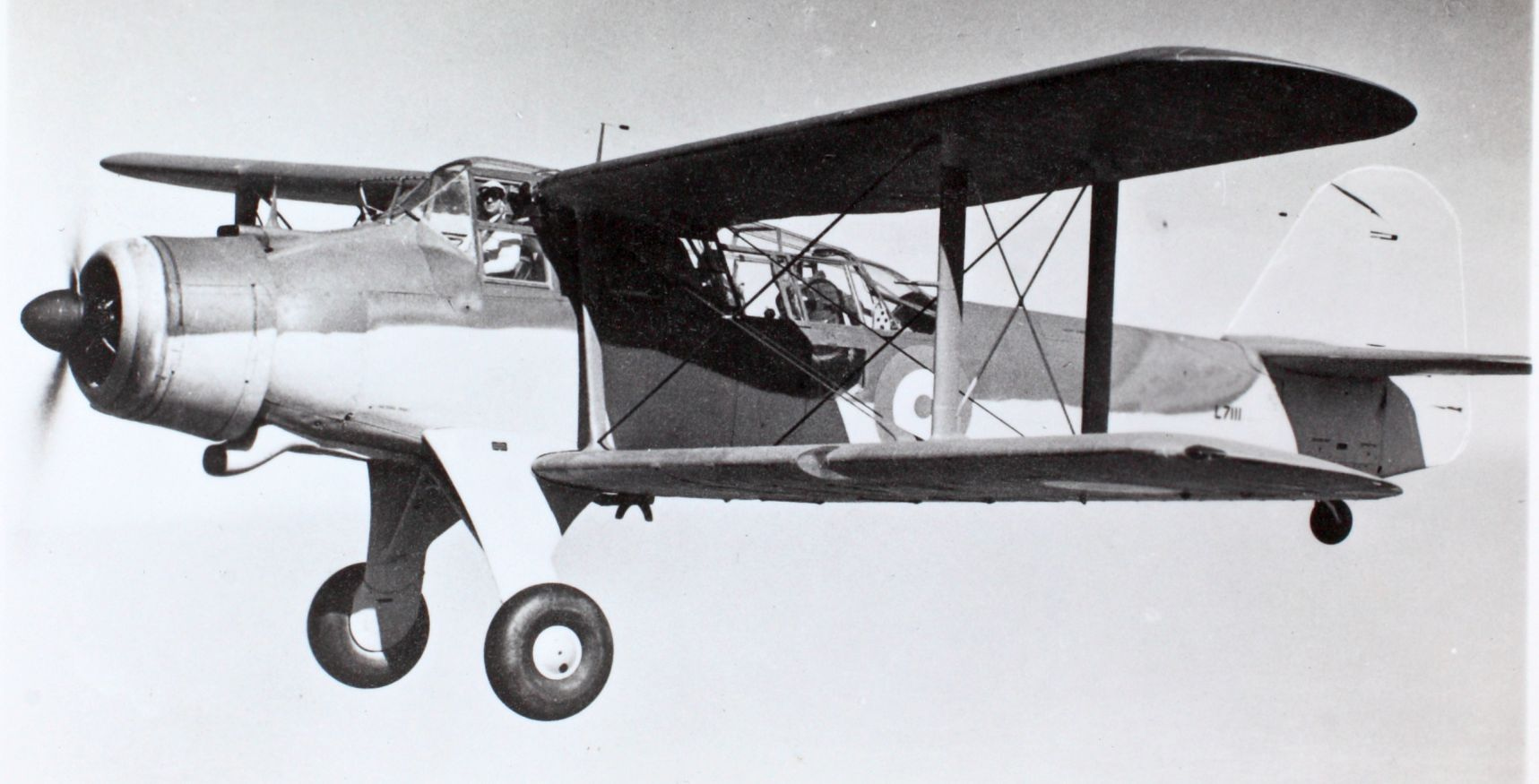
Wartime photographs of the Albacore at sea — most from HMS Victorious during the 1942 Tirpitz operations, taken by Royal Navy official photographer Lieutenant C. H. Parnall. They capture the type in its element: ranged on a carrier deck with torpedoes slung beneath, catapulting into an Arctic dawn, and recovering after a strike. Click any image to enlarge. All images are public domain or carry no known copyright restrictions; the photographer or holding institution is credited in each caption.
The Fairey Albacore on video
A detailed history of the type from Ed Nash’s Military Matters, a well-regarded military-aviation history channel — a fair, unglamorised look at why the Albacore never quite lived up to its brief. It is a useful complement to this page: where we have tried to give the aircraft a fair hearing in text, the video walks through the same story in the round, engine troubles and all. (No dedicated Albacore documentary has anything like the audience of a Spitfire or Lancaster film — another small measure of how thoroughly this aircraft slipped from popular memory.)
“Fairey Albacore; The Under Appreciated Slow Poke” — Ed Nash’s Military Matters (~80,000 views at time of writing). Views and availability may change on YouTube.
Where the Fairey Albacore flew and fought
The Albacore was a British aircraft used almost entirely by Commonwealth air arms, but its war ranged across the globe — from the Mediterranean and the Western Desert to the Arctic, the Channel and the Indian Ocean. This map shows its origin, the theatres where it saw action, its Commonwealth operator, and where a surviving airframe is being pieced together. Hover (or tap) a country for detail.
One thing the map makes clear is how concentrated the Albacore’s war was around the sea lanes and choke-points that decided the naval conflict. The Mediterranean dominates — the fighting off Greece at Matapan, the endless battle for Malta, the anti-shipping and flare-dropping work along the North African coast — because that is where the Fleet Air Arm was most heavily committed in the Albacore’s prime years. To the north, the single marker off Norway stands for the audacious carrier strike at the Tirpitz; to the east, Ceylon and Madagascar mark the type’s reach into the Indian Ocean; and the Channel marks its final, night-hunting chapter around D-Day. Remember, too, the map’s convention: the theatre colour marks where the fighting happened, not the nationality of the crews, who were overwhelmingly British and Commonwealth throughout.
Myths and misconceptions about the Fairey Albacore
Because the Albacore is remembered mostly through its rivalry with the Swordfish, several half-truths have grown up around it. When an aircraft becomes a shorthand for ‘the one that failed to replace the legend,’ the real, more interesting picture tends to get flattened into a caption. A few of the most common misconceptions are worth correcting in the interest of a fair record — not to inflate the Albacore’s reputation, but simply to describe it accurately.
10‘The Fairey Albacore was a failure’+
This is the most common and the least fair. The Albacore failed at one specific thing — replacing the Swordfish — but it succeeded at a great many others. It fought effectively in the Mediterranean, the Arctic, the Indian Ocean and the Channel; it torpedoed, bombed, spotted, reconnoitred, hunted submarines and lit battlefields; and it did all of this competently over roughly four years of front-line service. An aircraft that contributes to a victory like Cape Matapan and a battle like El Alamein is not a failure. It is more accurate to say the Albacore fell short of an exceptionally high bar, not that it was a poor aeroplane.
11‘It was slower and worse than the Swordfish’+
The opposite is true on the raw figures. The Albacore was faster than the Swordfish, better equipped, and vastly more comfortable, with its enclosed heated cockpit and modern flaps. On almost every specification it was the superior aircraft. What it lacked was the Swordfish’s peerless low-speed docility and, above all, the trust of its crews — qualities that do not show up in a specification table but decided which aircraft the Fleet Air Arm actually kept. ‘Better on paper, less loved in practice’ is the honest summary, not ‘worse.’
12‘The Albacore was a Swordfish with a canopy’+
It is an understandable shorthand — the two are clearly related in concept — but the Albacore was a genuinely new design, not a rebodied Swordfish. It had a different, more powerful engine, a larger and cleaner airframe, hydraulic flaps, and a substantially reworked structure and equipment fit. The family resemblance is real, but so are the differences. Calling it ‘just a Swordfish with a roof’ undersells the amount of fresh design that went into it — and rather misses the point that the roof, and the engine, are precisely where the interesting story lies.
The Fairey Albacore by the numbers
The numbers only hint at the story. An aircraft that first flew in December 1938 and was already being withdrawn from the front line by 1943 had a startlingly short career for something built in the hundreds — and the fact that it left the fleet before the aircraft it was meant to replace is the statistic that really matters. Wartime records of victories, losses and sorties for individual types are, in any case, incomplete and inconsistent, so we have kept to the figures that are reasonably well established and flagged the rest as estimates rather than dressing up the record with false precision.
These figures are best-available estimates for a wartime type; production totals in particular vary between sources and should be read as approximate.
The last Fairey Albacores: wrecks, parts and a composite that never flew home
There is a poignancy to the Albacore’s afterlife that mirrors its career. Just as it was overshadowed in service by the Swordfish, it was overshadowed in preservation too: the aircraft that crews loved were the ones that got saved, and the workaday Albacore was not among them. Preservation, like memory, favours the famous.
One of the saddest facts about the Albacore is how completely it vanished. Around 800 were built, they fought across half the world, and yet not a single complete original airframe survives intact today. Where the Swordfish has multiple survivors, including airworthy examples that still fly at air shows, the Albacore left almost nothing whole behind. Wartime attrition, post-war scrapping, and the simple fact that no one thought to preserve an unglamorous also-ran all conspired against it.
What does survive is fragments and recovered remains. Over the decades, parts of Albacores — sections recovered from crash sites, components salvaged from long-abandoned airframes — have made their way into collections, above all to the Fleet Air Arm Museum at Yeovilton, the home of British naval aviation heritage. From this raw material the museum has worked towards assembling or restoring a representative Albacore, effectively building one example from the scattered remains of many. It is painstaking, long-term work, and the precise state of any such project changes over time.
We want to be honest about this rather than overstate it, because it directly answers the question so many people ask. There is no complete, original Albacore you can visit and walk around the way you can a Spitfire or a Swordfish, and there is certainly no airworthy one. What exists is a heritage effort to reconstruct the type from what was left — a composite, pieced together, that stands in for the roughly 800 that are otherwise entirely gone. For an aircraft so overshadowed in life, it is a strangely fitting afterlife: present, but assembled from pieces; remembered, but only just.
What the Fairey Albacore left behind
The Albacore’s legacy is not written in surviving airframes — there are none complete — nor in a fond popular memory, which belongs to the Swordfish. It is written instead in a record of quiet competence and in a lesson that the aviation world keeps having to relearn.
The record first. Across roughly four years of front-line service the Albacore fought in most of the naval theatres that mattered: the Mediterranean, where it helped win at Matapan and sustain Malta; North Africa, where it lit the way at El Alamein; the Arctic, where it struck at the Tirpitz; the Indian Ocean, where it screened a threatened fleet and struck at Madagascar; and the Channel, where it hunted E-boats around D-Day. It torpedoed and bombed and spotted and illuminated and hunted submarines, and it did all of it capably. That is a fuller and more useful war than its modest reputation suggests, and it deserves to be remembered.
Then the lesson. The Albacore is one of aviation history’s clearest demonstrations that being the better aircraft on paper is not enough. Reliability, trust and the intangible confidence of the people who fly and maintain a machine can matter more than a few knots of speed or a heated cockpit. The Swordfish outlasted the Albacore because it was dependable and beloved, not because it was faster or more modern — it was neither. Any organisation choosing between a proven tool and a superior-but-unproven one can find the whole argument compressed into the story of these two Fairey biplanes.
There is a broader point here about how we remember machines and the people who used them. Aviation history has a weakness for the dramatic and the beloved: the record-breakers, the legends, the aircraft with a good story and a devoted following. The steady, useful, unglamorous types — the ones that simply did the work, day after dangerous day — tend to slip out of the popular memory even when their contribution was real. The Albacore is a textbook example. Its crews flew into the same anti-aircraft fire, ditched into the same cold seas and pressed home the same terrifying torpedo runs as the crews of more famous aircraft, and they deserve to be remembered for it regardless of what badge was on the fuselage.
And there is the final, tidy irony to sit with: the Albacore was designed to replace the Swordfish, failed to do so, was outlived by it, and was then replaced itself by the Barracuda. It is the middle child of a three-aircraft dynasty — less loved than the elder, less advanced than the younger, and easy to overlook between them. This page exists partly to make sure it is not.
Fairey Albacore: frequently asked questions
Can I fly in a Fairey Albacore?–
No — and no one can. There is no complete, airworthy Fairey Albacore anywhere in the world; the type is entirely retired and no intact original survives. If you want the real experience of flying in a genuine piece of military-aviation history, though, you absolutely can: MiGFlug offers flights in real fighter jets and classic warbirds. See what is available at migflug.com/flights-prices.
Why did the Fairey Albacore fail to replace the Swordfish?+
The Albacore was designed specifically to replace the Fairey Swordfish, and on paper it was the better aircraft — faster, with hydraulic flaps and, above all, an enclosed heated cockpit. But three things undid it. Its Bristol Taurus engine was troublesome and unreliable, especially early on; it offered no decisive margin of performance over the Swordfish; and it never matched the older aircraft’s legendary docility and forgiving manners on a pitching deck. A modestly better aeroplane that crews trusted less could not force the Swordfish into retirement — and so the type it was built to replace actually outlasted it in front-line service. It is one of the classic cautionary tales of aircraft procurement: newer is not automatically better where reliability and pilot confidence are concerned.
Did the Swordfish really outlast the Albacore?+
Yes — and that is the single most striking fact about the type. The Albacore was withdrawn from British carrier decks in 1943, while the older, slower, open-cockpit Swordfish it had been designed to replace soldiered on in front-line roles right through to the end of the war in Europe in 1945. The aircraft built to send the “Stringbag” into honourable retirement was gone from the fleet while the Stringbag was still flying combat sorties. Careers this neatly reversed are rare in aviation history, and it is the reason the Albacore is so often remembered chiefly as ‘the replacement that got replaced first.’
What engine did the Fairey Albacore use?+
A single Bristol Taurus — a compact fourteen-cylinder, two-row, air-cooled sleeve-valve radial of roughly 1,065–1,130 horsepower depending on the mark (the Taurus II and later Taurus XII were the main versions). It was an ambitious, high-revving engine that gave the Albacore a useful speed advantage over the Pegasus-engined Swordfish. Unfortunately it ran hot and, in its early forms, proved unreliable in service, and it never earned the trust that a carrier crew needs when flying over a cold sea at night. Most histories of the Albacore single out the Taurus, rather than the airframe, as the principal reason the type never fulfilled its promise.
What was the Fairey Albacore’s enclosed cockpit like?+
It was the feature crews praised most, and the clearest single improvement over the Swordfish. Where the Swordfish left its three-man crew exposed in open cockpits to wind, spray and freezing cold, the Albacore enclosed all three stations under a glazed canopy, with cockpit heating, a windscreen wiper and proper stowage for the observer’s charts. On the long, cold over-water sorties that defined naval flying — shadowing a fleet for hours, patrolling the Arctic or the Mediterranean at night — that shelter was not a mere comfort but a genuine operational advantage, because a warm, un-exhausted crew navigates and fights better. It is telling that the aircraft’s most-loved feature had nothing to do with how it flew or fought, and everything to do with looking after the men inside it.
Where did the Fairey Albacore see combat?+
Remarkably widely for a slow biplane. Albacores fought at the Battle of Cape Matapan in 1941, helping cripple the Italian fleet; covered the Malta convoys and struck Axis shipping along the North African coast; dropped illuminating flares over the desert at the Second Battle of El Alamein; attacked the battleship Tirpitz off Norway in March 1942; screened the Eastern Fleet in the Indian Ocean and struck during the invasion of Madagascar; and finally flew night anti-E-boat and anti-shipping patrols over the English Channel around D-Day in 1944. From the Arctic to the tropics, in torpedo, level-bombing, reconnaissance, gunnery-spotting, flare-dropping and anti-submarine roles, the Albacore turned up in a surprising number of the war’s naval and coastal actions.
Did the Royal Canadian Air Force fly the Albacore?+
Yes. While the Albacore served principally with the Royal Navy’s Fleet Air Arm, it was also operated by the RAF and by the Royal Canadian Air Force. No. 415 Squadron RCAF — nicknamed, appropriately, the “Swordfish” squadron — flew Albacores on anti-shipping and anti-E-boat operations over the English Channel before re-equipping with other types. The Albacore was therefore genuinely a Commonwealth aircraft, flown by aircrew from more than one nation in more than one air arm.
What replaced the Fairey Albacore?+
The monoplane Fairey Barracuda. In a fitting twist, the aircraft that had been designed to replace the Swordfish was itself replaced — the Barracuda took over the Fleet Air Arm’s carrier torpedo- and dive-bombing role from 1943 onward. The Albacore was the last British biplane torpedo bomber, and its withdrawal marked the final end of the biplane in that role. The line of succession — Swordfish, Albacore, Barracuda — neatly traces naval aviation’s passage from the fabric biplane to the all-metal monoplane in the space of just a few years.
How many Fairey Albacores were built?+
Around 800, all built by Fairey Aviation between 1939 and 1943. Sources differ slightly on the exact total and on the precise breakdown between production batches, so the round figure of roughly 800 is the honest one to quote. That is a modest number for an aircraft intended to re-equip an entire torpedo-bomber force, and the small total is itself a measure of how quickly the Albacore’s intended role was overtaken by the monoplane and by the events of the war.
Does any Fairey Albacore survive today?+
No complete original airframe survives intact anywhere in the world. The Fleet Air Arm Museum at Yeovilton holds substantial recovered parts and wreckage — the raw material of the type — and has worked over the years towards compiling or restoring a representative Albacore from those remains. But there is no whole, original, airworthy example, and there is no complete aircraft you can simply walk up to and admire in the way you can a surviving Swordfish. That absence is a big part of the answer to the most common question of all: no, you cannot fly one, because there is no flyable Albacore to fly. (We have written this honestly rather than overstate what survives — details of restoration projects change over time.)
Was the Fairey Albacore a good aircraft?+
It was a good aircraft that arrived in an impossible situation. Judged on its own merits it was capable, versatile and genuinely modern for a biplane — faster and far more comfortable than the Swordfish, able to torpedo, bomb, reconnoitre, spot and drop flares, and effective in a wide range of theatres. Its flaws were a temperamental engine and the absence of any decisive edge over the aircraft it was meant to replace. So the fair verdict is nuanced: not a failure, but not a triumph either — a solid, useful, hard-working machine that history has judged largely by the one thing it did not do, which was to render the Swordfish obsolete.
Why was the Fairey Albacore nicknamed the ‘Applecore’?+
“Applecore” was simply the affectionate bit of rhyming slang Fleet Air Arm crews attached to the Albacore, in the same spirit that gave the Swordfish its immortal “Stringbag.” Service nicknames like these were a normal part of naval-aviation culture. The difference is telling, though: “Stringbag” became a badge of deep affection, while “Applecore” never carried the same warmth — a small linguistic echo of the fact that crews respected the Albacore without ever quite loving it.
You can’t fly the Albacore — but these, you can
No complete Albacore survives, and none will ever fly again. But the thrill of climbing into a real military aircraft and taking it into the sky is very much alive — and you do not need to settle for a museum exhibit behind a rope. MiGFlug puts civilians in the cockpit of genuine fighter jets and classic warbirds, from Cold War classics to supersonic interceptors, with professional pilots and full briefings. If the Albacore’s story has left you wanting to feel what military flying is actually like, here are a few aircraft you can book right now.
See every aircraft you can fly at migflug.com/flights-prices
Related aircraft in the Book of Beasts
Sources & further reading