
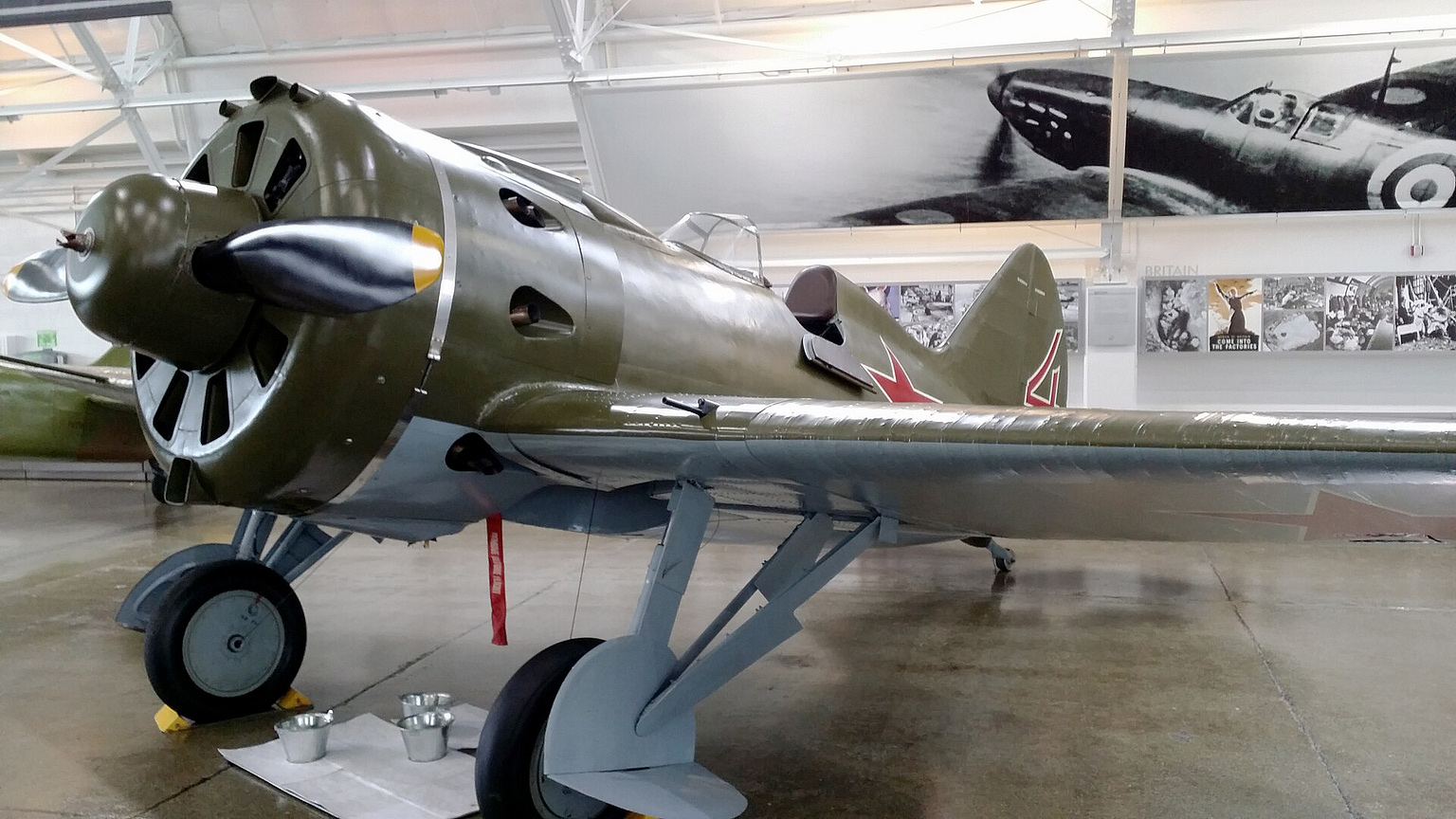
Polikarpov I-16
“Ishak”
The stubby, barrel-shaped Soviet fighter that pioneered the modern monoplane — a nimble but unforgiving little machine that fought from the skies of Spain to the opening days of Operation Barbarossa.
The little fighter that opened the monoplane age
In the early 1930s the fighter still meant a biplane — two wings, fixed wheels, an open cockpit. Then a short, fat, barrel-shaped machine from the Soviet Union rewrote the rulebook. The Polikarpov I-16, designed by Nikolai Polikarpov and his team at the Central Design Bureau (TsKB) as the TsKB-12, is widely credited as the world’s first mass-produced low-wing cantilever monoplane fighter to reach front-line service combining a retractable undercarriage and, early on, an enclosed cockpit.
Polikarpov built it under extraordinary duress: he had been arrested and sentenced to death on trumped-up charges, the sentence commuted to work in a prison design bureau, where he produced both the I-15 biplane and this radical monoplane. The prototype first flew on 30 December 1933, ski-equipped, in the hands of the legendary test pilot Valery Chkalov — who then spun it dozens of times to map its temper. The type entered squadron service around 1935.
The I-16 was fast and agile for its day, but it was also famously tricky to fly. Its very short fuselage and rearward centre of gravity made it longitudinally unstable and hair-trigger in pitch; it could flick into a spin, landed fast, and offered poor forward visibility. Raising the wheels meant spinning a hand crank roughly 44 turns. Soviet lore held that if you could master the “Ishak” (donkey), you could fly anything.
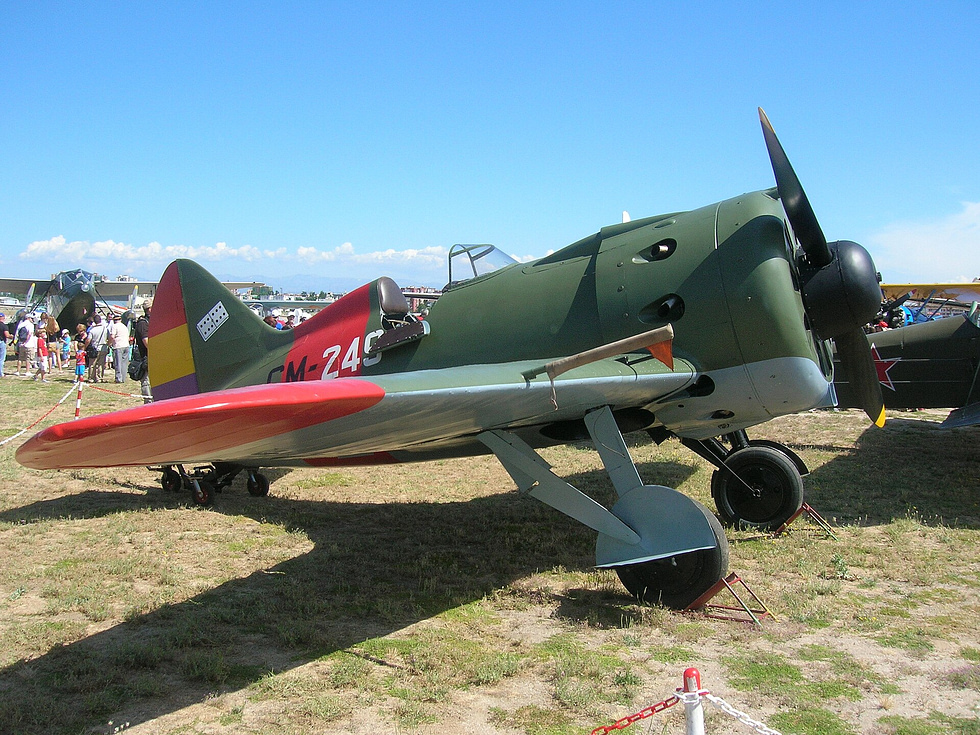
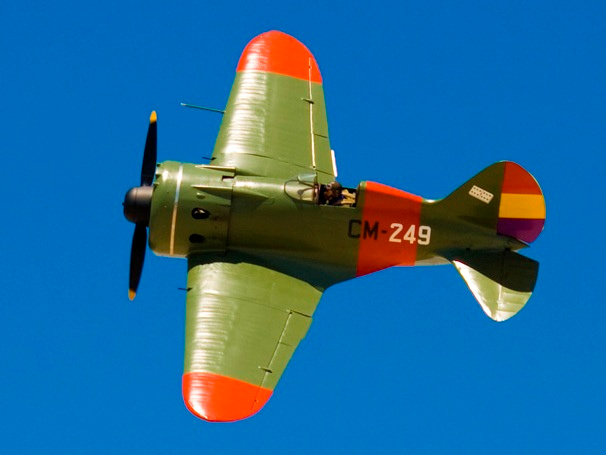
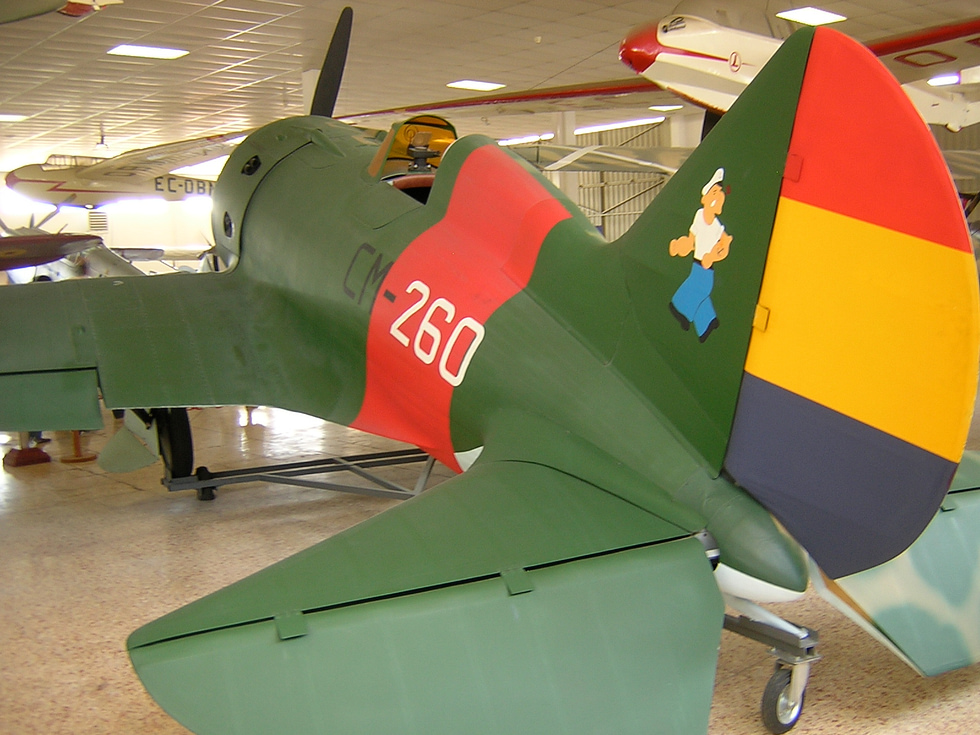
Its combat debut came in the Spanish Civil War from November 1936, where Republican pilots nicknamed it “Mosca” (fly) and their Nationalist opponents called it “Rata” (rat). It fought the Japanese in China and, decisively, over Mongolia at Khalkhin Gol in 1939, where rocket-armed I-16s scored what are reported as the first air-to-air rocket kills in history. When Germany invaded in June 1941 the I-16 was still the most numerous Soviet fighter — by then outclassed by the Messerschmitt Bf 109, yet it fought on into 1942–43. Around 10,000 were built.
01The Polikarpov I-16’s revolutionary design: the world’s first modern monoplane fighter
Where its contemporaries were fabric-and-wire biplanes, the I-16 was a low-wing cantilever monoplane with a retractable undercarriage — a combination widely credited as the first to reach front-line fighter service anywhere in the world. The stubby fuselage was a wooden monocoque skinned in birch plywood, mated to a fat air-cooled radial chosen partly for its tolerance of battle damage. Some pilots disliked the sliding canopy so much that later batches reverted to an open cockpit. Radical and cramped, it pointed straight at the fighters of the Second World War.
What makes it special
A monoplane when the world flew biplanes
The I-16 is widely credited as the first mass-produced low-wing cantilever monoplane fighter with retractable landing gear to reach front-line service. Its stubby fuselage was a wooden monocoque skinned in birch plywood, built around a fat radial engine. It was a genuine leap — a glimpse of the fighter’s future while most air forces still flew open-cockpit biplanes.
Agile but unforgiving: the twitchy “Ishak”
That short fuselage and rearward centre of gravity made the I-16 longitudinally unstable and extremely sensitive in pitch — quick to turn, but quick to bite. It landed fast, saw poorly forward, and its undercarriage retracted only by a hand crank of roughly 44 turns. It was a fighter for skilled hands, and Soviet crews respected it accordingly.
From Spain to Barbarossa: rockets and rams
The I-16 pioneered the RS-82 unguided rocket in air combat, credited with the first air-to-air rocket kills at Khalkhin Gol in 1939. Outclassed by the Bf 109 by 1941, it soldiered on regardless — its pilots sometimes resorting to the taran, deliberately ramming enemy aircraft when guns or options ran out.
02The Polikarpov I-16’s handling: why it took a skilled pilot
The I-16’s virtues and vices came from the same source: a very short fuselage. It made the fighter light on the controls and vicious in a horizontal turn, but also unstable in pitch — it “reacts to the slightest deviation of the controls,” as one account put it, and could snap into a spin. High approach speeds and an oil-fouled windscreen made landings a handful, and the manually cranked gear (about 44 turns) often left novices porpoising as they wound the wheels up. The maxim followed naturally: master the Ishak and you could fly anything.
03The Polikarpov I-16 at Khalkhin Gol: the first air-to-air rocket kills
Over the Mongolian steppe in August 1939, a flight of I-16s under Captain N. Zvonarev carried something new beneath their wings: RS-82 rockets. Salvoed into Japanese formations, they are credited with the first aircraft ever downed by air-to-air rockets — Soviet claims range from around 13 to 19 machines, and should be read as claims. It was a preview of a weapon that would define the jet age, fired from a propeller fighter.
Full specifications
Airframe & Performance (Type 24)
- Multitud
- 1
- Longitud
- 6.13 m
- Envergadura
- 9.00 m
- Altura
- 3.25 m
- Área del ala
- 14.5 m²
- Peso vacío
- ~1,490 kg
- Max takeoff weight
- ~2,095 kg
- Max speed
- ~462–490 km/h (some sources to ~525)
- Techo de servicio
- ~9,000–9,700 m
- Rango
- ~700 km
- Tasa de ascenso
- ~14.7 m/s
Propulsion, Armament & Cost
- Motor
- 1 × Shvetsov M-63 radial
- Power
- ~1,000–1,100 hp
- Guns
- 2 × 20 mm ShVAK + 2 × 7.62 mm ShKAS (gun-only on many Type 24)
- Rockets / bombs
- up to 6 × RS-82 rockets or ~500 kg bombs
- First flight
- 30 December 1933 (TsKB-12)
- Introduced
- ~1935
- Built
- ~10,000 (1934–1942)
- Unit cost
- No reliable public figure
- Cost per flight hour
- No reliable public figure
04The Polikarpov I-16’s cost: why no reliable price exists
The I-16 was a Soviet state product of the 1930s, built by the thousand in a command economy and never sold on an open market, so no dependable flyaway unit price or cost-per-flight-hour figure survives in the public record. What is documented is scale, not money: production is commonly estimated at around 10,000 airframes (counts range roughly 8,600 to 10,300 depending on how two-seat trainers are tallied). Any precise dollar figure attached to an I-16 today is, in practice, guesswork.
From design bureau to the Eastern Front
Design begins
Polikarpov’s TsKB team starts work on the TsKB-12 — a radical stubby monoplane fighter. It is ordered into production before it has even flown.
First flight
Test pilot Valery Chkalov lifts the ski-equipped prototype into the winter sky, powered by an M-22 radial, and later maps its spin behaviour.
Trials and service
State acceptance trials run from March 1934; the I-16 enters Soviet squadron service around 1935 as the VVS’s first modern monoplane fighter.
Spanish Civil War
Combat debut with Republican forces from November. Republicans call it “Mosca” (fly); Nationalists call it “Rata” (rat). It dominates the biplanes it meets.
China and Mongolia
Fights the Japanese in China with Soviet volunteer pilots, then over Mongolia at Khalkhin Gol, where rocket-armed I-16s are credited with the first air-to-air rocket kills.
Operation Barbarossa
Still the most numerous Soviet fighter — over 1,600 front-line — but outclassed by the Bf 109. Losses are catastrophic in the opening months.
Fading from the line
Production ends in 1942 and the I-16 is steadily replaced by newer fighters, though it fights on where nothing better is available.
Last sorties
Isolated operational use is reported as late as August 1945, closing out a front-line career that spanned the biplane age to the jet threshold.
From the front: twelve I-16 stories
Chkalov takes the barrel aloft
The stubby prototype flew a month after it was ordered into mass production.
Read the full story
Forty-four turns to fly
Raising the wheels was a genuine arm workout.
Read the full story
Rata versus Mosca — same plane, two names
One fighter, two enemies, two very different nicknames.
Read the full story
The first rocket kills in history
August 1939, over Mongolia, aviation crossed a threshold.
Read the full story
Why Soviet pilots called it “donkey”
Ishak — little donkey — was equal parts insult and affection.
Read the full story
When the guns ran dry, they rammed
Desperation turned the little fighter into a weapon itself.
Read the full story
Everywhere, and already obsolete
On 22 June 1941 it was the most numerous Soviet fighter — and outclassed.
Read the full story
Safonov of the Arctic
The Northern Fleet’s greatest ace made his name on the little Polikarpov.
Read the full story
The two-seat Ishak
To tame a killer, they built a double-seat version.
Read the full story
Ishak against Emil
Speed against the turn — the I-16 met its match in the Bf 109.
Read the full story
The monoplane and its biplane brother
Polikarpov fielded two fighters at once — and used them as a team.
Read the full story
Raised from Russian lakes, flying again
A handful of Ishaks fly today — rebuilt from wartime wrecks.
Read the full story
The I-16 in pictures
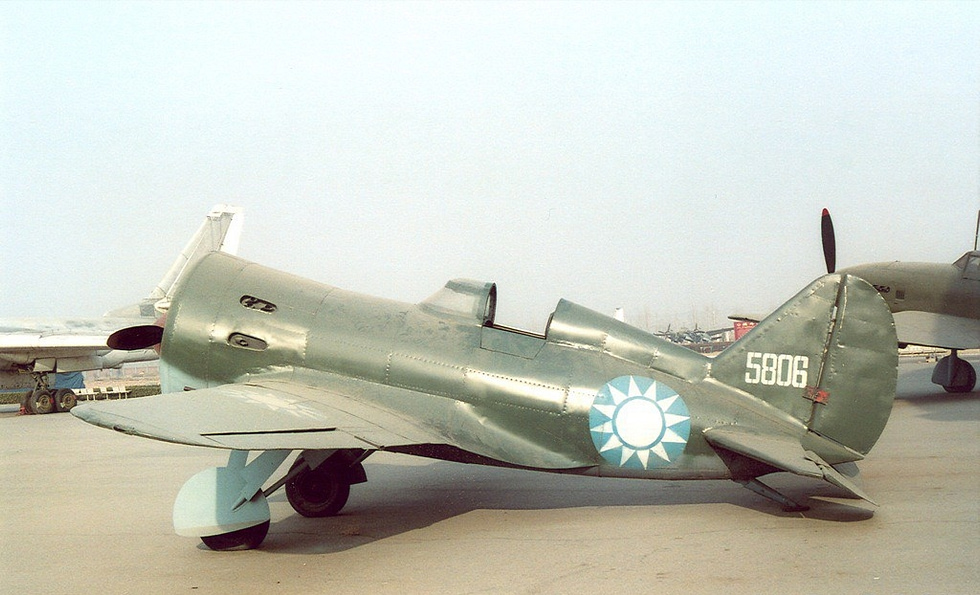
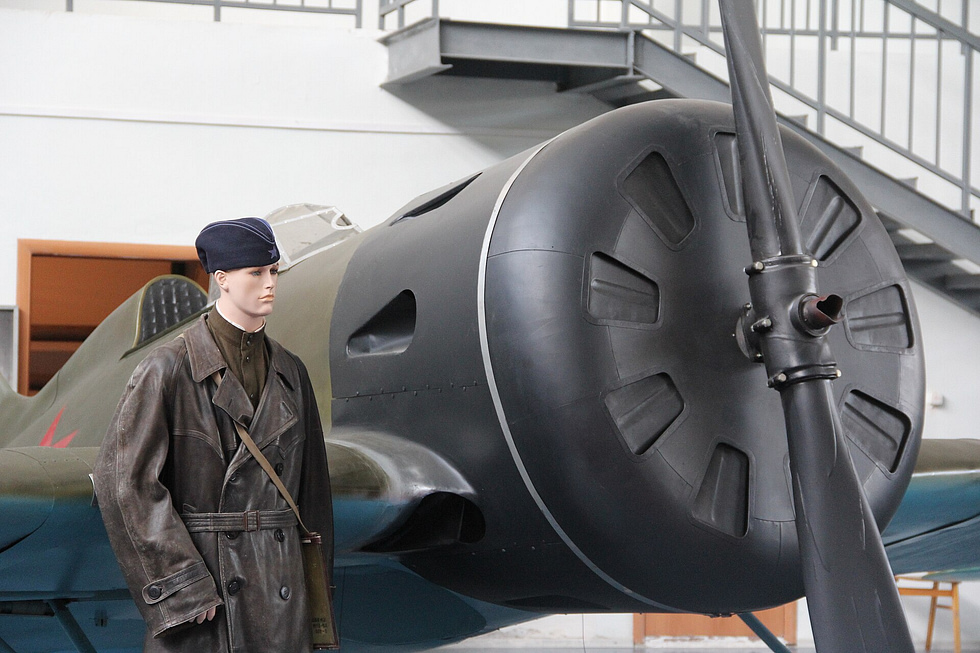
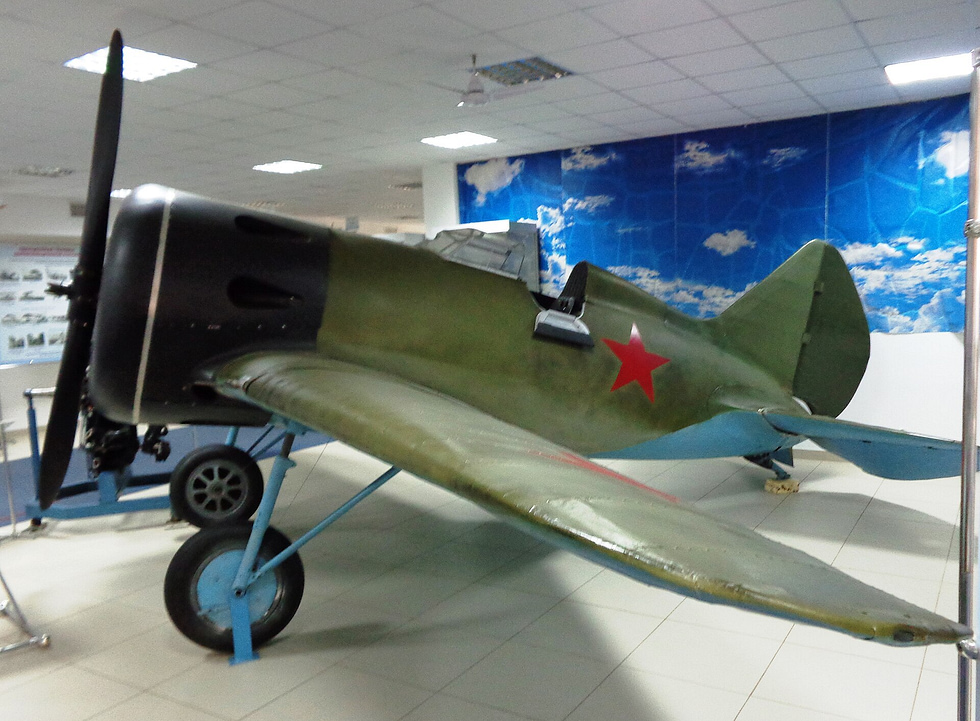
The I-16 in motion
A verified documentary feature for the I-16 is still being sourced — video coming soon. In the meantime, explore the photo gallery and stories above.
Where the I-16 flew
The score that defines it
The I-16 was a first-generation monoplane thrown into a decade of war — Spain, China, Mongolia and the Eastern Front. Its record is one of pioneering firsts and stubborn endurance rather than a tidy kill tally: it dominated the biplanes it first met, pioneered the air-to-air rocket, and fought on long after newer fighters had passed it by.
Compare the combat record of every military aircraft. Figures are commonly cited estimates.
Everything people ask about the I-16
Can I fly in an I-16?
Was the I-16 really the first of its kind?
Why was the I-16 so hard to fly?
Where does the nickname “Ishak” come from?
Did the I-16 really fire the first air-to-air rockets?
How did the I-16 compare to the Messerschmitt Bf 109?
How many I-16s were built?
Which countries operated the I-16?
You can’t fly the I-16.
These, you can.
Some legends only live in museums — others are fuelled and waiting. MiGFlug has put civilians in real military jet cockpits since 2004.
 Fly the L-39 AlbatrosThe world’s most-flown jet trainer — aerobatics included
 Fly the F-104 Starfighter“The missile with a man in it”
 Fly the MiG-21The Cold War’s most-produced jet
 Vuela el T-33 Shooting StarAmerica’s first jet trainer
 Fly the DH VampireA piece of early jet history
 Fly the S.211Agile Italian jet trainer
 Fly the MB-326The classic Aermacchi jet
 Fly the MiG-15The Soviet legend of the Korean War
Continue the tour
Every fact, checked
- History of War — Polikarpov I-16Development, variant table, and combat numbers for Spain, China, Khalkhin Gol and Barbarossa.
- Naval Encyclopedia — Polikarpov I-16Design significance, handling and the “Ishak” nickname, plus naval-aviation service and operators.
- Military Aviation MuseumPolikarpov’s imprisonment, the “first monoplane with retractable gear” claim, and restoration history.
- Warbirds Resource GroupFirst-flight chronology, Chkalov’s spin testing, and Spain and China delivery figures.
- Liquisearch — I-16 Type 24 specificationsDimensions, weights, M-63 power, speed, ceiling, range and armament data.
- Vintage Aviation NewsThe Alpine Fighter Collection remanufacture of I-16s from Karelian wrecks and today’s flying examples.
- Iron Dice — The Little Ishak That CouldNickname origins, 1941 front-line strength, and turn-fighting tactics against the Bf 109.
- gw2ru — Donkey, Rat and FlyThe nicknames and the aircraft’s twitchy handling character.