
Consolidated B-24
“Liberator”
The most-produced American military aircraft ever built — a long-legged four-engine heavy bomber that carried the war to Ploesti, closed the Atlantic against the U-boats, and rolled out of Ford’s Willow Run at a bomber an hour.
The bomber that out-built everything
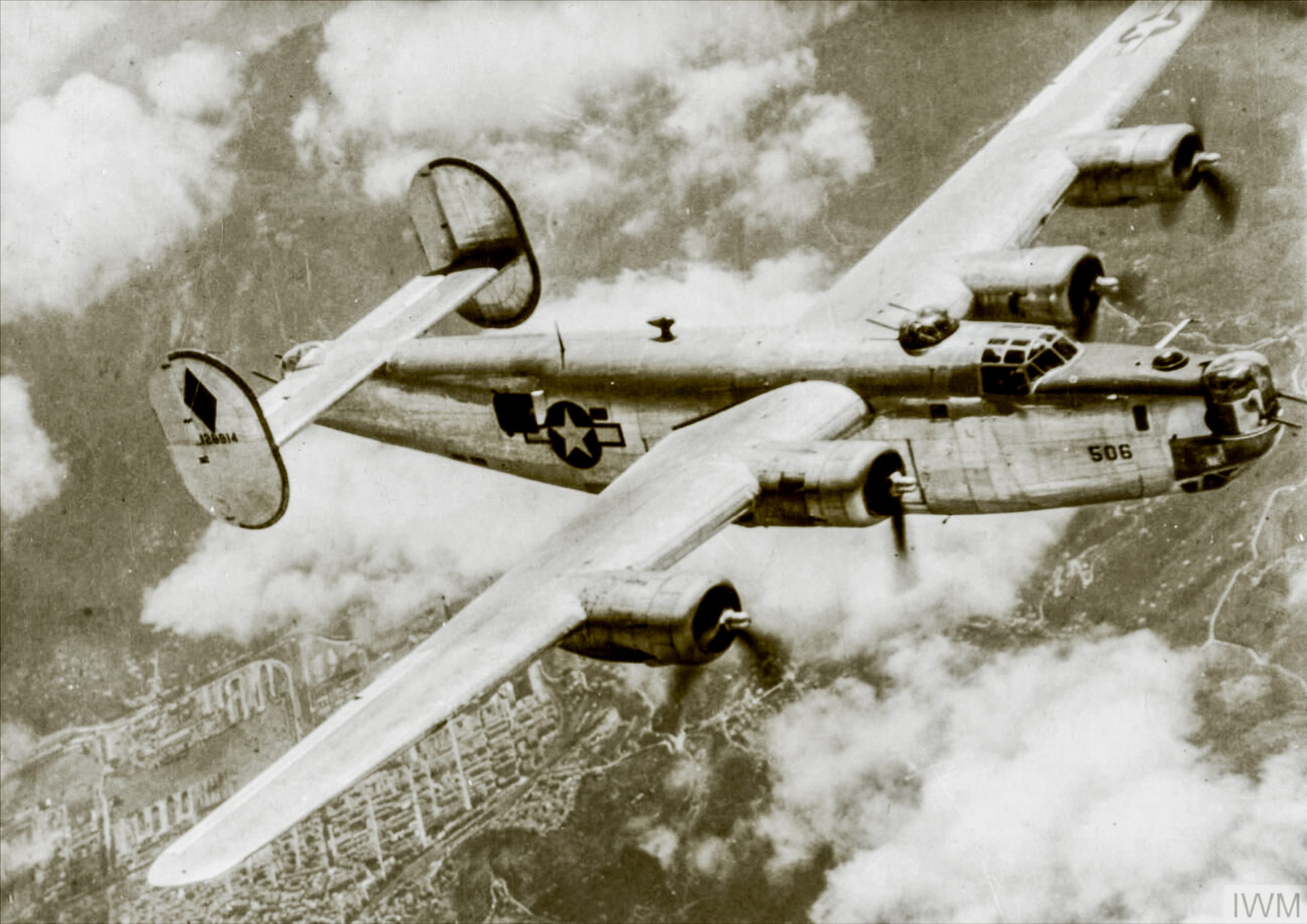
When the US Army Air Corps asked Consolidated Aircraft to build Boeing’s B-17 under licence in 1938, the San Diego firm made a bolder counter-offer: it would design a better bomber of its own. The result, first flown on 29 December 1939, was the B-24 Liberator — a slab-sided, twin-tailed four-engine machine wrapped around one radical idea, the high-aspect-ratio Davis wing. That long, narrow, remarkably efficient wing gave the Liberator more range and a heavier bomb load than the Flying Fortress it was meant to complement.
It was never as beloved as the B-17. The shoulder-mounted wing sat the fuselage low and made the aircraft heavy on the controls, tiring to fly in tight formation, and unforgiving when hit — and its slab-doored belly meant it ditched badly. But it flew farther, hit harder, and above all it could be mass-produced. Across a vast consortium — Consolidated in San Diego and Fort Worth, Douglas at Tulsa, North American at Dallas, and Ford’s enormous new plant at Willow Run — more than 18,000 were built, making the B-24 the most-produced American military aircraft in history.
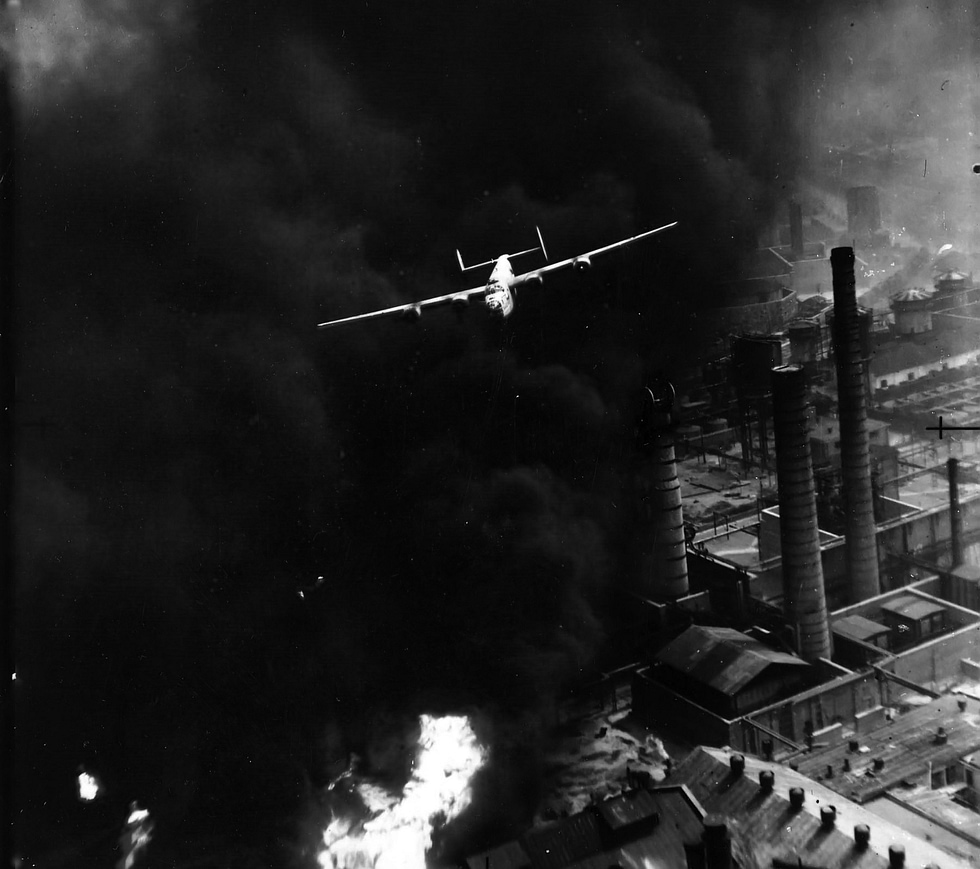
Those numbers let the Liberator do everything at once. It hammered German industry with the Eighth and Fifteenth Air Forces, made the low-level Ploesti oil raid of August 1943, flew the Pacific and China-Burma-India theatres, and — perhaps most decisively — became the Very Long Range patrol aircraft that finally closed the mid-Atlantic “air gap” where U-boats had hunted convoys unseen. No single Allied aircraft was asked to do more.
01The B-24 Liberator vs the B-17 Flying Fortress: which was the better bomber?
The two American heavies split the work of the daylight bombing campaign, and crews argued their merits for eighty years. The B-24 was faster (cruising around 215 mph against the B-17’s 182), flew farther, and carried more bombs — roughly 2,100 miles with a 5,000 lb load, where a B-17 managed about 2,000 miles with 4,000 lb. That reach made the Liberator the natural choice for the Pacific’s vast distances and for ocean patrol.
El B-17, though, was easier and more forgiving to fly, held formation better at high altitude, and earned a legend for absorbing battle damage and still coming home. The Liberator’s shoulder wing and big roller-shutter bomb-bay doors made it more fragile under fire and lethal in a water landing. Both were vital; the honest verdict is that they were complementary tools, and the B-24’s trump card was that it could be built in numbers no other heavy bomber ever matched.
What makes it special
The Davis wing: range and payload
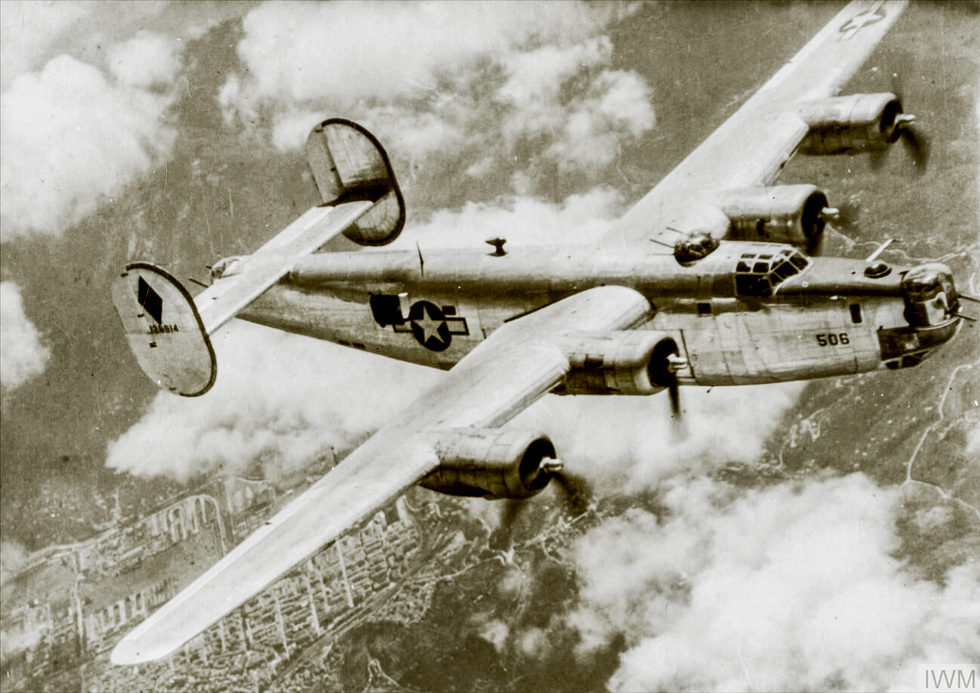
The Liberator’s defining feature was its high-aspect-ratio Davis wing — long, narrow and aerodynamically efficient. It generated lift with less drag than a conventional wing, giving the B-24 its long legs and heavy bomb load. The price was a wing mounted high on the fuselage that made the aircraft demanding to fly and left the belly’s big bomb-bay doors vulnerable.
Built by the thousands: Willow Run
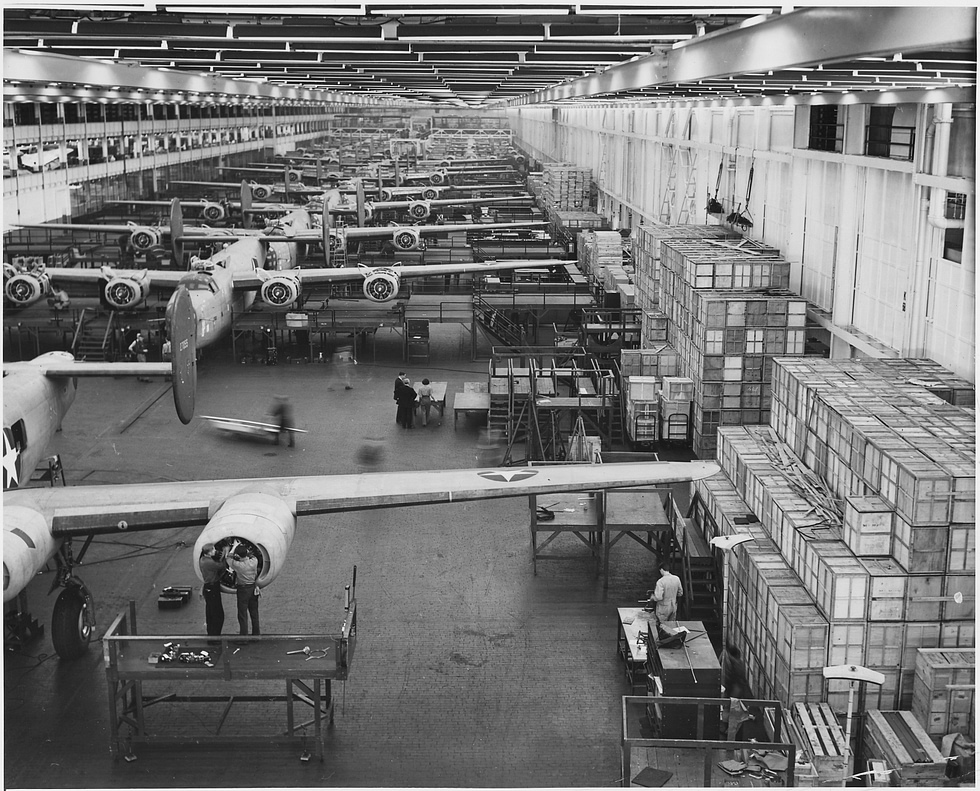
The B-24 was engineered for mass production. Ford’s mile-long Willow Run plant in Michigan applied automotive assembly-line methods to a heavy bomber, and at its 1944 peak it turned out roughly one B-24 an hour. Spread across five plants, output topped 18,000 — more than any other American military aircraft, before or since.
The U-boat killer over the Atlantic
Stripped of armour and packed with fuel, the Very Long Range (VLR) Liberator could patrol far out into the ocean. Fitted with ASV radar and the Leigh light, RAF Coastal Command Liberators closed the mid-Atlantic “air gap” in 1943 — and the type was ultimately credited, in full or in part, with sinking 93 U-boats.
02The B-24 Liberator’s Davis wing: the efficient design that made it hard to love
The Davis wing was a high-aspect-ratio aerofoil that David R. Davis pitched to Consolidated with striking efficiency claims. Wind-tunnel tests bore much of it out: the long, slender wing produced excellent lift-to-drag, and it handed the Liberator the cruise speed, ceiling and range that set it apart. It is why the B-24 could reach targets a B-17 could not, and why it excelled over the wide oceans.
But the same wing had to be mounted on the shoulder of a deep fuselage to clear the bomb bay, which raised the aircraft’s centre of gravity relative to the wing, made it heavy and tiring on the controls, and gave little margin if an engine failed on take-off. Laden and battle-damaged, a Liberator was less able to stagger home than a Fortress — and its shutter-type bomb doors flooded a ditched aircraft in seconds. The Davis wing was a brilliant bet on efficiency that crews paid for in workload and fragility.
03The B-24 Liberator and Willow Run: how Ford built a bomber an hour
Building a four-engine bomber like a car was a genuinely radical idea. Ford broke the Liberator into thousands of sub-assemblies and built a purpose-made factory at Willow Run, near Ypsilanti, Michigan — a single structure so long its final assembly line turned 90 degrees to stay within the county line. Early on the plant struggled; sceptics called it “Will-it-Run.” Once the tooling settled, it became the icon of American war production, employing tens of thousands, many of them women — the real “Rosie the Riveters” — and at its 1944 peak completing a B-24 roughly every 63 minutes. Combined with Consolidated, Douglas and North American lines, the consortium built more than 18,000 Liberators, a total no other American military aircraft has ever approached.
Full specifications
Figures below are for the definitive B-24J, the most-produced variant.
Airframe & Performance
- Multitud
- Typically 10
- Longitud
- 20.6 m (67 ft 8 in)
- Envergadura
- 33.5 m (110 ft)
- Altura
- 5.5 m (18 ft)
- Max takeoff weight
- ~29,500 kg (65,000 lb)
- Max speed
- ~470 km/h (290 mph)
- Velocidad de crucero
- ~346 km/h (215 mph)
- Techo de servicio
- ~8,500 m (28,000 ft)
- Rango
- ~3,400 km (2,100 mi) with 5,000 lb bombs
Propulsion, Armament & Programme
- Engines
- 4 × Pratt & Whitney R-1830 Twin Wasp
- Power (each)
- ~1,200 hp turbo-supercharged radial
- Defensive guns
- 10 × 0.50 cal (12.7 mm) M2 Browning
- Bomb load
- Up to ~3,600 kg (8,000 lb)
- First flight
- 29 December 1939 (XB-24)
- Built
- ~18,500 (1940–1945)
- Unit cost
- ~$297,000 (1944)
- Cost per flight hour
- No standardised figure (WWII-era)
04The B-24 Liberator’s cost: how mass production drove the price down
Like most wartime aircraft, the Liberator had no meaningful “cost per flight hour” in the modern sense — it was a war material produced at national scale, not a leased asset. What is well documented is how sharply its unit cost fell as the assembly lines matured: a B-24 that cost far more early in the programme was being delivered for around $297,000 by 1944 as Willow Run and the other plants hit stride. That collapse in cost per airframe — the direct dividend of building a bomber an hour — was as important to the Allied war effort as any single performance number.
From a San Diego gamble to 18,000 bombers
First flight
The prototype XB-24 flies on 29 December, built around the efficient high-aspect-ratio Davis wing.
Into service
The RAF names the type “Liberator” and, with the USAAF, puts it to work — including early Atlantic anti-submarine patrols.
Willow Run tools up
Ford opens its mile-long Michigan plant to build the four-engine bomber on an automotive assembly line.
The Atlantic gap closes
Very Long Range Liberators of RAF Coastal Command help win the Battle of the Atlantic during “Black May.”
Ploesti — Black Sunday
178 Liberators strike the Romanian oil refineries at treetop height on 1 August; 54 aircraft are lost.
A bomber an hour
Willow Run hits its stride, completing a B-24 roughly every 63 minutes as the type reaches every theatre.
War’s end
With victory won, production stops; thousands of surplus Liberators are scrapped almost overnight.
A handful survive
Of more than 18,000 built, only a couple remain airworthy — among the rarest of all warbirds to see fly.
From the war: twelve Liberator stories
Consolidated’s counter-offer
Asked to build B-17s under licence, Consolidated proposed a better bomber of its own.
Read the full story
Why it is called the Liberator
The RAF, not the USAAF, gave the B-24 its enduring name.
Read the full story
A bomber an hour
At its 1944 peak, Ford’s Willow Run plant completed a four-engine bomber roughly every 63 minutes.
Read the full story
Black Sunday
On 1 August 1943, 178 Liberators bombed the Ploesti oil refineries from treetop height.
Read the full story
The Sandman
One B-24 emerging from the smoke at Ploesti became the war’s most famous bombing photo.
Read the full story
Closing the gap
For a year, VLR Liberators were the only aircraft that could cover the mid-ocean U-boat killing ground.
Read the full story
93 U-boats
Liberators were credited, in full or in part, with sinking 93 German submarines.
Read the full story
The Navy’s Liberator
The US Navy flew its own long-range B-24s — and a dedicated single-tail derivative, the Privateer.
Read the full story
Rosie at Willow Run
Tens of thousands built the Liberator — and much of that workforce was women.
Read the full story
Ten men, freezing cold
A Liberator crew of ten worked for hours in unpressurised, sub-zero air.
Read the full story
The Lady Be Good
A lost B-24 flew on into the Sahara — and was found, preserved, sixteen years later.
Read the full story
The rarest warbird
Of more than 18,000 Liberators, only a couple still fly today.
Read the full story
The Liberator in pictures
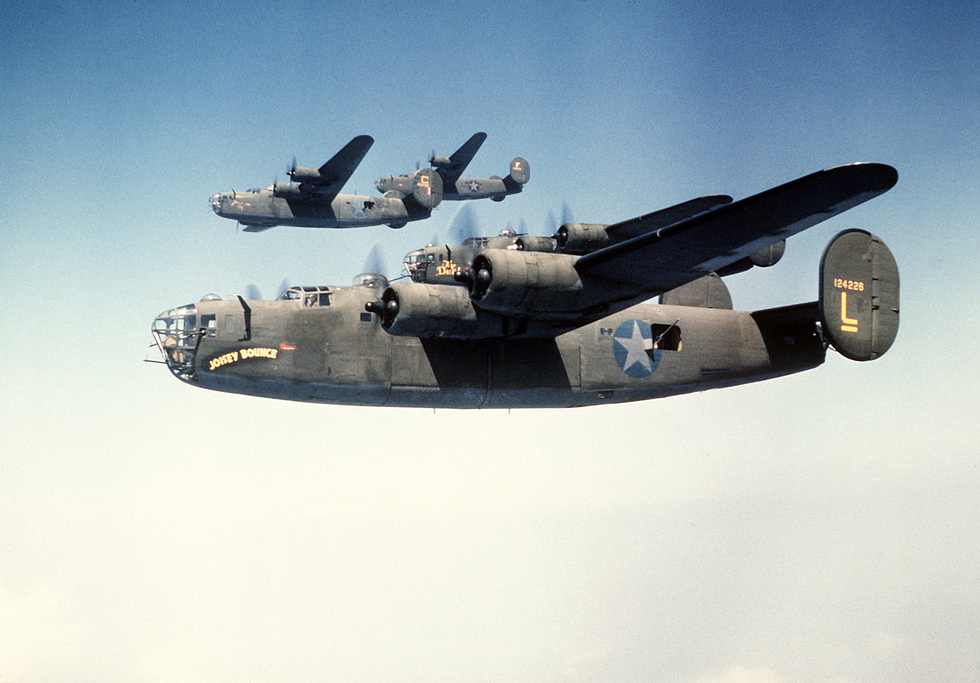
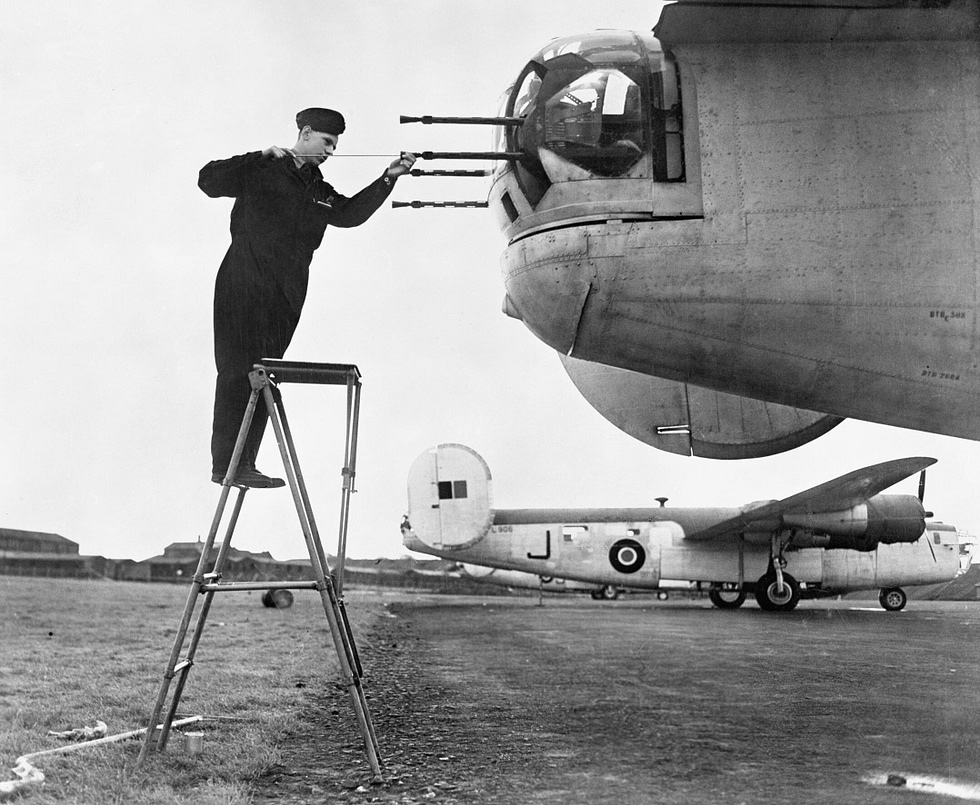

The Liberator in motion
A dedicated B-24 Liberator video feature is coming soon. In the meantime, explore the photo gallery above and the twelve first-hand stories from the aircraft’s wartime career.
Where the Liberator flew
The numbers that define it
The Liberator’s record is not a fighter’s kill tally — it is written in scale, reach and the campaigns it made possible. It was built in greater numbers than any other American military aircraft, it flew in every theatre of the war, and it helped win the Battle of the Atlantic outright.
Compare the combat record of every military aircraft. Figures as of July 2026.
Everything people ask about the B-24 Liberator
Can I fly in a B-24 Liberator?
Why was the B-24 built in bigger numbers than the B-17?
Was the B-24 better than the B-17?
What was the Ploesti raid?
How did the B-24 help beat the U-boats?
What was the Davis wing?
Are any B-24 Liberators still flying?
You can’t fly the Liberator.
These, you can.
Some legends only live in museums — others are fuelled and waiting. MiGFlug has put civilians in real military jet cockpits since 2004.
 Fly the L-39 AlbatrosThe world’s most-flown jet trainer — aerobatics included
 Fly the F-104 Starfighter“The missile with a man in it”
 Fly the MiG-21The Cold War’s most-produced jet
 Vuela el T-33 Shooting StarAmerica’s first jet trainer
 Fly the DH VampireA piece of early jet history
 Fly the S.211Agile Italian jet trainer
 Fly the MB-326The classic Aermacchi jet
 Fly the MiG-15The Soviet legend of the Korean War
Continue the tour
Every fact, checked
- National Museum of the US Air Force — Operation Tidal WaveOfficial account of the 1 August 1943 Ploesti raid: 178 aircraft, 54 lost, five Medals of Honor.
- Imperial War Museums — B-17 vs B-24Range, payload, speed and handling comparison of the two American heavy bombers.
- The Henry Ford — Willow Run Bomber PlantFord’s mile-long factory and the “bomber an hour” production story.
- War on the Rocks — The Davis WingHow the high-aspect-ratio Davis aerofoil shaped the Liberator’s range and character.
- Warbirds Resource Group — Liberator in RAF ServiceVLR Liberators, No. 120 Squadron and the 93 U-boat sinkings credited to the type.
- MiGFlug Afterburner — Operation Tidal WaveMiGFlug’s own long-read on the low-level Ploesti mission.
- CAF B-29/B-24 SquadronOperator of “Diamond Lil,” one of the last airworthy Liberators; type history and specifications.
- Military Factory — B-24 LiberatorReference specifications for the B-24J and production totals.