
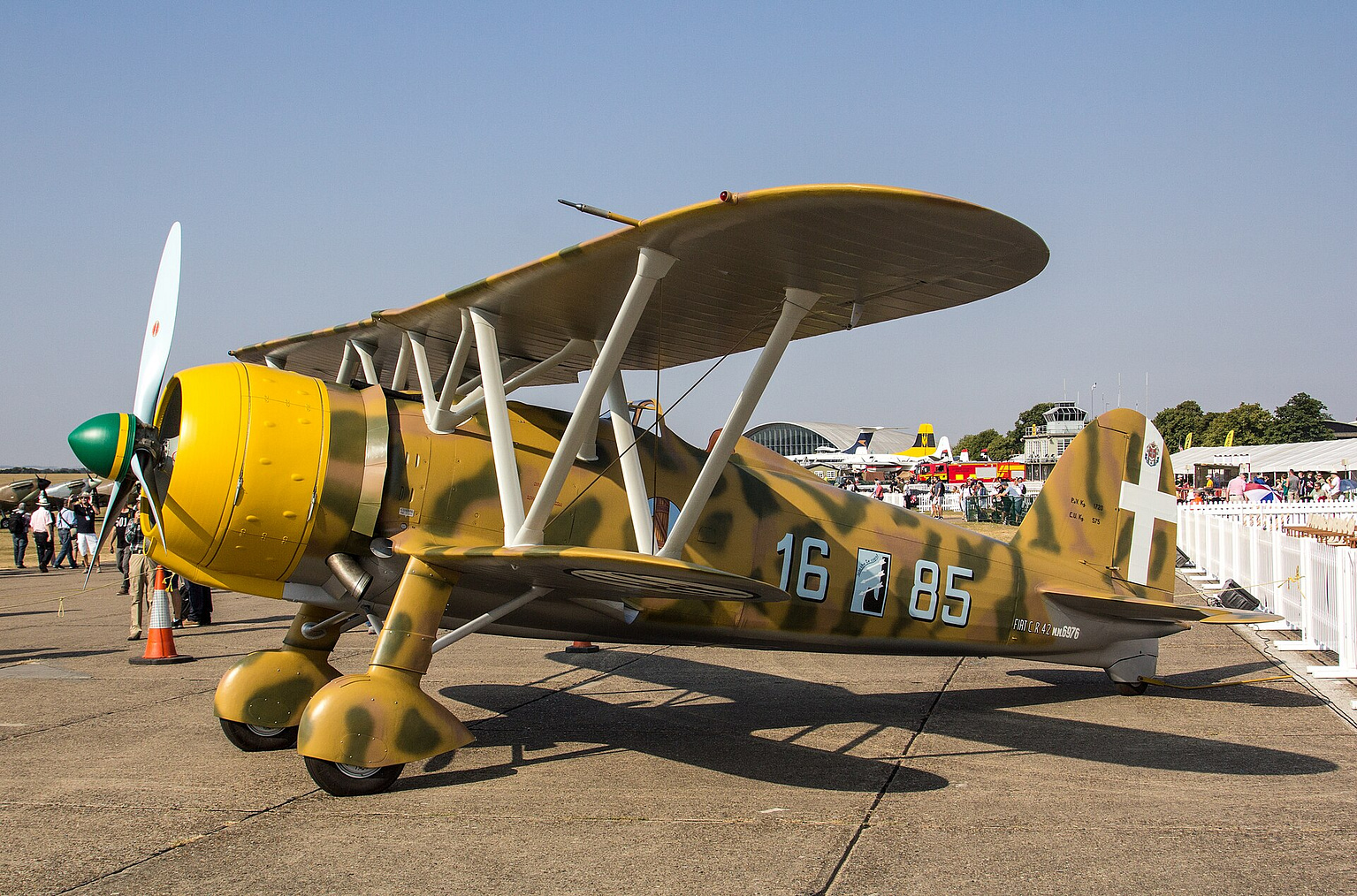
CR.42 Falco
A biplane in the monoplane age
Italy’s last great biplane fighter — beautiful, astonishingly agile, and obsolete the day it entered service, yet it fought on every Italian front from the Battle of Britain to the East African highlands.
The Falco: the last of the fighting biplanes
By the end of the 1930s the world’s air forces were racing to replace their biplanes with sleek monoplane fighters. Italy went the other way. In 1938 Fiat flew a brand-new biplane, the CR.42 Falco, and the Regia Aeronautica ordered it in quantity — a deliberate bet on agility and the dogfight at the very moment those things were being overtaken by speed and firepower.
The man behind it, Celestino Rosatelli, had designed the earlier CR.32, a biplane that had done well in the Spanish Civil War. Italian pilots loved the tight-turning, responsive feel of a good biplane, and the Falco delivered it in full: a clean sesquiplane, with a smaller lower wing, a powerful Fiat radial and handling that pilots — friend and foe — found delightful.
It was also, by 1940, hopelessly outdated. Slow and armed with just two machine guns, the Falco could not live with a Spitfire or Hurricane in a straight fight. And yet Italy built roughly 1,819 of them — the most-produced Italian aircraft of the war — and threw them onto every front it fought on.
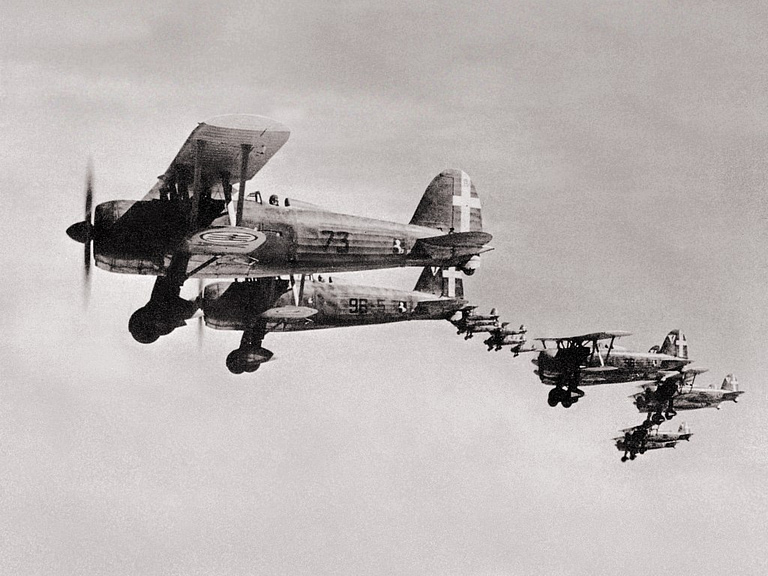
One of the strangest episodes came over the English Channel. In late 1940 Italian CR.42s of the Corpo Aereo Italiano flew from bases in Belgium against England — open-cockpit biplanes pitched into the radar-and-Spitfire world of the Battle of Britain. One Falco force-landed in Suffolk and survives in the RAF Museum to this day.
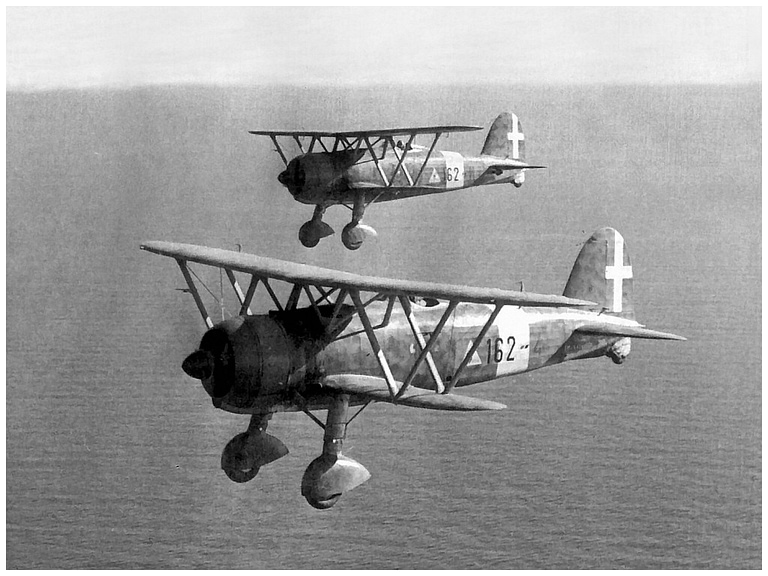
The Falco’s real war was fought in the heat and dust of North and East Africa, where skilled Italian pilots used its agility against Gladiators, Hurricanes and P-40s. In the mountains of East Africa, Mario Visintini ran up 16 victories to become the highest-scoring biplane fighter ace in history.
As the monoplanes took over, the Falco found second-line work as a night-fighter, ground-attack aircraft and trainer, serving to the end of the war — Germany even pressed over 150 into night-harassment duty. Several survive in museums today. The CR.42 was the last of a breed: the front-line fighter biplane, gone from the sky forever.
01Why Italy built a new biplane in 1939
The Falco can look like a mistake — a biplane ordered into mass production just as biplanes became obsolete. But it made a certain sense at the time. Italy’s aero-engine industry could not yet supply enough powerful inline engines for a first-rate monoplane, and Italian fighter doctrine still prized the tight-turning dogfight, where a nimble biplane could hold its own.
The result was an aircraft that was genuinely excellent at what it did — and outmatched by everything that mattered by 1941. The Falco is a case study in how quickly the technology of air warfare moved, and how an air force’s doctrine and industry can leave it fighting the last war with the wrong tool, however beautifully made.
How Fiat perfected a design the world was leaving behind
The peak of the biplane
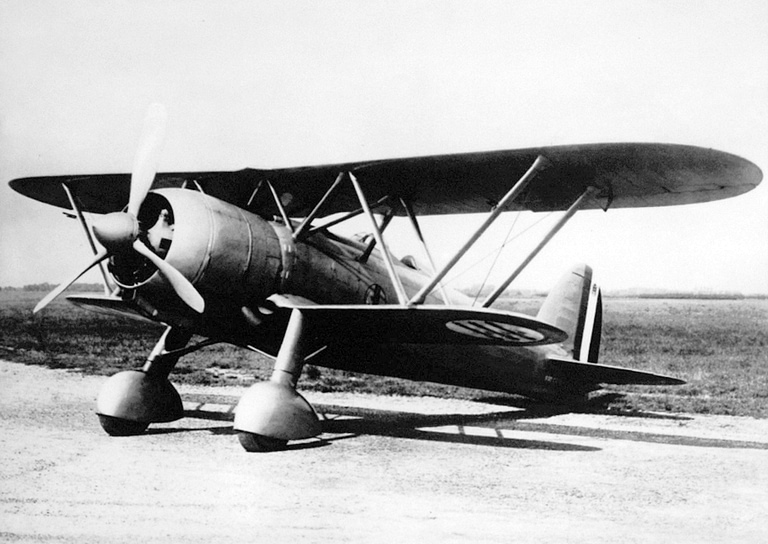
The Falco was a sesquiplane — its lower wing much smaller than its upper — refined from Rosatelli’s successful CR.32. Everything about it was tuned for the tight-turning dogfight: light, responsive controls and a famously quick half-roll that repeatedly surprised its monoplane opponents.
The Fiat radial
Power came from a Fiat A.74 air-cooled radial of around 840 hp — reliable and simple, but modest by the standards of the Merlins and DB 601s its enemies flew. It gave the Falco respectable agility and climb, but never the speed to dictate a fight.
Light armament
The Falco went to war with just two machine guns, typically two 12.7 mm Breda-SAFATs in the nose, sometimes with light underwing bombs added. It was enough against other biplanes and unarmoured targets, but far too little to trouble modern, armoured monoplanes.
02A quick half-roll and a hard truth
RAF pilots who fought the Falco came away impressed by its manoeuvrability — British intelligence specifically noted the surprise caused by its ability to snap into an extremely tight half-roll. In a slow, turning fight the CR.42 could out-manoeuvre a Hurricane or even a Spitfire.
The hard truth was that modern air combat had moved on from the turning fight. Fast monoplanes could dictate the terms of an engagement, diving in, firing and climbing away before the nimble biplane could bring its guns to bear. The Falco could win the manoeuvre and still never get the chance to shoot — the central dilemma of every biplane fighter caught in the monoplane age.
Fiat CR.42 Falco — by the numbers
Airframe & performance
- Multitud
- 1
- Longitud
- 8.25 m (27 ft 1 in)
- Wingspan (upper)
- 9.70 m (31 ft 10 in)
- Peso vacío
- ~1,780 kg (3,929 lb)
- Max takeoff weight
- ~2,415 kg (5,324 lb)
- Max speed
- ~441 km/h (274 mph)
- Techo de servicio
- ~10,210 m (33,500 ft)
- Rango
- ~780 km (480 mi)
Powerplant, armament & programme
- Motor
- Fiat A.74 R1C.38 radial, ~840 hp
- Armamento
- 2 × Breda-SAFAT MGs (typically 2 × 12.7 mm) + light underwing bombs
- First flight
- 23 May 1938
- Built
- ~1,819 (1939–1942)
- Operators
- Italy; also Belgium, Hungary, Sweden & Germany
- Cost per flight hour
- Not recorded — retired after the war
- Variants
- CR.42bis; CR.42CN night-fighter; CR.42AS ground-attack; Swedish J 11
03A family of Falcos
The basic Falco spawned a string of sub-types: the up-armed CR.42bis, the CR.42CN night-fighter (which intercepted RAF raiders without radar), the CR.42AS fighter-bomber for ground attack in the desert, and the Swedish-operated J 11. Figures varied a little between versions and production batches; those above are representative of the standard fighter.
From the last biplane to the war’s end
From CR.32 to CR.42
Fiat’s Celestino Rosatelli refines his line of biplane fighters. The CR.42 Falco makes its first flight on 23 May 1938.
Into service, already outdated
The Falco enters Regia Aeronautica service in 1939, and is a front-line fighter when Italy declares war in June 1940 — by which point the biplane is already obsolescent.
Biplanes over Britain
Italian CR.42s of the Corpo Aereo Italiano fly from Belgium against England — one of the strangest sights of the Battle of Britain.
The African wars
In North and East Africa the Falco comes into its own. In East Africa, Mario Visintini scores 16 victories to become the top biplane ace in history.
Second-line survivor
As monoplanes take over front-line fighting, the Falco moves to night-fighting, ground attack and training, remaining useful long after it should have been retired.
German service and the end
After 1943 Germany operates over 150 Falcos for night-harassment raids. The last of the fighting biplanes serves on until the very end of the war in Europe.
Eight chapters in the Falco’s war
A throwback built by the thousand
While the world switched to monoplanes, Italy ordered a brand-new biplane fighter — and built it in enormous numbers.
The full story
Agility that surprised the RAF
British pilots who tangled with the Falco came away startled by just how sharply it could manoeuvre.
The full story
The Corpo Aereo Italiano
In one of the strangest episodes of the air war, Italian biplanes flew against England during the Battle of Britain.
The full story
Mario Visintini’s 16 kills
In the mountains of East Africa, one Italian pilot made the CR.42 the mount of the highest-scoring biplane ace in history.
The full story
The last biplane duels
Over the deserts and highlands of Africa, the CR.42 fought the very last biplane-against-biplane battles in history.
The full story
The CR.42CN without radar
Denied the speed to fight by day, the Falco found a second life hunting in the dark.
The full story
Luftwaffe night harassment
After Italy’s surrender, the Falco went to war again — this time in German markings.
The full story
Where to see a Falco today
For an aircraft built by the thousand and largely scrapped, a surprising number of Falcos survive.
The full story
The Falco in pictures
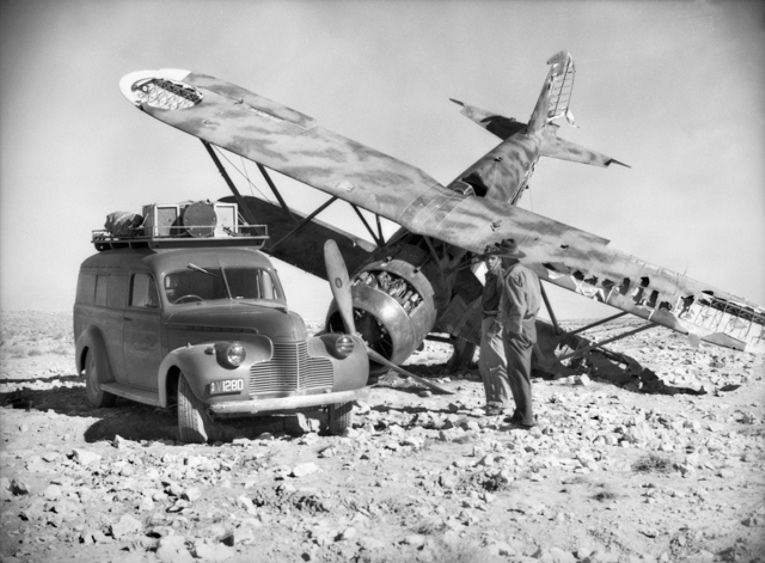
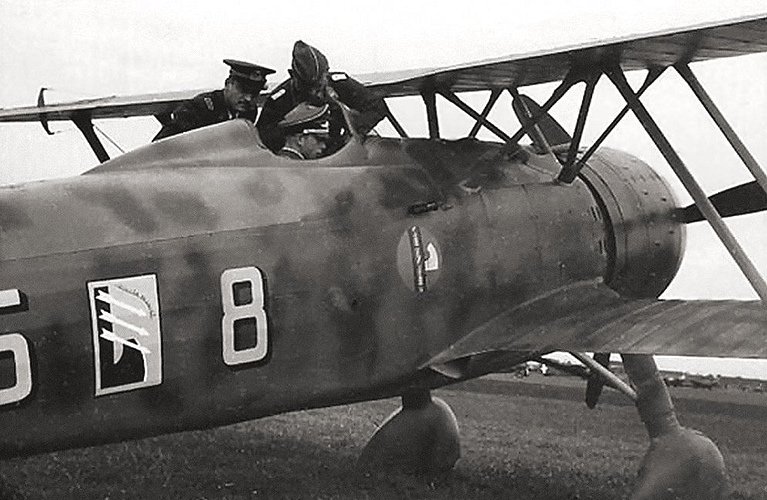
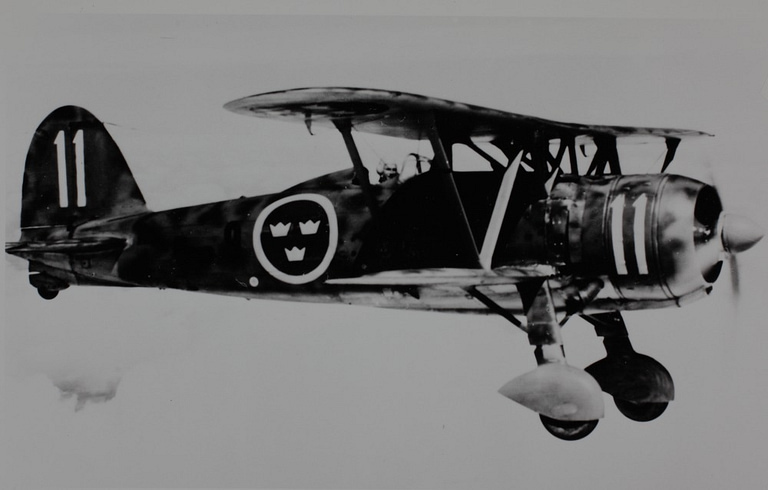
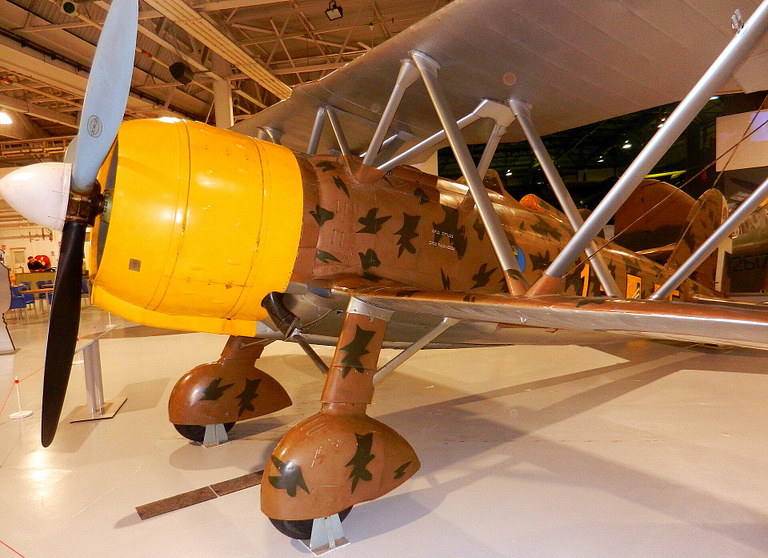
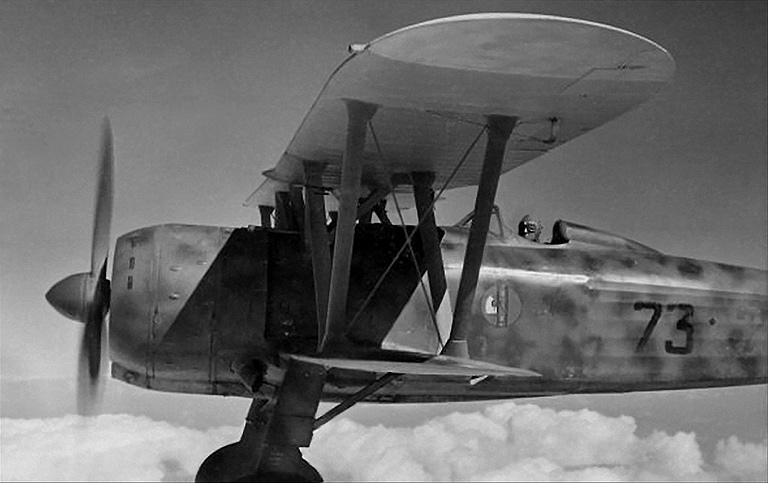
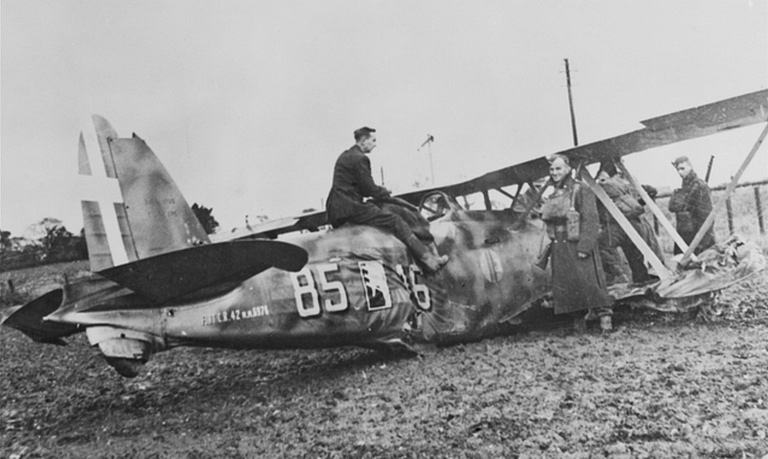
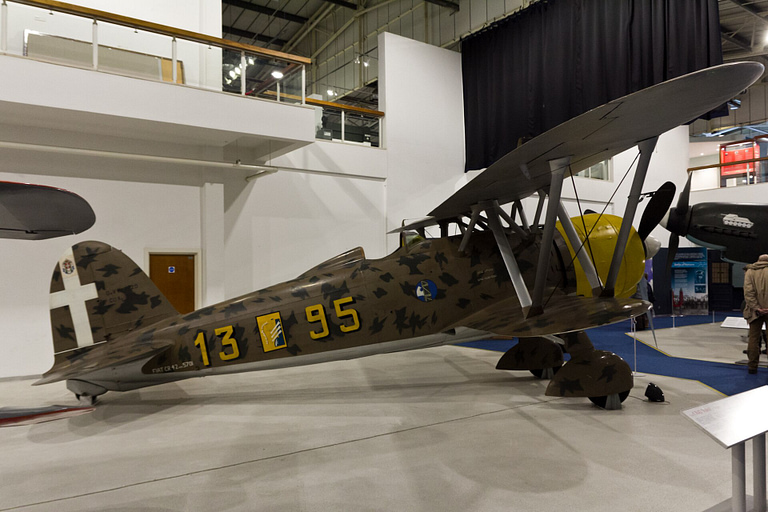
See the Falco in context
Was the Falco the best biplane fighter of the war — or a beautiful anachronism? This short history follows the CR.42 from Fiat’s drawing board through the Battle of Britain and the African wars to its place as the last front-line fighter biplane.
Video: “Fiat CR.42 — The Best Biplane Fighter of WW2?” by AllthingsWW2 (~88,000 views). Embedded via YouTube.
Where the Falco fought
The Falco, by the numbers
The CR.42 fought a war it was never really equipped to win, and its record is a mix of genuine successes and inevitable losses. Superb in a turning fight and available in huge numbers, it did real damage where it could dictate the terms — and was picked apart where it could not. It was, above all, the last front-line fighter biplane, closing a chapter of air warfare that began in 1914.
Claims and losses in the Mediterranean and African air wars are hard to reconcile between Italian, British and other records; the figures above reflect the type’s scale and its most famous exploits rather than a precise tally.
Fiat CR.42 Falco — questions & answers
Can you fly a Fiat CR.42 Falco today?
No airworthy CR.42 currently flies for the public, though one is under long-term restoration at Duxford. Several complete examples survive as static museum exhibits. If you want to fly a real fighter yourself, MiGFlug offers cockpit experiences in genuine jet fighters you can actually strap into.
Why did Italy use biplanes in the Second World War?
Italian fighter doctrine still prized the tight-turning dogfight, where an agile biplane excelled, and Italy’s engine industry could not yet supply enough powerful inline engines for a first-rate monoplane. The CR.42 was the result — superb at manoeuvre, but overtaken by the speed and firepower of monoplane fighters.
Did Italian biplanes really fight in the Battle of Britain?
Yes. In late 1940 the Corpo Aereo Italiano flew Fiat CR.42s from bases in occupied Belgium against southern England — one of the more surprising sights of the Battle of Britain. One of those Falcos survives, having force-landed in Suffolk.
Was the CR.42 a good fighter?
For its type, yes — it was beautifully agile and could out-turn a Hurricane or even a Spitfire. But it was slow and armed with only two machine guns, so against modern monoplanes it was badly outclassed and increasingly relegated to second-line roles.
How many CR.42s survive?
Several. Complete Falcos are preserved at the RAF Museum in the UK, the Swedish Air Force Museum and the Italian Air Force Museum, with another under restoration at Duxford.
You can’t fly a Falco — but you can fly a fighter jet
The Falco’s war belongs to history, but the thrill of flying a real fighter doesn’t. With MiGFlug you can strap into a genuine jet — from the L-39 Albatros to a MiG-29 at the edge of space — with an experienced fighter pilot beside you.
 Fly the L-39 AlbatrosThe world’s most-flown jet trainer — aerobatics included
 Fly the F-104 Starfighter“The missile with a man in it”
 Fly the MiG-21The Cold War’s most-produced jet
 Vuela el T-33 Shooting StarAmerica’s first jet trainer
 Fly the DH VampireA piece of early jet history
 Fly the S.211Agile Italian jet trainer
 Fly the MB-326The classic Aermacchi jet
 Fly the MiG-15The Soviet legend of the Korean War
Related aircraft
Where these facts come from
- RAF Museum — Fiat CR.42 FalcoThe Battle of Britain survivor MM5701
- Vintage Aviation News — surviving FalcosThe world’s surviving CR.42s
- Key.Aero — Italy’s forgotten fighterHistory & combat record
- San Diego Air & Space MuseumArchive photography of the type
Figures are drawn from museum and reference sources and cross-checked; where sources differ, the most commonly cited value is given. Armament and performance varied between the Falco’s several sub-types.