
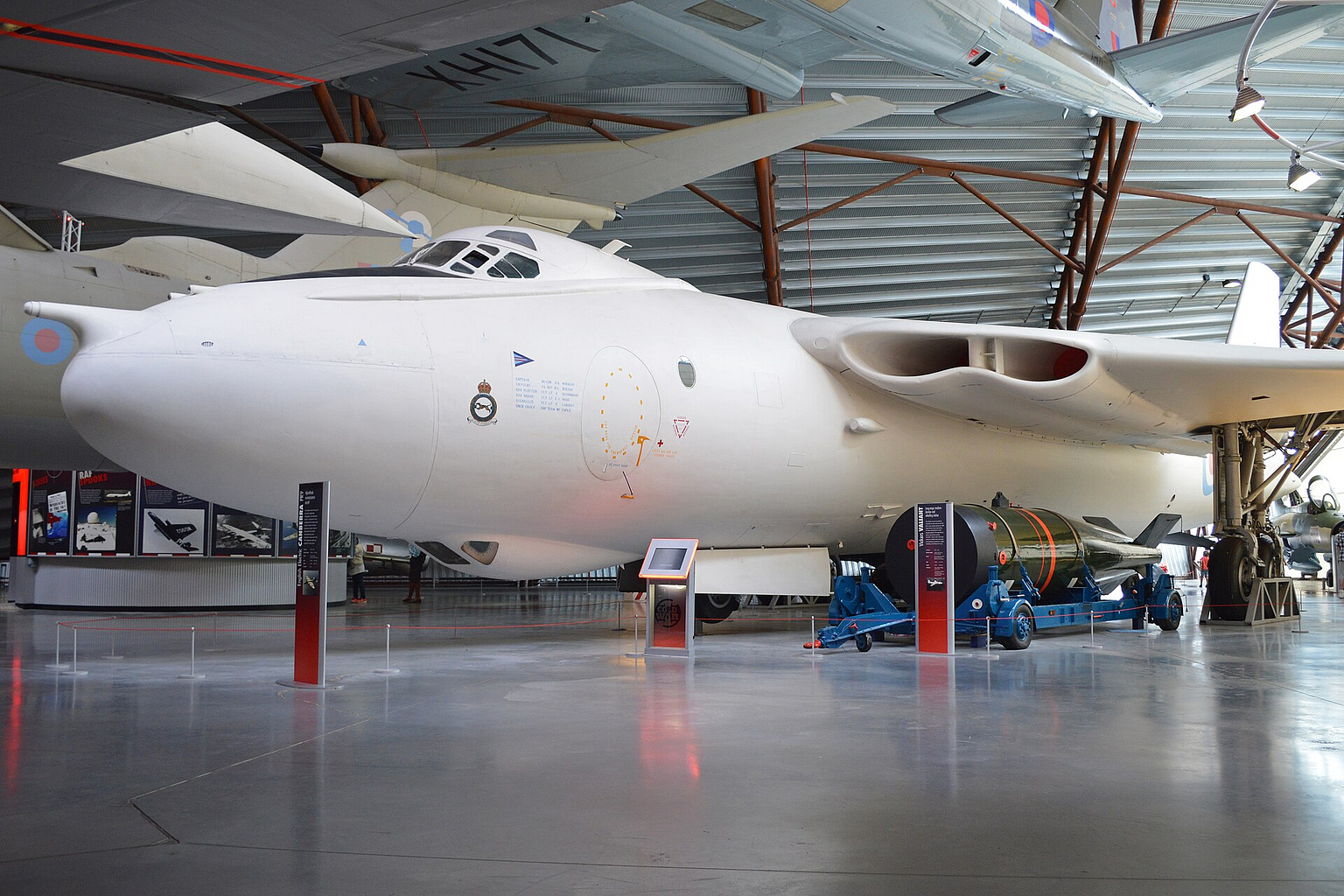
Vickers Valiant
Britain’s first V-bomber
The first of the RAF’s three “V-bombers” to fly and to serve — the aircraft that dropped Britain’s first atomic and hydrogen bombs, fought at Suez, and was then grounded almost overnight when metal fatigue cracked its wings.
The bomber that armed Britain’s deterrent — then cracked
When the Air Ministry set out to build a jet force capable of delivering Britain’s new atomic bomb, it hedged its bets. The radical designs that became the Avro Vulcan y Handley Page Victor promised extraordinary performance but carried real technical risk. So Vickers-Armstrongs, under chief designer George Edwards, was asked for something more conventional — a lower-risk “insurance” design that could reach the squadrons quickly. The result was the Vickers Valiant, and the gamble paid off: it was the first of the three “V-bombers” to fly and the first to enter service.
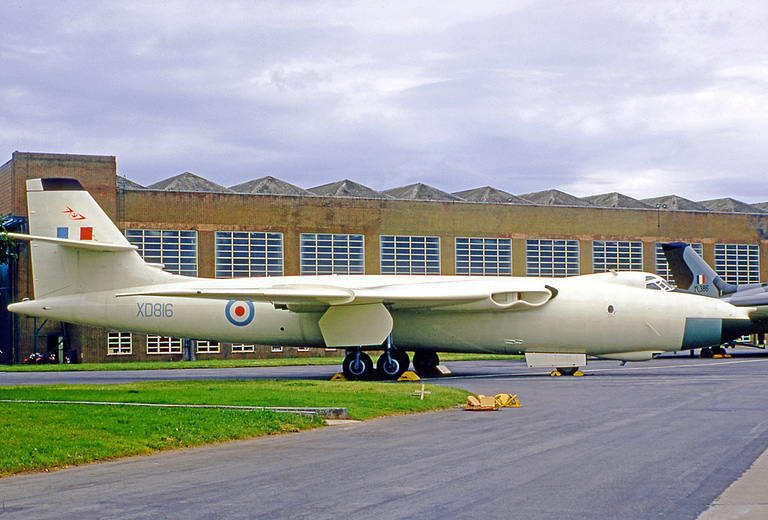
The prototype WB210 first flew on 18 May 1951 from Wisley, in the hands of Vickers’ veteran test pilot Joseph “Mutt” Summers. The programme was nearly derailed the following January when WB210 was lost to an engine-bay fire; the crew bailed out, but Squadron Leader Brian Foster was killed. Development pressed on, and by July 1955 No. 138 Squadron at RAF Wittering was operational — the cutting edge of Britain’s new airborne nuclear deterrent, painted in gleaming anti-flash white to reflect the heat of a nuclear blast.
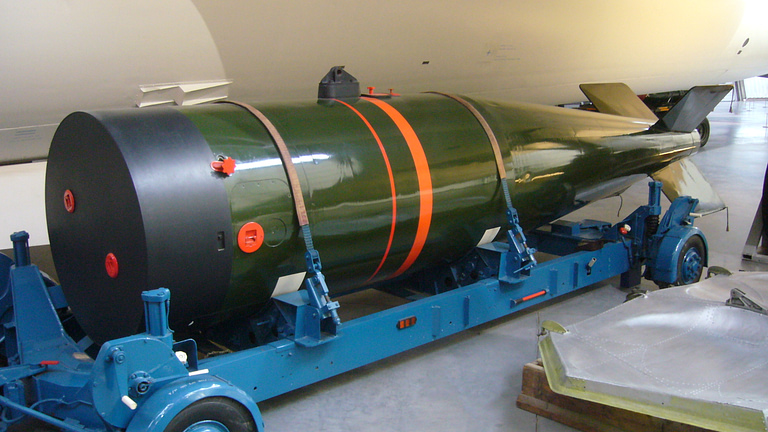
The Valiant packed its short career with firsts. On 11 October 1956 a Valiant of No. 49 Squadron dropped Britain’s first air-delivered atomic bomb — a Blue Danube — over Maralinga, South Australia. Weeks earlier, other Valiants had flown the V-force’s only combat missions, bombing Egyptian airfields from Malta during the Suez Crisis — and, tellingly, they did so conventionally, never nuclearly. Then on 15 May 1957 the Valiant XD818 released Britain’s first hydrogen bomb in Operation Grapple, off Christmas Island.
Its end came almost as fast as its rise. To survive improving Soviet missiles, the V-force switched to low-level flying in the early 1960s — but the Valiant’s wing had been designed for smooth air at high altitude. In August 1964 a heavy jolt in flight exposed metal fatigue in the main spar; fleet-wide inspection found widespread cracking. Judged uneconomic to repair, the entire fleet was grounded in December 1964 and scrapped. The first V-bomber to fly was also the first to go — a front-line life of barely a decade.
01The Vickers Valiant and Britain’s V-force: why the RAF built three bombers at once
Faced with the enormous stakes of the nuclear age and the uncertainty of untried technology, the Air Ministry deliberately ordered three different jet bombers against overlapping specifications — the Valiant, Vulcan and Victor — rather than betting everything on one. Giving each a name beginning with “V” broke the RAF’s old tradition of naming bombers after cities and gave the force its enduring nickname.
The Valiant was the pragmatic choice: conventional enough to be built quickly and reliably, it filled the front line while the more advanced Vulcan and Victor matured. By the time those two hit their stride, the Valiant was already being pushed from the strategic role — and the low-level mission that followed would prove its undoing.
What makes it special
The low-risk “insurance” bomber
Where the Vulcan chose a delta wing and the Victor a crescent, George Edwards gave the Valiant a moderately swept, conventional wing. The bet was that a straightforward airframe would reach service faster and with less technical risk — and it did, flying in 1951 and entering RAF service in 1955, ahead of both its more radical siblings.
Four Avons buried in the wing roots
Its four Rolls-Royce Avon turbojets were embedded in the thick wing roots and fed by leading-edge intakes, an aerodynamically clean layout that kept the fuselage free for a large fuel load and the bulky early nuclear weapons. The distinctive twin-intake leading edge became one of the Valiant’s signatures.
Built for the high-altitude bomb run
The Valiant was optimised to cruise near Mach 0.84 at around 54,000 ft — above the reach of 1950s defences — and dropped its weapons from that height. It wore anti-flash white with pale, washed-out national markings designed to reflect the thermal flash of a nuclear detonation rather than to hide it from enemy eyes.
02The Vickers Valiant B.2 “Black Bomber”: the strengthened one-off that could have saved the fleet
A single specialised low-level pathfinder, the Valiant B.2 (WJ954), first flew in September 1953. Painted gloss black, it had a strengthened structure and moved its main undercarriage into streamlined pods on the wing trailing edges to free wing space for fuel and to withstand the punishing loads of high-speed flight down low. The pathfinder role evaporated, an order for more was cancelled, and the sole aircraft was destroyed in trials in 1958. The irony is sharp: the B.2’s beefed-up wing was exactly what the standard B.1 lacked when the fleet was later forced down to low level.
03The Vickers Valiant’s wing-spar fatigue: how low-level flying grounded a whole fleet
The Valiant’s wing was stressed for smooth, thin air at high altitude. When rising Soviet surface-to-air missiles pushed the V-force down to low level from the early 1960s, the aircraft began soaking up turbulence loads it was never built for, and fatigue cracks spread through the DTD683 aluminium alloy of the main spar. On 6 August 1964 the crew of WP217 felt a heavy in-flight jolt that turned out to be a major spar failure. Inspections found widespread cracking across the fleet, a full re-sparring was judged uneconomic, and every Valiant was grounded within months and scrapped.
Full specifications
Figures are for the production Valiant B.1. Contested values (thrust, ceiling, number built) are hedged; several sources differ slightly.
Airframe & Performance
- Multitud
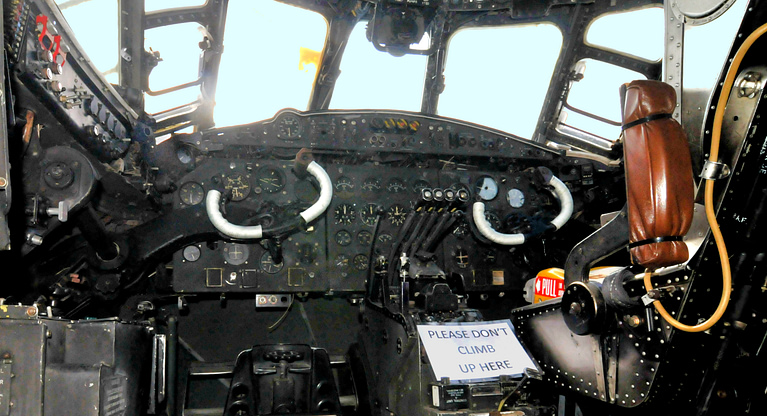
- 5 (two pilots, two navigators, air electronics officer)
- Longitud
- 32.99 m (108 ft 3 in)
- Envergadura
- 34.85 m (114 ft 4 in)
- Altura
- ~9.80 m (32 ft 2 in)
- Área del ala
- ~219 m² (2,362 sq ft)
- Max takeoff weight
- ~63,500 kg (140,000 lb)
- Max speed
- ~912 km/h (567 mph, Mach ~0.84) at altitude
- Techo de servicio
- ~16,000 m (~54,000 ft)
- Rango
- ~7,240 km (4,500 mi) with underwing tanks
Propulsion, Payload & Cost
- Engines
- 4 × Rolls-Royce Avon RA.28 turbojets
- Thrust (each)
- ~44.5 kN (~10,000–10,500 lbf, sources vary)
- Bomb load
- ~9,500 kg (21,000 lb) — one Blue Danube or conventional bombs
- First flight
- Prototype WB210, 18 May 1951
- Built
- ~107 (sources vary, ~104–107)
- Unit cost
- Commonly cited around £250,000 (mid-1950s, estimate)
- Cost per flight hour
- Not reliably recorded in 1950s RAF accounting (estimate only)
04The Vickers Valiant’s operating costs: what a 1950s V-bomber really cost
Reliable per-hour operating figures for the Valiant simply were not kept the way modern fleets track them, so any number should be treated as an order-of-magnitude estimate. Contemporary sources commonly place the flyaway cost of a Valiant in the region of £250,000 in mid-1950s money — a large sum, but deliberately less than the more advanced Vulcan and Victor, in keeping with the Valiant’s role as the lower-cost, lower-risk member of the V-force. Its true “cost”, in the end, was measured differently: a fleet-wide re-sparring to fix the fatigue cracks was judged so expensive that scrapping the aircraft outright was the cheaper option.
From specification to scrapyard in seventeen years
Ordered against B.9/48
Vickers’ design, evolved from specification B.35/46, is ordered against B.9/48 — the pragmatic, lower-risk member of the future V-force.
Prototype first flight
WB210 flies from Wisley on 18 May 1951, piloted by Mutt Summers — the first V-bomber into the air. The name “Valiant” is adopted that June.
WB210 lost
The prototype is destroyed by an engine-bay fire on 12 January 1952; the crew bails out but Sqn Ldr Brian Foster is killed.
Enters RAF service
No. 138 Squadron at RAF Wittering becomes operational in July 1955 — the first V-bomber squadron, in anti-flash white.
Suez — the V-force’s only war
From 31 October Valiants bomb Egyptian airfields from Malta during Operation Musketeer — the sole combat use of any V-bomber, flown conventionally.
Britain’s first atomic drop
On 11 October a No. 49 Squadron Valiant releases a Blue Danube over Maralinga — the first British air-delivered atomic bomb.
Britain’s first H-bomb
On 15 May Valiant XD818 drops the country’s first hydrogen device in Operation Grapple, near Christmas Island.
Tankers and low level
Converted Valiant tankers carry much of the RAF’s air-refuelling load, while the strategic force is pushed down to low-level penetration.
Grounded and scrapped
Main-spar fatigue exposed by the WP217 incident grounds the whole fleet in December 1964; No. 49 Squadron disbands and the Valiants are broken up.
Twelve Vickers Valiant stories
Three bombers, one insurance policy
The Valiant was Britain’s deliberately low-risk V-bomber — and it flew first.
Read the full story
The fire that nearly killed the programme
WB210 was lost to an engine-bay fire in January 1952, with one crewman killed.
Read the full story
The bomb that started it all
On 11 October 1956 a Valiant dropped Britain’s first air-delivered atomic bomb.
Read the full story
The hydrogen-bomb crew
Valiant XD818 dropped Britain’s first H-bomb in 1957 — though the device underperformed.
Read the full story
The only V-bomber to fight
At Suez in 1956, Valiants flew the V-force’s sole combat missions — conventionally.
Read the full story
Poor marks over Egypt
Suez bombing was reportedly inaccurate, and the raids are judged of limited effect.
Read the full story
The tanker years
Converted Valiants provided much of the RAF’s air-to-air refuelling in the early 1960s.
Read the full story
The Black Bomber
A one-off strengthened Valiant B.2 was painted gloss black for the low-level role.
Read the full story
Low level killed it
The switch to low-level flying cracked wings built for high altitude.
Read the full story
The jolt that grounded a fleet
A single heavy in-flight shock in 1964 exposed the fatal spar cracks.
Read the full story
Painted for Armageddon
The Valiant wore anti-flash white to survive a nuclear blast, not to hide.
Read the full story
The lone survivor at Cosford
Grapple veteran XD818 is the only complete Valiant left.
Read the full story
The Valiant in pictures
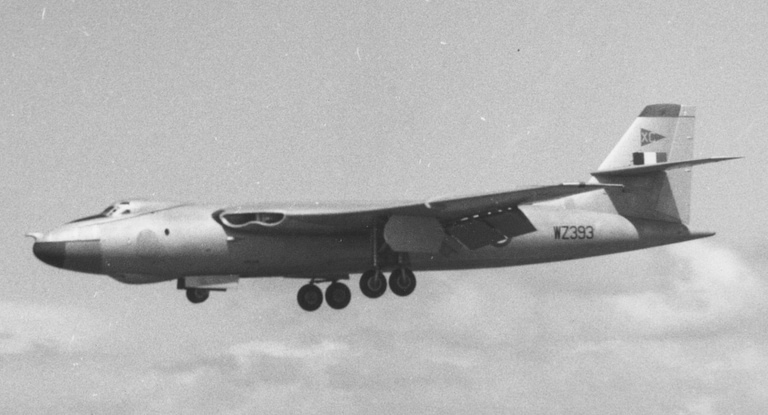
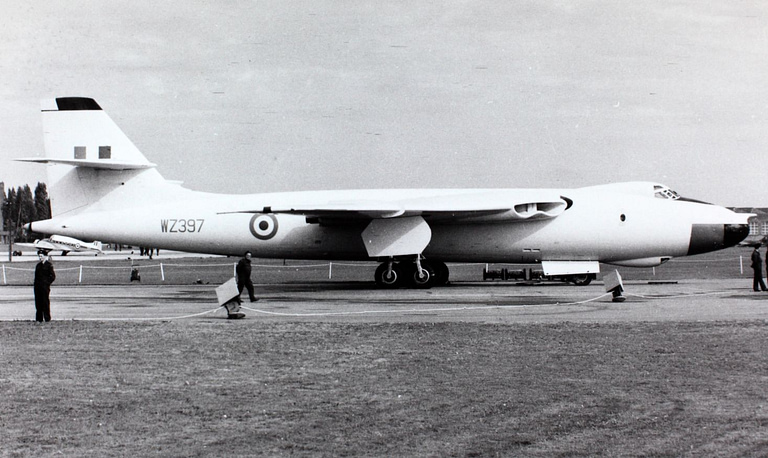
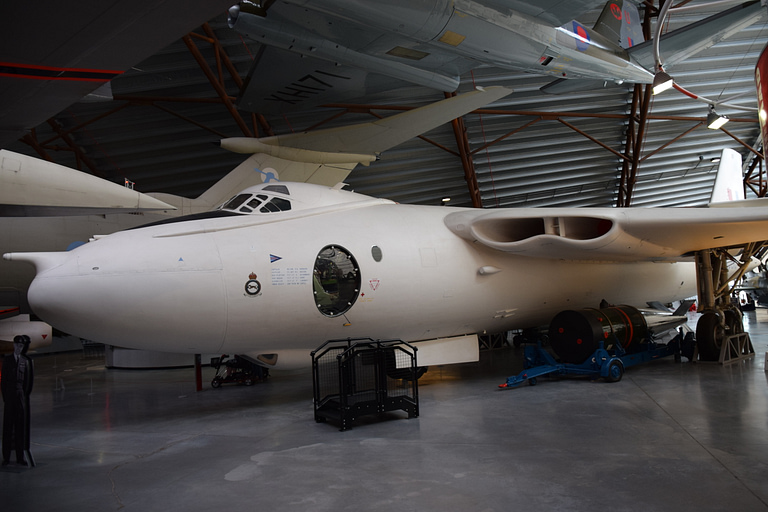
The Vickers Valiant in motion
A curated video feature for the Vickers Valiant is coming soon. In the meantime, explore the photo gallery above and the operations map below.
Where the Valiant flew
The record that defines it
The Valiant is a bomber, not a fighter, and holds no aerial kills — but it owns a unique distinction: it is the only one of Britain’s three V-bombers ever used in combat. During the 1956 Suez Crisis (Operation Musketeer), Valiants flying from Malta bombed Egyptian airfields — and did so as conventional bombers, never nuclear. Bombing from high altitude, accuracy was reportedly poor and the raids are generally judged of limited military value. The Valiant’s greater mark on history was made on the test range: it dropped Britain’s first atomic bomb (1956) y first hydrogen bomb (1957).
Compare the combat record of every military aircraft. Figures as of July 2026.
Everything people ask about the Vickers Valiant
Can I fly in a Vickers Valiant?
Why was the Valiant called a “V-bomber”?
Did the Valiant really drop Britain’s first nuclear bombs?
Was the Valiant ever used in combat?
Why was the Valiant retired so early?
How many Valiants survive today?
How fast and high could the Valiant fly?
You can’t fly the Valiant.
These, you can.
Some legends only live in museums — others are fuelled and waiting. MiGFlug has put civilians in real military jet cockpits since 2004.
 Fly the L-39 AlbatrosThe world’s most-flown jet trainer — aerobatics included
 Fly the F-104 Starfighter“The missile with a man in it”
 Fly the MiG-21The Cold War’s most-produced jet
 Vuela el T-33 Shooting StarAmerica’s first jet trainer
 Fly the DH VampireA piece of early jet history
 Fly the S.211Agile Italian jet trainer
 Fly the MB-326The classic Aermacchi jet
 Fly the MiG-15The Soviet legend of the Korean War
Continue the tour
Every fact, checked
- RAF Museum — Valiant XD818 individual historyOfficial museum record of the sole surviving Valiant and its H-bomb drop.
- Thunder & Lightnings — Vickers Valiant historyDetailed history: prototype, WB210 crash, Suez squadrons and the WP217 grounding.
- This Day in Aviation — first British atomic dropThe 11 October 1956 Blue Danube drop, crew details and B.1 specifications.
- Imperial War Museums — Operation MusketeerAuthoritative context for the Suez Crisis and the RAF bombing campaign.
- Vulcan to the Sky Trust — The Black BomberHeritage account of the Valiant B.2 pathfinder and the low-level fatigue irony.
- The Royal Air Force Chronicle — Vickers ValiantThe “insurance” design, anti-flash white, tanker role and fatigue withdrawal.
- Jets of the Cold War — Operation GrappleThe 1957 hydrogen-bomb trials and the underperformance of the first device.
- Military Factory — Vickers ValiantConsolidated specification table for dimensions, weights and performance.