For the first time, the U.S. Air Force is asking Congress for money to actually buy — not just develop — autonomous combat drones designed to fly alongside human pilots. The number: $996.5 million. The year: fiscal 2027. The programme: Collaborative Combat Aircraft, or CCA. After years of PowerPoint slides, concept videos, and test flights, the drone wingman is about to become a line item on a purchase order.
This is a watershed moment for military aviation. The Air Force is betting that the future of air combat is not a single pilot in a single cockpit, but a team: one human flying a fighter, flanked by two or more autonomous drones that can scout, jam, strike, or absorb a missile meant for their manned partner.
Quick Facts
• FY2027 procurement request: $996.5 million (first-ever CCA buy)
• R&D funding: $1.37 billion additional in FY2027
• Total CCA programme request: $2.37 billion for FY2027
• Competing prototypes: General Atomics YFQ-42A vs. Anduril YFQ-44A
• Target unit cost: Under $25 million per drone
• Estimated first buy: ~40 aircraft if unit cost holds
• Mission types: Strike, ISR, electronic warfare, decoy
Two Prototypes, One Winner (Eventually)
The CCA’s Increment 1 phase has two competitors building flyable prototypes. General Atomics Aeronautical Systems is fielding the YFQ-42A. Anduril Industries — the Palmer Luckey-founded defence startup that has been tearing through the Pentagon’s procurement world — is building the YFQ-44A.
Both companies received development contracts in 2024. Both have been conducting flight tests. The Air Force has not yet announced a down-select, and it’s possible both designs could enter production if they meet cost and performance targets. At under $25 million per unit, a CCA costs roughly a fifth of an F-35 — cheap enough to risk in combat, expensive enough to be genuinely capable.
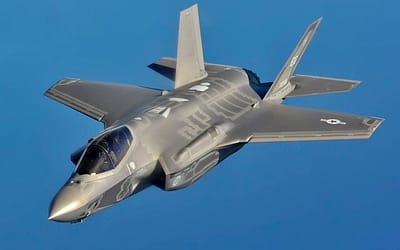
The drones are designed to operate semi-autonomously. A human pilot in an F-35 or the new F-47 would command a formation of two or more CCAs, assigning them missions in real time. The drones would handle their own navigation, threat avoidance, and target engagement within the parameters set by the pilot.
The XQ-67A, a precursor to the CCA programme, during its maiden flight. General Atomics is one of two companies competing for the drone wingman contract. US Air Force / Wikimedia Commons
Why Now
The timing is not accidental. Operation Epic Fury has shown exactly what happens when expensive manned aircraft face modern air defences. The U.S. has lost an F-15E, at least two MC-130Js, and multiple drones in Iran. A $25 million CCA can be sent into a heavily defended area to draw fire, jam radars, or strike targets — missions that would put a $100 million fighter and its pilot at unacceptable risk.
The Iran war has also accelerated the Pentagon’s appetite for mass. When your adversary can launch salvoes of ballistic missiles at your airfields and has enough anti-aircraft systems to make every sortie dangerous, you need more platforms in the air. CCAs provide that mass without proportionally increasing the number of pilots, maintenance crews, or runway space required.
The $25 Million Question
The Air Force has said publicly that CCAs are coming in under their cost target. If the $25 million-per-unit goal holds, the nearly $1 billion in FY2027 procurement funding could buy approximately 40 drones — enough to equip several fighter squadrons with autonomous wingmen for operational testing and early deployment.
The advance procurement budget also includes $150 million for FY2028, signalling that this is not a one-off buy but the beginning of a production ramp. The Air Force envisions hundreds of CCAs eventually flying alongside F-35s and F-47s in a force structure that looks radically different from today’s.
The drone wingman has been a concept for a decade. As of this budget request, it is now a programme of record with a production line. The age of manned-unmanned teaming just got real.
Sources: Air & Space Forces Magazine, DefenseScoop, Aviation A2Z, Breaking Defense
From the fjords of northern Norway to the sun-baked runways of southern Spain, NATO is conducting the largest air exercise in Alliance history. Ramstein Flag 2026, which began on 8 June and runs through 19 June, has assembled more than 200 aircraft from 18 nations...
The numbers arrived in Brussels like a cold shower. US fighter jets allocated to NATO: cut from 150 to 100. KC-46 aerial refuelling tankers: all eight withdrawn. Maritime patrol aircraft: slashed from 26 to 15. One carrier strike group, one cruise-missile submarine,...
Forget everything you think you know about how military drones get made. Lockheed Martin's legendary Skunk Works division — the outfit that gave us the U-2, the SR-71 Blackbird, and the F-117 Nighthawk — just showed off an unmanned aircraft that was designed,...




 English
0 Comments