The U.S. Air Force just opened its biggest pilot retention bonus program in history. Starting April 1, 2026, eligible aviators can apply for annual bonuses up to $50,000 — with total payouts reaching $600,000 over a 12-year commitment. The Air Force estimates 10,314 pilots will receive a bonus this fiscal year, a 15 percent jump from last year’s 8,941.
The numbers sound generous. They are not enough. The Air Force has been hemorrhaging experienced pilots for years, and the bleeding has only accelerated. Airlines are hiring at record rates, offering salaries that dwarf military pay, predictable schedules that don’t involve six-month deployments, and a quality of life the military simply cannot match.
The question is no longer whether the Air Force can afford to pay its pilots more. It is whether any amount of money can fix what is fundamentally a lifestyle problem.
Quick Facts
Program: FY2026 Aviation Bonus Program
Application window: April 1 – May 31, 2026
Maximum annual bonus: $50,000
Maximum total payout: Up to $600,000 over 12 years
Eligible pilots: 10,314 (up 15% from FY2025)
Highest payouts: Fighter, bomber, and U-2 communities
The Math That Keeps Generals Awake
Training a fighter pilot costs the Air Force roughly $11 million. That figure covers years of undergraduate pilot training, advanced fighter training, and the thousands of flight hours needed to produce a combat-ready aviator. When that pilot walks out the door at the end of their initial service commitment — typically around the 10-year mark — the Air Force loses more than a person. It loses a decade of institutional knowledge and an investment that cannot be quickly replaced.
The FY2026 bonus program tries to address this by offering the highest payouts to the communities hardest to replace. Fighter pilots, bomber crews, and the small cadre of U-2 Dragon Lady pilots — who fly reconnaissance missions at 70,000 feet in pressure suits — receive the top-tier bonuses. The updated program also offers higher compensation for shorter contract lengths, recognizing that many pilots balk at committing to another 12 years.
But the numbers tell a sobering story. Even with $600,000 on the table, the Air Force has consistently fallen short of its pilot retention targets. The reason is simple: the airlines can offer more.
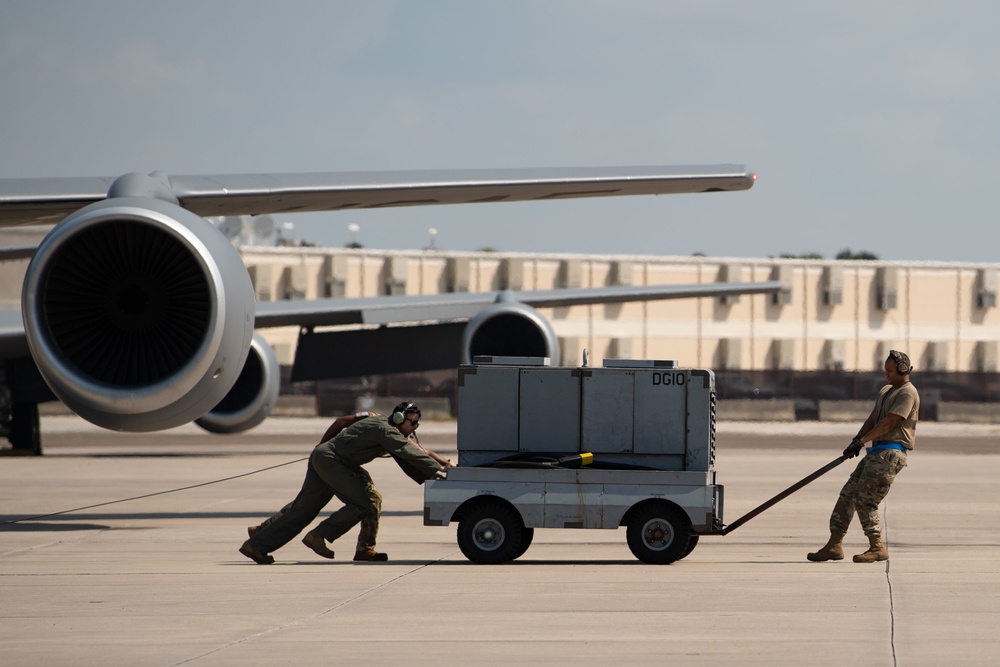
KC-135 crew members prepare for an aerial refueling mission. The Air Force is offering record bonuses to retain experienced aviators. U.S. Air Force photo / DVIDS
The Airline Magnet
A senior captain at a major U.S. airline earns between $350,000 and $450,000 per year. Some top the $500,000 mark. The work is demanding, but the schedule is predictable. You sleep in your own bed most nights. Your family knows when you will be home. You do not deploy to the Middle East for six months with 48 hours’ notice.
Compare that to a mid-career Air Force fighter pilot making roughly $130,000 in base pay and allowances — even with the $50,000 bonus, the total barely cracks $180,000. The math is devastating. An airline captain with 15 years of seniority earns more in a single year than the Air Force bonus pays over two.
The post-pandemic airline hiring boom made the gap worse. Every major U.S. carrier is short on pilots, and they are actively recruiting from the military with signing bonuses, fast-track upgrade programs, and the promise of stability. For a 35-year-old fighter pilot with two young kids and three combat deployments behind them, the pull is almost irresistible.
Money Cannot Fix the Real Problem
Retention surveys consistently show that money is not the primary reason pilots leave. Quality of life is. The endless cycle of deployments, temporary duty assignments, additional duties unrelated to flying, and the crushing bureaucracy of military life wears people down in ways that a bonus check cannot repair.
Pilots describe spending more time on administrative paperwork and ancillary training than in the cockpit. Squadron commanders — themselves experienced pilots — spend their days managing budgets and personnel actions instead of leading flights. The fighter pilot lifestyle that attracted young officers in the first place has been diluted by a decade of doing more with less.
The Air Force knows this. Internal studies have recommended reducing non-flying duties, increasing flight hours, and giving squadron commanders more autonomy. But implementing those changes requires structural reform that moves slowly through a vast bureaucracy, while the airlines are hiring now.
The $50,000 annual bonus is the biggest the Air Force has ever offered. It may slow the bleeding. But until the service fixes the underlying quality-of-life issues that drive pilots away, no check will be large enough to compete with a corner office at Delta, a home in Atlanta, and weekends with your kids.
Sources: Air Force Times, Stars and Stripes, Air & Space Forces Magazine, Task & Purpose
In a classified wargame room, Air Force planners just finished one of the most consequential simulations in recent memory. The question on the table: if the United States goes to war with China over Taiwan, what mix of aircraft gives the Air Force the best chance of...
Deep in California's Mojave Desert, a KC-135R Stratotanker sits on the Edwards Air Force Base flightline bristling with sensors, cameras, and telemetry equipment that no ordinary tanker carries. This is the Ghost Tanker — the U.S. Air Force's only dedicated test...
Somewhere in the CENTCOM operating area, a low-cost drone lifts off a catapult rail and heads toward an Iranian target. It looks almost identical to the Shahed-136 — the kamikaze drone Iran has been mass-producing and exporting for years. But this one carries American...




 English
0 Comments