
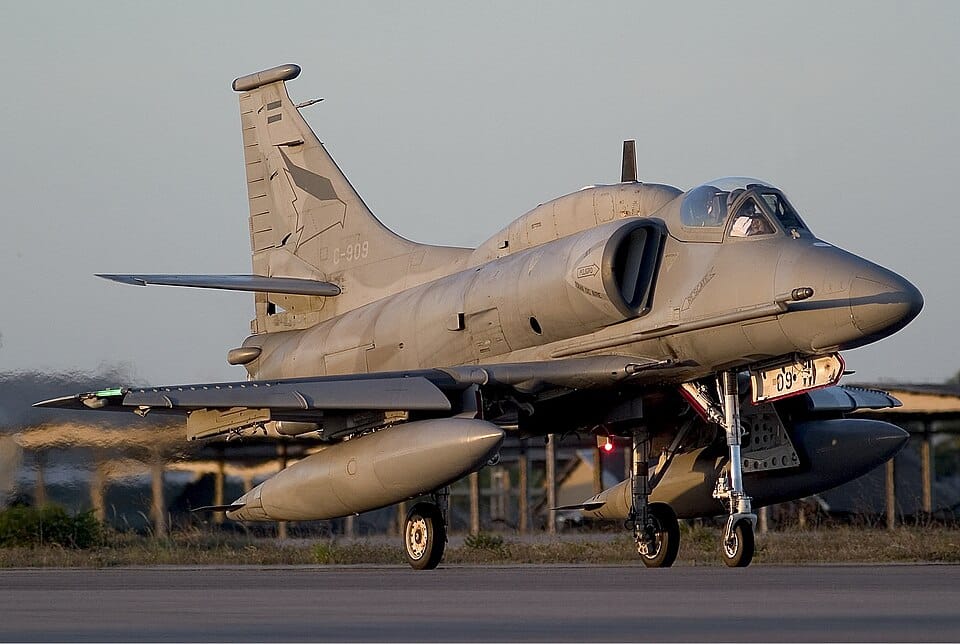
On May 14, 2026, at Villa Reynolds Air Base in San Luis province, the Argentine Air Force said goodbye to the last of its A-4AR Fightinghawks. It was not just a retirement ceremony. It was the closing of a chapter that stretches back sixty years — six decades of a small, stubborn jet that helped define what it meant to be an Argentine pilot.
For many in the crowd, this was personal. The A-4 Skyhawk is not merely a platform in Argentina. It is a symbol. A vessel for memory, grief, pride, and the particular kind of bravery that comes from climbing into a jet you know might not bring you home. When the last Fightinghawk taxied to a stop at the 5th Air Brigade, the silence that followed carried the weight of forty-four years of stories, losses, and hard-won triumphs.
✈️ Aircraft: A-4AR Fightinghawk (upgraded A-4M Skyhawk)
📅 Retired: May 14, 2026
🇦🇷 Operator: Fuerza Aérea Argentina, 5th Air Brigade
📍 Location: Villa Reynolds Air Base, San Luis Province
🕑 Service span: 60 years (first A-4Bs delivered 1966)
🔄 Replaced by: Ex-Royal Danish Air Force F-16AM/BM Fighting Falcons
🌎 Last operator: Brazil (AF-1 Skyhawk) is now the only A-4 user
Ed Heinemann’s Hot Rod: A Cold War Classic
The Douglas A-4 Skyhawk was born from the mind of Ed Heinemann, who in the early 1950s set out to prove that a light, simple attack jet could outperform the bloated, committee-designed machines rolling off the production lines of his competitors. When the prototype flew in 1954, it came in under the Navy’s weight specification by thousands of pounds. The Pentagon was stunned. Pilots were delighted. The A-4 earned its nickname — “Heinemann’s Hot Rod” — and went on to become one of the most-produced jet combat aircraft of the postwar era.

More than 2,960 Skyhawks were built. They served with the US Navy, US Marine Corps, and a dozen export customers. From the skies over Hanoi to the deserts of the Middle East, the little delta-winged jet proved itself again and again: agile, reliable, and deadly.
Argentina and the Skyhawk: A Bond Forged in History
Argentina received its first A-4B Skyhawks in 1966, beginning a relationship between pilot and airframe that would last longer than anyone predicted. For the Fuerza Aérea Argentina, the A-4 was more than an attack aircraft. It was the backbone of the fighter-bomber fleet, the jet that young pilots cut their teeth on, the machine that could be maintained with limited resources and still deliver results.

Throughout the 1970s, the Argentine A-4 fleet grew as the country acquired additional variants. The aircraft became the workhorse of Argentine tactical aviation — a role it would hold for decades, even as other nations moved on to newer types.
The Falklands: Blood, Courage, and a Tiny Jet
Then came 1982, and the Malvinas. The Falklands War was, for the Argentine A-4 pilots, both the finest hour and the darkest chapter. Flying at wave-top height through a gauntlet of Sea Harriers, Sea Dart missiles, and radar-directed gunfire, Argentine Skyhawk pilots pressed home attacks against the Royal Navy task force with a courage that stunned even their adversaries.
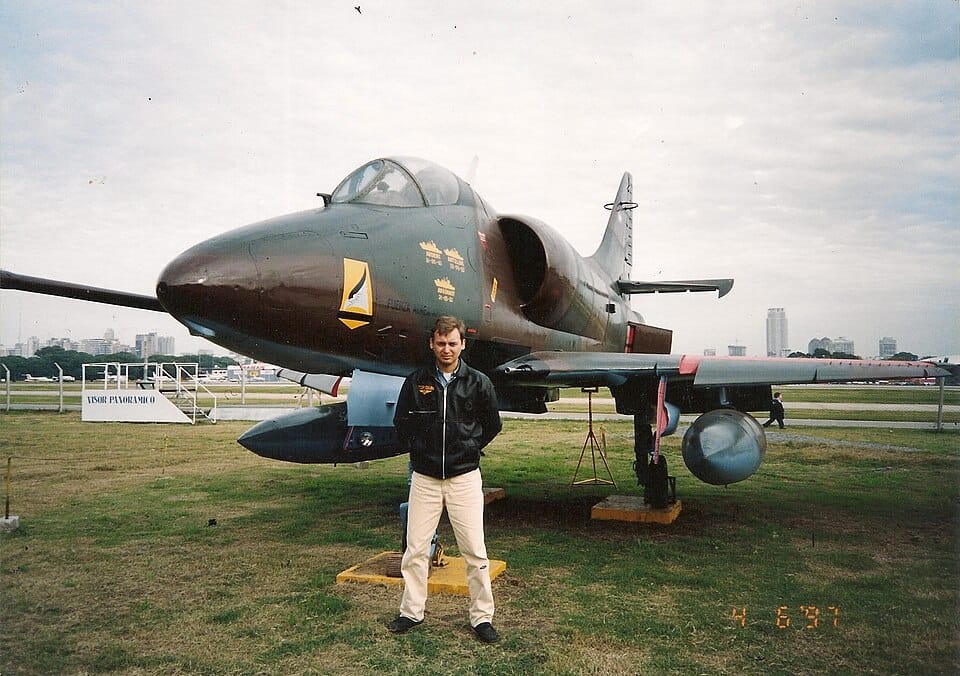
They sank HMS Coventry, HMS Ardent, and HMS Antelope. They damaged a dozen more ships. But the cost was staggering. Argentina lost more than twenty Skyhawks in the war — shot down by Sea Harriers, struck by surface-to-air missiles, or lost to the brutal realities of low-level maritime attack. Many pilots never returned. Their names are carved into memorials across Argentina today, and in the hearts of every pilot who flew the A-4 afterward.
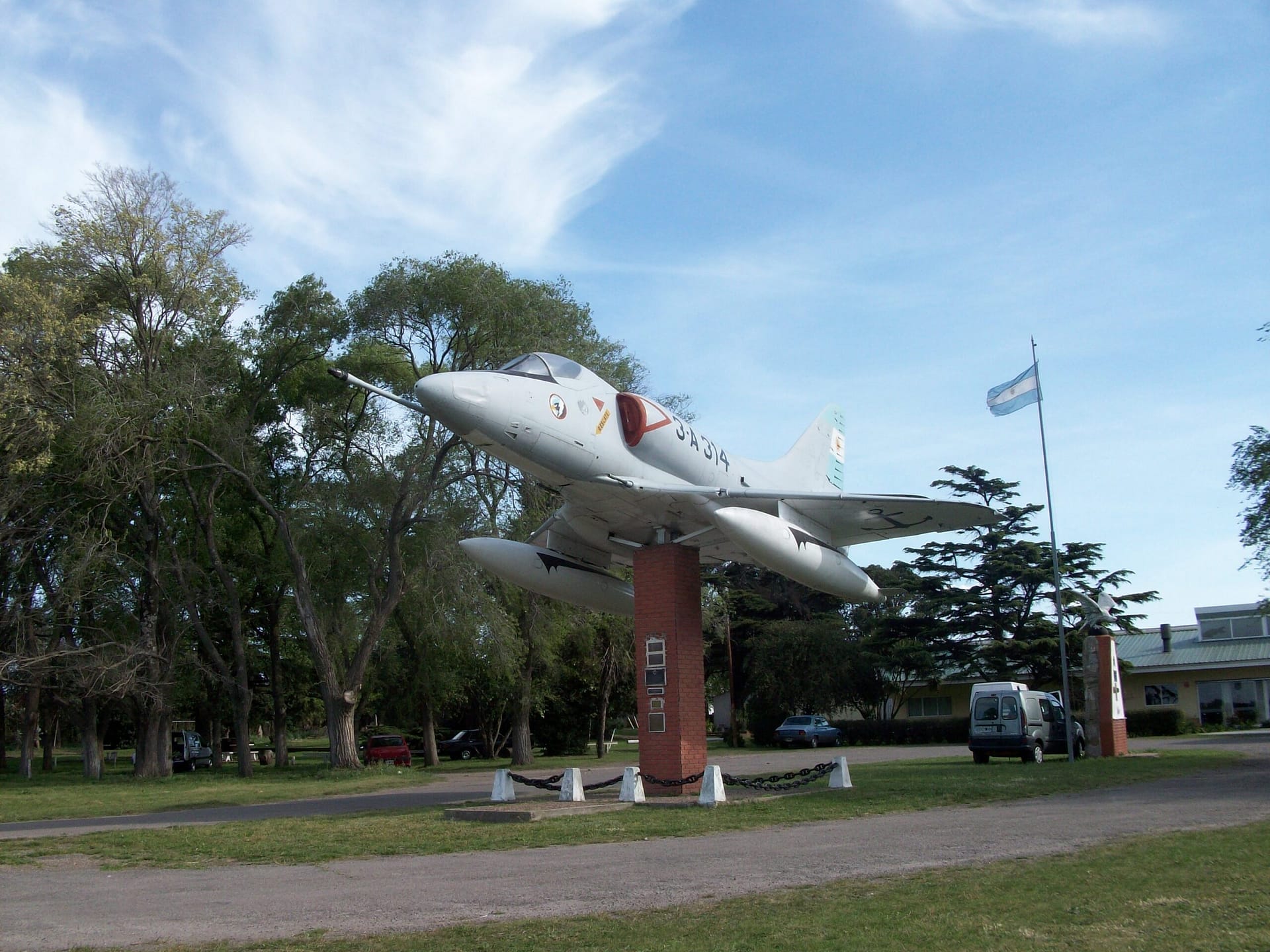
The Fightinghawk Reborn: The A-4AR Upgrade
After the Falklands, Argentina’s A-4 fleet was battered but not broken. In the 1990s, a new lease on life arrived in the form of 36 surplus US Marine Corps A-4M Skyhawks, acquired and upgraded by Lockheed Martin into the A-4AR Fightinghawk configuration. The upgrade was substantial: a new APG-66 radar (the same used in the F-16A), a modern glass cockpit with HOTAS controls, and upgraded avionics that brought the venerable airframe into the digital age.

The A-4AR was a different beast from the bare-bones B-models that had fought over the South Atlantic. It was a credible, capable fighter-bomber that could hold its own against regional threats. For nearly three decades, the Fightinghawk served as Argentina’s primary combat jet — a testament to the Skyhawk’s extraordinary adaptability.
The Successor Arrives: Danish F-16s Touch Down
The end of the Fightinghawk era was sealed in December 2025, when the first batch of ex-Royal Danish Air Force F-16AM and F-16BM Fighting Falcons arrived in Argentina. After decades of operating upgraded Cold War-era jets, the Argentine Air Force was finally stepping into the fourth generation. The F-16s, while themselves not new, represent a massive leap in capability: true multi-role performance, beyond-visual-range combat ability, and a global support network that the A-4 never had.

The transition has been years in the making. Argentina’s long search for a Skyhawk replacement included evaluations of the JF-17 Thunder, the Kfir, and the FA-50, before the Danish F-16 deal was finalized. It is a new chapter, and an exciting one — but for many Argentine pilots, nothing will ever replace the feeling of climbing into a Skyhawk cockpit.
The Last Skyhawk Nation: Brazil Carries the Torch
With Argentina’s retirement, only one country on Earth still flies the A-4 Skyhawk: Brazil. The Brazilian Navy operates the AF-1 Skyhawk (based on the A-4KU) from the aircraft carrier NAM Atlântico. These jets, themselves heavily upgraded with modern avionics and weapons systems, represent the very last gasp of Ed Heinemann’s masterpiece in operational military service.

When Brazil eventually retires its AF-1s, the A-4 Skyhawk will pass entirely into history. But what a history it has been: from Ed Heinemann’s drafting table to the skies over Vietnam, the South Atlantic, and a dozen other conflicts, the little jet that weighed less than its own specification rewrote the rules of combat aviation.
Farewell, Fightinghawk
At Villa Reynolds on May 14, the ceremony was everything a farewell should be. There were flyovers. There were speeches. There were old men in leather jackets with tears on their cheeks, remembering friends who never came back from the South Atlantic. And then the last A-4AR was towed into the hangar for the final time, its engine silent, its story complete.
Sixty years is a remarkable run for any military aircraft. For the A-4 in Argentine service, those sixty years encompass everything from the hope of a young air force building its strength, to the searing crucible of the Falklands, to the quiet professionalism of peacetime patrols over the Andes. The Skyhawk asked for nothing. It gave everything. And Argentina will not forget.
Sources: Argentine Air Force official communications; Jane’s Defence Weekly; Wikimedia Commons (CC BY-SA 3.0, CC BY 2.0, Public Domain); historical accounts of the Falklands War.


 English
0 Comments