
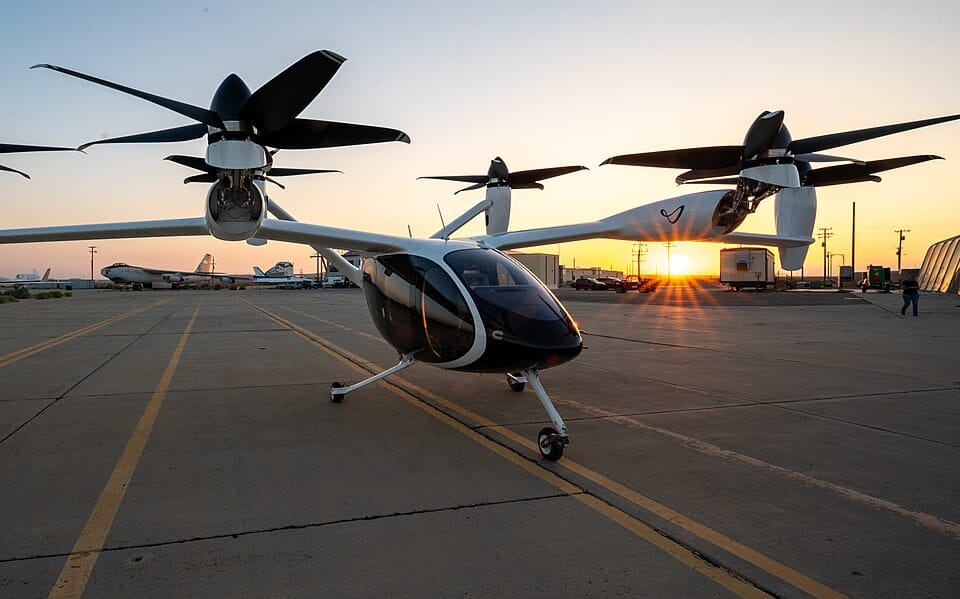
The air taxi revolution has a problem, and it's not the aircraft. Joby Aviation has flown from JFK to Manhattan in seven minutes. Archer Aviation has been named the official eVTOL provider for Belgrade's Expo 2027. FAA type certification is in the final stretch. The machines, against all odds, are nearly ready.
The ground, however, is not.
For electric vertical takeoff and landing aircraft to operate as commercial air taxis, they need somewhere to land, charge, and take off again—repeatedly, safely, and at scale. They need a new kind of airport. The industry calls them vertiports, and building them is turning out to be harder, more expensive, and more politically fraught than building the aircraft themselves.
🏚 Vertiports cost between $1M (basic retrofit) and $15M (flagship hub)
⚡ Fast-charging infrastructure is essential — aircraft need rapid turnaround
📢 Noise regulations remain a major hurdle despite eVTOLs being quieter than helicopters
💰 Funding models unclear — cities, operators, and developers all pointing at each other
✈ Joby flew JFK to Manhattan in 7 minutes; Archer signed for Belgrade Expo 2027
📋 Aircraft certification is ahead of infrastructure readiness in almost every market
What Is a Vertiport, and Why Can't We Just Use Heliports?
The simplest explanation: a vertiport is a heliport with a power outlet. But that dramatically understates the engineering challenge.
Joby's prototype charging system is designed to deliver megawatt-class power. For context, a typical fast-charging station for electric cars delivers around 350 kilowatts. eVTOL charging requires three to four times that power, and a busy vertiport might need several chargers operating simultaneously. That means new power lines, upgraded transformers, and potentially on-site energy storage to buffer peak demand.
Worse, there's no standardization yet. Joby's charging system is proprietary. Archer and Beta Technologies have started working on interoperability, but the industry hasn't settled on a universal charging standard. Imagine if every airline needed its own fuel type—that's roughly the current state of eVTOL charging infrastructure.
The NIMBY Problem: Quieter Isn't Silent
eVTOL manufacturers love to point out that their aircraft are significantly quieter than helicopters. This is true. A Joby S4 in cruise generates roughly 45 decibels at 500 meters—about the level of a quiet conversation. A helicopter at the same distance produces 80+ decibels.
But quieter is not silent, and the issue isn't just volume—it's frequency. A helicopter might fly overhead a few times a day. An air taxi vertiport could generate dozens of takeoffs and landings per hour, every hour, from early morning to late evening. Even at lower noise levels, the cumulative impact on nearby residents is a legitimate concern.
Community opposition has already stalled or killed vertiport proposals in several cities. The pattern is familiar to anyone who's watched urban development politics: the technology is welcomed in the abstract and opposed in the specific, especially when the specific means a landing pad visible from your bedroom window.
Who Pays for All of This?
The funding question is perhaps the most unresolved piece of the puzzle. Building a single mid-tier vertiport costs between $3 million and $7 million. Flagship hubs, like the four-story Skyports facility at Dubai International Airport, can cost $10 to $15 million. A functional network serving a metropolitan area would need dozens of these facilities.
So who pays? The candidates are familiar: cities and municipalities (using public infrastructure budgets), eVTOL operators themselves (Joby, Archer, Vertical Aerospace), real estate developers (who see air taxi access as a premium amenity), and airport authorities (who view it as an extension of existing aviation infrastructure).
In practice, the answer appears to be a combination. The Port Authority of New York and New Jersey is seeking partners to design and build a vertiport at LaGuardia Airport. Joby is investing in its own infrastructure for initial routes. Skyports, a dedicated vertiport developer, has attracted investment from real estate and aviation investors. But no single funding model has emerged as dominant, and the chicken-and-egg problem persists: operators won't invest in vertiports without guaranteed demand, and demand can't materialize without vertiports.
The Race: Joby in New York, Archer in Belgrade
Despite the infrastructure challenges, two companies are pushing forward with concrete plans. Joby Aviation has demonstrated its aircraft flying from JFK Airport to Manhattan in seven minutes, tracing routes it intends to offer commercially. The company plans to operate from existing heliport infrastructure initially, with electrification upgrades to follow.
Archer Aviation has taken a different approach, signing a partnership with Serbia to become the official eVTOL provider for Expo 2027 in Belgrade. This gives Archer a high-profile, time-limited showcase: a few months of intensive operations in front of visitors from over 130 countries. The deal includes fleet sales options and potential supply chain collaboration, with Serbia offering access to rare earth minerals for battery production.
Both strategies reveal the same underlying reality: the companies are working around the infrastructure gap rather than waiting for it to be solved. Joby is retrofitting existing helipads. Archer is targeting a temporary event rather than permanent infrastructure. Neither approach solves the long-term problem of building a durable, scalable vertiport network.
The disconnect between aircraft readiness and infrastructure readiness is the defining challenge of the eVTOL industry in 2026. The machines are impressive. The regulatory progress is real. But until someone figures out where to put them, how to charge them, and how to convince neighbors to accept them, air taxis will remain a technology in search of a landing pad.
The airport of the future isn't just smaller than today's airports. It's fundamentally different. And building it will require solving problems that have nothing to do with aerodynamics.
Sources: Flying Magazine, AeroTime, Aviation Week, Smart Cities Dive, The Next Web, eVTOL News, Low Altitude Economy, DataDeep.tech.
Related Questions
What is a vertiport?
A vertiport is a small airport for eVTOL air taxis — a place to take off, land, charge and turn around vertically-lifting electric aircraft. It's often described as "a heliport with a power outlet," but the engineering is far harder: eVTOL fast-charging needs megawatt-class power, several times what an electric-car charger delivers.
Why can't eVTOLs just use existing heliports?
Existing heliports lack the high-power charging eVTOLs need. Joby's charging system targets megawatt-class power, versus about 350 kilowatts for a car fast-charger, and a busy vertiport may run several chargers at once. That demands new power lines, upgraded transformers and possibly on-site energy storage — and there's no industry charging standard yet.
How much does a vertiport cost to build?
Vertiports range from about US$1 million for a basic rooftop retrofit to around US$15 million for a flagship hub. Costs come from charging infrastructure, fire protection, approach paths and noise mitigation. The expense and permitting time are why aircraft certification is now running ahead of infrastructure readiness in nearly every market.
Are eVTOLs quieter than helicopters?
Yes — eVTOLs are generally quieter than helicopters because distributed electric rotors avoid a helicopter's single large rotor and engine noise. Even so, noise regulations remain a major hurdle for urban operations, since frequent low-altitude flights over neighbourhoods raise community concerns that can block vertiport approvals.
How far along is eVTOL air taxi service?
Aircraft are close: Joby has flown JFK to Manhattan in seven minutes, Archer was named eVTOL provider for Belgrade's Expo 2027, and FAA type certification is in its final stretch. The bottleneck is ground infrastructure — vertiports and charging — which is proving harder and costlier than the aircraft.
Who is solving the vertiport problem?
Several firms are tackling it. Modular pads like the Australian Aeroberm vertiport aim to retrofit rooftops cheaply, while operators partner with cities and developers. But funding models remain murky, with each party expecting the others to pay — one reason eVTOL firms have burned billions without revenue.
Related Posts


0 Comments