

For three years, the world’s aviation press has watched Riyadh Air with the kind of attention usually reserved for a celebrity divorce. The airline has spent more on launch advertising than most mid-size carriers spend on a fleet. It has cut deals with Boeing and Airbus that other airlines would crawl across glass to get. It has hired senior people from Etihad, Singapore Airlines, IAG, Lufthansa, and every other globally recognised carrier. And on 1 July 2026, it is set to open its scheduled flights to the general public, flying from Riyadh to London Heathrow on its own Boeing 787-9 Dreamliner — after an initial phase of invitation-only flights to London and Dubai that began on 26 October 2025 with a leased aircraft.
Quick Facts
Airline: Riyadh Air
Parent: Public Investment Fund (PIF) of Saudi Arabia
Founded: March 2023
First commercial flight: 26 October 2025 (invitation-only, leased 787-9); public scheduled Riyadh (RUH) — London Heathrow (LHR) service announced for 1 July 2026
Launch aircraft: Boeing 787-9 Dreamliner
Total firm order: 39 Boeing 787-9 (with 33 options), 60 Airbus A321neo, 25 Airbus A350-1000 (with 25 options)
CEO: Tony Douglas (formerly Etihad Aviation Group CEO)
Strategic role: Centerpiece of Saudi Vision 2030 — turn Riyadh into a global aviation hub rivalling Dubai, Doha, and Istanbul
Network plan: 100+ destinations by 2030
Why Riyadh Air exists
To understand Riyadh Air, you have to understand Saudi Arabia’s Vision 2030 — the post-oil economic transformation programme Crown Prince Mohammed bin Salman has been running since 2016. Aviation is one of its central pillars. The Kingdom wants to be a global tourism destination, a global business travel hub, and a global air transit point comparable to the United Arab Emirates and Qatar.
It already has one excellent airline — Saudia, the flag carrier — but Saudia is a legacy operator built around religious tourism (the Hajj and Umrah pilgrimages to Mecca) and domestic and regional services. It is not optimised to compete head-to-head with Emirates, Qatar Airways, or Singapore Airlines on the global premium long-haul market. Riyadh Air is. It was conceived from a blank sheet of paper specifically to fill that gap.

The 1 July launch
Riyadh to London Heathrow is a deliberate choice. It is one of the most-fought-over premium long-haul routes in the world, currently operated by British Airways, Saudia, and (until recently) Virgin Atlantic. It is a route where premium-cabin passengers willingly pay £6,000+ for a one-way business class fare. It is a route Saudi Arabia’s ruling family and senior business class travel constantly. And it is a route where Riyadh Air can credibly arrive as a luxury alternative on day one — a 787-9 with brand-new lie-flat suites against legacy carriers running older aircraft with tired interiors.
Other early-network destinations following London include New York JFK, Paris Charles de Gaulle, Frankfurt, Madrid, Bangkok, and Tokyo. The full first-year plan calls for around fifteen long-haul destinations and twenty-plus regional routes, building toward over 100 destinations by 2030.

The fleet
Riyadh Air’s order book is one of the largest single-customer aircraft deals of the decade. Thirty-nine Boeing 787-9 Dreamliners (firm, with options for 33 more). Sixty Airbus A321neo single-aisles for medium-haul. A separate order for 25 Airbus A350-1000 widebodies (with purchase rights for 25 more) for ultra-long-haul. By 2030, the airline expects to be operating more than 130 aircraft — comparable in size to Etihad Airways at its peak.
The cabin design has been done in collaboration with Safran (business class suites) and Recaro (premium economy), with all-suite business class and a Premium Economy cabin that some early reviewers have described as comparable to legacy carriers’ business class of a decade ago. The economy product is reportedly closer to Qatar Airways than to a transatlantic low-cost carrier — which, given the Kingdom’s budget, is exactly the positioning intended.
The competitive question
The honest test for Riyadh Air will not be its launch day. It will be 2028 or 2029, once it has been flying long enough for passengers and industry to compare it on level terms with Emirates, Qatar Airways, Etihad, and Turkish Airlines. The Gulf airline market is brutally competitive. Emirates and Qatar Airways are formidable incumbents with long-built loyalty programmes and dense network presence. Etihad has been rebuilding from its mid-2010s overextension and remains a credible premium player. Turkish Airlines is the world’s largest network carrier by destinations served.
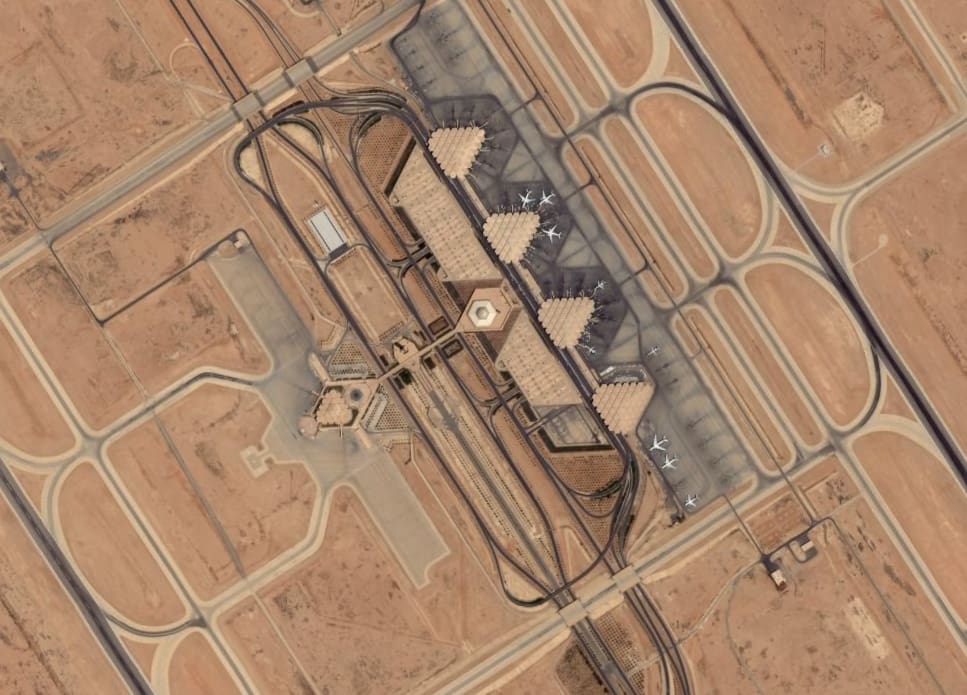
Riyadh Air’s answer is to lean on Saudi Arabia’s sovereign wealth, the new tourism industry the Vision 2030 plan is building, the geographical position of Riyadh as a credible hub between Europe-Asia and Europe-Africa flows, and the eventual opening of the new King Salman International Airport — a six-runway megaproject that will give Riyadh airport capacity comparable to DXB and AYT combined.
On 1 July 2026, the first Boeing 787-9 with paying passengers will push back from a Riyadh gate. After three years of branding, hiring, ordering, and waiting, the airline finally becomes real.
Sources: Simple Flying; Reuters aviation desk; Riyadh Air official statements; PIF investor briefings.
Related Questions
What is Riyadh Air?
Riyadh Air is a new Saudi Arabian carrier owned by the Public Investment Fund (PIF). Founded in March 2023 as part of Saudi Arabia's Vision 2030, it aims to turn Riyadh into a global aviation hub, competing with established Gulf carriers such as Emirates and Qatar Airways.
When did Riyadh Air start flying?
Riyadh Air operated its first commercial flight on 26 October 2025, initially on an invitation-only basis using a leased Boeing 787-9. Public scheduled service from Riyadh (RUH) to London Heathrow (LHR) was announced to begin on 1 July 2026.
What aircraft does Riyadh Air fly?
Riyadh Air launched with the Boeing 787-9 Dreamliner, a long-range twin-engine wide-body, and has placed major orders with both Boeing and Airbus to build out its fleet. The Dreamliner is a popular choice for new long-haul carriers — though even new 787s draw scrutiny, as the Lufthansa 787 probe showed.
Where does Riyadh Air fly?
Its first announced public route is Riyadh to London Heathrow, launching 1 July 2026, with an extensive network planned as the fleet grows. Long-haul ambitions are an industry-wide trend, exemplified by record routes like Alaska Airlines' Anchorage-to-Boston nonstop.
Who owns Riyadh Air?
Riyadh Air is wholly owned by the Public Investment Fund (PIF), Saudi Arabia's sovereign wealth fund. The deep financial backing has let the airline spend heavily on branding and recruit senior executives from carriers such as Etihad, Singapore Airlines, IAG and Lufthansa.
Related Posts
Lufthansa Splits a $5 Billion Order Between Airbus and Boeing
226 MAXs: India’s Akasa Air Places One of Aviation’s Biggest Orders
0 Comments