Hundreds of metal spheres fall from the sky over the village of Tadjmart in northern Mali on the night of 16–17 May. They are roughly the size of an orange. When they hit the ground, they explode. One child is killed. Three women are injured. In the morning, villagers find unexploded bomblets scattered among the houses — small, fruit-shaped, deadly.
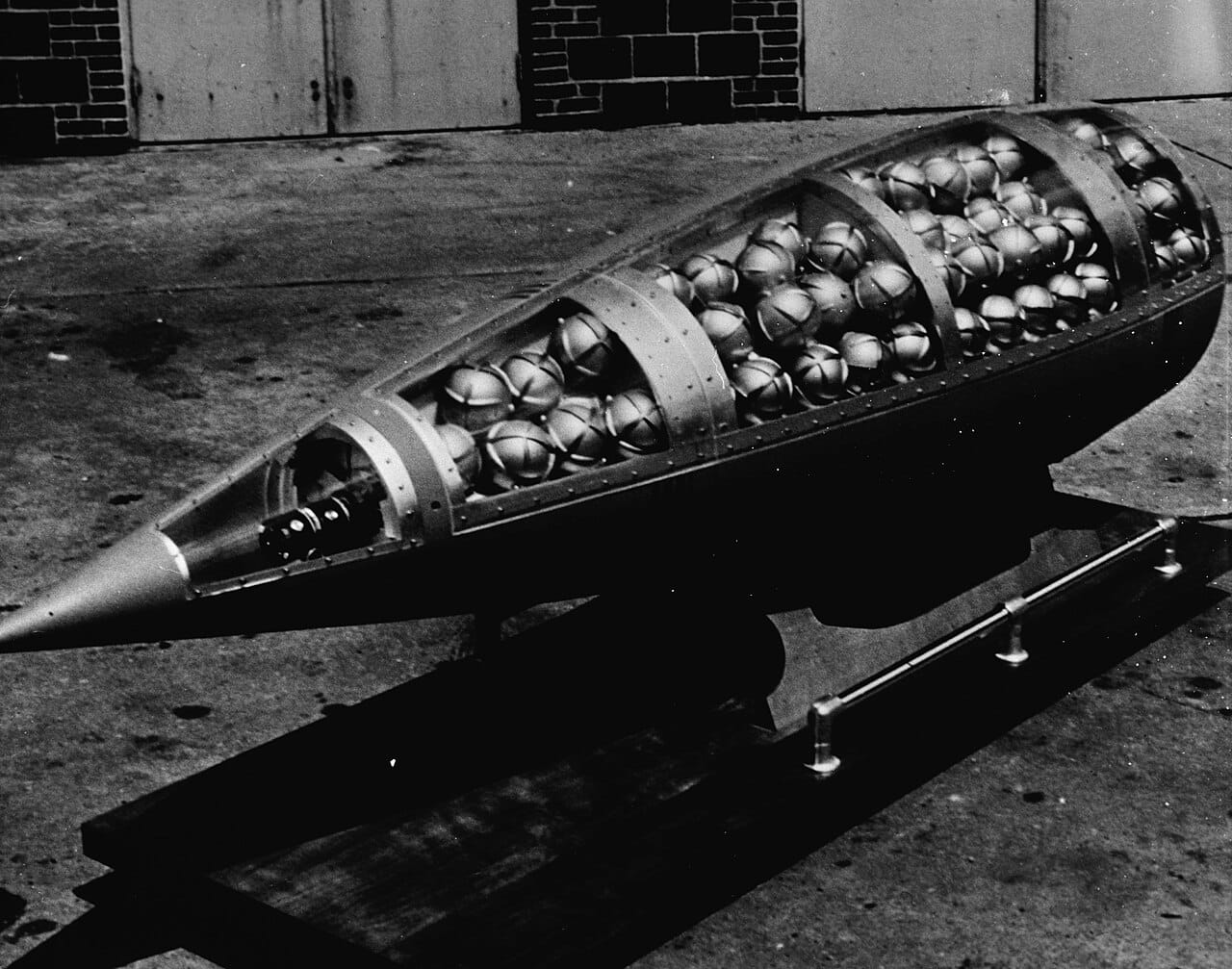
They are ShOAB-0.5 submunitions, manufactured in Russia, delivered by an RBK-500 cluster munition dispenser. A single RBK-500 can scatter 565 of them across a wide area. Mali is a signatory to the Convention on Cluster Munitions, which bans their use, production, and stockpiling. And yet here they are, embedded in the red soil of a Tuareg village 55 kilometres south of Aguelhok.
Bellingcat’s investigation, published on 26 May 2026, geolocated the footage and matched it to the exact location where Mali’s military announced airstrikes on the same date.
Quick Facts
Location: Tadjmart, 55 km south of Aguelhok, northern Mali
Date of strike: Night of 16–17 May 2026
Munition: ShOAB-0.5 submunitions from RBK-500 cluster bomb dispensers (Russian-made)
Casualties: 1 child killed, 3 women injured
Perpetrator: Malian Armed Forces (FAMa) announced airstrikes; local witnesses attribute the attack to Russia’s Africa Corps
Legal status: Mali is a party to the Convention on Cluster Munitions — use is banned
Investigation: Bellingcat geolocated the footage and matched it to the FAMa-announced strike location
What Bellingcat Found
According to Bellingcat’s investigation, social media footage posted on 17 May shows the unexploded ShOAB-0.5 bomblets clearly — small metallic spheres with stabilising fins, a design instantly recognisable to any munitions expert. Bellingcat and its publishing partner Jeune Afrique geolocated the video to the village of Tadjmart, confirming the footage matched the coordinates of the airstrikes that Mali’s military publicly announced the same day.
The footage shows multiple small craters consistent with submunition detonations alongside buildings in the village. The pattern is characteristic of a cluster munition dispersal: a wide area peppered with small impacts rather than a single large explosion.
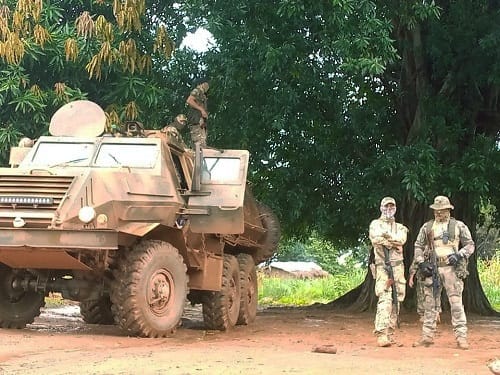
Russian mercenaries from what is now the Africa Corps (formerly Wagner Group) — operating alongside Malian armed forces in the Sahel. The group is directly supporting FAMa operations in northern Mali. Wikimedia Commons
This marks the first confirmed use of cluster munitions in the Mali conflict since the war began in 2012. It is also the first documented instance of these specific Russian-made weapons being used on Malian soil — raising urgent questions about who supplied them, who dropped them, and whether Moscow is directly complicit in violating an international treaty its ally signed.
Russia’s Africa Corps and the Sahel War
The airstrikes targeted areas held by Tuareg separatists and militant groups in the Kidal region, where conflict has spiked dramatically in recent weeks. Coordinated attacks by insurgent forces against Malian army and Africa Corps positions have pushed the fighting to levels not seen since the 2023 recapture of Kidal.
Russia’s Africa Corps — the successor to the Wagner Group’s African operations, now formally integrated into the Russian Ministry of Defence — has been supporting Malian military operations with aircraft, armoured vehicles, and ground troops. Local residents and The Africa Report have attributed the cluster munition strike specifically to Africa Corps air assets operating in the region.
“Mali as a party to the Convention on Cluster Munitions is subject to its prohibitions and has obligations not only to refrain from using cluster munitions but also to clear and destroy such munitions on its territory.”
Brian Finucane — Senior Adviser, US Program, International Crisis Group
565 Bomblets From a Single Dispenser
The RBK-500 is a Soviet-designed cluster munition dispenser still in widespread Russian service. It opens at a preset altitude and scatters its payload — in this case, 565 ShOAB-0.5 fragmentation submunitions — across a football-field-sized area. Each bomblet weighs approximately half a kilogram and is designed to detonate on impact, sending shrapnel in all directions.
The weapon is inherently indiscriminate. It cannot be aimed at a specific building or a specific fighter. It saturates an area. In a village, that area includes homes, market stalls, and the spaces where children play. The unexploded bomblets remain lethal long after the attack — a persistent danger to anyone who picks one up or steps on one. This is precisely why 112 nations agreed to ban them.
A Treaty Violated in Plain Sight
Mali ratified the Convention on Cluster Munitions in 2010. The treaty does not merely prohibit use — it requires signatories to destroy existing stockpiles and clear contaminated areas. By allowing Russian-supplied cluster munitions to be used on its soil, Mali is in violation of virtually every obligation the convention imposes.
The question of accountability now extends to Moscow. Russia never signed the convention. But its forces — whether labelled Africa Corps, Wagner, or something else — are operating as an extension of Malian military command, using Russian-manufactured weapons, dropped from what local sources say are Russian-operated aircraft. The legal and diplomatic fallout from Bellingcat’s investigation is only beginning.
The orange-sized bomblets in the soil of Tadjmart are not just munitions. They are evidence.
Sources: Bellingcat, Jeune Afrique, The Africa Report, AllAfrica, International Crisis Group
In March 1957 a US Navy blimp named Snow Bird took off from Boston, flew east to Portugal, south past Africa, west across the South Atlantic on the trade winds, and landed at Key West eleven and a half days later. The record still stands.
First flown in 1947, the Antonov An-2 has been built in three countries, operated by 47, and remains the only certified biplane in current production. The operating handbook lists no stall speed — for a very good reason.
The President of the United States is currently flying around the world on a Qatari hand-me-down. Trump's interim Air Force One is a former royal Boeing 747-8 from Doha that the Air Force just finished repainting red, white and blue because the actual Air Force Ones —...



 English
0 Comments