
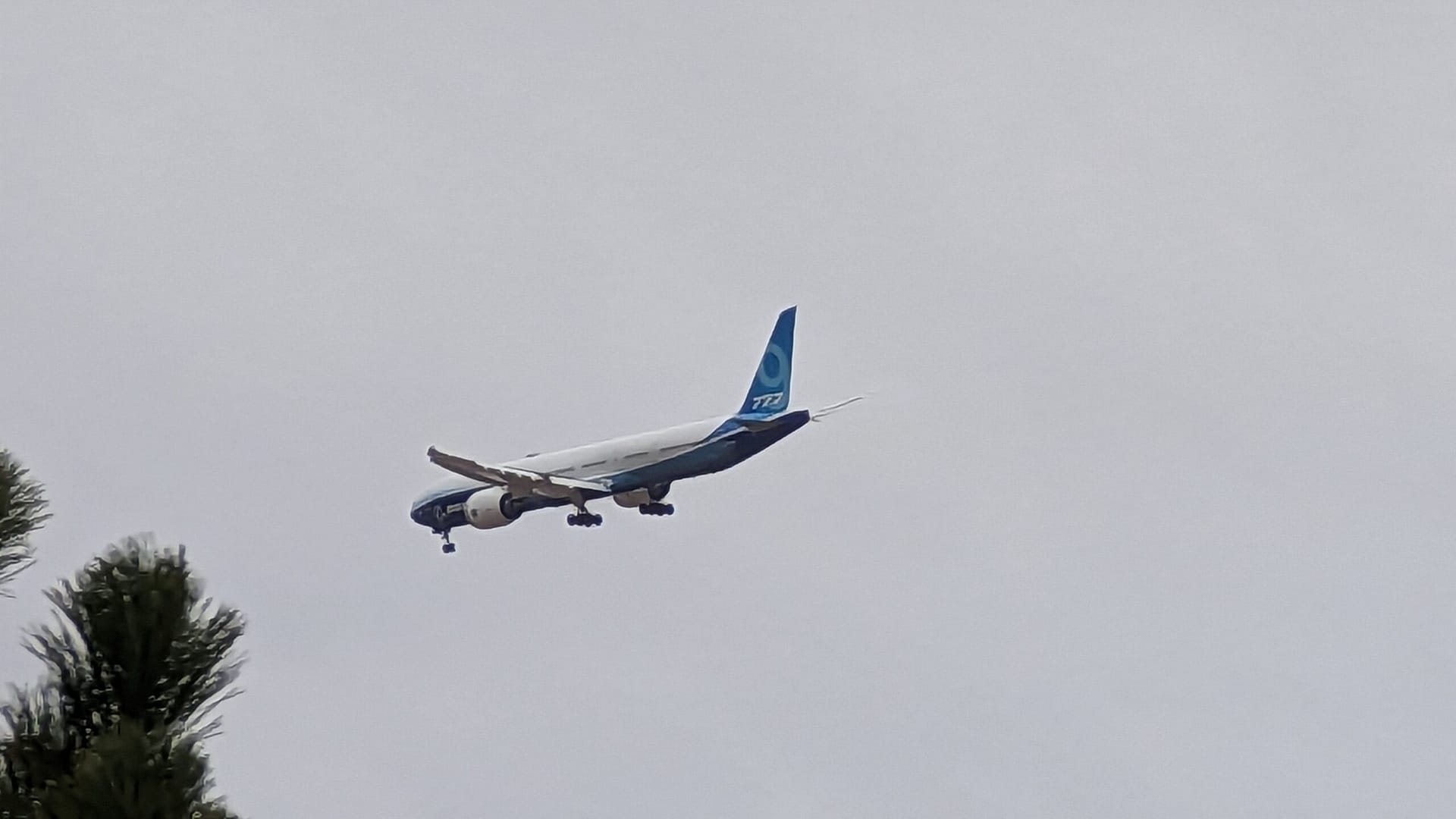
The President of the United States is about to start flying around the world on a Qatari hand-me-down. Trump’s interim Air Force One is a former royal Boeing 747-8 from Doha that the Air Force is repainting red, white and blue because the actual Air Force Ones — Boeing’s two custom VC-25Bs — won’t be ready until mid-2028.
That is the headline insult. Behind it, an entire portfolio of Boeing’s biggest civilian and military programs is currently sitting somewhere on the wrong side of “behind schedule.” If you ordered a major aircraft from Boeing in the last decade, there’s a non-trivial chance you’re still waiting.
Here’s the 2026 roster of late jets, in alphabetical order of corporate embarrassment.
Quick Facts: The Boeing Late List
- VC-25B (Air Force One): Original delivery 2024 → now mid-2028 (~4 yrs late)
- KC-46A RVS 2.0 retrofit: Original March 2024 → now 2028 (~4 yrs late)
- 737 MAX-7 & MAX-10: Targeted 2022 cert → still pending mid-2026
- 777-9: Targeted 2020 → now early 2027, ETOPS still uncertified
- 30+ stored 777-9s: Built, parked at Paine Field, awaiting “change incorporation” rework
- Interim AF1: Refurbished ex-Qatari 747-8 (~$400M+ refurb bill)
VC-25B Air Force One — four years late, and counting
The two replacement Air Force Ones were supposed to enter service in 2024. They will now be delivered in mid-2028. The first slip was triggered when Boeing’s interior subcontractor, GDC Technics, went bankrupt and had to be replaced. Then came the executive lavatories, then the secure comms suite, then the engines, then the paint scheme that the President kept changing his mind about.
To plug the gap, the Air Force has spent more than a year modifying a Boeing 747-8 gifted to the United States by the royal family of Qatar — a $400 million jet that Air Force Secretary Troy Meink says will cost “less than $400 million” to convert. Lawmakers think the real number will top a billion. The interim Air Force One starts flying this summer.
KC-46A Pegasus — the RVS that won’t quit being late
The KC-46 has been delivered. The problem is the Remote Vision System — the camera-and-screen rig the boom operator uses to plug a tanker boom into a receiver. RVS 1.0 was always known to be marginal. RVS 2.0 was supposed to fix it in March 2024. It then slipped to summer 2027, and under the “recovery plan” Boeing and the Air Force announced in May 2026, fielding of the upgraded system now stretches to 2028 — roughly four years late.
Until RVS 2.0 is fielded, the KC-46 fleet flies with restrictions on which receivers it can safely refuel. The Air Force has been quietly leaning on the old KC-135 to fill the gap. Israel just took delivery of its own KC-46A “Gideon” last week and now has the same RVS issue.
737 MAX-7 and MAX-10 — still not certified, four years later
Boeing once told customers the 737 MAX 7 would be FAA-certified by 2022. The MAX 10 was supposed to follow shortly after. Both are still uncertified in mid-2026. The biggest single hold-up has been a redesign of the engine anti-ice system after overheating was identified during testing. Boeing now expects both variants to enter service “sometime in 2026” — a fourth straight year of slippage.
Southwest, the launch customer for the MAX 7, has been buying older MAX 8s in the meantime. United, the biggest MAX 10 customer, has been openly flirting with the Airbus A321neo on every earnings call. The 737 MAX-10 program now has a public-relations problem on top of a certification one.
777-9 — the Terrible Teens
The big one. The 777X family was meant to enter service in 2020. Then 2023. Then 2025. Now Boeing is targeting FAA type certification in the second half of 2026 and first deliveries in early 2027 — seven years late. ETOPS certification, the rule the 777-9 needs to fly its bread-and-butter trans-Pacific routes, isn’t even on the books yet.
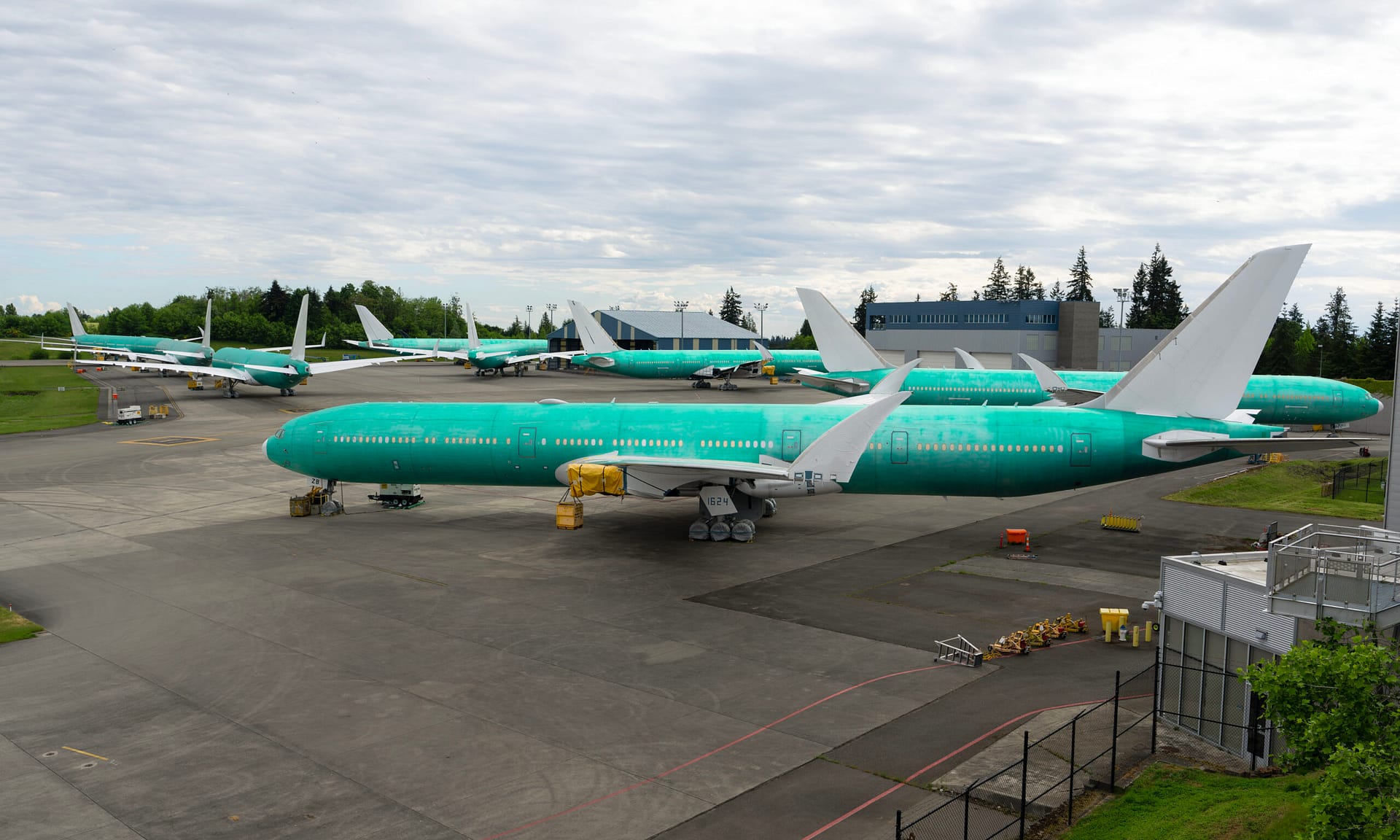
Meanwhile, more than 30 brand-new 777-9s are parked in primer on the Everett flight line. Boeing built them years before certification, expecting it to come through on schedule. It didn’t. Now every one of those airframes needs a “change incorporation” retrofit before it can be delivered, and Emirates — the program’s largest customer — has already said it won’t accept any of the stored jets.
The pattern, and the ramp that’s supposed to fix it
Across military and commercial, the throughline is the same — Boeing books an aggressive certification or delivery target, the FAA and DoD inspectors find something, the schedule resets a year, the inventory of half-finished airplanes grows.
The company is trying to compensate by ramping 737 MAX production to 47 frames a month, the new ceiling the FAA approved last week. But more output doesn’t help if the late stuff stays late. Until 777-9 ETOPS, KC-46 RVS 2.0, MAX-7/-10 cert and VC-25B all land, Boeing’s biggest customers will keep flying yesterday’s jets — including the President, who’s about to ride a Qatari prince’s old 747 to G20.
That, more than any quarterly earnings call, is the picture of Boeing in 2026.
Sources: Simple Flying, Breaking Defense, Defense News, FlightGlobal, Air & Space Forces Magazine, NPR.
 English
0 Comments