
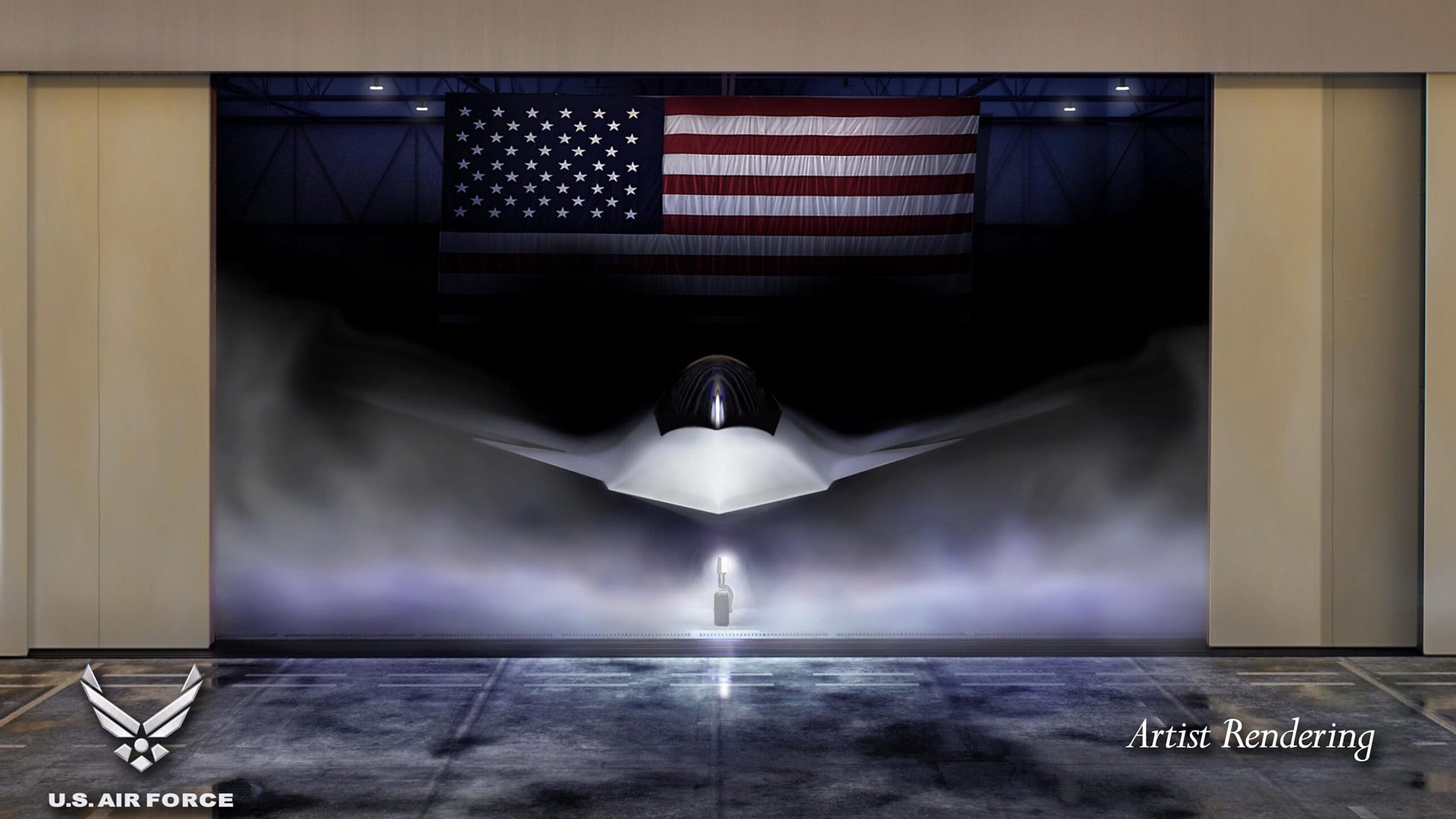
The F-47 has a $20 billion prime contract, 185 jets on order, Mach 2-plus on the spec sheet, eight robot wingmen each, and a $300 million per copy sticker that would make a Lamborghini dealer blush. The Air Force is building it in St. Louis. Boeing’s stock loves it. Trump named it.
There’s just one small thing nobody is putting on the press release: not a single pilot has ever flown one. Not because they aren’t supposed to — there isn’t one to fly. There’s no simulator. No syllabus. No test pilot pool selected. The aircraft that’s going to replace the F-22 Raptor and police the skies against China’s J-20 currently exists in CAD, in tooling jigs in Missouri, and in a slick computer render the Air Force keeps emailing reporters.
Welcome to the most ambitious — and most paper-airplane — fighter program in modern American history.
Quick Facts
- Prime contract: $20 billion (Boeing), awarded March 2025
- Planned buy: 185 aircraft
- Unit cost: ~$300 million per jet
- Top speed: Mach 2+
- Combat radius: 1,000+ nautical miles
- Engine: Adaptive-cycle (Pratt & Whitney XA103 or GE XA102)
- Drone wingmen: Up to 8 Collaborative Combat Aircraft per F-47
- Final assembly: St. Louis, Missouri
- First flight (planned): 2028
- Initial operational capability: 2029
A “Stealth++” quarterback with a drone swarm
The pitch is genuinely impressive. The F-47 is built to be the manned quarterback of a new American air combat formation: a single human pilot in a sixth-generation, deeper-stealth-than-F-22 airframe, networked with up to eight Collaborative Combat Aircraft drones. The CCAs do the dirty work — penetrate contested airspace, hunt SAM sites, jam radars, soak up missiles, act as decoys. The F-47 stays high, fast and a long way back from the threat envelope, calling the plays.
That math turns 185 fighters into a potential 1,500-platform combat ecosystem. Whether the Pentagon ever buys all 1,480 CCAs is another question, but on paper the F-47 plus drone-swarm concept is the single biggest leap in air combat doctrine since stealth.
The aircraft itself is meant to deliver Mach 2+ persistent supercruise, a 1,000+ nautical-mile combat radius (a huge jump over the F-22), an adaptive-cycle powerplant — either P&W’s XA103 or GE’s XA102 — and a stealth signature the Air Force has cheerfully described only as “Stealth++.”
$300 million each, and that’s the optimistic number
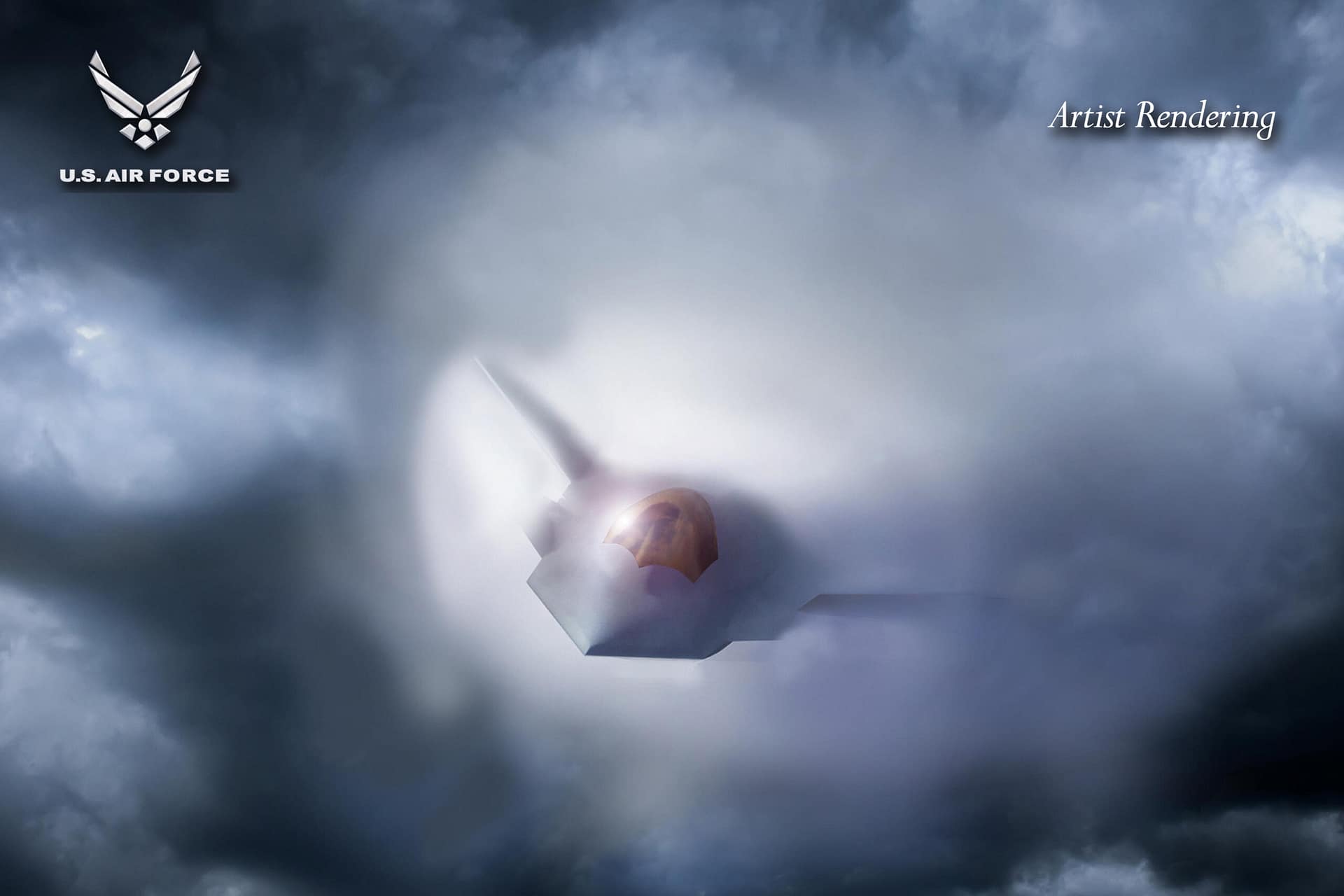
$300 million is the unit price the Air Force is currently telegraphing. For context: an F-35A is roughly $80 million today. The F-22 cost about $150 million per copy at the end of its run, and Congress refused to buy more than 187 of them because the price tag was already unforgivable. The F-47 launches at twice the F-22 figure and the Pentagon wants almost the same fleet size.
185 jets at $300 million each is $55.5 billion in airframes alone. Add the eight-drone wingman package per fighter, the new adaptive engines, the network backbone, the simulators and training infrastructure that don’t exist yet, and the program lifetime cost runs in the multi-hundred-billion-dollar range before anyone fuels one up.
The one thing nobody’s flown
And here’s the twist. Boeing is now in the manufacturing phase. Long-lead tooling is in St. Louis. The Air Force is publicly tracking a 2028 first flight and a 2029 IOC. Skeptics — including a few sitting lawmakers — point out that historically every modern American fighter has slipped at least three years from its IOC target. Some now openly say the F-47 won’t see operational service until the mid-2030s.
That gap matters because the test pilot cadre that’s going to take the F-47 from a renderer’s hard drive to an air-to-air kill ratio has not been picked. There’s no training pipeline. There’s no simulator. There isn’t even a finalised cockpit layout in the public domain. Every other sixth-gen program in the world — Tempest, GCAP, China’s J-50 — has at least a publicly-acknowledged test crew structure. The F-47 doesn’t.
The point is not that this kills the program. Boeing is genuinely building this thing, and the contract is real. The point is that the operational fielding date assumes everything goes right — first flight, envelope expansion, CCA integration, simulator development, pilot selection and training — without a single year of slippage in a program type that has never not slipped.
185 jets, eight drones each, Mach 2-plus, $300 million per copy. America’s first sixth-gen fighter is real. It’s just nobody’s flown one yet.
Sources: National Security Journal, 19FortyFive, Wikipedia (Boeing F-47), Air & Space Forces Magazine, The War Zone.


 English
0 Comments