

On the morning of December 31, 1986, the wind off the Negev was dry and cold and the tarmac at Ben Gurion International, on the IAI factory side, was thick with people in winter coats. A small, pale, beautifully proportioned fighter jet — nose canard, single intake, paint so fresh it still smelled — sat at the end of the runway with its engine spinning. In the cockpit was a soft-spoken test pilot named Menachem Shmul. At 13:21, he eased the throttle forward and the Lavi lifted into Israeli sky for the first time.
Twenty-six minutes later he was back on the ground, grinning. Ovadia Harari, the chief engineer of the program, would later say that some of the men around him in the crowd were weeping. Israel, a country thirty-eight years old, surrounded by enemies, had just built — from scratch — a fourth-generation fighter jet that the test pilots agreed handled like a thoroughbred.
Eight months later, that same airplane was dead. Not in combat. In a cabinet meeting in Jerusalem. By one vote.

Generation: 4th-generation multirole fighter
Manufacturer: Israel Aircraft Industries (IAI)
Chief engineer: Ovadia Harari
Configuration: Single-engine, delta + canard, fly-by-wire
First flight: 31 December 1986 — test pilot Menachem Shmul
Cabinet cancellation vote: 30 August 1987 — 12–11
Prototypes flown: 2 (B-01 and B-02)
U.S. funding earmarked: Roughly $2 billion+
Disputed afterlife: Striking similarities to the Chengdu J-10
A nation builds itself a fighter
Israel had wanted a domestic fighter since the late 1960s. The French embargo of 1967, just before the Six-Day War, taught the country a lesson it never forgot: someone else’s political weather could ground your air force at the worst possible moment. By 1980, the cabinet under Menachem Begin approved a full-scale program. The aircraft would replace the IAF’s aging A-4 Skyhawks and Kfirs. It would be Israeli from nose to tail. They called it Lavi — “young lion.”
Harari, an Egyptian-born aerospace engineer who had emigrated to Israel as a young man and gone on to graduate from the Technion, took the program on as chief engineer. The cultural weight on him was immense. The Lavi wasn’t just an airplane. It was, in the most literal possible way, a national project. Schoolchildren wrote essays about it. The IAI workforce of roughly sixteen thousand people had its life savings tangled up in it.
And the airplane itself was, by all accounts, very good. The delta-canard layout gave it superb agility at low speeds. The fly-by-wire system was original Israeli code — among the very first such systems built outside the United States. The cockpit was glass — HUD, two MFDs, HOTAS controls. The Pratt & Whitney PW1120 engine, a derivative of the F100 used in the F-15 and F-16, gave the prototype near-supersonic performance straight off the runway. Pilots who flew it loved it.

The killing of the Lavi
Then the math caught up with the dream. The Lavi was being built largely on American money — over two billion dollars of U.S. military aid had been formally redirected to the program. American defense contractors, who had been told their components would feed an Israeli airplane that would never compete with American exports, started getting nervous. So did the U.S. Defense Department. So did Congress.
By 1987 the unit cost projections had climbed steadily into territory that even supporters — chief among them Defense Minister Moshe Arens, an aerospace engineer himself — struggled to defend. Cost overruns, Washington pressure, and a Finance Ministry led by Moshe Nissim that simply did not want to write any more checks all collided on August 30, 1987, in a cabinet meeting that ran late into the evening.
The vote was twelve to eleven against. One abstention. Defense Minister Moshe Arens, who had championed the program from the start, offered his resignation rather than be part of the decision to terminate it. The next morning, in Tel Aviv, the IAI workforce woke up to the news that their airplane — the airplane their entire country had paid for in pride and tax dollars — was finished. Roughly six thousand jobs at IAI evaporated within months.
Harari’s line, made later about the early design phase, captures something painful about the whole story. The Lavi was built by people who didn’t know they couldn’t do it, and then it was killed by people who were certain they couldn’t afford it. By the end, both groups were probably right.
The afterlife in Chengdu
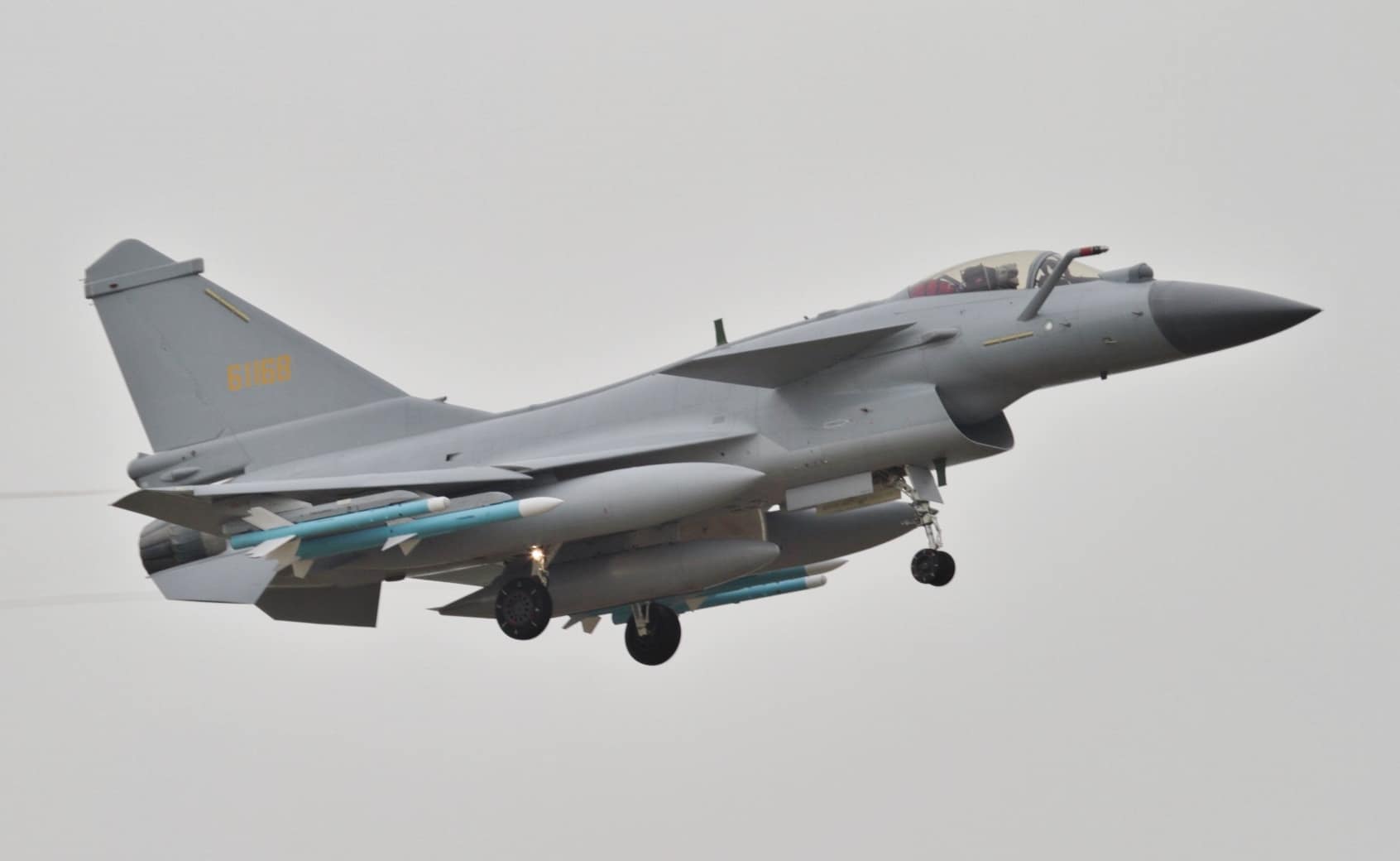
Then comes the part of the Lavi story that nobody ever fully tied down. In the 1990s, China’s Chengdu Aircraft Industry Group rolled out a new fighter, the J-10. It was single-engine. Delta canard. Single intake under the cockpit. Single-seat. Fly-by-wire. From certain angles, particularly above and below, it looks like the Lavi’s twin. Western intelligence assessments throughout the late 1990s and 2000s pointed to extensive Israeli technical assistance to the J-10 program — some of it official, some allegedly through IAI engineers consulting on the side.
Israel denies it. China denies it. The visual evidence does whatever it does. What is documented is that, after the Lavi was killed, Israel sold China the Phalcon AWACS technology before American pressure killed that deal too. The J-10 entered service in 2005. By then most of the original Lavi engineers had retired. The structural resemblance never quite stopped raising eyebrows.
A young lion in a glass case
Today, prototype B-01 sits on the apron at the Israeli Air Force Museum in Hatzerim, sand-blown, gate-guarded, missing nothing visible from the outside. Schoolchildren on field trips climb the steps next to it and listen to docents describe an airplane their grandparents helped build and their parents’ government killed. The cabinet decision of August 30, 1987 has been called — in op-eds, in memoirs, in interviews with old IAI hands — the single greatest unforced error in Israeli industrial policy. It is impossible to prove. It is also impossible to fully dismiss.
What the Lavi proved, in its short life, was that Israel could build a world-class fighter. What its cancellation proved was that geopolitics will swallow any aircraft program it can’t afford to let live. The two prototypes flew. The young lion never roared. And four thousand miles to the east, in Sichuan province, something that looks remarkably like its ghost has been flying combat patrols for the Chinese air force for twenty years.
Sources: Smithsonian Air & Space Magazine, FlightGlobal, Globes, Haaretz, Tablet Magazine, GlobalSecurity.org, Federation of American Scientists, Technion / American Technion Society, Wikipedia.


 English
0 Comments