

Quick Facts
- AGM-114L Longbow Hellfire uses millimeter-wave radar for fire-and-forget guidance against aerial drones
- Coyote is a tube-launched interceptor drone that tracks and destroys enemy UAS at close range
- Ford and Roosevelt carrier strike groups are first to receive the systems; Eisenhower, Vinson, and Reagan groups are next
- New eight-cell Coyote launchers replaced earlier four-cell versions on USS Carl M. Levin and three other destroyers
- The Navy also tested the LOCUST laser counter-drone system aboard USS George H.W. Bush in October 2025
Why the Navy Needs a Cheaper Kill Chain
Red Sea combat operations in 2024 and the broader confrontation with Iran exposed a painful reality. Navy destroyers were expending SM-2 and SM-6 missiles costing between $2 million and $5 million each to destroy Houthi drones and missiles that cost a fraction of that. The math was unsustainable, and the fleet’s vertical launch cells were being emptied faster than the supply chain could refill them. The Longbow Hellfire, originally designed as a helicopter-launched anti-tank weapon, solves part of the equation. Its millimeter-wave active radar seeker locks onto targets autonomously after launch, meaning no guidance is needed from the ship. Each missile costs roughly $150,000, a fraction of a Standard Missile. The Coyote interceptor, even cheaper, is essentially a kamikaze drone that hunts other drones.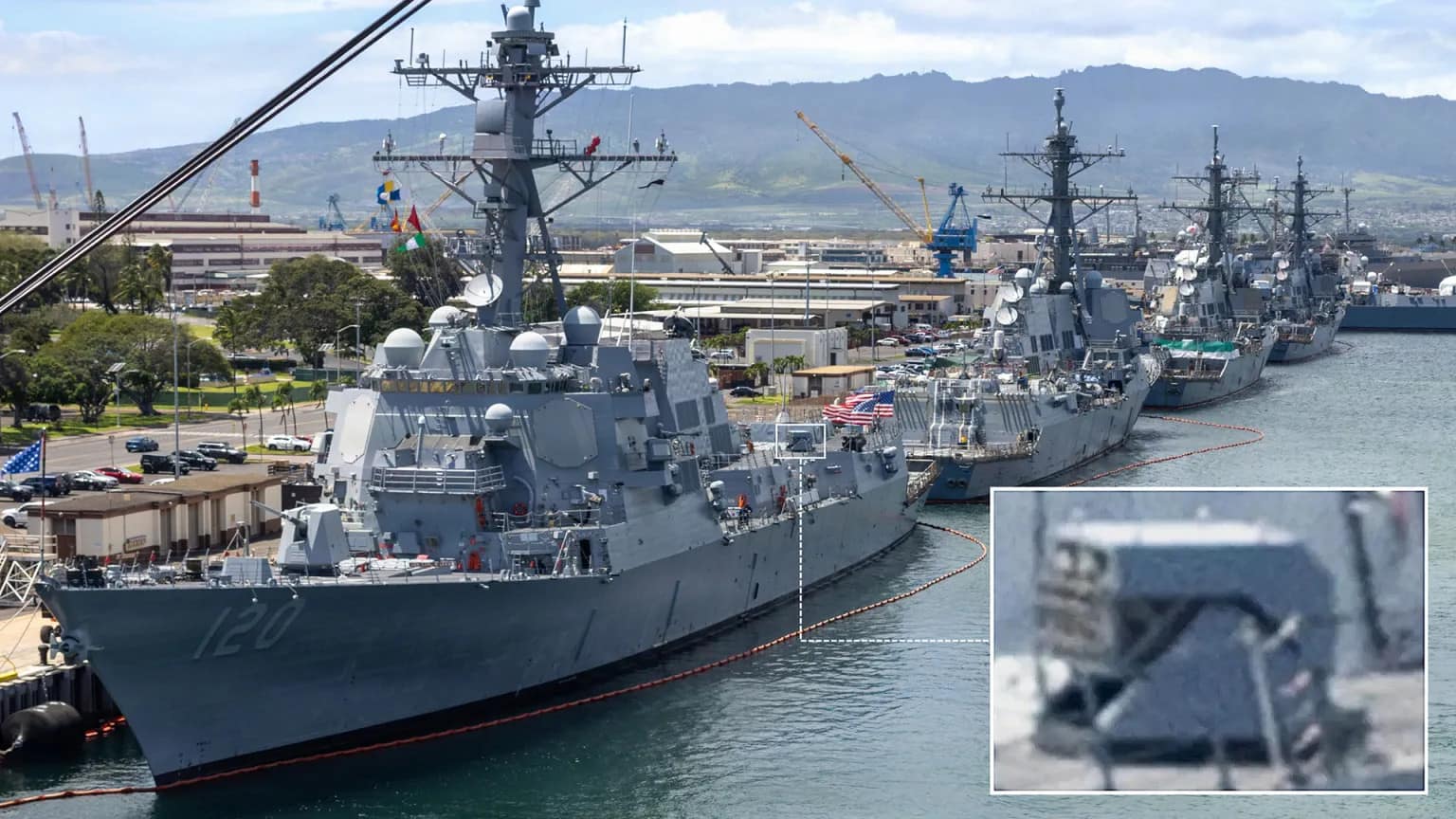
Containerized Firepower on the Fly
One of the most significant aspects of this upgrade is its non-permanent nature. The Hellfire and Coyote launchers are containerized, meaning they can be bolted onto a destroyer before a deployment and removed afterward. This allows the Navy to shuffle limited counter-drone assets between strike groups depending on the threat environment. Lockheed Martin unveiled its Grizzly containerized Hellfire launcher in March 2026, a system specifically designed for rapid deployment. The company has also been developing ship-based launchers for the newer AGM-179 Joint Air-to-Ground Missile (JAGM), a more capable derivative of the Hellfire with extended range. A model of an Arleigh Burke destroyer fitted with six four-cell JAGM Quad Launchers was displayed at Sea Air Space 2026.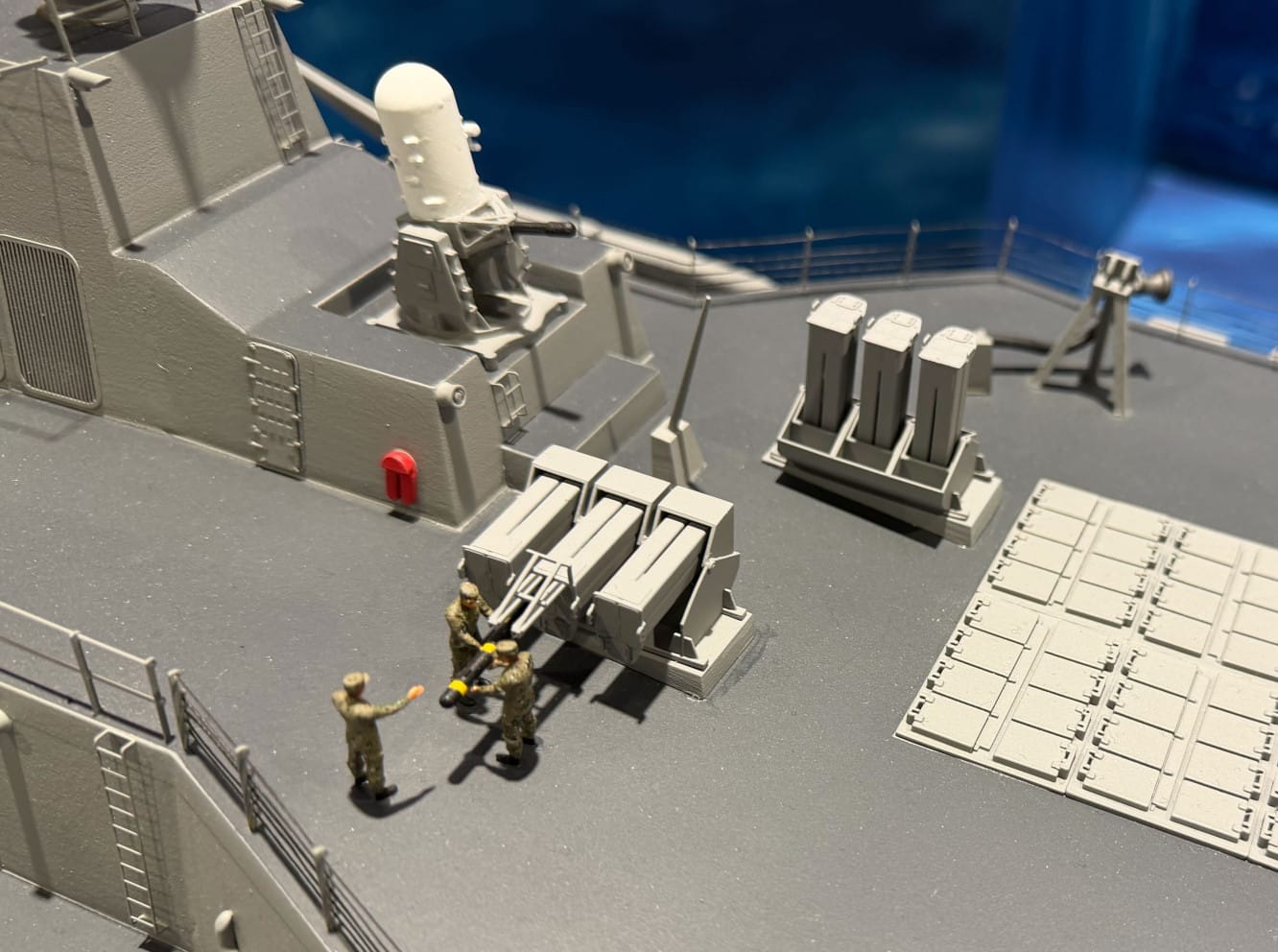
Layered Defense: From Missiles to Lasers
The Hellfire and Coyote systems are just one layer of the Navy’s emerging counter-drone architecture. Anduril’s Roadrunner-M, a reusable interceptor that launches vertically and can return to base if it doesn’t find a target, is being developed for shipboard use under the Counter-NEXT program. Zone 5 Technologies’ White Spike interceptor is also in the pipeline. Meanwhile, the Navy tested the AeroVironment LOCUST laser counter-drone system aboard the aircraft carrier USS George H.W. Bush in October 2025. Directed energy weapons offer the tantalizing prospect of infinite magazines, limited only by electrical power, but their effectiveness against fast-moving swarms at extended ranges remains unproven in combat conditions.A Fleet-Wide Shift in Thinking
The broader significance of this program extends well beyond the Ford and Roosevelt strike groups. The Navy has confirmed plans to install counter-drone containerized launchers on ships in the Eisenhower, Vinson, and Reagan carrier strike groups as well. What began as an emergency stopgap after the Red Sea experience is becoming doctrine. The age of the cheap, expendable attack drone has permanently altered naval warfare. A billion-dollar destroyer can now be threatened by a swarm of drones costing less than a luxury car. The Longbow Hellfire and Coyote give the Navy its first real answer, but the race between drone offense and ship defense is only accelerating.Sources: The War Zone, Naval News, Navy FY2027 Budget Documents, National Interest, Army Recognition

 English
0 Comments