
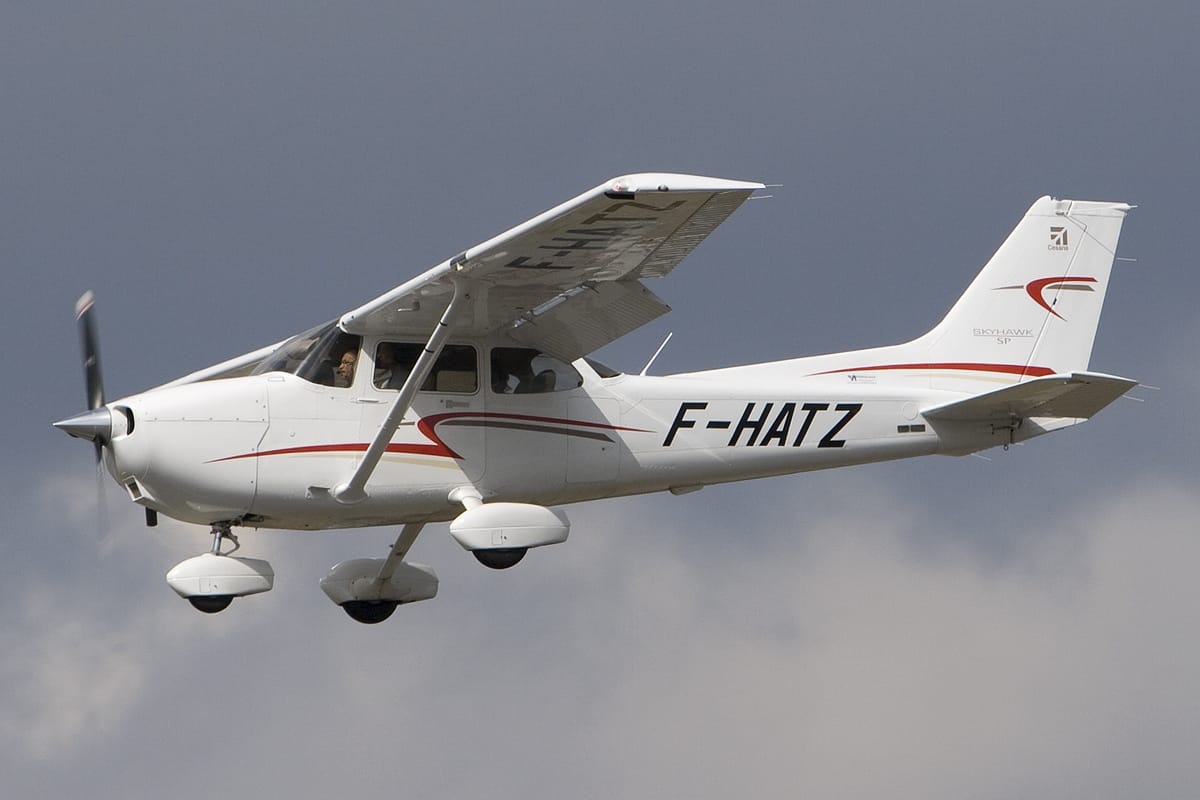
The cabin is silent except for the wind through the vents. Your instructor's seat sits empty, and your hands grip the yoke so hard your knuckles have gone white. The runway stretches ahead, indifferent to the hammering in your chest. In exactly ninety seconds, you're going to take this Cessna 172 alone into the sky—something you've practiced a thousand times, but never like this. Never truly alone.
Your first solo flight is coming. Maybe it's tomorrow. Maybe it's waiting three weeks down the calendar like some beautiful, terrifying milestone. But when it happens, you'll discover that everything you thought you knew about flying is about to shift. Not because the airplane changes. Because you do.
The Moment They Tell You You're Ready
Nobody expects it. That's the thing nobody tells you in ground school. You'll be on your tenth dual training flight or your fifteenth, cruising over farmland on a lazy afternoon, and your instructor—the one who's been methodical, exacting, unimpressed by your best efforts—will suddenly go quiet. The radio crackles. The spring air pours through the open window. And then: "You know what? I think you're ready."
Your stomach does something that doesn't have a name in any language. Ready? But I made that crosswind correction weird last time. My landing on Wednesday was honestly kind of sloppy. The truth is, you'll never feel ready. Nobody does. The examiners, the flight test standards, the licensing boards—they all know this. Readiness isn't a feeling you wake up with one morning. Readiness is when the accidents stop happening and the patterns become solid.
Your instructor knew it before you did. They've been preparing you for this since day one, and now, in that moment when they tell you to bring the plane around for your solo, they're saying something deeper: I trust you. That should terrify you. It probably does.
The Three Circuits That Change Everything
Solo flights aren't marathons. They're three or four laps around the pattern—maybe thirty minutes of actual flying, though it will feel like hours and seconds simultaneously. Your instructor steps out at the hold-line. The weight distribution changes instantly. The tail feels lighter. You feel everything more.
Taxi out alone for the first time. The Cessna hasn't changed, but you have. Every minor vibration through the nose wheel, every adjustment of the throttle, feels magnified. You'll call the tower differently on your first radio call as a solo pilot. Your voice might crack. It might be too loud. Don't worry—they know. They've heard thousands of student pilots make that call, and they're rooting for you.
Takeoff is surreal. With just your weight in the cockpit, the airplane lifts faster than you expect. You've trained for this, briefed this, visualized this—and your body still doesn't quite believe it's happening with nobody in the right seat. The climb rate is better. The controls are more responsive. One human, one machine, one clear sky. This is the moment the textbooks stop mattering and instinct takes over.
By the second circuit, muscle memory is anchoring you. You fly the pattern because you've flown it fifty times before. Your hands know where to move the yoke. Your feet know the rudder pressures. The rhythm settles in: downwind turn, descent, base leg, final approach, landing, back to takeoff. The pattern becomes meditation.
The Radio Call Nobody Forgets
During your first solo approach, you'll announce to the entire frequency: "Tower, this is [your aircraft call sign], student solo on final runway one-eight." Some of you will whisper it. Some will shout it with the confidence of someone who's done this a hundred times (even though you haven't). Every voice is different. Every one matters.
The controller has already been listening to your pattern work, sizing you up, ready to intervene if needed. But they let you fly it. They don't give you extra instructions. They trust you the way your instructor did. This is your moment.
What Surprises You
The empty right seat isn't quiet—it's loud. The silence of being alone in a cockpit is deafening in a way no textbook explains. You'll talk to yourself without realizing it. Good choice on that turn. Altitude's dropping, bring the nose up a hair. Looking good. Your brain narrates the flight like you're explaining it to someone, even though you're talking to the empty air.
The airplane climbs differently with your weight alone—it's zippier off the runway, and you'll feel less drag on the controls. Your landing might be the smoothest of your life because adrenaline sharpens your inputs. Everything you've practiced snaps into focus. The wind sock becomes readable in ways you'd missed before. The runway markers align perfectly in your vision because you're calm and focused in a way you didn't think possible while terrified.
And somewhere during that first circuit, sometimes on the climb out, sometimes on downwind, you'll realize something has shifted inside you. You're not the student in the right seat anymore. You're the pilot.
The Landing That Defines You
Your first landing alone is often your best landing ever. There's no pressure to impress anyone—your instructor is watching from the ground, but they're not grading you. You're past all that now. You're flying for yourself, and somehow that clarity translates into perfect control inputs. Short final. Flare. The mains kiss the pavement. Nosewheel down. Smooth rollout to the taxiway.
You'll taxi back to the apron in a daze. You'll set the parking brake. Cut the engine. And in that moment, when the propeller spins down and you're sitting in absolute silence, something will hit you: you just did it. You just flew an airplane solo. You didn't need anyone in the right seat. You didn't need another set of hands or eyes or experience.
The Tradition You Can't Escape (And Shouldn't Want To)
Here's where things get weird in the best possible way. When you taxi up to the tarmac, your instructor and every other person at the flight school is waiting. Celebration isn't optional. Your shirt—usually the oldest one you own—is about to become a trophy.
The shirt tail cutting is aviation's oldest rite of passage. The tradition stretches back to the early days of tandem cockpits, when instructors would literally tug a student's shirt tail during moments of panic to get their attention. The cloth was a lifeline. Cutting it off became the ceremony of saying: you don't need me to tug your shirt anymore. You're a pilot. You're on your own now.
You'll watch your shirt tail get cut off, framed, signed by everyone at the school, and hung in the flight school office as proof that you joined something bigger than yourself. It's silly. It's beautiful. It's been done exactly this way since the 1930s.
The Military Standard
In military flight training—at places like NAS Pensacola or RAF Valley—a first solo carries even more weight. You're not just clearing a training milestone. You're proving you have the ability to handle combat aircraft under pressure. A young pilot soloing in a T-6 Texan II or a Hawk is announcing to the entire military aviation system: I'm ready for the next filter.
Military traditions are even more intense. Some training squadrons throw solo pilots in the pool, flight suit and all. Others hose them down with water cannons. The RAF has been known to present first-solo pilots with ceremonial boomerangs or custom patches. The traditions vary, but the meaning is constant: congratulations, you just survived the most important filter in military aviation.
After the Engines Cool
Days later, you'll still feel the rhythm of that pattern in your body. You'll hear the engine note in your sleep. You'll see the runway rising up to meet the wheels during perfectly ordinary moments. Your first solo rewires something in your brain that doesn't unplug.
It's not overconfidence. Good pilots know that first solo is just the beginning. The real learning starts now. Crosswinds. Bad weather. equipment failures. Complex maneuvers. Everything gets harder from here. But you've proven something to yourself that no classroom can teach: when it matters, when you're truly alone, you can do this.
That's what first solo really means. Not the end of training. The beginning of trust in yourself.

"The empty right seat is the loudest thing in the cockpit."
Quick Tips for Your Own First Solo
Before You Go Up
- Preflight twice. The second preflight catches what adrenaline made you miss the first time.
- Eat something light. You need fuel in your body to fuel your brain.
- Silence your phone. This is your time.
In the Pattern
- Talk to yourself. Your instructor talks to themselves. Every pilot does. Narrate the flight and you'll make better decisions.
- Trim the aircraft. A properly trimmed plane flies itself and lets you focus on the bigger picture.
- Look outside. Instruments are tools, but your eyes are the best instrument you have.
The Approach
- Plan your descent early. Don't wait until you're high and desperate.
- Go around if anything feels off. A go-around is good decision-making, not failure.
- Flare late. Give yourself time to feel the aircraft slow and settle.
Your first solo flight is waiting for you. Someday soon, maybe tomorrow, maybe next month, you'll step into that cockpit alone. The wind will be right. Your skills will be sharp. Your mind will be clear. And when that moment comes, you'll understand why pilots never stop talking about their first time alone in the sky.
It's not about the airplane. It's about the person you become the moment you prove you can handle it.
Related Questions
What happens on your first solo flight?
On a first solo the instructor steps out and the student flies alone — usually three or four circuits of the traffic pattern, about thirty minutes of flying. With only one occupant the aircraft is lighter, so it lifts off sooner, climbs faster, and feels more responsive than during dual training.
How does an instructor decide a student is ready to solo?
Readiness is not a feeling — it is demonstrated consistency. When a student’s landings and pattern work become reliably solid and the mistakes stop recurring, the instructor judges them ready, often unexpectedly during a routine lesson. Most students never feel ready; the instructor’s trust is the real signal, as explored in your first solo: what nobody tells you.
Why does an airplane fly differently on a first solo?
Removing the instructor’s weight changes performance. With one person aboard instead of two, the wing has less weight to lift, so takeoff happens sooner, the climb rate improves, and the controls feel lighter and more responsive. Expecting these changes keeps the lighter handling from surprising you.
How long is a typical first solo flight?
A first solo is short — usually three or four laps around the airport traffic pattern, roughly thirty minutes of actual flying, though it feels much longer. It is not a cross-country adventure but a controlled demonstration of takeoffs, circuits, and landings the student has already flown many times with an instructor.
What should student pilots expect to feel before their first solo?
Nerves are normal — a racing heart, a shaky first radio call, and the conviction that you are not ready. Controllers have heard thousands of first-solo calls and are rooting for you. By the second circuit, muscle memory takes over and the rhythm settles in. Mastering challenges like crosswind landings beforehand builds the confidence to get there.
How much does it cost to learn to fly?
Learning to fly involves dual instruction, solo time, aircraft rental, instructor fees, exams, and medical certification, so totals vary widely by country and aircraft. The first solo is a milestone partway through, not the finish line. For a current breakdown see how much it actually costs to learn to fly in 2026.
0 Comments