
Quick Facts
- What: Team Gen 6 — a German industrial alliance for sixth-generation combat aircraft development
- Members: Airbus Defence & Space, Autoflug, Diehl Defence, Hensoldt, Liebherr, MBDA, MTU Aero Engines, Rohde & Schwarz
- Announced: ILA Berlin Air Show, 10–14 June 2026
- Context: Follows the formal termination of the Franco-German FCAS programme on 8 June 2026
- Previous programme: FCAS/SCAF — €100 billion, 9 years, roughly €3.2 billion committed to the current development phase alone, zero flying aircraft produced
- Goal: Define Germany’s path to a sixth-generation fighter, potentially with new European partners
Le divorce
The FCAS programme died of irreconcilable differences. Dassault wanted industrial control — the “best athlete” model that would concentrate design authority at the French firm. Airbus wanted equal partnership. France insisted on nuclear delivery and carrier capability; Germany needed neither. Berlin proposed two variants; Paris refused. Chancellor Merz delivered the news to President Macron on 6 June at the EU–Western Balkans Summit in Montenegro, then went public on 8 June. Nine years and roughly €3.2 billion committed to the current development phase alone produced no flying aircraft, no finalised design, and no signed industrial agreement on workshare.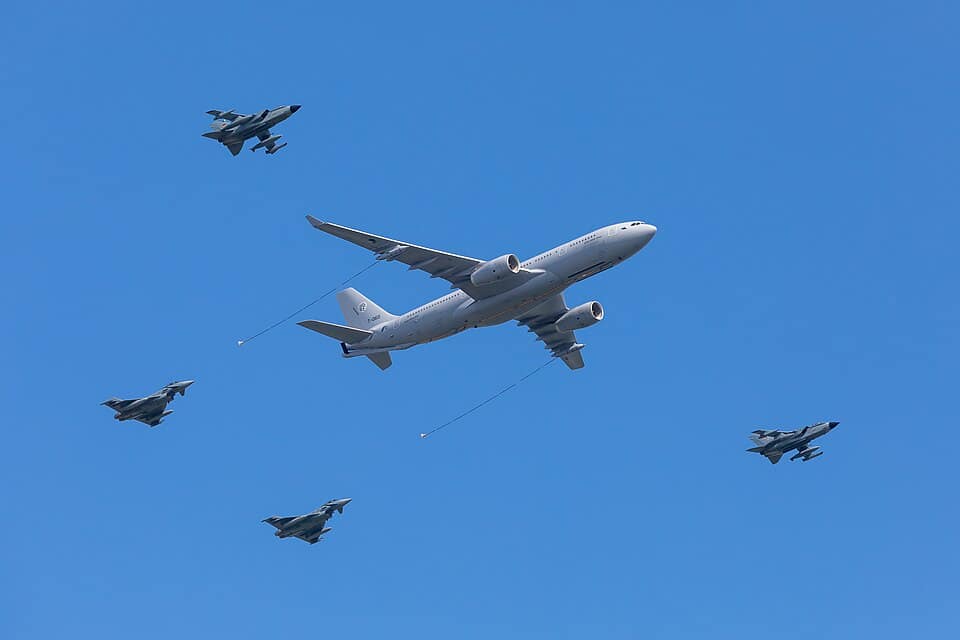
Eight Companies, One Message
Team Gen 6 comprises the core of Germany’s defence-industrial base: Airbus Defence & Space (airframes and systems integration), MBDA (missiles and precision munitions), Hensoldt (sensors and electronic warfare), MTU Aero Engines (propulsion), Diehl Defence (guided weapons and countermeasures), Rohde & Schwarz (secure communications), Liebherr (environmental control and landing gear systems), and Autoflug (crew systems and ejection seats). The alliance covers every major subsystem of a combat aircraft. This is not a lobbying consortium — it is a statement that Germany possesses the complete industrial capability to build a fighter without French participation. In announcing the split, Merz said Germany had reached profound disagreements with France over the programme and would pursue a European solution — but one built on equal partnership.The Open Door
Berlin has been careful not to frame Team Gen 6 as exclusively German. The word “European” appears repeatedly in early briefings. The UK’s GCAP programme (Global Combat Air Programme, with Italy and Japan) is the obvious potential partner — it is further advanced, has a flying demonstrator timeline, and its industrial structure leaves room for additional partners. But joining GCAP would mean accepting BAE Systems and Leonardo as co-leads. After a decade of fighting Dassault over industrial control, Germany may not be eager to enter another coalition where it holds a minority stake. The alternative — an all-German programme with selected bilateral partnerships — would be slower and more expensive, but would give Berlin the sovereignty it clearly prizes.The Eurofighter Is Not Going Anywhere
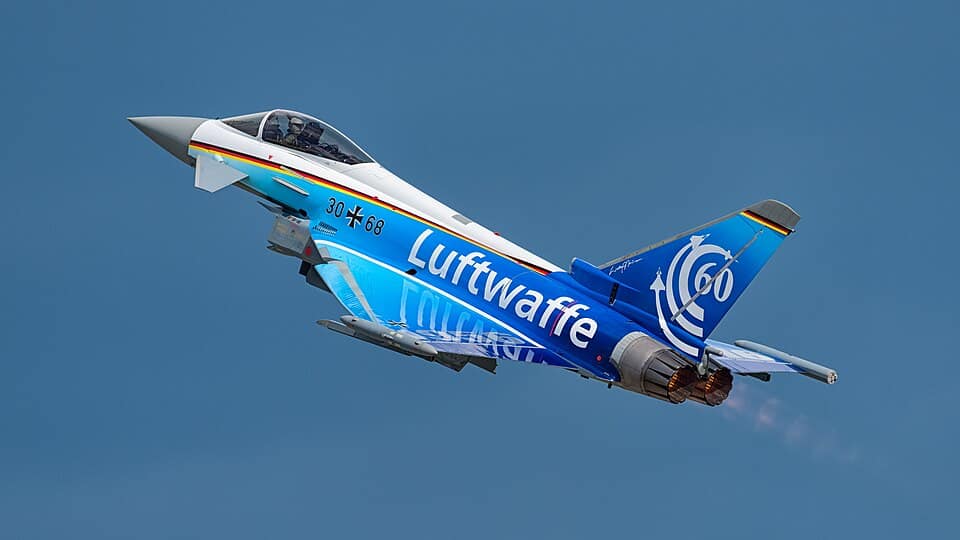
The immediate consequence of the FCAS collapse is that the Eurofighter Typhoon will remain Europe’s frontline fighter well into the 2050s. Any successor from Team Gen 6 is at least 15–20 years from service entry. In the meantime, the Quadriga upgrade programme — which Germany just showcased with “the most capable Eurofighter ever built” — becomes strategically critical. The Typhoon was designed in the 1980s and first flew in 1994. It has been upgraded continuously, but it was never intended to carry the weight of European air power for another three decades. It will now have to. Sources: AeroTime, Euronews, Defense News, The Aviationist, Aircraft InsiderRelated Posts
 English
0 Comments