
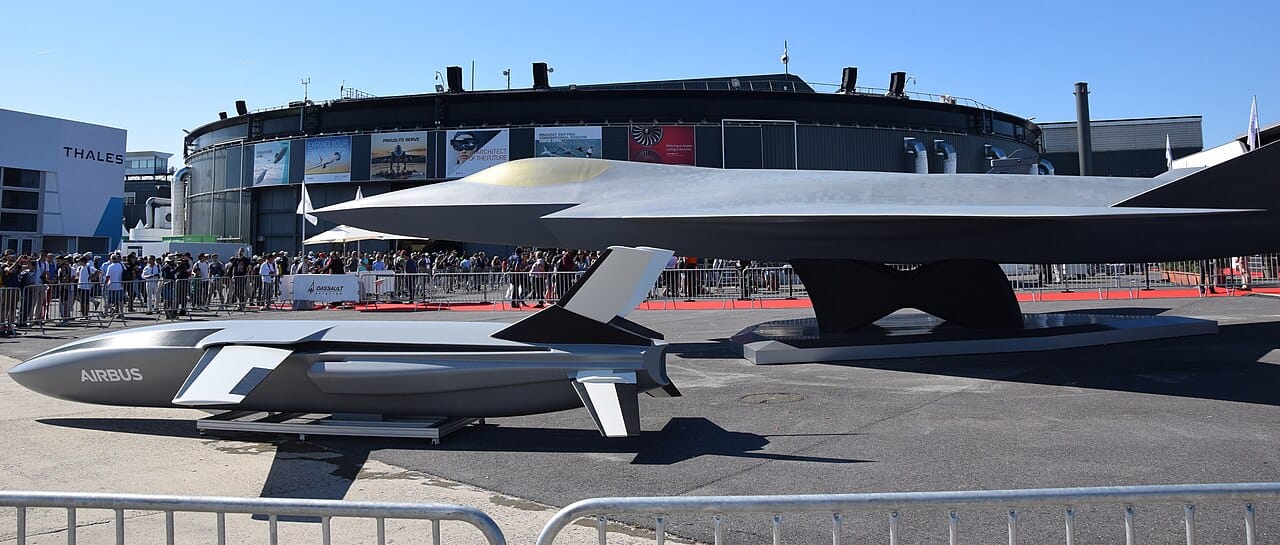
It was meant to be the aircraft that bound Europe together — a tailless, sensor-fused sixth-generation fighter, flanked by swarms of loyal drones, sharing one encrypted combat cloud, flying off French and German runways by 2040. On Monday, the Élysée Palace ended it with a single sentence.
France and Germany have agreed to terminate the Future Combat Air System — FCAS, or SCAF in French — the most ambitious joint defence project the continent has ever attempted. A programme valued at more than €100 billion, launched with great fanfare in 2017, has collapsed not under enemy fire but under the weight of an industrial argument that nobody could win: who leads, and who builds what.
We have watched the cracks widen for weeks. Now the structure is gone. And the timing — with Washington openly questioning whether it will defend its NATO allies at all — could hardly be worse.
- Programme: Future Combat Air System (FCAS / SCAF)
- Partners: France (Dassault Aviation), Germany & Spain (Airbus, with Indra)
- Launched: 2017; Spain joined 2019
- Estimated cost: more than €100 billion
- Goal: replace the Rafale and the Eurofighter Typhoon by ~2040
- Killed: 8 June 2026, confirmed by the office of President Macron
A fighter built from three flags
FCAS was never just an aeroplane. Its planners spoke of a “system of systems”: a New Generation Fighter at the centre, a family of unmanned Remote Carriers flying alongside it, and an Air Combat Cloud knitting every sensor, missile and drone into a single battlefield picture. The full-scale mockup unveiled at the 2019 Paris Air Show — sleek, angular, unmistakably stealthy — became the poster image of European strategic autonomy.
The political logic was just as grand. Rather than each nation building its own jet, France, Germany and later Spain would pool money and engineering talent into one airframe to replace both the Rafale and the Typhoon. It was meant to prove that Europe could do for fighters what Airbus had done for airliners.
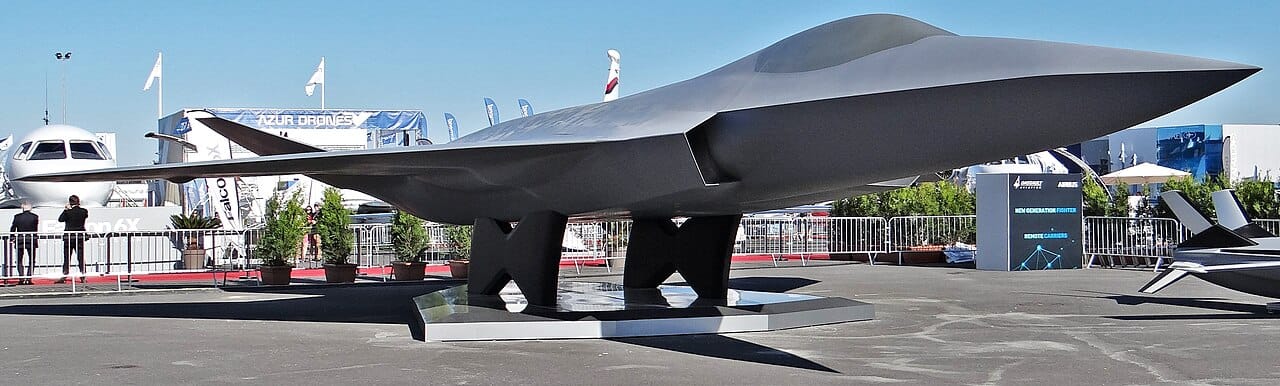
Who leads? The question that broke it
The programme foundered on a single, corrosive dispute: industrial leadership. Dassault Aviation, which builds the Rafale and answers for the French share, pushed for clear design authority over the fighter. Airbus — carrying the industrial weight of Germany and Spain — refused to be a junior partner on a jet it was helping to fund. Reports of Dassault seeking as much as 80 percent of the core fighter work hardened positions on both sides.
Paris and Berlin tried, repeatedly, to save it. President Macron and Chancellor Friedrich Merz discussed the impasse only last week. It was not enough. Berlin concluded there was no further leverage to apply to the companies, and the project was allowed to die.
What Europe loses
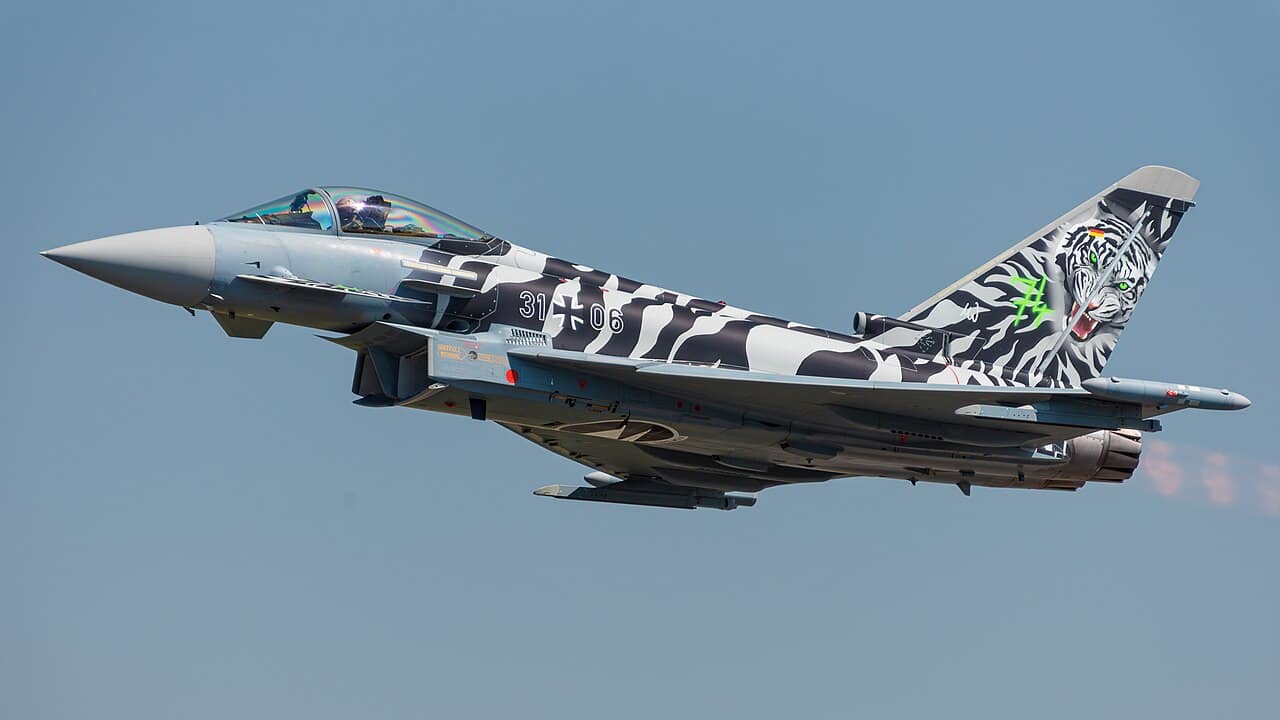
The casualty list is long. The Rafale and the Eurofighter Typhoon — the two front-line types FCAS was meant to succeed — now face a future with no agreed European replacement on the horizon. Britain, Italy and Japan are pressing ahead with their rival Global Combat Air Programme (GCAP). The United States is racing its own F-47. China has flown not one but two sixth-generation prototypes. Europe’s flagship answer has just walked off the stage.
Macron’s office insists France will keep chasing “ambitious European projects.” In practice, that likely means Paris pursuing a more national path — possibly an evolved Rafale and Dassault-led design — while Airbus has already been seen courting Saab of Sweden about an alternative European fighter. The dream of one continental jet is over; the scramble to replace it has begun.
A self-inflicted wound at the worst moment
What stings most is the context. As FCAS collapsed over a boardroom argument, NATO jets were scrambling to down a stray drone over Latvia, Russia was launching its largest barrages of the war, and Washington was pulling fighters out of Europe and questioning the alliance itself. The case for European defence cooperation has never been stronger. The continent’s most visible attempt at it has just failed — not because the engineering was impossible, but because two proud companies could not agree on whose name went first.
The mockup will go back into storage. The lesson will linger far longer.
Sources: Reuters; Al Jazeera; The Defense Post; Aerotime; Airbus.
 English
0 Comments