
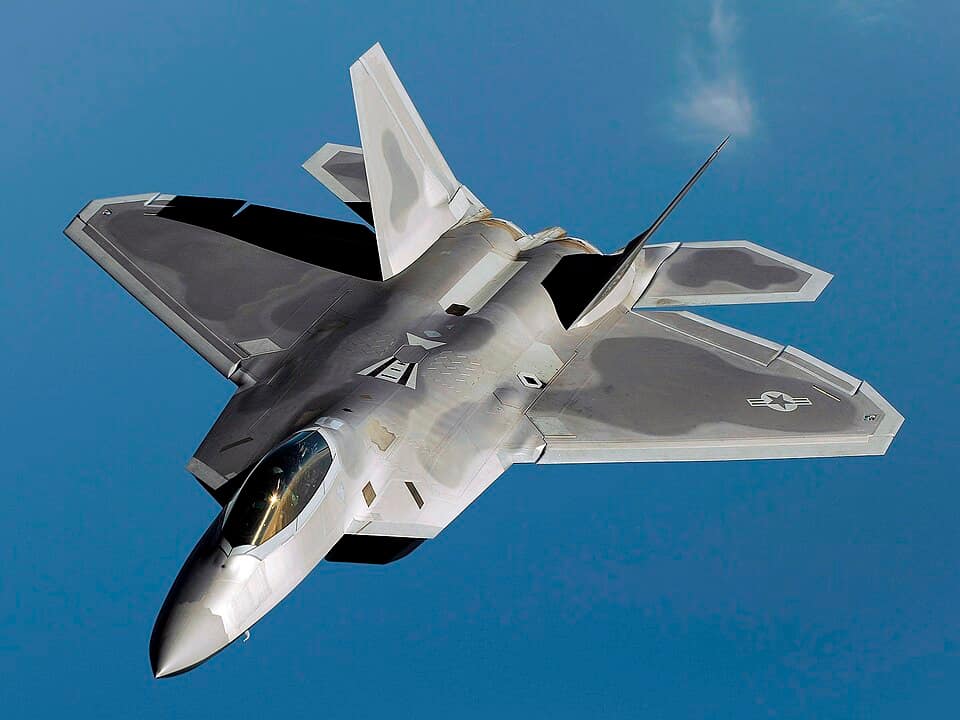
There’s a reason the most lethal fighter jets on Earth look like they were built in pairs. The twin vertical stabilizer isn’t decorative—it’s an engineering solution to a physics problem that becomes impossible to ignore once you’re pulling 9 Gs and dancing with another jet at 1,200 mph.
Look at an F-15 Eagle banking hard against a horizon, or an F-22 Raptor cutting through the sky, and you’ll see those two canted fins working in concert. They’re there for a reason that has nothing to do with aesthetics and everything to do with staying alive when seconds and inches matter.
The Physics of High-Angle Flight
When a fighter jet climbs to extreme angles of attack—nose pointed 30, 40, even 50 degrees above the horizon—something dangerous happens to a single tail: the fuselage begins to block airflow over the vertical stabilizer. The wider the body, the worse the problem. Without clean airflow, the pilot loses yaw control and directional stability. The jet can slip into an uncontrolled spin.
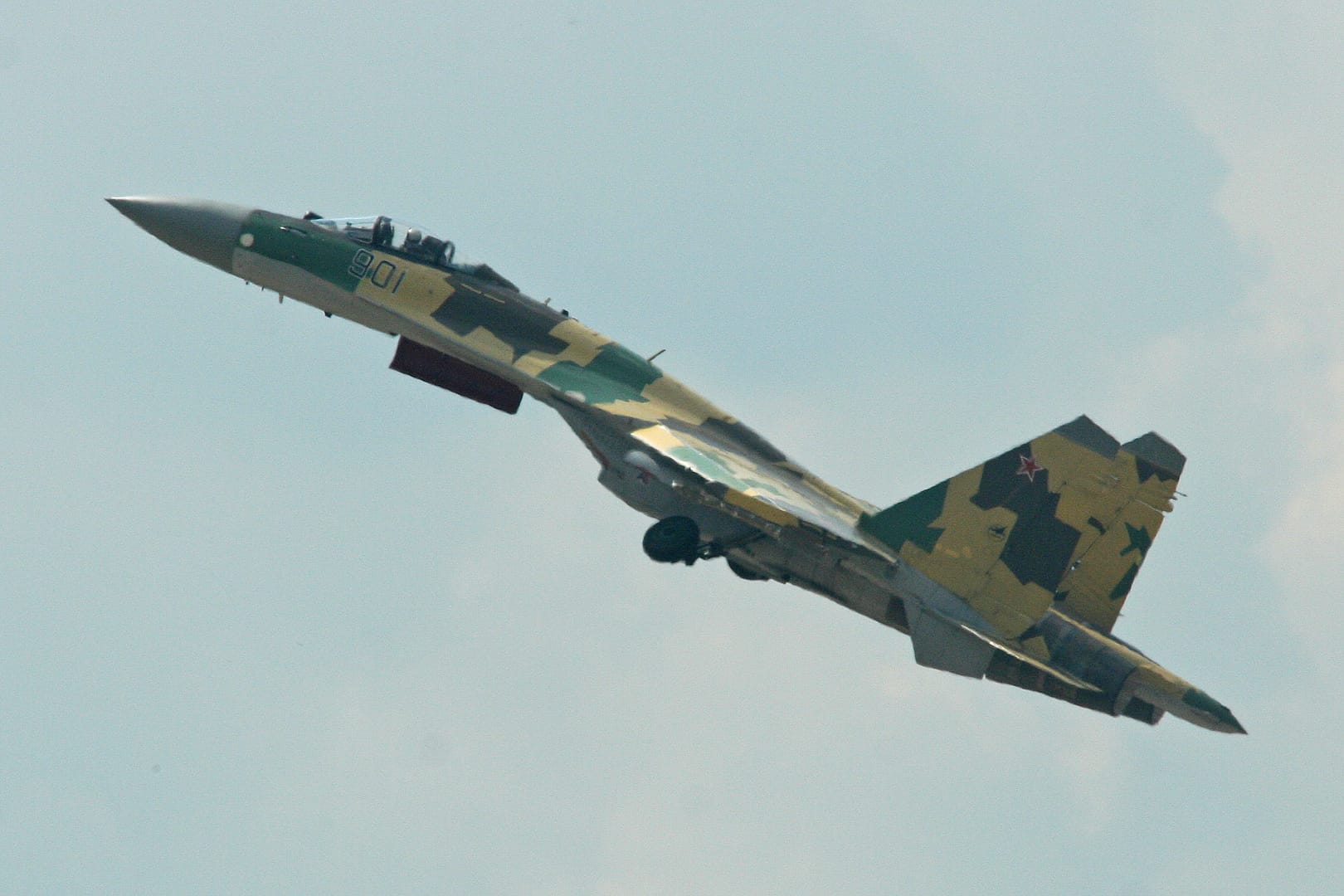
Twin vertical stabilizers positioned outboard of the fuselage sit outside this interference zone. They bathe in clean air even when the nose is pointed skyward and the engine is screaming. The result: controllability and stability at angles of attack where a single-tailed jet would be flying blind.
The F-15 can sustain speeds up to Mach 2.5 with those twin tails keeping it locked in. An F-16, by contrast, achieved legendary dogfighting prowess—hitting 9 Gs with ease—partly because its single tail design was engineered for efficiency at lower speeds. Different missions. Different solutions.
Smaller Fins, Same Control
Twin tails also solve a structural problem. A single massive vertical stabilizer generates enormous forces at its root where it meets the fuselage. Those stresses concentrate in a small area. Distributing the same control authority across two smaller fins spreads the load and reduces weight—a critical advantage in a machine where every kilogram costs you altitude and speed.
This is why carriers love twin-tail designs. A smaller overall tail height means jets fit in the hangar deck and on crowded flight decks. Shorter tails also lower the aircraft’s center of gravity profile, improving handling characteristics—especially on short-deck launches where every advantage counts.
Redundancy and Stealth
There’s a survival element too. If a surface-to-air missile or cannon round tears a chunk out of one tail fin, you still have the other. Not quite two independent control surfaces, but better than nothing when the alternative is ejecting over hostile territory.
Modern stealth jets take this further. The F-22 Raptor’s canted twin fins can be angled to deflect radar waves away from the transmitter. A single vertical tail can’t do this trick. The two fins, properly faceted, mask the hot engine exhaust and reduce the jet’s radar cross-section—turning a defensive structure into an offensive stealth asset.
The Single-Tail Exception
The F-16 Fighting Falcon proves the exception. Its single tail works because the jet was designed from the ground up for a different mission: supreme agility at subsonic and transonic speeds, not high-Mach penetration bombing runs. The F-16 trades maximum speed for sustained turn rate—the ability to out-turn your opponent in a merge. A single, efficiently designed fin does the job without the weight penalty.
But go faster, go higher, go more extreme, and you need those twin fins. They’re not a visual signature of a military jet; they’re a confession: this machine was designed to operate in regimes of flight where conventional aerodynamics become threats rather than features.
Sources: Simple Flying, Aviation Stack Exchange
Related Questions
Why do some fighter jets have two tails?
Twin vertical stabilizers keep a fighter controllable at the extreme angles of attack of air combat. With the nose pointed steeply up, a wide fuselage can blank the airflow over a single central tail, costing yaw control. Two fins mounted outboard sit in cleaner air and keep working when a single tail would stall.
What happens to a single tail at high angle of attack?
When a fighter's nose climbs to 30, 40 or even 50 degrees above the horizon, the fuselage begins to block airflow over a single vertical stabilizer. Starved of clean air, the tail loses yaw control and directional stability, and the jet can slip into an uncontrolled spin — exactly the situation twin tails are designed to avoid.
Are twin tails better than a single tail?
Not universally — it depends on the mission. Twin tails excel at high angle of attack and high speed; the F-15 sustains up to Mach 2.5 with its pair. A single-tailed jet like the F-16 was optimised for efficient dogfighting and pulls 9 G with ease. Designers match the tail layout to the aircraft's role, much as wing choices vary on a swing-wing fighter.
Do twin tails have structural advantages?
Yes. A single large fin concentrates enormous aerodynamic loads at its root where it meets the fuselage. Splitting the same control authority across two smaller fins distributes those stresses, allowing lighter, shorter stabilizers that are easier to build strong — a recurring theme across fighter design history.
Which fighter jets have twin tails?
Many modern fighters carry twin canted tails, including the F-15 Eagle, F/A-18 Hornet and F-22 Raptor. The layout suits aircraft that must remain controllable while manoeuvring hard at high angles of attack, where a single tail risks being blanked by the fuselage.
Why are the twin tails canted outward?
Angling the fins outward moves them clear of the turbulent, blanked air behind a wide fuselage and into cleaner flow at high angle of attack. On stealth designs the cant also helps deflect radar energy away from the source, reducing the aircraft's radar signature while preserving directional control.

0 Comments