
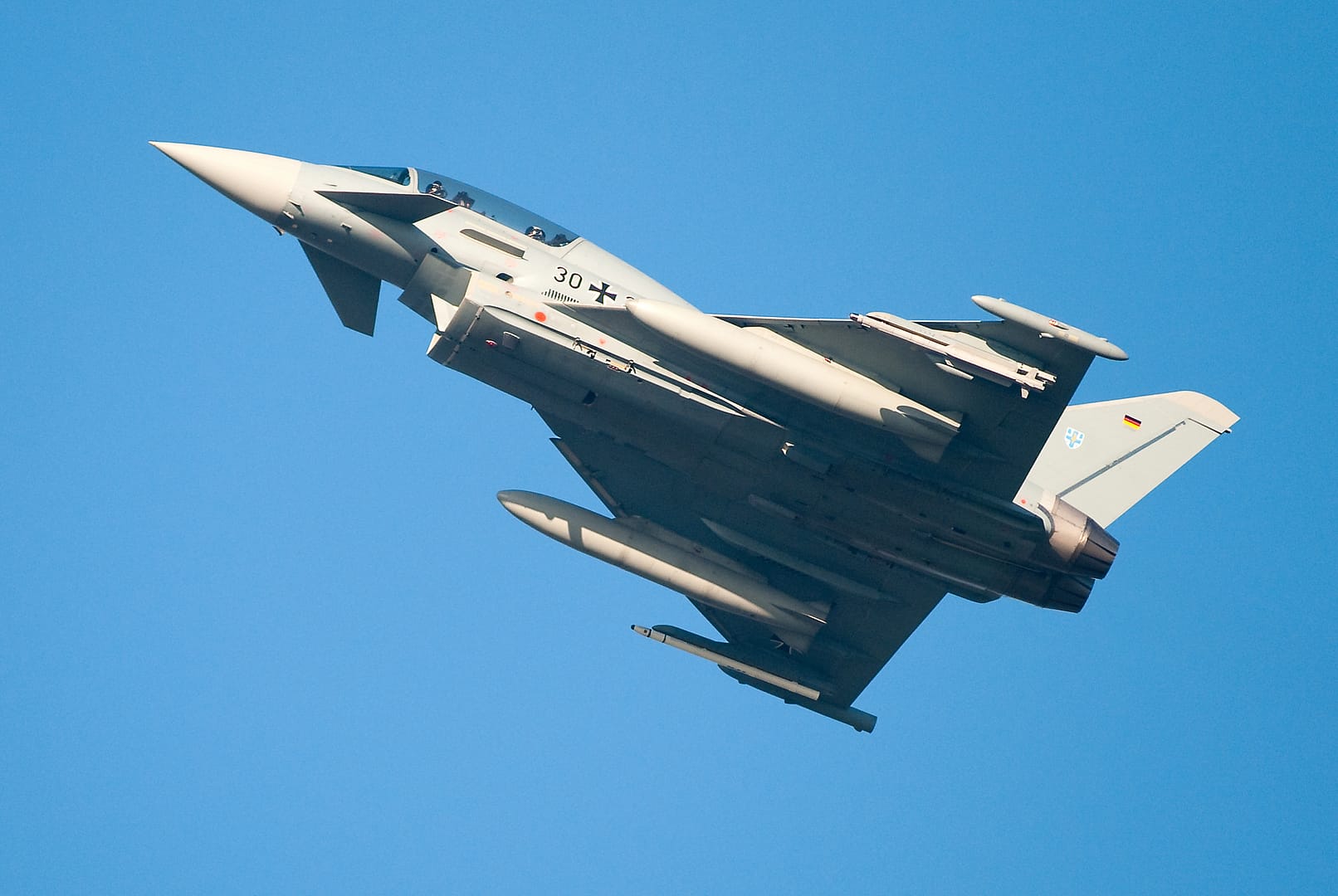
Nine years, approximately four billion euros, and zero prototypes. That is the balance sheet of the Franco-German Future Combat Air System (FCAS), officially declared dead at ILA Berlin on June 8, 2026. Within 48 hours, German industry had already formed a new consortium, and Berlin had begun courting a seat at the table of a programme that actually builds aircraft: the British-Italian-Japanese Global Combat Air Programme, or GCAP.
The collapse of FCAS was neither sudden nor surprising to anyone who had followed the tortured programme closely. What is surprising is the speed with which Germany has pivoted — and the diplomatic complexity of the path ahead. Joining GCAP would mean entering a partnership with three nations that have been designing without Germany, accepting terms that Berlin did not set, and acknowledging that Franco-German defence cooperation has hit a wall.
For European air power, this is a watershed moment. The question is no longer whether Europe can build a sixth-generation fighter — it is whether Europe can avoid fragmenting its industrial base into competing, subscale programmes.
Quick Facts: FCAS Collapse & GCAP
- FCAS Officially Scrapped: June 8, 2026, at ILA Berlin
- Investment Lost: ~€4 billion over 9 years
- Root Cause: Dassault Aviation vs. Airbus industrial deadlock
- GCAP Partners: UK (BAE Systems), Italy (Leonardo), Japan (JAIEC/MHI)
- GCAP Target Entry into Service: 2035
- Team Gen 6: 8 German companies, consortium formed June 10, 2026
- German Alternatives: Join GCAP, buy more F-35s, or launch new Airbus-led programme
Death of FCAS: A Slow-Motion Industrial Collision
Chancellor Friedrich Merz personally informed President Emmanuel Macron on June 6, during the EU Western Balkans Summit in Montenegro, that Germany would not continue the joint sixth-generation fighter development. The public announcement two days later at ILA Berlin merely confirmed what the aerospace industry had known for months: the Dassault-Airbus deadlock was terminal.
The disagreements were fundamental. Dassault Aviation, as design authority, refused to share core intellectual property — particularly around stealth design and radar cross-section data — with Airbus Defence and Space. Airbus, backed by Berlin, insisted on a genuinely equal partnership with full technology access. Neither side budged. The result: nine years of studies, presentations, and political communiqués that produced impressive PowerPoint decks but not a single piece of flying hardware.

Three Roads from Berlin
Defence Minister Boris Pistorius wasted no time outlining Germany’s options. Speaking at ILA Berlin, he described three possible paths forward — each carrying its own industrial logic and political risk.
The first option — purchasing additional F-35A Lightning IIs — is the quickest but the least palatable for German industry. Berlin has already ordered 35 F-35As to replace its Tornado fleet in the nuclear sharing role. Expanding that order would meet capability gaps but send European defence money to Lockheed Martin.
The second option is joining GCAP. The UK, Italy, and Japan have been developing their Tempest/GCAP fighter since 2018, with BAE Systems, Leonardo, and Japan’s JAIEC leading the effort. The programme has a 2035 target for service entry and, unlike FCAS, has produced demonstrator hardware and a functioning tri-national governance structure.
The third option — a new programme under German leadership with Airbus as prime contractor — is the most ambitious and the most uncertain. It is this path that Team Gen 6, the eight-company German consortium formed on June 10, is positioning itself to pursue.
GCAP: The Door Is Open, But Not Wide
Leonardo CEO Lorenzo Mariani has publicly acknowledged that German participation in GCAP could strengthen the programme — but has also flagged the constraints. The 2035 deadline is non-negotiable for the existing partners, and integrating a fourth major industrial nation into a programme already in its design phase would require careful management.
Japan presents an additional complication. Tokyo’s participation in GCAP was politically sensitive from the start, representing Japan’s first major international defence co-development programme. Adding Germany — a nation with its own history of export restrictions and parliamentary oversight of arms deals — could slow decision-making in a programme that prizes efficiency.
The Fragmentation Risk
The broader strategic concern is European fragmentation. With GCAP (UK-Italy-Japan), the cancelled FCAS (France-Germany-Spain), a potential German-led programme, and France now likely to pursue its own path, Europe faces the prospect of multiple competing sixth-generation fighter efforts — none of which may achieve the scale economies needed to be globally competitive.
What Happens Next
Berlin is expected to make a formal decision on its preferred path by autumn 2026. In the meantime, Team Gen 6 will lobby aggressively for the Airbus-led option, GCAP partners will quietly assess the feasibility of German integration, and France will recalibrate its own sixth-generation plans — likely doubling down on Dassault’s national capabilities.
The irony is sharp. FCAS was conceived to demonstrate European strategic autonomy. Its collapse has instead demonstrated Europe’s enduring inability to subordinate national industrial interests to collective capability. Whether GCAP can succeed where FCAS failed — and whether Germany can find a credible seat at that table — will define European air power for a generation.
Sources: Breaking Defense, Army Recognition, Defence Matters, TechTimes, Defense Express

 English
0 Comments